16 Results for "

green fluorophore

" in MedChemExpress (MCE) Product Catalog:
Products (16)

16 Results for "green fluorophore" in MCE Product Catalog:

14
14 Publications Verification
Cat. No.: HY-D0208
CAS No.: 518-47-8
Synonyms: Uranine sodium
Research Areas:  

Cancer

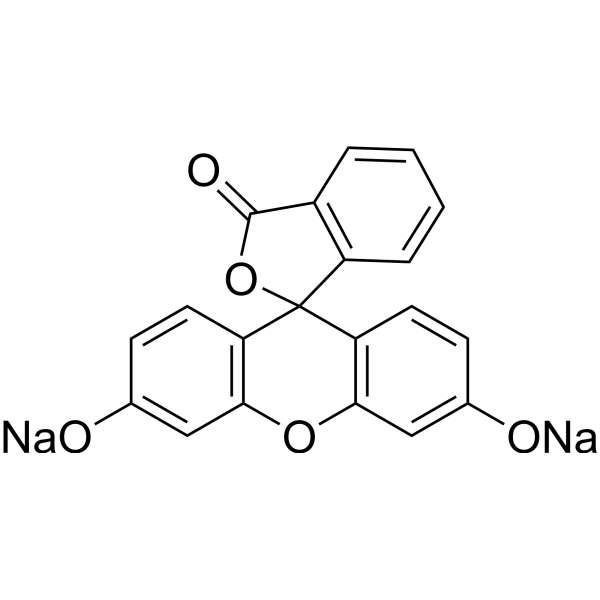
Fluorescein (Uranine) sodium is widely used as a fluorescent tracer in medicinal and biological applications and tumor infected tissues tracer. Fluorescein (Uranine) sodium is a representative green fluorophore that has been widely used as a scaffold of practically useful green fluorescent probes .
loading...
    loading...
14
14 Publications Verification
Cat. No.: HY-D0251
CAS No.: 2321-07-5
Synonyms: Uranine
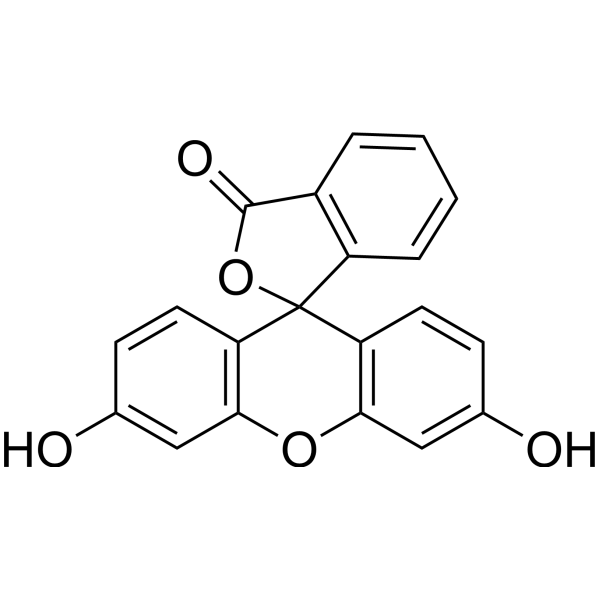
Fluorescein (Uranine) is widely used as a fluorescent tracer in medicinal and biological applications and tumor infected tissues tracer. Fluorescein (Uranine) is a representative green fluorophore that has been widely used as a scaffold of practically useful green fluorescent probes .
loading...
    loading...
6
6 Cited Publications
Cat. No.: HY-D0722
CAS No.: 124387-19-5
Synonyms: 5-(6)-Carboxyfluorescein diacetate; CFDA
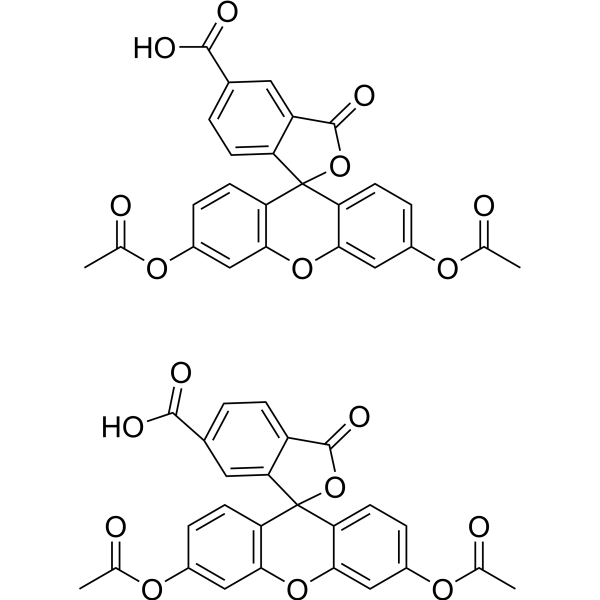
5(6)-CFDA is a common aliphatic luciferin-line organism. CFDA conducts free diffusion into cells, and then it is hydrolyzed into carboxyl fluorescein (CF) by intracellular non-specific lipase. CF containing portion contains an additional negative charge so that it is better retained in cells, compared to fluorescein dyes .
loading...
    loading...
Cat. No.: HY-D1602
CAS No.: 217075-07-5
Target:  

Fluorescent Dye

Research Areas:  

Others

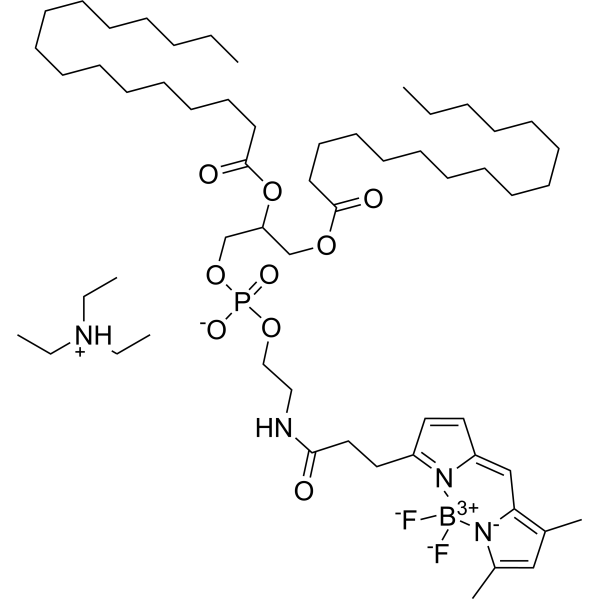
BODIPY FL-DHPE is a fluorescent lipid probe composed of phosphatidylethanolamine (DHPE) labeled with a BODIPY FL fluorophore, which is used for fluorescent labeling of cell membranes, differentiation between liposome membrane fusion and endocytic pathways, and studies of membrane dynamics. The two C16 alkyl chains of BODIPY FL-DHPE insert into the lipid bilayer of membranes, and its fluorescence exhibits concentration dependence: it exists as monomers and emits green fluorescence at low mole fractions; it forms dimers with a red-shifted emission peak at high mole fractions; this spectral change is independent of enzymes, pH, and membrane potential. When liposomes enter the plasma membrane via membrane fusion, the dye is diluted, leading to attenuation of the dimer peak and enhancement of the monomer peak; when entry occurs via endocytosis, the dye remains in endosomes at high concentration with no change in the dimer peak, allowing differentiation between the two uptake pathways. Ex = 488 nm; monomer Em = 515 nm, dimer Em ≈ 620 nm .
loading...
    loading...
Cat. No.: HY-114353
CAS No.: 1379771-95-5
Purity:  99.71%
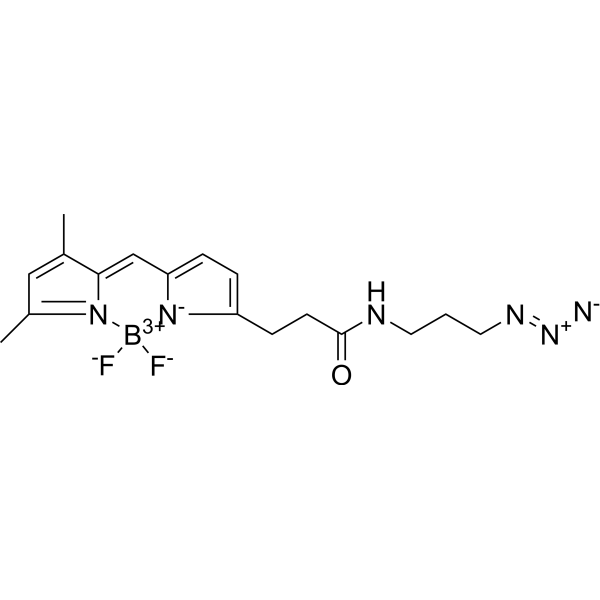
BODIPY FL azide is a BODIPY dye connector containing an azide group capable of Click Chemistry. The green fluorophore is representative of the borodipyrromethane class of fluorescent dyes and has a high quantum yield in aqueous environments, high stability to photobleaching and is compatible with FAM fluorescence measurement instruments .
loading...
    loading...
Cat. No.: HY-D1590
CAS No.: 929679-22-1
Target:  

Fluorescent Dye

Research Areas:  

Others

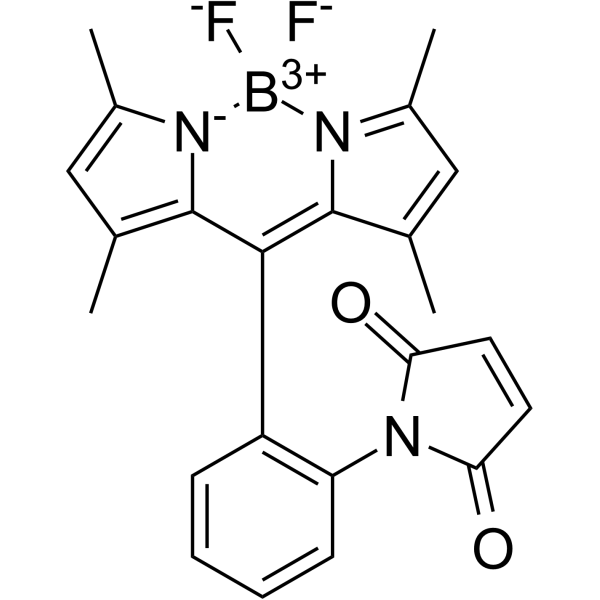
ODIPY Green 8-P2M is a novel thiol-reactive fluorescence probe based on the BODIPY fluorophore, the fluorescence is strongly quenched by d-PeT and then can be restored after reaction with thiol, resulting in an extremely high signal-to-noise ratio. ODIPY Green 8-P2M can be useful for detecting extremely low concentrations of protein in the gel after SDS-PAGE .
loading...
    loading...
Cat. No.: HY-D1560
CAS No.: 438476-80-3
Target:  

Fluorescent Dye

Research Areas:  

Others

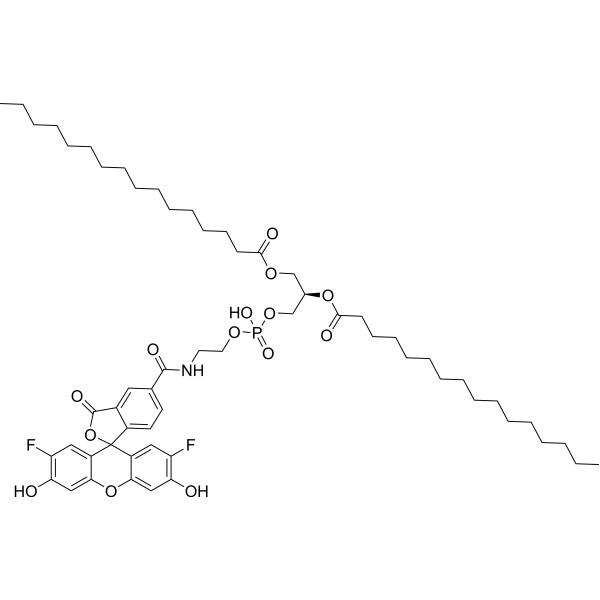
FG 488 DHPE is a lipid-coupled fluorochrome, has be used as a fluorophore Oregon Green 488. FG 488 DHPE monitors acidification of lipid vesicles with λex/λem=508/534 nm.FG 488 DHPE is also used for Hv1-induced proton translocation quantificatio with λex/λem=508/534 nm as well .
loading...
    loading...
Cat. No.: HY-178819
Research Areas:  

Cancer

NM-001 is a theranostic prodrug that targets ανβ3 integrin. NM-001 consists of cRGD and GFLG peptides, a DCM fluorophore and Chlorambucil (HY-13593). NM-001 internalizes into lysosomes of tumor cells via the cRGD peptide, and generates NM-002 (HY-178820) and Chlorambucil through intracellular cleavage at the GFLG peptide by overexpressed Cathepsin B (CTSB). NM-001 exhibits green fluorescence under physiological conditions, and converts to NIR fluorescence by CTSB activation. NM-001 has significant antitumor activity with low toxicity in HeLa cell xenografts mouse models. NM-001 can be used for real-time drug release monitoring research .
loading...
    loading...
Cat. No.: HY-D0251R
CAS No.: 2321-07-5
Synonyms: Uranine (Standard)
Research Areas:  

Cancer

Fluorescein (Standard) is the analytical standard of Fluorescein. This product is intended for research and analytical applications. Fluorescein (Uranine) is widely used as a fluorescent tracer in medicinal and biological applications and tumor infected tissues tracer. Fluorescein (Uranine) is a representative green fluorophore that has been widely used as a scaffold of practically useful green fluorescent probes .
loading...
    loading...
Cat. No.: HY-D2599
ICG PEG1000 NH2 is a polyethylene glycol derivative containing Indocyanine green (ICG) (HY-D0711) fluorescent dye and polyethylene glycol (PEG) and an amino group. The Indocyanine green fluorophore is commonly used in applications such as immunolabeling, nucleic acid labeling, fluorescence microscopy, and flow cytometry. ICG PEG1000 NH2 can be used for fluorescence imaging, fluorescence tracing and fluorescence labeling (Ex/Em=785/813 nm).
loading...
    loading...
Cat. No.: HY-D2602
ICG PEG5000 NH2 is a polyethylene glycol derivative containing Indocyanine green (ICG) (HY-D0711) fluorescent dye and polyethylene glycol (PEG) and an amino group. The Indocyanine green fluorophore is commonly used in applications such as immunolabeling, nucleic acid labeling, fluorescence microscopy, and flow cytometry. ICG PEG5000 NH2 can be used for fluorescence imaging, fluorescence tracing and fluorescence labeling (Ex/Em=785/813 nm).
loading...
    loading...
Cat. No.: HY-D2600
ICG PEG2000 NH2 is a polyethylene glycol derivative containing Indocyanine green (ICG) (HY-D0711) fluorescent dye and polyethylene glycol (PEG) and an amino group. The Indocyanine green fluorophore is commonly used in applications such as immunolabeling, nucleic acid labeling, fluorescence microscopy, and flow cytometry. ICG PEG2000 NH2 can be used for fluorescence imaging, fluorescence tracing and fluorescence labeling (Ex/Em=785/813 nm).
loading...
    loading...
Cat. No.: HY-D2601
ICG PEG3400 NH2 is a polyethylene glycol derivative containing Indocyanine green (ICG) (HY-D0711) fluorescent dye and polyethylene glycol (PEG) and an amino group. The Indocyanine green fluorophore is commonly used in applications such as immunolabeling, nucleic acid labeling, fluorescence microscopy, and flow cytometry. ICG PEG3400 NH2 can be used for fluorescence imaging, fluorescence tracing and fluorescence labeling (Ex/Em=785/813 nm).
loading...
    loading...
Cat. No.: HY-D2603
ICG PEG10000 NH2 is a polyethylene glycol derivative containing Indocyanine green (ICG) (HY-D0711) fluorescent dye and polyethylene glycol (PEG) and an amino group. The Indocyanine green fluorophore is commonly used in applications such as immunolabeling, nucleic acid labeling, fluorescence microscopy, and flow cytometry. ICG PEG10000 NH2 can be used for fluorescence imaging, fluorescence tracing and fluorescence labeling (Ex/Em=785/813 nm).
loading...
    loading...
Cat. No.: HY-D3182
CAS No.: 2252329-12-5
AldeRed 588-A is a fluorescent labeling reagent and a substrate for aldehyde dehydrogenase (ALDH). AldeRed 588-A is metabolized by functionally active ALDH enzymes, thereby specifically labeling viable ALDH bright cell populations with red-shifted fluorescence. AldeRed 588-A supports one-step isolation and sorting of ALDH-expressing cells (including normal stem cells and cancer stem cells), and can be used in combination with green fluorophores for multicolor experimental applications. AldeRed 588-A is widely applicable to research related to various cancers such as bladder cancer, breast cancer, and head and neck cancer .
loading...
    loading...
Cat. No.: HY-D3106
CAS No.: 2659241-66-2
Target:  

Fluorescent Dye

Research Areas:  

Others

Lys-VBOD is a Fluorescent probe for lysosomal viscosity monitoring and live cell imaging. Its detection mechanism depends on viscosity: increased viscosity restricts the twisting of the double bond between the indole and BODIPY fluorophore, as well as the rotation of the single bond between quinoline and BODIPY, which reduces non-radiative decay and leads to enhanced fluorescence intensity in high viscosity environments; it also features a morpholine group that provides lysosome-targeting properties, allowing it to localize to lysosomes for viscosity detection. The probe has excitation/emission wavelengths of Ex/Em = 602/637 nm, and its fluorescence intensity shows a good linear relationship with log-transformed viscosity values. Lys-VBOD is stable across a wide pH range of 5.35 to 10.74, is not affected by macromolecules and proteins like BSA, has a fluorescence lifetime that increases with viscosity, and can visualize real-time lysosomal viscosity changes in live cells under Dexamethasone (HY-14648) stimulation[1].
loading...
    loading...
  • 1

