

1. Search Result
Search Result
Results for "

histone 4 mRNA

" in MedChemExpress (MCE) Product Catalog:

1992

Inhibitors & Agonists

7

Screening Libraries

54

Fluorescent Dyes

109

Biochemical Assay Reagents

88

Peptides

7

MCE Kits

11

Inhibitory Antibodies

180

Natural
Products

78

Recombinant Proteins

45

Isotope-Labeled Compounds

219

Antibodies

9

Click Chemistry

622

Oligonucleotides

6

GMP Molecules

Cat. No. Product Name
  • HY-L024
    904 compounds

    A histone modification, a covalent post-translational modification (PTM) to histone proteins, includes methylation, phosphorylation, acetylation, ubiquitylation, and sumoylation, etc. In general, histone modifications are catalyzed by specific enzymes that act predominantly at the histone N-terminal tails involving amino acids such as lysine or arginine, as well as serine, threonine, tyrosine, etc. The PTMs made to histones can impact gene expression by altering chromatin structure or recruiting histone modifiers. Histone modifications act in diverse biological processes such as transcriptional activation/inactivation, chromosome packaging, and DNA damage/repair. Deregulation of histone modification contributes to many diseases, including cancer and autoimmune diseases.

    MCE owns a unique collection of 904 bioactive compounds targeting Epigenetic Reader Domain, HDAC, Histone Acetyltransferase, Histone Demethylase, Histone Methyltransferase, Sirtuin, etc. Histone Modification Research Compound Library is a useful tool for histone modification research and drug screening.

  • HY-L005M
    297 compounds

    Epigenetics involves heritable phenotypic changes that occur without alterations to the underlying DNA sequence. Key mechanisms include DNA methylation, histone modifications, and regulation by small non-coding RNAs such as microRNAs. By modifying DNA, histones, or RNA—while leaving their primary sequences intact—these processes influence molecular function and regulation, thereby playing critical roles in cellular differentiation, embryonic development, gene expression control, aging, and diseases such as cancer.

    MCE provide a unique collection of 297 epigenetics-related compounds. For each regulatory target and its subtype, 3 to 5 highly specific representative compounds have been retained, which can be used in epigenetic and related disease research.

  • HY-L005
    1,945 compounds

    Epigenetics refers to changes in phenotype that are not rooted in DNA sequence. Many types of epigenetic processes have been identified, including DNA methylation, alteration in the structure of histone proteins and gene regulation by small noncoding microRNAs. Modification of DNA, protein, or RNA, resulting in changes to the function and/or regulation of these molecules, without altering their primary sequences, reveals the complexities of cellular differentiation, embryology, the regulation of gene expression, aging, cancer, and other diseases.

    MCE provide a unique collection of 1,945 epigenetics-related compounds that can be used in the research of the related diseases.

  • HY-L203
    338 compounds

    Methylation is an epigenetic modification mechanism that involves adding methyl groups to molecules such as DNA and histones, which can alter gene expression without changing the DNA sequence. This process is catalyzed by enzymes such as DNA methyltransferases (DNMTs) and histone methyltransferases (HMTs), and can be reversed by demethylases. The balance of methylation and demethylation is crucial for maintaining cellular function and genomic stability. Abnormal regulation of methylation may lead to a variety of diseases, including cancer, neurological disorders, and developmental abnormalities. A deep understanding of the molecular mechanisms of methylation metabolism is essential for developing therapeutic strategies for diseases associated with methylation dysregulation.

    MCE contains 338 compounds targeting methylation/demethylation enzymes, which is of significant value for studying the pathways of methylation metabolism and exploring their mechanisms of action in diseases.

  • HY-L207
    664 compounds

    Metabolomics is the large-scale study of cellular metabolic complement, with proven utility in both basic and applied studies of plants, microorganisms, and mammals. As an important tool for the study of complex biological systems, metabolomics monitors the complex molecular networks that exist in the natural flow of information from genes to mRNA and proteins to organisms. The metabolome is composed of biomolecules that most closely resemble the phenotype of an organism, and changes in its composition can easily lead to the production of diseases. Therefore, metabolomics has received much attention in drug target discovery, drug response and translational research of disease mechanisms. Mass spectrometry-based metabolomics methods can simultaneously detect and quantify thousands of metabolite signatures, thereby characterizing the pathophysiological mechanisms of various biomedical symptoms.

    MCE can provide 664 mass spectrometry human endogenous metabolites that can be used for metabolite identification and quantification, functional cell detection and phenotypic screening of mass spectrometry.

  • HY-L249
    5,860 compounds

    Protein lactylation, an emerging post-translational modification identified in recent years, plays a critical role in linking cellular metabolic reprogramming, epigenetic regulation, and signaling networks. Based on a systematic framework encompassing lactate metabolism, lactylation, and downstream signaling pathways, this compound library comprehensively targets multiple regulatory layers, including histone modification enzymes (such as p300 and HDACs), key glycolytic enzymes (such as PKM2, LDHA, and GAPDH), transcriptional regulators (such as STAT3, HMGB1, and p53), as well as central signaling pathway nodes including HIF-1α, NF-κB, and PI3K-AKT-mTOR. This integrated design enables a comprehensive representation of the regulatory roles of lactylation across the “metabolism–epigenetics–signaling” axis.

    MCE has assembled a collection of 5,860 known bioactive compounds and potential functional molecules, making this library suitable for a wide range of applications, including high-throughput drug screening, inhibitor identification, and mechanistic studies. It can be used to systematically evaluate the functional roles of lactylation in biological processes such as tumor metabolism, immune regulation, and inflammatory responses, and to efficiently identify small-molecule candidates with regulatory potential, thereby facilitating the development of innovative therapeutics targeting the interplay between metabolism and epigenetic regulation.

  • HY-L251
    95 compounds

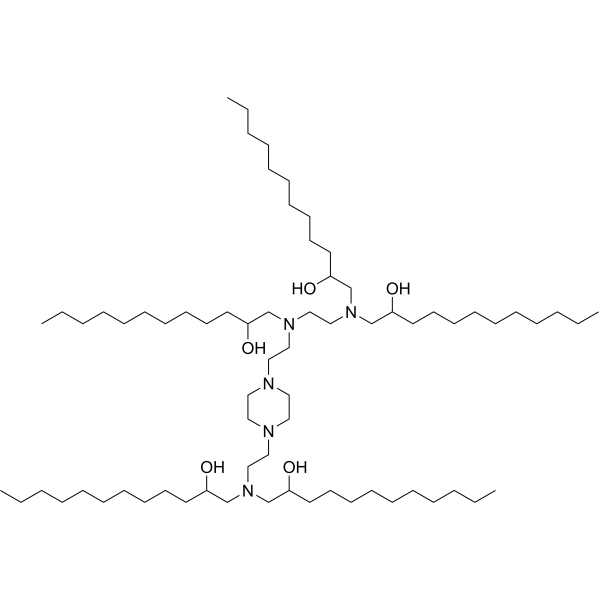
    Ionizable lipids are a class of specialized, functional lipid molecules with pH-sensitive charge characteristics. They are primarily divided into two major categories: ionizable cationic lipids and ionizable anionic lipids, though the term typically specifies ionizable cationic lipids within the biomedical field. Structurally, these lipids consist of an ionizable hydrophilic headgroup, a biodegradable linker, and hydrophobic tails. Their primary application is serving as the key delivery vehicle in lipid nanoparticles (LNPs) to encapsulate negatively charged nucleic acid macromolecules, such as mRNA vaccines, siRNA therapeutics, and CRISPR gene-editing components. In a physiological, neutral environment, they remain electrically neutral to minimize systemic toxicity and prolong circulation time. Upon entering the acidic microenvironment of cellular endosomes, however, they undergo protonation to become positively charged, thereby inducing membrane fusion and enabling the highly efficient intracellular release of the nucleic acid cargo. Consequently, they serve as the technological cornerstone for bringing nucleic acid therapies into clinical application.

    To accelerate the translational process of cutting-edge nucleic acid drugs, MCE has meticulously constructed an ionizable lipid compound library containing 95 high-performance molecules, aiming to provide researchers and pharmaceutical professionals with a high-throughput, multi-dimensional lipid screening platform.

Inquiry Online

Your information is safe with us. * Required Fields.

Salutation


Country or Region *

Applicant Name *


Organization Name *

Department *


Email Address *


Product Name *

Cat. No.


Requested quantity *

Phone Number *


Remarks

Inquiry Online

Inquiry Information

Product Name:
Cat. No.:
Quantity:
MCE Japan Authorized Agent:

