1. Search Result
Search Result
Results for "

host gene

" in MedChemExpress (MCE) Product Catalog:

16

Inhibitors & Agonists

1

Screening Libraries

5

Peptides

1

MCE Kits

4

Natural
Products

1

Oligonucleotides

Cat. No. Product Name Target Research Areas Chemical Structure
  • HY-P1940

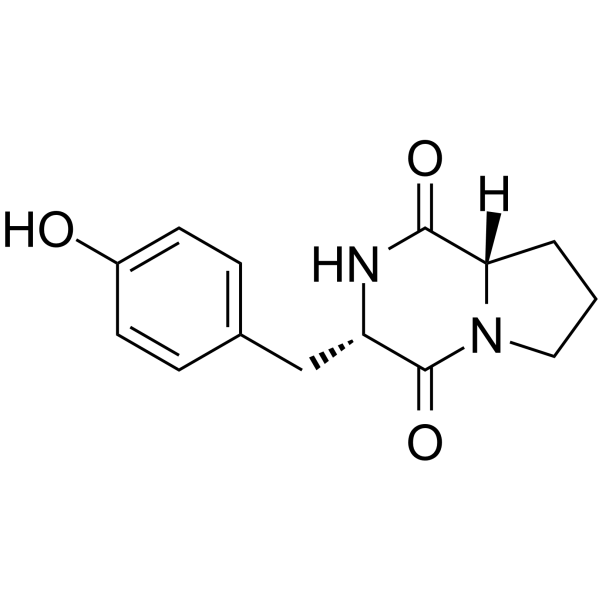
    Cyclo(Tyr-Pro)

    Endogenous Metabolite Bacterial Fungal Infection Cancer
    Maculosin (Cyclo (Tyr-Pro)) is a host-specific phytotoxin for spotted knapweed from Alternaria alternata. Maculosin is a quorum-sensing molecule involved in cell-cell communication. Maculosin also acts as a signaling molecule regulating virulence gene expression. Maculosin shows antimicrobial, antifungal, antioxidant and anti-cancer properties .Maculosin (Cyclo (Tyr-Pro)) is a host-specific phytotoxin for spotted knapweed from Alternaria alternata. Maculosin is a quorum-sensing molecule involved in cell-cell communication. Maculosin also acts as a signaling molecule regulating virulence gene expression. Maculosin shows antimicrobial, antifungal, antioxidant and anti-cancer properties .
    Maculosin
  • HY-P1934
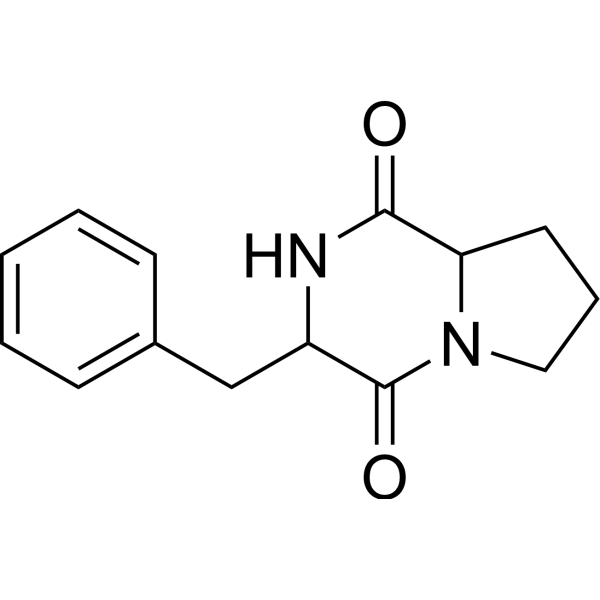
    Cyclo(Phe-Pro)
    5+ Cited Publications

    Cyclo(phenylalanylprolyl); A-64863

    HCV Bacterial Antibiotic Reactive Oxygen Species (ROS) Infection
    Cyclo(Phe-Pro) (Cyclo(phenylalanylprolyl)) is a quorum-sensing molecule of Vibrio vulnificus that specifically interacts with RIG-I, inhibiting RIG-I polyubiquitination, suppressing IRF-3 activation, and reducing type I interferon production. Cyclo(Phe-Pro) enhances susceptibility to HCV and influenza virus and also alleviates plant aluminum toxicity stress. The mechanism of Cyclo(Phe-Pro) involves the regulation of host immune signaling pathways, bacterial virulence gene expression, and plant antioxidant systems, making it a promising candidate for research in viral infections, bacterial virulence regulation, and agricultural stress resistance .
    Cyclo(Phe-Pro)
  • HY-128200
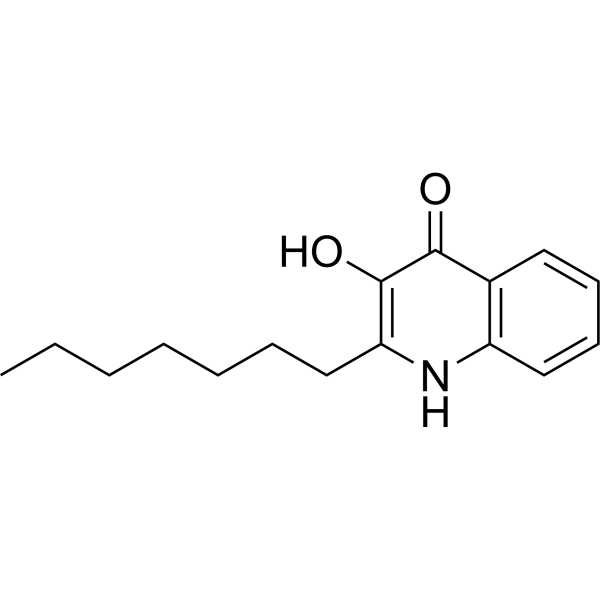
    Pseudomonas quinolone signal
    2 Publications Verification

    PQS

    Bacterial Infection Inflammation/Immunology
    Pseudomonas quinolone signal (PQS) is a quorum-sensing signaling molecule produced by Pseudomonas aeruginosa. The synthesis of Pseudomonas quinolone signal relies on the las quorum-sensing system, and its biological activity is associated with the rhl system. Pseudomonas quinolone signal regulates the expression of the virulence gene lasB. Additionally, Pseudomonas quinolone signal plays roles in iron acquisition, cytotoxicity, outer-membrane vesicle biogenesis, and host immune modulation .
    Pseudomonas quinolone signal
  • HY-135646

    Influenza Virus Infection Inflammation/Immunology
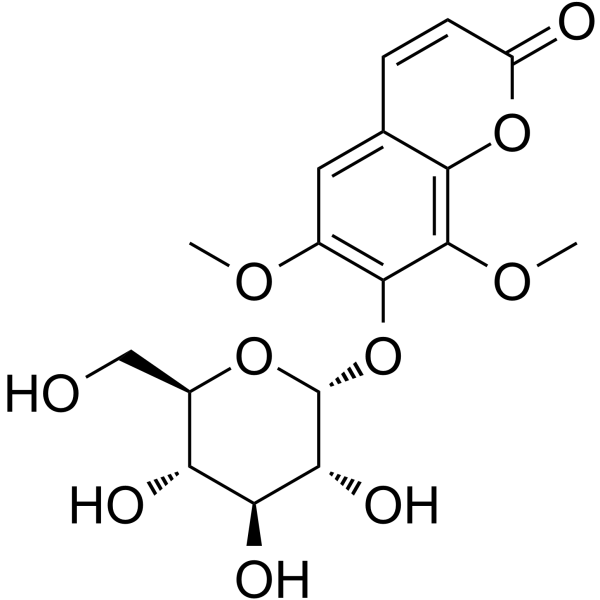
    Eleutheroside B1, a coumarin compound, has a wide spectrum of anti-human influenza virus efficacy, with an IC50 value of 64-125 µg/ml. Eleutheroside B1 mediates its anti-influenza activity through POLR2A and N-glycosylation. Eleutheroside B1 inhibits the mRNA expression of several chemokine genes and the influenza nucleoprotein (NP) gene, and exhibits low cytotoxicity. Antiviral and anti-inflammatory activities .
    Eleutheroside B1
  • HY-Y1058

    BHA

    Fungal Infection
    Benzohydroxamic acid (BHA) is a chitin deacetylase (CDA) inhibitor with significant antifungal activity. The Ki values of BHA against the CDAs of Verticillium dahliae and Puccinia striiformis f. sp. tritici are 8.31 μM and 9.83 μM, respectively. Benzohydroxamic acid can restore the defense responses of infected host plants, upregulate the expression of defense-related genes, and reduce the growth and reproduction of fungi in plants. Benzohydroxamic acid can be used in the research of the field of controlling agricultural fungal diseases, such as various plant fungal diseases caused by Verticillium dahliae, Puccinia striiformis and other fungi, like cotton wilt and wheat stripe rust .
    Benzohydroxamic acid
  • HY-N13047

    TMV SOD Infection
    Ningnanmycin is a plant antiviral agent. Ningnanmycin binds to specific residues on the TMV CP disc, inhibits CP assembly, disassembles the CP disc into monomers, and disrupts the structure of the TMV CP disc to reduce pathogenicity. Ningnanmycin binds to key amino acids of PVY CP, interferes with CP-CP interactions, inhibits CP assembly and virion formation, and blocks PVY replication. Ningnanmycin induces the expression of antiviral response genes PRXIIB, PRXIIE, PUB4 and PER42, thereby activating the host defense system. Ningnanmycin can be used in studies related to Tobacco Mosaic Virus infection and Potato Virus Y infection .
    Ningnanmycin
  • HY-N7700A
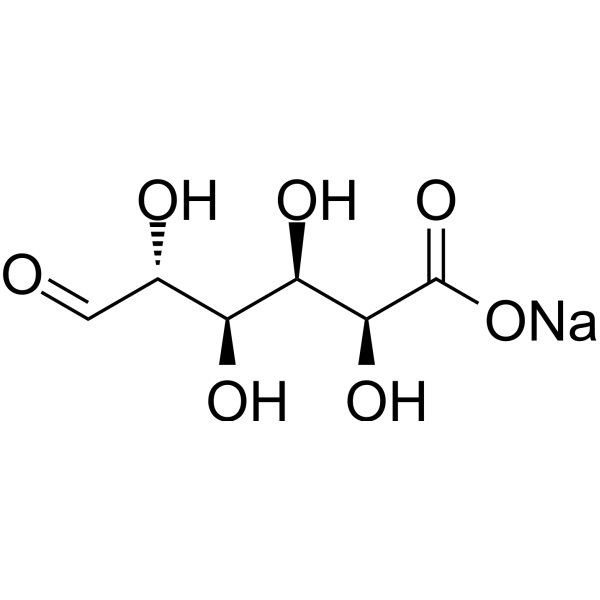
    Guluronic acid sodium
    1 Publications Verification

    G2013 sodium

    VEGFR Toll-like Receptor (TLR) COX NO Synthase NF-κB MMP Inflammation/Immunology Cancer
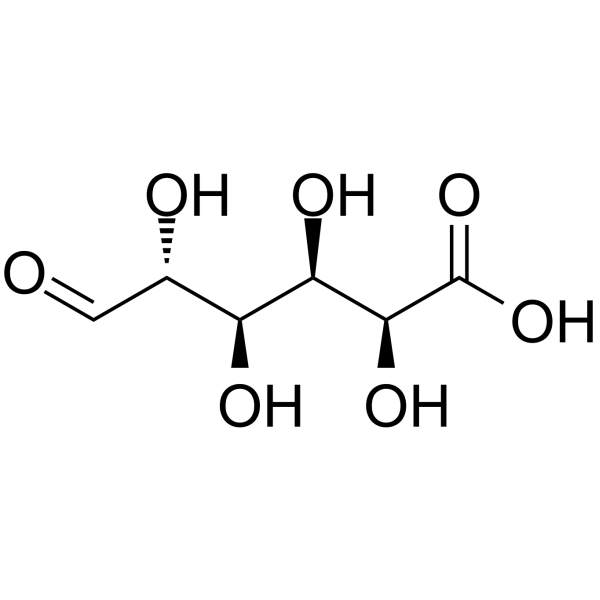
    Guluronic acid (G2013) sodium is an orally active oxidative stress regulator and anti-inflammatory agent that exerts pharmacological effects by down-regulating various pro-inflammatory and oxidative stress-related genes (such as TLR4, NF-κB, iNOS, etc.) and inhibiting the activities of COX-2, MMPs and VEGF. Low-dose Guluronic acid sodium up-regulates the expression of immunoregulatory genes SHIP1 and SOCS1, thereby effectively inhibiting cancer-related inflammation, tumor angiogenesis, cell adhesion and metastasis, while reducing the accumulation of immunosuppressive cells. Guluronic acid sodium significantly prolongs the survival time of tumor-bearing hosts within a concentration range without direct cytotoxicity, demonstrating favorable safety. Guluronic acid sodium has involved in the research of multiple sclerosis, ankylosing spondylitis, breast cancer and other inflammatory diseases .
    Guluronic acid sodium
  • HY-N7700

    G2013

    MMP COX VEGFR Toll-like Receptor (TLR) NF-κB NO Synthase Inflammation/Immunology Cancer
    Guluronic acid (G2013) is an orally active oxidative stress regulator and anti-inflammatory agent that exerts pharmacological effects by down-regulating various pro-inflammatory and oxidative stress-related genes (such as TLR4, NF-κB, iNOS, etc.) and inhibiting the activities of COX-2, MMPs and VEGF. Low-dose Guluronic acid up-regulates the expression of immunoregulatory genes SHIP1 and SOCS1, thereby effectively inhibiting cancer-related inflammation, tumor angiogenesis, cell adhesion and metastasis, while reducing the accumulation of immunosuppressive cells. Guluronic acid significantly prolongs the survival time of tumor-bearing hosts within a concentration range without direct cytotoxicity, demonstrating favorable safety. Guluronic acid has involved in the research of multiple sclerosis, ankylosing spondylitis, breast cancer and other inflammatory diseases .
    Guluronic acid
  • HY-148062

    PROTACs CDK AAK1 Cyclin G-associated Kinase (GAK) Salt-inducible Kinase (SIK) LIM Kinase (LIMK) Wee1 SnRK Others
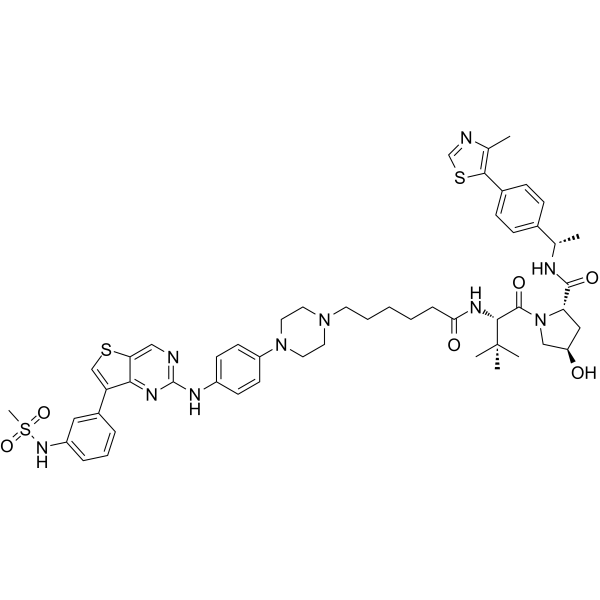
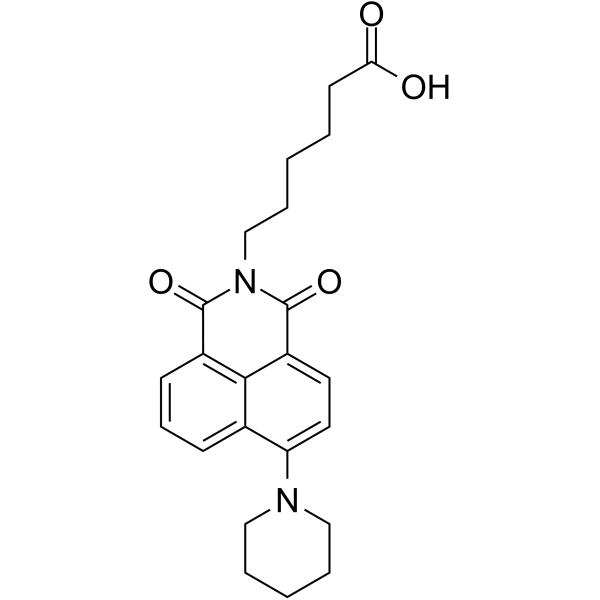
    RSS0680 is a small noncoding RNA (sRNA) targeting the mRNA ribosome binding site (RBS) and a PROTAC with protein kinase degradation activity (Pink: FLT3-IN-17 (HY-148070); Black: Linker (HY-W041970); Blue: E3 ligase Ligand (HY-112078)). RSS0680 competitively binds to RBS through the conserved CCUCCUCCC anti-Shine-Dalgarno (aSD) sequence and inhibits the translation initiation of target genes. RSS0680 can interact with the DUF1127 protein CcaF1, regulate its own stability and participate in bacterial oxidative stress defense, enhancing the host's resistance to heat shock and oxidative damage by affecting pathways such as C1 metabolism and pyruvate dehydrogenase complex. RSS0680 degrades AAK1, CDK1, CDK16, CDK2, CDK4, CDK6, EIF2AK4, GAK, LATSl, LIMK2, MAPK6, MAPKAPK5, MARK2, MARK4, MKNK2, NEK9, RPS6KB1, SIK2, SNRK, STK17A, STK17B, STK35, and WEEl. RSS0680 can be used to study diseases or disorders mediated by aberrant kinase activity and regulatory mechanisms of noncoding RNAs in α-proteobacteria[1][2].
    RSS0680
  • HY-121473

    Antibiotic Bacterial Fungal Parasite Infection
    Aklavin is a structural analog of Aclacinomycin A (HY-N2306) produced by Streptomyces strain A 1165. Aklavin possesses Z-DNA-inducing and stabilizing activities, along with antibiotic, anti-phage and broad-spectrum antimicrobial activities. Aklavin inhibits the proliferation of various viruses (such as influenza virus and poliovirus) and interferes with their nucleoprotein synthesis, while also exhibiting inhibitory effects on staphylococci, mycobacteria and specific fungi. Aklavin blocks phage-induced bacterial lysis by regulating host-parasite interactions. Aklavin shows specific toxicity to fertilized eggs and mice, and does not alter the splicing of the SMN2 gene .
    Aklavin
  • HY-P11107

    Apoptosis TNF Receptor Inflammation/Immunology Cancer
    RP-832c is a synthetic analogue of host defense peptides (HDP), targeting the mannose receptor CD206 on the surface of M2 polarized macrophages (Kd = 3.5 μM). RP-832c binding to CD206 induces a significant conformational change in the receptor, activating signaling pathways that lead to rapid apoptosis and repolarization of CD206-positive M2 macrophages to an M1 phenotype. RP-832c treatment significantly reduces CD206 gene expression in M2 macrophages while transiently increasing expression of TNF-α, a marker for M1 macrophages. RP-832c is used for the studies of T-cell lymphoma (CTCL) and idiopathic pulmonary fibrosis (IPF) .
    RP-832c
  • HY-134922

    Influenza Virus Infection
    NS1-IN-1 (compound 3) is a potent NS1 inhibitor. NS1 is a major influenza A virus virulence factor that inhibits host gene expression. NS1-IN-1 decreases viral protein levels, contributing to the reduction of virus replication. NS1-IN-1 shows antiviral activity by repressing the activity of mTORC1 in a TSC1-TSC2-dependent manner .
    NS1-IN-1
  • HY-P10509

    CMV Infection
    IE1 peptide refers to an antigenic peptide encoded by the immediate early (IE) gene of mouse cytomegalovirus (mCMV). IE1 peptide is one of the key antigenic peptides expressed during mCMV infection, plays a role in transcriptional activation in the life cycle of mCMV, and is one of the earliest genes expressed in the viral replication cycle. IE1 peptide is an important target for CD8+ T cell response and can be used to study the host immune response to mCMV infection .
    IE1 peptide
  • HY-174523

    mRNA Inflammation/Immunology
    Human TLR5 mRNA encodes the human toll like receptor 5 (TLR5) protein, a member of the Toll-like receptor (TLR) family which plays a fundamental role in pathogen recognition and activation of innate immunity. TLR5 recognizes bacterial flagellin, the principal component of bacterial flagella and a virulence factor. The activation of this receptor mobilizes the nuclear factor NF-kappaB, which in turn activates a host of inflammatory-related target genes.
    Human TLR5 mRNA
  • HY-P11137

    HSV Cancer
    LANA is a KSHV latency-associated nuclear antigen. The core function of LANA is to act as an "anchor" for the viral genome, attaching it to the chromatin of the host cell. LANA ensures that the episomal DNA of KSHV replicates together with the host chromosome and is evenly distributed among the daughter cells, thereby maintaining the latent infection of the virus in the cell population. LANA can regulate the transcription of viral and host cell genes, and regulate certain host cell genes to promote cell survival. LANA can be used to study the viral DNA tethering structure .
    LANA
  • HY-125613

    HIV Influenza Virus Infection
    ML416 is a broad-spectrum antiviral agent. ML416 inhibits host de novo pyrimidine biosynthesis, and induces a variety of interferon-stimulated genes (ISGs). ML416 can be used for the research of viral infections including alphaviruses, influenza virus, and HIV-1 .
    ML416

Inquiry Online

Your information is safe with us. * Required Fields.

Salutation


Country or Region *

Applicant Name *


Organization Name *

Department *


Email Address *


Product Name *

Cat. No.


Requested quantity *

Phone Number *


Remarks

Inquiry Online

Inquiry Information

Product Name:
Cat. No.:
Quantity:
MCE Japan Authorized Agent:

