1. Search Result
Search Result
Results for "

human GSK-3β

" in MedChemExpress (MCE) Product Catalog:

21

Inhibitors & Agonists

2

Natural
Products

6

Recombinant Proteins

Targets Recommended:
Cat. No. Product Name Target Research Areas Chemical Structure
  • HY-142295
    GNF2133
    1 Publications Verification

    DYRK Metabolic Disease
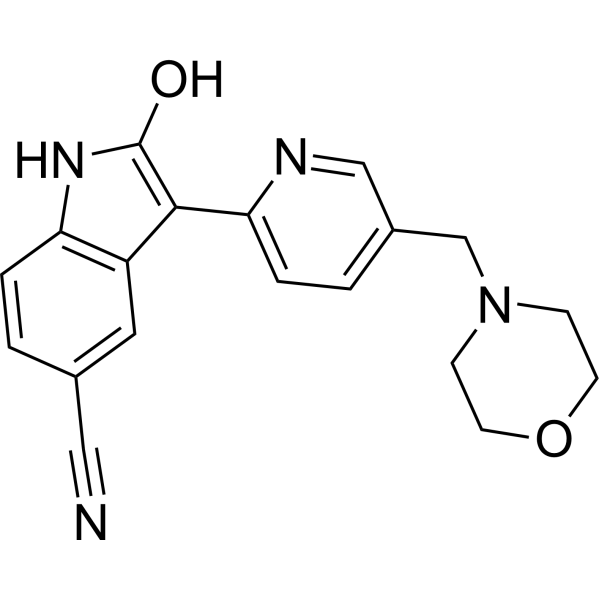
    GNF2133 is a potent, selective and orally active DYRK1A inhibitor with IC50s of 0.0062, >50 µM for DYRK1A and GSK3β, respectively. GNF2133 shows good proliferation potency and efficacy on rat and human primary β-cell. GNF2133 significantly improves glucose disposal capacity and increases insulin secretion. GNF2133 has the potential for the research of type 1 diabetes .
    GNF2133
  • HY-N6973
    Boldine
    1 Publications Verification

    RANKL/RANK Apoptosis Inflammation/Immunology Cancer
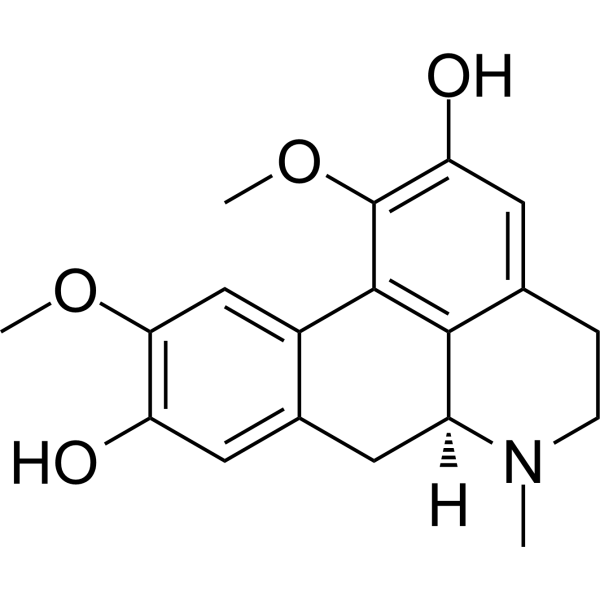
    Boldine is an apomorphine isoquinoline alkaloid extracted from the root of the pheasant pepper (Litsea cubeba). Boldine is an oral effective antioxidant, anti-inflammatory, antitumor agent, and can inhibit osteoclast formation. Boldine induces apoptosis of human bladder cancer cells by regulating ERK, AKT and GSK-3β. Boldine ameliorates bone destruction by down-regulating the OPG/RANKL/RANK signaling pathway. It can be used in rheumatoid arthritis research .
    Boldine
  • HY-13862
    AZD1080
    5 Publications Verification

    GSK-3 Neurological Disease
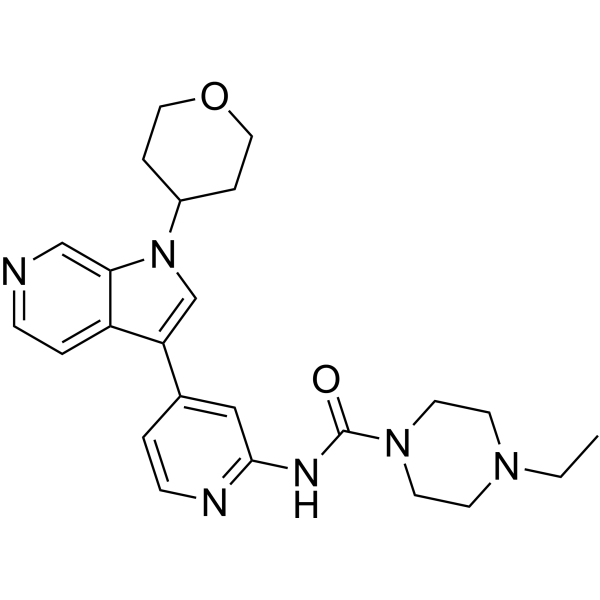
    AZD1080 is a potent and selective GSK3 inhibitor. AZD1080 inhibits recombinant human GSK3α and GSK3β with pKi (IC50) of 8.2 (6.9 nM) and 7.5 (31 nM), respectively.
    AZD1080
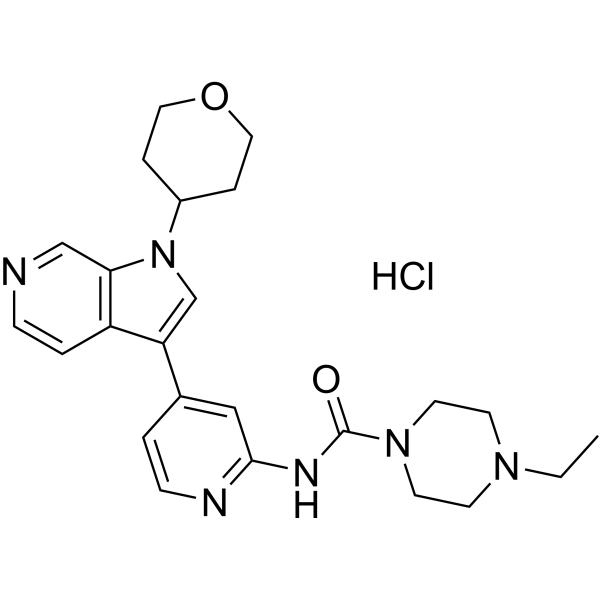
  • HY-142295A
    GNF2133 hydrochloride
    1 Publications Verification

    DYRK Metabolic Disease
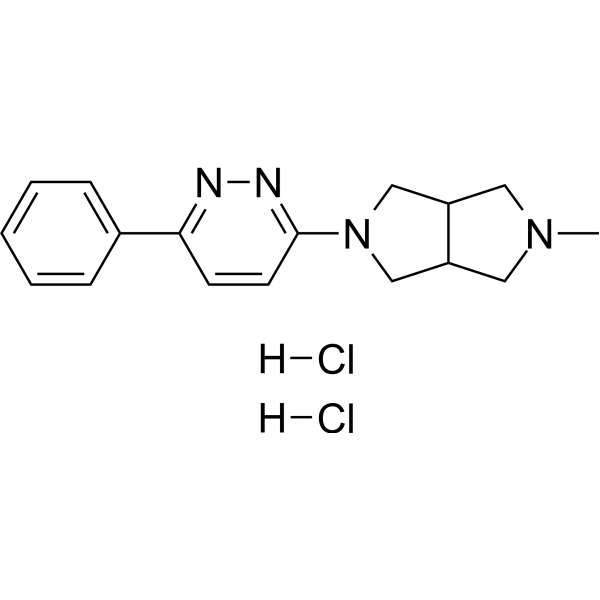
    GNF2133 hydrochloride is a potent, selective and orally active DYRK1A inhibitor with IC50s of 0.0062, >50 µM for DYRK1A and GSK3β, respectively. GNF2133 hydrochloride shows good proliferation potency and efficacy on rat and human primary β-cell. GNF2133 hydrochloride significantly improves glucose disposal capacity and increases insulin secretion. GNF2133 hydrochloride has the potential for the research of type 1 diabetes .
    GNF2133 hydrochloride
  • HY-15438
    SB 415286
    5+ Cited Publications

    GSK-3 Apoptosis Metabolic Disease
    SB 415286 is a potent and selective cell permeable inhibitor of GSK-3α, with an IC50 of 77.5 nM, and a Ki of 30.75 nM; SB 415286 is equally effective at inhibiting human GSK-3α and GSK-3β.
    SB 415286
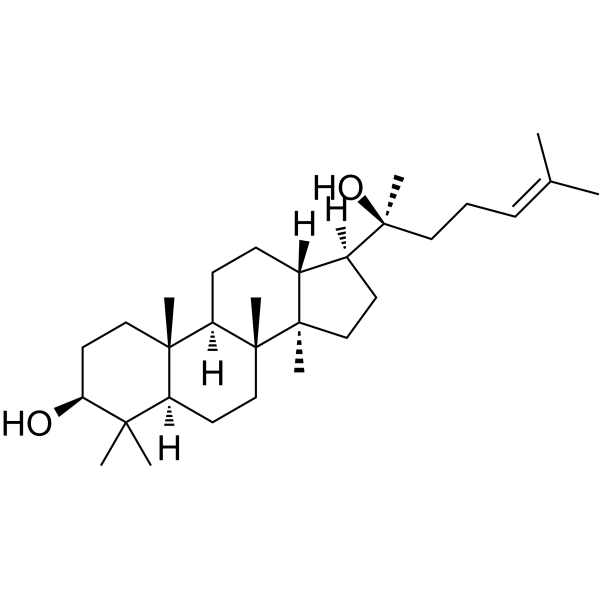
  • HY-N3677

    OGT Akt mTOR GSK-3 Reactive Oxygen Species (ROS) Apoptosis PARP MDM-2/p53 Inflammation/Immunology Cancer
    Dammarenediol II is a ginsenoside precursor . Dammarenediol II reduces the activity of O-GlcNAc transferase (OGT) and downregulates the global O-GlcNAcylation level. Dammarenediol II inhibits the phosphorylation of Akt, mTOR and GSK3β. Dammarenediol II inhibits human carboxylesterase activity, VEGF-induced ROS production, stress fiber formation and vascular endothelial cadherin disruption. Dammarenediol II promotes cell apoptosis (apoptosis), increases the levels of cleaved PARP1 and p53, and inhibits retinal microvascular leakage. Dammarenediol II can be used in studies related to liver cancer and diabetic retinopathy .
    Dammarenediol II
  • HY-122026

    PF-367

    GSK-3 Neurological Disease
    PF-04802367 (PF-367) is a highly selective GSK-3 inhibitor with an IC50 of 2.1 nM based on a recombinant human GSK-3β enzyme assay and 1.1 nM based on ADP-Glo assay. PF-04802367 shows desirable central nervous system (CNS) properties and potency. PF-04802367 is equally effective at inhibition of the two known GSK-3 isoforms (GSK-3α and GSK-3β) with IC50 values of 10.0 and 9.0 nM in mobility shift assays, respectively .
    PF-04802367
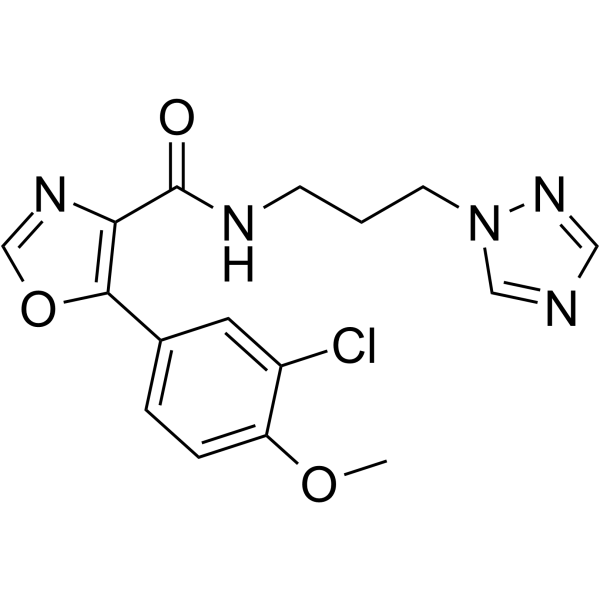
  • HY-137472

    GSK-3 Neurological Disease
    SAR502250 is a potent, selective, ATP competitive, orally active and brain-penetrant inhibitor of GSK3, with an IC50 of 12 nM for human GSK-3β. SAR502250 displays antidepressant-like activity. SAR502250 can be used for the research of Alzheimer’s disease (AD) .
    SAR502250
  • HY-110067

    PTEN Apoptosis Autophagy Ferroptosis Reactive Oxygen Species (ROS) Interleukin Related Akt Keap1-Nrf2 Cardiovascular Disease Inflammation/Immunology Cancer
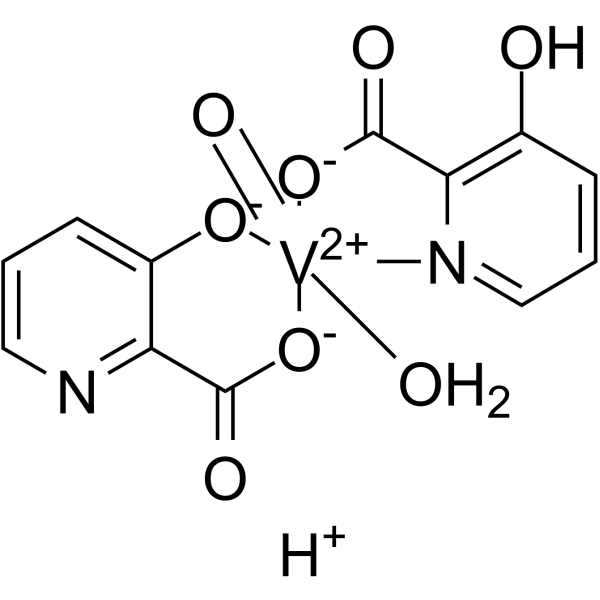
    VO-OHPic is a reversible, noncompetitive PTEN inhibitor with an human IC50 value of 46 nM. VO-OHPic inhibits PTEN signaling, activates Akt-GSK3β and Nrf-2/HO-1 pathways, induces apoptosis resistance and elevates IL-10 levels. VO-OHPic inhibits autophagy, ferroptosis and oxidative stress. VO-OHPic can be used for the research of acute myocardial infarction, intervertebral disc degeneration, cardiomyopathy and cancer .
    VO-OHPic
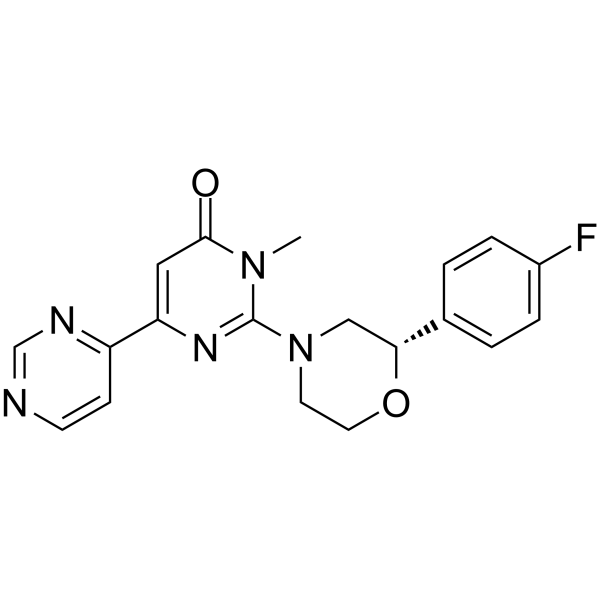
  • HY-170491

    GSK-3 Infection Neurological Disease
    GSK-3β inhibitor 23 (Compound 11726169) is the inhibitor for glycogen synthase kinase-3, that inhibits GSK-3β and GSK-3α with IC50 of 12.1 nM and 18.8 nM. GSK-3β inhibitor 23 exhibits antiviral activity against HIV 1. GSK-3β inhibitor 23 exhibits good metabolic stablility in mouse/human liver microsomes and plasma, but poor Caco-2 permeability (which predicts low oral bioavailability) .
    GSK-3β inhibitor 23
  • HY-59201A

    ERK 5-HT Receptor Epigenetic Reader Domain nAChR Neurological Disease Metabolic Disease
    A-582941 dihydrochloride is a selective, orally active, blood-brain barrier-permeable α7 nAChR agonist, with Ki values of 10.8 nM and 17 nM in rat brain and human frontal cortex, respectively. A-582941 dihydrochloride exhibits agonistic activity at 5-HT3 receptors, with a Ki of 150 nM. A-582941 dihydrochloride triggers phosphorylation of ERK1/2 and CREB, inhibits GSK-3β via Ser-9 phosphorylation, increases acetylcholine release, induces the expression of Arc and c-Fos, activates brain regions associated with working memory and attention, and reduces cell death caused by nerve growth factor (NGF) deprivation. A-582941 dihydrochloride is applicable for the research of Alzheimer's disease and schizophrenia .
    A-582941 dihydrochloride
  • HY-15438R

    GSK-3 Apoptosis Metabolic Disease
    SB 415286 (Standard) is the analytical standard of SB 415286. This product is intended for research and analytical applications. SB 415286 is a potent and selective cell permeable inhibitor of GSK-3α, with an IC50 of 77.5 nM, and a Ki of 30.75 nM; SB 415286 is equally effective at inhibiting human GSK-3α and GSK-3β.
    SB 415286 (Standard)
  • HY-172586

    GSK-3 PKA Neurological Disease Cancer
    GSK-3α/β-IN-1 is GSK-3α/β inhibitor with IC50 s of 0.265 μM and 0.255 μM for GSK-3α and GSK-3β, respectively. GSK-3α/β-IN-1 also inhibits PKA with an IC50 of 0.188 μM. GSK-3α/β-IN-1 potently inhibits cell viability of three Glioblastoma (GBM) cell lines (IC50 : 3-6 μM, 72 h) with no toxicity to human astrocytes and good metabolic stability. GSK-3α/β-IN-1 has potential CNS activity in all-human blood-brain barrier (BBB) model of GBM .
    GSK-3α/β-IN-1
  • HY-183529

    Parasite CDK GSK-3 Infection
    Antitrypanosomal agent 31 is an antitrypanosoma agent with a pEC50 of 6.4. Antitrypanosomal agent 31 inhibits GSK-3β, CDK-2, and CDK-4 with pIC50s of 5.8, 6.9, and 7.1, respectively. Antitrypanosomal agent 31 can be used for the research of human african trypanosomiasis .
    Antitrypanosomal agent 31
  • HY-182342

    SGK Neurological Disease
    SGK1-IN-8 (compound 55) is a SGK1 and GSK3β inhibitor, with an IC50 of 0.11 μM against human SGK1 and an IC50 of 3.39 μM against human GSK3β. SGK1-IN-8 inhibits the catalytic activities of SGK1 and GSK3β, and reduces the phosphorylation level of TAU protein at the Ser214 site. SGK1-IN-8 is available for the research of Alzheimer's disease .
    SGK1-IN-8
  • HY-128491

    GSK-3 CDK Ser/Thr Kinase Metabolic Disease
    UNC10112785 is a serine/threonine kinase inhibitor with a human GSK-3β IC50 of 0.031 μM, human CDK-2 IC50 of 0.016 μM, and human CDK-4 IC50 of 1.99 μM. UNC10112785 can be used for the research of type 2 diabetes .
    UNC10112785
  • HY-59201

    nAChR 5-HT Receptor ERK Epigenetic Reader Domain Neurological Disease
    A-582941 is a selective, orally active, blood-brain barrier-permeable α7 nAChR agonist, with Ki values of 10.8 nM and 17 nM in rat brain and human frontal cortex, respectively. A-582941 exhibits agonistic activity at 5-HT3 receptors, with a Ki of 150 nM. A-582941 triggers phosphorylation of ERK1/2 and CREB, inhibits GSK-3β via Ser-9 phosphorylation, increases acetylcholine release, induces the expression of Arc and c-Fos, activates brain regions associated with working memory and attention, and reduces cell death caused by nerve growth factor (NGF) deprivation. A-582941 is applicable for the research of Alzheimer's disease and schizophrenia .
    A-582941
  • HY-180881

    HSV Tau Protein Akt GSK-3 Neurological Disease
    PAV-174 is a potent antiviral agent that targets a host protein. PAV-174 prevents Herpes simplex virus (HSV-1) infection in cells (IC50 of 0.02 μM in Vero cells) and human brain organoids. PAV-174 inhibits oxidized macrophage migration inhibitory factor (oxMIF)-induced tau phosphorylation in vitro and in vivo independent of infection. PAV-174 reduces HSV-1-induced tau phosphorylation via the Akt/GSK3β signaling pathway. PAV-174 can be used for Alzheimer’s disease research .
    PAV-174
  • HY-183259

    Sirtuin Others
    6,7-Dimethoxy-1,3-bis (4-methoxyphenyl) isoquinoline is a SIRT1 inhibitor with a KD value of 0.5 μM .
    6,7-Dimethoxy-1,3-bis(4-methoxyphenyl)isoquinoline
  • HY-182001

    Cholinesterase (ChE) GSK-3 Neurological Disease
    Multi-kinase-IN-13 (Compound 10F) is an inhibitor of AChE, BuChE, and GSK-3β, with an IC50 of 3 nM against hAChE, 303 nM against hBuChE, and 7.58 nM against GSK-3β. Multi-kinase-IN-13 exhibits in vitro iron chelating activity. AChE-IN-110 can be used in the research of Alzheimer's disease .
    Multi-kinase-IN-13
  • HY-181811

    Cholinesterase (ChE) GSK-3 Neurological Disease
    PJ17 is a potent dual-target inhibitor of AChE and GSK-3β, with IC50 values of 8.84 μM and 4.19 μM, respectively. PJ17 shows no significant neurotoxic effect in primary cerebellar granule neuron cultures. PJ17 serves as a template for the design of multitarget drugs. PJ17 can be used for the research of Alzheimer's disease .
    PJ17

Inquiry Online

Your information is safe with us. * Required Fields.

Salutation


Country or Region *

Applicant Name *


Organization Name *

Department *


Email Address *


Product Name *

Cat. No.


Requested quantity *

Phone Number *


Remarks

Inquiry Online

Inquiry Information

Product Name:
Cat. No.:
Quantity:
MCE Japan Authorized Agent:

