1. Search Result
Search Result
Results for "

human H1 receptors

" in MedChemExpress (MCE) Product Catalog:

22

Inhibitors & Agonists

1

Natural
Products

1

Isotope-Labeled Compounds

Cat. No. Product Name Target Research Areas Chemical Structure
  • HY-B0539
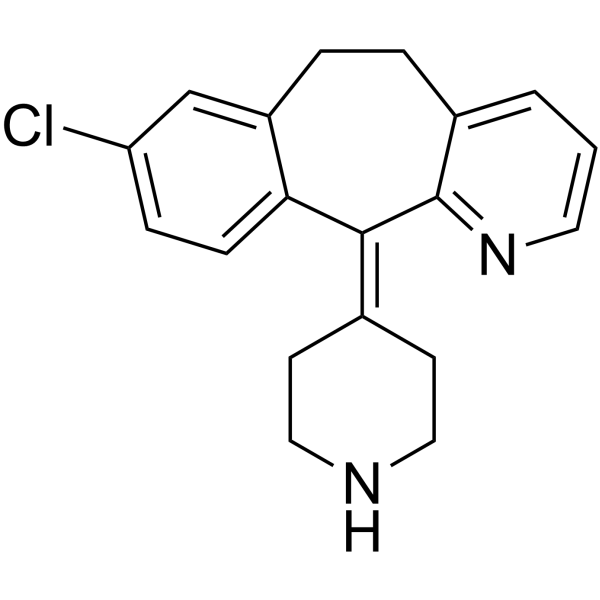
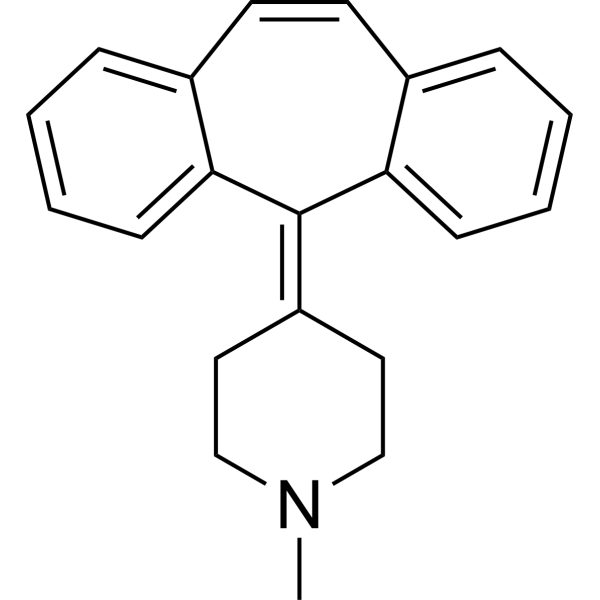
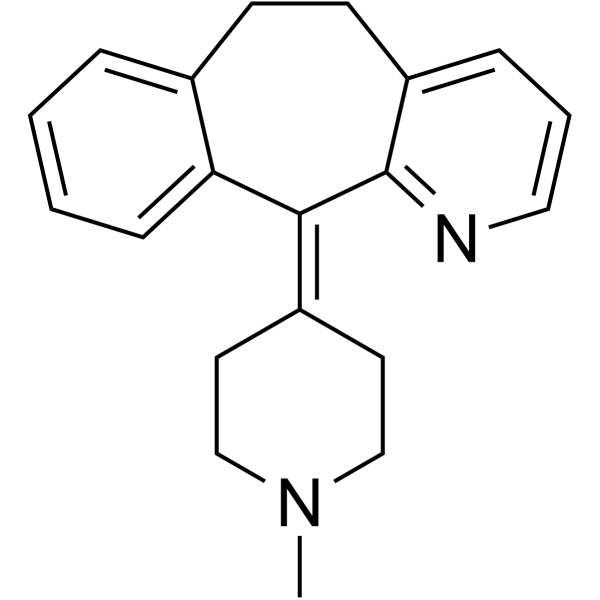
    Desloratadine
    10+ Cited Publications

    Sch34117

    Histamine Receptor TNF Receptor Leukotriene Receptor Inflammation/Immunology
    Desloratadine (Sch34117) is an orally active and selective H1 receptor antagonist (Ki=0.9 nM) with anti-inflammatory and anti-allergic activities. Desloratadine inhibits the release of histamine and LTC4 from human basophils and targets the regulatory signals of IL-4 and IL-13 production in basophils. Desloratadine significantly alleviates SAR symptoms in patients with concurrent asthma and can be used in the study of seasonal allergic rhinitis and chronic idiopathic urticaria .
    Desloratadine
  • HY-B0349
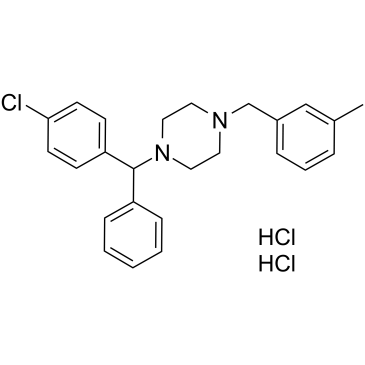
    Meclizine dihydrochloride
    4 Publications Verification

    Meclozine dihydrochloride

    Histamine Receptor Apoptosis Neurological Disease Endocrinology Cancer
    Meclizine (Meclozine) dihydrochloride, an antihistamine, reversibly inhibits the interaction of histamine at the H1 receptors. Meclizine dihydrochloride is a member of the piperazine class of H1 antagonists. Meclizine dihydrochloride is an effective anti-motion sickness agent. Meclizine dihydrochloride crosses the blood-brain barrier. Meclizine dihydrochloride can be used for the research of polyQ toxicity disorders, such as Huntington's disease. Meclizine dihydrochloride is an agonist ligand for mouse constitutive androstane receptor (CAR) and an inverse agonist for Human CAR .
    Meclizine dihydrochloride
  • HY-B1165

    p38 MAPK Checkpoint Kinase (Chk) Histamine Receptor 5-HT Receptor CDK PARP Apoptosis Cancer
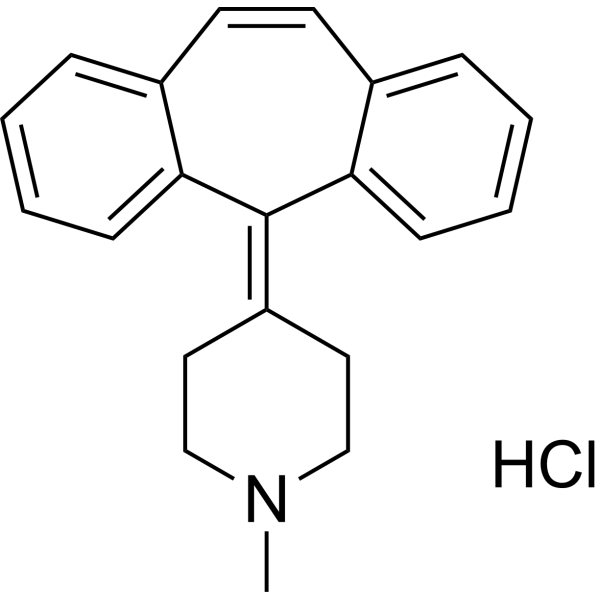
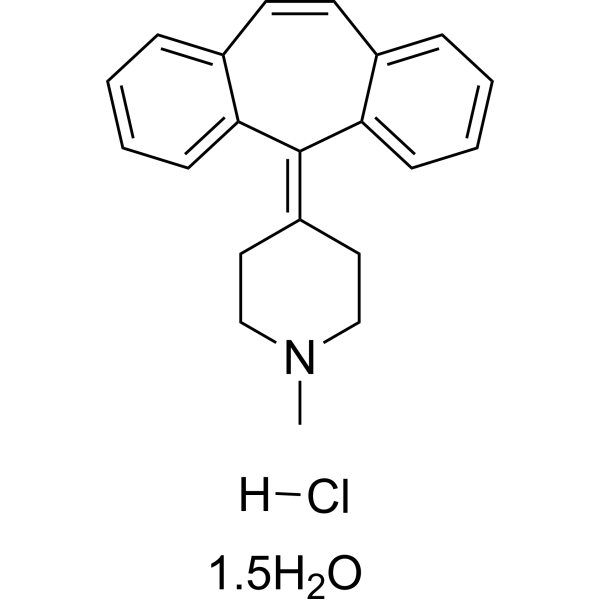
    Cyproheptadine hydrochloride sesquihydrate acts as a p38 MAP kinase activator, CHK2 activator, histamine H1 receptor inhibitor and serotonin receptor inhibitor. Cyproheptadine hydrochloride sesquihydrate mediates cell cycle arrest via G1 phase arrest, G1/S transition arrest, G0/G1 phase arrest, reduced expression of cyclins D1/D2/D3, upregulated expression of HBP1, p16, p21, p27, and decreased phosphorylation of retinoblastoma protein. Cyproheptadine hydrochloride sesquihydrate induces Apoptosis by increasing PARP and cleaved PARP, as well as activating the mitochondrial caspase pathway. Cyproheptadine hydrochloride sesquihydrate inhibits tumor growth with extremely low toxicity to normal cells. Cyproheptadine hydrochloride sesquihydrate can be used in research related to hepatocellular carcinoma, multiple myeloma and acute myeloid leukemia .
    Cyproheptadine (hydrochloride sesquihydrate)
  • HY-B0170A

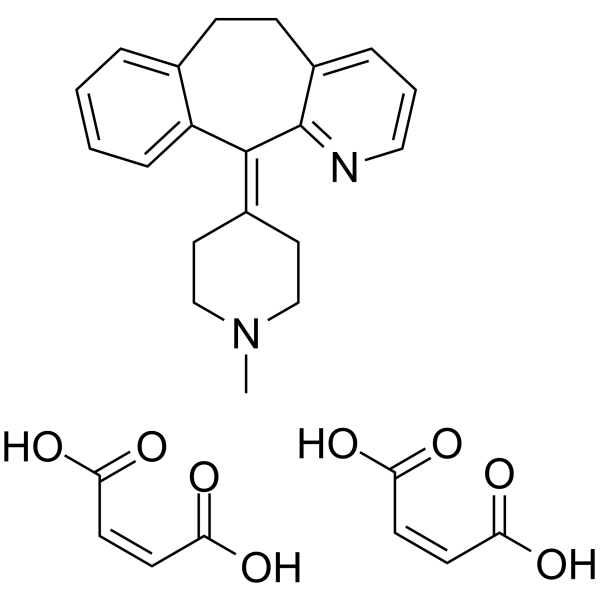
    Azatadine maleate

    Histamine Receptor SARS-CoV Inflammation/Immunology
    Azatadine dimaleate (Azatadine maleate) is an orally active histamine H1 receptor inhibitor, cetylcholine receptor inhibitor, and serotonin receptor inhibitor. Azatadine dimaleate induces sedation and exhibits topical anesthetic properties. Azatadine dimaleate can be used for the research of allergic rhinitis .
    Azatadine dimaleate
  • HY-148825

    iGluR Histamine Receptor Potassium Channel Cytochrome P450 Adrenergic Receptor Metabolic Disease Inflammation/Immunology Cancer
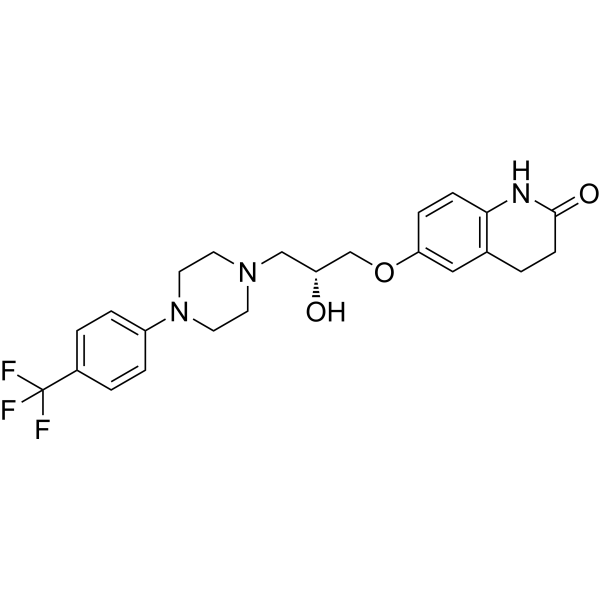
    NP10679 is a selective, pH dependent GluN2B subunit-specific N-methyl-D-aspartate (NMDA) receptor inhibitor with high oral bioavailability and good brain penetration. NP10679 inhibits GluN2B with IC50s of 23 and 142 nM at pH 6.9 and 7.6, respectively. NP10679 is a histamine H1 antagonist and a hERG channel inhibitor with IC50s of 73 and 620 nM, respectively. NP10679 is a reversible inhibitor of human liver CYP enzymes .
    NP10679
  • HY-106587A

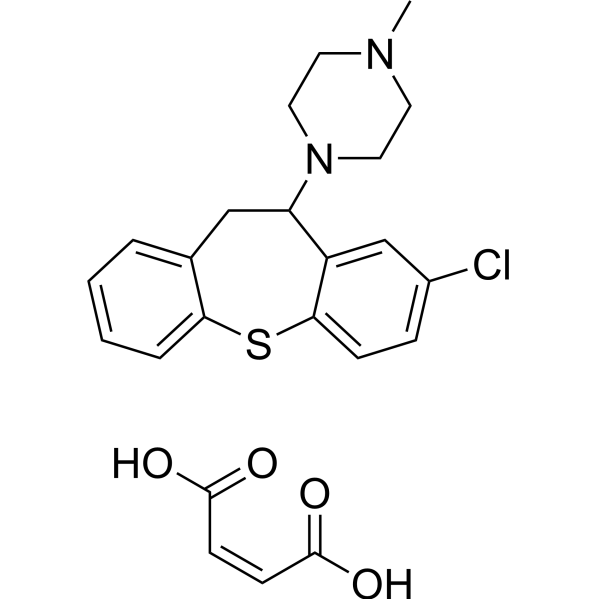
    Clorotepine maleate salt

    Drug Derivative 5-HT Receptor Neurological Disease
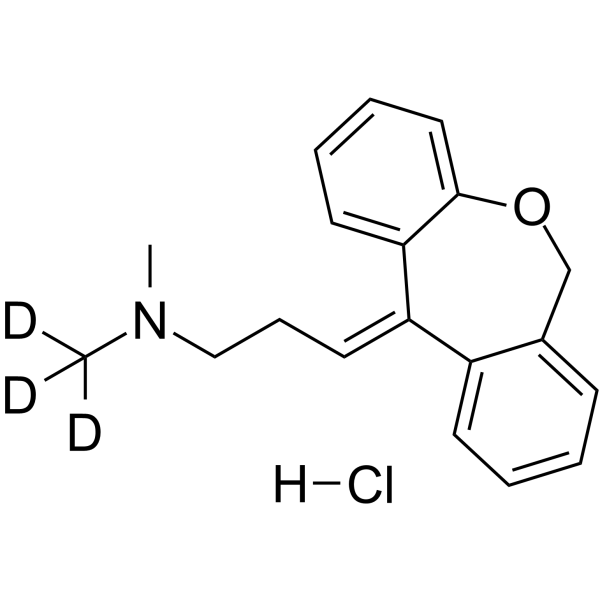
    Octoclothepin (Clorotepine) maleate salt is a D2 dopamine receptor antagonist and 5-HT2 serotonin receptor antagonist , with Ki values of 0.67 nM, 0.57 nM, and 0.19 nM for the dopamine D2, 5-HT2A, and 5-HT2C receptors, respectively. Octoclothepin maleate salt also binds to adrenergic receptors, with Ki values of 0.66 nM, 0.56 nM, and 0.77 nM for α1a, α1b, and α1d, respectively. Octoclothepin maleate salt can be used in schizophrenia research .
    Octoclothepin maleate salt
  • HY-B0349A

    Meclozine

    Histamine Receptor Apoptosis Neurological Disease Inflammation/Immunology
    Meclizine (Meclozine), an antihistamine, reversibly inhibits the interaction of histamine at the H1 receptors. Meclizine is a member of the piperazine class of H1 antagonists. Meclizine is an effective anti-motion sickness agent. Meclizine crosses the blood–brain barrier. Meclizine is an agonist ligand for mouse constitutive androstane receptor (CAR) and an inverse agonist for Human CAR. Meclizine can be used for the research of polyQ toxicity disorders, such as Huntington's disease .
    Meclizine
  • HY-101601

    TAK-427

    Histamine Receptor Inflammation/Immunology Endocrinology
    Bamirastine inhibits ligand binding to recombinant human histamine H1 receptors (rhH1R) with an IC50 value of 17.3 nM.
    Bamirastine
  • HY-B0170

    Histamine Receptor mAChR nAChR 5-HT Receptor Inflammation/Immunology
    Azatadine is an orally active histamine H1 receptor inhibitor, cetylcholine receptor inhibitor, and serotonin receptor inhibitor. Azatadine induces sedation and exhibits topical anesthetic properties. Azatadine can be used for the research of allergic rhinitis .
    Azatadine
  • HY-B0349B

    Meclozine dihydrochloride monohydrate

    Histamine Receptor Apoptosis Neurological Disease Inflammation/Immunology
    Meclizine (Meclozine) dihydrochloride monohydrate, an antihistamine, reversibly inhibits the interaction of histamine at the H1 receptors. Meclizine dihydrochloride is a member of the piperazine class of H1 antagonists. Meclizine dihydrochloride monohydrate is an effective anti-motion sickness agent. Meclizine dihydrochloride monohydrate crosses the blood-brain barrier. Meclizine dihydrochloride monohydrate is an agonist ligand for mouse constitutive androstane receptor (CAR) and an inverse agonist for Human CAR. Meclizine dihydrochloride monohydrate can be used for the research of polyQ toxicity disorders, such as Huntington's disease .
    Meclizine dihydrochloride monohydrate
  • HY-B0349R

    Meclozine dihydrochloride (Standard)

    Reference Standards Histamine Receptor Apoptosis Neurological Disease Endocrinology Cancer
    Meclizine (dihydrochloride) (Standard) is the analytical standard of Meclizine (dihydrochloride). This product is intended for research and analytical applications. Meclizine (Meclozine) dihydrochloride, an antihistamine, reversibly inhibits the interaction of histamine at the H1 receptors. Meclizine dihydrochloride is a member of the piperazine class of H1 antagonists. Meclizine dihydrochloride is an effective anti-motion sickness agent. Meclizine dihydrochloride crosses the blood-brain barrier. Meclizine dihydrochloride can be used for the research of polyQ toxicity disorders, such as Huntington's disease. Meclizine dihydrochloride is an agonist ligand for mouse constitutive androstane receptor (CAR) and an inverse agonist for Human CAR .
    Meclizine dihydrochloride (Standard)
  • HY-124626

    Histamine Receptor Inflammation/Immunology
    (R)-(+)-Mequitazine is a histamine H1 receptor antagonist that mainly undergoes bio-transformation via human liver microsomes, resulting in hydroxylated and S-oxidized metabolites. (R)-(+)-Mequitazine competitively binds to the H1 receptors in gastrointestinal, vascular, and respiratory effect cells, thus blocking the endogenous activity of histamine. (R)-(+)-Mequitazine has an inhibitory effect on CYP3A-catalyzed midazolam 1’-hydroxylase. (R)-(+)-Mequitazine can be used in the study of various allergic diseases .
    (R)-(+)-Mequitazine
  • HY-170789

    Histamine Receptor Neurological Disease
    H1R ligand-1 (Compound fragment 1) is a high-affinity ligand for the human histamine H1 receptor (H1R). H1R ligand-1 can be used as a scaffold to design and synthesize a set of derivatives to explore H1R binding kinetics .
    H1R ligand-1
  • HY-B0349S

    Meclozine-d8

    Isotope-Labeled Compounds Histamine Receptor Apoptosis Inflammation/Immunology
    Meclizine-d8 is a deuterium labeled Meclizine. Meclizine is a histamine H1 receptor antagonist and has the potential to treat nausea and motion sickness. Meclizine is an agonist ligand for mouse constitutive androstane receptor (CAR) and an inverse agonist for Human CAR .
    Meclizine-d8
  • HY-14939A

    Histamine Receptor Inflammation/Immunology
    Vapitadine hydrochloride (Compound 3a) is a selective, orally active and nonsedating antihistamine agent, which exhibits a good binding affinity with human cloned histamine H1 receptor with a Ki of 19 nM. Vapitadine hydrochloride decreases the histamine-induced lethality (ED50 is 0.056-1.2 mg/kg), antagonizes the cutaneous reactions to histamine (ED50 is 0.51-1.4 mg/kg) in rats .
    Vapitadine hydrochloride
  • HY-167897

    Histamine Receptor Neurological Disease
    UR-AK49 (compound 11) is a human histamine H1 and H2 receptor agonist. UR-AK49 has an EC50 of 23 nM in a GTPase assay with hH2R-Gsalpha fusion protein expressed in Sf9 insect cells. UR-AK49 can be used in neuro-related research .
    UR-AK49
  • HY-156049

    Amyloid-β Metabolic Disease
    MG-H1 is a receptor of advanced glycation end products (RAGE) ligand with a Kd of 4.12 nM. MG-H1 can bind to human umbilical vein endothelial cell. MG-H1 can be used for research of diabetes .
    MG-H1
  • HY-B0170AR

    Azatadine maleate (Standard)

    Histamine Receptor Reference Standards Metabolic Disease Inflammation/Immunology
    Azatadine dimaleate (Standard) is the analytical standard of Azatadine dimaleate. This product is intended for research and analytical applications. Azatadine dimaleate (Azatadine maleate) is an orally active histamine H1 receptor inhibitor, cetylcholine receptor inhibitor, and serotonin receptor inhibitor. Azatadine dimaleate induces sedation and exhibits topical anesthetic properties. Azatadine dimaleate can be used for the research of allergic rhinitis .
    Azatadine dimaleate (Standard)
  • HY-106587

    Clorotepine

    5-HT Receptor Drug Derivative Neurological Disease
    Octoclothepin (Clorotepine) is a D2 dopamine receptor antagonist and 5-HT2 serotonin receptor antagonist , with Ki values of 0.67 nM, 0.57 nM, and 0.19 nM for the dopamine D2, 5-HT2A, and 5-HT2C receptors, respectively. Octoclothepin also binds to adrenergic receptors, with Ki values of 0.66 nM, 0.56 nM, and 0.77 nM for α1a, α1b, and α1d, respectively. Octoclothepin can be used in schizophrenia research .
    Octoclothepine
  • HY-106587B

    Clorotepine dimaleate

    Dopamine Receptor 5-HT Receptor Adrenergic Receptor Neurological Disease
    Octoclothepin (Clorotepine) dimaleate is a D2 dopamine receptor antagonist and 5-HT2 serotonin receptor antagonist , with Ki values ​​of 0.67 nM, 0.57 nM, and 0.19 nM for the dopamine D2, 5-HT2A, and 5-HT2C receptors, respectively. Octoclothepin dimaleate also binds to adrenergic receptors, with Ki values ​​of 0.66 nM, 0.56 nM, and 0.77 nM for α1a, α1b, and α1d, respectively. Octoclothepin dimaleate can be used in schizophrenia research .
    Octoclothepin dimaleate
  • HY-124912

    Histamine Receptor Others
    VUF-6884 (Compound 7j) is a histamine receptor (Histamine Receptor) ligand with activity toward human H4R and H1R. Its pEC50 and pKi values against human H4R are 7.70 and 7.55, respectively, while those against human H1R are 8.17 and 8.11, respectively. VUF-6884 competitively binds to the orthosteric binding site of human H4R to displace histamine, and exhibits inverse agonist activity at human H1R .
    VUF-6884
  • HY-182736

    CCR Histamine Receptor Calcium Channel Inflammation/Immunology
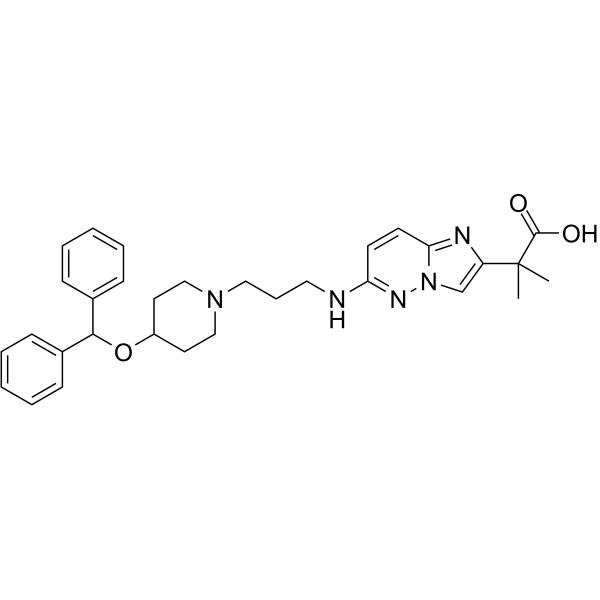
    YM-344484 is an orally active dual antagonist of chemokine CCR3 receptor and histamine histamine H1 receptor. YM-344484 inhibits ligand-induced Ca 2+ influx, chemotaxis of CCR3-expressing cells, histamine-induced Ca 2+ influx, increased vascular permeability and eosinophil accumulation. YM-344484 suppresses vascular permeability and inhibits eosinophil infiltration in a mouse asthma model. YM-344484 can be used in research related to asthma, allergic rhinitis and atopic dermatitis .
    YM-344484

Inquiry Online

Your information is safe with us. * Required Fields.

Salutation


Country or Region *

Applicant Name *


Organization Name *

Department *


Email Address *


Product Name *

Cat. No.


Requested quantity *

Phone Number *


Remarks

Inquiry Online

Inquiry Information

Product Name:
Cat. No.:
Quantity:
MCE Japan Authorized Agent:

