



1668-19-5
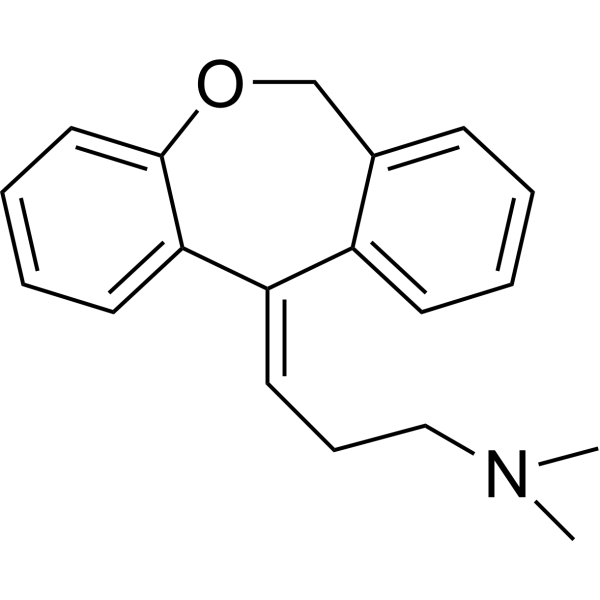
Chemical Structure
Doxepin
- CAS No.: 1668-19-5
- Formula:C19H21NO
- Molecular Weight:279.38
IUPAC Name: (E)-3-(dibenzo[b,e]oxepin-11(6H)-ylidene)-N,N-dimethylpropan-1-amine
InChIKey: ODQWQRRAPPTVAG-GZTJUZNOSA-N
SMILES: CN(C)CC/C=C1C2=CC=CC=C2OCC3=CC=CC=C/13
Biological Activity: Doxepin is an orally active tricyclic antidepressant capable of crossing the blood-brain barrier. Doxepin enhances the expression of PSD-95 and synapsin-1 via the PI3K/AKT/mTOR signaling pathway and is metabolized in vivo into DesmethylDoxepin (NorDoxepin) (HY-100046). Doxepin binds to the serotonin transporter (SERT) and the norepinephrine transporter (NET), with Kd values of 68 nM and 29.5 nM, respectively. Doxepin can be used in research concerning various conditions, including depression, anxiety, obesity, and atopic dermatitis[1][2][3][4][5].
| Cat. No. | Product Name | Purity | Description | Pricing | |||||||||||||||||||
|---|---|---|---|---|---|---|---|---|---|---|---|---|---|---|---|---|---|---|---|---|---|---|---|
|
|
Doxepin | 99.66% | Doxepin is an orally active tricyclic antidepressant capable of crossing the blood-brain barrier. Doxepin enhances the expression of PSD-95 and synapsin-1 via the PI3K/AKT/mTOR signaling pathway and is metabolized in vivo into DesmethylDoxepin (NorDoxepin) (HY-100046). Doxepin binds to the serotonin transporter (SERT) and the norepinephrine transporter (NET), with Kd values of 68 nM and 29.5 nM, respectively. Doxepin can be used in research concerning various conditions, including depression, anxiety, obesity, and atopic dermatitis. | ||||||||||||||||||||
|
loading...
/
|
|||||||||||||||||||||||
|
|
Doxepin-d3 | Doxepin-d3 is the deuterated-labeled Doxepin (HY-B0725A). Doxepin is an orally active, blood-brain barrier penetrant tricyclic antidepressant with multiple activities including hypnosis, sedation, analgesia and vasodilation. Doxepin enhances the expression of PSD-95 and synapsin 1 via the PI3K/AKT/mTOR signaling pathway, and is metabolized to Desmethyldoxepin in vivo. Doxepin can be used in research related to various diseases such as depression, anxiety, obesity and atopic dermatitis. | |||||||||||||||||||||
|
loading...
/
|
|||||||||||||||||||||||
-
Similarity Score 1.00
 HY-B0725B(Z)-Doxepin
-
Similarity Score 0.98
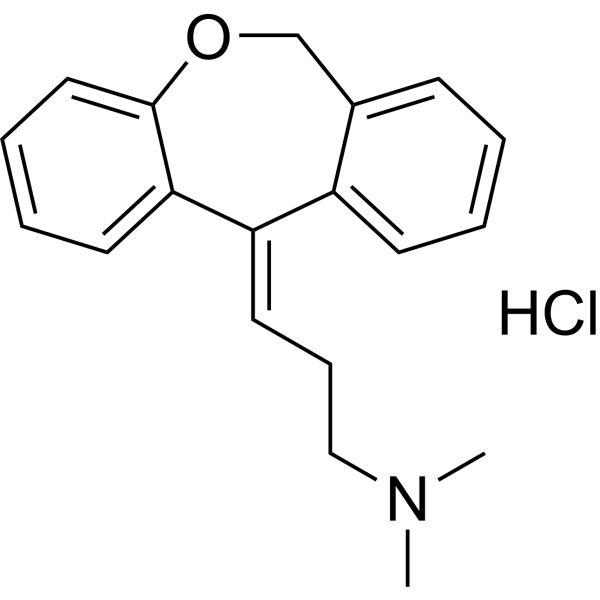 HY-B0725RDoxepin Hydrochloride (Standard)
-
Similarity Score 0.88
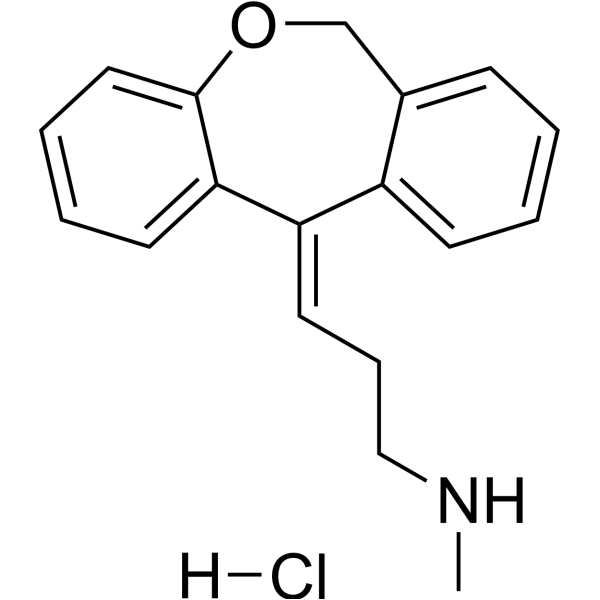 HY-100046Nordoxepin hydrochloride
-
Similarity Score 0.88
 HY-Z4470Doxepin impurity 1 hydrochloride
-
Similarity Score 0.86
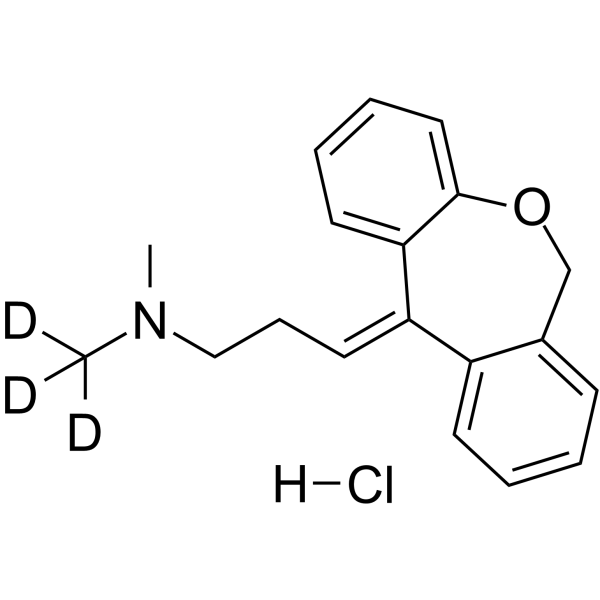 HY-B0725SDoxepin-d3 hydrochloride
-
Similarity Score 0.83
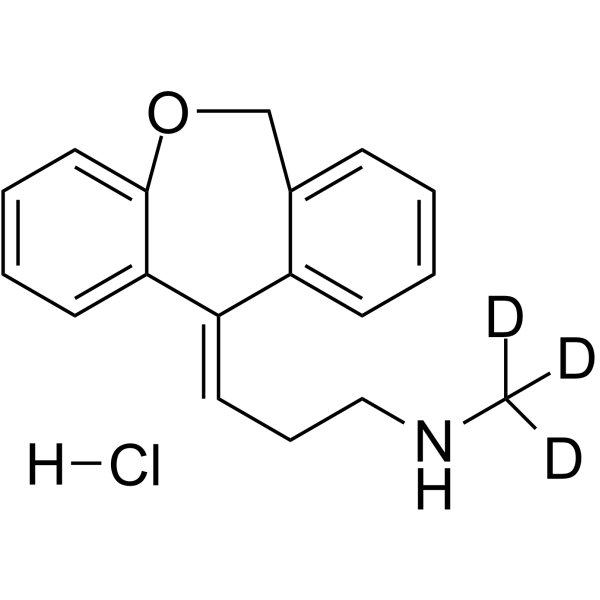 HY-133771ASNordoxepin-d3 hydrochloride
-
Similarity Score 0.78
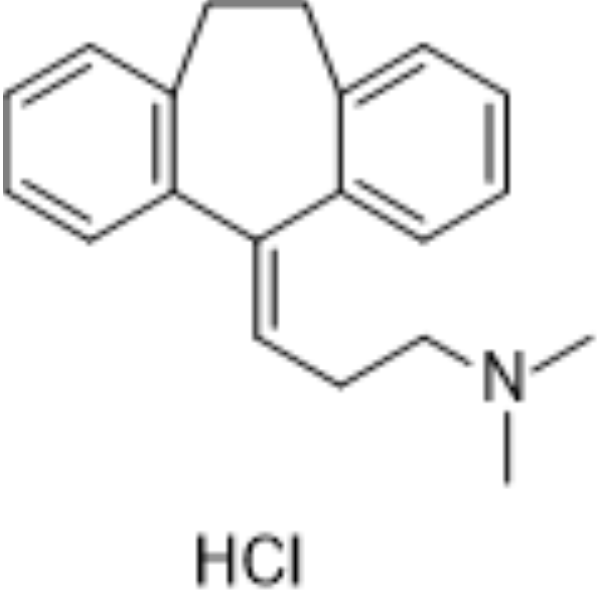 HY-B0527AAmitriptyline hydrochloride
-
Similarity Score 0.75
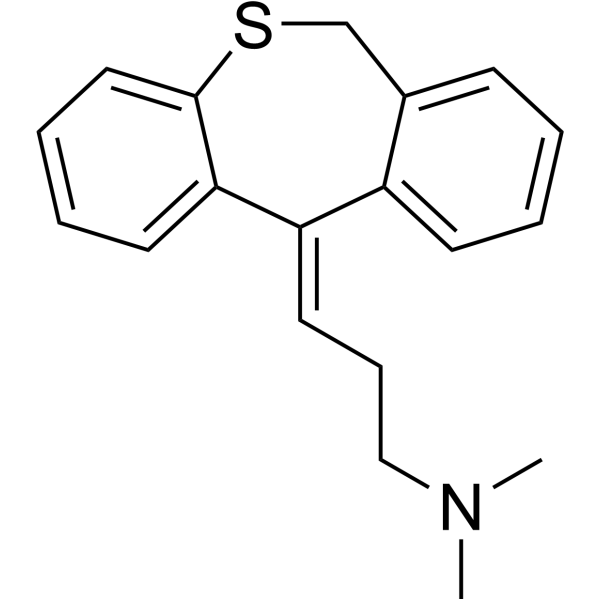 HY-12394Dothiepin
-

Explore the MedChemAI to find more analogs


References
- [1]. Bu J. Mechanism underlying the effects of doxepin on β-amyloid -induced memory impairment in rats. Iran J Basic Med Sci. 2017 Sep;20(9):1044-1049. [Content Brief]
- [2]. Pinder R M, et al. Doxepin Up-to-Date: A Review of its Pharmacological Properties and Therapeutic Efficacy with Particular Reference to Depression. Drugs, 1977, 13: 161-218.
- [3]. Chang GR, et al. Doxepin Exacerbates Renal Damage, Glucose Intolerance, Nonalcoholic Fatty Liver Disease, and Urinary Chromium Loss in Obese Mice. Pharmaceuticals (Basel, Switzerland). 2021 Mar 16;14(3):267.
- [4]. Sun XY, et al. Characterization of the anticonvulsant activity of doxepin in various experimental seizure models in mice. Pharmacological reports : PR. 2009;61(2):245-51.
- [5]. Tatsumi M, et al. Pharmacological profile of antidepressants and related compounds at human monoamine transporters. Eur J Pharmacol. 1997 Dec 11;340(2-3):249-58.



