1. Search Result
Search Result
Pathways Recommended: Protein Tyrosine Kinase/RTK
Results for "

human MET kinases

" in MedChemExpress (MCE) Product Catalog:

25

Inhibitors & Agonists

1

Fluorescent Dyes

2

Inhibitory Antibodies

1

Oligonucleotides

Targets Recommended:
Cat. No. Product Name Target Research Areas Chemical Structure
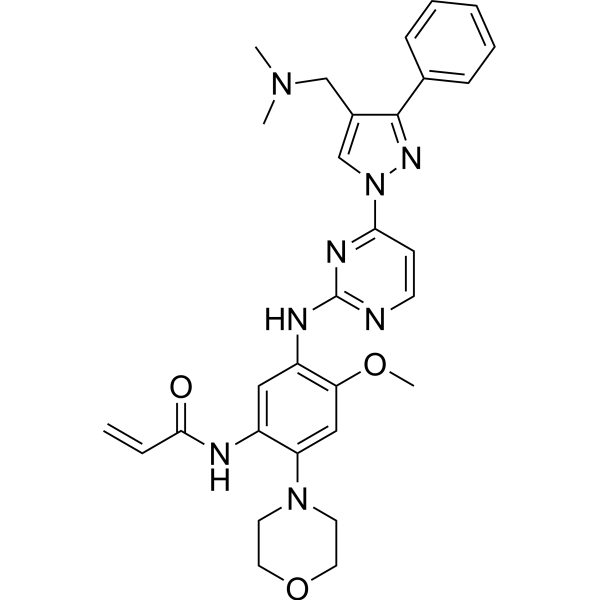
  • HY-109061
    Lazertinib
    3 Publications Verification

    YH25448; GNS-1480

    Apoptosis Akt TRP Channel EGFR ERK Infection Neurological Disease Metabolic Disease Cancer
    Lazertinib (YH25448; GNS-1480) is an orally active, blood-brain barrier permeable third-generation EGFR tyrosine kinase inhibitor, as well as an ABCB1/ABCG2 inhibitor and a TRPA1 activator. Lazertinib exhibits IC50 values of 0.4 mM and 0.2 mM against human ABCB1 and ABCG2, respectively. By inhibiting mutant EGFR signaling, EGFR phosphorylation and the downstream ERK/AKT pathway, as well as upregulating surface expression of EGFR/MET, Lazertinib induces cell cycle arrest, apoptosis, spontaneous calcium responses, hyperexcitability of dorsal root ganglion (DRG) neurons, and TRPA1-dependent pain-like behaviors. Lazertinib competitively binds to the substrate-binding sites of ABCB1/ABCG2, stimulates their ATPase activity without altering their expression or plasma membrane localization, thereby enhancing ADCC activity, acting as a chemosensitizer, and reversing ABCB1-mediated multidrug resistance. It exerts antitumor activity as a single agent or in combination with other drugs. Lazertinib is applicable to research related to non-small cell lung cancer, multidrug-resistant cancers, and paresthesia .
    Lazertinib
  • HY-109061B
    Lazertinib mesylate
    3 Publications Verification

    YH25448 mesylate; GNS-1480 mesylate

    TRP Channel EGFR Akt ERK Apoptosis Cancer
    Lazertinib (YH25448; GNS-1480) mesylate is an orally active, blood-brain barrier permeable third-generation EGFR tyrosine kinase inhibitor, as well as an ABCB1/ABCG2 inhibitor and a TRPA1 activator. Lazertinib mesylate exhibits IC50 values of 0.4 mM and 0.2 mM against human ABCB1 and ABCG2, respectively. By inhibiting mutant EGFR signaling, EGFR phosphorylation and the downstream ERK/AKT pathway, as well as upregulating surface expression of EGFR/MET, Lazertinib mesylate induces cell cycle arrest, apoptosis, spontaneous calcium responses, hyperexcitability of dorsal root ganglion (DRG) neurons, and TRPA1-dependent pain-like behaviors. Lazertinib mesylate competitively binds to the substrate-binding sites of ABCB1/ABCG2, stimulates their ATPase activity without altering their expression or plasma membrane localization, thereby enhancing ADCC activity, acting as a chemosensitizer, and reversing ABCB1-mediated multidrug resistance. It exerts antitumor activity as a single agent or in combination with other drugs. Lazertinib mesylate is applicable to research related to non-small cell lung cancer, multidrug-resistant cancers, and paresthesia .
    Lazertinib mesylate
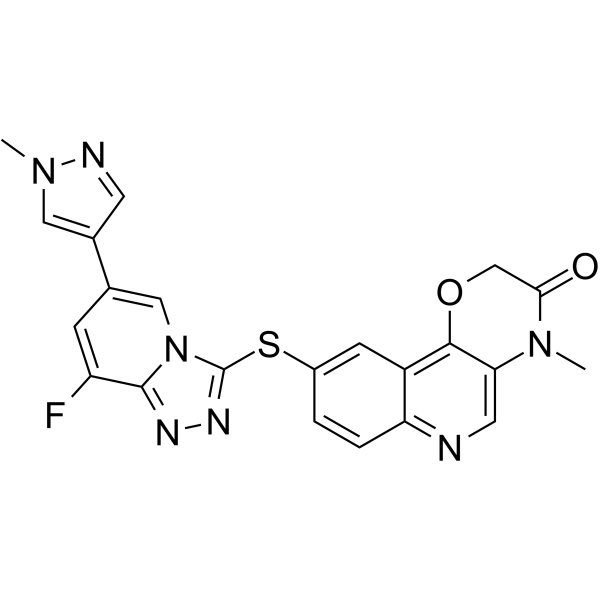
  • HY-12017
    PF-04217903
    2 Publications Verification

    c-Met/HGFR Cancer
    PF-04217903 is a potent ATP-competitive c-Met kinase inhibitor with Ki of 4.8 nM for human c-Met. PF-04217903 shows more than 1,000-fold selectivity relative to 208 kinases. Antiangiogenic properties .
    PF-04217903
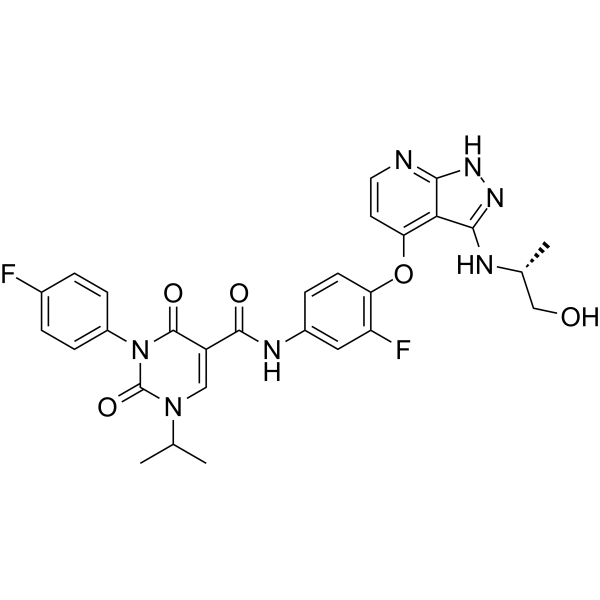
  • HY-147218

    ARRY-067

    TAM Receptor Cancer
    PF-07265807 (ARRY-067) is a kinase inhibitor with primary targets AXL, MERTK, and TYRO3. PF-07265807 acts as an immunomodulator that cross-activates CD8 + T cells by enhancing dendritic cell function. PF-07265807 blocks downstream signal transduction of AXL and MERTK, and inhibits the proliferation and migration of tumor cells with high expression of these two kinases. PF-07265807 is applicable to research related to advanced or metastatic solid tumors, such as colorectal cancer .
    PF-07265807
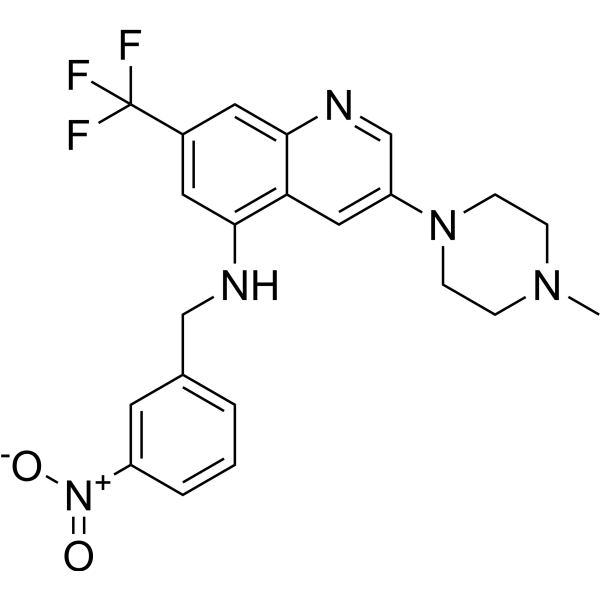
  • HY-147259

    c-Met/HGFR Cancer
    Dalmelitinib is an orally active selective c-Met kinase inhibitor (IC50: 2.9 nM) that binds to the ATP-binding region of c-Met. Dalmelitinib induces the phosphorylation of MET, partially or completely inhibits the phosphorylation of AKT and ERK. Dalmelitinib potently inhibits cancer cell (c-Met oncogene amplification) proliferation, and is used for the research of cancers like human non-small cell lung cancer (NSCLC) .
    Dalmelitinib
  • HY-P990947

    AZD9592 Antibody

    ADC Antibody EGFR Cancer
    Tilatamig (AZD9592 Antibody) is a human antibody of the Ig (G1-κ_G1-λ2) subtype that targets EGFR/MET. Tilatamig conjugates with the Top1 inhibitor AZ14170133 (HY-145399) to form the antibody-drug conjugate (ADC) Tilatamig samrotecan (HY-171124) (AZD9592). Tilatamig accurately targets NSCLC models including EGFR-mutant, EGFR-wildtype, and EGFR tyrosine kinase inhibitor-treated ones, and its activity correlates with high expression of EGFR, c-MET and SLFN11. Tilatamig is available for in vivo anti-tumor studies in patient-derived xenograft models of non-small cell lung cancer (NSCLC) and head and neck squamous cell carcinoma (HNSCC) .
    Tilatamig
  • HY-E70758

    c-Met/HGFR Cancer
    Mesenchymal-to-epithelial transition (MET) is a receptor tyrosine kinase for hepatocyte growth factor (HGF). MET overactivation is strongly associated with angiogenesis, cellular motility, growth, and invasion. Aberrant MET signaling can drive tumorigenesis in several cancer types through various molecular mechanisms, including MET amplification, MET exon 14 skipping mutation, MET overexpression, and MET fusions. MET Y1235D is a mutant of MET. MET Y1235D Recombinant Human Active Protein Kinase is a recombinant MET Y1235D protein that can be used to study MET Y1235D-related functions .
    MET Y1235D Recombinant Human Active Protein Kinase
  • HY-E70751

    c-Met/HGFR Cancer
    Mesenchymal-to-epithelial transition (MET) is a receptor tyrosine kinase for hepatocyte growth factor (HGF). MET overactivation is strongly associated with angiogenesis, cellular motility, growth, and invasion. Aberrant MET signaling can drive tumorigenesis in several cancer types through various molecular mechanisms, including MET amplification, MET exon 14 skipping mutation, MET overexpression, and MET fusions. MET G1163R is a mutant of MET. MET G1163R Recombinant Human Active Protein Kinase is a recombinant MET G1163R protein that can be used to study MET G1163R-related functions .
    MET G1163R Recombinant Human Active Protein Kinase
  • HY-12017A
    PF-04217903 mesylate
    2 Publications Verification

    c-Met/HGFR Cancer
    PF-04217903 mesylate is a potent ATP-competitive c-Met kinase inhibitor with Ki of 4.8 nM for human c-Met. PF-04217903 mesylate shows more than 1,000-fold selectivity relative to 208 kinases. Antiangiogenic properties .
    PF-04217903 mesylate
  • HY-171191

    Antibody-Drug Conjugates (ADCs) Microtubule/Tubulin c-Met/HGFR Cancer
    REGN5093-M114 is a bispecific antibody-drug conjugate (ADC) that targets two epitopes of the MET receptor tyrosine kinase inhibits the proliferation of NSCLC cells, exhibits antitumor efficacy in mouse models. REGN5093-M114 is composed of the human monoclonal anti-MET antibody Davutamig (HY-P990073) and the tubulin-inhibiting linker-payload (HY-148528) .
    REGN5093-M114
  • HY-E70754

    c-Met/HGFR Cancer
    Mesenchymal-to-epithelial transition (MET) is a receptor tyrosine kinase for hepatocyte growth factor (HGF). MET overactivation is strongly associated with angiogenesis, cellular motility, growth, and invasion. Aberrant MET signaling can drive tumorigenesis in several cancer types through various molecular mechanisms, including MET amplification, MET exon 14 skipping mutation, MET overexpression, and MET fusions. MET Y1230A is a mutant of MET. MET Y1230A Recombinant Human Active Protein Kinase is a recombinant MET Y1230A protein that can be used to study MET Y1230A-related functions .
    MET Y1230A Recombinant Human Active Protein Kinase
  • HY-E70756

    c-Met/HGFR Cancer
    Mesenchymal-to-epithelial transition (MET) is a receptor tyrosine kinase for hepatocyte growth factor (HGF). MET overactivation is strongly associated with angiogenesis, cellular motility, growth, and invasion. Aberrant MET signaling can drive tumorigenesis in several cancer types through various molecular mechanisms, including MET amplification, MET exon 14 skipping mutation, MET overexpression, and MET fusions. MET Y1230D is a mutant of MET. MET Y1230D Recombinant Human Active Protein Kinase is a recombinant MET Y1230D protein that can be used to study MET Y1230D-related functions .
    MET Y1230D Recombinant Human Active Protein Kinase
  • HY-E70749

    c-Met/HGFR Cancer
    Mesenchymal-to-epithelial transition (MET) is a receptor tyrosine kinase for hepatocyte growth factor (HGF). MET overactivation is strongly associated with angiogenesis, cellular motility, growth, and invasion. Aberrant MET signaling can drive tumorigenesis in several cancer types through various molecular mechanisms, including MET amplification, MET exon 14 skipping mutation, MET overexpression, and MET fusions. MET D1228N is a mutant of MET. MET D1228N Recombinant Human Active Protein Kinase is a recombinant MET D1228N protein that can be used to study MET D1228N-related functions .
    MET D1228N Recombinant Human Active Protein Kinase
  • HY-E70748

    c-Met/HGFR Cancer
    Mesenchymal-to-epithelial transition (MET) is a receptor tyrosine kinase for hepatocyte growth factor (HGF). MET overactivation is strongly associated with angiogenesis, cellular motility, growth, and invasion. Aberrant MET signaling can drive tumorigenesis in several cancer types through various molecular mechanisms, including MET amplification, MET exon 14 skipping mutation, MET overexpression, and MET fusions. MET D1228H is a mutant of MET. MET D1228H Recombinant Human Active Protein Kinase is a recombinant MET D1228H protein that can be used to study MET D1228H-related functions .
    MET D1228H Recombinant Human Active Protein Kinase
  • HY-E70755

    c-Met/HGFR Cancer
    Mesenchymal-to-epithelial transition (MET) is a receptor tyrosine kinase for hepatocyte growth factor (HGF). MET overactivation is strongly associated with angiogenesis, cellular motility, growth, and invasion. Aberrant MET signaling can drive tumorigenesis in several cancer types through various molecular mechanisms, including MET amplification, MET exon 14 skipping mutation, MET overexpression, and MET fusions. MET Y1230C is a mutant of MET. MET Y1230C Recombinant Human Active Protein Kinase is a recombinant MET Y1230C protein that can be used to study MET Y1230C-related functions .
    MET Y1230C Recombinant Human Active Protein Kinase
  • HY-E70752

    c-Met/HGFR Cancer
    Mesenchymal-to-epithelial transition (MET) is a receptor tyrosine kinase for hepatocyte growth factor (HGF). MET overactivation is strongly associated with angiogenesis, cellular motility, growth, and invasion. Aberrant MET signaling can drive tumorigenesis in several cancer types through various molecular mechanisms, including MET amplification, MET exon 14 skipping mutation, MET overexpression, and MET fusions. MET L1195V is a mutant of MET. MET L1195V Recombinant Human Active Protein Kinase is a recombinant MET L1195V protein that can be used to study MET L1195V-related functions .
    MET L1195V Recombinant Human Active Protein Kinase
  • HY-E70757

    c-Met/HGFR Cancer
    Mesenchymal-to-epithelial transition (MET) is a receptor tyrosine kinase for hepatocyte growth factor (HGF). MET overactivation is strongly associated with angiogenesis, cellular motility, growth, and invasion. Aberrant MET signaling can drive tumorigenesis in several cancer types through various molecular mechanisms, including MET amplification, MET exon 14 skipping mutation, MET overexpression, and MET fusions. MET Y1230H is a mutant of MET. MET Y1230H Recombinant Human Active Protein Kinase is a recombinant MET Y1230H protein that can be used to study MET Y1230H-related functions .
    MET Y1230H Recombinant Human Active Protein Kinase
  • HY-E70753

    c-Met/HGFR Cancer
    Mesenchymal-to-epithelial transition (MET) is a receptor tyrosine kinase for hepatocyte growth factor (HGF). MET overactivation is strongly associated with angiogenesis, cellular motility, growth, and invasion. Aberrant MET signaling can drive tumorigenesis in several cancer types through various molecular mechanisms, including MET amplification, MET exon 14 skipping mutation, MET overexpression, and MET fusions. MET M1250T is a mutant of MET. MET M1250T Recombinant Human Active Protein Kinase is a recombinant MET M1250T protein that can be used to study MET M1250T-related functions .
    MET M1250T Recombinant Human Active Protein Kinase
  • HY-124267

    SOMG-833

    c-Met/HGFR Cancer
    Zgwatinib (SOMG-833) is a potent, selective, and ATP-competitive c-MET inhibitor, with an IC50 of 0.93 nM against c-MET, over 10,000-fold more potent compared with 19 tyrosine kinases (including c-MET family members and highly homologous kinases). Zgwatinib potently inhibits c-MET-driven cell proliferation. Zgwatinib as a potential candidate agent for c-MET-driven human cancers research .
    Zgwatinib
  • HY-12017B

    c-Met/HGFR Cancer
    PF-04217903 phenolsulfonate is a potent ATP-competitive c-Met kinase inhibitor with Ki of 4.8 nM for human c-Met. PF-04217903 phenolsulfonate shows more than 1,000-fold selectivity relative to 208 kinases. Antiangiogenic properties .
    PF-04217903 phenolsulfonate
  • HY-174581

    mRNA Cancer
    Human MET mRNA encodes the human MET proto-oncogene, receptor tyrosine kinase (MET) protein, a member of the receptor tyrosine kinase family. MET regulates many physiological processes including proliferation, scattering, morphogenesis and survival.
    Human MET mRNA
  • HY-E70750

    c-Met/HGFR Cancer
    Mesenchymal-to-epithelial transition (MET) is a receptor tyrosine kinase for hepatocyte growth factor (HGF). MET overactivation is strongly associated with angiogenesis, cellular motility, growth, and invasion. Aberrant MET signaling can drive tumorigenesis in several cancer types through various molecular mechanisms, including MET amplification, MET exon 14 skipping mutation, MET overexpression, and MET fusions. MET F1200I is a mutant of MET. MET F1200I Recombinant Human Active Protein Kinase is a recombinant MET F1200I protein that can be used to study MET F1200I-related functions .
    MET F1200I Recombinant Human Active Protein Kinase
  • HY-P992396

    c-Met/HGFR Cancer
    KTN0073 is a high-affinity MET receptor tyrosine kinase inhibitor. KTN0073 can be used in studies related to non-small cell lung cancer and human cancers driven by HGF, MET amplification, or exon 14 mutation. KTN0073 binds to the Sema/PSI domain to block the HGF-MET interaction, and induces ubiquitination and degradation of oncogenic MET receptors via an HGF-independent pathway, thereby inhibiting MET-dependent signal transduction. KTN0073 exhibits significant antitumor activity in vivo, and its tumor suppressive activity is superior to that of the IgG1 subtype when grafted to the IgG2 constant region .
    KTN0073
  • HY-182763

    EGFR Raf Caspase Apoptosis Bcl-2 Family Cancer
    EGFR/BRAFV600E-IN-7 is a dual EGFR and BRAF V600E kinase inhibitor with human IC50 values of 0.12 μM, 0.80 μM, 1.20 μM for EGFR and 0.05 μM, 0.22 μM, 0.78 μM for BRAF V600E.EGFR/BRAFV600E-IN-7 interacts with key ATP-binding site residues of EGFR and BRAF V600E, including hydrogen bonding with EGFR Met769 and BRAF V600E Cys532.EGFR/BRAFV600E-IN-7 induces apoptosis via caspase-3/8/9 activation, modulates Bax and Bcl-2 expression, scavenges free radicals, and exhibits antiproliferative activity against human cancer cell lines.EGFR/BRAFV600E-IN-7 displays drug-likeness with no PAINS/Brenk structural alerts per in silico predictions.EGFR/BRAFV600E-IN-7 can be used for the research of colon cancer, pancreatic cancer, lung cancer, breast cancer .
    EGFR/BRAFV600E-IN-7
  • HY-109061A

    YH25448 mesylate hydrate; GNS-1480 mesylate hydrate

    Apoptosis Akt TRP Channel EGFR ERK Cancer
    Lazertinib (YH25448; GNS-1480) mesylate hydrate is an orally active, blood-brain barrier permeable third-generation EGFR tyrosine kinase inhibitor, as well as an ABCB1/ABCG2 inhibitor and a TRPA1 activator. Lazertinib mesylate hydrate exhibits IC50 values of 0.4 mM and 0.2 mM against human ABCB1 and ABCG2, respectively. By inhibiting mutant EGFR signaling, EGFR phosphorylation and the downstream ERK/AKT pathway, as well as upregulating surface expression of EGFR/MET, Lazertinib mesylate hydrate induces cell cycle arrest, apoptosis, spontaneous calcium responses, hyperexcitability of dorsal root ganglion (DRG) neurons, and TRPA1-dependent pain-like behaviors. Lazertinib mesylate hydrate competitively binds to the substrate-binding sites of ABCB1/ABCG2, stimulates their ATPase activity without altering their expression or plasma membrane localization, thereby enhancing ADCC activity, acting as a chemosensitizer, and reversing ABCB1-mediated multidrug resistance. It exerts antitumor activity as a single agent or in combination with other drugs. Lazertinib mesylate hydrate is applicable to research related to non-small cell lung cancer, multidrug-resistant cancers, and paresthesia .
    Lazertinib mesylate hydrate

Inquiry Online

Your information is safe with us. * Required Fields.

Salutation


Country or Region *

Applicant Name *


Organization Name *

Department *


Email Address *


Product Name *

Cat. No.


Requested quantity *

Phone Number *


Remarks

Inquiry Online

Inquiry Information

Product Name:
Cat. No.:
Quantity:
MCE Japan Authorized Agent:

