1. Search Result
Search Result
Pathways Recommended: Membrane Transporter/Ion Channel
Results for "

hydrophobic channel

" in MedChemExpress (MCE) Product Catalog:

10

Inhibitors & Agonists

1

Fluorescent Dyes

3

Peptides

1

Click Chemistry

Cat. No. Product Name Target Research Areas Chemical Structure
  • HY-P5712
    Gramicidin S
    1 Publications Verification

    Gramicidin soviet

    Antibiotic Bacterial Na+/K+ ATPase Infection
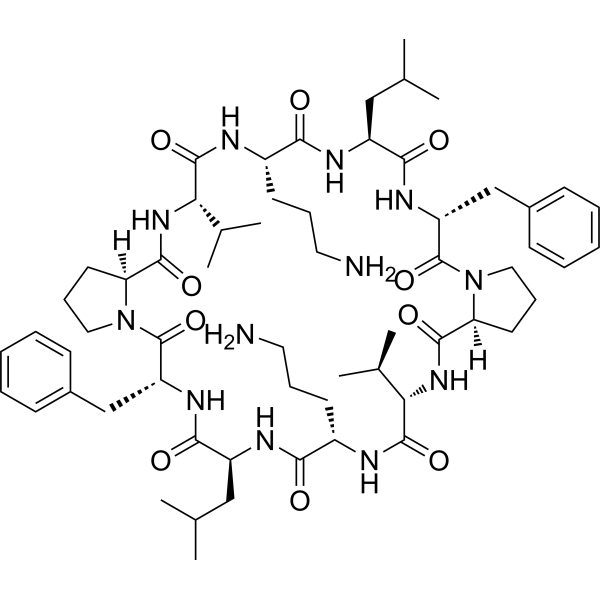
    Gramicidin S (Gramicidin soviet) is a cationic cyclic peptide antibiotic that selectively targets bacterial cell membranes and has anticancer activity. Gramicidin S also exerts antibacterial activity by destroying membrane integrity and interfering with membrane protein function. Gramicidin S inserts into the phospholipid bilayer through hydrophobic amino acid residues, specifically binds to negatively charged membrane lipids and disrupts membrane structure, thereby inhibiting cell division and cell wall synthesis, and ultimately causing bacterial death. Gramicidin S also inhibits ion channels, with IC50s of 41 μM, 24 μM, and 3 μM for Na +/K +-ATPase, tobacco leaf plasma membrane Mg 2+/K +-ATPase, and rat heart plasma membrane Ca 2+-ATPase, respectively .
    Gramicidin S
  • HY-P2324
    Gramicidin A
    1 Publications Verification

    Bacterial HIF/HIF Prolyl-Hydroxylase Antibiotic Infection Cancer
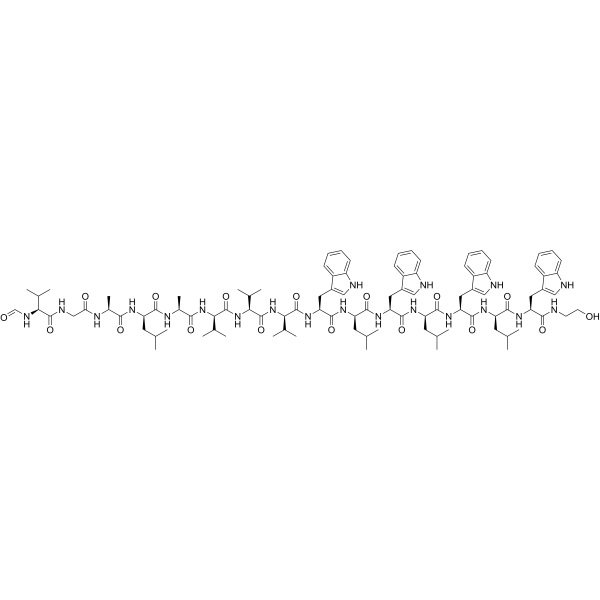
    Gramicidin A is a peptide component of gramicidin, an antibiotic mixture originally isolated from B. brevis. Gramicidin A is a highly hydrophobic channel-forming ionophore that forms channels in model membranes that are permeable to monovalent cations. Gramicidin A induces degradation of hypoxia inducible factor 1 α (HIF-1α) .
    Gramicidin A
  • HY-D1543

    DNA Stain Infection
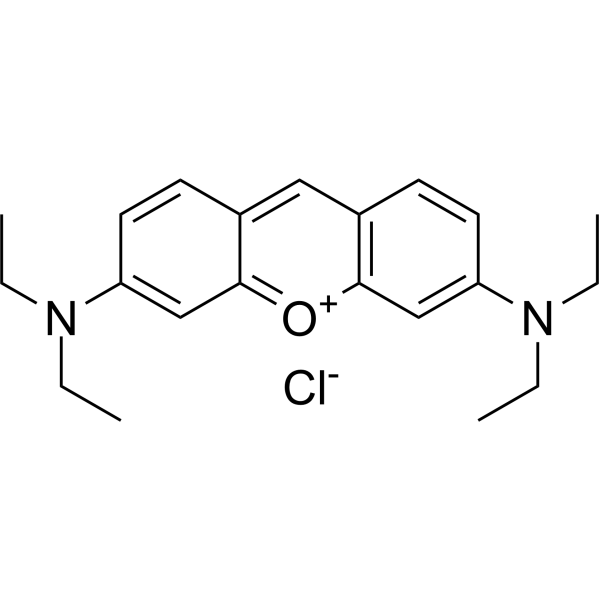
    Pyronin B is an organic cationic dye used for the staining of bacteria, mycobacteria and ribonucleic acids. Pyronin B is also used as a small hydrophobic (SH) protein channel inhibitor .
    Pyronin B
  • HY-172140

    Potassium Channel Neurological Disease
    Ebio3 is a selective potassium channel (KCNQ2) inhibitor with an IC50 of 1.2 nM. Ebio3 binds to the KCNQ2 channel through its hydrophobic tail, causing the S6 helix to move inward, which leads to the closure of the inner gate. The inhibitory effect of Ebio3 is also effective in pathogenic mutants of KCNQ2 (such as R75C and I238L), where it can inhibit outward currents by more than 80%. Ebio3 is expected to be used in the research of neurological diseases such as epilepsy .
    Ebio3
  • HY-P2324A

    Antibiotic Bacterial Infection
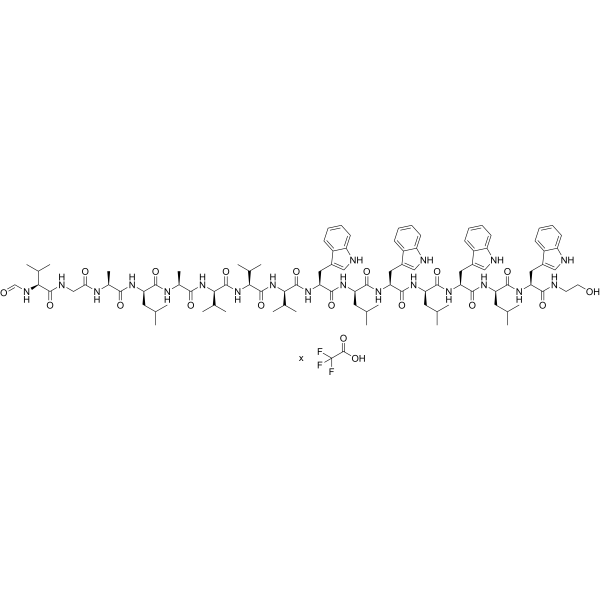
    Gramicidin A (TFA) is a peptide component of gramicidin, an antibiotic mixture originally isolated from B. brevis. Gramicidin A (TFA) is a highly hydrophobic channel-forming ionophore that forms channels in model membranes that are permeable to monovalent cations. Gramicidin A (TFA) induces degradation of hypoxia inducible factor 1 α (HIF-1α) .
    Gramicidin A TFA
  • HY-126230

    Endogenous Metabolite Others
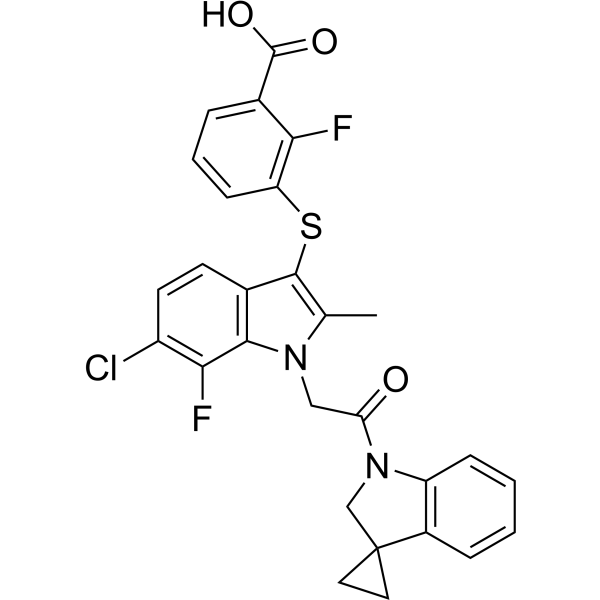
    PAT-494 is an ATX inhibitor with significant activity in biochemical and plasma assays. PAT-494 can reduce LPA levels in rat plasma through oral administration. The structure-activity relationship study of PAT-494 shows that its binding mode with ATX is novel and it can effectively occupy the hydrophobic pockets and channels of ATX .
    PAT-494
  • HY-120646

    PD-1/PD-L1 Others
    BMS-242 is a small molecule PD-1/PD-L1 inhibitor with the activity of inhibiting the PD-1/PD-L1 interaction. BMS-242 can bind to the hydrophobic channel pocket between PD-L1 molecules, inhibit the PD-1/PD-L1 immune checkpoint pathway, and provide a new way for cancer inhibition.
    BMS-242
  • HY-126229

    Phosphodiesterase (PDE) Cancer
    PAT-078 is a type II autotaxin (ATX) inhibitor. PAT-078 mainly occupies the hydrophobic pocket of ATX, blocks the bottleneck region between the hydrophobic channel and the catalytic site, and does not interact with the zinc ion at the catalytic site .
    PAT-078
  • HY-181128

    Potassium Channel Neurological Disease
    QO-83, Retigabine analogue, is a voltage-gated potassium channel KCNQ2 (Kv7.2) activator with an EC50 of 0.56 μM. QO-83 binds to a single hydrophobic pocket of KCNQ2-CaM complex in closed conformation. QO-83 induces a negative shift in the voltage-dependent activation curve of KCNQ2 channels, increasing the channel's voltage sensitivity. QO-83 can be used for the research of epilepsies .
    QO-83
  • HY-183335

    Smo Hedgehog Gli Apoptosis Caspase Cancer
    Anticancer agent 321 is a Smoothened (SMO) inhibitor with a human IC50 of 0.12 μM, enhanced aqueous solubility, good plasma and metabolic stability, moderate therapeutic index, preliminary safety profile, and moderate oral bioavailability in rats.Anticancer agent 321 binds to SMO’s 7-transmembrane helical channel, forming hydrogen bonds with Asp384 and hydrophobic/π-π interactions with His470, Phe391, Tyr394, stabilizing SMO’s inactive conformation to inhibit Hedgehog/GLI signaling.Anticancer agent 321 inhibits proliferation, suppresses colony formation, induces apoptosis, and downregulates Hedgehog/GLI pathway target genes GLI1, GLI2, Ptch1, HHip in cancer cells.Anticancer agent 321 inhibits tumor growth, downregulates Ki67 and SOX2, and upregulates cleaved-caspase 3 in tumor tissues.Anticancer agent 321 can be used for the research of cutaneous squamous cell carcinoma .
    SMO-IN-6

Inquiry Online

Your information is safe with us. * Required Fields.

Salutation


Country or Region *

Applicant Name *


Organization Name *

Department *


Email Address *


Product Name *

Cat. No.


Requested quantity *

Phone Number *


Remarks

Inquiry Online

Inquiry Information

Product Name:
Cat. No.:
Quantity:
MCE Japan Authorized Agent:

