4 Results for "

liver adenomas

" in MedChemExpress (MCE) Product Catalog:
Products (4)

4 Results for "liver adenomas" in MCE Product Catalog:

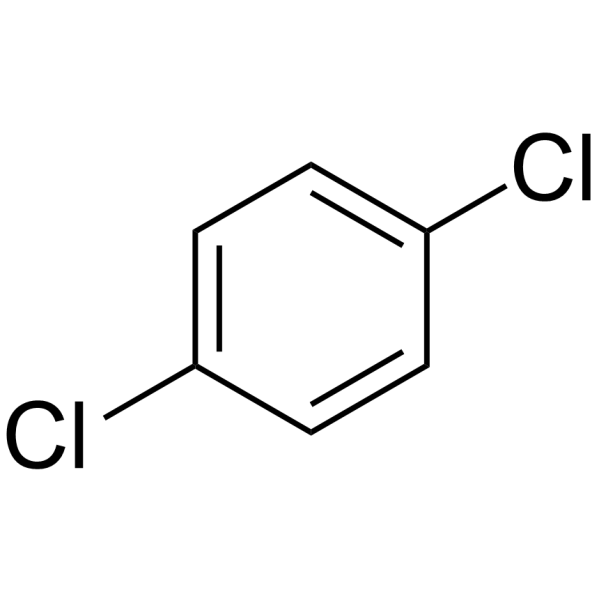
Cat. No.: HY-Y0496
CAS No.: 106-46-7
Research Areas:  

Cancer

1,4-Dichlorobenzene is a non-genotoxic, orally active mitogenic/tumor-promoting carcinogen that is also widely used as a dye, resin intermediate, and deodorant, moth repellent/insecticide. 1,4-Dichlorobenzene induces liver tumors in mice and promotes the growth of spontaneous precancerous lesions, but shows no liver tumor-inducing activity in F344 rats. Exposure to 1,4-dichlorobenzene leads to elevated leukocyte counts, serum alanine aminotransferase, and blood urea nitrogen levels. Due to the hepatotoxic characteristics, 1,4-Dichlorobenzene is applicable to liver cancer-related research .
loading...
    loading...
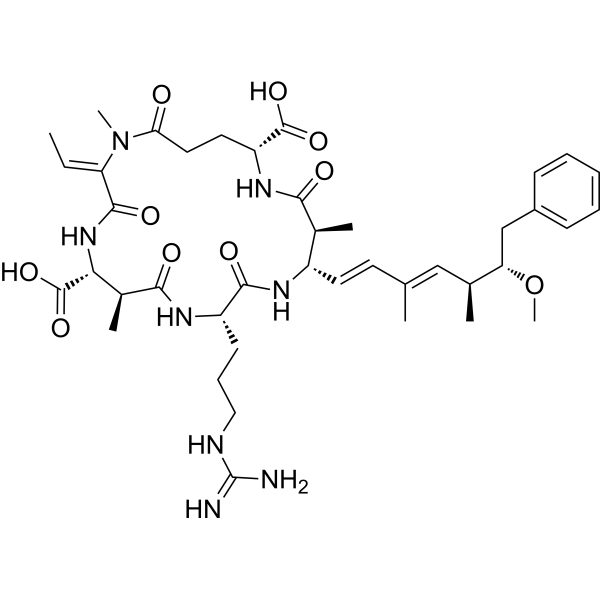
Cat. No.: HY-P2040
CAS No.: 118399-22-7
Nodularin is a hepatotoxin, tumor promoter, and protein phosphatase inhibitor. Nodularin induces apoptosis (apoptosis) in normal cells (including caspase activation, upregulation of Bcl-XS, and upregulation of BAX/P53), triggers hyperphosphorylation of the MAPK/ERK, mTOR/S6K and p38 MAPK signaling pathways, and induces oxidative stress, endoplasmic reticulum membrane instability, peroxisome proliferation and increased lysosomal enzyme activity. Nodularin promotes DEN (HY-N7434)-initiated hepatocyte proliferation and adenoma formation, and inhibits proliferation, phagocytosis and chemotaxis of normal lymphocytes, oocyte maturation and vitellogenesis, as well as angiogenesis. Nodularin exhibits hepatotoxicity, reproductive and endocrine toxicity, and embryonic developmental toxicity in various animal models. Nodularin can be used in studies related to liver cancer, hepatotoxicity and reproductive endocrine toxicity .
loading...
    loading...
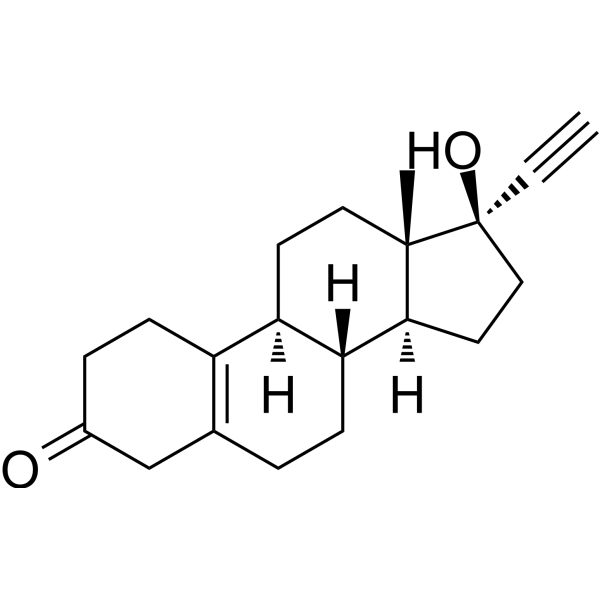
Cat. No.: HY-B1341
CAS No.: 68-23-5
Synonyms: Enidrel; SC-4642; NSC 15432
Norethynodrel (Enidrel; SC-4642) is an orally active progestogen analog that reduces estrogen-like effects and enhances progestogen-like responses in endometrial stromal cells. Norethynodrel also promotes cell maturation and predecidual cell formation by inducing organelle hyperplasia and glycogen accumulation. Norethynodrel competitively inhibits drug-metabolizing enzymes in rat liver microsomes, thereby prolonging Pentobarbital sleep time, while exhibiting multiple effects including reduced body weight gain, attenuated heart rate elevation and ovulation inhibition. In mouse models, Norethynodrel significantly increases the incidence of mammary adenocarcinoma, cervical cancer and pituitary tumors. Norethynodrel can be used for mechanism research on related diseases such as mammary adenocarcinoma, cervical cancer, ovarian tubular adenoma and pituitary adenoma .
loading...
    loading...
Cat. No.: HY-169475
CAS No.: 19408-74-3
Synonyms: 1,2,3,7,8,9-HxCDD
Research Areas:  

Cancer

1,2,3,7,8,9-Hexachlorodibenzo-p-dioxin (1,2,3,7,8,9-HxCDD) is a polychlorinated dibenzodioxin. 1,2,3,7,8,9-Hexachlorodibenzo-p-dioxin combined with 1,2,3,6,7,8-hexachlorodibenzo-p-dioxin induces the formation of liver adenomas or carcinomas in rats .
loading...
    loading...

