

Search Result
Results for "
macropinocytosis
" in MedChemExpress (MCE) Product Catalog:
| Cat. No. |
Product Name |
Target |
Research Areas |
Chemical Structure |
-
- HY-18723
-
Yoda 1
Maximum Cited Publications
100 Publications Verification
|
Piezo Channel
Akt
ERK
Potassium Channel
|
Cardiovascular Disease
|
|
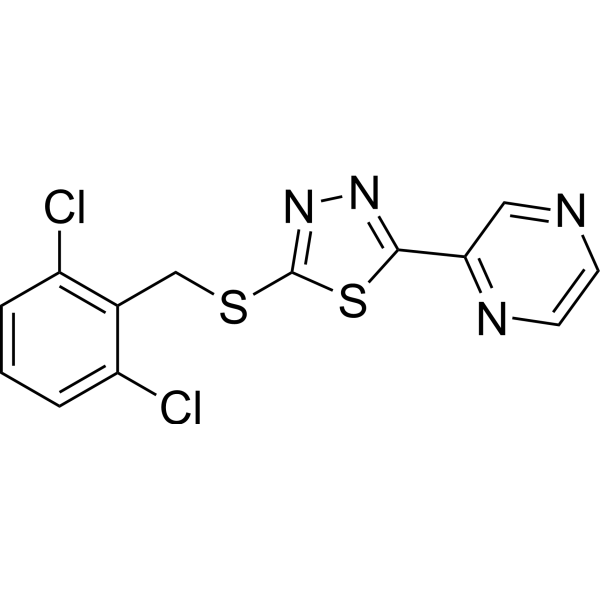
Yoda 1 is a potent and selective Piezo1 agonist. Yoda 1 activates purified Piezo1 channels. Yoda 1 potently inhibits macropinocytosis induced by epidermal growth factor (EGF). Yoda 1 enhances Ca 2+ influx followed by activation of the calcium-activated potassium channel KCa3.1 and inhibition of Rac1 activation .
|
-
-
- HY-101840
-
-
-
- HY-101840A
-
|
L593754 hydrochloride; MH 12-43 hydrochloride; Ethylisopropylamiloride hydrochloride
|
TRP Channel
Autophagy
COX
Prostaglandin Receptor
Na+/H+ Exchanger (NHE)
|
Inflammation/Immunology
Cancer
|
|
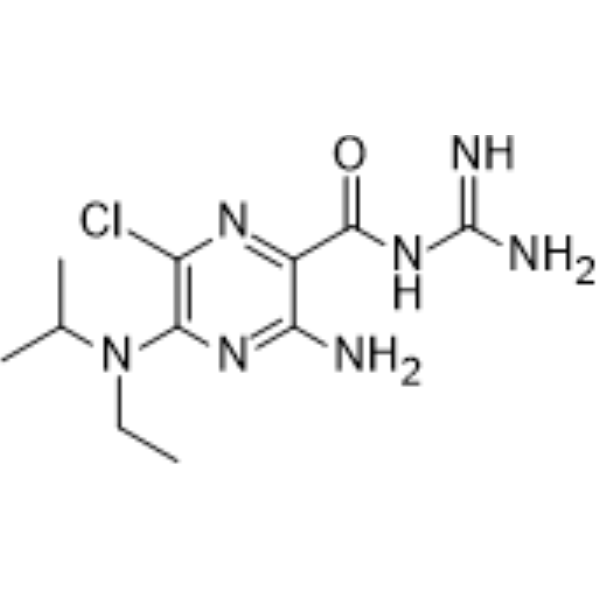
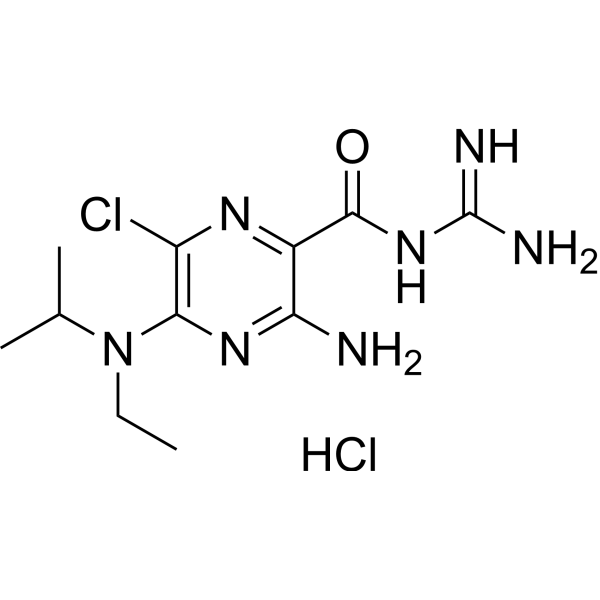
EIPA (L593754) hydrochloride is an orally active TRPP3 channel inhibitor with an IC50 of 10.5 μM. EIPA hydrochloride also enhances autophagy by inhibiting Na +/H +-exchanger 3 (NHE3). EIPA hydrochloride inhibits macropinocytosis as well. EIPA hydrochloride can be used in the research of inflammation and cancers, such as gastric cancer, colon carcinoma, pancreatic carcinoma .
|
-
-
- HY-33878
-
|
|
Potassium Channel
Proton Pump
|
Neurological Disease
|
|
2-PPA is a lysosomal potassium and proton channel TMEM175 pore blocker. 2-PPA binds at a TMEM175 pore site to occlude potassium and proton ion permeation pathways. 2-PPA increases lysosomal macromolecule catabolism, accelerates macropinocytosis. 2-PPA binds to hepatic protein in covalent. 2-PPA can be used for the research of Parkinson's disease .
|
-
-
- HY-119624
-
|
|
PIKfyve
|
Cancer
|
|
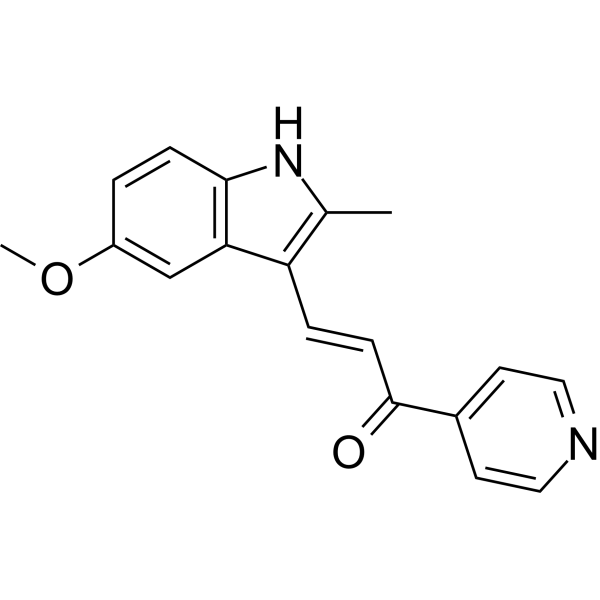
MOMIPP, a macropinocytosis inducer, is a PIKfyve inhibitor. MOMIPP penetrates the blood-brain barrier (BBB) .
|
-
-
- HY-N0735
-
|
|
Autophagy
Apoptosis
AMPK
mTOR
STAT
Interleukin Related
PKC
p38 MAPK
NF-κB
COX
Reactive Oxygen Species (ROS)
PI3K
Akt
MMP
|
Neurological Disease
Inflammation/Immunology
Cancer
|
|
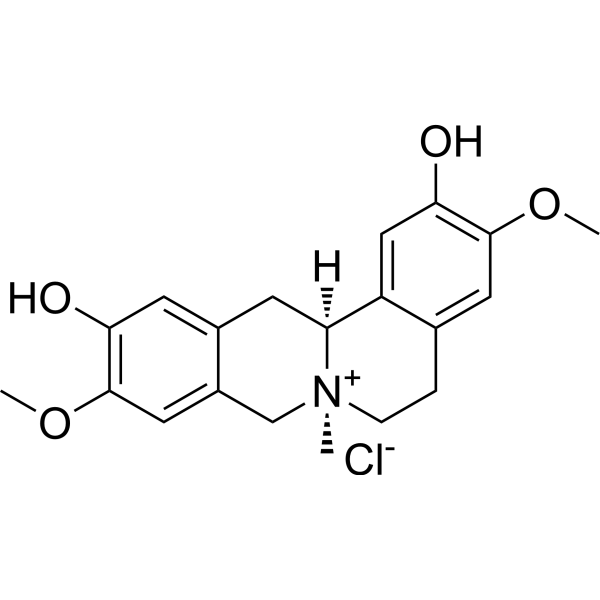
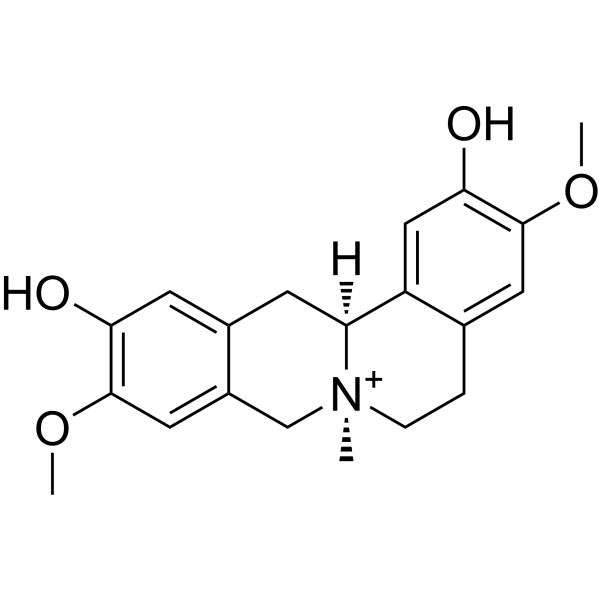
Phellodendrine chloride is an orally active plant alkaloid. Phellodendrine chloride inhibits the proliferation of KRAS-mutated pancreatic cancer cells by suppressing macropinocytosis and glutamine metabolism, inducing ROS accumulation and mitochondrial apoptosis. Phellodendrine chloride promotes autophagy by activating the AMPK/mTOR pathway, alleviating intestinal damage in ulcerative colitis. Phellodendrine chloride can alleviate gouty arthritis by inhibiting the IL-6/STAT3 signaling pathway. Phellodendrine chloride suppresses allergic reactions by altering the conformation of MRGPRB3/MRGPRX2 protein, thereby inhibiting the activation of PKC and subsequent downstream MAPK and NF-κB signaling. Phellodendrine chloride inhibits the AKT/NF-κB pathway and down-regulates the expression of COX-2, thereby protecting zebrafish embryos from oxidative stress. Phellodendrine chloride has an anti-major depressive disorder (MDD) effect by down-regulating CHRM1, HTR1A, and the PI3K/Akt signaling pathway .
|
-
-
- HY-176954
-
|
|
Proton Pump
Ras
Autophagy
Apoptosis
|
Cancer
|
|
RSC-1255 is a potent and selective Vacuolar H⁺-ATPase (V-ATPase) inhibitor that directly binds the mammalian V-ATPase complex with a Kd = 23 nM. RSC-1255 exhibits preferential cytotoxicity toward KRAS-mutant cancer cells, especially KRAS G13D and KRAS G12V cells. RSC-1255 induces apoptosis and blocks lysosomal acidification, autophagy, and macropinocytosis in cancer cells. RSC-1255 can be used for the study of KRAS-driven lung and colon cancers .
|
-
-
- HY-P10861A
-
|
|
Tau Protein
|
Neurological Disease
|
|
RI-AG03 acetate is a proteolytically stable tau aggregation inhibitor that crosses the blood-brain barrier and exhibits oral efficacy. RI-AG03 acetate inhibits tau aggregation and promotes the formation of alternative amorphous aggregates that are non-amyloidogenic. RI-AG03 acetate mediates cellular uptake through direct membrane penetration and macropinocytosis, and its conjugation with cell-penetrating peptide sequences (CPPs) enhances the binding of cells to liposomes. RI-AG03 acetate suppresses aggregation-dependent neurodegenerative and behavioral phenotypes, and extends the lifespan of Drosophila models of tauopathy. RI-AG03 acetate can be used for research on tau-related diseases such as Alzheimer's disease .
|
-
-
- HY-N0427
-
|
|
Akt
NF-κB
AMPK
mTOR
PKC
STAT
Interleukin Related
p38 MAPK
COX
Reactive Oxygen Species (ROS)
Apoptosis
Autophagy
PI3K
MMP
|
Neurological Disease
Inflammation/Immunology
Cancer
|
|
Phellodendrine is an orally active plant alkaloid. Phellodendrine inhibits the proliferation of KRAS-mutated pancreatic cancer cells by suppressing macropinocytosis and glutamine metabolism, inducing ROS accumulation and mitochondrial apoptosis. Phellodendrine promotes autophagy by activating the AMPK/mTOR pathway, alleviating intestinal damage in ulcerative colitis. Phellodendrine can alleviate gouty arthritis by inhibiting the IL-6/STAT3 signaling pathway. Phellodendrine suppresses allergic reactions by altering the conformation of MRGPRB3/MRGPRX2 protein, thereby inhibiting the activation of PKC and subsequent downstream MAPK and NF-κB signaling. Phellodendrine inhibits the AKT/NF-κB pathway and down-regulates the expression of COX-2, thereby protecting zebrafish embryos from oxidative stress. Phellodendrine has an anti-major depressive disorder (MDD) effect by down-regulating CHRM1, HTR1A, and the PI3K/Akt signaling pathway .
|
-
-
- HY-P99925
-
|
REGN421
|
Notch
|
Metabolic Disease
Cancer
|
|
Enoticumab (REGN421, SAR153192) is an IgG1κ antibody targeting human Dll4. DLL4 is a ligand of the Notch signaling pathway and regulates fatty acid uptake through non-transcriptional regulation of macropinocytosis-dependent long-chain fatty acid uptake. Specific in vivo activity of Enoticumab in an ovarian xenograft model. EGN421 (2.5 mg/kg once weekly) resulted in 86% and 83% tumor growth inhibition in mouse subcutaneous TOV-112D or intraperitoneal A2780 human tumor xenograft models, respectively .
|
-
-
- HY-148114
-
|
|
Autophagy
|
Neurological Disease
Cancer
|
|
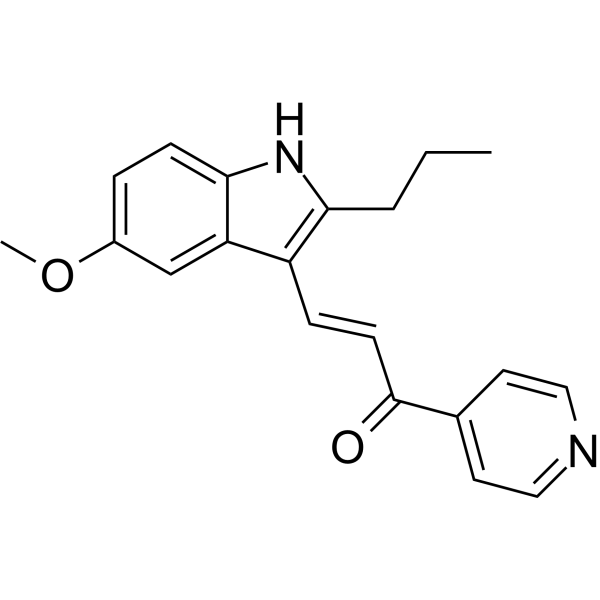
MOPIPP is a novel indolebased chalcone, and vacuolin-1, is a non-lethal vacuoleinducing 2-propyl analog of MOMIPP (HY-119624). MOPIPP induces cellular vacuolization and increases autophagosomes numbers. MOPIPP can be used for the study of glioblastoma cells .
|
-
-
- HY-P2483B
-
|
|
Bacterial
Proteasome
|
Infection
Inflammation/Immunology
Cancer
|
|
Octaarginine acetate is a cell-penetrating peptide and proteasome inhibitor. Octaarginine acetate exhibits mixed-type inhibition against 20S proteasome chymotrypsin-like, caspase-like, and trypsin-like activities, and inhibits 26S proteasome activity with decreased efficiency. Octaarginine acetate induces ubiquitin-conjugated protein accumulation, mediates HSPG-dependent cellular internalization via macropinocytosis, enhances liposomal cargo uptake and gene delivery. Octaarginine acetate can be used for the research of cervix carcinoma, collagen antibody-induced arthritis, and bacterial infections .
|
-
-
- HY-P2483
-
|
|
Proteasome
Bacterial
|
Infection
Inflammation/Immunology
Cancer
|
|
Octaarginine is a cell-penetrating peptide and proteasome inhibitor. Octaarginine exhibits mixed-type inhibition against 20S proteasome chymotrypsin-like, caspase-like, and trypsin-like activities, and inhibits 26S proteasome activity with decreased efficiency. Octaarginine induces ubiquitin-conjugated protein accumulation, mediates HSPG-dependent cellular internalization via macropinocytosis, enhances liposomal cargo uptake and gene delivery. Octaarginine can be used for the research of cervix carcinoma, collagen antibody-induced arthritis, and bacterial infections .
|
-
-
- HY-P10861
-
|
|
Tau Protein
|
Neurological Disease
|
|
RI-AG03 is a proteolytically stable tau aggregation inhibitor that crosses the blood-brain barrier and exhibits oral efficacy. RI-AG03 inhibits tau aggregation and promotes the formation of alternative amorphous aggregates that are non-amyloidogenic. RI-AG03 mediates cellular uptake through direct membrane penetration and macropinocytosis, and its conjugation with cell-penetrating peptide sequences (CPPs) enhances the binding of cells to liposomes. RI-AG03 suppresses aggregation-dependent neurodegenerative and behavioral phenotypes, and extends the lifespan of Drosophila models of tauopathy. RI-AG03 can be used for research on tau-related diseases such as Alzheimer's disease .
|
-
-
- HY-161844
-
|
|
SARS-CoV
Dengue Virus
|
Infection
|
|
Virapinib is a macropinocytosis inhibitor with antiviral activity. Virapinib exhibits broad-spectrum antiviral activity against SARS-CoV-2, monkeypox virus, tick-borne encephalitis virus, and Ebola pseudotyped vesicular stomatitis virus, and it enhances Dengue Virus infection. Virapinib blocks viral entry by inhibiting macropinocytosis, reduces syncytium formation in SARS-CoV-2-infected cells, and impairs cellular entry of SARS-CoV-2 variants. Virapinib upregulates the expression of genes related to sterol biosynthesis. Virapinib can be used in studies related to COVID-19, monkeypox, tick-borne encephalitis, and Ebola virus infection .
|
-
-
- HY-50733
-
|
|
Apoptosis
Casein Kinase
Ras
|
Cancer
|
|
CX-5011 free base is a potent CK2 inhibitor. CX-5011 free base also is a Rac-1 activator. CX-5011 free base induces methuosis and promotes macropinocytosis. CX-5011 free base induces apoptosis. CX-5011 free base decreases the expression of rpS6 phosphorylation .
|
-
-
- HY-N0735R
-
|
|
Reference Standards
Autophagy
mTOR
AMPK
Apoptosis
STAT
Interleukin Related
PKC
p38 MAPK
NF-κB
COX
Reactive Oxygen Species (ROS)
PI3K
Akt
MMP
|
Neurological Disease
Inflammation/Immunology
Cancer
|
|
Phellodendrine chloride (Standard) is the analytical standard of Phellodendrine chloride (HY-N0735). Phellodendrine chloride is an orally active plant alkaloid. Phellodendrine chloride inhibits the proliferation of KRAS-mutated pancreatic cancer cells by suppressing macropinocytosis and glutamine metabolism, inducing ROS accumulation and mitochondrial apoptosis. Phellodendrine chloride promotes autophagy by activating the AMPK/mTOR pathway, alleviating intestinal damage in ulcerative colitis. Phellodendrine chloride can alleviate gouty arthritis by inhibiting the IL-6/STAT3 signaling pathway. Phellodendrine chloride suppresses allergic reactions by altering the conformation of MRGPRB3/MRGPRX2 protein, thereby inhibiting the activation of PKC and subsequent downstream MAPK and NF-κB signaling. Phellodendrine chloride inhibits the AKT/NF-κB pathway and down-regulates the expression of COX-2, thereby protecting zebrafish embryos from oxidative stress. Phellodendrine chloride has an anti-major depressive disorder (MDD) effect by down-regulating CHRM1, HTR1A, and the PI3K/Akt signaling pathway.
|
-
-
- HY-P4110
-
|
|
iGluR
|
Metabolic Disease
Inflammation/Immunology
|
|
TAT-NSF222 Fusion Peptide is a fusion polypeptide with two domains, a TAT domain, which enters cells through macropinocytosis, and an NSF domain that inhibits N-ethylmaleimide-sensitive factor (NSF). TAT-NSF222 Fusion Peptide is an exocytosis inhibitor .
|
-
-
- HY-101840AR
-
|
L593754 hydrochloride (Standard); MH 12-43 hydrochloride (Standard); Ethylisopropylamiloride hydrochloride (Standard)
|
Reference Standards
TRP Channel
Autophagy
COX
Prostaglandin Receptor
Na+/H+ Exchanger (NHE)
|
Inflammation/Immunology
Cancer
|
|
EIPA (hydrochloride) (Standard) is the analytical standard of EIPA (hydrochloride). This product is intended for research and analytical applications. EIPA (L593754) hydrochloride is an orally active TRPP3 channel inhibitor with an IC50 of 10.5 μM. EIPA hydrochloride also enhances autophagy by inhibiting Na+/H+-exchanger 3 (NHE3). EIPA hydrochloride inhibits macropinocytosis as well. EIPA hydrochloride can be used in the research of inflammation and cancers, such as gastric cancer, colon carcinoma, pancreatic carcinoma .
|
-
-
- HY-101840R
-
|
L593754 (Standard); MH 12-43 (Standard); Ethylisopropylamiloride (Standard)
|
Reference Standards
TRP Channel
Prostaglandin Receptor
Autophagy
COX
Na+/H+ Exchanger (NHE)
|
Inflammation/Immunology
Cancer
|
|
EIPA (Standard) is the analytical standard of EIPA. This product is intended for research and analytical applications. EIPA (L593754) is an orally active TRPP3 channel inhibitor with an IC50 of 10.5 μM. EIPA also enhances autophagy by inhibiting Na+/H+-exchanger 3 (NHE3). EIPA inhibits macropinocytosis as well. EIPA can be used in the research of inflammation and cancers, such as gastric cancer, colon carcinoma, pancreatic carcinoma .
|
-
-
- HY-P2483A
-
|
|
Proteasome
Bacterial
|
Infection
Neurological Disease
Cancer
|
|
Octaarginine TFA is a cell-penetrating peptide and proteasome inhibitor. Octaarginine TFA exhibits mixed-type inhibition against 20S proteasome chymotrypsin-like, caspase-like, and trypsin-like activities, and inhibits 26S proteasome activity with decreased efficiency. Octaarginine TFA induces ubiquitin-conjugated protein accumulation, mediates HSPG-dependent cellular internalization via macropinocytosis, enhances liposomal cargo uptake and gene delivery. Octaarginine TFA can be used for the research of cervix carcinoma, collagen antibody-induced arthritis, and bacterial infections .
|
-
-
- HY-W1130452
-
|
|
Liposome
|
Cancer
|
|
Lipid C16-C is an ionizable cationic lipid that can be used to prepare lipid nanoparticles (LNPs) for mRNA delivery. Lipid C16-C mediates ApoE-independent macropinocytosis-based mRNA delivery to macrophages, with endosomal acidification enabling endosomal escape and release of mRNA cargo into the cytosol .
|
-
-
- HY-185373
-
|
Liposomal paclitaxel
|
Liposome
Estrogen Receptor/ERR
|
Cancer
|
|
Paclitaxel liposome (Liposomal paclitaxel) is an antitumor agent targeting Estrogen Receptor. Paclitaxel liposome binds to overexpressed Estrogen Receptor to mediate receptor-specific endocytosis, and enters cells via macropinocytosis, caveolae-dependent and clathrin-dependent endocytic pathways. Paclitaxel liposome suppresses cell viability and tumor growth, and reduces the distribution of Paclitaxel (HY-B0015) in normal tissues. Paclitaxel liposome can be used for research related to breast cancer and locally advanced esophageal squamous cell carcinoma .
|
-
-
- HY-183866
-
|
Maleimide-KGDEVD-doxorubicin
|
Peptide-Drug Conjugates (PDCs)
HSP
IFNAR
|
Cancer
|
|
MPD-1 (Maleimide-KGDEVD-doxorubicin) is a peptide drug conjugate (PDC). MPD-1 releases Doxorubicin (HY-15142) via radiation-activated caspase-3 cleavage, triggering a cytotoxic amplification cascade at the tumor site. MPD-1 enhances CD8 + T cell tumor infiltration, and activates antigen-presenting cells. MPD-1 enables dual-trigger payload release, amplifies cytotoxicity via in situ feedback, and selectively delivers payload to tumor microenvironments via enhanced albumin metabolism and macropinocytosis. MPD-1 exhibits antitumor efficacy in mouse colorectal cancer models. MPD-1 can be used for the research of colorectal cancer .
|
-
| Cat. No. |
Product Name |
Target |
Research Area |
-
- HY-P10861A
-
|
|
Tau Protein
|
Neurological Disease
|
|
RI-AG03 acetate is a proteolytically stable tau aggregation inhibitor that crosses the blood-brain barrier and exhibits oral efficacy. RI-AG03 acetate inhibits tau aggregation and promotes the formation of alternative amorphous aggregates that are non-amyloidogenic. RI-AG03 acetate mediates cellular uptake through direct membrane penetration and macropinocytosis, and its conjugation with cell-penetrating peptide sequences (CPPs) enhances the binding of cells to liposomes. RI-AG03 acetate suppresses aggregation-dependent neurodegenerative and behavioral phenotypes, and extends the lifespan of Drosophila models of tauopathy. RI-AG03 acetate can be used for research on tau-related diseases such as Alzheimer's disease .
|
-
- HY-P2483B
-
|
|
Bacterial
Proteasome
|
Infection
Inflammation/Immunology
Cancer
|
|
Octaarginine acetate is a cell-penetrating peptide and proteasome inhibitor. Octaarginine acetate exhibits mixed-type inhibition against 20S proteasome chymotrypsin-like, caspase-like, and trypsin-like activities, and inhibits 26S proteasome activity with decreased efficiency. Octaarginine acetate induces ubiquitin-conjugated protein accumulation, mediates HSPG-dependent cellular internalization via macropinocytosis, enhances liposomal cargo uptake and gene delivery. Octaarginine acetate can be used for the research of cervix carcinoma, collagen antibody-induced arthritis, and bacterial infections .
|
-
- HY-P2483
-
|
|
Proteasome
Bacterial
|
Infection
Inflammation/Immunology
Cancer
|
|
Octaarginine is a cell-penetrating peptide and proteasome inhibitor. Octaarginine exhibits mixed-type inhibition against 20S proteasome chymotrypsin-like, caspase-like, and trypsin-like activities, and inhibits 26S proteasome activity with decreased efficiency. Octaarginine induces ubiquitin-conjugated protein accumulation, mediates HSPG-dependent cellular internalization via macropinocytosis, enhances liposomal cargo uptake and gene delivery. Octaarginine can be used for the research of cervix carcinoma, collagen antibody-induced arthritis, and bacterial infections .
|
-
- HY-P10861
-
|
|
Tau Protein
|
Neurological Disease
|
|
RI-AG03 is a proteolytically stable tau aggregation inhibitor that crosses the blood-brain barrier and exhibits oral efficacy. RI-AG03 inhibits tau aggregation and promotes the formation of alternative amorphous aggregates that are non-amyloidogenic. RI-AG03 mediates cellular uptake through direct membrane penetration and macropinocytosis, and its conjugation with cell-penetrating peptide sequences (CPPs) enhances the binding of cells to liposomes. RI-AG03 suppresses aggregation-dependent neurodegenerative and behavioral phenotypes, and extends the lifespan of Drosophila models of tauopathy. RI-AG03 can be used for research on tau-related diseases such as Alzheimer's disease .
|
-
- HY-P4110
-
|
|
iGluR
|
Metabolic Disease
Inflammation/Immunology
|
|
TAT-NSF222 Fusion Peptide is a fusion polypeptide with two domains, a TAT domain, which enters cells through macropinocytosis, and an NSF domain that inhibits N-ethylmaleimide-sensitive factor (NSF). TAT-NSF222 Fusion Peptide is an exocytosis inhibitor .
|
-
- HY-P2483A
-
|
|
Proteasome
Bacterial
|
Infection
Neurological Disease
Cancer
|
|
Octaarginine TFA is a cell-penetrating peptide and proteasome inhibitor. Octaarginine TFA exhibits mixed-type inhibition against 20S proteasome chymotrypsin-like, caspase-like, and trypsin-like activities, and inhibits 26S proteasome activity with decreased efficiency. Octaarginine TFA induces ubiquitin-conjugated protein accumulation, mediates HSPG-dependent cellular internalization via macropinocytosis, enhances liposomal cargo uptake and gene delivery. Octaarginine TFA can be used for the research of cervix carcinoma, collagen antibody-induced arthritis, and bacterial infections .
|
-
- HY-P11784
-
|
|
Peptides
|
Others
|
|
p5RHH is an acid-activated membrane-lytic peptide derived from melittin. p5RHH, as a siRNA delivery vector, initiates synchronous disassembly of nanocomplexes and endosome lysis in response to acidic pH, and triggers the release of siRNA into the cytoplasm following macropinocytosis .
|
| Cat. No. |
Product Name |
Target |
Research Area |
Image |
-
- HY-P99925
-
|
REGN421
|
Notch
|
Metabolic Disease
Cancer
|
|
Enoticumab (REGN421, SAR153192) is an IgG1κ antibody targeting human Dll4. DLL4 is a ligand of the Notch signaling pathway and regulates fatty acid uptake through non-transcriptional regulation of macropinocytosis-dependent long-chain fatty acid uptake. Specific in vivo activity of Enoticumab in an ovarian xenograft model. EGN421 (2.5 mg/kg once weekly) resulted in 86% and 83% tumor growth inhibition in mouse subcutaneous TOV-112D or intraperitoneal A2780 human tumor xenograft models, respectively .
|
-
(5)
| Cat. No. |
Product Name |
Category |
Target |
Chemical Structure |
| Cat. No. |
Product Name |
|
Classification |
-
- HY-185373
-
|
Liposomal paclitaxel
|
|
Liposome
|
|
Paclitaxel liposome (Liposomal paclitaxel) is an antitumor agent targeting Estrogen Receptor. Paclitaxel liposome binds to overexpressed Estrogen Receptor to mediate receptor-specific endocytosis, and enters cells via macropinocytosis, caveolae-dependent and clathrin-dependent endocytic pathways. Paclitaxel liposome suppresses cell viability and tumor growth, and reduces the distribution of Paclitaxel (HY-B0015) in normal tissues. Paclitaxel liposome can be used for research related to breast cancer and locally advanced esophageal squamous cell carcinoma .
|
Your information is safe with us. * Required Fields.
Inquiry Information
- Product Name:
- Cat. No.:
- Quantity:
- MCE Japan Authorized Agent:

