
13 Results for "

microglial phagocytosis

" in MedChemExpress (MCE) Product Catalog:
Products (13)

13 Results for "microglial phagocytosis" in MCE Product Catalog:

5
5 Cited Publications
Cat. No.: HY-15322
CAS No.: 1370261-96-3
Purity:  99.38%
Synonyms: P505-15; PRT-2607; BIIB-057
Target:  

Syk Apoptosis Caspase

Research Areas:  

Inflammation/Immunology Cancer

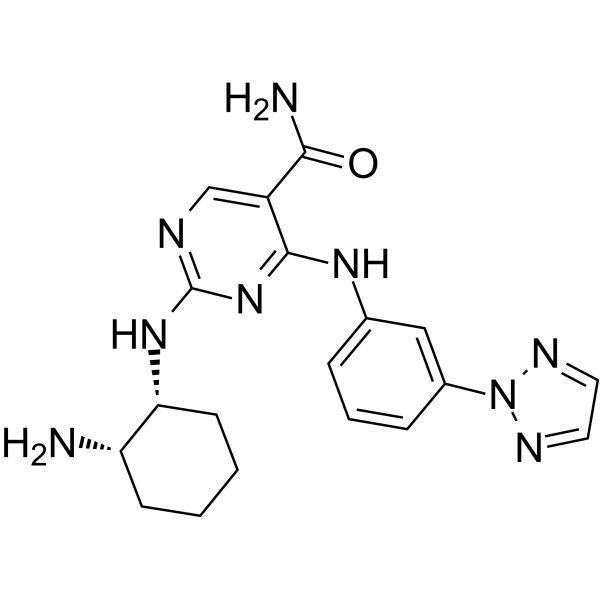
PRT062607 (P505-15; PRT-2607) is an orally active ATP-competitive Syk inhibitor with an IC50 value of 1 nM, and exhibits at least 80-fold selectivity over other kinases. PRT062607 blocks B cell antigen receptor-mediated activation, Fcε receptor 1-mediated basophil degranulation and microglial phagocytosis, and induces caspase-dependent apoptosis and microglial death. PRT062607 inhibits tumor growth and peripheral nerve injury-induced mechanical allodynia, and prevents neuronal loss. PRT062607 can be used in research related to rheumatoid arthritis, chronic lymphocytic leukemia, non-Hodgkin's lymphoma, neurodegenerative diseases and neuropathic pain .
loading...
    loading...
2
2 Cited Publications
Cat. No.: HY-A0183
CAS No.: 1446756-47-3
Synonyms: Phospholipids, phosphatidylserines; Serine glycerophosphatides
Category:  

Animals

Target:  

Akt TGF-β Receptor

Phosphatidylserine (Phospholipids) is a well-conserved anti-inflammatory and immunosuppressive signal. Phosphatidylserine is involved in membrane translocation and the activation of protein kinase C, participating in Akt signaling through its interaction with PIP3. The local exposure of Phosphatidylserine can interact with complement and other proteins, promoting microglial phagocytosis during critical periods of synaptic refinement. Phosphatidylserine can promote blood coagulation in the extracellular environment and acts as a "eat me" signal to clear out apoptotic cells. Phosphatidylserine can suppress inflammation in tissues by inducing TGF-β secretion and inhibiting immune responses .
loading...
    loading...
Cat. No.: HY-175510
CAS No.: 3114105-24-4
Target:  

TREM receptor

Research Areas:  

Neurological Disease

TREM2 agonist-5 is the microglial lipid-sensing receptor (TREM2) agonist with a Kd of 71.36 μM. TREM2 agonist-5 is a racemic structural analog of the TREM2 agonist VG-3927 and exhibits superior microglial phagocytosis and activates TREM2 signaling in HEK293-hTREM2/DAP12 cells. TREM2 agonist-5 displays a superior in vitro pharmacokinetic profile to VG-3927. TREM2 agonist-5 can used for the study of Alzheimer’s disease .
loading...
    loading...
Cat. No.: HY-P6442
CAS No.: 1020407-90-2
Chemerin15 is an anti-inflammatory peptide derived from Chemerin. Chemerin15 binds to ChemR23. Chemerin15 inhibits TNFα-induced activation of Syk, ERK and Src kinases. Chemerin15 increases the expression of p-p38 mRNA and protein. Chemerin15 mediates phagocytosis, resolution of inflammation, CD62L shedding and downregulation of PSGL-1 expression in macrophages and microglia. Chemerin15 inhibits neutrophil-mediated vascular inflammation and myocardial ischemia-reperfusion injury via ChemR23. Chemerin15 enhances microglial phagocytosis, thereby alleviating cerebral ischemia-reperfusion injury .
loading...
    loading...
Cat. No.: HY-174369
Target:  

TREM receptor Syk

Research Areas:  

Neurological Disease

TREM2 agonist-3 (Compound 4i) is a TREM2 agonist with a KD value of 19.0 µM. The KD value of TREM2 agonist-3 for TREM1 is 39.8 µM. TREM2 agonist-3 induces an increase in phosphorylated SYK levels. TREM2 agonist-3 can be used in the research of neurodegenerative diseases and other diseases associated with TREM2 dysfunction .
loading...
    loading...
Cat. No.: HY-178324
CAS No.: 364611-21-2
T2M-010 is a potent, brain-penetrant TREM2 agonist (Kd = 0.83 μM). T2M-010 activates receptor-proximal signaling, inducing SYK phosphorylation in TREM2-expressing cells, and promotes microglial phagocytosis. T2M-010 can be used for the study of protective microglial responses relevant to Alzheimer’s disease (AD) .
loading...
    loading...
Cat. No.: HY-N3201
CAS No.: 630057-39-5
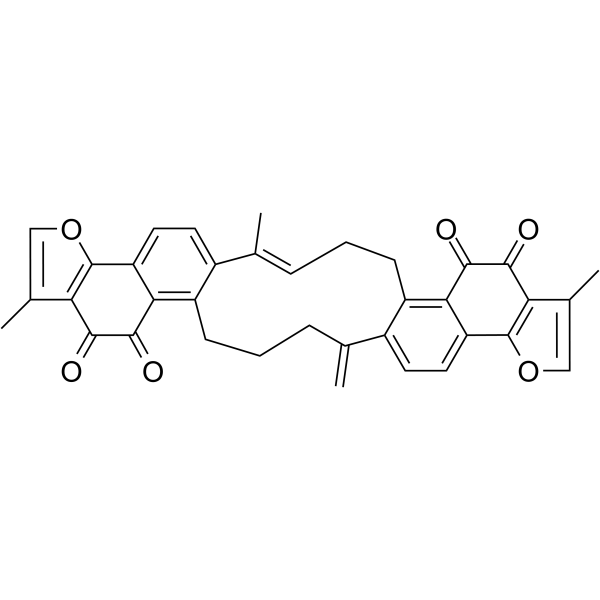
Neoprzewaquinone (NEO) is an orally active phenanthraquinone derivative isolated from Salvia miltiorrhiza Bunge. Neoprzewaquinone A inhibits IL-15Rα, blocks the ROCK2/STAT3 pathway to impair the migration and invasion abilities of triple-negative breast cancer cells; induces apoptosis of hepatocellular carcinoma cells by inhibiting the PI3K-AKT pathway; suppresses LPS-induced inflammation via binding to TLR4/MD2, and inhibits IL-15-induced proliferation, migration and phagocytosis of microglial cells; protects osteoblasts from mitochondrial dysfunction and apoptosis in diabetic osteoporosis by activating PRKD2 and the ELF5/PRKD2/PI3K/AKT/mTOR axis. Neoprzewaquinone A can be used in the research of diseases including rheumatoid arthritis, hepatocellular carcinoma, diabetic osteoporosis and triple-negative breast cancer .
loading...
    loading...
Cat. No.: HY-P990283

Target:  

CD22

Anti-Mouse CD22 Antibody (Cy34.1) is a mouse-derived IgG1 κ type antibody inhibitor, targeting to mouse CD22. Anti-Mouse CD22 Antibody (Cy34.1) can deplete CD22 cells and B cells. Anti-Mouse CD22 Antibody (Cy34.1) can promote microglial phagocytosis. Anti-Mouse CD22 Antibody (Cy34.1) can be used for the researches of inflammation and neurological disease, such as Alzheimer's disease (AD) and neuromyelitis .
loading...
    loading...
Cat. No.: HY-168091
CAS No.: 2585015-90-1
YM-I-26 is a selective NLRP3 inflammasome inhibitor. YM-I-26 enhances the phagocytosis of β-amyloid protein by mouse microglial BV2 cells and inhibits the production of IL-1β and IL-10. YM-I-26 can be used to study the immunomodulatory activity associated with inflammation .
loading...
    loading...
Cat. No.: HY-162020
Target:  

Tau Protein

SB1617 is a neuroinflammation-modulating agent, and has neuroprotective effect by reducing pathogenic tau levels through microglia-mediated anti-inflammatory activity .
loading...
    loading...
Cat. No.: HY-P991867

Target:  

Amyloid-β

Research Areas:  

Neurological Disease

SHR-1707 is a humanized anti- IgG1 monoclonal antibody. SHR-1707 binds Aβ fibrils and monomers, blocking plaque formation and promoting the microglial phagocytosis of Aβ. SHR-1707 reduces brain Aβ deposition in 5xFAD transgenic mice. SHR-1707 can be used for Alzheimer’s disease research. Recommend Isotype Controls: Human IgG1 kappa, Isotype Control (HY-P99001) .
loading...
    loading...
Cat. No.: HY-182702
CAS No.: 1214405-38-5
Target:  

TREM receptor Syk

Research Areas:  

Neurological Disease

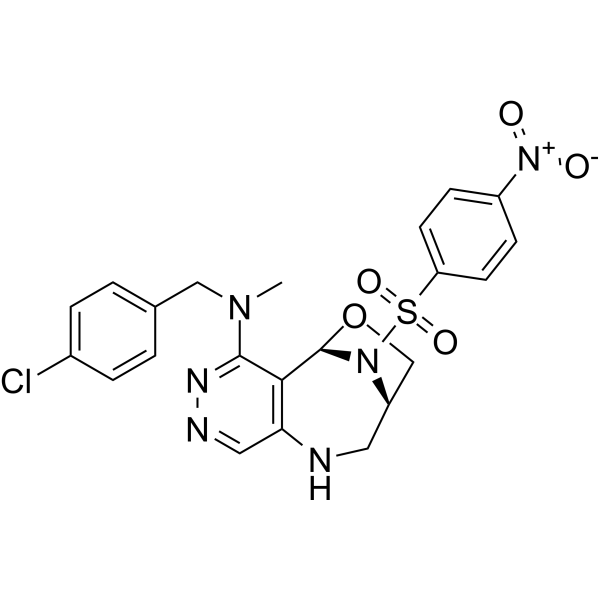
As48 is a selective TREM2 agonist with a KD value of 12.48 μM in TRIC binding assay. As48 binds near the TREM2 cleavage region, forms hydrogen bonds with Gly68, reduces conformational flexibility in regions 58-102, restricts protease accessibility to the cleavage site. As48 activates SYK phosphorylation, enhances microglial phagocytosis, and induces downstream calcium signaling in TREM2-expressing cells. As48 inhibits TREM2 ectodomain shedding without affecting ADAM10/17 protease activities. As48 can be used for the research of Alzheimer's disease .
loading...
    loading...
Cat. No.: HY-164641
CAS No.: 2459994-71-7
Target:  

Orphan GPCR

Research Areas:  

Neurological Disease

GPR34 agonist 1 is a G-protein coupled receptor 34 agonist that enhances fibrillar Aβ uptake in mouse primary microglia with an EC50 of 5 nM .GPR34 agonist 1 selectively activates Gi/o-coupled GPR34, reduces intracellular cyclic adenosine monophosphate levels, and requires functional TREM2 signaling .GPR34 agonist 1 induces microglial Aβ fibril phagocytosis and chemotaxis, enhances microglial uptake and clearance of amyloid β fibrils, and increases microglial Aβ fibril uptake in vivo and in human induced pluripotent stem cell-derived microglia .GPR34 agonist 1 can be used for the research of Alzheimer disease .
loading...
    loading...
  • 1

