18 Results for "

microtubule destabilizing agent

" in MedChemExpress (MCE) Product Catalog:
Products (18)

18 Results for "microtubule destabilizing agent" in MCE Product Catalog:

8
8 Cited Publications
Cat. No.: HY-B0413
CAS No.: 43210-67-9
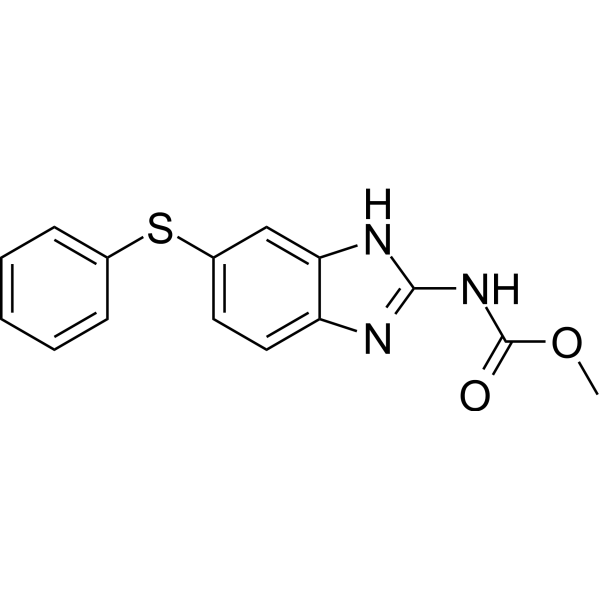
Fenbendazole is an orally active benzimidazole anthelmintic agent, with a broad antiparasitic range. Fenbendazole is a microtubule destabilizing agent and acts on helminthes primarily by binding to tubulin and disrupting the tubulin microtubule equilibrium. Fenbendazole stabilizes the transcriptional activator HIF-1α. Fenbendazole possesses an efficient anti-proliferative activity and induces apoptosis. Fenbendazole causes cell-cycle arrest and mitotic cell death, and has antitumor activity in mice xenografted with wild-type p53 .
loading...
    loading...
6
6 Cited Publications
Cat. No.: HY-B0413S
CAS No.: 1228182-47-5
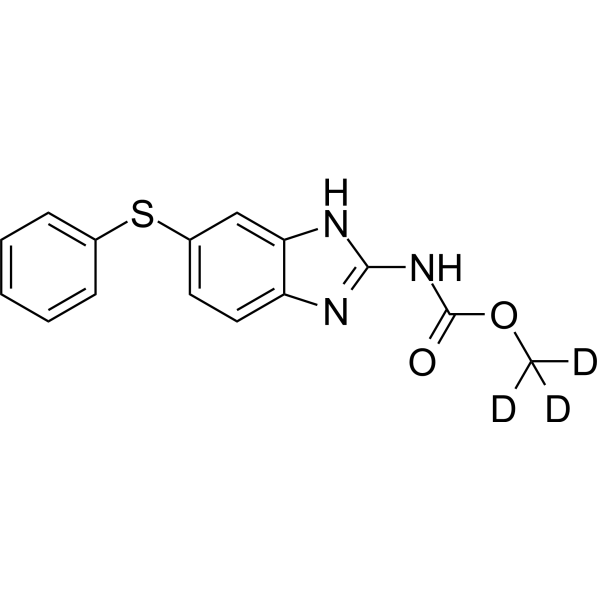
Fenbendazole-d3 is a deuterium labeled Fenbendazole. Fenbendazole-d3 is a HIF-1α agonist and activates the HIF-1α-related GLUT1 pathway. Fenbendazole is an orally active benzimidazole anthelmintic agent, with a broad antiparasitic range. Fenbendazole is a microtubule destabilizing agent. Fenbendazole causes cell-cycle arrest and mitotic cell death, and has antitumor activity in mice xenografted with wild-type p53 .
loading...
    loading...
Cat. No.: HY-N1243
CAS No.: 205304-87-6
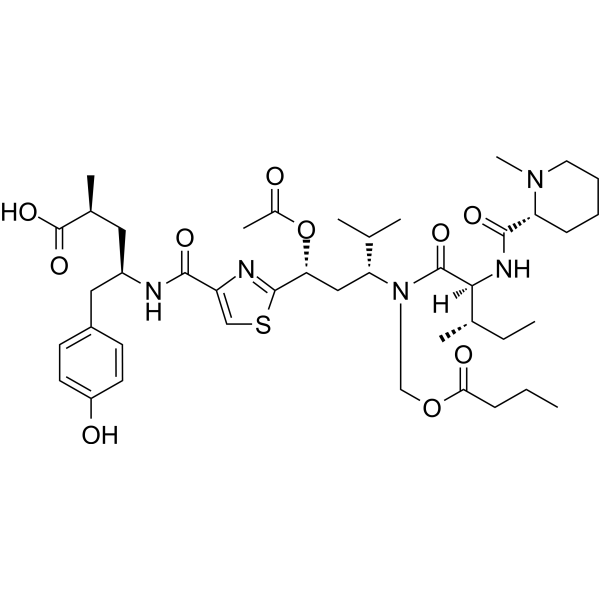
Tubulysin B is a highly cytotoxic peptide and potent microtubule destabilizing agents isolated from the myxobacteria Archangium geophyra and Angiococcus disciformis. Tubulysin B has IC50 values in the picomolar range against many cancer cell lines, including those with multidrug resistant properties .Tubulysin B is a cytotoxic activity tubulysin which inhibits tubulin polymerization and leads to cell cycle arrest and apoptosis .
loading...
    loading...
Cat. No.: HY-B0413R
CAS No.: 43210-67-9
Fenbendazole (Standard) is the analytical standard of Fenbendazole. This product is intended for research and analytical applications. Fenbendazole is an orally active benzimidazole anthelmintic agent, with a broad antiparasitic range. Fenbendazole is a microtubule destabilizing agent and acts on helminthes primarily by binding to tubulin and disrupting the tubulin microtubule equilibrium. Fenbendazole stabilizes the transcriptional activator HIF-1α. Fenbendazole possesses an efficient anti-proliferative activity and induces apoptosis. Fenbendazole causes cell-cycle arrest and mitotic cell death, and has antitumor activity in mice xenografted with wild-type p53 .
loading...
    loading...
Cat. No.: HY-16196
CAS No.: 864668-87-1
Synonyms: IRC-110160
Research Areas:  

Cancer

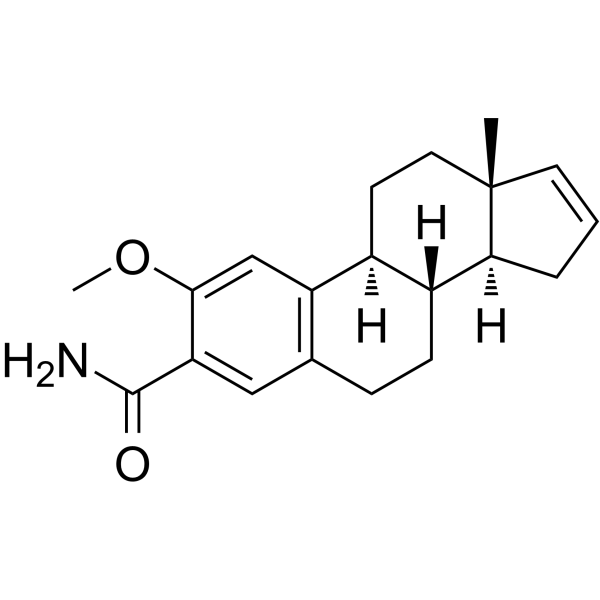
ENMD-1198 (IRC-110160), an orally active microtubule destabilizing agent, is a 2-methoxyestradiol analogue with antiproliferative and antiangiogenic activity. ENMD-1198 is suitable for inhibiting HIF-1alpha and STAT3 in human HCC cells and leads to reduced tumor growth and vascularization.
loading...
    loading...
Cat. No.: HY-103257
CAS No.: 154554-41-3
Purity:  99.57%
Synonyms: NSC656158
Target:  

Microtubule/Tubulin

Research Areas:  

Cancer

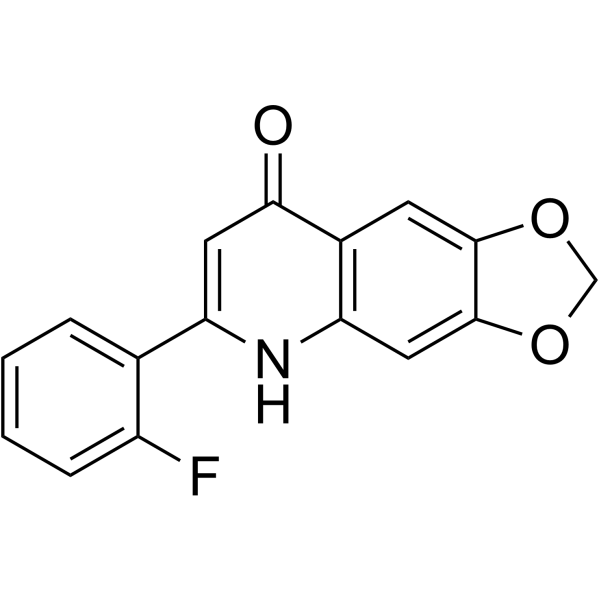
CHM-1, a microtubule-destabilizing agent, inhibits tubulin polymerization. CHM-1 is a potent and selective antimitotic antitumor activity against human hepatocellular carcinoma. CHM-1 induces growth inhibition and apoptosis via G2-M phase arrest in human hepatocellular carcinoma cells by activation of Cdc2 kinase activity .
loading...
    loading...
Cat. No.: HY-I0834
CAS No.: 915095-94-2
Target:  

Microtubule/Tubulin

Research Areas:  

Cancer

(S)-3-(4-(2-Chloro-5-iodobenzyl)phenoxy)tetrahydrofuran (compound 2d), a halogenated Phenstatin analog, is a microtubule destabilizing agent. (S)-3-(4-(2-Chloro-5-iodobenzyl)phenoxy)tetrahydrofuran shows anticancer activities .
loading...
    loading...
Cat. No.: HY-139981
CAS No.: 2850370-28-2
Target:  

Microtubule/Tubulin

Research Areas:  

Cancer

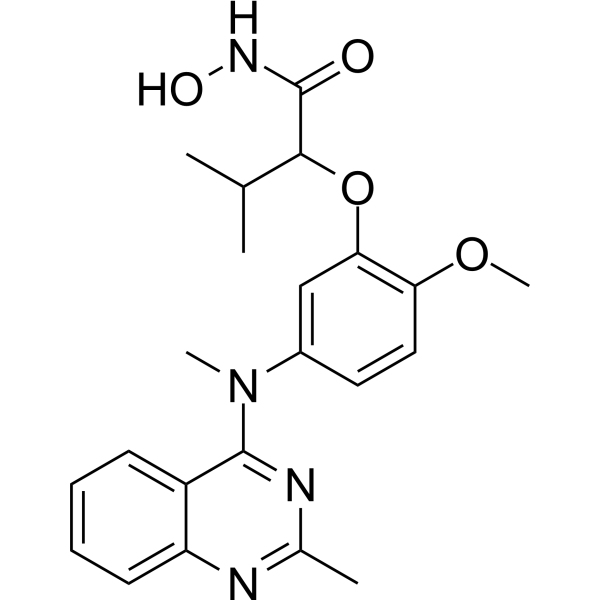
Microtubule destabilizing agent-1 (Compound 12b) acts as a microtubule destabilizing agent (MDA) based on hydroxamic acid, could serve as a potential MDA for further investigation. Microtubule destabilizing agent-1 shows favorable metabolism stability, high bioavailability, and potent antitumor activity .
loading...
    loading...
Cat. No.: HY-159891
Research Areas:  

Cancer

Microtubule destabilizing agent-2 (Compound 21) is an orally active and selective antitumor compound targeting microtubule protein. Microtubule destabilizing agent-2 destabilizes microtubule proteins and inhibits microtubule polymers. Microtubule destabilizing agent-2 arrests the G0/G1 phase in human tumor cells. Microtubule destabilizing agent-2 induces Apoptosis by activating the cascade pathway of caspases. Microtubule destabilizing agent-2 has anti-inflammatory activity, as inhibiting TNF-α and IL-6 in vitro. Microtubule destabilizing agent-2 reduces tumors growth in xenograft mice .
loading...
    loading...
Cat. No.: HY-179695
Research Areas:  

Cancer

Microtubule destabilizing agent-3, a B32B3 (HY-12240) analog, is a microtubule destabilizing agent. Microtubule destabilizing agent-3 exerts its antimyeloma phenotypes by destabilizing microtubules and promoting mitotic arrest, leading to cell death. Microtubule destabilizing agent-3 induces G2/M phase arrest and caspase-dependent apoptosis. Microtubule destabilizing agent-3 can be used for the research of multiple myeloma .
loading...
    loading...
Cat. No.: HY-179696
CAS No.: 2734582-91-1
Research Areas:  

Cancer

destabilizing agent-3 (HY-179695). Microtubule destabilizing agent-3 is a microtubule destabilizing agent. Microtubule destabilizing agent-3 exerts its antimyeloma phenotypes by destabilizing microtubules and promoting mitotic arrest, leading to cell death. Microtubule destabilizing agent-3 induces G2/M phase arrest and caspase-dependent apoptosis .
loading...
    loading...
Cat. No.: HY-145820
CAS No.: 2767446-34-2
Research Areas:  

Cancer

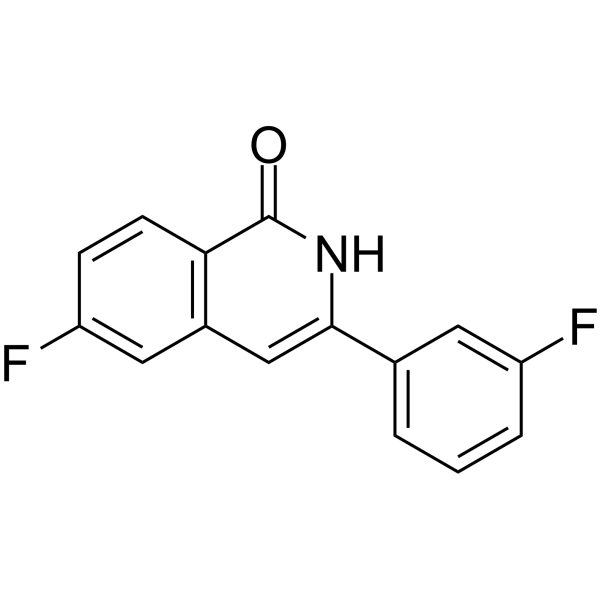
Tubulin inhibitor 14 is a potent NQO2 (quinone oxidoreductase 2) inhibitor with an IC50 of 1.0 μM. Tubulin inhibitor 14 also inhibits tubulin polymerization and the formation of endothelial cell capillary-like tubes. Tubulin inhibitor 14 is a microtubule-destabilizing agent with potential tumor-selectivity and antiangiogenic and vascular disrupting features .
loading...
    loading...
Cat. No.: HY-149918
CAS No.: 3049213-47-7
Research Areas:  

Cancer

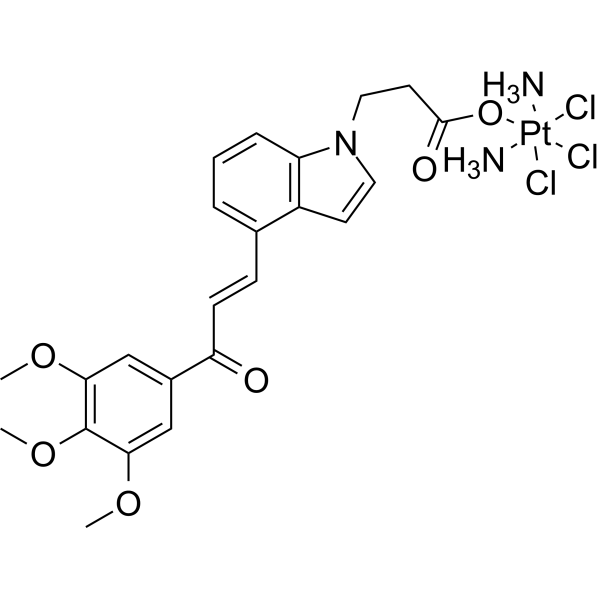
Antiproliferative agent-23 is a microtubule-destabilizing agent (MDA) and efficiently disturbes the tubulin-microtubule system. Antiproliferative agent-23 induces apoptosis via a mitochondrion-dependent pathway by downregulating the Bcl-2 protein, upregulating Bax and Cyt c proteins, and activating the caspase cascade. Antiproliferative agent-23 initiates reactive oxygen species (ROS)-mediated endoplasmic reticulum stress in A549/CDDP cells (cisplatin resistant cancer cell line) via the PERK/ATF4/CHOP signaling pathway. Antiproliferative agent-23 has anti-tumor activity .
loading...
    loading...
Cat. No.: HY-121634
CAS No.: 794466-17-4
Research Areas:  

Others

DAP-81 is an inhibitory agent targeting Polo-like kinases (Plks), a class of evolutionarily conserved serine/threonine kinases. DAP-81 dose-dependently increases the number of monopolar spindles in treated cells. High-resolution live-cell microscopy revealed that Plk activity is required for the assembly and maintenance of bipolar mitotic spindles. Plk inhibition destabilizes centromeric microtubules while stabilizing other spindle microtubules, leading to the formation of monopolar spindles. Further testing of compounds based on "privileged scaffolds" such as the DAP scaffold may lead to the discovery of new cell division probes and anti-microtubule agents.
loading...
    loading...
Cat. No.: HY-173361
Target:  

Microtubule/Tubulin

Research Areas:  

Cancer

Anticancer agent 270 (Compound 8e) is an inhibitor that acts on tubulin. Its IC50 value against MCF-7 breast cancer cells is 1.02 μM. Through a dual mechanism of action, namely inducing Apoptosis and destabilizing microtubules, it exerts significant anti-proliferative activity against breast cancer cells. Anticancer agent 270 can be applied to research in the field of cancer .
loading...
    loading...
Cat. No.: HY-163270
CAS No.: 2446376-25-4
Research Areas:  

Cancer

PM534 is a potent tubulin inhibitor (KD = 20 nM). PM534 targets and binds to the entire colchicine-binding domain (CBD) of tubulin, thereby inhibiting tubulin assembly; this leads to cell cycle arrest at the G2-M phase and induces multinucleation and apoptosis. PM534 exhibits microtubule-destabilizing agent (MDA) activity, potent broad-spectrum antitumor activity, and anti-angiogenic effects. PM534 can be used in research concerning human non-small cell lung cancer (NSCLC), breast cancer, ovarian cancer, and prostate cancer .
loading...
    loading...
Cat. No.: HY-W013437
CAS No.: 51135-38-7
Target:  

Microtubule/Tubulin

Research Areas:  

Cancer

7-Benzoyloxindole (Compound 4a) is a tubulin destabilizer. 7-Benzoyloxindole disrupts the structure of microtubulin, thereby inhibiting the growth of tumor cells. 7-Benzoyloxindole can be used in the research of gastric cancer and lung cancer .
loading...
    loading...
Cat. No.: HY-103257R
CAS No.: 154554-41-3
Synonyms: NSC656158 (Standard)
Research Areas:  

Cancer

CHM-1 (Standard) is the analytical standard of CHM-1 (HY-103257). This product is intended for research and analytical applications. CHM-1, a microtubule-destabilizing agent, inhibits tubulin polymerization. CHM-1 is a potent and selective antimitotic antitumor activity against human hepatocellular carcinoma. CHM-1 induces growth inhibition and apoptosis via G2-M phase arrest in human hepatocellular carcinoma cells by activation of Cdc2 kinase activity .
loading...
    loading...
  • 1

