12 Results for "

microvascular blood

" in MedChemExpress (MCE) Product Catalog:
Products (12)

12 Results for "microvascular blood" in MCE Product Catalog:

2
2 Cited Publications
Cat. No.: HY-N0419
CAS No.: 491-50-9
Synonyms: Quercetin-7-O-β-D-glucopyranoside
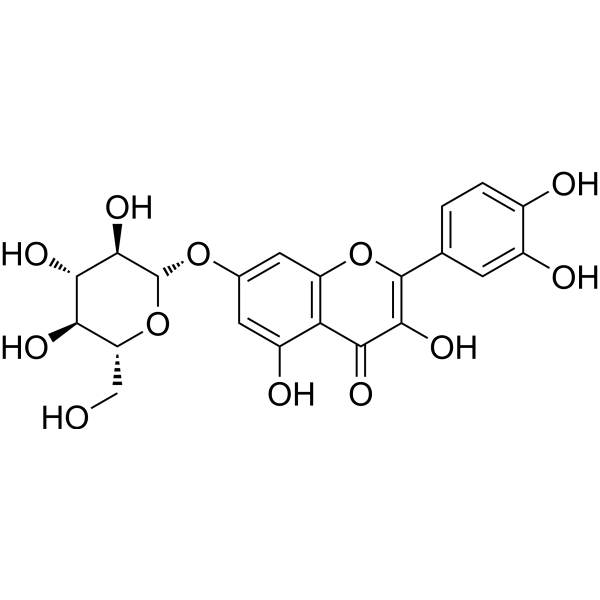
Quercimeritrin (Quercetin-7-O-β-D-glucopyranoside) is an orally active α-glucosidase inhibitor (with an IC50 of 79.88 μM against the Saccharomyces cerevisiae enzyme) and a P-gp substrate, with anti-angiogenic and antioxidant activities. Quercimeritrin does not cross the blood-brain barrier and does not inhibit cytochrome P450 enzymes. Quercimeritrin precisely binds to and inhibits the active sites of c-Kit, MMP-2, Aurora-A kinases and α-glucosidase, thereby disrupting target functions. Quercimeritrin effectively regulates postprandial blood glucose and also exhibits significant anti-angiogenic activity, which inhibits endothelial cell proliferation and microvascular growth. Quercimeritrin can be used in the research of diabetes and breast cancer .
loading...
    loading...
2
2 Cited Publications
Cat. No.: HY-125864B
CAS No.: 9001-32-5
Target:  

MMP Cadherin

Murine Fibrinogen is a native fibrinogen derived from mouse plasma. Murine Fibrinogen acts as a cerebrovascular permeability enhancer. Murine Fibrinogen activates matrix metalloproteinase-9 (MMP-9), downregulates the expression of vascular endothelial cadherin (VE-cadherin), and upregulates the expression of plasmalemmal vesicle-associated protein-1 (PV-1). Murine Fibrinogen increases macromolecular leakage from pial veins, thereby disrupting the microvascular integrity of cerebral blood vessels. Murine Fibrinogen can be used in studies related to cerebrovascular dysfunction .
loading...
    loading...
Cat. No.: HY-110281
CAS No.: 490-83-5
Purity:  95.57%
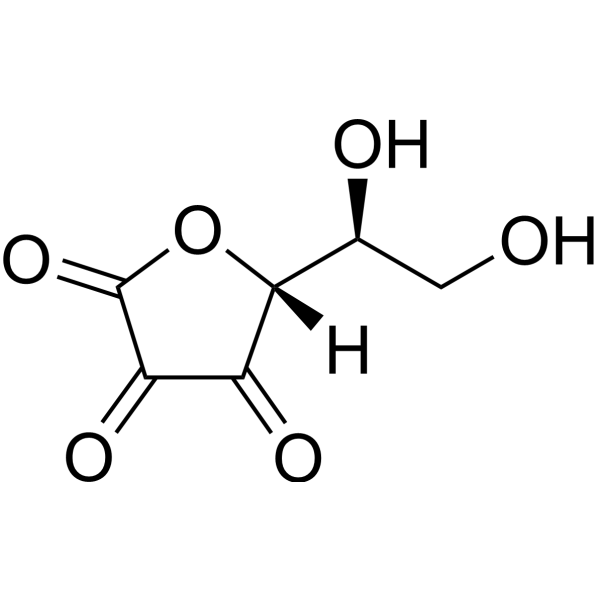
Dehydroascorbic acid is an oxidized form of vitamin C that can cross the blood-brain barrier (BBB). Dehydroascorbic acid clears cytotoxic reactive oxygen species (ROS) produced after ischemic stroke by converting to ascorbic acid (AA), thereby reducing neuronal and glial cell damage and stabilizing cerebral microvascular NO signaling to maintain perfusion in the ischemic area. Dehydroascorbic acid can be used in research on ischemic stroke .
loading...
    loading...
Cat. No.: HY-P10580
CAS No.: 1359657-45-6
Vasculotide is a blood-brain barrier (BBB)-penetrant Tie2 agonist. Vasculotide binds to a unique domain of Tie2, induces receptor clustering to drive phosphorylation, activates downstream PI3K/Akt and eNOS pathways, enhances inter-endothelial cell junctions (such as VE-cadherin and claudin-5), and inhibits inflammatory adhesion molecules, ultimately stabilizing the vascular endothelial barrier and reducing its permeability . Vasculotide alleviates pulmonary microvascular leakage and microcirculatory dysfunction caused by cardiopulmonary bypass, acts as an adjuvant radioprotective agent to reduce acute radiation dermatitis, and promotes BBB recovery after focused ultrasound (FUS). Combination of Vasculotide with antibiotics reduces lung injury .
loading...
    loading...
Cat. No.: HY-W015777
CAS No.: 105-13-5
Synonyms: P-Methoxy-benzyl alcoho; (4-Methoxyphenyl)methanol
4-Methoxybenzyl alcohol (P-Methoxy-benzyl alcoho; (4-Methoxyphenyl) methanol) is a naturally derived volatile aromatic compound. 4-Methoxybenzyl alcohol upregulates the phosphorylation level of PI3K/Akt pathway proteins, downregulates the expression of pro-inflammatory factors, increases the content of tight junction proteins occludin and claudin-5, and alleviates structural damage to the blood-brain barrier. 4-Methoxybenzyl alcohol improves the decrease in viability and NO level of cerebral microvascular endothelial cells induced by oxygen-glucose deprivation/reperfusion, and reduces the release of lactate dehydrogenase. 4-Methoxybenzyl alcohol serves as a substrate in the two-phase persulfate-mediated electro-oxidation system, where it is directionally oxidized to p-anisaldehyde. 4-Methoxybenzyl alcohol acts as a substrate for wild-type fungal aryl alcohol oxidase. 4-Methoxybenzyl alcohol can be used in studies related to ischemic stroke, as well as in research across various fields such as chemical synthesis, including the synthesis of fragrances and flavorings .
loading...
    loading...
Cat. No.: HY-137874
CAS No.: 1955-67-5
Purity:  99.56%
Target:  

Inhibitory Antibodies

Research Areas:  

Metabolic Disease Cancer

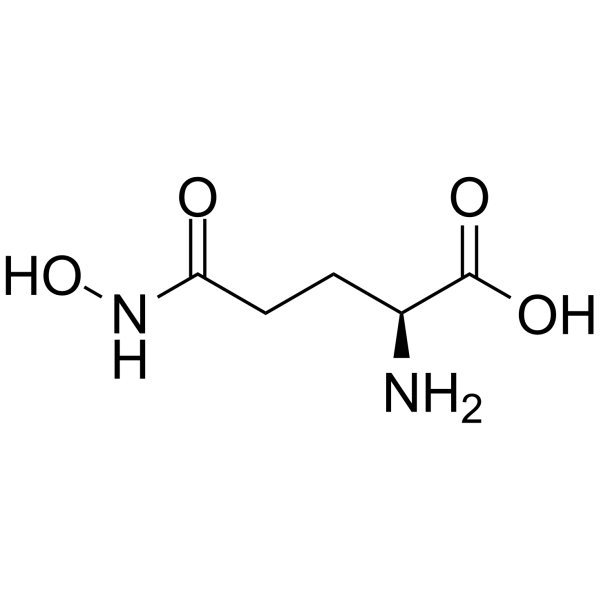
L-Glutamic γ-monohydroxamate is an antitumor agent, inhibits cell proliferation. L-Glutamic γ-monohydroxamate selectively inhibits the uptake of L-histidine into microvascular endothelial cell. L-Glutamic γ-monohydroxamate, as a vanadium ligand, activates glucose uptake and metabolism, thus decreases the blood glucose levels in vivo .
loading...
    loading...
Cat. No.: HY-W416250
CAS No.: 17680-99-8
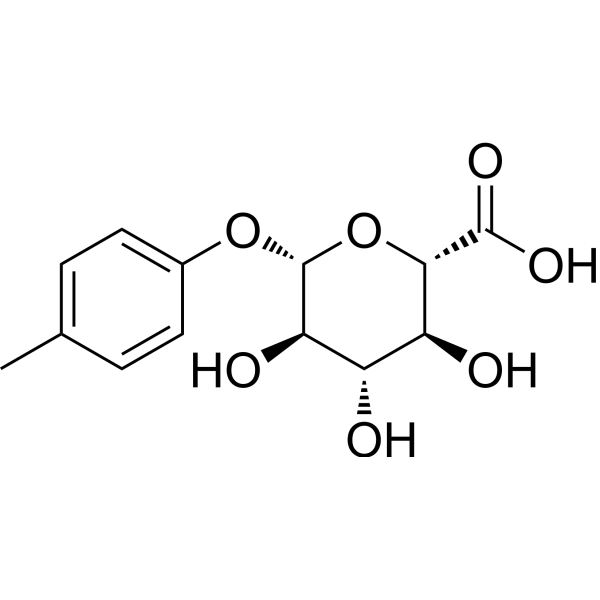
p-Cresol glucuronide is a metabolite of p-Cresol (HY-Y0506). p-Cresol glucuronide acts as a TLR4-antagonizing blood-brain barrier protective agent in brain microvascular endothelial cells, and serves as a non-invasive urinary biomarker metabolite in renal cell carcinoma. p-Cresol glucuronide inhibits LPS (HY-D1056)-induced increase in blood-brain barrier permeability and signal response, impairs mitochondrial function, induces oxidative stress and enhances inflammatory responses, depletes intracellular glutathione, and increases cell necrosis. p-Cresol glucuronide can be used in studies related to renal cell carcinoma, chronic kidney disease and heart disease .
loading...
    loading...
Cat. No.: HY-P10580A
Vasculotide TFA is a blood-brain barrier (BBB)-penetrant Tie2 agonist. Vasculotide TFA binds to a unique domain of Tie2, induces receptor clustering to drive phosphorylation, activates downstream PI3K/Akt and eNOS pathways, enhances inter-endothelial cell junctions (such as VE-cadherin and claudin-5), and inhibits inflammatory adhesion molecules, ultimately stabilizing the vascular endothelial barrier and reducing its permeability . Vasculotide TFA alleviates pulmonary microvascular leakage and microcirculatory dysfunction caused by cardiopulmonary bypass, acts as an adjuvant radioprotective agent to reduce acute radiation dermatitis, and promotes BBB recovery after focused ultrasound (FUS). Combination of Vasculotide TFA with antibiotics reduces lung injury .
loading...
    loading...
Cat. No.: HY-19586
CAS No.: 107767-55-5
Synonyms: A 81-3138; HWA-138
Research Areas:  

Endocrinology

Albifylline (A 81-3138; HWA-138) is a Xanthine (HY-W017389) derivate. Albifylline reduces the shock-induced leukocyte adhesions to the sinusoidal endothelium in the liver after hemorrhagic shock and improves microvascular blood flow in the liver .
loading...
    loading...
Cat. No.: HY-W015777R
CAS No.: 105-13-5
Synonyms: P-Methoxy-benzyl alcoho (Standard); (4-Methoxyphenyl)methanol (Standard)
4-Methoxybenzyl alcohol (Standard) (P-Methoxy-benzyl alcoho (Standard); (4-Methoxyphenyl)methanol (Standard)) is the analytical standard of 4-Methoxybenzyl alcohol (HY-W015777). This product is intended for research and analytical applications. 4-Methoxybenzyl alcohol (P-Methoxy-benzyl alcoho; (4-Methoxyphenyl) methanol) is a naturally derived volatile aromatic compound. 4-Methoxybenzyl alcohol upregulates the phosphorylation level of PI3K/Akt pathway proteins, downregulates the expression of pro-inflammatory factors, increases the content of tight junction proteins occludin and claudin-5, and alleviates structural damage to the blood-brain barrier. 4-Methoxybenzyl alcohol improves the decrease in viability and NO level of cerebral microvascular endothelial cells induced by oxygen-glucose deprivation/reperfusion, and reduces the release of lactate dehydrogenase. 4-Methoxybenzyl alcohol serves as a substrate in the two-phase persulfate-mediated electro-oxidation system, where it is directionally oxidized to p-anisaldehyde. 4-Methoxybenzyl alcohol acts as a substrate for wild-type fungal aryl alcohol oxidase. 4-Methoxybenzyl alcohol can be used in studies related to ischemic stroke, as well as in research across various fields such as chemical synthesis, including the synthesis of fragrances and flavorings .
loading...
    loading...
Cat. No.: HY-185379
CAS No.: 3106554-00-8
Target:  

STING

Research Areas:  

Inflammation/Immunology

STING antagonist-3 is a potent STING antagonist with an IC50 of 2.3 nM against human wild-type STING. STING antagonist-3 inhibits human wild-type STING and the gain-of-function STING mutants N154S and V155M. STING antagonist-3 suppresses IFN‑α2a production in stimulated human whole blood. STING antagonist-3 inhibits IP-10 production in activated human dermal microvascular endothelial cells (HMVEC-d). STING antagonist-3 can be used for the research of autoimmune diseases, autoinflammatory diseases, interferonopathies, and fibrotic disorders .
loading...
    loading...
Cat. No.: HY-182639
CAS No.: 1869033-49-7
Research Areas:  

Cancer

AM9928 is a monoacylglycerol lipase (MAGL) inhibitor with IC50 and Ki values of 8.9 nM and 7.3 nM, respectively. AM9928 blocks the adhesion and migration of triple-negative breast cancer (TNBC) cells, and inhibits the secretion of IL-6, IL-8 and VEGF-A by TNBC cells. AM9928 suppresses the activation of human brain microvascular endothelial cells (HBMECs) induced by TNBC-derived exosomes, and reduces the secretion of IL-8 and VEGF-A by HBMECs. AM9928 attenuates changes in blood-brain barrier permeability, inhibits tumor growth in the mammary fat pad, and reduces brain colonization of TNBC. AM9928 can be used in studies related to triple-negative breast cancer .
loading...
    loading...
  • 1

