17 Results for "

minor groove binding

" in MedChemExpress (MCE) Product Catalog:
Products (17)

17 Results for "minor groove binding" in MCE Product Catalog:

5
5 Cited Publications
Art. -Nr.: HY-D1191
CAS. Nr.: 2225748-05-8
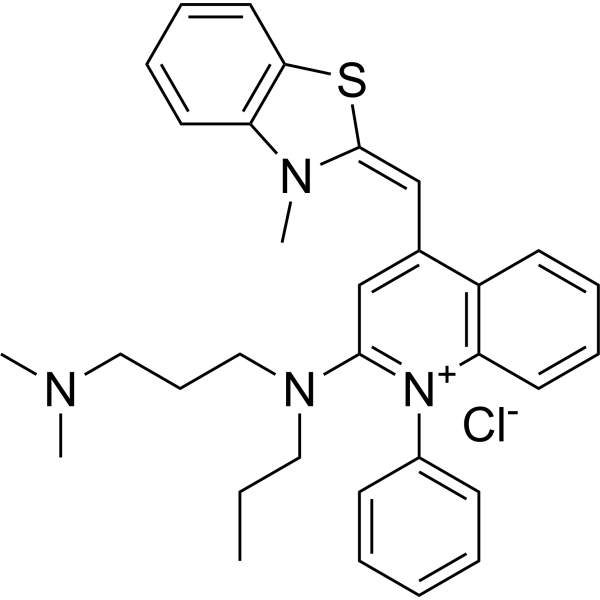
SYBR Green I chloride is a highly sensitive fluorescent nucleic acid dye that binds specifically to the minor groove of double-stranded DNA or intercalates between base pairs. SYBR Green I chloride exhibits weak fluorescence in the unbound state but emits bright fluorescence upon binding, and it preferentially binds to large-fragment DNA and DNA with high G+C content. SYBR Green I chloride is suitable for real-time PCR technology; its fluorescence intensity correlates with the amount and size of amplification products, enabling accurate quantification of gene expression and discrimination of amplicons via melting curve analysis without additional post-processing. SYBR Green I chloride is widely used in preclinical in vitro nucleic acid detection .
loading...
    loading...
1
1 Cited Publications
Art. -Nr.: HY-W040129
CAS. Nr.: 7059-24-7
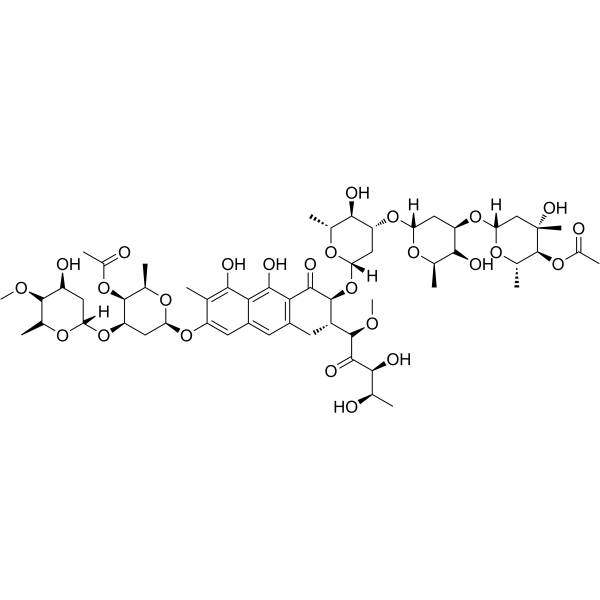
Chromomycin A3 is an inhibitor that selectively binds to GC-rich DNA sequences. Chromomycin A3 targets the DNA minor groove after forming a dimer with Mg 2+. Chromomycin A3 inhibits DNA replication and transcription, blocks the binding of Sp1 transcription factor to target gene promoters, downregulates the expression of anti-apoptotic proteins such as FLIP, Mcl-1, and XIAP, and induces S-phase cycle arrest and caspase-dependent apoptosis in tumor cells. Chromomycin A3 can antagonize oxidative stress induced by glutathione depletion and neuronal apoptosis induced by Camptothecin (HY-15660). Chromomycin A3 can be used in basic research on malignant tumors such as cholangiocarcinoma, and is a potential chemosensitizer and GC-rich region probe .
loading...
    loading...
1
1 Cited Publications
Art. -Nr.: HY-128904
CAS. Nr.: 2055896-98-3
Reinheit:  98.77%
Forschungsgebiete:  

Cancer

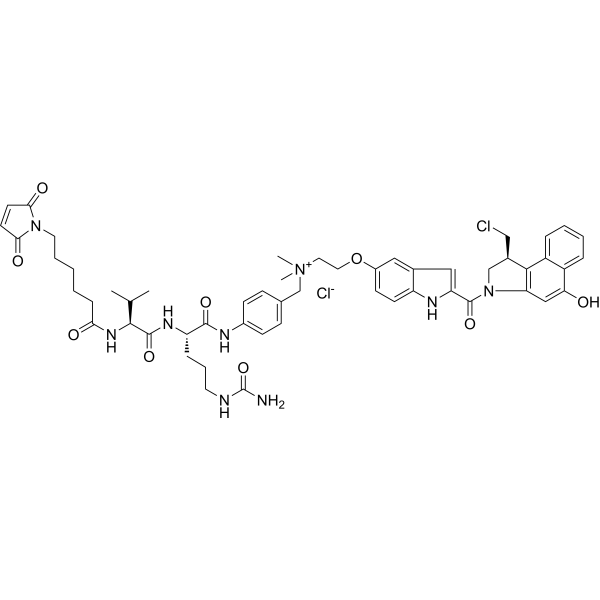
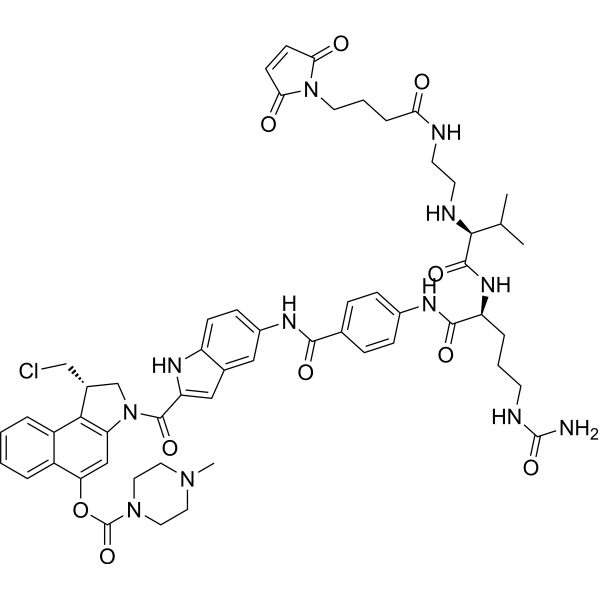
MC-Val-Cit-PAB-duocarmycin chloride is a agent-linker conjugate for ADC with potent antitumor activity by using Duocarmycin (a DNA minor groove binding alkylating agent), linked via the ADC linker MC-Val-Cit-PAB.
loading...
    loading...
Art. -Nr.: HY-112899
CAS. Nr.: 169901-27-3
Forschungsgebiete:  

Cancer

DC1, an analogue of the minor groove-binding DNA alkylator CC-1065, is a ADC Cytotoxin. DC1 can be used in synthesis of antibody-drug conjugates for the targeted treatment of cancer.
loading...
    loading...
Art. -Nr.: HY-136289
CAS. Nr.: 932744-62-2
Forschungsgebiete:  

Cancer

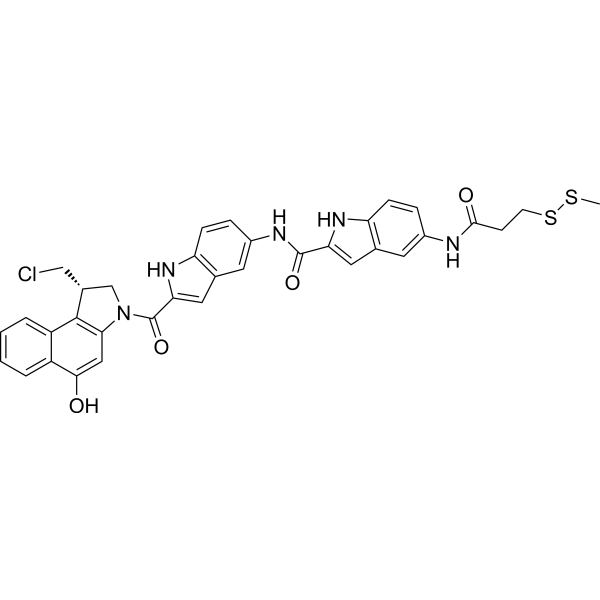
MB-VC-MGBA is a agent-linker conjugate for ADC with potent antitumor activity by using MGBA (minor-groove-binding DNA-alkylating agent), linked via the ADC linker MB-VC .
loading...
    loading...
Art. -Nr.: HY-135900
CAS. Nr.: 2412923-79-4
Target:  

ADC Payloads Bacterial

Forschungsgebiete:  

Cancer

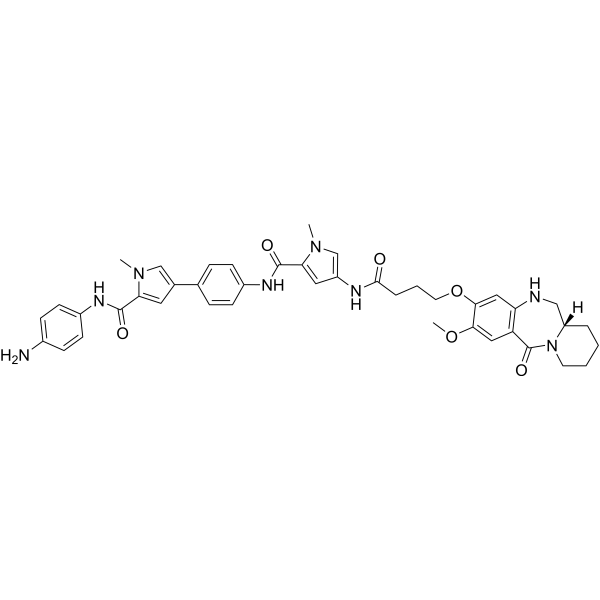
Aniline-MPB-amino-C3-PBD is a cytotoxic agent comprised non-alkylating group. Aniline-MPB-amino-C3-PBD is a sequence-selective DNA minor-groove binding agent. Aniline-MPB-amino-C3-PBD acts as the payload for ADCs. Antimicrobial activity .
loading...
    loading...
Art. -Nr.: HY-112898
CAS. Nr.: 501666-85-9
Reinheit:  ≥98.0%
Target:  

ADC Payloads

Forschungsgebiete:  

Cancer

DC1Sme, a DC1 derivative, exhibits IC50 values of 22 pM, 10 pM, 32 pM and 250 pM for Ramos, Namalwa, HL60/s and COLO 205 cancer cells, respectively. DC1, an analogue of the minor groove-binding DNA alkylator CC-1065, is a ADC Cytotoxin. DC1 can be used in synthesis of antibody-drug conjugates for the targeted treatment of cancer.
loading...
    loading...
Art. -Nr.: HY-144333
CAS. Nr.: 2761734-27-2
Forschungsgebiete:  

Cancer

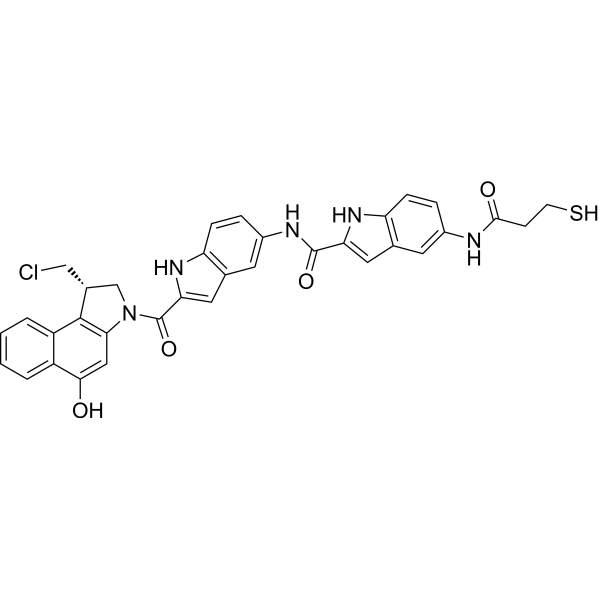
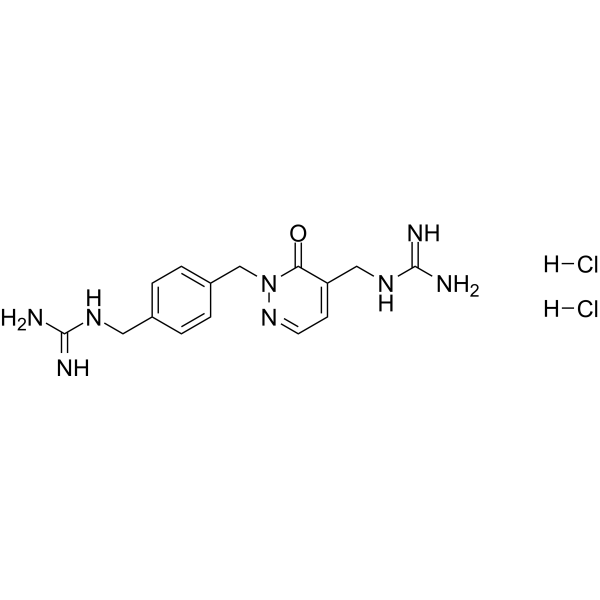
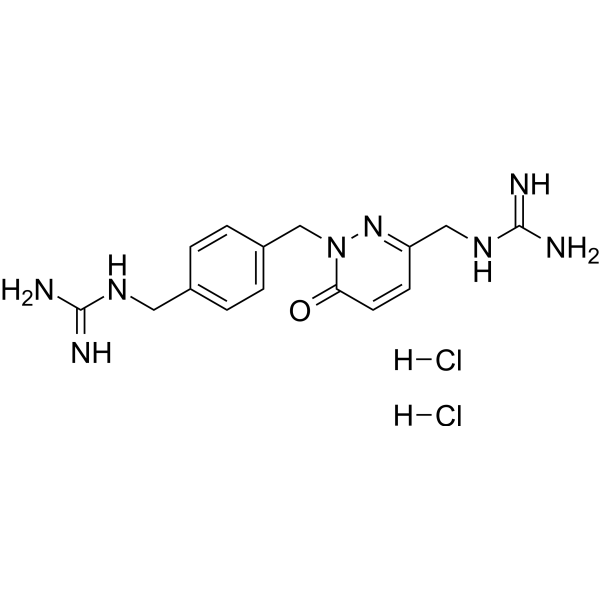
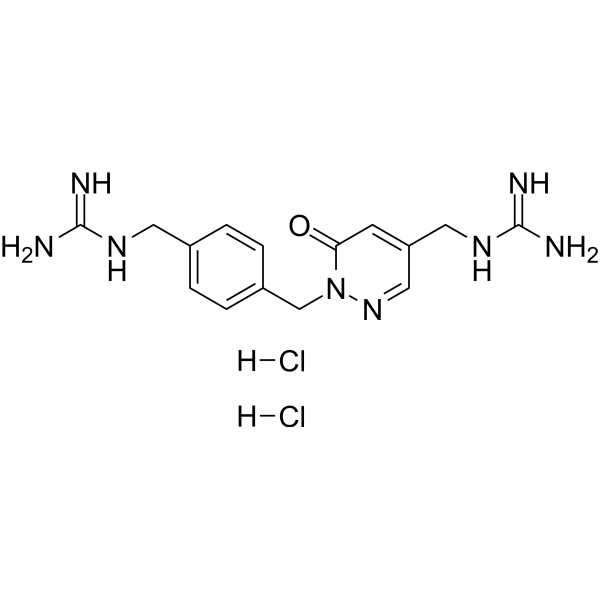
DNA crosslinker 1 dihydrochloride (Compound 4) is a potent DNA minor groove binder with DNA binding affinity (ΔTm) of 1.1 °C. DNA crosslinker 1 dihydrochloride can be used for researching anticancer .
loading...
    loading...
Art. -Nr.: HY-144336
CAS. Nr.: 2761734-21-6
Forschungsgebiete:  

Cancer

DNA crosslinker 3 (dihydrochloride) (compound 1) is a potent DNA minor groove binder with DNA binding affinity (ΔTm) of 1.4 °C. DNA crosslinker 3 (dihydrochloride) can be used for researching anticancer .
loading...
    loading...
Art. -Nr.: HY-129252
CAS. Nr.: 81542-99-6
Prothracarcin is an antibiotic with antitumor activity that exerts its tumor cell toxicity by covalently binding to the C-2 amino group of guanine residues in the minor groove of DNA. Prothracarcin also shows antibacterial activity against Gram-positive bacteria and some Gram-negative bacteria such as Escherichia coli .
loading...
    loading...
Art. -Nr.: HY-144335
CAS. Nr.: 2761734-25-0
Forschungsgebiete:  

Cancer

DNA crosslinker 2 (dihydrochloride) is a potent DNA minor groove binder with DNA binding affinity (ΔTm) of 1.2 °C. DNA crosslinker 2 (dihydrochloride) has certain inhibitory activity against cancer cells NCI-H460, A2780 and MCF-7. DNA crosslinker 2 (dihydrochloride) can be used for researching anticancer .
loading...
    loading...
Art. -Nr.: HY-DY1115
Target:  

Fluorescent Dye

Forschungsgebiete:  

Others

Cyanine 3.18 (TEA) (solution) is a cyanine dye and fluorescent label for biomolecules. Cyanine 3.18 (TEA) (solution) interacts with double helical DNA via intercalation, minor groove binding, or DNA-templated aggregation .
loading...
    loading...
Art. -Nr.: HY-W040129R
CAS. Nr.: 7059-24-7
Chromomycin A3 (Standard) is the analytical standard of Chromomycin A3 (HY-W040129). This product is intended for research and analytical applications. Chromomycin A3 is an inhibitor that selectively binds to GC-rich DNA sequences. Chromomycin A3 targets the DNA minor groove after forming a dimer with Mg 2+. Chromomycin A3 inhibits DNA replication and transcription, blocks the binding of Sp1 transcription factor to target gene promoters, downregulates the expression of anti-apoptotic proteins such as FLIP, Mcl-1, and XIAP, and induces S-phase cycle arrest and caspase-dependent apoptosis in tumor cells. Chromomycin A3 can antagonize oxidative stress induced by glutathione depletion and neuronal apoptosis induced by Camptothecin (HY-15660). Chromomycin A3 can be used in basic research on malignant tumors such as cholangiocarcinoma, and is a potential chemosensitizer and GC-rich region probe .
loading...
    loading...
Art. -Nr.: HY-187697
CAS. Nr.: 915978-94-8
Forschungsgebiete:  

Cancer

DB1255 is an ERG inhibitor that binds to the minor groove of DNA, with KD values of 26 nM and 86 nM for the ATGA and AATT sequences, respectively. DB1255 targets and binds to specific DNA minor grooves (single GC/AT-rich sequences), forming a hydrogen bond network with G bases and AT pairs via its thiophene group and amidino group, respectively, thereby blocking the binding of transcription factors. DB1255 can be used in the research of leukemia and prostate cancer .
loading...
    loading...
Art. -Nr.: HY-N19343
CAS. Nr.: 94492-22-5
Cistanoside C is a phenylpropanoid glycoside with free radical scavenging, DNA repair and DNA minor groove binding activities. Cistanoside C scavenges hydrated electrons and hydroxyl radicals. Cistanoside C inhibits the proliferation of cancer cells. Cistanoside C can be used in research related to leukemia, liver cancer, lung adenocarcinoma and gastric adenocarcinoma .
loading...
    loading...
Art. -Nr.: HY-187163
CAS. Nr.: 78831-35-3
Target:  

DNA/RNA Synthesis

Forschungsgebiete:  

Cancer

Anticancer agent 355 is a highly selective and potent anticancer agent, with IC50 values of 64.66 μM and 13.35 μM against HeLa and MDA-MB-231 cancer cells, respectively. Anticancer agent 355 induces plasmid DNA degradation via intercalation or minor groove binding, and disrupts the tertiary structure of BSA by interfering with the interactions of amino acid side chains. Anticancer agent 355 can be used in the research of cervical cancer and breast cancer .
loading...
    loading...
Art. -Nr.: HY-181060
CAS. Nr.: 952306-31-9
Forschungsgebiete:  

Cancer

Apoptosis inducer 56 is an apoptosis inducer. Apoptosis inducer 56 induces DNA damage (upregulation of γH2AX and p-ATM expression) by minor groove binding. Apoptosis inducer 56 induces intrinsic apoptosis (upregulation of p53 and Bax/Bcl-2 ratio, cleaved caspase-7) via S-phase cell cycle arrest. Apoptosis inducer 56 shows selectivity for cancer cells over normal breast epithelial cells. Apoptosis inducer 56 can be used for the research of breast cancer .
loading...
    loading...
  • 1

