11 Results for "

murine splenocytes

" in MedChemExpress (MCE) Product Catalog:
Products (11)

11 Results for "murine splenocytes" in MCE Product Catalog:

  • Targets Recommended:
5
5 Cited Publications
Cat. No.: HY-D1191
CAS No.: 2225748-05-8
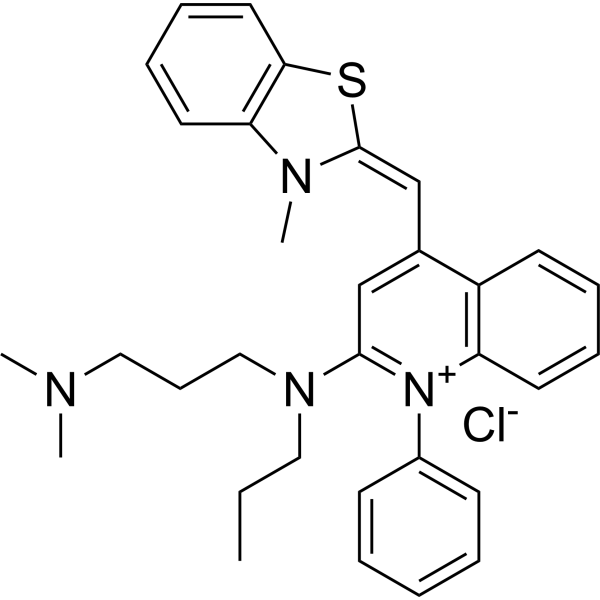
SYBR Green I chloride is a highly sensitive fluorescent nucleic acid dye that binds specifically to the minor groove of double-stranded DNA or intercalates between base pairs. SYBR Green I chloride exhibits weak fluorescence in the unbound state but emits bright fluorescence upon binding, and it preferentially binds to large-fragment DNA and DNA with high G+C content. SYBR Green I chloride is suitable for real-time PCR technology; its fluorescence intensity correlates with the amount and size of amplification products, enabling accurate quantification of gene expression and discrimination of amplicons via melting curve analysis without additional post-processing. SYBR Green I chloride is widely used in preclinical in vitro nucleic acid detection .
loading...
    loading...
Cat. No.: HY-164278
CAS No.: 3035557-55-9
Target:  

STING Cathepsin

Research Areas:  

Cancer

diABZI-V/C-Mal is a STING agonist (with a STING EC50 of 314 nM in TH1 dual reporter cells) and a Cathepsin B substrate. diABZI-V/C-Mal activates STING, thereby triggering the IRF3 signaling pathway. diABZI-V/C-Mal is cleaved by Cathepsin B to regenerate diABZI-NH2 .
loading...
    loading...
Cat. No.: HY-159069
CAS No.: 9010-72-4
Purity:  95.02%
Zymosan (ZM), 95% is a yeast cell wall-derived carbohydrate-rich preparation and immunomodulator. Zymosan (ZM), 95% binds to and activates TLR-2, TLR-4, and Dectin-1 receptor to trigger downstream signaling pathways. Zymosan (ZM), 95% upregulates TLR-2, TLR-4, and TNF-α mRNA expression, increases serum TNF-α levels, and stimulates splenocyte number and viability in mice. Zymosan (ZM), 95% attenuates melanoma growth progression, modulates macrophage marker gene expression, and mediates phagocytosis, ROS generation, and cytokine production. Zymosan (ZM), 95% reduces Connexin 43 protein and mRNA levels, inhibits gap junctional intercellular communication, and induces proinflammatory factor production in human corneal cells. Zymosan (ZM), 95% induces peritoneal inflammation in mice, functions as a drug carrier, and supports fibroblast cell attachment in hydrogel formulations. Zymosan (ZM), 95% can be used for the research of melanoma, tumors, fungal keratitis, ocular surface inflammatory disorders, and peritoneal inflammation .
loading...
    loading...
Cat. No.: HY-P99976

Target:  

CD19

Research Areas:  

Inflammation/Immunology

Anti-Mouse CD19 Antibody (1D3) is an IgG2a antibody inhibitor targeting mouse CD19. Anti-Mouse CD19 Antibody (1D3) reduces CD19 expression levels on the surface of B cells. Anti-Mouse CD19 Antibody (1D3) inhibits the replication of peritoneal B-1a cells .
loading...
    loading...
Cat. No.: HY-136427
CAS No.: 79220-94-3
Purity:  98.08%
KRM-III is an orally active TCR inhibitor and NFAT inhibitor with an IC50 of 5 μM against NFAT. KRM-III has no effect on the activation of nuclear factor-κB. KRM-III inhibits T cell proliferation induced by T cell antigen receptor stimulation. KRM-III abrogates anti-CD3 antibody-induced cell activation in vivo. KRM-III reduces paw pad swelling in delayed-type hypersensitivity induced by Bovine serum albumin (HY-D0842). KRM-III alleviates the severity of experimental autoimmune encephalomyelitis (EAE) in mice. KRM-III can be used in studies related to experimental autoimmune encephalomyelitis .
loading...
    loading...
Cat. No.: HY-P11060
Synonyms: Adpgk peptide
Target:  

MHC

Research Areas:  

Cancer

MC38 SLP Adpgk (Adpgk peptide) is an H-2 K b-restricted colorectal cancer neoantigen peptide. MC38 SLP Adpgk is formulated into PCNP nanocomplexes together with CpG ODN. PCNP vaccines significantly enhance the co-delivery efficiency of neoantigens and adjuvants to lymphoid organs, and activate cytotoxic T cells. PCNP vaccines not only protect mice from MC-38 colorectal tumor invasion, but also exhibit anti-tumor efficacy in established colorectal tumor models and significantly prolong the survival of tumor-bearing mice .
loading...
    loading...
Cat. No.: HY-P11158
CAS No.: 1427515-26-1
Research Areas:  

Infection Cancer

Gymnin is a defensin-like antifungal peptide. Gymnin has significant antifungal activities against phytopathogenic and mycotoxigenic fungi. Gymnin inhibits HIV-1 reverse transcriptase with an IC50 of 200 μM and the proliferation of tumor cells. Gymnin has a weak mitogenic activity toward murine splenocytes. Gymnin can be used for plant disease treatments research .
loading...
    loading...
Cat. No.: HY-N10445
Target:  

CD28 CD3

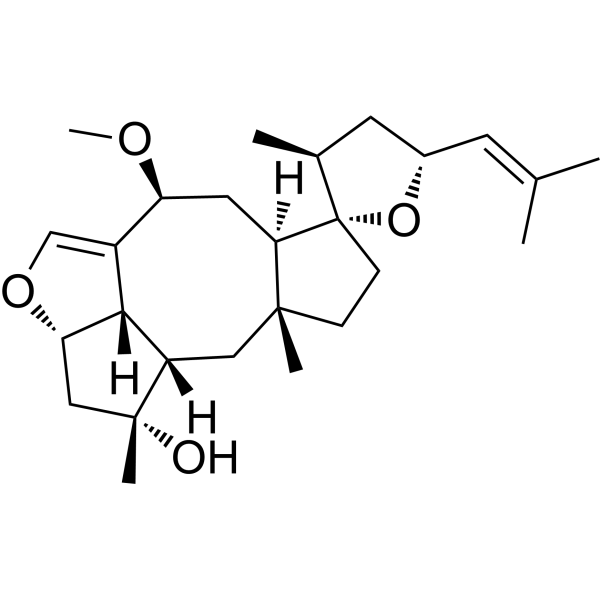
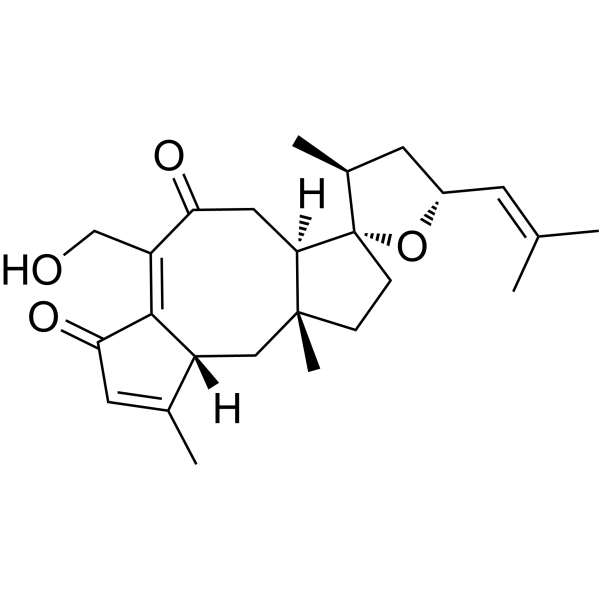
Maydispenoid A is a potent immunosuppressor. Maydispenoid A can inhibit anti-CD3/anti-CD28 mAbs activated and lipopolysaccharide activated murine splenocyte proliferation .
loading...
    loading...
Cat. No.: HY-N10446
CAS No.: 3024647-69-3
Target:  

CD28 CD3

Maydispenoid B is a potent immunosuppressor. Maydispenoid B can inhibit anti-CD3/anti-CD28 mAbs activated and lipopolysaccharide activated murine splenocyte proliferation .
loading...
    loading...
Cat. No.: HY-123650
CAS No.: 78859-42-4
Purity:  99.06%
Synonyms: 5'-p-Fluorosulfonylbenzoyladenosine
Research Areas:  

Cancer

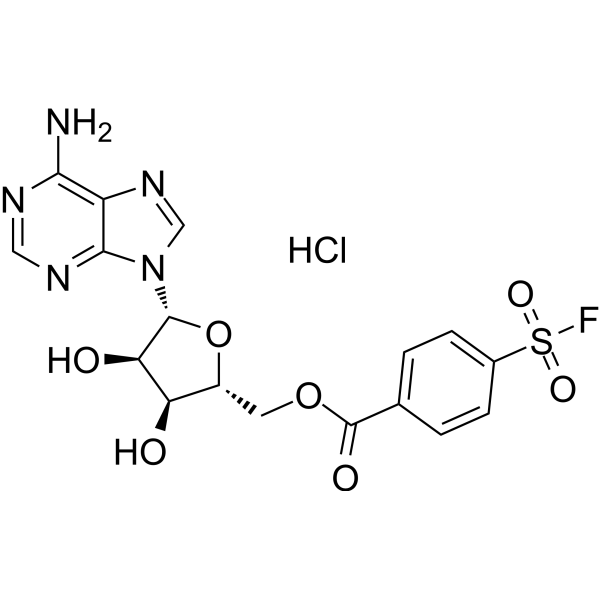
FSBA (5'-p-Fluorosulfonylbenzoyladenosine) hydrochloride is a covalent modifier and affinity labeling reagent for adenine nucleotide-binding proteins. FSBA hydrochloride covalently attaches to the nucleotide-binding sites of pyruvate kinase, glutamate dehydrogenase, and p56 lck, and to a lysine residue in the ATP-binding site of cAMP-dependent protein kinase, causing loss of enzymatic activity. FSBA hydrochloride can be used for the research of T lymphoma .
loading...
    loading...
Cat. No.: HY-183455
CAS No.: 86798-59-6
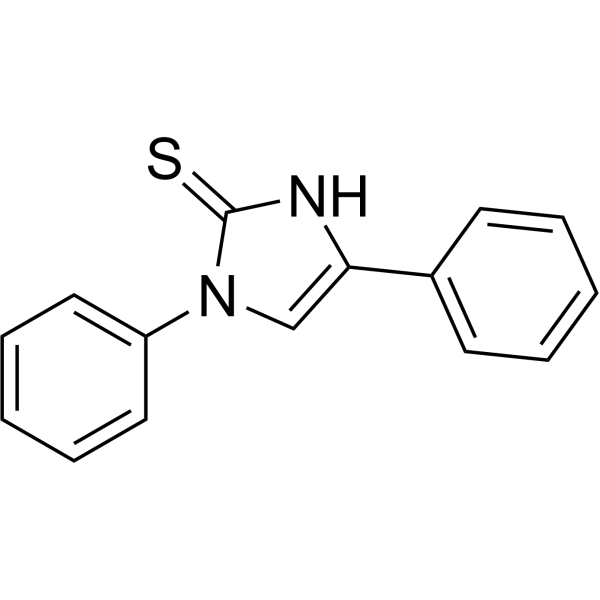
CI-930 is a selective, orally active phosphodiesterase 3 (PDE3) inhibitor with an IC50 value of 0.0.84 μM. CI-930 exerts positive inotropic and vasodilatory effects by inhibiting cAMP hydrolysis. CI-930 also regulates hemodynamics, inhibits the proliferation of coronary artery smooth muscle cells, and suppresses the proliferation of mouse splenocytes. CI-930 can be used in research related to heart failure, atherosclerosis, and asthma .
loading...
    loading...
  • 1

