Search Result
Results for "
nausea and vomiting
" in MedChemExpress (MCE) Product Catalog:
23
Isotope-Labeled Compounds
| Cat. No. |
Product Name |
Target |
Research Areas |
Chemical Structure |
-
- HY-B0002B
-
|
GR 38032; SN 307
|
5-HT Receptor
|
Neurological Disease
|
|
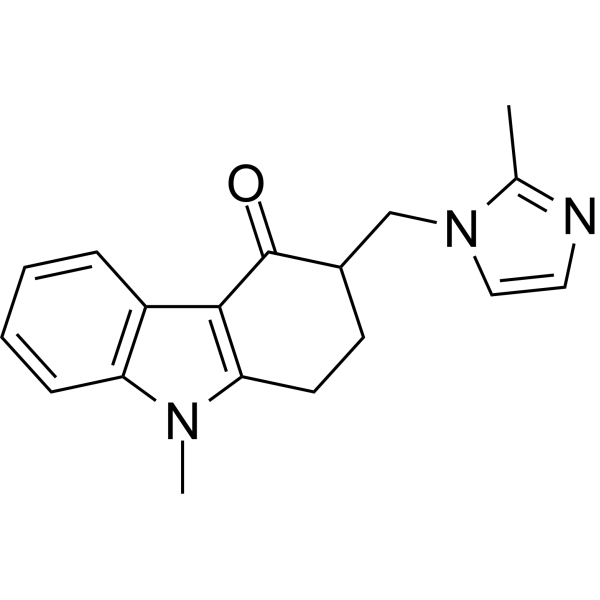
Ondansetron (GR 38032; SN 307) is a highly selective 5-HT3 receptor antagonist with an IC50 value of 103 pM. Ondansetron exerts its antiemetic effect by antagonizing 5-HT receptors located in localized neurons in the peripheral and central nervous systems. Ondansetron can inhibit nausea and vomiting induced by chemotherapy and radiotherapy .
|
-
-
- HY-B0807A
-
|
|
Dopamine Receptor
NADPH Oxidase
Dengue Virus
Flavivirus
|
Neurological Disease
Inflammation/Immunology
Cancer
|
|
Prochlorperazine dimaleate is an orally active phenothiazine-type dopamine D2 receptor (D2R) antagonist. Prochlorperazine exhibits anti-cancer activity in vitro against various cancer cell lines. Prochlorperazine dimaleate exhibits IC50 values of 6.4 μM, 4.5 μM and 2.3 μM for NOX1, NOX2 and NOX5, respectively. Prochlorperazine dimaleate has antedesmosidic activity against dengue virus (DENV). Prochlorperazine dimaleate can be used for research on nausea, vomiting, migraine, and schizophrenia .
|
-
-
- HY-W010892
-
|
Hyoscine hydrobromide trihydrate
|
mAChR
5-HT Receptor
|
Neurological Disease
|
|
Scopolamine (Hyoscine) hydrobromide trihydrate is a high-affinity muscarinic antagonist that can cross the blood-brain barrier. Scopolamine hydrobromide trihydrate competitively antagonizes 5-HT3 receptors with an IC50 of 2.09 μM. Scopolamine hydrobromide trihydrate can induce cognitive and memory deficits in animals. Scopolamine hydrobromide trihydrate can be used in the research of preventing postoperative nausea and vomiting, motion sickness, nervous system diseases, etc .
|
-
-
- HY-B0750
-
|
MDL-73147
|
5-HT Receptor
|
Cancer
|
|
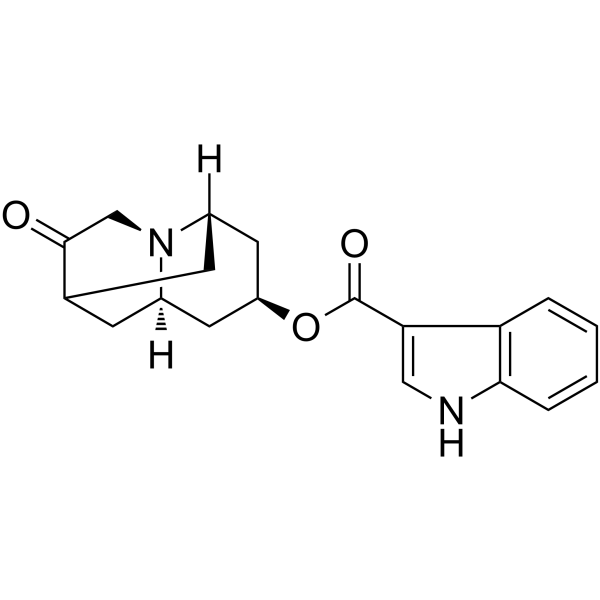
Dolasetron (MDL-73147) is a serotonin 5-HT3 receptor antagonist. Dolasetron acts as an antiemetics agent and can be used for the research of chemotherapy-induced nausea and vomiting in cancer .
|
-
-
- HY-B0002
-
|
GR 38032 hydrochloride; SN 307 hydrochloride
|
5-HT Receptor
|
Neurological Disease
|
|
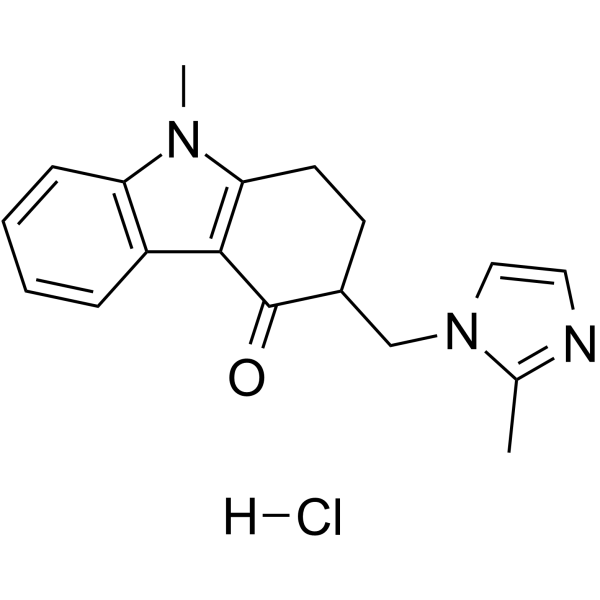
Ondansetron (GR 38032; SN 307) hydrochloride is a highly selective 5-HT3 receptor antagonist with an IC50 value of 103 pM. Ondansetron hydrochloride exerts its antiemetic effect by antagonizing 5-HT receptors located in localized neurons in the peripheral and central nervous systems. Ondansetron hydrochloride can inhibit nausea and vomiting induced by chemotherapy and radiotherapy .
|
-
-
- HY-14407A
-
|
MK-0517; L785298
|
Neurokinin Receptor
|
Neurological Disease
Endocrinology
Cancer
|
|
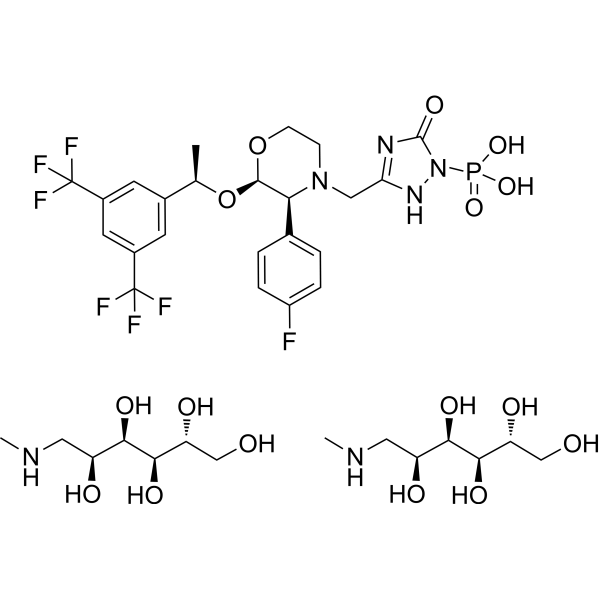
Fosaprepitant dimeglumine (MK-0517) is a proagent of Aprepitant (HY-10052). Fosaprepitant dimeglumine is a neurokinin-1 receptor antagonist, which is development for the prevention of chemotherapy-induced nausea and vomiting (CINV) .
|
-
-
- HY-B1215
-
|
|
Histamine Receptor
|
Neurological Disease
Endocrinology
|
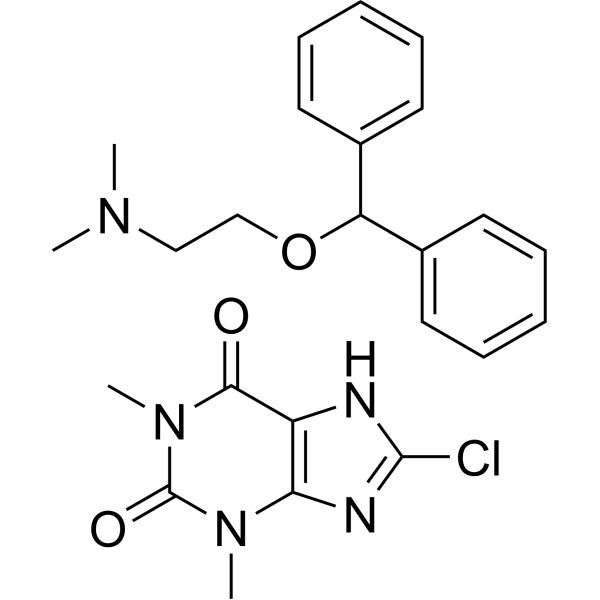
Dimenhydrinate is an orally active H1-antihistamine consisting of Diphenhydramine (HY-B0303) and 8-Chlorotheophylline. Dimenhydrinate is used to prevent nausea, vomiting, dizziness, and vertigo associated with motion sickness .
|
-
-
- HY-A0021
-
|
|
5-HT Receptor
Flavivirus
|
Infection
Cardiovascular Disease
Neurological Disease
|
|
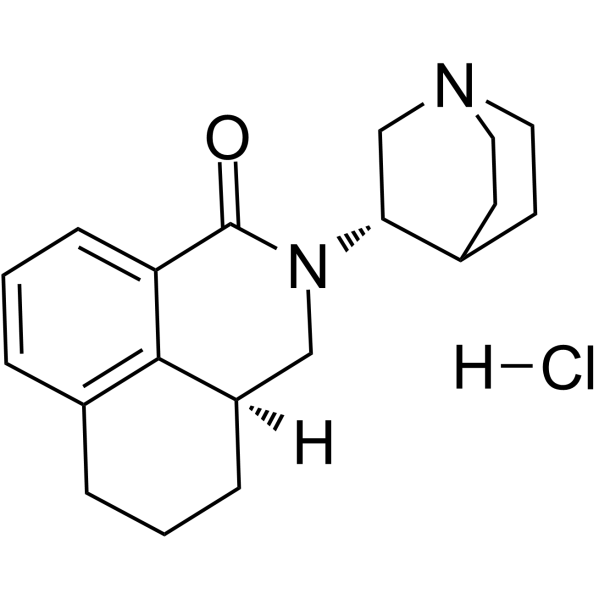
Palonosetron hydrochloride is a 5-HT3 antagonist primarily used to prevent acute, delayed, and overall chemotherapy-induced nausea and vomiting. In addition, Palonosetron hydrochloride exhibits moderate anti-flavivirus activity and potent anti-Zika virus activity in mammalian cells. Palonosetron hydrochloride also possesses antidepressant activity .
|
-
-
- HY-B0002A
-
|
GR 38032 hydrochloride dihydrate; SN 307 hydrochloride dihydrate
|
5-HT Receptor
|
Neurological Disease
|
|
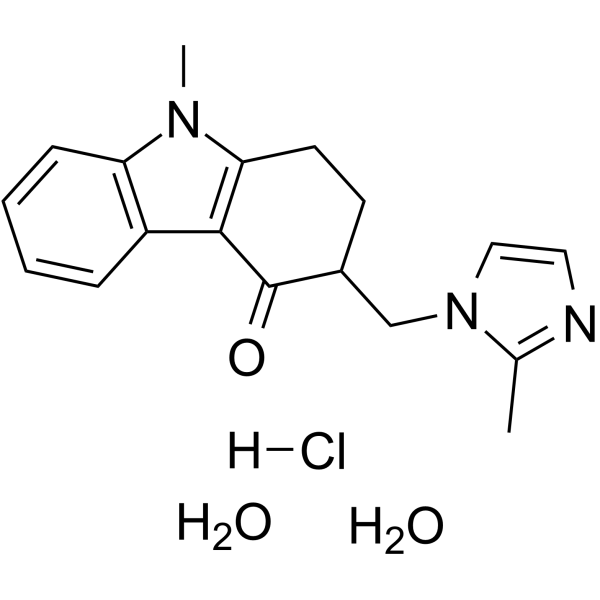
Ondansetron (GR 38032; SN 307) hydrochloride dehydrate is a highly selective 5-HT3 receptor antagonist with an IC50 value of 103 pM. Ondansetron hydrochloride dehydrate exerts its antiemetic effect by antagonizing 5-HT receptors located in localized neurons in the peripheral and central nervous systems. Ondansetron hydrochloride dehydrate can inhibit nausea and vomiting induced by chemotherapy and radiotherapy .
|
-
-
- HY-B0071
-
|
BRL 43694
|
5-HT Receptor
|
Neurological Disease
|
|
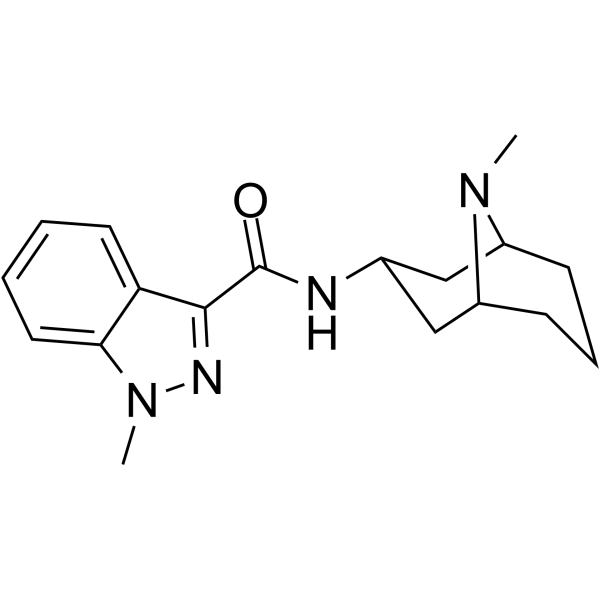
Granisetron (BRL 43694) is a serotonin 5-HT3 receptor antagonist used as an antiemetic to treat nausea and vomiting following chemotherapy.
|
-
-
- HY-17382
-
|
|
5-HT Receptor
Dopamine Receptor
|
Endocrinology
|
|
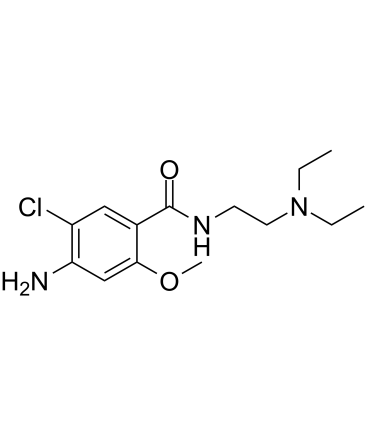
Metoclopramide is a potent antagonist of 5-HT3 and dopamine D2 receptor, with IC50s of 308 nM and 483 nM, respectively. Metoclopramide can be used for the research of nausea and vomiting, gastro-oesophageal reflux, and gastroparesis .
|
-
-
- HY-B0071A
-
|
BRL 43694A
|
5-HT Receptor
|
Neurological Disease
Cancer
|
|
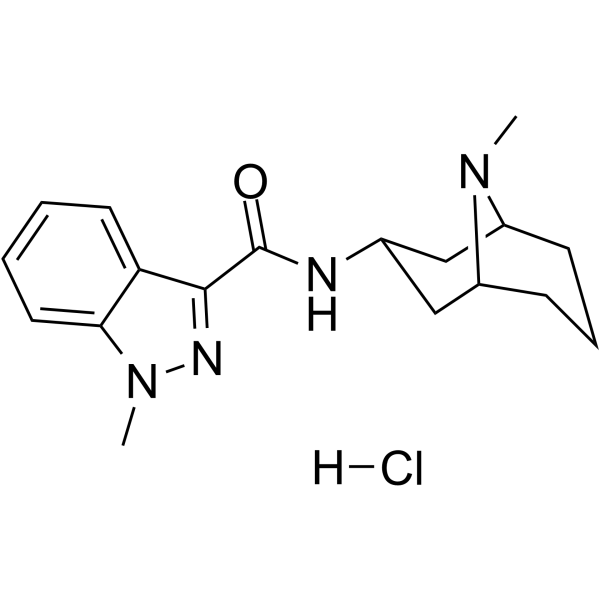
Granisetron (Hydrochloride) (BRL 43694A) is a serotonin 5-HT3 receptor antagonist used as an antiemetic to treat nausea and vomiting following chemotherapy.
|
-
-
- HY-121388
-
|
(+)-Ledol
|
Fungal
|
Infection
|
|
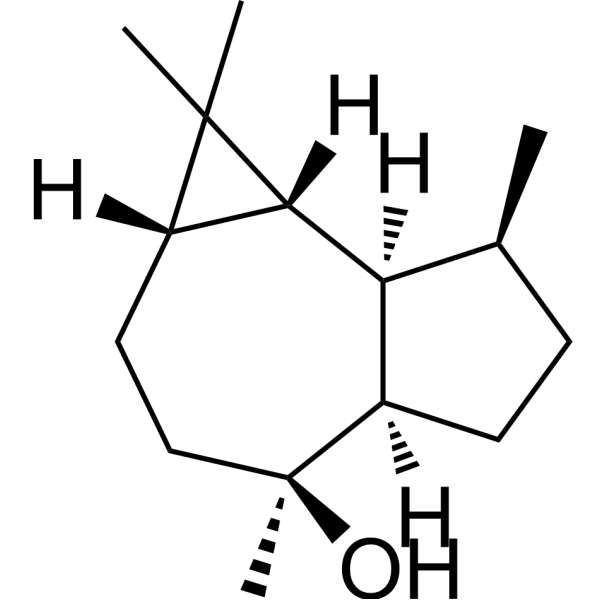
Ledol ((+)-Ledol) is an antifungal agent isolated from the volatile oil components of Rhododendron tomentosum. Ledol also acts as an expectorant and antitussive, while it can cause adverse reactions such as dizziness, nausea and vomiting .
|
-
-
- HY-B1693
-
|
Methotrimeprazine
|
5-HT Receptor
Dopamine Receptor
Histamine Receptor
Autophagy
Enterovirus
Calcium Channel
|
Infection
Neurological Disease
Inflammation/Immunology
|
|
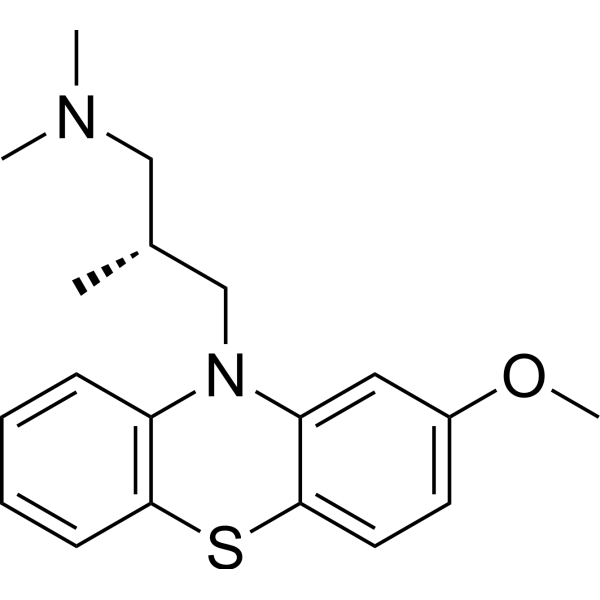
Levomepromazine (Methotrimeprazine) is an orally active antipsychotic compound and Ca 2+ release inducer. Levomepromazine inhibits SERCA pump and induces an increase in cytoplasmic Ca 2+ levels. Levomepromazine has antagonistic effects on a variety of neurotransmitter receptors, including dopamine, cholinergic, serotonin, and histamine receptors. Levomepromazine can induce adaptive ER stress and autophagy. In addition, Levomepromazine has antiviral, anti-inflammatory, neuroprotective and analgesic, sedative and anti-injurious activities. Levomepromazine can be used in the study psychiatric disorders and relieving nausea and vomiting .
|
-
-
- HY-12751A
-
-
-
- HY-B1397
-
|
|
Histamine Receptor
|
Neurological Disease
|
|
Cyclizine, a piperazine-derivative, is a potent and selective histamine H1 receptor antagonist. Cyclizine can be used for the research of nausea, vomiting, and dizziness .
|
-
-
- HY-116578
-
|
EXP999; RP9965
|
Dopamine Receptor
|
Neurological Disease
|
|
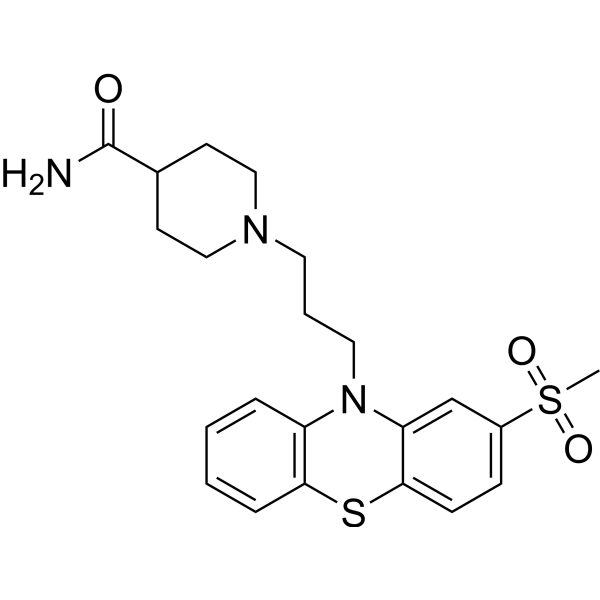
Metopimazine (EXP999; RP9965) is a phenothiazine, orally available, selective dopamine D2 receptor antagonist that does not penetrate the blood-brain barrier. Metopimazine blocks dopamine D2 receptors in the chemoreceptor trigger zone and the periphery, thereby inhibiting nausea and vomiting. Metopimazine is indicated for chemotherapy-induced nausea and vomiting, and has low central side effects due to its poor brain penetration. The use of metopimazine in acute gastroenteritis may have potential risks .
|
-
-
- HY-B0326
-
|
|
Drug Derivative
|
Endocrinology
|
|
Alibendol can be taken orally. It has anti-spasmodic properties and promotes bile secretion, making it useful for research on digestive system issues like indigestion, nausea, vomiting, and constipation .
|
-
-
- HY-B2065
-
|
(-)-Scopolamine hydrochloride; Hyoscine hydrochloride
|
mAChR
5-HT Receptor
|
Neurological Disease
|
|
Scopolamine (Hyoscine) hydrochloride is a high-affinity muscarinic antagonist that can cross the blood-brain barrier. Scopolamine hydrochloride competitively antagonizes 5-HT3 receptors with an IC50 of 2.09 μM. Scopolamine hydrochloride can induce cognitive and memory deficits in animals. Scopolamine hydrochloride can be used in the research of preventing postoperative nausea and vomiting, motion sickness, nervous system diseases, etc .
|
-
-
- HY-B0068
-
|
Y-25130 hydrochloride
|
5-HT Receptor
|
Neurological Disease
|
|
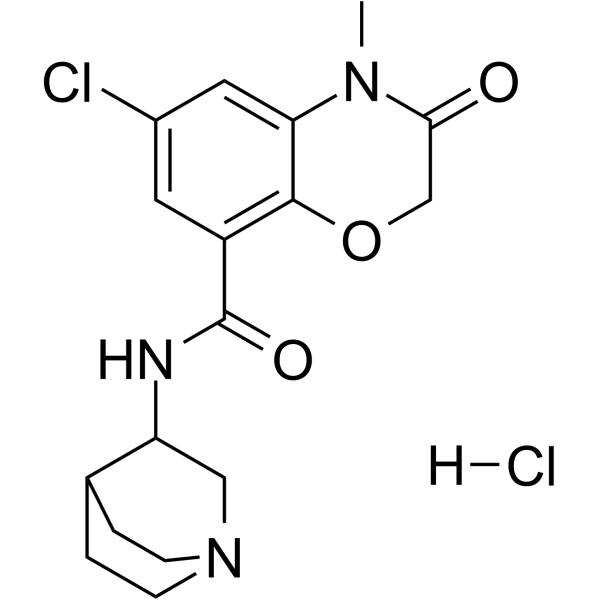
Azasetron (Y-25130) hydrochloride, a benzamide derivative, is a potent and selective 5-HT3 receptor antagonist. Azasetron is used in the study for Chemotherapy-induced nausea and vomiting (CINV) .
|
-
-
- HY-14405A
-
|
GW679769B
|
Neurokinin Receptor
Cytochrome P450
|
Neurological Disease
Cancer
|
|
Casopitant mesylate (GW679769B) is a potent, selective, brain permeable and orally active neurokinin 1 (NK1) receptor antagonist. Casopitant mesylate is a second in the class of antiemetics that acts to antagonise the emetogenic effect of Substance P (HY-P0201). Casopitant mesylate is also a substrate and a weak-to-moderate inhibitor of CYP3A4. Casopitant mesylate can be used for chemotherapy-induced nausea and vomiting (CINV) and postoperative nausea and vomiting (PONV) .
|
-
-
- HY-B1164
-
|
|
Dopamine Receptor
|
Neurological Disease
|
|
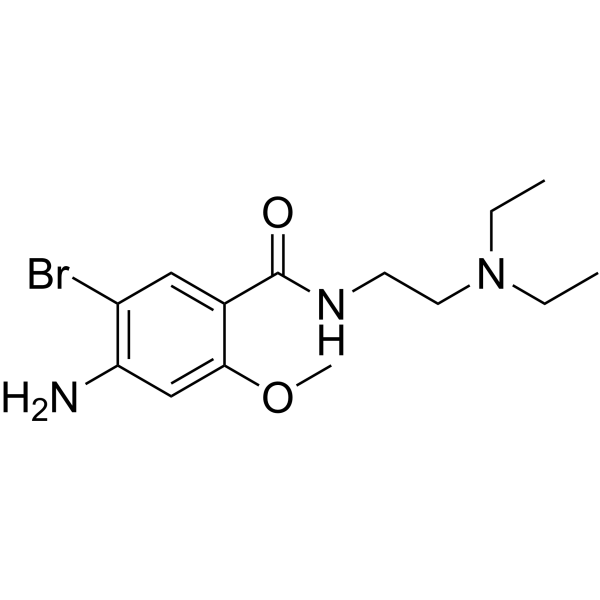
Bromopride is a selective, irreversible, competitive, and orally effective dopamine D2 receptor antagonist. Bromopride can pass through the blood-brain barrier, inhibit the vomiting center, and enhance gastrointestinal motility, exerting antiemetic and gastrointestinal motility effects. Bromopride antagonizes dopamine-mediated vomiting reflexes and promotes gastrointestinal smooth muscle contraction, and has no adverse effects on abdominal wall healing in rats with postoperative abdominal infection. Bromopride can be used for the study of digestive system diseases (such as gastric hypomotility, nausea and vomiting) .
|
-
-
- HY-12143
-
|
GR 205171A
|
Neurokinin Receptor
|
Neurological Disease
|
|
Vofopitant dihydrochloride (GR 205171A) is a blood-brain barrier-permeable NK1 receptor inhibitor with a pKi of 9.02 in mice. Vofopitant dihydrochloride blocks vomiting-related responses and inhibits pseudoptyalism. Vofopitant dihydrochloride exerts anxiolytic effects, regulates 5-HT receptor function and increases central 5-HT release. Vofopitant dihydrochloride improves hyperarousal symptoms of post-traumatic stress disorder. Vofopitant dihydrochloride can be used in research related to depression, anxiety, vomiting and postoperative nausea and vomiting .
|
-
-
- HY-17382A
-
|
|
5-HT Receptor
Dopamine Receptor
|
Endocrinology
|
|
Metoclopramide hydrochloride hydrate is a potent antagonist of 5-HT3 and dopamine D2 receptor, with IC50s of 308 nM and 483 nM, respectively. Metoclopramide hydrochloride hydrate can be used for the research of nausea and vomiting, gastro-oesophageal reflux, and gastroparesis .
|
-
-
- HY-B0750B
-
|
MDL-73147EF hydrate
|
5-HT Receptor
|
Cancer
|
|
Dolasetron Mesylate hydrate (MDL-73147EF hydrate) is a serotonin 5-HT3 receptor antagonist used to treat nausea and vomiting following chemotherapy .
|
-
-
- HY-14407
-
-
-
- HY-B0002BS
-
|
GR 38032-d5; SN 307-d5
|
5-HT Receptor
Isotope-Labeled Compounds
|
Neurological Disease
|
|
Ondansetron-d5 is the deuterium labeled Ondansetron (HY-B0002B). Ondansetron (GR 38032; SN 307) is a highly selective 5-HT3 receptor antagonist with an IC50 value of 103 pM. Ondansetron exerts its antiemetic effect by antagonizing 5-HT receptors located in localized neurons in the peripheral and central nervous systems. Ondansetron can inhibit nausea and vomiting induced by chemotherapy and radiotherapy .
|
-
-
- HY-B0750A
-
|
MDL-73147EF
|
5-HT Receptor
|
Cancer
|
|
Dolasetron Mesylate (MDL-73147EF) is a serotonin 5-HT3 receptor antagonist used to treat nausea and vomiting following chemotherapy .
|
-
-
- HY-B1397B
-
|
|
Histamine Receptor
|
Neurological Disease
|
|
Cyclizine lactate, a piperazine-derivative, is a potent and selective histamine H1 receptor antagonist. Cyclizine lactate can be used for the research of nausea, vomiting, and dizziness .
|
-
-
- HY-14405B
-
|
(R)-GW679769
|
Neurokinin Receptor
|
Cancer
|
|
(R)-Casopitant ((R)-GW679769) is the isomer of Casopitant (HY-14405). Casopitant is a NK(1)-receptor antagonist. Casopitant can be used for the research of chemotherapy-induced nausea and vomiting .
|
-
-
- HY-12142
-
|
GR 205171
|
Neurokinin Receptor
|
Neurological Disease
|
|
Vofopitant (GR 205171A) is a blood-brain barrier-permeable NK1 receptor inhibitor with a pKi of 9.02 in mice. Vofopitant blocks vomiting-related responses and inhibits pseudoptyalism. Vofopitant exerts anxiolytic effects, regulates 5-HT receptor function and increases central 5-HT release. Vofopitant improves hyperarousal symptoms of post-traumatic stress disorder. Vofopitant can be used in research related to depression, anxiety, vomiting and postoperative nausea and vomiting .
|
-
-
- HY-A0021S
-
|
|
Isotope-Labeled Compounds
5-HT Receptor
Flavivirus
|
Infection
Cardiovascular Disease
Neurological Disease
|
|
Palonosetron-d3 hydrochloride is the deuterium labeled Palonosetron hydrochloride (HY-A0021). Palonosetron hydrochloride is a 5-HT3 antagonist primarily used to prevent acute, delayed, and overall chemotherapy-induced nausea and vomiting. In addition, Palonosetron hydrochloride exhibits moderate anti-flavivirus activity and potent anti-Zika virus activity in mammalian cells. Palonosetron hydrochloride also possesses antidepressant activity .
|
-
-
- HY-B1397C
-
|
|
Histamine Receptor
|
Neurological Disease
|
|
Cyclizine hydrochloride, a piperazine-derivative, is a potent and selective histamine H1 receptor antagonist. Cyclizine hydrochloride can be used for the research of nausea, vomiting, and dizziness .
|
-
-
- HY-167639
-
|
(S)-YM060 free base
|
5-HT Receptor
|
Metabolic Disease
|
|
(S)-Ramosetron ((S)-YM060 free base) is an orally active antagonist of the 5-hydroxytryptamine 5-HT3 receptor. (S)-Ramosetron is promising for research of diseases related to nausea and vomiting, irritable bowel syndrome (IBS) .
|
-
-
- HY-17382B
-
|
|
5-HT Receptor
Dopamine Receptor
|
Neurological Disease
|
|
Metoclopramide hydrochloride is a potent and orally active antagonist of 5-HT3 and dopamine D2 receptor, with IC50s of 308 nM and 483 nM, respectively. Metoclopramide hydrochloride can be used for the research of nausea and vomiting, gastro-oesophageal reflux, and gastroparesis .
|
-
-
- HY-B0002S1
-
|
GR 38032-d6 hydrochloride; SN 307-d6 hydrochloride
|
5-HT Receptor
|
Neurological Disease
|
|
Ondansetron-d6 (hydrochloride) is the deuterium labeled Ondansetron hydrochloride . Ondansetron hydrochloride is a serotonin 5-HT3 receptor antagonist used mainly as anantiemetic (to treat nausea and vomiting), often following chemotherapy .
|
-
-
- HY-14407AS
-
|
MK-0517-d4; L785298-d4
|
Isotope-Labeled Compounds
Neurokinin Receptor
|
Neurological Disease
Endocrinology
Cancer
|
|
Fosaprepitant-d4 (dimeglumine) is deuterium labeled Fosaprepitant (dimeglumine). Fosaprepitant dimeglumine (MK-0517) is a proagent of Aprepitant (HY-10052). Fosaprepitant dimeglumine is a neurokinin-1 receptor antagonist, which is development for the prevention of chemotherapy-induced nausea and vomiting (CINV) .
|
-
-
- HY-B1215R
-
|
|
Reference Standards
Histamine Receptor
|
Neurological Disease
Endocrinology
|
Dimenhydrinate (Standard) is the analytical standard of Dimenhydrinate. This product is intended for research and analytical applications. Dimenhydrinate is an orally active H1-antihistamine consisting of Diphenhydramine (HY-B0303) and 8-Chlorotheophylline. Dimenhydrinate is used to prevent nausea, vomiting, dizziness, and vertigo associated with motion sickness .
|
-
-
- HY-14407AR
-
|
MK-0517 (Standard); L785298 (Standard)
|
Reference Standards
Neurokinin Receptor
|
Neurological Disease
Endocrinology
Cancer
|
|
Fosaprepitant (dimeglumine) (Standard) is the analytical standard of Fosaprepitant (dimeglumine). This product is intended for research and analytical applications. Fosaprepitant dimeglumine (MK-0517) is a proagent of Aprepitant (HY-10052). Fosaprepitant dimeglumine is a neurokinin-1 receptor antagonist, which is development for the prevention of chemotherapy-induced nausea and vomiting (CINV) .
|
-
-
- HY-A0018
-
|
|
5-HT Receptor
Flavivirus
|
Infection
Cardiovascular Disease
Neurological Disease
|
|
Palonosetron is a 5-HT3 antagonist primarily used to prevent acute, delayed, and overall chemotherapy-induced nausea and vomiting. Palonosetron exhibits moderate anti-flavivirus activity and potent anti-Zika virus activity in mammalian cells. Palonosetron also possesses antidepressant activity .
|
-
-
- HY-172514
-
|
|
Neurokinin Receptor
|
Cancer
|
|
(1R,2S,3R)-Aprepitant (Compound ent-4) is a competitive human neurokinin-1 (NK-1) receptor antagonist. (1R,2S,3R)-Aprepitant is promising for research of cancers and postoperative nausea and vomiting .
|
-
-
- HY-W010892S
-
|
Hyoscine-d3 hydrobromide
|
Isotope-Labeled Compounds
mAChR
5-HT Receptor
|
Neurological Disease
|
|
Scopolamine-d3 hydrobromide is the deuterium labeled Scopolamine hydrobromide (HY-B2065). Scopolamine (Hyoscine) hydrochloride is a high-affinity muscarinic antagonist that can cross the blood-brain barrier. Scopolamine hydrochloride competitively antagonizes 5-HT3 receptors with an IC50 of 2.09 μM. Scopolamine hydrochloride can induce cognitive and memory deficits in animals. Scopolamine hydrochloride can be used in the research of preventing postoperative nausea and vomiting, motion sickness, nervous system diseases, etc .
|
-
-
- HY-B1693A
-
|
Methotrimeprazine hydrochloride
|
5-HT Receptor
Dopamine Receptor
Histamine Receptor
Autophagy
Enterovirus
Calcium Channel
|
Infection
Neurological Disease
Inflammation/Immunology
|
|
Levomepromazine (Methotrimeprazine) hydrochloride is an orally active antipsychotic compound and Ca 2+ release inducer. Levomepromazine inhibits SERCA pump and induces an increase in cytoplasmic Ca 2+ levels. Levomepromazine hydrochloride has antagonistic effects on a variety of neurotransmitter receptors, including dopamine, cholinergic, serotonin, and histamine receptors. Levomepromazine hydrochloride can induce adaptive ER stress and autophagy. In addition, Levomepromazine hydrochloride has antiviral, anti-inflammatory, neuroprotective and analgesic, sedative and anti-injurious activities. Levomepromazine hydrochloride can be used in the study psychiatric disorders and relieving nausea and vomiting .
|
-
-
- HY-W010892R
-
|
Hyoscine hydrobromide trihydrate (Standard)
|
mAChR
Reference Standards
5-HT Receptor
|
Neurological Disease
|
|
Scopolamine hydrobromide trihydrate (Standard) is the analytical standard of Scopolamine hydrobromide trihydrate (HY-W010892). This product is intended for research and analytical applications. Scopolamine (Hyoscine) hydrobromide is a high-affinity muscarinic antagonist that can cross the blood-brain barrier. Scopolamine hydrobromide competitively antagonizes 5-HT3 receptors with an IC50 of 2.09 μM. Scopolamine hydrobromide can induce cognitive and memory deficits in animals. Scopolamine hydrobromide can be used in the research of preventing postoperative nausea and vomiting, motion sickness, nervous system diseases, etc .
|
-
-
- HY-B1693R
-
|
Methotrimeprazine (Standard)
|
Reference Standards
5-HT Receptor
Dopamine Receptor
Autophagy
Histamine Receptor
Enterovirus
Calcium Channel
|
Infection
Neurological Disease
Inflammation/Immunology
|
|
Levomepromazine (Standard) is the analytical standard of Levomepromazine. This product is intended for research and analytical applications. Levomepromazine (Methotrimeprazine) is an orally active antipsychotic compound and Ca 2+ release inducer. Levomepromazine inhibits SERCA pump and induces an increase in cytoplasmic Ca 2+ levels. Levomepromazine has antagonistic effects on a variety of neurotransmitter receptors, including dopamine, cholinergic, serotonin, and histamine receptors. Levomepromazine can induce adaptive ER stress and autophagy. In addition, Levomepromazine has antiviral, anti-inflammatory, neuroprotective and analgesic, sedative and anti-injurious activities. Levomepromazine can be used in the study psychiatric disorders and relieving nausea and vomiting .
|
-
-
- HY-U00244
-
|
P2647; BZQ; Benzoquinamide
|
Adrenergic Receptor
Dopamine Receptor
|
Metabolic Disease
|
|
Benzquinamide (P2647; BZQ; Benzoquinamide) is an orally active binder of dopamine receptors and adrenergic receptors. Benzquinamide specifically targets dopamine D2, D3, D4 receptors and α-2A, α-2B, α-2C adrenergic receptors. Benzquinamide regulates blood pressure and heart rate, attenuates the pressor effect of adrenaline, and exhibits activities such as antiemesis, anxiolysis, and reduction of histamine-induced bronchoconstriction. Benzquinamide has good safety and does not deplete serotonin or norepinephrine in the brain. Benzquinamide can be used in studies related to nausea/vomiting, mental disorders, anxiety states, neurosis, and psychosis .
|
-
-
- HY-A0125AS
-
|
|
Isotope-Labeled Compounds
Dopamine Receptor
|
Neurological Disease
Cancer
|
|
Alizapride- 13C,d3 (hydrochloride) is deuterium labeled Alizapride (hydrochloride). Alizapride hydrochloride is a dopamine receptor antagonist with prokinetic and antiemetic effects which can also be used in the treatment of nausea and vomiting, including postoperative nausea and vomiting.
|
-
-
- HY-126161
-
|
BRL-4664
|
Cannabinoid Receptor
|
Neurological Disease
Cancer
|
|
Nonabine (BRL-4664) is an orally active chromenol derivative and Cannabinoid-like antiemetic. Nonabine controls nausea and vomiting induced by cancer chemotherapy regimens. Nonabine can be used in the research of lymphoma and chemotherapy-induced nausea and vomiting .
|
-
-
- HY-14405
-
|
GW679769
|
Neurokinin Receptor
Cytochrome P450
|
Neurological Disease
|
|
Casopitant (GW679769) is a potent, selective, brain-penetrant and orally active neurokinin 1 (NK1) receptor antagonist. Casopitant antagonizes the emetic effects of Substance P (HY-P0201). Casopitant is also a substrate and weak to moderate inhibitor of CYP3A4. Casopitant is indicated for chemotherapy-induced nausea and vomiting (CINV) and postoperative nausea and vomiting (PONV) .
|
-
-
- HY-12751
-
|
Ro 2-9578 free base
|
Dopamine Receptor
|
Neurological Disease
|
|
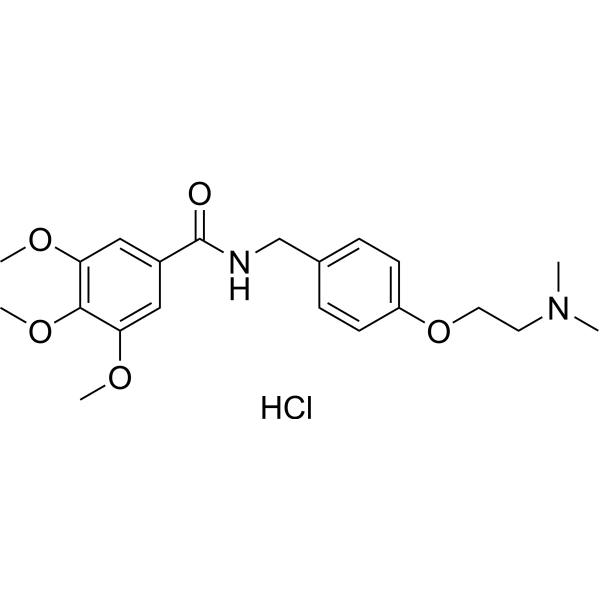
Trimethobenzamide (Ro 2-9578 free base) is a blocker of the D2 receptor. Trimethobenzamide is an antiemetic used to prevent nausea and vomiting .
|
-
- HY-101729
-
|
|
Others
|
Cardiovascular Disease
|
|
Anti-Heart Failure Agent 1 an orally available compound suitable for the treatment of heart failure without inducing nausea, vomiting and restlessness.
|
-
- HY-12751S
-
-
- HY-B0019
-
|
(Rac)-SENS-401 free base
|
5-HT Receptor
|
Neurological Disease
|
|
Azasetron ((Rac)-SENS-401 free base) is an antiemetic drug with 5-HT3 receptor antagonist activity. Azasetron is often used as a preventive measure for postoperative nausea and vomiting or chemotherapy-induced nausea and vomiting. Azasetron does not impair neutrophil chemotaxis or phagocytosis and does not scavenge O(-)(2) or H(2)O(2) generated by cell-free systems .
|
-
- HY-B1397A
-
|
|
Histamine Receptor
|
Neurological Disease
|
|
Cyclizine dihydrochloride, a piperazine-derivative, is a potent and selective histamine H1 receptor antagonist. Cyclizine dihydrochloride can be used for the research of nausea, vomiting, and dizziness .
|
-
- HY-12751AR
-
|
Ro 2-9578 (Standard)
|
Reference Standards
Dopamine Receptor
Influenza Virus
|
Others
|
|
Trimethobenzamide (hydrochloride) (Standard) is the analytical standard of Trimethobenzamide (hydrochloride). This product is intended for research and analytical applications. Trimethobenzamide hydrochloride is a blocker of the D2 receptor. Trimethobenzamide is an antiemetic used to prevent nausea and vomiting.
|
-
- HY-143994S
-
|
|
Isotope-Labeled Compounds
Dopamine Receptor
|
Neurological Disease
|
|
Metopimazine-d6 hydrochloride is the deuterium labeled Metopimazine (HY-116578). Metopimazine (EXP999; RP9965) is a phenothiazine, orally available, selective dopamine D2 receptor antagonist that does not penetrate the blood-brain barrier. Metopimazine blocks dopamine D2 receptors in the chemoreceptor trigger zone and the periphery, thereby inhibiting nausea and vomiting. Metopimazine is indicated for chemotherapy-induced nausea and vomiting, and has low central side effects due to its poor brain penetration. The use of metopimazine in acute gastroenteritis may have potential risks .
|
-
- HY-W777959
-
|
|
Isotope-Labeled Compounds
5-HT Receptor
|
Neurological Disease
|
|
Azasetron Hydrochloride- 13C,d3 is the deuterium and 13C-labeled Azasetron (HY-B0019). Azasetron ((Rac)-SENS-401 free base) is an antiemetic drug with 5-HT3 receptor antagonist activity. Azasetron is often used as a preventive measure for postoperative nausea and vomiting or chemotherapy-induced nausea and vomiting. Azasetron does not impair neutrophil chemotaxis or phagocytosis and does not scavenge O(-)(2) or H(2)O(2) generated by cell-free systems .
|
-
- HY-132348S
-
-
- HY-B0071R
-
|
BRL 43694 (Standard)
|
Reference Standards
5-HT Receptor
|
Neurological Disease
Cancer
|
|
Granisetron (Standard) is the analytical standard of Granisetron. This product is intended for research and analytical applications. Granisetron (BRL 43694) is a serotonin 5-HT3 receptor antagonist used as an antiemetic to treat nausea and vomiting following chemotherapy.
|
-
- HY-B1397S
-
-
- HY-B0071AR
-
|
BRL 43694A (Standard)
|
Reference Standards
5-HT Receptor
|
Neurological Disease
Cancer
|
|
Granisetron (Hydrochloride) (Standard) is the analytical standard of Granisetron (Hydrochloride). This product is intended for research and analytical applications. Granisetron (Hydrochloride) (BRL 43694A) is a serotonin 5-HT3 receptor antagonist used as an antiemetic to treat nausea and vomiting following chemotherapy.
|
-
- HY-B1164A
-
|
|
Dopamine Receptor
|
Neurological Disease
|
|
Bromopride hydrochloride is a selective, irreversible, competitive, and orally active dopamine D2 receptor antagonist. Bromopride hydrochloride can pass through the blood-brain barrier, inhibit the vomiting center, and enhance gastrointestinal motility, exerting antiemetic and gastrointestinal motility effects. Bromopride hydrochloride antagonizes dopamine-mediated vomiting reflexes and promotes gastrointestinal smooth muscle contraction, and has no adverse effects on abdominal wall healing in rats with postoperative abdominal infection. Bromopride hydrochloride can be used for the study of digestive system diseases (such as gastric hypomotility, nausea and vomiting) .
|
-
- HY-B0002S
-
|
|
Isotope-Labeled Compounds
5-HT Receptor
|
Neurological Disease
|
|
Ondansetron-d3 (hydrochloride) is the deuterium labeled Ondansetron hydrochloride. Ondansetron hydrochloride (GR 38032 hydrochloride) is a serotonin 5-HT3 receptor antagonist used mainly as anantiemetic (to treat nausea and vomiting), often following chemotherapy .
|
-
- HY-B0071S2
-
-
- HY-B0071AS
-
|
BRL 43694A-d6
|
Isotope-Labeled Compounds
5-HT Receptor
|
Neurological Disease
Cancer
|
|
Granisetron-d6 (Hydrochloride) (BRL 43694A-d6) is deuterium labeled Granisetron (Hydrochloride). Granisetron (Hydrochloride) (BRL 43694A) is a serotonin 5-HT3 receptor antagonist used as an antiemetic to treat nausea and vomiting following chemotherapy.
|
-
- HY-118209
-
|
|
Dopamine Receptor
5-HT Receptor
|
Neurological Disease
|
|
L-646462 is an antagonist of dopamine and 5-HT, with selectivity for the peripheral system (the central/peripheral activity ratio of L-646462 is 143). L-646462 can be used in research related to nausea, vomiting, and associated neurological disorders .
|
-
- HY-B0068R
-
|
|
5-HT Receptor
Reference Standards
|
Neurological Disease
|
|
Azasetron (hydrochloride) (Standard) is the analytical standard of Azasetron (hydrochloride). This product is intended for research and analytical applications. Azasetron (Y-25130) hydrochloride, a benzamide derivative, is a potent and selective 5-HT3 receptor antagonist. Azasetron is used in the study for Chemotherapy-induced nausea and vomiting (CINV) .
|
-
- HY-116578S
-
|
EXP999-d6; RP9965-d6
|
Isotope-Labeled Compounds
Dopamine Receptor
|
Neurological Disease
|
|
Metopimazine-d6 (EXP999-d6; RP9965-d6) is the deuterium labeled Metopimazine (HY-116578). Metopimazine (EXP999; RP9965) is a phenothiazine, orally available, selective dopamine D2 receptor antagonist that does not penetrate the blood-brain barrier. Metopimazine blocks dopamine D2 receptors in the chemoreceptor trigger zone and the periphery, thereby inhibiting nausea and vomiting. Metopimazine is indicated for chemotherapy-induced nausea and vomiting, and has low central side effects due to its poor brain penetration. The use of metopimazine in acute gastroenteritis may have potential risks .
|
-
- HY-12141
-
|
GW597599 mesylate; GW597599B
|
Neurokinin Receptor
|
Neurological Disease
|
|
Vestipitant (GW597599) mesylate is a selective, orally active, and blood-brain barrier penetrant NK1 receptor antagonist. Vestipitant mesylate exhibits high affinity for the human NK1 receptor (pKi: 9.65). Vestipitant mesylate can be used in the research of diseases such as depression, anxiety disorders, and nausea and vomiting .
|
-
- HY-17382S
-
|
|
Isotope-Labeled Compounds
5-HT Receptor
Dopamine Receptor
|
Endocrinology
|
|
Metoclopramide-d3 is deuterium labeled Metoclopramide. Metoclopramide is a potent antagonist of 5-HT3 and dopamine D2 receptor, with IC50s of 308 nM and 483 nM, respectively. Metoclopramide can be used for the research of nausea and vomiting, gastro-oesophageal reflux, and gastroparesis .
|
-
- HY-B0750BR
-
|
MDL-73147EF hydrate (Standard)
|
Reference Standards
5-HT Receptor
|
Cancer
|
|
Dolasetron Mesylate hydrate (MDL-73147EF hydrate) (Standard) is the analytical standard of Dolasetron Mesylate hydrate (HY-B0750B). This product is intended for research and analytical applications. Dolasetron Mesylate hydrate is a serotonin 5-HT3 receptor antagonist used to treat nausea and vomiting following chemotherapy .
|
-
- HY-B0750S1
-
|
MDL-73147-d5
|
5-HT Receptor
Isotope-Labeled Compounds
|
Cancer
|
|
Dolasetron (MDL-73147)-d5 is deuterated labeled Dolasetron (HY-B0750). Dolasetron is a serotonin 5-HT3 receptor antagonist. Dolasetron acts as an antiemetics agent and can be used for the research of chemotherapy-induced nausea and vomiting in cancer .
|
-
- HY-B0750S
-
|
MDL-73147-d4
|
Isotope-Labeled Compounds
5-HT Receptor
|
Cancer
|
|
Dolasetron (MDL-73147)-d4 is deuterium labeled Dolasetron (HY-B0750). Dolasetron is a serotonin 5-HT3 receptor antagonist. Dolasetron acts as an antiemetics agent and can be used for the research of chemotherapy-induced nausea and vomiting in cancer .
|
-
- HY-12142S
-
|
rac-GR 205171-d3
|
Isotope-Labeled Compounds
Neurokinin Receptor
|
Neurological Disease
|
|
rac-Vofopitant-d3 (rac-GR 205171-d3) is a racemic form of deuterated Vofopitant (HY-12142). Vofopitant (GR 205171A) is a blood-brain barrier-permeable NK1 receptor inhibitor with a pKi of 9.02 in mice. Vofopitant blocks vomiting-related responses and inhibits pseudoptyalism. Vofopitant exerts anxiolytic effects, regulates 5-HT receptor function and increases central 5-HT release. Vofopitant improves hyperarousal symptoms of post-traumatic stress disorder. Vofopitant can be used in research related to depression, anxiety, vomiting and postoperative nausea and vomiting .
|
-
- HY-13256R
-
|
OSI-420 (Standard); CP-373420 hydrochloride (Standard)
|
Reference Standards
Drug Metabolite
|
Cancer
|
|
Metoclopramide (hydrochloride hydrate) (Standard) is the analytical standard of Metoclopramide (hydrochloride hydrate). This product is intended for research and analytical applications. Metoclopramide hydrochloride hydrate is a potent antagonist of 5-HT3 and dopamine D2 receptor, with IC50s of 308 nM and 483 nM, respectively. Metoclopramide hydrochloride hydrate can be used for the research of nausea and vomiting, gastro-oesophageal reflux, and gastroparesis .
|
-
- HY-17382AR
-
|
|
Reference Standards
5-HT Receptor
Dopamine Receptor
|
Endocrinology
|
|
Metoclopramide (hydrochloride hydrate) (Standard) is the analytical standard of Metoclopramide (hydrochloride hydrate). This product is intended for research and analytical applications. Metoclopramide hydrochloride hydrate is a potent antagonist of 5-HT3 and dopamine D2 receptor, with IC50s of 308 nM and 483 nM, respectively. Metoclopramide hydrochloride hydrate can be used for the research of nausea and vomiting, gastro-oesophageal reflux, and gastroparesis .
|
-
- HY-N7541R
-
|
|
HCV Protease
Reference Standards
|
Inflammation/Immunology
|
|
Metoclopramide (Standard) is the analytical standard of Metoclopramide. This product is intended for research and analytical applications. Metoclopramide is a potent antagonist of 5-HT3 and dopamine D2 receptor, with IC50s of 308 nM and 483 nM, respectively. Metoclopramide can be used for the research of nausea and vomiting, gastro-oesophageal reflux, and gastroparesis .
|
-
- HY-17382R
-
|
|
Reference Standards
5-HT Receptor
Dopamine Receptor
|
Endocrinology
|
|
Metoclopramide (Standard) is the analytical standard of Metoclopramide. This product is intended for research and analytical applications. Metoclopramide is a potent antagonist of 5-HT3 and dopamine D2 receptor, with IC50s of 308 nM and 483 nM, respectively. Metoclopramide can be used for the research of nausea and vomiting, gastro-oesophageal reflux, and gastroparesis .
|
-
- HY-B0002AR
-
|
GR 38032 hydrochloride dihydrate (Standard); SN 307 hydrochloride dihydrate (Standard)
|
Reference Standards
5-HT Receptor
|
Neurological Disease
|
|
Ondansetron (hydrochloride dihydrate) (Standard) is the analytical standard of Ondansetron (hydrochloride dihydrate). This product is intended for research and analytical applications. Ondansetron (GR 38032) hydrochloride dehydrate is an orally active, highly selective and competitive 5-HT3 receptor antagonist (crosses the blood-brain barrier). Ondansetron hydrochloride dehydrate can be used in studies of preventing nausea and vomiting associated with cancer chemotherapy, radiation therapy and surgery .
|
-
- HY-A0021R
-
|
|
Reference Standards
5-HT Receptor
Flavivirus
|
Infection
Cardiovascular Disease
Neurological Disease
|
|
Palonosetron hydrochloride (Standard) is the analytical standard of Palonosetron hydrochloride (HY-A0021). This product is intended for research and analytical applications. Palonosetron hydrochloride is a 5-HT3 antagonist primarily used to prevent acute, delayed, and overall chemotherapy-induced nausea and vomiting. In addition, Palonosetron hydrochloride exhibits moderate anti-flavivirus activity and potent anti-Zika virus activity in mammalian cells. Palonosetron hydrochloride also possesses antidepressant activity .
|
-
- HY-B0002BS1
-
|
GR 38032-d3; SN 307-d3
|
5-HT Receptor
Isotope-Labeled Compounds
|
Neurological Disease
|
|
Ondansetron-d3 is the deuterium labeled Ondansetron (HY-B0002B ). Ondansetron (GR 38032; SN 307) is a highly selective 5-HT3 receptor antagonist with an IC50 value of 103 pM. Ondansetron exerts its antiemetic effect by antagonizing 5-HT receptors located in localized neurons in the peripheral and central nervous systems. Ondansetron can inhibit nausea and vomiting induced by chemotherapy and radiotherapy .
|
-
- HY-B0002BR
-
|
GR 38032 (Standard); SN 307 (Standard)
|
Reference Standards
5-HT Receptor
|
Neurological Disease
Cancer
|
|
Ondansetron (Standard) is the analytical standard of Ondansetron (HY-B0002B). This product is intended for research and analytical applications. Ondansetron (GR 38032; SN 307) is a highly selective 5-HT3 receptor antagonist with an IC50 value of 103 pM. Ondansetron exerts its antiemetic effect by antagonizing 5-HT receptors located in localized neurons in the peripheral and central nervous systems. Ondansetron can inhibit nausea and vomiting induced by chemotherapy and radiotherapy .
|
-
- HY-B0002BS2
-
|
GR 38032-13C,d3; SN 307-13C,d3
|
Isotope-Labeled Compounds
5-HT Receptor
|
Neurological Disease
|
|
Ondansetron- 13C,d3 is the 13C- and deuterium labeled Ondansetron (HY-B0002B). Ondansetron (GR 38032; SN 307) is a highly selective 5-HT3 receptor antagonist with an IC50 value of 103 pM. Ondansetron exerts its antiemetic effect by antagonizing 5-HT receptors located in localized neurons in the peripheral and central nervous systems. Ondansetron can inhibit nausea and vomiting induced by chemotherapy and radiotherapy .
|
-
- HY-U00244A
-
|
P2647 hydrochloride; BZQ hydrochloride; Benzoquinamide hydrochloride
|
Adrenergic Receptor
Dopamine Receptor
|
Neurological Disease
|
|
Benzquinamide (P2647; BZQ; Benzoquinamide) hydrochloride is an orally active binder of dopamine receptors and adrenergic receptors. Benzquinamide hydrochloride specifically targets dopamine D2, D3, D4 receptors and α-2A, α-2B, α-2C adrenergic receptors. Benzquinamide hydrochloride regulates blood pressure and heart rate, attenuates the pressor effect of adrenaline, and exhibits activities such as antiemesis, anxiolysis, and reduction of histamine-induced bronchoconstriction. Benzquinamide hydrochloride has good safety and does not deplete serotonin or norepinephrine in the brain. Benzquinamide hydrochloride can be used in studies related to nausea/vomiting, mental disorders, anxiety states, neurosis, and psychosis .
|
-
- HY-B0071S1
-
|
BRL 43694-d4
|
Isotope-Labeled Compounds
|
Neurological Disease
Cancer
|
|
Granisetron-d4 (BRL 43694-d4) is deuterium labeled Granisetron. Granisetron (BRL 43694) is a serotonin 5-HT3 receptor antagonist used as an antiemetic to treat nausea and vomiting following chemotherapy.
|
-
- HY-124470
-
|
|
Others
|
Cardiovascular Disease
|
|
Amisometradine is an orally active aminouracil diuretic with a diuretic potency approximately 40% that of Mersalyl (HY-108868) (when administered intramuscularly). Amisometradine exerts its effects by promoting the excretion of sodium, chloride and a small amount of potassium, exhibits significant therapeutic effects in heart failure models, and has good tolerance with long-term administration. Compared with drugs of the same class, Amisometradine causes fewer gastrointestinal reactions; its minor side effects mainly include nausea, vomiting, diarrhea, tinnitus and deafness, and are usually not accompanied by proteinuria or abnormalities in blood and urine indicators. Amisometradine is an important tool for the study of heart failure and related diuretic mechanisms .
|
-
- HY-166562S
-
|
Methotrimeprazine-d6 hydrochloride
|
Isotope-Labeled Compounds
Enterovirus
Histamine Receptor
Autophagy
5-HT Receptor
Calcium Channel
Dopamine Receptor
|
Infection
Neurological Disease
Inflammation/Immunology
|
|
Levomepromazine-d6 hydrochloride (Methotrimeprazine-d6 hydrochloride) is the deuterium labeled Levomepromazine hydrochloride. Levomepromazine (Methotrimeprazine) hydrochloride is an orally active antipsychotic compound and Ca 2+ release inducer. Levomepromazine inhibits SERCA pump and induces an increase in cytoplasmic Ca 2+ levels. Levomepromazine hydrochloride has antagonistic effects on a variety of neurotransmitter receptors, including dopamine, cholinergic, serotonin, and histamine receptors. Levomepromazine hydrochloride can induce adaptive ER stress and autophagy. In addition, Levomepromazine hydrochloride has antiviral, anti-inflammatory, neuroprotective and analgesic, sedative and anti-injurious activities. Levomepromazine hydrochloride can be used in the study psychiatric disorders and relieving nausea and vomiting .
|
-
| Cat. No. |
Product Name |
Category |
Target |
Chemical Structure |
-
- HY-W010892
-
|
Hyoscine hydrobromide trihydrate
|
Alkaloids
Other Alkaloids
Datura metel L.
Solanaceae
Plants
Source Classification
|
mAChR
5-HT Receptor
|
|
Scopolamine (Hyoscine) hydrobromide trihydrate is a high-affinity muscarinic antagonist that can cross the blood-brain barrier. Scopolamine hydrobromide trihydrate competitively antagonizes 5-HT3 receptors with an IC50 of 2.09 μM. Scopolamine hydrobromide trihydrate can induce cognitive and memory deficits in animals. Scopolamine hydrobromide trihydrate can be used in the research of preventing postoperative nausea and vomiting, motion sickness, nervous system diseases, etc .
|
-
-
- HY-121388
-
-
-
- HY-B2065
-
|
(-)-Scopolamine hydrochloride; Hyoscine hydrochloride
|
Alkaloids
Other Alkaloids
Atropa belladonna Linn.
Solanaceae
Plants
Source Classification
|
mAChR
5-HT Receptor
|
|
Scopolamine (Hyoscine) hydrochloride is a high-affinity muscarinic antagonist that can cross the blood-brain barrier. Scopolamine hydrochloride competitively antagonizes 5-HT3 receptors with an IC50 of 2.09 μM. Scopolamine hydrochloride can induce cognitive and memory deficits in animals. Scopolamine hydrochloride can be used in the research of preventing postoperative nausea and vomiting, motion sickness, nervous system diseases, etc .
|
-
-
- HY-W010892R
-
|
Hyoscine hydrobromide trihydrate (Standard)
|
Alkaloids
Structural Classification
Other Alkaloids
Datura metel L.
Solanaceae
Plants
Source Classification
|
mAChR
Reference Standards
5-HT Receptor
|
|
Scopolamine hydrobromide trihydrate (Standard) is the analytical standard of Scopolamine hydrobromide trihydrate (HY-W010892). This product is intended for research and analytical applications. Scopolamine (Hyoscine) hydrobromide is a high-affinity muscarinic antagonist that can cross the blood-brain barrier. Scopolamine hydrobromide competitively antagonizes 5-HT3 receptors with an IC50 of 2.09 μM. Scopolamine hydrobromide can induce cognitive and memory deficits in animals. Scopolamine hydrobromide can be used in the research of preventing postoperative nausea and vomiting, motion sickness, nervous system diseases, etc .
|
-
-
- HY-N7541R
-
|
|
Microorganisms
Ketones, Aldehydes, Acids
Source Classification
|
HCV Protease
Reference Standards
|
|
Metoclopramide (Standard) is the analytical standard of Metoclopramide. This product is intended for research and analytical applications. Metoclopramide is a potent antagonist of 5-HT3 and dopamine D2 receptor, with IC50s of 308 nM and 483 nM, respectively. Metoclopramide can be used for the research of nausea and vomiting, gastro-oesophageal reflux, and gastroparesis .
|
-
| Cat. No. |
Product Name |
Chemical Structure |
-
- HY-B0002BS
-
|
|
|
Ondansetron-d5 is the deuterium labeled Ondansetron (HY-B0002B). Ondansetron (GR 38032; SN 307) is a highly selective 5-HT3 receptor antagonist with an IC50 value of 103 pM. Ondansetron exerts its antiemetic effect by antagonizing 5-HT receptors located in localized neurons in the peripheral and central nervous systems. Ondansetron can inhibit nausea and vomiting induced by chemotherapy and radiotherapy .
|
-
-
- HY-A0021S
-
|
|
|
Palonosetron-d3 hydrochloride is the deuterium labeled Palonosetron hydrochloride (HY-A0021). Palonosetron hydrochloride is a 5-HT3 antagonist primarily used to prevent acute, delayed, and overall chemotherapy-induced nausea and vomiting. In addition, Palonosetron hydrochloride exhibits moderate anti-flavivirus activity and potent anti-Zika virus activity in mammalian cells. Palonosetron hydrochloride also possesses antidepressant activity .
|
-
-
- HY-B0002S1
-
|
|
|
Ondansetron-d6 (hydrochloride) is the deuterium labeled Ondansetron hydrochloride . Ondansetron hydrochloride is a serotonin 5-HT3 receptor antagonist used mainly as anantiemetic (to treat nausea and vomiting), often following chemotherapy .
|
-
-
- HY-14407AS
-
|
|
|
Fosaprepitant-d4 (dimeglumine) is deuterium labeled Fosaprepitant (dimeglumine). Fosaprepitant dimeglumine (MK-0517) is a proagent of Aprepitant (HY-10052). Fosaprepitant dimeglumine is a neurokinin-1 receptor antagonist, which is development for the prevention of chemotherapy-induced nausea and vomiting (CINV) .
|
-
-
- HY-W010892S
-
|
|
|
Scopolamine-d3 hydrobromide is the deuterium labeled Scopolamine hydrobromide (HY-B2065). Scopolamine (Hyoscine) hydrochloride is a high-affinity muscarinic antagonist that can cross the blood-brain barrier. Scopolamine hydrochloride competitively antagonizes 5-HT3 receptors with an IC50 of 2.09 μM. Scopolamine hydrochloride can induce cognitive and memory deficits in animals. Scopolamine hydrochloride can be used in the research of preventing postoperative nausea and vomiting, motion sickness, nervous system diseases, etc .
|
-
-
- HY-A0125AS
-
|
|
|
Alizapride- 13C,d3 (hydrochloride) is deuterium labeled Alizapride (hydrochloride). Alizapride hydrochloride is a dopamine receptor antagonist with prokinetic and antiemetic effects which can also be used in the treatment of nausea and vomiting, including postoperative nausea and vomiting.
|
-
-
- HY-12751S
-
|
|
|
Trimethobenzamide-d6 is deuterium labeled Trimethobenzamide. Trimethobenzamide is a blocker of the D2 receptor. Trimethobenzamide is an antiemetic used to prevent nausea and vomiting.
|
-
-
- HY-143994S
-
|
|
|
Metopimazine-d6 hydrochloride is the deuterium labeled Metopimazine (HY-116578). Metopimazine (EXP999; RP9965) is a phenothiazine, orally available, selective dopamine D2 receptor antagonist that does not penetrate the blood-brain barrier. Metopimazine blocks dopamine D2 receptors in the chemoreceptor trigger zone and the periphery, thereby inhibiting nausea and vomiting. Metopimazine is indicated for chemotherapy-induced nausea and vomiting, and has low central side effects due to its poor brain penetration. The use of metopimazine in acute gastroenteritis may have potential risks .
|
-
-
- HY-W777959
-
|
|
|
Azasetron Hydrochloride- 13C,d3 is the deuterium and 13C-labeled Azasetron (HY-B0019). Azasetron ((Rac)-SENS-401 free base) is an antiemetic drug with 5-HT3 receptor antagonist activity. Azasetron is often used as a preventive measure for postoperative nausea and vomiting or chemotherapy-induced nausea and vomiting. Azasetron does not impair neutrophil chemotaxis or phagocytosis and does not scavenge O(-)(2) or H(2)O(2) generated by cell-free systems .
|
-
-
- HY-132348S
-
|
|
|
Granisetron-d3 is the deuterium labeled Granisetron. Granisetron (BRL 43694) is a serotonin 5-HT3 receptor antagonist used as an antiemetic to treat nausea and vomiting following chemotherapy .
|
-
-
- HY-B1397S
-
|
|
|
Cyclizine-d3 is deuterium labeled Cyclizine. Cyclizine, a piperazine-derivative, is a potent and selective histamine H1 receptor antagonist. Cyclizine can be used for the research of nausea, vomiting, and dizziness .
|
-
-
- HY-B0002S
-
|
|
|
Ondansetron-d3 (hydrochloride) is the deuterium labeled Ondansetron hydrochloride. Ondansetron hydrochloride (GR 38032 hydrochloride) is a serotonin 5-HT3 receptor antagonist used mainly as anantiemetic (to treat nausea and vomiting), often following chemotherapy .
|
-
-
- HY-B0071S2
-
|
|
|
Granisetron-d6 (BRL 43694-d6) is deuterium labeled Granisetron. Granisetron (BRL 43694) is a serotonin 5-HT3 receptor antagonist used as an antiemetic to treat nausea and vomiting following chemotherapy.
|
-
-
- HY-B0071AS
-
|
|
|
Granisetron-d6 (Hydrochloride) (BRL 43694A-d6) is deuterium labeled Granisetron (Hydrochloride). Granisetron (Hydrochloride) (BRL 43694A) is a serotonin 5-HT3 receptor antagonist used as an antiemetic to treat nausea and vomiting following chemotherapy.
|
-
-
- HY-116578S
-
|
|
|
Metopimazine-d6 (EXP999-d6; RP9965-d6) is the deuterium labeled Metopimazine (HY-116578). Metopimazine (EXP999; RP9965) is a phenothiazine, orally available, selective dopamine D2 receptor antagonist that does not penetrate the blood-brain barrier. Metopimazine blocks dopamine D2 receptors in the chemoreceptor trigger zone and the periphery, thereby inhibiting nausea and vomiting. Metopimazine is indicated for chemotherapy-induced nausea and vomiting, and has low central side effects due to its poor brain penetration. The use of metopimazine in acute gastroenteritis may have potential risks .
|
-
-
- HY-17382S
-
|
|
|
Metoclopramide-d3 is deuterium labeled Metoclopramide. Metoclopramide is a potent antagonist of 5-HT3 and dopamine D2 receptor, with IC50s of 308 nM and 483 nM, respectively. Metoclopramide can be used for the research of nausea and vomiting, gastro-oesophageal reflux, and gastroparesis .
|
-
-
- HY-B0750S1
-
|
|
|
Dolasetron (MDL-73147)-d5 is deuterated labeled Dolasetron (HY-B0750). Dolasetron is a serotonin 5-HT3 receptor antagonist. Dolasetron acts as an antiemetics agent and can be used for the research of chemotherapy-induced nausea and vomiting in cancer .
|
-
-
- HY-B0750S
-
|
|
|
Dolasetron (MDL-73147)-d4 is deuterium labeled Dolasetron (HY-B0750). Dolasetron is a serotonin 5-HT3 receptor antagonist. Dolasetron acts as an antiemetics agent and can be used for the research of chemotherapy-induced nausea and vomiting in cancer .
|
-
-
- HY-12142S
-
|
|
|
rac-Vofopitant-d3 (rac-GR 205171-d3) is a racemic form of deuterated Vofopitant (HY-12142). Vofopitant (GR 205171A) is a blood-brain barrier-permeable NK1 receptor inhibitor with a pKi of 9.02 in mice. Vofopitant blocks vomiting-related responses and inhibits pseudoptyalism. Vofopitant exerts anxiolytic effects, regulates 5-HT receptor function and increases central 5-HT release. Vofopitant improves hyperarousal symptoms of post-traumatic stress disorder. Vofopitant can be used in research related to depression, anxiety, vomiting and postoperative nausea and vomiting .
|
-
-
- HY-B0002BS1
-
|
|
|
Ondansetron-d3 is the deuterium labeled Ondansetron (HY-B0002B ). Ondansetron (GR 38032; SN 307) is a highly selective 5-HT3 receptor antagonist with an IC50 value of 103 pM. Ondansetron exerts its antiemetic effect by antagonizing 5-HT receptors located in localized neurons in the peripheral and central nervous systems. Ondansetron can inhibit nausea and vomiting induced by chemotherapy and radiotherapy .
|
-
-
- HY-B0002BS2
-
|
|
|
Ondansetron- 13C,d3 is the 13C- and deuterium labeled Ondansetron (HY-B0002B). Ondansetron (GR 38032; SN 307) is a highly selective 5-HT3 receptor antagonist with an IC50 value of 103 pM. Ondansetron exerts its antiemetic effect by antagonizing 5-HT receptors located in localized neurons in the peripheral and central nervous systems. Ondansetron can inhibit nausea and vomiting induced by chemotherapy and radiotherapy .
|
-
-
- HY-B0071S1
-
|
|
|
Granisetron-d4 (BRL 43694-d4) is deuterium labeled Granisetron. Granisetron (BRL 43694) is a serotonin 5-HT3 receptor antagonist used as an antiemetic to treat nausea and vomiting following chemotherapy.
|
-
-
- HY-166562S
-
|
|
|
Levomepromazine-d6 hydrochloride (Methotrimeprazine-d6 hydrochloride) is the deuterium labeled Levomepromazine hydrochloride. Levomepromazine (Methotrimeprazine) hydrochloride is an orally active antipsychotic compound and Ca 2+ release inducer. Levomepromazine inhibits SERCA pump and induces an increase in cytoplasmic Ca 2+ levels. Levomepromazine hydrochloride has antagonistic effects on a variety of neurotransmitter receptors, including dopamine, cholinergic, serotonin, and histamine receptors. Levomepromazine hydrochloride can induce adaptive ER stress and autophagy. In addition, Levomepromazine hydrochloride has antiviral, anti-inflammatory, neuroprotective and analgesic, sedative and anti-injurious activities. Levomepromazine hydrochloride can be used in the study psychiatric disorders and relieving nausea and vomiting .
|
-
Your information is safe with us. * Required Fields.
Inquiry Information
- Product Name:
- Cat. No.:
- Quantity:
- MCE Japan Authorized Agent:

