1. Search Result
Search Result
Results for "

non-mutagenic

" in MedChemExpress (MCE) Product Catalog:

13

Inhibitors & Agonists

4

Fluorescent Dyes

1

Biochemical Assay Reagents

2

Isotope-Labeled Compounds

Cat. No. Product Name Target Research Areas Chemical Structure
  • HY-15930
    TMB
    Maximum Cited Publications
    6 Publications Verification

    BM blue; Sure Blue TMB

    Fluorescent Dye MOFs Reactive Oxygen Species (ROS) Others
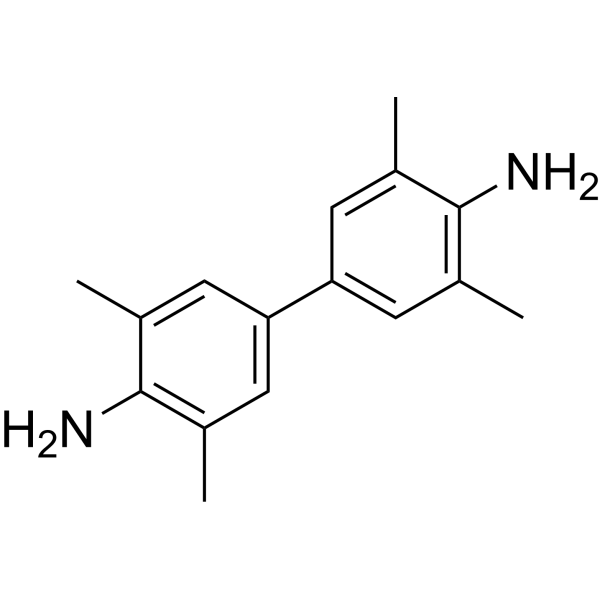
    TMB is a non-toxic, non-mutagenic, colorless dye that is also used as a chromogenic agent in enzyme detection systems based on horseradish peroxidase (HRP). TMB can function as a photoacoustic probe for reactive oxygen and nitrogen species (ROS/RNS), reacting with hypochlorite, hydrogen peroxide, singlet oxygen, and nitrogen dioxide to produce blue oxidation products. TMB can detect the singlet oxygen produced by the outer membrane of Escherichia coli ATCC 25922 .
    TMB
  • HY-15930A
    TMB dihydrochloride
    Maximum Cited Publications
    6 Publications Verification

    BM blue dihydrochloride; Sure Blue TMB dihydrochloride

    Fluorescent Dye Reactive Oxygen Species (ROS) Others
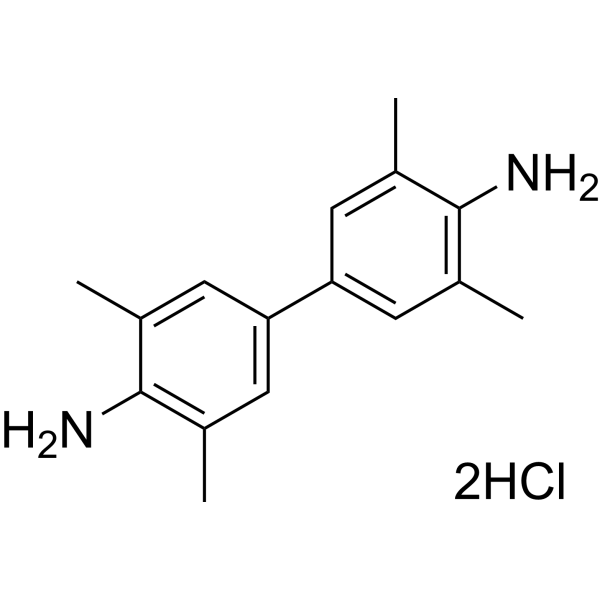
    TMB dihydrochloride is the dihydrochloride form of TMB (HY-15930). TMB dihydrochloride is a non-toxic, non-mutagenic, colorless dye that is also used as a chromogenic agent in enzyme detection systems based on horseradish peroxidase (HRP). TMB dihydrochloride can function as a photoacoustic probe for reactive oxygen and nitrogen species (ROS/RNS), reacting with hypochlorite, hydrogen peroxide, singlet oxygen, and nitrogen dioxide to produce blue oxidation products. TMB dihydrochloride can detect the singlet oxygen produced by the outer membrane of Escherichia coli ATCC 25922 .
    TMB dihydrochloride
  • HY-G0007
    Omeprazole sulfone
    2 Publications Verification

    Omeprazole sulphone

    Drug Metabolite Cytochrome P450 Aryl Hydrocarbon Receptor Inflammation/Immunology
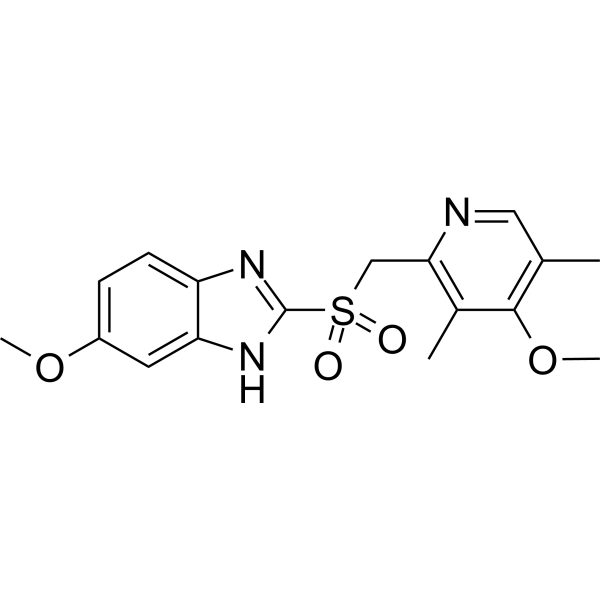
    Omeprazole sulfone (Omeprazole sulphone) is one of the major circulating metabolites of Omeprazole (HY-B0113) in vivo, and belongs to class 4 non-mutagenic impurities. Omeprazole sulfone does not bind to the aryl hydrocarbon receptor (AhR), nor does it induce the expression of CYP1A1 or CYP1A2. However, Omeprazole sulfone promotes the migration of gastric epithelial cells under basal conditions and reverses the inhibitory effect of Indomethacin (HY-14397) on cell migration. Omeprazole sulfone does not promote cell proliferation, nor does it upregulate COX-2 expression or activate signaling pathways such as ERK, P38 MAPK and PI3K. Omeprazole sulfone maintains basal ulcer healing under non-acid-dependent conditions and can be used in studies related to gastric ulcer repair .
    Omeprazole sulfone
  • HY-15930B
    TMB dihydrochloride x.hydrate
    5+ Cited Publications

    Sure Blue TMB dihydrochloride x.hydrate

    Fluorescent Dye Reactive Oxygen Species (ROS) Others
    TMB (dihydrochloride x.hydrate) is the dihydrochloride x hydrate form of TMB (HY-15930). TMB (dihydrochloride x.hydrate) is a non-toxic, non-mutagenic, colorless dye that is also used as a chromogenic agent in enzyme detection systems based on horseradish peroxidase (HRP). TMB (dihydrochloride x.hydrate) can function as a photoacoustic probe for reactive oxygen and nitrogen species (ROS/RNS), reacting with hypochlorite, hydrogen peroxide, singlet oxygen, and nitrogen dioxide to produce blue oxidation products. TMB (dihydrochloride x.hydrate) can detect the singlet oxygen produced by the outer membrane of Escherichia coli ATCC 25922 .
    TMB dihydrochloride x.hydrate
  • HY-125170

    STAT Cancer
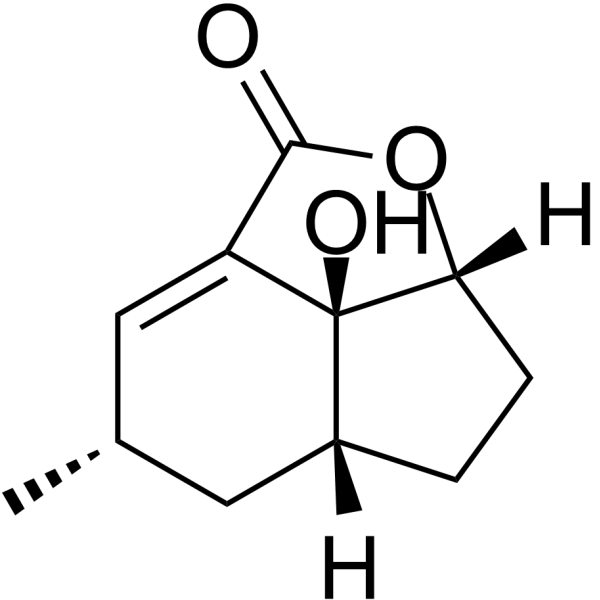
    Galiellalactone is a is a small non-toxic and non-mutagenic fungal metabolite, a selective inhibitor of STAT3 signaling, with an IC50 of 250-500 nM. Galiellalactone can be used to research castration-resistant prostate cancer .
    Galiellalactone
  • HY-15930C
    TMB monosulfate
    Maximum Cited Publications
    6 Publications Verification

    BM blue monosulfate; Sure Blue TMB monosulfate

    Fluorescent Dye Reactive Oxygen Species (ROS) Others
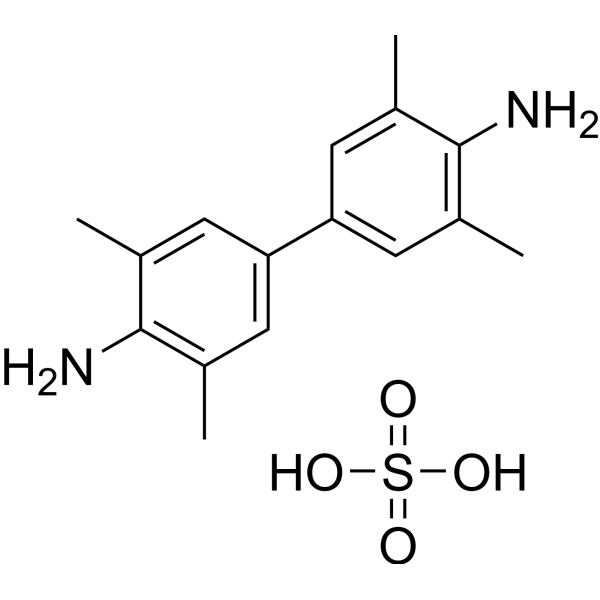
    TMB monosulfate is the monosulfate form of TMB (HY-15930). TMB monosulfate is a non-toxic, non-mutagenic, colorless dye that is also used as a chromogenic agent in enzyme detection systems based on horseradish peroxidase (HRP). TMB monosulfate can function as a photoacoustic probe for reactive oxygen and nitrogen species (ROS/RNS), reacting with hypochlorite, hydrogen peroxide, singlet oxygen, and nitrogen dioxide to produce blue oxidation products. TMB monosulfate can detect the singlet oxygen produced by the outer membrane of Escherichia coli ATCC 25922 .
    TMB monosulfate
  • HY-15930R

    BM blue (Standard); Sure Blue TMB (Standard)

    Fluorescent Dye Reactive Oxygen Species (ROS) Reference Standards Others
    TMB (Standard) is the analytical standard of TMB. This product is intended for research and analytical applications. TMB is a non-toxic, non-mutagenic, colorless dye that is also used as a chromogenic agent in enzyme detection systems based on horseradish peroxidase (HRP). TMB can function as a photoacoustic probe for reactive oxygen and nitrogen species (ROS/RNS), reacting with hypochlorite, hydrogen peroxide, singlet oxygen, and nitrogen dioxide to produce blue oxidation products. TMB can detect the singlet oxygen produced by the outer membrane of Escherichia coli ATCC 25922 .
    TMB (Standard)
  • HY-G0007R

    Omeprazole sulphone (Standard)

    Reference Standards Drug Metabolite Cytochrome P450 Aryl Hydrocarbon Receptor Infection Cancer
    Omeprazole sulfone (Standard) is the analytical standard of Omeprazole sulfone. This product is intended for research and analytical applications. Omeprazole sulfone (Omeprazole sulphone) is one of the major circulating metabolites of Omeprazole (HY-B0113) in vivo, and belongs to class 4 non-mutagenic impurities. Omeprazole sulfone does not bind to the aryl hydrocarbon receptor (AhR), nor does it induce the expression of CYP1A1 or CYP1A2. However, Omeprazole sulfone promotes the migration of gastric epithelial cells under basal conditions and reverses the inhibitory effect of Indomethacin (HY-14397) on cell migration. Omeprazole sulfone does not promote cell proliferation, nor does it upregulate COX-2 expression or activate signaling pathways such as ERK, P38 MAPK and PI3K. Omeprazole sulfone maintains basal ulcer healing under non-acid-dependent conditions and can be used in studies related to gastric ulcer repair .
    Omeprazole sulfone (Standard)
  • HY-147835

    Bacterial Infection
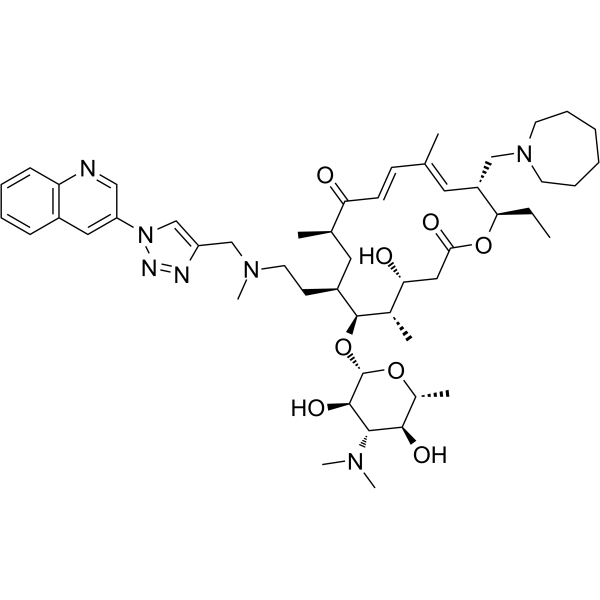
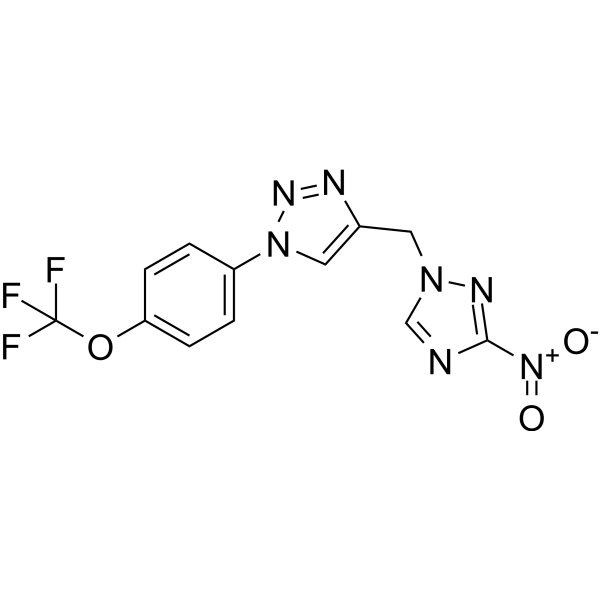
    Antibacterial agent 109 (Compound C-2) is a potent antibacterial agent against both gram-positive and gram negative bacteria, and non-mutagenic. Antibacterial agent 109 inhibits protein synthesis by blocking the extension of new peptide chains .
    Antibacterial agent 109
  • HY-G0007S

    Omeprazole sulfone-d3; Omeprazole sulphone-d3

    Isotope-Labeled Compounds Drug Metabolite Cytochrome P450 Aryl Hydrocarbon Receptor Infection Cancer
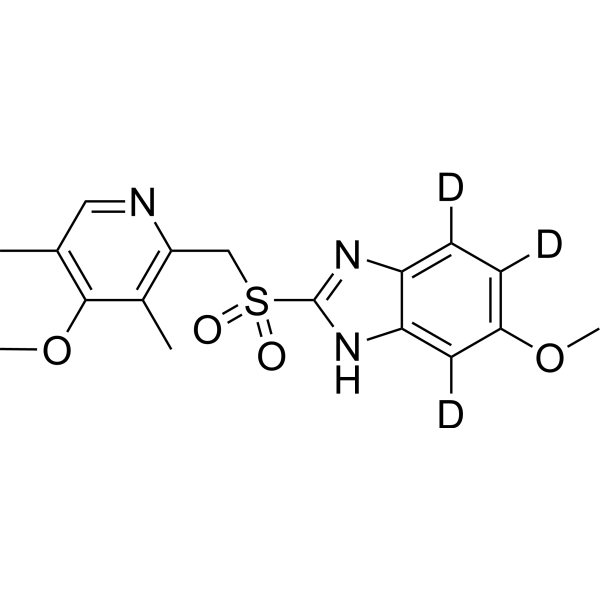
    Omeprazole sulfone-d3 is the deuterium labeled Omeprazole sulfone. Omeprazole sulfone (Omeprazole sulphone) is one of the major circulating metabolites of Omeprazole (HY-B0113) in vivo, and belongs to class 4 non-mutagenic impurities. Omeprazole sulfone does not bind to the aryl hydrocarbon receptor (AhR), nor does it induce the expression of CYP1A1 or CYP1A2. However, Omeprazole sulfone promotes the migration of gastric epithelial cells under basal conditions and reverses the inhibitory effect of Indomethacin (HY-14397) on cell migration. Omeprazole sulfone does not promote cell proliferation, nor does it upregulate COX-2 expression or activate signaling pathways such as ERK, P38 MAPK and PI3K. Omeprazole sulfone maintains basal ulcer healing under non-acid-dependent conditions and can be used in studies related to gastric ulcer repair .
    Omeprazole sulfone-d3
  • HY-G0007S1

    Omeprazole sulfone-13C,d3; Omeprazole sulphone-13C,d3

    Isotope-Labeled Compounds Drug Metabolite Cytochrome P450 Aryl Hydrocarbon Receptor Others
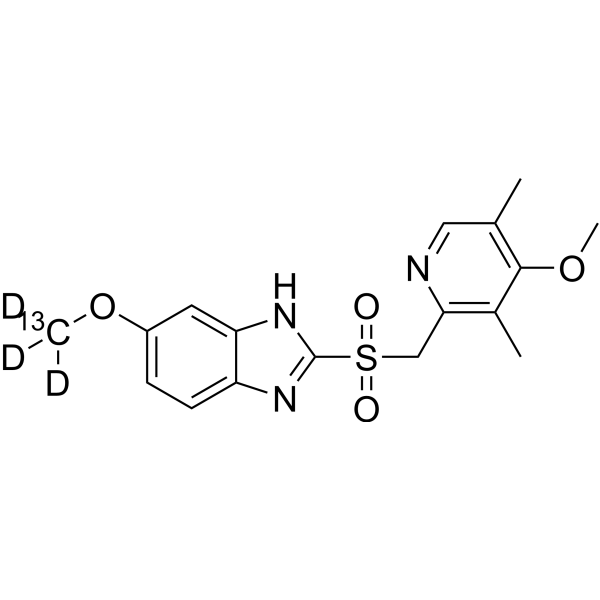
    Omeprazole sulfone- 13C,d3 is the deuterium and 13C labeled Omeprazole sulfone. Omeprazole sulfone (Omeprazole sulphone) is one of the major circulating metabolites of Omeprazole (HY-B0113) in vivo, and belongs to class 4 non-mutagenic impurities. Omeprazole sulfone does not bind to the aryl hydrocarbon receptor (AhR), nor does it induce the expression of CYP1A1 or CYP1A2. However, Omeprazole sulfone promotes the migration of gastric epithelial cells under basal conditions and reverses the inhibitory effect of Indomethacin (HY-14397) on cell migration. Omeprazole sulfone does not promote cell proliferation, nor does it upregulate COX-2 expression or activate signaling pathways such as ERK, P38 MAPK and PI3K. Omeprazole sulfone maintains basal ulcer healing under non-acid-dependent conditions and can be used in studies related to gastric ulcer repair .
    Omeprazole sulfone-13C,d3
  • HY-163292

    Bacterial Parasite Infection
    Antibacterial agent 180 (15g), an appropriate substrate for the type I nitro reductases (TcNTR I), is a promising antitrypanosomatid agent. Antibacterial agent 180 (15g) shows nonmutagenic potential against Salmonella typhimurium strains (TA98, TA100, and TA102) .
    Antibacterial agent 180
  • HY-182365

    Histone Demethylase Neurological Disease Inflammation/Immunology
    EED-IN-4 is an orally active, EZH2-selective immunomodulator and EED-H3K27me3 inhibitor (EED, IC50=28.21 nM) with anti-inflammatory activity. In mouse models, EED-IN-4 preferentially and persistently accumulates in lymph nodes after oral administration. By reducing the H3K27me3 level of dendritic cells and inhibiting their migration, EED-IN-4 reduces the infiltration of immune cells into the central nervous system and effectively alleviates spinal cord inflammation. EED-IN-4 shows weak inhibitory activity against hERG channels and is non-mutagenic, with no obvious toxicity observed upon long-term oral administration. EED-IN-4 can be used for the research of multiple sclerosis .
    EED-IN-4

Inquiry Online

Your information is safe with us. * Required Fields.

Salutation


Country or Region *

Applicant Name *


Organization Name *

Department *


Email Address *


Product Name *

Cat. No.


Requested quantity *

Phone Number *


Remarks

Inquiry Online

Inquiry Information

Product Name:
Cat. No.:
Quantity:
MCE Japan Authorized Agent:

