
1. Search Result
Search Result
Results for "

organic reactions

" in MedChemExpress (MCE) Product Catalog:

206

Inhibitors & Agonists

8

Fluorescent Dyes

134

Biochemical Assay Reagents

3

Natural
Products

10

Isotope-Labeled Compounds

11

Click Chemistry

4

Oligonucleotides

Targets Recommended:
Cat. No. Product Name Target Research Areas Chemical Structure
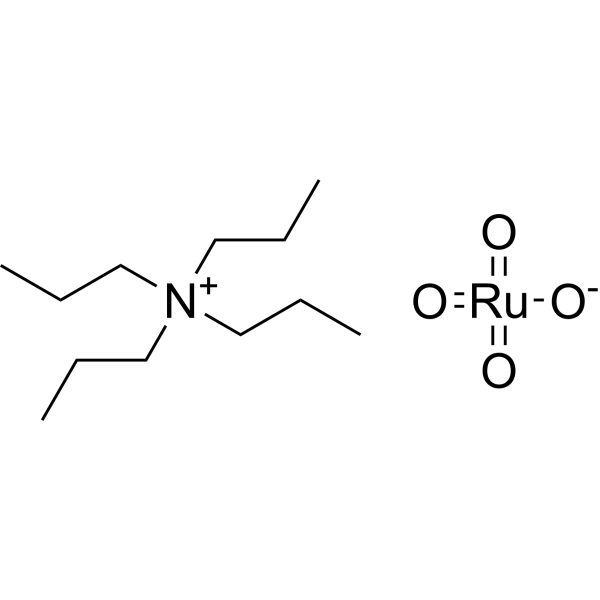
  • HY-W007801

    TPAP

    Biochemical Assay Reagents Others
    Tetrapropylammonium perruthenate (TPAP) is an organic compound commonly used as a catalyst and oxidizing agent. It can play an oxidation role in some organic synthesis reactions, and can catalyze the oxidation reactions of olefins and aromatic compounds. In addition, the compound is widely used in some industrial production areas, such as in the application of plastics, rubber and textile manufacturing processes.
    Tetrapropylammonium perruthenate
  • HY-Y1332

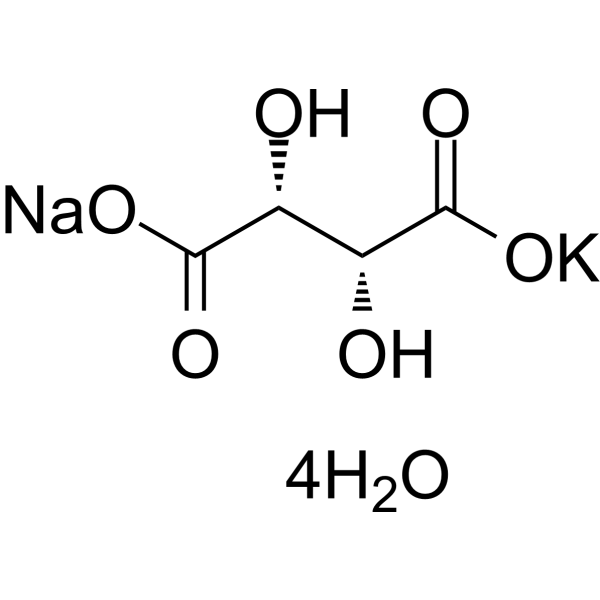
    L-Tartaric acid potassium sodium salt tetrahydrate; Potassium sodium tartrate tetrahydrate; Sodium potassium tartrate tetrahydrate

    Biochemical Assay Reagents Others
    Rochelle salt is an organic-inorganic compound commonly used as a catalyst and complexing reagent. It can be used to catalyze or promote certain chemical reactions, and is widely used in batteries, pharmaceuticals and food industries. In addition, this compound is also used as a substrate or intermediate in some biochemical reactions.
    Rochelle salt
  • HY-Y0971

    TBAF

    Biochemical Assay Reagents Others
    Tetrabutylammonium fluoride is an organic compound containing both ammonium and fluorine functional groups. It is commonly used as a reagent in various chemical synthesis applications, especially as a source of fluoride ions for nucleophilic reactions. Tetrabutylammonium fluoride has several properties that make it suitable for these applications, including its high solubility in polar solvents and its ability to selectively activate certain chemical bonds. In addition, it can be used as a catalyst for organic reactions and as an electrolyte for batteries.
    Tetrabutylammonium fluoride (solution),1M in THF
  • HY-34717

    Tetra-n-butylammonium tetrafluoroborate

    Biochemical Assay Reagents Others
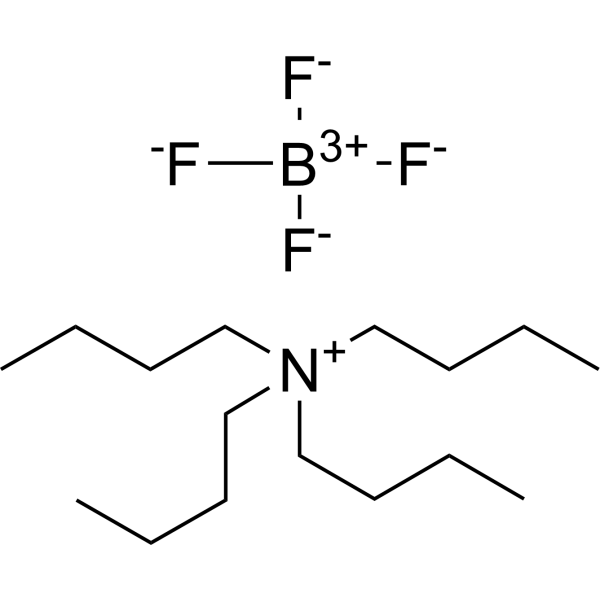
    Tetrabutylammonium tetrafluoroborate is an inorganic salt commonly used in organic synthesis reactions and electrochemical applications. It is usually used as a catalyst or reagent, and is widely used in the field of organic synthesis, such as fluorination reaction, olefin addition and cyclization reaction, etc. In addition, it can also be used in electrochemical deposition and electroplating, and plays an important role in some electronic devices. Although it has no direct application in the medical field, it plays an important role in chemical research and industrial production.
    Tetrabutylammonium tetrafluoroborate
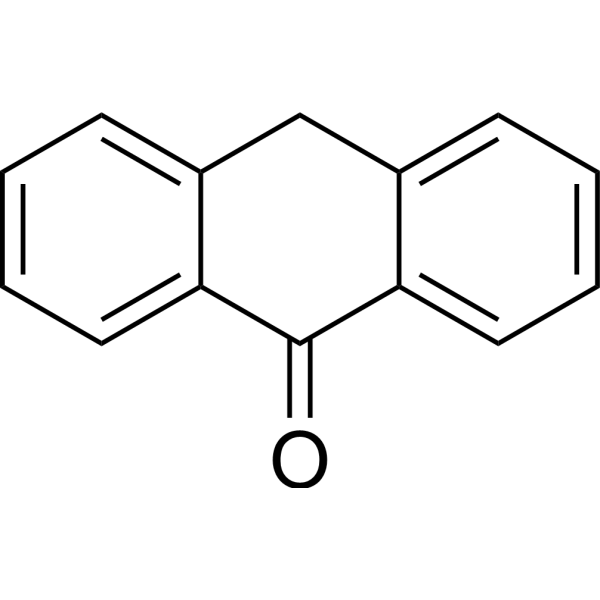
  • HY-W009938
    Anthrone
    1 Publications Verification

    Anthracen-9(10H)-one

    Biochemical Assay Reagents Others
    Anthrone is an organic compound commonly used as a dye and intermediate. It can be used to make products such as pigments, dyes and fluorescent whitening agents, and is widely used in certain industrial production fields such as textile manufacturing, soap making and paper making. In addition, this compound is also used as a reagent and catalyst in some organic synthesis reactions.
    Anthrone
  • HY-B2210

    DIPA; Diisopropylamine dichloroacetate

    Biochemical Assay Reagents Others
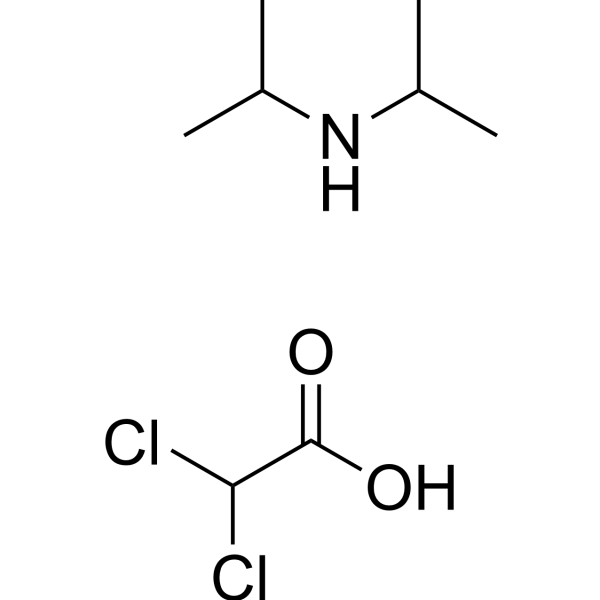
    Diisopropylammonium dichloroacetate is an organic compound commonly used as a catalyst and ligand for organic reactions. It can promote various organic chemical reactions, such as olefin addition, carbonylation reaction and asymmetric catalytic reaction, etc. In addition, the compound is also widely used in the research of some medical fields, for example, in the application of anti-tumor therapy.
    Diisopropylammonium dichloroacetate
  • HY-W879064

    Biochemical Assay Reagents Others
    DBCO-Palmitic is a click chemical organic compound. DBCO-Palmitic can be used in the azide-alkyne cycloaddition (SPAAC) reaction.
    DBCO-Palmitic
  • HY-34515

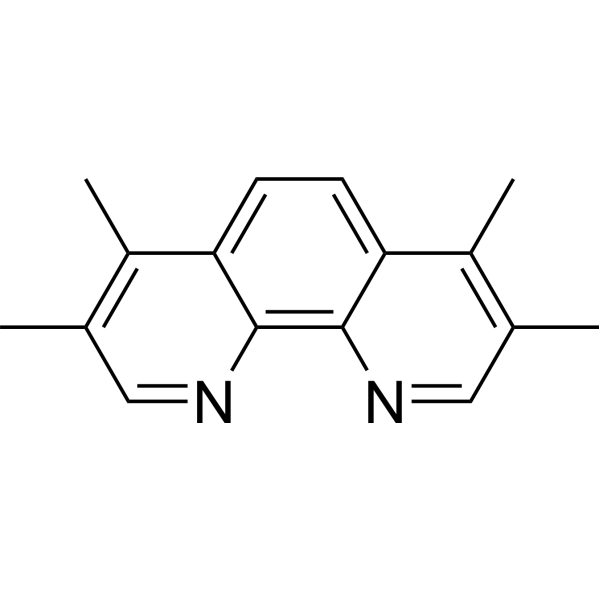
    TMPhen; 3,4,7,8-Tetramethyl-1,10-phenanthroline

    Biochemical Assay Reagents Others
    3,4,7,8-Tetramethyl-1,10-phenanthroline (TMPhen) is an organic molecule commonly used as a ligand or catalyst. It has a wide range of applications in different fields, such as organometallic chemical reactions, electrochemical detection, and organic optoelectronic devices. Due to its excellent performance in fluorescent probes, biosensors and photocatalytic reactions, it has been widely used in research in the fields of chemistry and life sciences.
    3,4,7,8-Tetramethyl-1,10-phenanthroline
  • HY-D0172

    AP 6G; Actiron 43-65; Aliquat 100

    Biochemical Assay Reagents Others
    Tetrabutylammonium bromide is an organic ammonium compound, which is often used in catalytic reactions and separation and purification processes. It has a significant catalytic effect in some organic synthesis reactions, and can be used as a surfactant, stabilizer and antibacterial agent, etc. In addition, in some laboratory studies, this compound has also been used as an ion exchanger, solvent extractant, etc.
    Tetrabutylammonium bromide
  • HY-Y1699

    Biochemical Assay Reagents Others
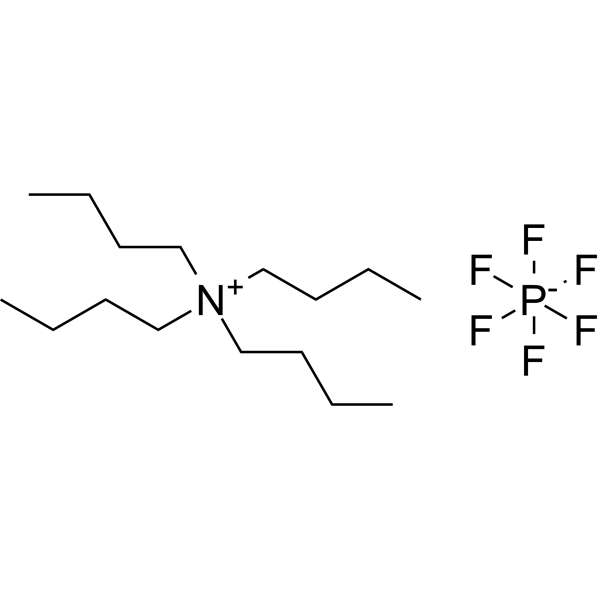
    Tetrabutylammonium hexafluorophosphate is an organic-inorganic compound commonly used as an ionic solvent and catalyst. It can be used to catalyze or promote reactions in certain chemical reactions, and is widely used in batteries, solar cells and pigments. In addition, this compound is also widely used in organic synthesis and chemical analysis.
    Tetrabutylammonium hexafluorophosphate
  • HY-W008145

    Biochemical Assay Reagents Others
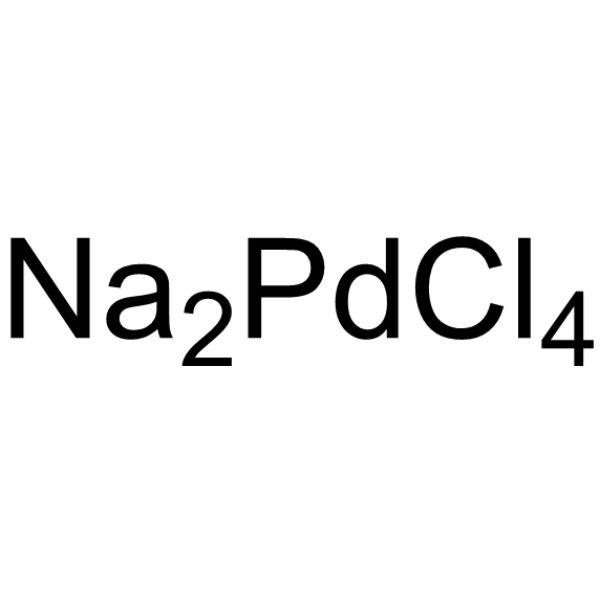
    Sodium tetrachloropalladate(II) is an organic compound commonly used as a catalyst and as a raw material for dye production. It can be used to catalyze or promote reactions in certain chemical reactions, and is widely used in the fields of organic synthesis and dye preparation. In addition, the compound is also used for metallization, silver plating and electroplating of circuit boards.
    Sodium tetrachloropalladate(II)
  • HY-24312

    Biochemical Assay Reagents Others
    AD-mix-α is a mixture of organic compounds, commonly used to distinguish and identify asymmetric carbon atoms in chiral compounds. It consists of compounds containing catalytically active metals and chiral ligands. AD-mix-α is widely used in various organic synthesis reactions, such as hydrogenation, addition, and carbonylation reactions, to increase yield and reduce the formation of side reaction products. Although it has no direct application in the medical field, it plays an important role in the pharmaceutical industry and chemical research.
    AD-mix-α
  • HY-Y1374

    Biochemical Assay Reagents Others
    Benzoic anhydride is a catalyst that can be used for organic synthesis reactions. Benzoic anhydride is used as a chemical titration reagent for selective quantification and deactivation of phenolic hydroxyl groups on the surface of carbon nanotubes .
    Benzoic anhydride
  • HY-W014408

    TEA bromide

    Biochemical Assay Reagents Others
    Tetraethylammonium bromide is a quaternary ammonium salt consisting of a positively charged tetraethylammonium cation and a negatively charged bromide anion. This compound is commonly used as a phase transfer catalyst in organic chemical reactions, facilitating the transfer of reactants between immiscible phases. It can also be used as a reagent for the synthesis of various organic compounds, an electrolyte in electrochemical experiments, and a source of tetraethylammonium ions in biochemical and pharmacological research.
    Tetraethylammonium bromide
  • HY-W014106

    N,N,N-Triethylethanaminium tetrafluoroborate

    Biochemical Assay Reagents Others
    Tetraethylammonium tetrafluoroborate is a quaternary ammonium salt consisting of a positively charged tetraethylammonium cation and a negatively charged tetrafluoroborate anion. This compound is commonly used as a phase transfer catalyst in organic chemical reactions, facilitating the transfer of reactants between immiscible phases. It can also be used as a reagent for the synthesis of various organic compounds, an electrolyte in electrochemical experiments, and a source of tetraethylammonium ions in biochemical and pharmacological research.
    Tetraethylammonium tetrafluoroborate
  • HY-W087905

    Biochemical Assay Reagents Others
    2,3-Dimethyl-2,3-diphenylbutane is a minor product formed during the thermal decomposition of dicumyl peroxide (DCP) in cumene, generated through radical coupling reactions. As an initiator capable of producing free radicals, 2,3-dimethyl-2,3-diphenylbutane promotes cross-linking or decomposition processes via initiating free radical reactions in fields such as polymer polymerization (e.g., modification of polyphenylene oxide processing), organic synthesis (e.g., DCP decomposition reactions), and coal processing (e.g., oxidation stabilization of coal tar pitch), thereby enhancing material properties or reaction efficiency .
    2,3-Dimethyl-2,3-diphenylbutane
  • HY-W002570

    Biochemical Assay Reagents Others
    2-Naphthylboronic acid is a biochemical reagent that can be used as a biological material or organic compound for life science related research. 2-Naphthylboronic acid can undergo silylation reaction. 2-Naphthylboronic acid also readily undergo Suzuki-Miyaura cross-coupling .
    2-Naphthylboronic acid
  • HY-W127702

    Methscopolamine nitrate

    Biochemical Assay Reagents Others
    Scopolamine methyl nitrate is an organic compound commonly used in neuroscience research and pharmacology research. It can be used to study the role and structure of acetylcholine receptors, and is widely used in drug development and research in related fields. In addition, this compound is also used as a substrate or catalyst in certain biochemical reactions.
    Scopolamine methyl nitrate
  • HY-W039724

    Biochemical Assay Reagents Others
    Thioxanthone is a powerful photocatalyst for organic reactions. Thioxanthone is a heterocyclic compound with the ability to participate successfully in merger reactions with metal complexes .
    Thioxanthone
  • HY-W008039

    Tetra-n-butylammonium acetate

    Biochemical Assay Reagents Others
    Tetrabutylammonium acetate is an organic compound commonly used as a catalyst and solvent. It can be used to catalyze or promote reactions in certain organic reactions, and is widely used in batteries, solar cells and pigments. In addition, this compound is widely used in the oil and gas industry, for example as a carbonate dissolver.
    Tetrabutylammonium acetate (contains 10-15%AcOH)
  • HY-W035133

    5,10,15,20-Tetra-p-tolyl-21H,23H-porphine

    MOFs Others
    5,10,15,20-Tetrakis(p-tolyl)porphyrin (TTP) is an organic compound belonging to the class of porphyrins, a cyclic molecule composed of four pyrrole rings linked together. TTP is a synthetic porphyrin commonly used as a sensitizer for dye-sensitized solar cells and a catalyst for organic reactions. Due to its unique structure, TTP has a series of interesting properties, including at specific wavelengths and its potential as a catalyst for various chemical reactions. In dye-sensitized solar cells, TTPs help convert sunlight into electricity by absorbing photons and transferring electrons to the semiconductor layer of the device. In organic chemistry, TTP is often used as a catalyst for various organic compounds in reactions such as oxidation and reduction. Its ability to selectively bind certain substrates makes it a useful tool for synthesizing complex molecules and studying their properties.
    5,10,15,20-Tetrakis(p-tolyl)porphyrin
  • HY-W008635

    Biochemical Assay Reagents Others
    Tetrabutylammonium tetrahydroborate is an organic compound commonly used as a reducing agent and catalyst. It can act as a reducing agent in certain chemical reactions and can promote the reduction of organic compounds such as esters, aldehydes and ketones. In addition, this compound is also widely used in organic synthesis and chemical analysis, and also has important uses in some production processes.
    Tetrabutylammonium tetrahydroborate
  • HY-W004963

    TBAT

    Biochemical Assay Reagents Others
    Tetrabutylammonium difluorotriphenylsilicate(IV) (TBAT) is an organic compound commonly used as a catalyst and surfactant. It can play a catalytic role in some organic synthesis reactions, and can be used as a cleaning agent, lubricant and stabilizer. In addition, the compound is widely used in certain industrial fields, such as in the plastic, rubber and textile manufacturing processes.
    Tetrabutylammonium difluorotriphenylsilicate(IV)
  • HY-W010394

    Biochemical Assay Reagents Others
    Methyl 3-oxopentanoate, which is also known as diethyl acetylmalonate or MEAM, Methyl 3-oxopentanoate is commonly used as a building block for the synthesis of various organic compounds, including pharmaceuticals, agrochemicals, and flavorings, and it can also Used as a reagent in organic chemical reactions, especially the formation of carbon-carbon bonds through malonate synthesis, the researchers also investigated the potential use of Methyl 3-oxopentanoate in the development of chiral auxiliaries that can aid in the selection of Controlling the stereochemistry of chemical reactions.
    Methyl 3-oxopentanoate
  • HY-Y0075

    Drug Derivative Others
    2-Naphthaldehyde is an aromatic aldehyde. 2-Naphthaldehyde is soluble in various organic solvents. 2-Naphthaldehyde can participate in chemical reactions to generate functionalized ketone derivatives .
    2-Naphthaldehyde
  • HY-75129

    Biochemical Assay Reagents Others
    Pyridin-3-ylboronic acid is an organic compound. Pyridin-3-ylboronic acid is a key reagent in the Suzuki-Miyaura cross-coupling reaction. Pyridin-3-ylboronic acid is used in organic synthesis to construct oligopyridine compounds, and then as an α-helix mimetic to study protein-protein interactions .
    Pyridin-3-ylboronic acid
  • HY-W004547

    4,4'-Diamino-2,2'-bipyridine

    Biochemical Assay Reagents Others
    (NH2)2bpy (4,4'-Diamino-2,2'-bipyridine) is an organic compound commonly used as a catalyst and complexing reagent. It can form complexes with other metal ions or organic molecules, and can play a catalytic role in some organic synthesis reactions. In addition, this compound is also widely used in some chemical analysis and detection methods, such as in biological analysis and electrochemical analysis
    (NH2)2bpy
  • HY-W012450

    Phenyltrimethylammonium bromide

    Biochemical Assay Reagents Others
    Trimethylphenylammonium bromide is a quaternary ammonium salt consisting of a positively charged N,N,N-trimethylanilinium cation and a negatively charged bromide anion. This compound is commonly used as a phase transfer catalyst in organic chemical reactions, facilitating the transfer of reactants between immiscible phases. It can also be used as a reagent in the synthesis of various organic compounds and in some applications as a surfactant or corrosion inhibitor.
    Trimethylphenylammonium bromide
  • HY-W127452

    Environmental Pollutants Biochemical Assay Reagents Others
    Undecylenate SodiumIt is an organic compound belonging to the class of carboxylates. It is formed by the reaction of undecylenic acid and sodium hydroxide. Undecylenate SodiumIt has a variety of applications in the cosmetic and personal care industries, especially as an antifungal agent in products such as face creams, lotions and shampoos. In addition, it can be used as a preservative in various formulations.
    Undecylenate sodium
  • HY-W127699

    N,N,N-Trimethyl-2-(propionyloxy)ethanaminium (p-toluenesulfonate)

    Biochemical Assay Reagents Others
    Propionylcholine (p-toluenesulfonate) is an organic compound commonly used in biochemical research and neuroscience research. It can be used to study cholinergic signal transduction and esterase activity, and is widely used in biomedical research and pharmacological research. In addition, this compound is also used as a substrate or catalyst in certain biochemical reactions.
    Propionylcholine (p-toluenesulfonate)
  • HY-130544

    5-Azidovaleric acid

    Biochemical Assay Reagents PROTAC Linkers Others
    5-Azidopentanoic acid (5-Azidovaleric acid) is a organic acid that can be used in click chemistry reactions .
    5-Azidopentanoic acid
  • HY-ER019

    N-Benzyl-N,N-dibutylbutan-1-aminium chloride

    Biochemical Assay Reagents Others
    Benzyltributylammonium chloride is an organic salt compound, usually used in catalytic reactions and surfactants. It can play a catalytic role in some organic synthesis reactions, and can be used as a cleaning agent, lubricant and emulsifier. In addition, the compound is widely used in certain industrial fields, such as in the plastic, rubber and textile manufacturing processes.
    Benzyltributylammonium chloride
  • HY-W009235

    Tetraethylammonium 4-methylbenzenesulfonate

    Biochemical Assay Reagents Others
    Tetraethylammonium p-toluenesulfonate p-toluenesulfonate is an organic compound commonly used as a catalyst and surfactant. It can be used to catalyze or promote reactions in certain organic synthesis reactions, and is widely used in the fields of surfactants, lubricants and antistatic agents. In addition, the compound is also used for metallization, silver plating and electroplating of circuit boards.
    Tetraethylammonium p-toluenesulfonate
  • HY-W005507

    2-imidazolidinone, 1-methyl-

    Biochemical Assay Reagents Others
    1-Methylimidazolidin-2-one is an organic compound commonly used as a solvent and intermediate. It can play a buffering and stabilizing role in some organic synthesis reactions, and can be used as a solvent in some chemical reactions and industrial production processes. In addition, the compound also has good toxicity and biocompatibility, and is widely used in some medical fields.
    1-Methylimidazolidin-2-one
  • HY-42045

    Drug Derivative Others
    Pyrimidine-5-boronic acid pinacol ester is a derivative of Boronic acid. Boronic acid is an intermediate commonly used in organic synthesis reactions and can be used as a key reagent in the Suzuki-Miyaura reaction. It generates organic free radicals through oxygen-mediated oxidation and exhibits potential mutagenic activity. Boronic acid is mainly used in research in the fields of drug synthesis and catalytic reactions. Pyrimidine-5-boronic acid pinacol ester serves as a building block in DNA-compatible one-pot click chemistry for synthesis of DNA-encoded libraries .
    Pyrimidine-5-boronic acid pinacol ester
  • HY-W009684

    Ethyl dodecanoate

    Environmental Pollutants Biochemical Assay Reagents Others
    Ethyl Laurate is an organic compound commonly used as a flavoring and food additive. It can be used to make fruit, mint and sweet flavors, and is widely used in some food processing and cosmetic production. In addition, this compound is also used as a reagent and intermediate in some organic synthesis reactions.
    Ethyl Laurate
  • HY-W127637
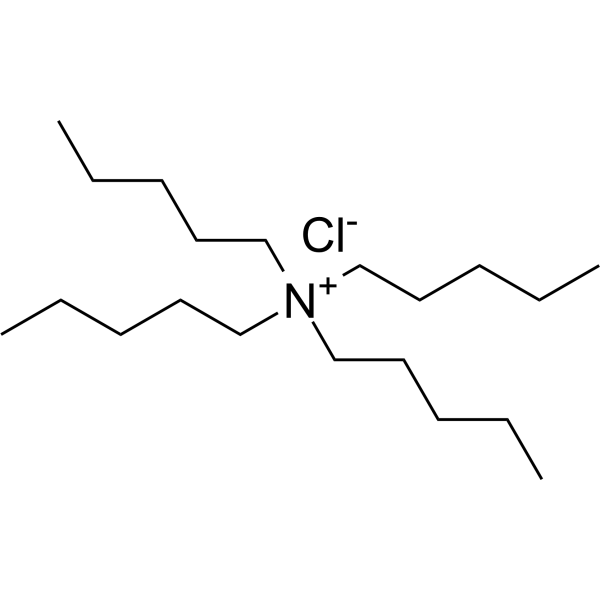
    Tetraamylammonium chloride
    1 Publications Verification

    Tetrapentylammonium chloride

    Biochemical Assay Reagents Others
    Tetraamylammonium chloride is an organic compound containing ammonium and chloride ions. It is commonly used as a phase transfer catalyst in organic synthesis, especially in the production of pharmaceuticals and agrochemicals. Tetraamylammonium Chloride has a strong base that facilitates the transfer of reactants between immiscible solvents, resulting in more efficient chemical reactions. In addition, it can also be used as an intermediate in the synthesis of other quaternary ammonium compounds.
    Tetraamylammonium chloride
  • HY-W127601

    Biochemical Assay Reagents Others
    Lard oil is a biochemical reagent that can be used as a biological material or organic compound for life science related research. Lard oil is a click chemistry reagent, it contains an Azide group and can undergo copper-catalyzed azide-alkyne cycloaddition reaction (CuAAc) with molecules containing Alkyne groups. It can also undergo strain-promoted alkyne-azide cycloaddition (SPAAC) reactions with molecules containing DBCO or BCN groups.
    Lard oil
  • HY-W005176

    Methyl Butyrylacetate; Methyl 3-oxohexanoate

    Biochemical Assay Reagents Others
    Methyl 3-oxohexanoate (Methyl Butyrylacetate) is an organic compound commonly used in the manufacture of fragrances, drugs, and other chemicals. It can be used as a condensation reagent, a diazotization reagent and an addition reagent, and it plays a catalytic role in some organic synthesis reactions, and can also play a role in some drug synthesis. In addition, the compound is widely used in the food industry, for example in products such as juices, beer and confectionery.
    Methyl 3-oxohexanoate
  • HY-W013231

    Benzyltriethylammonium iodide

    Biochemical Assay Reagents Others
    N-Benzyl-N,N-diethylethanaminium iodide is a quaternary ammonium salt consisting of a positively charged N-benzyl-N,N-diethylethylamine cation and a negatively charged iodide anion. This compound is commonly used as a phase transfer catalyst in organic chemical reactions, facilitating the transfer of reactants between immiscible phases. It can also be used as a reagent for the synthesis of various organic compounds, and as a surfactant or emulsifier in industrial and personal care products.
    N-Benzyl-N,N-diethylethanaminium iodide
  • HY-W010283

    Biochemical Assay Reagents Others
    2,3-Dimethylindol is an organic liquid hydrogen carrier (LOHC). 2,3-Dimethylindol enables reversible hydrogen storage and release via catalytic hydrogenation/dehydrogenation reactions. 2,3-Dimethylindol is promising for research of clean energy storage .
    2,3-Dimethylindole
  • HY-W099640

    Tetra-n-octylammonium iodide

    Biochemical Assay Reagents Others
    Tetraoctylammonium iodideIt is an organic compound and belongs to the category of quaternary ammonium salts. It is often used as a phase transfer catalyst, meaning it facilitates a reaction between two immiscible phases, such as an aqueous phase and an organic phase. Tetraoctylammonium iodideIt has a variety of applications in organic synthesis, especially in reactions involving nucleophilic substitution, oxidation, and reduction. Additionally, it is used as a surfactant and emulsifier in industrial and laboratory settings.
    Tetraoctylammonium iodide
  • HY-W034801

    Cupric Acetylacetonate

    Biochemical Assay Reagents Others
    Copper(II) acetylacetonate (Cupric Acetylacetonate) is the homoleptic acetylacetonate complex of copper(II). Copper(II) acetylacetonate is used as a catalyst in various organic reactions, including oxidation, cross-coupling, and polymerization reactions. Copper(II) acetylacetonate is also a precursor for making metal-organic frameworks (MOF) and nanomaterials .
    Copper(II) acetylacetonate
  • HY-W127342

    Decanoic acid chloride

    Biochemical Assay Reagents Others
    Decanoyl chloride is an organic compound belonging to the class of acid chlorides. It is a colorless liquid with a pungent odor and is commonly used as a reagent in various organic chemical reactions, especially in the synthesis of esters, amides and fatty acids. Decanoyl chloride has numerous applications in synthetic organic chemistry, especially in the production of pharmaceuticals, agrochemicals and specialty chemicals. In addition, it can be used as a precursor for the synthesis of surfactants and detergents.
    Decanoyl chloride
  • HY-W127654

    Biochemical Assay Reagents Others
    (Ferrocenylmethyl)trimethylammonium bromide is an organic compound containing ammonium and bromide ions. It is commonly used as a phase transfer catalyst in organic synthesis, especially in the production of pharmaceuticals and agrochemicals. (Ferrocenylmethyl)trimethylammonium Bromide has a strong base that facilitates the transfer of reactants between immiscible solvents for more efficient chemical reactions. In addition, it can also be used as an intermediate in the synthesis of other organic compounds.
    (Ferrocenylmethyl)trimethylammonium bromide
  • HY-W583317

    Biochemical Assay Reagents Endogenous Metabolite
    sSPhos Pd G2 is a palladium catalyst with excellent cross-coupling reaction activity. sSPhos Pd G2 exhibits efficient catalytic ability in the synthesis of organic molecules and compounds. sSPhos Pd G2 can effectively promote the formation of CC bonds, optimize reaction conditions and increase yields. sSPhos Pd G2 is also used in a variety of transformation reactions, helping researchers develop new materials and compounds.
    sSPhos Pd G2
  • HY-W033831

    Rh2(TPA)4

    Endogenous Metabolite Biochemical Assay Reagents
    Rhodium(II) triphenylacetate dimer (Rh2(TPA)4) is an important catalyst with high C–H activation reaction activity. Rhodium(II) triphenylacetate dimer is widely used in organic synthesis to achieve the construction of complex molecules. Rhodium(II) triphenylacetate dimer can also be used to catalyze the synthesis of certain biologically active molecules and improve the preparation efficiency of compounds. Rhodium(II) triphenylacetate dimer exhibits excellent selectivity and reaction rate in catalytic reactions.
    Rhodium(II) triphenylacetate dimer
  • HY-W014884

    Decanoic Acid Ethyl Ester

    Environmental Pollutants Biochemical Assay Reagents Others
    Ethyl decanoate is an organic compound commonly used as a flavoring and food additive. It can be used to prepare flavors and food seasonings with various flavors, and is widely used in food, flavors and cosmetics. In addition, this compound is also used as a substrate or intermediate in some biochemical reactions.
    Ethyl decanoate
  • HY-W130901

    Pent-4-ynylbenzene

    Bacterial Infection Cancer
    5-Phenyl-1-pentyne (Pent-4-ynylbenzene) is a compound with antibacterial and antitumor activity, which can effectively inhibit the growth of certain cancer cells. 5-Phenyl-1-pentyne is often used as a reaction intermediate in organic synthesis to promote a variety of chemical reactions. 5-Phenyl-1-pentyne is also used in the synthesis of new compounds to improve the bioavailability and inhibitory effect of the compounds.
    5-Phenyl-1-pentyne
  • HY-Y0667

    Biochemical Assay Reagents Others
    Benzyltriethylammonium chloride is a quaternary ammonium salt commonly used as a phase transfer catalyst, surfactant and stabilizer in various chemical reactions, especially in organic synthesis. Benzyltriethylammonium chloride has unique chemical properties that facilitate the transfer of ions or molecules from one phase to another, making it an important ingredient in a variety of industrial processes.
    Benzyltriethylammonium chloride

Inquiry Online

Your information is safe with us. * Required Fields.

Salutation


Country or Region *

Applicant Name *


Organization Name *

Department *


Email Address *


Product Name *

Cat. No.


Requested quantity *

Phone Number *


Remarks

Inquiry Online

Inquiry Information

Product Name:
Cat. No.:
Quantity:
MCE Japan Authorized Agent:

