14 Results for "

ovarian colony

" in MedChemExpress (MCE) Product Catalog:
Products (14)

14 Results for "ovarian colony" in MCE Product Catalog:

6
6 Publications Verification
Cat. No.: HY-100433
CAS No.: 1401089-31-3
Purity:  99.32%
Target:  

PDI

Research Areas:  

Cancer

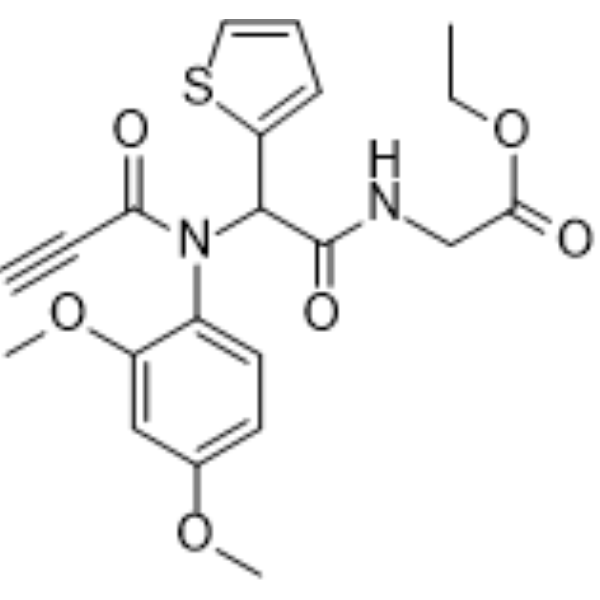
PACMA 31 is an irreversible, orally active protein disulfide isomerase (PDI) inhibitor with an IC50 of 10 μM. PACMA 31 forms a covalent bond with the active site cysteines of PDI. PACMA 31 shows tumor targeting ability and significantly suppresses ovarian tumor growth without causing toxicity to normal tissues . PACMA 31 is a click chemistry reagent, it contains an Alkyne group and can undergo copper-catalyzed azide-alkyne cycloaddition (CuAAc) with molecules containing Azide groups.
loading...
    loading...
4
4 Cited Publications
Cat. No.: HY-14933
CAS No.: 524684-52-4
Purity:  98.05%
Synonyms: ERB-041
Research Areas:  

Cancer

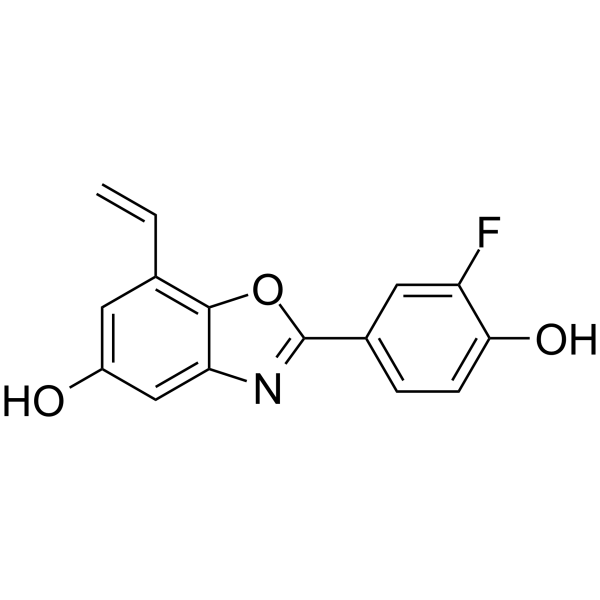
Prinaberel (ERB-041) is a potent and selective estrogen receptor (ER) β agonist with IC50s of 5.4, 3.1 and 3.7 nM for human, rat and mouse ERβ, respectively. Prinaberel displays >200-fold selectivity for ERβ over ERα. Prinaberel is a potent skin cancer chemopreventive agent that acts by dampening the WNT/β-catenin signaling pathway. Prinaberel induces ovarian cancer apoptosis .
loading...
    loading...
1
1 Cited Publications
Cat. No.: HY-N3415
CAS No.: 3301-49-3
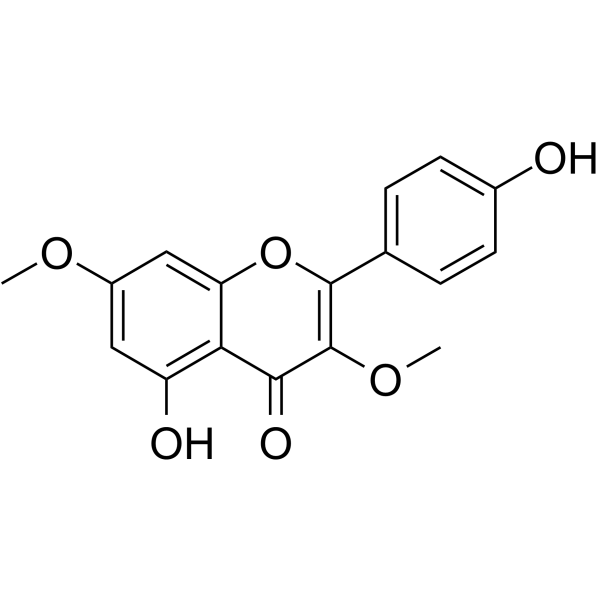
Kumatakenin is an orally active apoptosis inducer and autophagy inhibitor, with a Kd value of 2.94 μM for mouse ATG5. Kumatakenin increases the activities of caspase-3, caspase-8 and caspase-9, thereby inducing caspase-dependent apoptosis in ovarian cancer cells. Kumatakenin reduces the expression of chemokines and pro-oncogenic factors in ovarian cancer cells, and inhibits M2 macrophage polarization. Kumatakenin inactivates TRIM65 function, reduces the expression and stability of FASN, and thus inhibits the proliferation, migration, invasion and tumor progression of esophageal cancer cells. Kumatakenin interacts with ATG5 to reduce its protein level, decrease LC3 level, and reduce the number of autophagosomes in the hippocampus. Kumatakenin binds to Eno3 to upregulate its expression, reduce the stability and expression level of IRP1 mRNA, inhibit ferroptosis, alleviate intestinal inflammation, and restore epithelial barrier function. Kumatakenin enhances the efficacy of antibiotics against pathogenic bacteria, inhibits SARS-CoV-2 replication, and reduces cytokine production. Kumatakenin is applicable to research related to ovarian cancer, esophageal cancer, depression and colitis .
loading...
    loading...
Cat. No.: HY-159607
CAS No.: 2755761-78-3
Target:  

PROTACs SWI/SNF Complex

Research Areas:  

Cancer

PRT3789 is a selective SMARCA2 PROTAC degrader (DC50 in HeLa cell: 0.72 nM for SMARCA2, 14 nM for SMARCA4). PRT3789 forms a stable ternary complex with Von Hippel-Lindau (VHL) E3 ligase, induces polyubiquitination at SMARCA2-specific lysine residues, and drives proteasome-dependent SMARCA2 degradation. PRT3789 disrupts SWI/SNF chromatin remodeling complex integrity, induces dissociation of specific subunits, suppresses oncogenic gene expression, reduces chromatin accessibility, and upregulates antigen processing/presentation-related gene expression. PRT3789 induces synthetic lethality, inhibits proliferation and colony formation, and drives tumor growth inhibition and regression in SMARCA4-deficient contexts. PRT3789 can be used for the research of SMARCA4-mutated solid tumors, non-small cell lung cancer, endometrial cancer, colorectal cancer, bladder cancer, esophageal cancer, ovarian cancer, and gastric cancer .
loading...
    loading...
Cat. No.: HY-175817
Target:  

Wee1 Apoptosis

Research Areas:  

Cancer

PKMYT1-IN-10 is a selective PKMYT1 inhibitor with an IC50 of 3 nM. PKMYT1-IN-10 inhibits colony formation, induces apoptosis, and induces S-phase cancer cell cycle arrest. PKMYT1-IN-10 exhibits liver microsomal stability, favorable plasma stability, minimal CYPs inhibition. PKMYT1-IN-10 can be used for the studies of ovarian cancer and breast cancer .
loading...
    loading...
Cat. No.: HY-175857
Target:  

HDAC Apoptosis

Research Areas:  

Cancer

HDAC-IN-92 is a pan-HDAC inhibitor with an IC50 of 12.58 µM in A2780 cells. HDAC-IN-92 demonstrates broad-spectrum, notable cytotoxic activity against a range of human cancer cell lines, including ovarian, liver, and breast carcinomas. HDAC-IN-92 causes apoptosis and demonstrates a notable decrease in tumor cell colony formation. HDAC-IN-92 inhibits the formation of blood vessels in the chick chorioallantoic membrane (CAM). HDAC-IN-92 exhibits anti-tumor effect in a 4T1 tumor-bearing mouse model. HDAC-IN-92 can be used for research targeting solid tumor .
loading...
    loading...
Cat. No.: HY-187179
Target:  

CDK Apoptosis

Research Areas:  

Cancer

CDK2-IN-62 is a predicted CDK2 inhibitor. CDK2-IN-62 induces apoptosis in breast cancer cells and reduces their colony-forming ability. CDK2-IN-62 can be used for the research of breast cancer, ovarian cancer and colorectal cancer .
loading...
    loading...
Cat. No.: HY-100433R
CAS No.: 1401089-31-3
Target:  

PDI Reference Standards

Research Areas:  

Cancer

PACMA 31 (Standard) is the analytical standard of PACMA 31 (HY-100433). This product is intended for research and analytical applications. PACMA 31 is an irreversible, orally active protein disulfide isomerase (PDI) inhibitor with an IC50 of 10 μM. PACMA 31 forms a covalent bond with the active site cysteines of PDI. PACMA 31 shows tumor targeting ability and significantly suppresses ovarian tumor growth without causing toxicity to normal tissues . PACMA 31 is a click chemistry reagent, it contains an Alkyne group and can undergo copper-catalyzed azide-alkyne cycloaddition (CuAAc) with molecules containing Azide groups.
loading...
    loading...
Cat. No.: HY-184306
Target:  

Syk Apoptosis

Research Areas:  

Cancer

SYK-IN-15 is an orally active spleen tyrosine kinase (SYK) inhibitor with an IC50 of 10.9 nM. SYK-IN-15 induces cell cycle S-phase arrest and cell apoptosis. SYK-IN-15 inhibits cancer cell colony formation and exerts antiproliferative effects on cancer cells. SYK-IN-15 can be used for the research of solid tumors (ovarian cancer, breast cancer, liver cancer) .
loading...
    loading...
Cat. No.: HY-187350
LRPPRC-IN-1 is a LRPPRC inhibitor. LRPPRC-IN-1 exerts dual effects of inhibiting LRPPRC activity and inducing its degradation by binding to the RNA-binding domain of LRPPRC. LRPPRC-IN-1 downregulates the expression of mitochondrial OXPHOS complex subunits and ATP synthase, inhibits oxidative phosphorylation, reduces ATP production, suppresses the proliferation and colony formation of various cancer cells, and inhibits tumor growth in vivo. LRPPRC-IN-1 can be used in studies related to lung cancer, pancreatic cancer, breast cancer, esophageal cancer, colorectal cancer, lymphoma, melanoma, cervical cancer, ovarian cancer, and prostate cancer .
loading...
    loading...
Cat. No.: HY-182052
CAS No.: 3063042-21-4
Synonyms: anti-NSCLC agent-2
Ferroptosis inducer-16 (anti-NSCLC agent-2) is a nitric oxide (NO) donor and a ferroptosis inducer. Ferroptosis inducer-16 inhibits DNA synthesis and colony formation. Ferroptosis inducer-16 disrupts lysosomal integrity by releasing NO, triggers iron overload and oxidative stress, downregulates the SLC7A11-GPX4 axis, depletes GSH, and accumulates lipid peroxides. Ferroptosis inducer-16 inhibits tumor growth in an OVCAR8/ADR xenograft mouse model without obvious toxicity, and can be used in the study of non-small cell lung cancer and drug-resistant ovarian cancer .
loading...
    loading...
Cat. No.: HY-106289
CAS No.: 105026-50-4
Target:  

Antibiotic

Research Areas:  

Cancer

Antibiotic MX 2 is an orally active antibiotic that can cross the blood-brain barrier. Antibiotic MX 2 inhibits the growth of drug-sensitive and multidrug-resistant tumor cells, prolongs the survival of tumor-bearing mice, induces single-strand and double-strand DNA breaks, suppresses colony formation of fresh human-derived tumor cells, and overcomes multidrug resistance mediated by P-glycoprotein. Antibiotic MX 2 can be used in research related to L1210 leukemia, Lewis lung cancer, colon adenocarcinoma type 26 and type 38, gastric adenocarcinoma, non-small cell lung cancer, mammary adenocarcinoma, drug-resistant P388 leukemia, renal cancer, melanoma, ovarian cancer, breast cancer, small cell lung cancer, and colorectal cancer .
loading...
    loading...
Cat. No.: HY-126051
CAS No.: 1381782-08-6
Synonyms: (-)-Viriditoxin
Viriditoxin ((-)-Viriditoxin) is a mycotoxin . Viriditoxin promotes tubulin polymerization, and inhibits FtsZ polymerization and GTPase activity. Viriditoxin exhibits cytotoxicity against cancer cells, induces apoptosis, inhibits cell migration and colony formation, induces G2/M phase arrest, and triggers autophagic cell death. Viriditoxin activates caspase-3, cleaves PARP, promotes cytochrome c release, and induces ROS production. Viriditoxin possesses broad-spectrum antibacterial activity against Gram-positive pathogenic bacteria, fish pathogenic bacteria, and permeabilized Gram-negative bacteria. Viriditoxin can be used in research related to ovarian cancer, lung cancer, nasopharyngeal carcinoma, colon cancer, neuroblastoma, prostate cancer, leukemia, lymphoma, bacterial infections, and streptococcosis .
loading...
    loading...
Cat. No.: HY-181687
Target:  

HSP CDK

Research Areas:  

Cancer

Hsp90-IN-46 is a Hsp90 inhibitor. Hsp90-IN-46 exhibits broad-spectrum antiproliferative activity against tumor cell lines. Hsp90-IN-46 inhibits breast cancer cell proliferation by reducing colony formation and downregulating the proliferation marker Ki-67. Hsp90-IN-46 inhibits Hsp90 and its ATPase activity, downregulates the downstream substrate oncoproteins HER2 and CDK4, and moderately induces the heat shock response. Hsp90-IN-46 shows significant antitumor activity in a mouse model of triple-negative breast cancer tumor xenografts. Hsp90-IN-46 can be used for research on various cancers including triple-negative breast cancer, leukemia, non-small cell lung cancer, colon cancer, ovarian cancer, renal cancer, prostate cancer .
loading...
    loading...
  • 1

