



1. Search Result
Search Result
Results for "

pharmaceutical auxiliarie

" in MedChemExpress (MCE) Product Catalog:

66

阻害剤およびアゴニスト

5

生化学アッセイ試薬

2

天然物

3

同位体標識化合物

47

オリゴヌクレオチド

製品番号 製品名 Target 研究分野 構造式
  • HY-Y0316
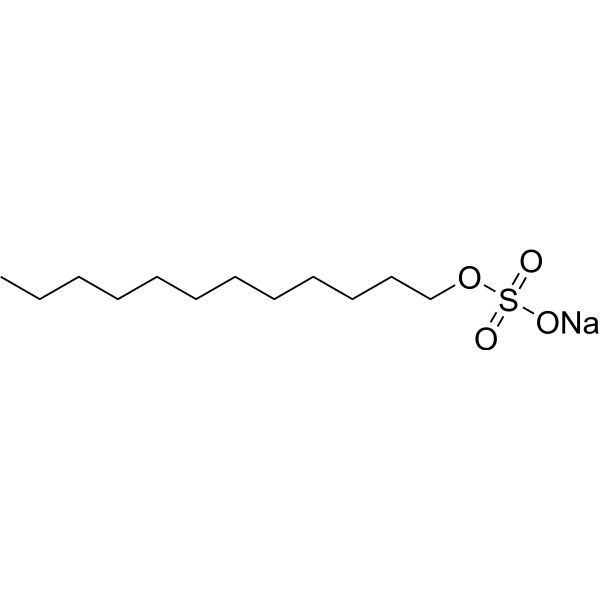
    Sodium dodecyl sulfate
    5 Publications Verification

    Sodium lauryl sulfate; Laurylsulfuric acid sodium salt

    Environmental Pollutants Biochemical Assay Reagents Others
    Sodium dodecyl sulfate is an anionic surfactant commonly used as a detergent, emulsifier, and protein denaturant in various industrial processes, especially in the production of personal care products, cleaners, and laboratory reagents. Sodium dodecyl sulfate has unique chemical properties that make it an effective ingredient in many applications, helping to reduce surface tension and enhance cleaning power.
    Sodium dodecyl sulfate
  • HY-B2243
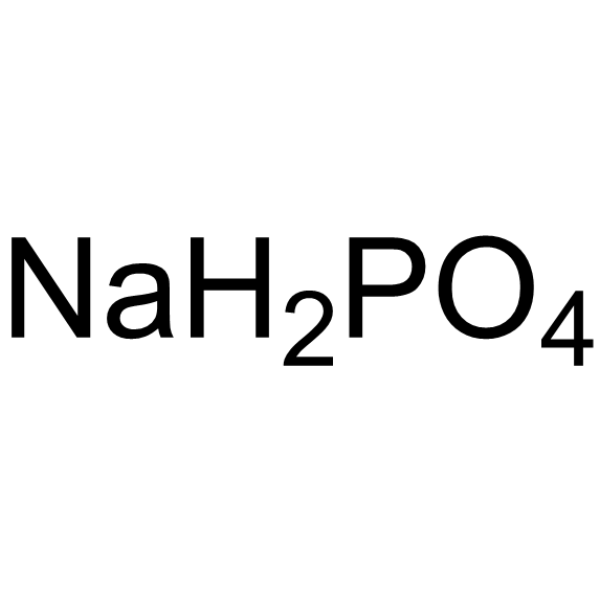
    Anhydrous sodium dihydrogen phosphate
    1 Publications Verification

    Sodium phosphate monobasic; Monosodium dihydrogen orthophosphate; Monosodium phosphate

    Environmental Pollutants Biochemical Assay Reagents Others
    Dihydrogen monosodium phosphate (Monosodium phosphate) is an inorganic salt compound commonly used in industry and laboratories. It can be used as a buffer, nutritional supplement, cleaning agent, etc., and plays a role in certain metal processing, pharmaceutical and chemical industries. In addition, Dihydrogen monosodium phosphate can also be used in the field of water treatment and environmental protection, for example as a purifying agent or precipitating agent for solutions.
    Anhydrous sodium dihydrogen phosphate
  • HY-Y1326

    Environmental Pollutants Biochemical Assay Reagents Bacterial Infection
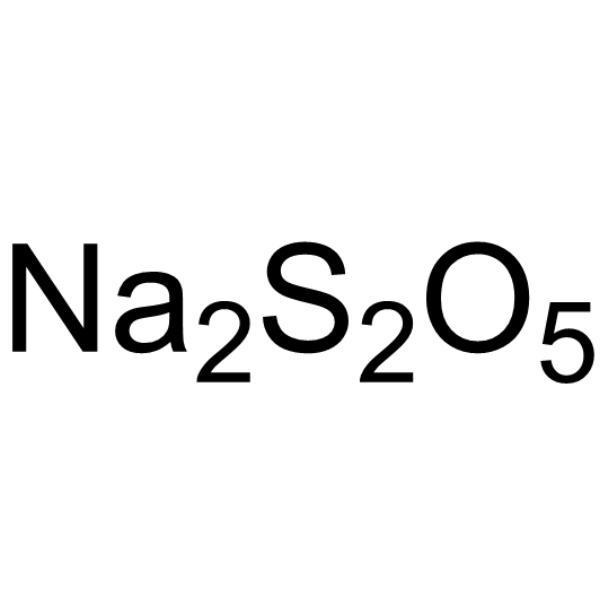
    Sodium metabisulfite, a sulfite salt, is used as an antioxidant and antimicrobial agent in a variety of drugs and functions as a preservative in many food preparations .
    Sodium metabisulfite
  • HY-Y1316
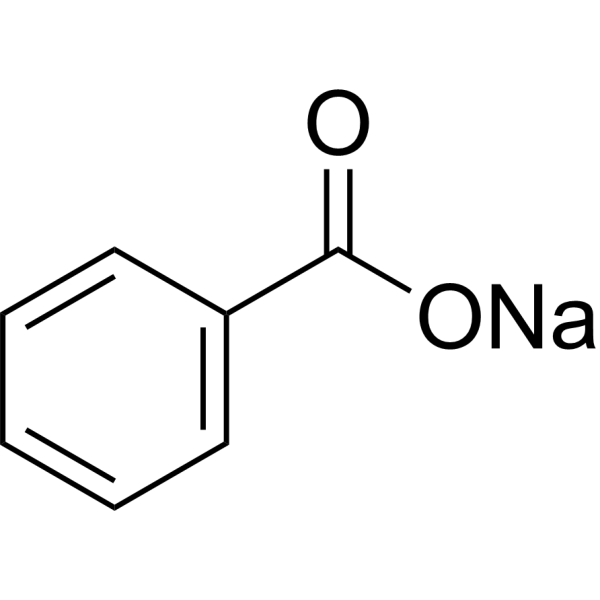
    Sodium benzoate
    2 Publications Verification

    Environmental Pollutants Biochemical Assay Reagents Apoptosis NF-κB Inflammation/Immunology Cancer
    Sodium benzoate is an orally active pharmaceutical excipient, such as an antibacterial agent, preservative, lubricant, etc. Pharmaceutical excipients, or pharmaceutical auxiliaries, refer to other chemical substances used in the pharmaceutical process other than pharmaceutical ingredients. Pharmaceutical excipients generally refer to inactive ingredients in pharmaceutical preparations, which can improve the stability, solubility and processability of pharmaceutical preparations. Pharmaceutical excipients also affect the absorption, distribution, metabolism, and elimination (ADME) processes of co-administered drugs.Sodium benzoate activates NF-κB and induces Apoptosis. Sodium benzoate induces immune suppression and produces reproductively toxic. Sodium benzoate can be used for colon cancer and immune disease research .
    Sodium benzoate
  • HY-Y0308

    Environmental Pollutants Biochemical Assay Reagents Others
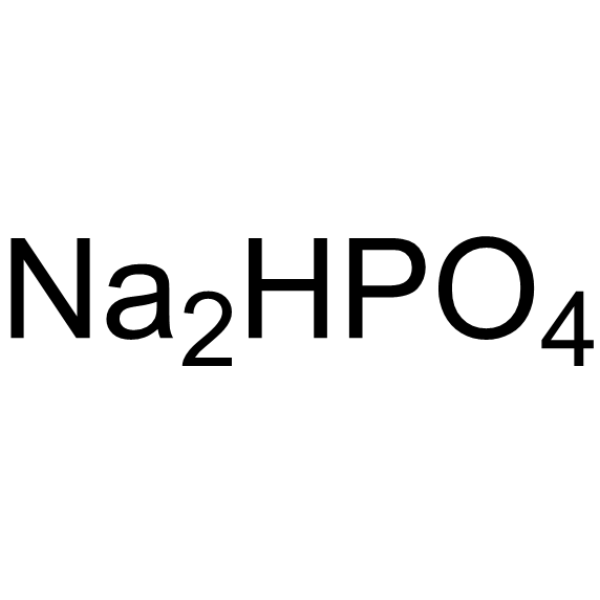
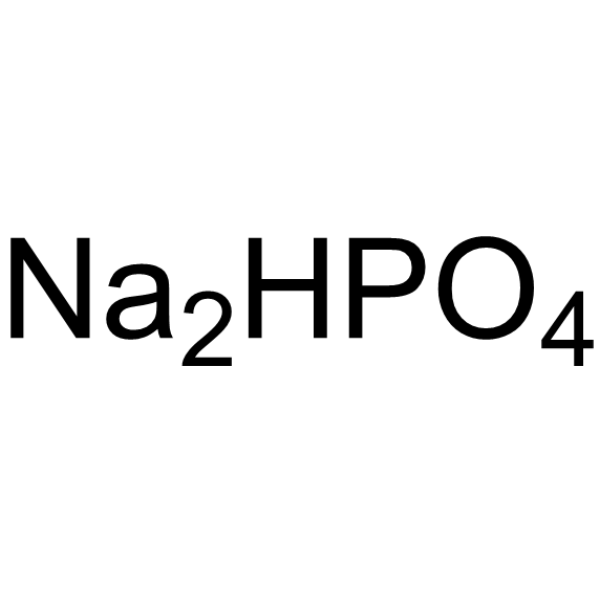
    Disodium phosphate is commonly used as a food additive, buffer and laboratory reagent. Disodium phosphate has unique chemical properties that make it an important ingredient in the manufacture of fertilizers, detergents and water treatment products. Additionally, it is used in various medical applications such as osmotic laxatives and electrolyte replacement solutions.
    Disodium phosphate
  • HY-Y0873F

    Polyethylene glycol 600

    Environmental Pollutants Biochemical Assay Reagents Others
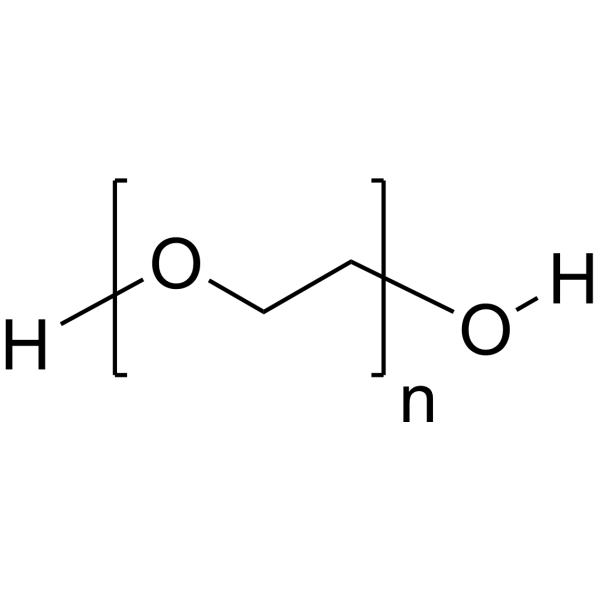
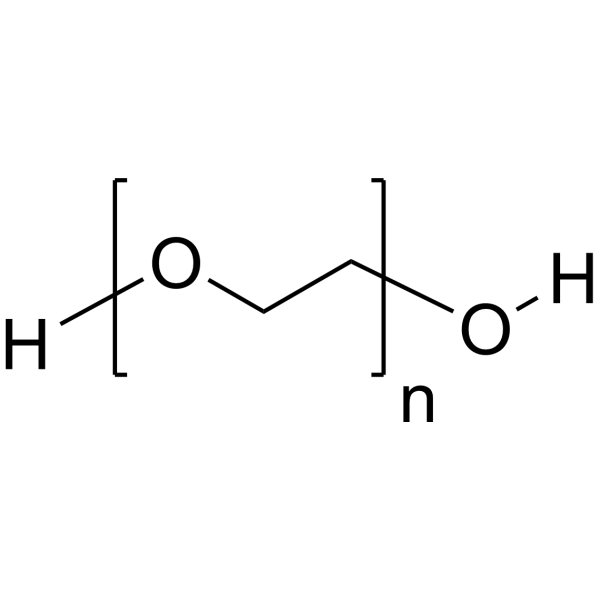
    PEG600 can be used as an excipient, such as ointment base, lubricant. Pharmaceutical excipients, or pharmaceutical auxiliaries, refer to other chemical substances used in the pharmaceutical process other than pharmaceutical ingredients. Pharmaceutical excipients generally refer to inactive ingredients in pharmaceutical preparations, which can improve the stability, solubility and processability of pharmaceutical preparations. Pharmaceutical excipients also affect the absorption, distribution, metabolism, and elimination (ADME) processes of co-administered drugs .
    PEG600
  • HY-W115786

    Environmental Pollutants Biochemical Assay Reagents Reactive Oxygen Species (ROS) TNF Receptor Interleukin Related Inflammation/Immunology Cancer
    Kaolin is a family of kaolinitic clays, which is found in the earth's crust. Kaolin alleviates the toxicity of graphene oxide for mammalian cells. Kaolin can be utilized in industrial, cosmetic and medical fields, excipient .
    Kaolin
  • HY-W051271

    Titanium dioxide

    Environmental Pollutants Reactive Oxygen Species (ROS) Photosensitizer Others
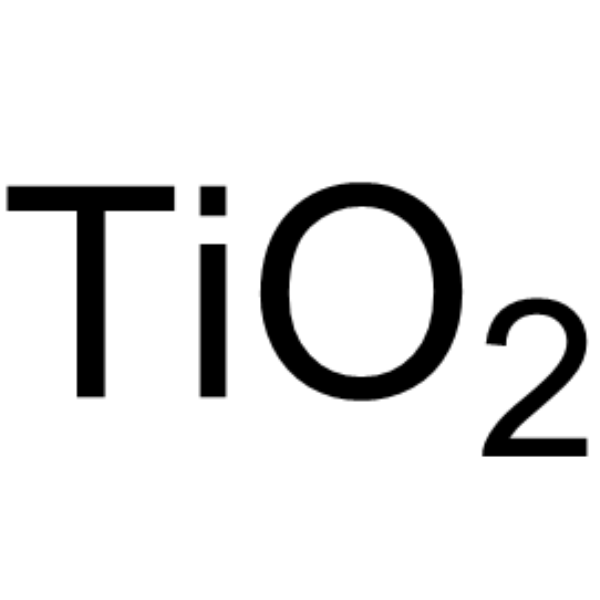
    Titanium(IV) oxide is a photosensitizer and photocatalyst. Titanium(IV) oxide can be used as a pharmaceutical excipient such as a flow aid, coating agent, sunscreen, colorant, etc. Pharmaceutical excipients or pharmaceutical excipients refer to other chemical substances used in the pharmaceutical process other than the drug ingredients. Pharmaceutical excipients generally refer to inactive ingredients in pharmaceutical preparations that can improve the stability, solubility and processability of pharmaceutical preparations. Pharmaceutical excipients also affect the absorption, distribution, metabolism and elimination (ADME) process of co-administered drugs. Titanium(IV) oxide can use light energy to generate electron-hole pairs to degrade pollutants. Photons excite electrons in TiO2 to generate active oxygen species (such as ·OH and ·O2 -), thereby oxidizing and mineralizing pollutants such as organic compounds and heavy metals. TiO2 can be used in the research of environmental remediation fields such as water treatment, air purification and self-cleaning materials .
    Titanium(IV) oxide
  • HY-W250795

    Maltodextrin; Dextrin maize starch

    Environmental Pollutants Biochemical Assay Reagents Others
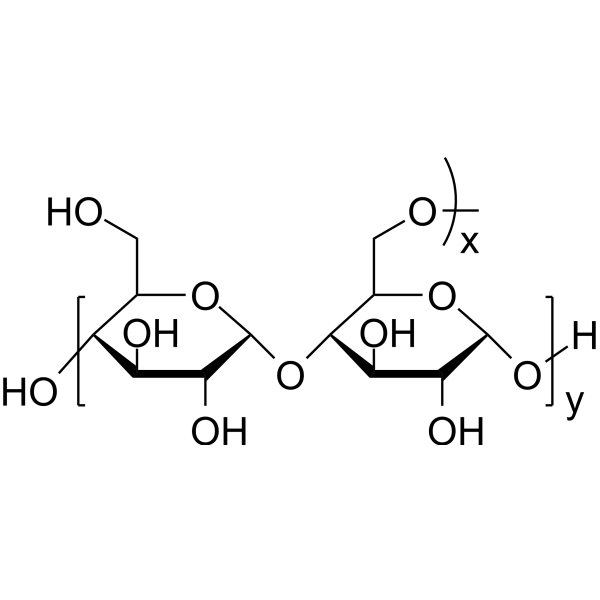
    Maltodextrin, dextrose equivalent 16.5-19.5 can be used as an excipient. Pharmaceutical excipients, or pharmaceutical auxiliaries, refer to other chemical substances used in the pharmaceutical process other than pharmaceutical ingredients. Pharmaceutical excipients generally refer to inactive ingredients in pharmaceutical preparations, which can improve the stability, solubility and processability of pharmaceutical preparations. Pharmaceutical excipients also affect the absorption, distribution, metabolism, and elimination (ADME) processes of co-administered drugs .
    Maltodextrin, dextrose equivalent 16.5-19.5
  • HY-W019883
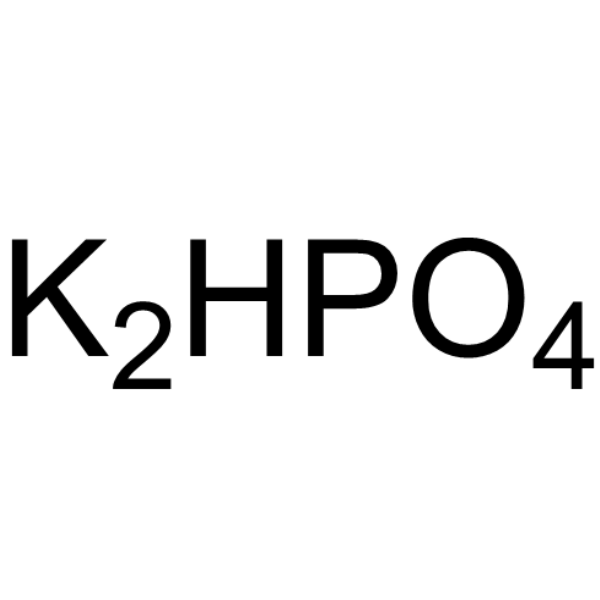
    Dipotassium hydrogen phosphate
    1 Publications Verification

    Environmental Pollutants Biochemical Assay Reagents Lipase Fungal Infection Metabolic Disease
    Dipotassium hydrogen phosphate is a salt. Dipotassium hydrogen phosphate can enhance the lipase production of Rhizopous oligosporous in neutral pH phosphate buffer. Dipotassium hydrogen phosphate can be used as a pharmaceutical excipient, such as a pH adjuster, a buffer .
    Dipotassium hydrogen phosphate
  • HY-B2221
    Cellulose
    1 Publications Verification

    Pectin glycosidase

    Environmental Pollutants Endogenous Metabolite Others Cancer
    Cellulose (Pectin glycosidase) is a natural high molecular weight polysaccharide found in many plants and organisms. It is widely used in manufacturing industries, such as in paper making, textiles, food and medicine, etc. As a renewable resource, Cellulose is biodegradable and sustainable, and can also be used to manufacture chemicals such as Cellulose Esters, Cellulose Acetate and Cellulose Nitrate. In addition, Cellulose is often used as a food additive to increase the stability and quality of food.
    Cellulose
  • HY-W129988

    Environmental Pollutants Biochemical Assay Reagents Others
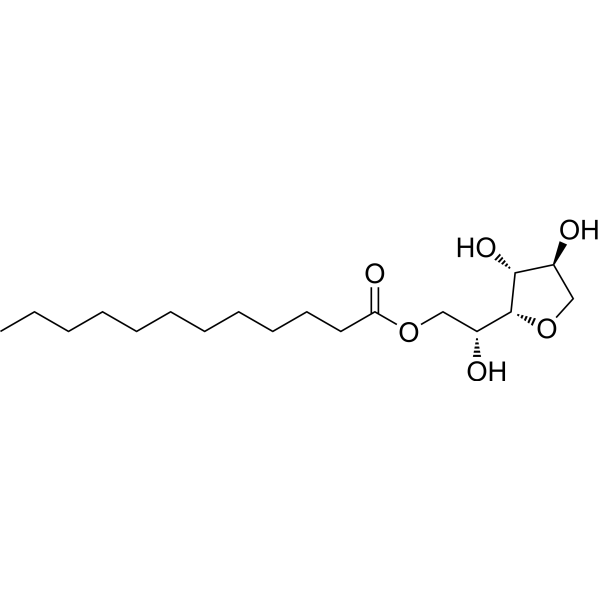
    Sorbitan monododecanoate is a non-ionic surfactant, often used as an emulsifier in food, feed and topical preparations. Sorbitan monododecanoate can also be employed as a pharmaceutical excipient .
    Sorbitan monododecanoate
  • HY-Y1054

    Stearic Acid Magnesium(II) Salt

    Environmental Pollutants Biochemical Assay Reagents Others
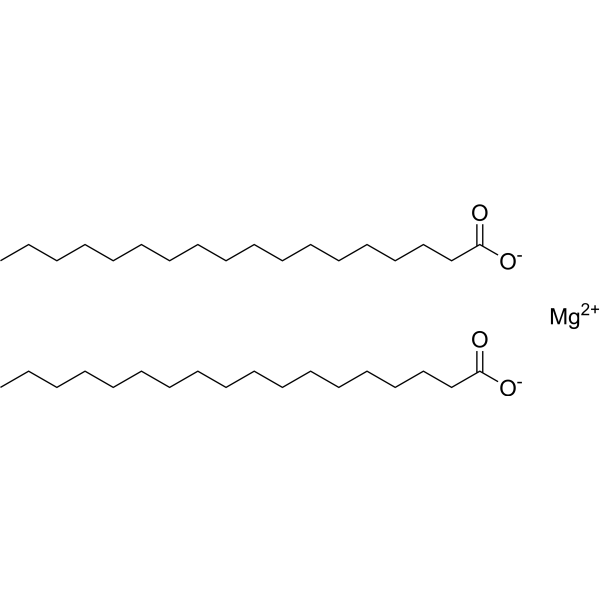
    Magnesium stearate is a commonly used pharmaceutical lubricant. But Magnesium stearate leads to an adverse effect on bonding between particles. Magnesium stearate can be used as an excipient, such as lubricant. Pharmaceutical excipients, or pharmaceutical auxiliaries, refer to other chemical substances used in the pharmaceutical process other than pharmaceutical ingredients. Pharmaceutical excipients generally refer to inactive ingredients in pharmaceutical preparations, which can improve the stability, solubility and processability of pharmaceutical preparations. Pharmaceutical excipients also affect the absorption, distribution, metabolism, and elimination (ADME) processes of co-administered drugs .
    Magnesium stearate
  • HY-Y1213

    Biochemical Assay Reagents Drug Intermediate Others
    Carbon possesses unique physicochemical properties such as electrical and structural characteristics, making it a core material in the field of fuel cells. Carbon also serves as a pharmaceutical excipient and can be used in the synthesis of other compounds .
    Carbon
  • HY-Y0873E

    Polyethylene glycol 1500

    Environmental Pollutants Biochemical Assay Reagents Others
    PEG1500 can be used as an excipient, such as ointment base, lubricant. Pharmaceutical excipients, or pharmaceutical auxiliaries, refer to other chemical substances used in the pharmaceutical process other than pharmaceutical ingredients. Pharmaceutical excipients generally refer to inactive ingredients in pharmaceutical preparations, which can improve the stability, solubility and processability of pharmaceutical preparations. Pharmaceutical excipients also affect the absorption, distribution, metabolism, and elimination (ADME) processes of co-administered drugs .
    PEG1500
  • HY-100557

    Environmental Pollutants Biochemical Assay Reagents Interleukin Related Metabolic Disease Inflammation/Immunology
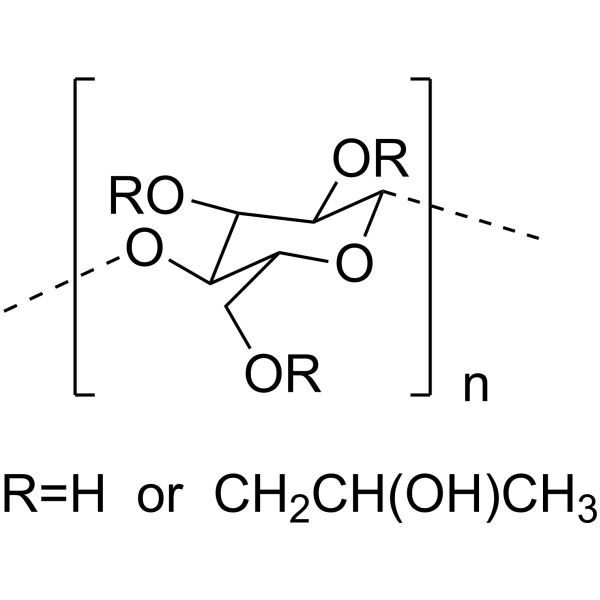
    Hydroxypropyl Cellulose is an orally active cellulose ether and surfactant. Hydroxypropyl cellulose is divided into high-substituted HPC (HHPC) and low-substituted HPC (LHPC). Hydroxypropyl Cellulose reduces inflammatory mediators (IL-6, IL-1β). Hydroxypropyl Cellulose improves colitis and obesity. Hydroxypropyl Cellulose can be used as a pharmaceutical excipient, such as coating agent, emulsifier, suspension, tablet, thickener, viscosifier .
    Hydroxypropyl Cellulose
  • HY-Y0308E

    Disodium hydrogen phosphate, for cell culture

    Environmental Pollutants Biochemical Assay Reagents Others
    Sodium phosphate dibasic (Disodium hydrogen phosphate), for cell culture is a buffer and chelating agent. Sodium phosphate dibasic is used to adjust the pH of liquids. Sodium phosphate dibasic can be used in cell culture .
    Sodium phosphate dibasic, for cell culture
  • HY-W115746

    Ethyl cellulose N-200

    Environmental Pollutants Biochemical Assay Reagents Infection Cancer
    Ethyl cellulose is a derivative of cellulose. Ethyl cellulose is a non-toxic, biodegradable polymer. Ethyl cellulose has unique properties such as oil gel formation, active ingredient delivery and film formation. Ethyl cellulose can be used as a pharmaceutical excipient, such as a coating agent, flavoring agent, tablet filler, etc. Ethyl cellulose can be used to prepare nanoparticles for active compound delivery .
    Ethyl cellulose
  • HY-W011426

    Propan-2-yl hexadecanoate

    Environmental Pollutants Biochemical Assay Reagents Liposome Others
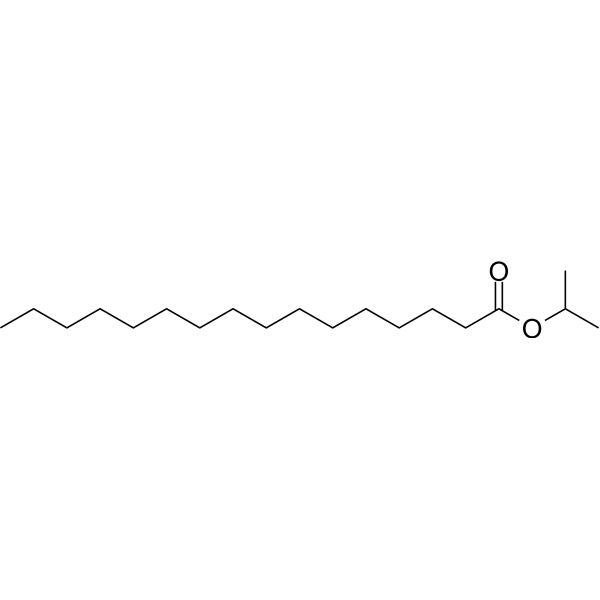
    Isopropyl palmitate is an fatty acid ester. Isopropyl palmitate can be used for design and characterization of bioactive bilayer films. The bilayer membrane not only has the ability to scavenge free radicals and inhibit lipid peroxidation, but also can inhibit the growth of known foodborne pathogens. Isopropyl palmitate can be used as an excipient, such as lubricant, oily carrier, solvent, controlled-release transdermal film. Pharmaceutical excipients, or pharmaceutical auxiliaries, refer to other chemical substances used in the pharmaceutical process other than pharmaceutical ingredients. Pharmaceutical excipients generally refer to inactive ingredients in pharmaceutical preparations, which can improve the stability, solubility and processability of pharmaceutical preparations. Pharmaceutical excipients also affect the absorption, distribution, metabolism, and elimination (ADME) processes of co-administered drugs .
    Isopropyl palmitate
  • HY-N11684

    Biochemical Assay Reagents Others
    Cocoa butter can be used as an excipient, such as lubricants, suppository bases. Pharmaceutical excipients, or pharmaceutical auxiliaries, refer to other chemical substances used in the pharmaceutical process other than pharmaceutical ingredients. Pharmaceutical excipients generally refer to inactive ingredients in pharmaceutical preparations, which can improve the stability, solubility and processability of pharmaceutical preparations. Pharmaceutical excipients also affect the absorption, distribution, metabolism, and elimination (ADME) processes of co-administered drugs .
    Cocoa butter
  • HY-45072

    Environmental Pollutants Biochemical Assay Reagents Others
    Croscarmellose sodium is a commonly used pharmaceutical additive approved by the US Food and Drug Administration (FDA). Croscarmellose sodium is used as excipients, such as the suspending agent, binder, glidant, antiadherent, and disintegrants .
    Croscarmellose sodium
  • HY-W422419

    Cetostearyl alcohol

    Biochemical Assay Reagents Others
    Cetearyl alcohol can be used as an excipient. Pharmaceutical excipients, or pharmaceutical auxiliaries, refer to other chemical substances used in the pharmaceutical process other than pharmaceutical ingredients. Pharmaceutical excipients generally refer to inactive ingredients in pharmaceutical preparations, which can improve the stability, solubility and processability of pharmaceutical preparations. Pharmaceutical excipients also affect the absorption, distribution, metabolism, and elimination (ADME) processes of co-administered drugs .
    Cetearyl alcohol
  • HY-154696

    Biochemical Assay Reagents Others
    Ferric oxide, yellow can be used as an excipient, such as colorant. Pharmaceutical excipients, or pharmaceutical auxiliaries, refer to other chemical substances used in the pharmaceutical process other than pharmaceutical ingredients. Pharmaceutical excipients generally refer to inactive ingredients in pharmaceutical preparations, which can improve the stability, solubility and processability of pharmaceutical preparations. Pharmaceutical excipients also affect the absorption, distribution, metabolism, and elimination (ADME) processes of co-administered drugs .
    Ferric oxide, yellow
  • HY-134524

    Dimethyl isosorbide; O,O-Dimethylisosorbide

    Environmental Pollutants Biochemical Assay Reagents Others
    Isosorbide dimethyl ether is a green solvent. Isosorbide dimethyl ether can be used to prepare sustainable ultrafiltration and microfiltration membranes .
    Isosorbide dimethyl ether
  • HY-W088069

    Biochemical Assay Reagents Others
    Dipotassium hydrogen phosphate trihydrate, which is commonly used as a buffer and source of phosphorus and potassium in various applications, such as fertilizers, food processing, and pharmaceuticals, in biochemistry and molecular biology, Dipotassium hydrogen phosphate trihydrate is used in the preparation of cell culture media And reagent buffer system, in addition, it has been used in analytical chemistry as a reagent for the determination of calcium and magnesium ions in water samples.
    Dipotassium hydrogen phosphate trihydrate
  • HY-Y0708

    Calcium phosphate dihydrate

    Biochemical Assay Reagents Others
    Calcium hydrogen phosphate dihydrate (Calcium phosphate dihydrate) can be found quite frequently in urinary calculi stones. Calcium hydrogen phosphate dihydrate can be used as an excipient, such as diluent, adsorbent. Pharmaceutical excipients, or pharmaceutical auxiliaries, refer to other chemical substances used in the pharmaceutical process other than pharmaceutical ingredients. Pharmaceutical excipients generally refer to inactive ingredients in pharmaceutical preparations, which can improve the stability, solubility and processability of pharmaceutical preparations. Pharmaceutical excipients also affect the absorption, distribution, metabolism, and elimination (ADME) processes of co-administered drugs .
    Calcium hydrogen phosphate dihydrate
  • HY-134098

    Adipic acid diisopropyl ester

    Environmental Pollutants TRP Channel Others
    Diisopropyl adipate is an alternative plasticizer and a TRPA1 activator. Diisopropyl adipate activates TRPA1 and enhances FITC-induced contact hypersensitivity (CHS).Diisopropyl adipate also serves as an ingredient in cosmetics and drug formulations topically applied to the skin. Diisopropyl adipate can be used as an excipient, such as emollients, plasticizers. Pharmaceutical excipients, or pharmaceutical auxiliaries, refer to other chemical substances used in the pharmaceutical process other than pharmaceutical ingredients. Pharmaceutical excipients generally refer to inactive ingredients in pharmaceutical preparations, which can improve the stability, solubility and processability of pharmaceutical preparations. Pharmaceutical excipients also affect the absorption, distribution, metabolism, and elimination (ADME) processes of co-administered drugs .
    Diisopropyl adipate
  • HY-W099536

    Tetraoxyethylene glycol monododecyl ether

    Biochemical Assay Reagents Others
    PEG-4 lauryl ether is a non-ionic detergent that can be used as an excipient or for the isolation of functional membrane complexes .
    PEG 4 lauryl ether
  • HY-154630

    Biochemical Assay Reagents Others
    Polyoxypropylene stearyl ether can be used as an excipient, such as surfactant, softener, lubricating, wetting, plasticizing, solubilizing and dispersing properties. Pharmaceutical excipients, or pharmaceutical auxiliaries, refer to other chemical substances used in the pharmaceutical process other than pharmaceutical ingredients. Pharmaceutical excipients generally refer to inactive ingredients in pharmaceutical preparations, which can improve the stability, solubility and processability of pharmaceutical preparations. Pharmaceutical excipients also affect the absorption, distribution, metabolism, and elimination (ADME) processes of co-administered drugs .
    Polyoxypropylene stearyl ether
  • HY-154696A

    Biochemical Assay Reagents Others
    Ferric oxide, red can be used as an excipient, such as colorant. Pharmaceutical excipients, or pharmaceutical auxiliaries, refer to other chemical substances used in the pharmaceutical process other than pharmaceutical ingredients. Pharmaceutical excipients generally refer to inactive ingredients in pharmaceutical preparations, which can improve the stability, solubility and processability of pharmaceutical preparations. Pharmaceutical excipients also affect the absorption, distribution, metabolism, and elimination (ADME) processes of co-administered drugs .
    Ferric oxide, red
  • HY-W094497B

    Sodium phosphate monobasic monohydrate, for molecular biology

    Biochemical Assay Reagents Others
    Sodium dihydrogen phosphate monohydrate, for molecular biology is an inorganic salt compound commonly used in industry and laboratories. It can be used as a buffer, and plays a role in certain metal processing, pharmaceutical and chemical industries.
    Sodium dihydrogen phosphate monohydrate, for molecular biology
  • HY-W013482

    Benzyl Paraben

    Biochemical Assay Reagents Others
    Benzyl 4-hydroxybenzoate is a prominent material. Benzyl 4-hydroxybenzoate can be used as an excipient, such as bacteriostatic agent, preservative. Pharmaceutical excipients, or pharmaceutical auxiliaries, refer to other chemical substances used in the pharmaceutical process other than pharmaceutical ingredients. Pharmaceutical excipients generally refer to inactive ingredients in pharmaceutical preparations, which can improve the stability, solubility and processability of pharmaceutical preparations. Pharmaceutical excipients also affect the absorption, distribution, metabolism, and elimination (ADME) processes of co-administered drugs .
    Benzyl 4-hydroxybenzoate
  • HY-154739A

    Biochemical Assay Reagents Others
    Amorphous silica can be used as an excipient, such as viscosifier, suspending agent, tablet disintegrating agent, adsorbent dispersing agent as liquid in powders. Pharmaceutical excipients, or pharmaceutical auxiliaries, refer to other chemical substances used in the pharmaceutical process other than pharmaceutical ingredients. Pharmaceutical excipients generally refer to inactive ingredients in pharmaceutical preparations, which can improve the stability, solubility and processability of pharmaceutical preparations. Pharmaceutical excipients also affect the absorption, distribution, metabolism, and elimination (ADME) processes of co-administered drugs .
    Amorphous silica
  • HY-Y0302

    Environmental Pollutants Biochemical Assay Reagents Others
    Diammonium phosphate is a neutral and efficient catalyst in 1,8‐Dioxo‐octahydroxanthene derivatives synthesis. Diammonium phosphate can be used as an excipient, such as diuretic, buffer, effervescent .
    Diammonium phosphate
  • HY-W020027

    2-Methylacrylamide

    Environmental Pollutants Biochemical Assay Reagents Others
    Methacrylamide can be used as an excipient. Pharmaceutical excipients, or pharmaceutical auxiliaries, refer to other chemical substances used in the pharmaceutical process other than pharmaceutical ingredients. Pharmaceutical excipients generally refer to inactive ingredients in pharmaceutical preparations, which can improve the stability, solubility and processability of pharmaceutical preparations. Pharmaceutical excipients also affect the absorption, distribution, metabolism, and elimination (ADME) processes of co-administered drugs .
    Methacrylamide
  • HY-154636A

    Biochemical Assay Reagents Others
    Light Liquid Paraffin can be used as an excipient, such as excipient, lubricant. Pharmaceutical excipients, or pharmaceutical auxiliaries, refer to other chemical substances used in the pharmaceutical process other than pharmaceutical ingredients. Pharmaceutical excipients generally refer to inactive ingredients in pharmaceutical preparations, which can improve the stability, solubility and processability of pharmaceutical preparations. Pharmaceutical excipients also affect the absorption, distribution, metabolism, and elimination (ADME) processes of co-administered drugs .
    Light Liquid Paraffin
  • HY-Y1054R

    Stearic Acid Magnesium(II) Salt (Standard)

    Biochemical Assay Reagents Reference Standards Others
    Magnesium stearate (Standard) is the analytical standard of Magnesium stearate. This product is intended for research and analytical applications. Magnesium stearate is a commonly used pharmaceutical lubricant. But Magnesium stearate leads to an adverse effect on bonding between particles. Magnesium stearate can be used as an excipient, such as lubricant. Pharmaceutical excipients, or pharmaceutical auxiliaries, refer to other chemical substances used in the pharmaceutical process other than pharmaceutical ingredients. Pharmaceutical excipients generally refer to inactive ingredients in pharmaceutical preparations, which can improve the stability, solubility and processability of pharmaceutical preparations. Pharmaceutical excipients also affect the absorption, distribution, metabolism, and elimination (ADME) processes of co-administered drugs .
    Magnesium stearate (Standard)
  • HY-W115818

    Environmental Pollutants Biochemical Assay Reagents Others
    Polyoxyethylene Sorbitan Monostearate is an ester of the saturated fatty acid stearic acid (C18:0). Polyoxyethylene Sorbitan Monostearate can be used as an excipient, such as surfactant, emulsifier, solubilizer, wetting agent. Pharmaceutical excipients, or pharmaceutical auxiliaries, refer to other chemical substances used in the pharmaceutical process other than pharmaceutical ingredients. Pharmaceutical excipients generally refer to inactive ingredients in pharmaceutical preparations, which can improve the stability, solubility and processability of pharmaceutical preparations. Pharmaceutical excipients also affect the absorption, distribution, metabolism, and elimination (ADME) processes of co-administered drugs .
    Polyoxyethylene Sorbitan Monostearate
  • HY-154739

    Biochemical Assay Reagents Others
    Cristobalite can be used as an excipient, such as disintegrants, anti-adhesives, glidants, suspending agents, thickeners, defoamers. Pharmaceutical excipients, or pharmaceutical auxiliaries, refer to other chemical substances used in the pharmaceutical process other than pharmaceutical ingredients. Pharmaceutical excipients generally refer to inactive ingredients in pharmaceutical preparations, which can improve the stability, solubility and processability of pharmaceutical preparations. Pharmaceutical excipients also affect the absorption, distribution, metabolism, and elimination (ADME) processes of co-administered drugs .
    Cristobalite
  • HY-Y1316R

    Biochemical Assay Reagents Reference Standards Others
    Sodium benzoate (Standard) is the analytical standard of Sodium benzoate. This product is intended for research and analytical applications. Sodium benzoate can be used as an excipient, such as antimicrobial agent, preservative, lubricant. Pharmaceutical excipients, or pharmaceutical auxiliaries, refer to other chemical substances used in the pharmaceutical process other than pharmaceutical ingredients. Pharmaceutical excipients generally refer to inactive ingredients in pharmaceutical preparations, which can improve the stability, solubility and processability of pharmaceutical preparations. Pharmaceutical excipients also affect the absorption, distribution, metabolism, and elimination (ADME) processes of co-administered drugs .
    Sodium benzoate (Standard)
  • HY-101530A

    PEG 8 stearate

    Biochemical Assay Reagents Others
    Polyoxyl 8 stearate can be used as an excipient. Pharmaceutical excipients, or pharmaceutical auxiliaries, refer to other chemical substances used in the pharmaceutical process other than pharmaceutical ingredients. Pharmaceutical excipients generally refer to inactive ingredients in pharmaceutical preparations, which can improve the stability, solubility and processability of pharmaceutical preparations. Pharmaceutical excipients also affect the absorption, distribution, metabolism, and elimination (ADME) processes of co-administered drugs .
    Polyoxyl 8 stearate
  • HY-W127624A

    Biochemical Assay Reagents Others
    PEG 18 cetostearyl ether can be used as an excipient. Pharmaceutical excipients, or pharmaceutical auxiliaries, refer to other chemical substances used in the pharmaceutical process other than pharmaceutical ingredients. Pharmaceutical excipients generally refer to inactive ingredients in pharmaceutical preparations, which can improve the stability, solubility and processability of pharmaceutical preparations. Pharmaceutical excipients also affect the absorption, distribution, metabolism, and elimination (ADME) processes of co-administered drugs .
    PEG 18 cetostearyl ether
  • HY-154634

    Biochemical Assay Reagents Others
    Cyclomethicone can be used as an excipient, such as emollients, humectants, thickeners. Pharmaceutical excipients, or pharmaceutical auxiliaries, refer to other chemical substances used in the pharmaceutical process other than pharmaceutical ingredients. Pharmaceutical excipients generally refer to inactive ingredients in pharmaceutical preparations, which can improve the stability, solubility and processability of pharmaceutical preparations. Pharmaceutical excipients also affect the absorption, distribution, metabolism, and elimination (ADME) processes of co-administered drugs .
    Cyclomethicone
  • HY-B2221S1

    Isotope-Labeled Compounds Endogenous Metabolite Others
    U- 13C Cellulose from chicory is the 13C labeled Cellulose (HY-B2221). Cellulose (Pectin glycosidase) is a natural high molecular weight polysaccharide found in many plants and organisms. It is widely used in manufacturing industries, such as in paper making, textiles, food and medicine, etc. As a renewable resource, Cellulose is biodegradable and sustainable, and can also be used to manufacture chemicals such as Cellulose Esters, Cellulose Acetate and Cellulose Nitrate. In addition, Cellulose is often used as a food additive to increase the stability and quality of food .
    U-13C Cellulose from chicory
  • HY-154635

    Biochemical Assay Reagents Others
    Oxidized paraffin (calcium) can be used as an excipient, such as ointment base, hardening agent. Pharmaceutical excipients, or pharmaceutical auxiliaries, refer to other chemical substances used in the pharmaceutical process other than pharmaceutical ingredients. Pharmaceutical excipients generally refer to inactive ingredients in pharmaceutical preparations, which can improve the stability, solubility and processability of pharmaceutical preparations. Pharmaceutical excipients also affect the absorption, distribution, metabolism, and elimination (ADME) processes of co-administered drugs .
    Oxidized paraffin calcium
  • HY-W131101

    Environmental Pollutants Liposome Others
    Sorbitan tristearate is a non-ionic surfactant, with a synergistic effect on skin permeability. Sorbitan tristearate can be used as an excipient, such as emulsifier. Pharmaceutical excipients, or pharmaceutical auxiliaries, refer to other chemical substances used in the pharmaceutical process other than pharmaceutical ingredients. Pharmaceutical excipients generally refer to inactive ingredients in pharmaceutical preparations, which can improve the stability, solubility and processability of pharmaceutical preparations. Pharmaceutical excipients also affect the absorption, distribution, metabolism, and elimination (ADME) processes of co-administered drugs .
    Sorbitan tristearate
  • HY-27979

    Biochemical Assay Reagents Others
    Ethyl acrylate-methyl methacrylate copolymer can be used as an excipient, such as sustained-release coating materials, matrix sustained-release tablet binders and retarders. Pharmaceutical excipients, or pharmaceutical auxiliaries, refer to other chemical substances used in the pharmaceutical process other than pharmaceutical ingredients. Pharmaceutical excipients generally refer to inactive ingredients in pharmaceutical preparations, which can improve the stability, solubility and processability of pharmaceutical preparations. Pharmaceutical excipients also affect the absorption, distribution, metabolism, and elimination (ADME) processes of co-administered drugs .
    Ethyl acrylate-methyl methacrylate copolymer
  • HY-W127624C

    Biochemical Assay Reagents Others
    PEG 20 cetostearyl ether can be used as an excipient. Pharmaceutical excipients, or pharmaceutical auxiliaries, refer to other chemical substances used in the pharmaceutical process other than pharmaceutical ingredients. Pharmaceutical excipients generally refer to inactive ingredients in pharmaceutical preparations, which can improve the stability, solubility and processability of pharmaceutical preparations. Pharmaceutical excipients also affect the absorption, distribution, metabolism, and elimination (ADME) processes of co-administered drugs .
    PEG 20 cetostearyl ether
  • HY-Y1326R

    Biochemical Assay Reagents Reference Standards Bacterial Infection
    Sodium metabisulfite (Standard) is the analytical standard of Sodium metabisulfite. This product is intended for research and analytical applications.Sodium metabisulfite, a sulfite salt, is used as an antioxidant and antimicrobial agent in a variety of drugs and functions as a preservative in many food preparations.
    Sodium metabisulfite (Standard)
  • HY-B2221S

    Isotope-Labeled Compounds Endogenous Metabolite Others
    U- 13C Cellulose high DP from potato is the 13C labeled Cellulose (HY-B2221). Cellulose (Pectin glycosidase) is a natural high molecular weight polysaccharide found in many plants and organisms. It is widely used in manufacturing industries, such as in paper making, textiles, food and medicine, etc. As a renewable resource, Cellulose is biodegradable and sustainable, and can also be used to manufacture chemicals such as Cellulose Esters, Cellulose Acetate and Cellulose Nitrate. In addition, Cellulose is often used as a food additive to increase the stability and quality of food .
    U-13C Cellulose high DP from potato

オンラインお問い合わせ

入力情報は安全に管理されます. 必須入力項目.

タイトル


国或いは地域 *

お名前 *


組纖名 *

デパートメント *


メールアドレス *


製品名 *

製品番号


カスタマ需要量 *

電話番号 *


必ず会社名を記載ください。個人への返信は行いません。

備考

バルクお問い合わせ

Inquiry Information

製品名:
製品番号:
数量:
MCE 日本正規代理店:

