



Croscarmellose sodium

Based on 1 Customer Validation
Croscarmellose sodium is a commonly used pharmaceutical additive approved by the US Food and Drug Administration (FDA). Croscarmellose sodium is used as excipients, such as the suspending agent, binder, glidant, antiadherent, and disintegrants.
연구목적의 판매만을 진행합니다. 환자를 대상으로 한 판매는 하지 않습니다.
- CAS No.: 74811-65-7
-
보관:
4°C, sealed storage, away from moisture
* In solvent : -80°C, 6 months; -20°C, 1 month (sealed storage, away from moisture)

To place orders, for customer services and technical support, please contact: MedChemExpress USA
Tel: 609-228-6898 E-mail: [email protected] [email protected]


-
 Biological Activity
-
Chemical Information
- Protocol
- 순도&문서
- References
-
 Help & FAQs


-
HY-Y0850E
Polyvinyl alcohol (Mw 30000-70000, 87-90% hydrolyzed)Dressing Meterial -
HY-Y0850
Polyvinyl alcohol (Mw 146000-186000, 99+% hydrolyzed)Biochemical reagents -
HY-Y0850J
Polyvinyl alcohol (Mw 13000-23000, 87-89% hydrolyzed)Polyvinyl Alcohol -

HY-Y0850U4
PVA (Mw 145000, 99+% hydrolyzed, ~3300 polymerization)Polyvinyl Alcohol -

HY-Y0850U
PVA (Mw 31000, 87-89% hydrolyzed, ~630 polymerization)Polymer -
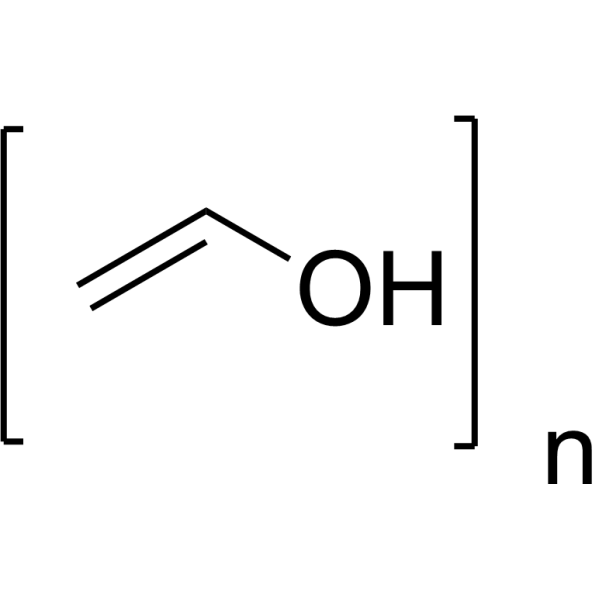
HY-Y0850K
Polyvinyl alcohol (Mw 31000-50000, 98-99% hydrolyzed)Biochemical Reagent -
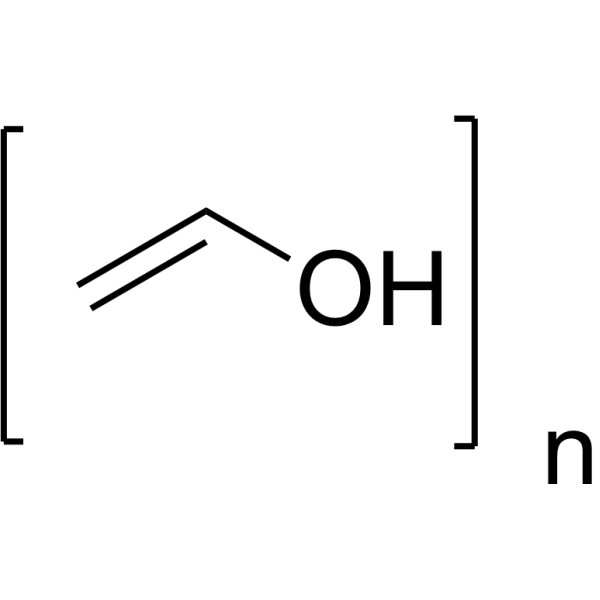
HY-Y0850O
Polyvinyl alcohol (Mw 31000-50000, 87-89% hydrolyzed)Emulsification Stabilizer -
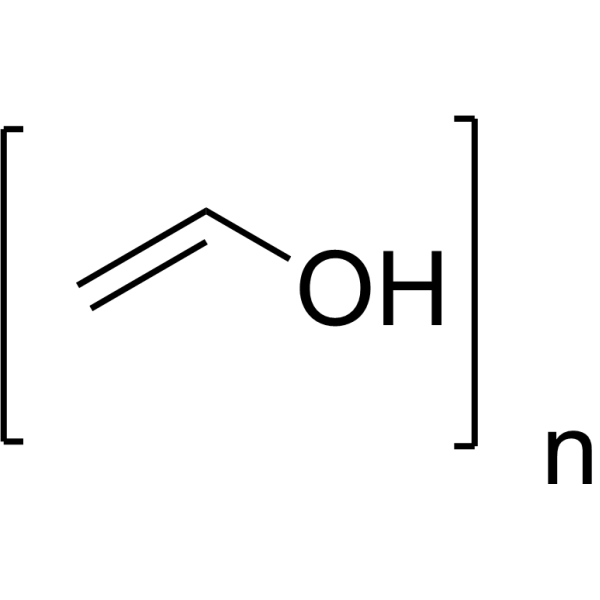
HY-Y0850H
Polyvinyl alcohol (Mw 89000-98000, 99+% hydrolyzed)Biochemical Reagent -
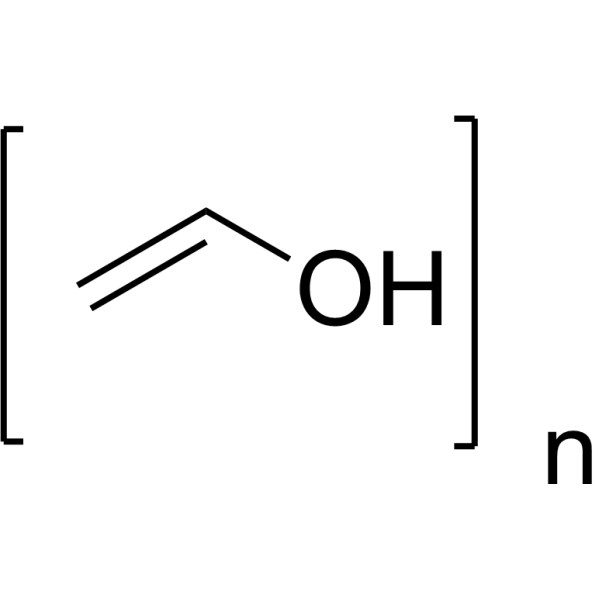
HY-Y0850I
Polyvinyl alcohol (Mw 9000-10000, 80% hydrolyzed)Biochemical Reagent -

HY-Y0850U6
PVA (Mw 205000)Polyvinyl Alcohol -
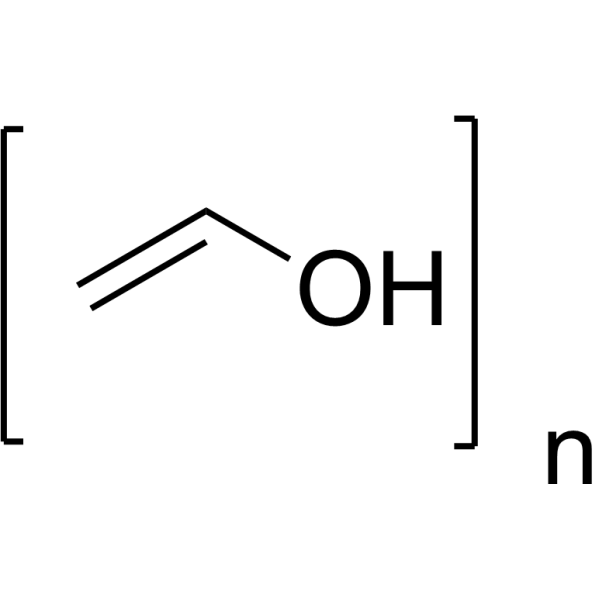
HY-Y0850N
Polyvinyl alcohol (Mw 13000-23000, 98% hydrolyzed)Biochemical Reagent -

HY-Y0850U3
PVA (Mw 125000, 98-99% hydrolyzed, ~2800 polymerization)Wound Dressing


Biological Activity
제품 설명
In Vitro
Croscarmellose sodium is a commonly used pharmaceutical excipient. Pharmaceutical excipient refers to the inactive chemical substances used in the pharmaceutical process other than pharmaceutical ingredients, which can improve the stability, solubility and processability of pharmaceutical preparations. Pharmaceutical excipients also affect the absorption, distribution, metabolism, and elimination (ADME) processes of co-administered drugs[2].
Croscarmellose sodium promotes the dissolution of poorly soluble compounds in water, and can be used as suspending agent in injections. Croscarmellose sodium improves the fluidity of drugs as a lubricant in tables. Croscarmellose sodium prevents drug particles from adhering to the mold as an anti-adherent agent. Croscarmellose sodium acts as a disintegrant that rapidly absorbs water and swells, causing the drug to disintegrate rapidly in the gastrointestinal tract, thereby accelerating drug release and absorption. Croscarmellose sodium acts also as an additive in the food industry for thickening or stabilization[1][3].
MedChemExpress (MCE) has not independently confirmed the accuracy of these methods. They are for reference only. Further protocols information, click here.
In Vivo
MedChemExpress (MCE) has not independently confirmed the accuracy of these methods. They are for reference only.


Chemical Information
-
CAS No. 74811-65-7
-
Appearance Solid
-
Color White to off-white
-
SMILES
[Croscarmellose sodium]
-
선적
Room temperature in continental US; may vary elsewhere.
-
보관
4°C, sealed storage, away from moisture
* In solvent : -80°C, 6 months; -20°C, 1 month (sealed storage, away from moisture)

Protocol
-
How to Select the Route of Administration for Mammals
Route-of-administration selection in mammals is a pharmacokinetic, pharmacodynamic, formulation, animal-welfare, and translational decision, not a default technical choice. The selected route should match the study goal: intravenous dosing is most useful when complete systemic exposure and rapid onset are required, oral dosing is most translational for orally intended medicines but is affected by absorption and first-pass metabolism, subcutaneous or intramuscular dosing can provide slower systemic exposure, and intraperitoneal dosing can be useful in rodent proof-of-concept studies but may have limited clinical translation. Published route-comparison studies show that the same compound can produce different exposure, onset, bioavailability, tissue distribution, and tolerability depending on route; therefore, route choice should be supported by pilot pharmacokinetic or pharmacodynamic evidence when the literature is insufficient. Unresolved questions include how to standardize route sel


순도&문서
-
Data Sheet (267 KB)
-
SDS (252 KB)
- English - EN (252 KB)
- Français - FR (252 KB)
- Deutsch - DE (252 KB)
- Norwegian - NO (252 KB)
- Español - ES (252 KB)
- Swedish - SV (252 KB)
- Italian - IT (252 KB)
- Korean - KR (252 KB)
- Portuguese - PT (252 KB)
-
Handling Instructions (2659 KB)
References
[1]. Mumoli N, et al. Allergic reaction to Croscarmellose sodium used as excipient of a generic drug. QJM. 2011 Aug;104(8):709-10. [Content Brief]
[2]. Elder DP, et al. Pharmaceutical excipients - quality, regulatory and biopharmaceutical considerations. Eur J Pharm Sci. 2016 May 25;87:88-99. [Content Brief]
[3]. Gordon MS, et al., Effect of the mode of croscarmellose sodium incorporation on tablet dissolution and friability. J Pharm Sci. 1990 Jan;79(1):43-7. [Content Brief]

Calculators
Concentration (start) × Volume (start) = Concentration (final) × Volume (final)


Croscarmellose sodium Related Classifications
HY-45072 Related Classifications
 Powered by Bioz