1. Search Result
Search Result
Results for "

pharmacological tool

" in MedChemExpress (MCE) Product Catalog:

32

Inhibitors & Agonists

15

Screening Libraries

1

Fluorescent Dyes

2

Biochemical Assay Reagents

2

Peptides

2

Natural
Products

Cat. No. Product Name Target Research Areas Chemical Structure
  • HY-P1410
    GsMTx4
    110+ Cited Publications

    TRP Channel Piezo Channel Cardiovascular Disease Neurological Disease Inflammation/Immunology
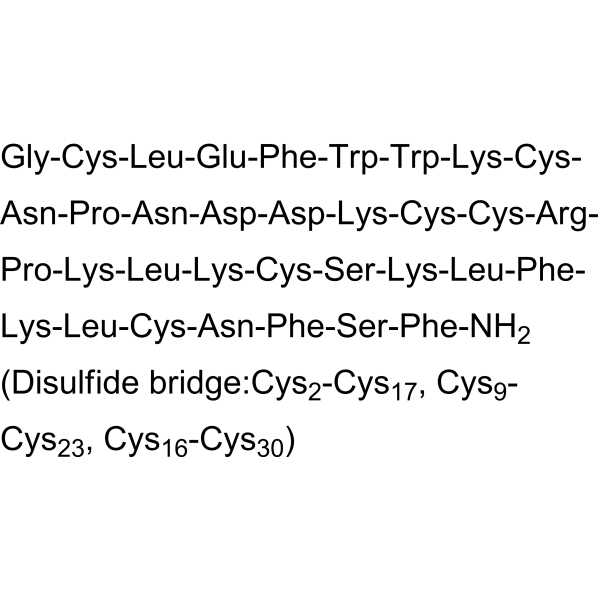
    GsMTx4 is a spider venom peptide that selectively inhibits cationic-permeable mechanosensitive channels (MSCs) belonging to the Piezo and TRP channel families. GsMTx4 also blocks cation-selective stretch-activated channels (SACs) , attenuates lysophosphatidylcholine (LPC)-induced astrocyte toxicity and microglial reactivity. GsMTx4 is an important pharmacological tool for identifying the role of these excitatory MSCs in normal physiology and pathology .
    GsMTx4
  • HY-P1410A
    GsMTx4 TFA
    110+ Cited Publications

    TRP Channel Piezo Channel Cardiovascular Disease Neurological Disease Inflammation/Immunology
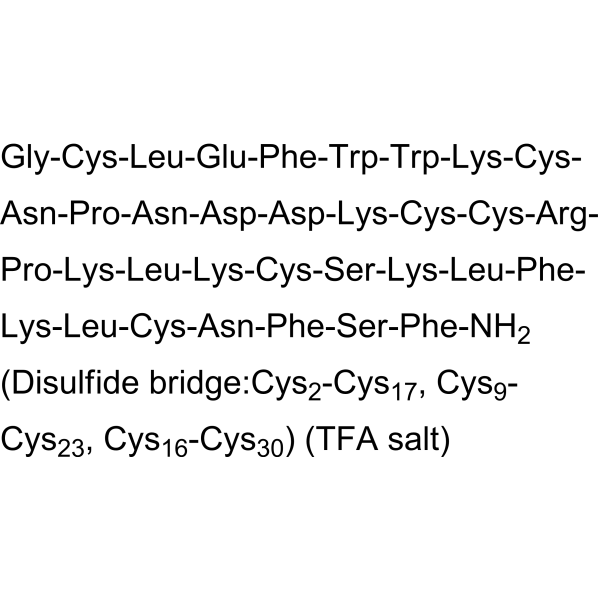
    GsMTx4 TFA is a spider venom peptide that selectively inhibits cationic-permeable mechanosensitive channels (MSCs) belonging to the Piezo and TRP channel families. GsMTx4 TFA also blocks cation-selective stretch-activated channels (SACs) , attenuates lysophosphatidylcholine (LPC)-induced astrocyte toxicity and microglial reactivity. GsMTx4 TFA is an important pharmacological tool for identifying the role of these excitatory MSCs in normal physiology and pathology .
    GsMTx4 TFA
  • HY-13991
    CCG-1423
    10+ Cited Publications

    Ras Apoptosis Cancer
    CCG-1423 is an inhibitor of Rho/MRTF/SRF pathway. CCG-1423 shows activities in several cancer cells. CCG-1423 is a promising lead compound for the development of novel pharmacologic tools, and it can be used for the research of cancer and diabetes .
    CCG-1423
  • HY-115576
    P62-mediated mitophagy inducer
    5 Publications Verification

    p62 Mitophagy Autophagy Mitosis Neurological Disease Cancer
    P62-mediated mitophagy inducer (PMI) is a P62-mediated mitophagy activator. P62-mediated mitophagy inducer activates mitochondrial autophagy without recruitment of Parkin or collapse of the mitochondrial membrane potential and remains active in cells lacking a fully functional PINK1/Parkin pathway. P62-mediated mitophagy inducer serves as a pharmacological tool to study the molecular mechanisms of mitosis, avoiding toxicity and some of the non-specific effects associated with the sudden dissipation of mitochondria lacking membrane potential .
    P62-mediated mitophagy inducer
  • HY-12345
    ML365
    5+ Cited Publications

    Potassium Channel Cardiovascular Disease
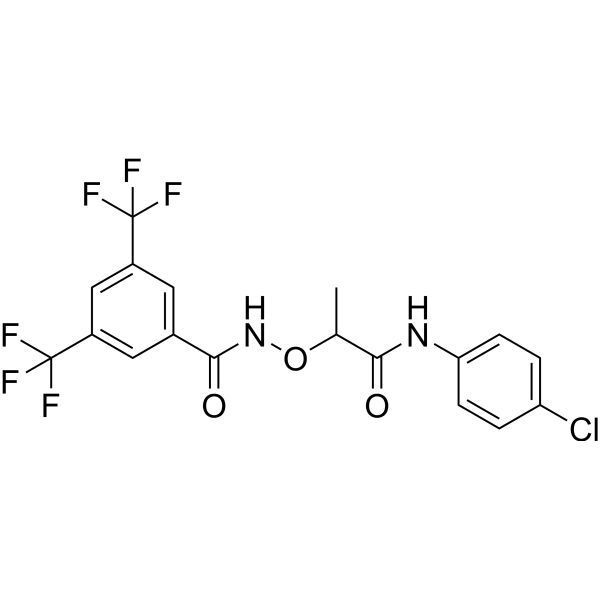
    ML365 is a selective two-pore domain potassium channel KCNK3/TASK1 inhibitor, with an IC50 of 4 nM. ML365 acts as a pharmacological tool that can be used to examine the specific roles of TASK1 channels .
    ML365
  • HY-103111

    mGluR Neurological Disease
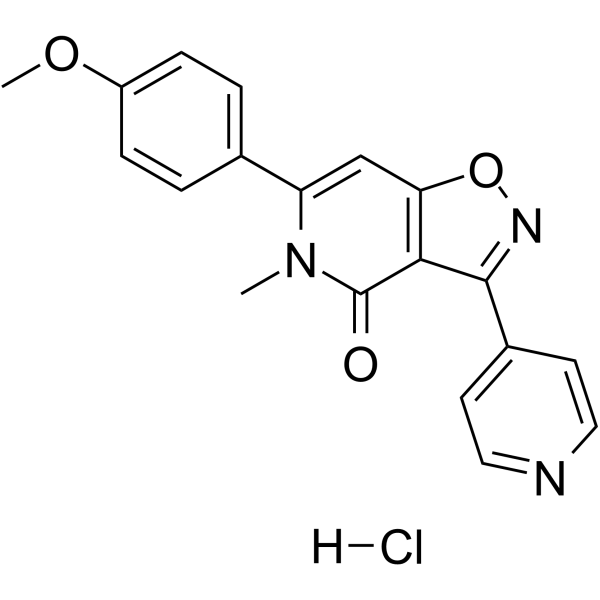
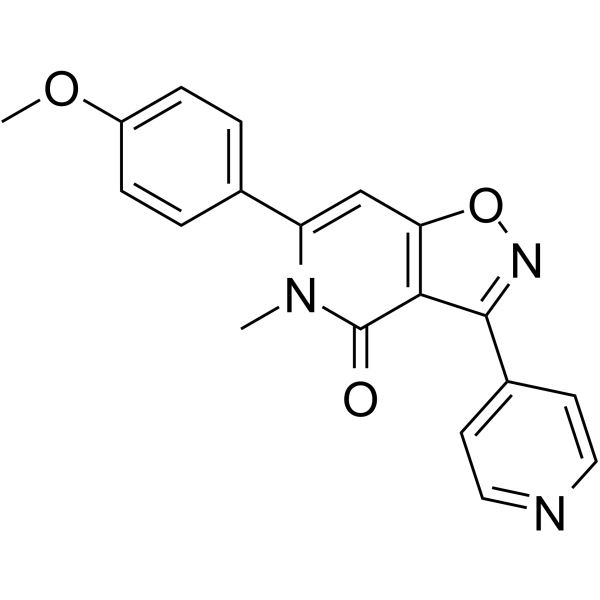
    MMPIP hydrochloride is an allosteric metabotropic glutamate receptor 7 (mGluR7) selective antagonist (KB values 24 -30 nM). MMPIP hydrochloride acts as a pharmacological tool for elucidating the roles of mGluR7 on central nervous system functions. MMPIP hydrochloride alleviates pain and normalizes affective and cognitive behavior in neuropathic mice .
    MMPIP hydrochloride
  • HY-N0380

    Others Neurological Disease
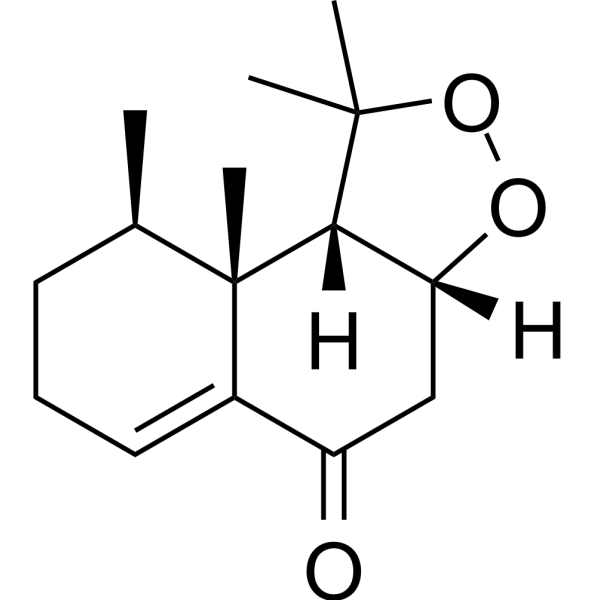
    Nardosinone, isolated from Nardostachys chinensis, is the first enhancer of the neuritogenic action of dbcAMP and staurosporine. Nardosinone may become a useful pharmacological tool for studying the mechanism of action of not only nerve growth factor (NGF) but also both the neuritogenic substances .
    Nardosinone
  • HY-D2335

    Fluorescent Dye Neurological Disease
    SERTlight is a fluorescent agent that can specifically label serotonergic neuronal cell bodies, dendrites, and axonal projections as fluorescent substrates of the serotonin transporter (SERT). SERTlight is orthogonal to various genetically encoded sensors in terms of optics, pharmacology, and operation, enabling multiple imaging. SERTlight allows the use of GRAB5HT sensors to label distal 5HT axonal projections and simultaneously image the release of endogenous 5HT, providing a new multifunctional molecular tool for studying serotonergic systems .
    SERTlight
  • HY-W106234

    TRP Channel Others
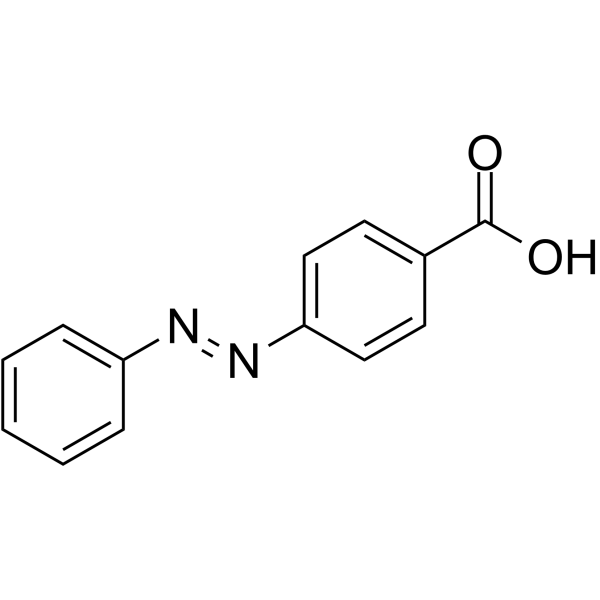
    4-(Phenyldiazenyl)benzoic acid is a photosensitive and photoswitchable TRPA1 agonist that can be used as pharmacological tools for study of pain signaling.
    4-(Phenyldiazenyl)benzoic acid
  • HY-13450

    JAK EGFR Inflammation/Immunology
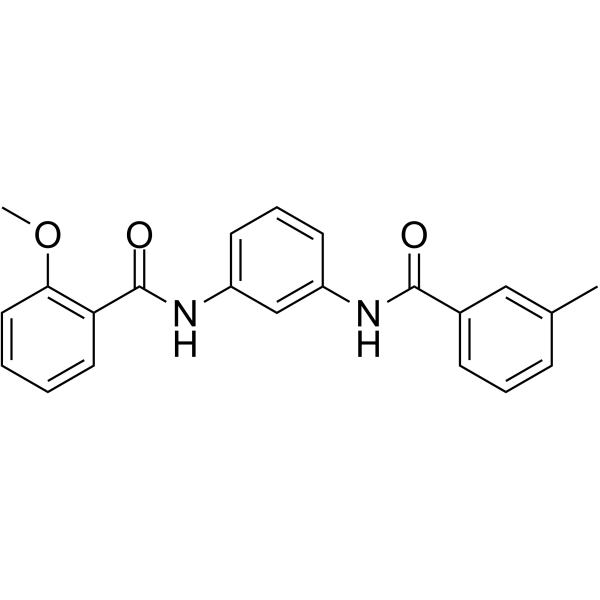
    ZM 449829 is a potent, selective and ATP competitive inhibitor of JAK3, with a pIC50 of 6.8. ZM 449829 will be useful pharmacological tools for the investigation of the JAK3 .
    ZM 449829
  • HY-107503

    mGluR Neurological Disease
    MMPIP is an allosteric metabotropic glutamate receptor 7 (mGluR7) selective antagonist (KB values 24 -30 nM). MMPIP acts as a pharmacological tool for elucidating the roles of mGluR7 on central nervous system functions. MMPIP alleviates pain and normalizes affective and cognitive behavior in neuropathic mice .
    MMPIP
  • HY-118967

    VU0183254

    HCN Channel Others
    VUANT1 (VU0183254) is an allosteric antagonist of insect odorant receptor ion channels, which has the activity of inhibiting insect odorant receptor signaling. VUANT1 can inhibit the activation of insect odorant receptors through allosteric regulation, which is important for the study of the molecular mechanism of insect olfactory signaling. Although it may be of limited use in insect control programs, it can be used as a pharmacological tool to study related mechanisms.
    VUANT1
  • HY-116211

    WIN-25978

    Biochemical Assay Reagents Neurological Disease
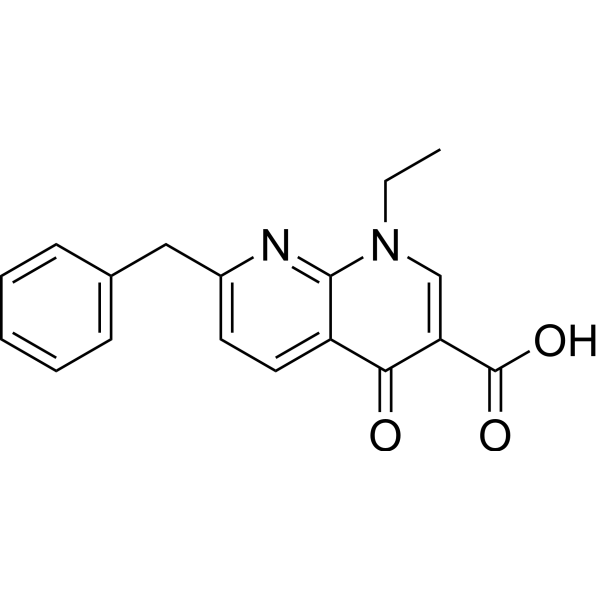
    Amfonelic acid (WIN-25978) is a highly selective dopamine reuptake inhibitor. Amfonelic acid interferes with the in vitro neuronal uptake of norepinephrine in the iris of rats, but does not alter the concentrations of norepinephrine or dopamine in the whole mouse brain. Amfonelic acid can be used as a pharmacological tool to study the brain reward system, dopamine pathway and dopamine transporter .
    Amfonelic acid
  • HY-179690

    Parasite Adenosine Kinase Infection
    Antiparasitic agent-30 is a potent adenosine kinase TbrAK modulator and antitrypanosomal agent. Antiparasitic agent-30 exhibits significant inhibitory activity against Trypanosoma brucei rhodesiense, while enhancing the activity of recombinant TbrAK(EC50=38 nM, Ka=75 nM-497 nM). Antiparasitic agent-30 exerts its pharmacological effects by eliminating intrinsic substrate inhibition and hyperactivating TbrAK in Trypanosoma brucei rhodesiense. Antiparasitic agent-30 serves as a valuable tool molecule for studying acute African human trypanosomiasis (sleeping sickness) .
    Antiparasitic agent-30
  • HY-W480392

    Adenosine Receptor
    1,9-Dimethylxanthine is an adenosine receptor antagonist that has the activity of blocking the effects of adenosine on the central nervous system. 1,9-Dimethylxanthine enhances nerve excitability by regulating the adenosine system. 1,9-Dimethylxanthine is used as a pharmacological tool in research to help explore physiological and pathological processes related to adenosine.
    1,9-Dimethylxanthine
  • HY-121562

    5-HT Receptor Neurological Disease
    SB 714786 is a potent and selective 5-hydroxytryptamine 1D (5-HT1D) receptor antagonist. It was developed from the previously reported series of dual 5-HT1 selective 5-hydroxytryptamine reuptake inhibitors (5HT1-SSRIs). SB 714786 is the first reported highly potent and selective 5-HT1D receptor antagonist, providing an extremely useful pharmacological tool for further understanding the role of 5-HT1 receptor subtypes. It has no or very low intrinsic activity against all three receptors. SB 714786 has pKi values of 6.5, 6.7, 9.1 and 6.5 for 5-HT1A, 5-HT1B, 5-HT1D and SerT receptors, respectively, showing high selectivity for 5-HT1D receptors. These properties make SB 714786 a potential tool compound for studying the function of 5-HT1D receptors and the treatment of related diseases.
    SB 714786
  • HY-D1398

    nAChR Neurological Disease
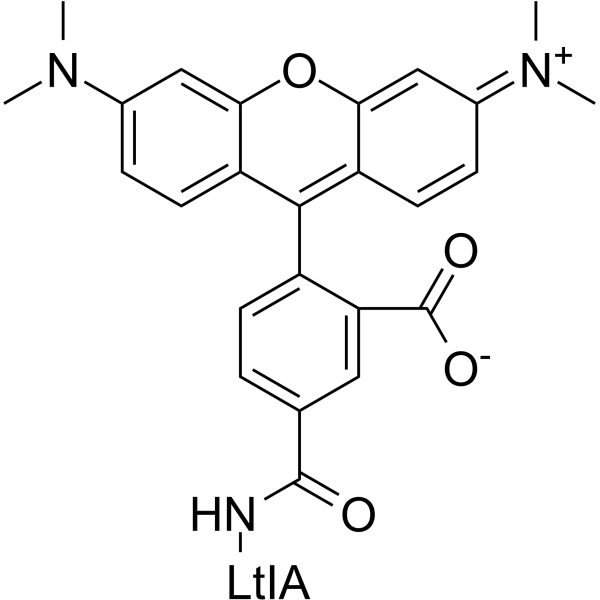
    LtIA-F, a novel fluorescent analogue of LtIA, provides a wealth of pharmacological tools to explore the structure–function relationship, distribution, and ligand binding domain of the α3β2 nAChR subtype.
    LtIA-F
  • HY-132882

    Ceramidase Inflammation/Immunology
    ARN19689 is a potent, selective, orally active and non-covalent inhibitor of N Acylethanolamine-Hydrolyzing Acid Amidase (NAAA), with an IC50 of 42 nM. ARN19689 is a promising pharmacological tool to be further investigated in the field of inflammatory conditions .
    ARN19689
  • HY-B1558

    MCI-2016 free base

    Calcium Channel Neurological Disease
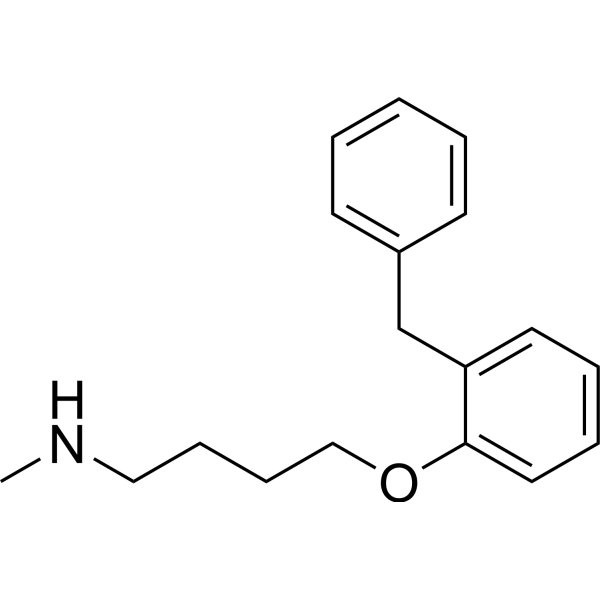
    Bifemelane is a nootropic compound. Bifemelan causes the first peak by stimulating release from intracellular Ca 2+ stores and the second by capacitive entry through store–operated Ca 2+ channels. Bifemelane will be provided as a pharmacological tool for basic studies on astrocytes .
    Bifemelane
  • HY-101199

    Opioid Receptor Neurological Disease
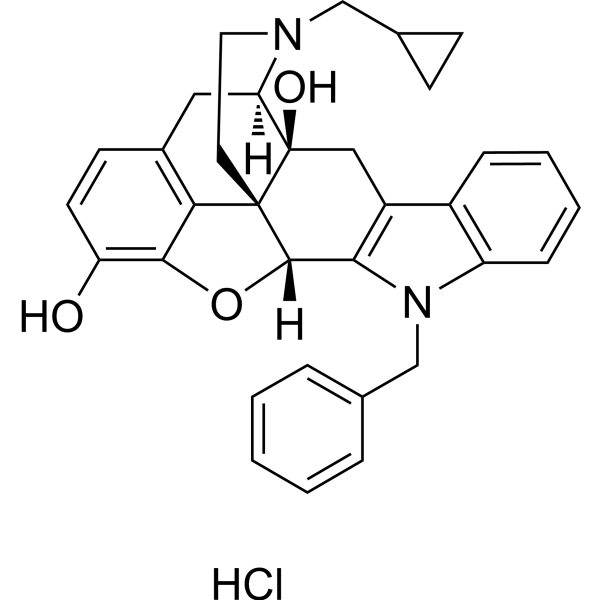
    N-Benzylnaltrindole hydrochloride is a potent δ2-selective opioid receptor antagonist. Benzylnaltrindole hydrochloride has a long duration of action in vivo than Naltriben (NTB). N-Benzylnaltrindole hydrochloride iserve as a useful tool in the pharmacologic characterization of δ-opioid receptor function .
    N-Benzylnaltrindole hydrochloride
  • HY-N0380R

    Reference Standards Others Neurological Disease
    Nardosinone (Standard) is the analytical standard of Nardosinone. This product is intended for research and analytical applications. Nardosinone, isolated from Nardostachys chinensis, is the first enhancer of the neuritogenic action of dbcAMP and staurosporine. Nardosinone may become a useful pharmacological tool for studying the mechanism of action of not only nerve growth factor (NGF) but also both the neuritogenic substances .
    Nardosinone (Standard)
  • HY-13991R

    Ras Apoptosis Cancer
    CCG-1423 (Standard) is the analytical standard of CCG-1423. This product is intended for research and analytical applications. CCG-1423 is an inhibitor of Rho/MRTF/SRF pathway. CCG-1423 shows activities in several cancer cells. CCG-1423 is a promising lead compound for the development of novel pharmacologic tools, and it can be used for the research of cancer and diabetes .
    CCG-1423 (Standard)
  • HY-121364

    Histamine Receptor Fluorescent Dye Others
    Bodilisant is a histamine H3 receptor (hH3R) ligand and imaging/labeling agent, with a Ki value of 6.51 nM for hH3R. Bodilisant binds to hH3R to produce strong green fluorescence, localizes to the extracellular membrane without internalization, and generates clear, displaceable fluorescent labeling of hH3R in native human brain tissues. Bodilisant serves as a pharmacological tool to visualize the distribution of hH3R via fluorescence confocal laser scanning microscopy .
    Bodilisant
  • HY-W822786

    5-HT Receptor Neurological Disease
    GR125487 is a highly selective and potent 5-HT4 receptor (5-HT4 receptor) antagonist with a Kd value of 0.1 nM. GR125487 has an extremely low affinity for 5-HT3 receptors (Kd > 1 μM). GR125487 completely antagonizes the memory-promoting effect of BIMU1, and its administration alone has no significant effect on basic social memory. GR125487 can be used for the study of social olfactory memory .
    GR125487
  • HY-107748A

    5'-GNTI TFA

    Endogenous Metabolite Neurological Disease
    5'-Guanidinonaltrindole TFA is a selective kappa-opioid receptor antagonist with significant opioid antagonist activity. 5'-Guanidinonaltrindole TFA exhibits 5 times the antagonistic potency of the prototypical kappa-opioid receptor antagonist norbinatorphimine in smooth muscle preparations, with a selectivity ratio exceeding 500 times. Binding and functional studies of 5'-Guanidinonaltrindole TFA showed pA(2) values comparable to smooth muscle data. 5'-Guanidinonaltrindole TFA is regarded as a potentially valuable pharmacological tool for studying opioids due to its high selectivity and potency .
    5'-Guanidinonaltrindole TFA
  • HY-116450

    Dopamine Receptor Neurological Disease
    TISCH is a potent and selective iodinated ligand with high affinity and selectivity for CNS D1 dopamine receptors. TISCH showed a Kd value of 0.205 nM in rat striatal tissue, indicating its effectiveness in biological activity. TISCH is able to easily cross the blood-brain barrier and show distribution in specific areas with D1 receptor density. TISCH is considered to be useful as a pharmacological tool for characterizing D1 dopamine receptors. When labeled with I-123, TISCH has the potential to be used as an in vivo imaging agent for CNS D1 dopamine receptors .
    TISCH
  • HY-123059A

    (2S,3S)-ICI-118551 hydrochloride

    Adrenergic Receptor Cardiovascular Disease
    (2S,3S)-Zenidolol ((2S,3S)-ICI-118551) hydrochloride is a β2-adrenergic receptor (β2AR) antagonist with pKi values for β1AR and β2AR of 7.51 and 9.27 respectively. (2S,3S)-Zenidolol hydrochloride can be used in the research of heart failure, ischemic heart disease and hypertension .
    (2S,3S)-Zenidolol hydrochloride
  • HY-103111R

    Reference Standards mGluR Neurological Disease
    MMPIP hydrochloride (Standard) is the analytical standard of MMPIP hydrochloride (HY-103111). This product is intended for research and analytical applications. MMPIP hydrochloride is an allosteric metabotropic glutamate receptor 7 (mGluR7) selective antagonist (KB values 24 -30 nM). MMPIP hydrochloride acts as a pharmacological tool for elucidating the roles of mGluR7 on central nervous system functions. MMPIP hydrochloride alleviates pain and normalizes affective and cognitive behavior in neuropathic mice .
    MMPIP hydrochloride (Standard)
  • HY-W127641R

    Biochemical Assay Reagents Reference Standards Others
    β-Methylcholine (chloride) (Standard) is the analytical standard of β-Methylcholine (chloride). This product is intended for research and analytical applications. β-Methylcholine chloride is an organic compound containing choline and chloride ions. It is commonly used as a pharmacological research tool, especially in the study of acetylcholine receptors and signaling pathways. β-Methylcholine chloride has various applications in the pharmaceutical industry, especially as a standard reference material for the calibration of analytical instruments. In addition, it can be used in the production of other choline derivatives and as a precursor of neurotransmitters.
    β-Methylcholine chloride (Standard)
  • HY-182280

    Insulin Receptor Metabolic Disease
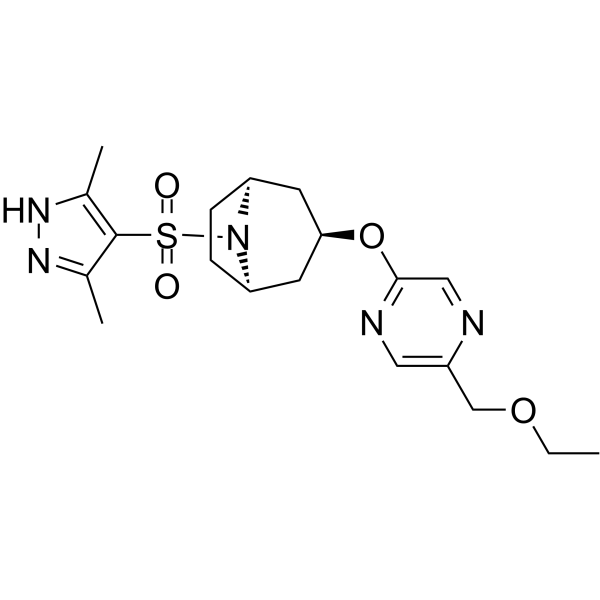
    BDM71230 is an orally active inducer of insulin-degrading enzyme (IDE), with an EC50 of 1.9 μM against human IDE. BDM71230 binds to the interface of IDE dimers and enhances the catalytic activity of IDE via steric effects. BDM71230 can potentiate the hydrolytic effect of IDE on insulin and slightly attenuate the hypoglycemic effect of insulin. BDM71230 serves as a pharmacological tool for investigating IDE function and is applicable to studies related to glucose intolerance .
    BDM71230
  • HY-181135

    GABA Receptor Neurological Disease
    Bicyclo-GABA is a selective betaine/GABA transporter 1 (BGT1) competitive, non-transported inhibitor with an IC50 of 590 nM. Bicyclo-GABA exhibits low micromolar agonistic activity at α1β2γ2 GABAA receptors with an EC50 of 5.1 μM. Bicyclo-GABA displays 129 times higher activity for BGT1 than GAT3. Bicyclo-GABA serves as a valuable tool compound for deciphering its elusive pharmacological role in the brain and periphery .
    Bicyclo-GABA
  • HY-111241

    Dopamine Receptor Neurological Disease
    SV 293 is a selective antagonist with neutral antagonist activity. SV 293 binds to human D2 receptors with 100-fold higher affinity and has lower affinity for human D3 and D4 dopamine receptor subtypes. SV 293 was found to block the effects of the full agonist quinpirole in forskolin-dependent adenylate acylase inhibition assays and electrophysiological assays. SV 293 can be used as a useful pharmacological tool to study the role of dopamine D2-like receptor subtypes in dopamine pathways associated with neurological, neuropsychiatric and movement disorders .
    SV 293

Inquiry Online

Your information is safe with us. * Required Fields.

Salutation


Country or Region *

Applicant Name *


Organization Name *

Department *


Email Address *


Product Name *

Cat. No.


Requested quantity *

Phone Number *


Remarks

Inquiry Online

Inquiry Information

Product Name:
Cat. No.:
Quantity:
MCE Japan Authorized Agent:

