
12 Results for "

plant immune response

" in MedChemExpress (MCE) Product Catalog:
Products (12)

12 Results for "plant immune response" in MCE Product Catalog:

6
6 Publications Verification
Cat. No.: HY-N7378
CAS No.: 115819-92-6
Synonyms: 1-Hydroxy-2-piperidinecarboxylic acid; NHP
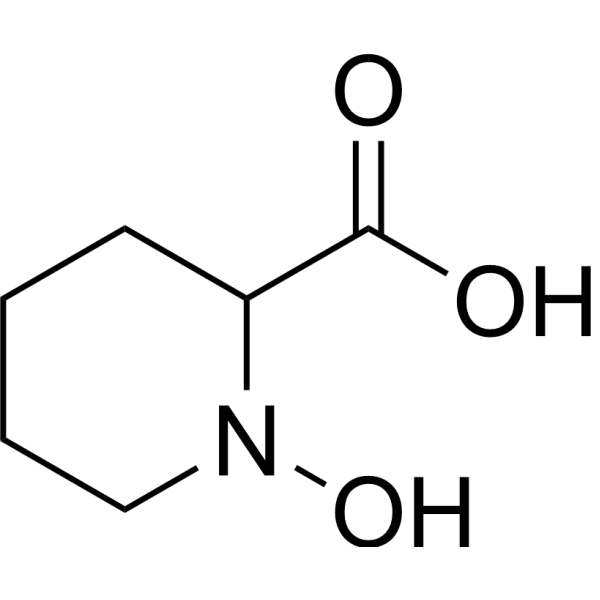
N-Hydroxypipecolic acid (1-Hydroxy-2-piperidinecarboxylic acid), a plant metabolite and a systemic acquired resistance (SAR) regulator, orchestrates SAR establishment in concert with the immune signal salicylic acid. N-Hydroxypipecolic acid accumulates systemically in the plant foliage in response to pathogen attack. N-Hydroxypipecolic acid induces SAR to bacterial and oomycete infection .
loading...
    loading...
2
2 Cited Publications
Cat. No.: HY-N2353
CAS No.: 147-81-9
Synonyms: (±)​-​Arabinose; DL-​Arabinose; dl-​Arabinose
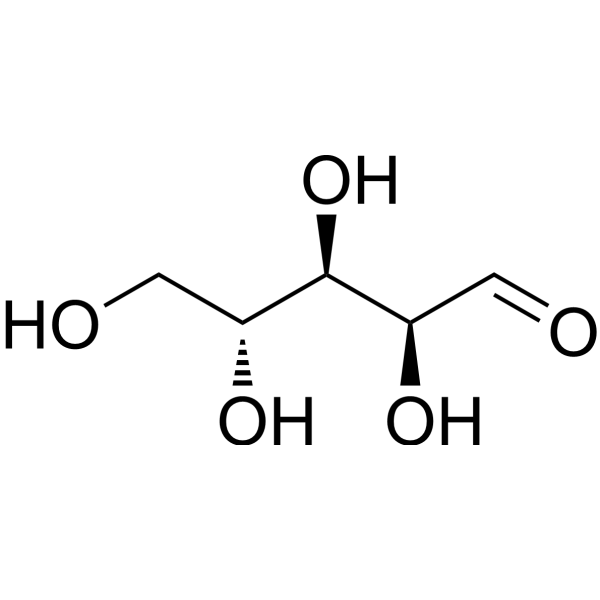
Arabinose is a pentose sugar commonly found in plants. Arabinose alleviates immune dysregulation and inflammation by promoting balanced immune responses and reducing inflammation. Arabinose induces cytotoxicity, autophagy (Autophagy), and cell cycle arrest in breast cancer cells through the p38-MAPK signaling pathway. Arabinose activates the ACSS2-PPARγ/TFEB-AMPK axis in neuroblastoma cells, thereby exerting neuromodulatory/antidepressant effects. Arabinose can also be used as an intermediate in compound synthesis. Arabinose may be applied in research related to immune inflammation, depression, breast cancer, and other diseases .
loading...
    loading...
Cat. No.: HY-P2812
CAS No.: 9001-87-0
Synonyms: PLD
Phospholipase D, Streptomyces chromofuscus (PLD) is an enzyme of the phospholipase superfamily, which widely exists in bacteria, yeast, plants, animals and viruses, and is often used in biochemical research. Phospholipase D can catalyze the hydrolysis of phosphodiester bonds in glycerophospholipids to produce phosphatidic acid and soluble choline. Phospholipase D is involved in a variety of disease-related processes, including diabetes, atherogenesis, obesity, tumorigenesis, immune response, and neuroendocrine function .
loading...
    loading...
Cat. No.: HY-P10396
CAS No.: 849352-44-9
Target:  

Bacterial

Research Areas:  

Infection Inflammation/Immunology

Elf18 is a peptide fragment of bacterial translation elongation factor Tu (EF-Tu). Elf18 can be recognized by plant pattern recognition receptors, thereby inducing an immune response. Elf18 can enhance plants' resistance to pathogens and can be used in research related to plant immune responses .
loading...
    loading...
Cat. No.: HY-E70119
CAS No.: 9015-75-2
Target:  

Fungal

Research Areas:  

Infection

Pectate Lyase is an enzyme that exists in microorganisms, plants and animals. Pectate Lyase degrades pectic acid via the β-elimination mechanism. Pectate Lyase induces plant immune responses and participates in virulence. Pectate Lyase is applied in fields such as plant fiber degumming and fruit and vegetable processing .
loading...
    loading...
Cat. No.: HY-21200
CAS No.: 375-92-8
Synonyms: 1-Perfluoroheptanesulfonic acid; Perfluoroheptanesulphonic acid; PFHpS
Target:  

PPAR

Perfluoroheptanesulfonic acid (1-Perfluoroheptanesulfonic acid; Perfluoroheptanesulphonic acid; PFHpS) is a per- and polyfluoroalkyl substance (PFAS) that penetrates the skin and induces systemic toxicity and immunotoxicity. Perfluoroheptanesulfonic acid reduces the expression of PPARδ in liver tissue; it induces hepatocyte hypertrophy and necrosis in liver tissue and alters serum biochemical markers associated with liver injury. Perfluoroheptanesulfonic acid upregulates genes related to fatty acid metabolism, cell necrosis and inflammation, reduces the relative weights of the spleen and thymus, suppresses humoral immune responses, and alters the composition of immune cell subsets in the spleen and skin. The plasma concentration of Perfluoroheptanesulfonic acid correlates with food intake. Perfluoroheptanesulfonic acid and perfluorooctanesulfonic acid exhibit synchronous pulse events in influent samples from wastewater treatment plants. Perfluoroheptanesulfonic acid can be used in studies related to liver injury and immune system damage .
loading...
    loading...
Cat. No.: HY-P10779
CAS No.: 2268675-54-1
Target:  

Bacterial

Research Areas:  

Inflammation/Immunology

flg22Pst is a peptide that can be derived Pseudomonas syringae pv. tabaci and serves as an effective elicitor for the plant immune system. flg22Pst can induce callose deposition in plants, trigger plant immune responses, and thereby assist plants in defending against pathogen invasion .
loading...
    loading...
Cat. No.: HY-149169
CAS No.: 2280874-34-0
Target:  

Bacterial

Research Areas:  

Inflammation/Immunology

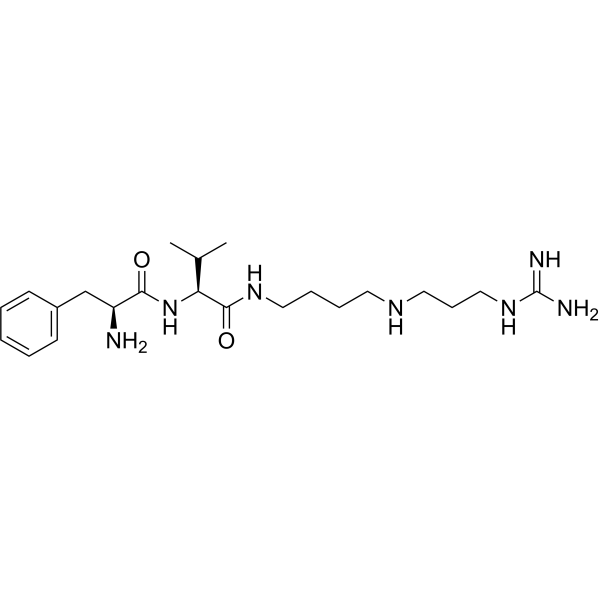
Phevamine A is a small molecule bacterial phytotoxin that can be isolated from Pseudomonas syringae. Phevamine promotes bacterial growth by suppressing plant immune responses .
loading...
    loading...
Cat. No.: HY-N7378A
CAS No.: 2253632-01-6
Synonyms: 1-Hydroxy-2-piperidinecarboxylic acid potassium; NHP potassium
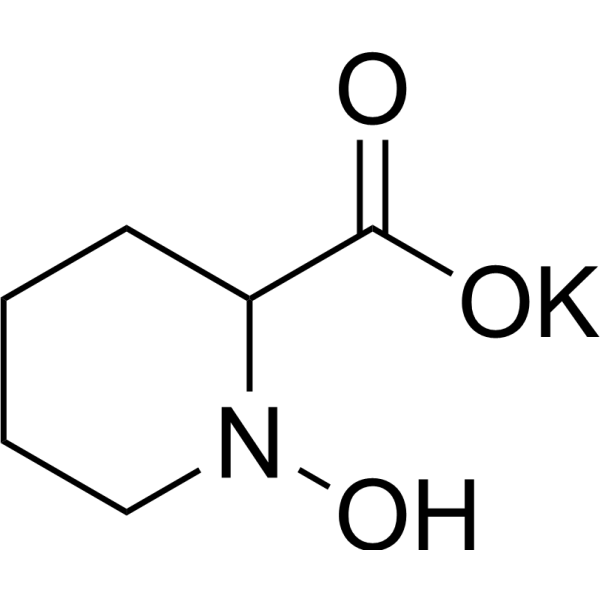
N-Hydroxypipecolic acid potassium (1-Hydroxy-2-piperidinecarboxylic acid potassium), a plant metabolite and a systemic acquired resistance (SAR) regulator, orchestrates SAR establishment in concert with the immune signal salicylic acid. N-Hydroxypipecolic acid potassium accumulates systemically in the plant foliage in response to pathogen attack. N-Hydroxypipecolic acid potassium induces SAR to bacterial and oomycete infection .
loading...
    loading...
Cat. No.: HY-171541
CAS No.: 354562-11-1
Target:  

Fungal

Research Areas:  

Infection

CDA-IN-1 (Compound vs#2-1) is an inhibitor of chitin deacetylase (CDA). CDA-IN-1 exhibits antifungal activity. It can inhibit fungal growth by suppressing the activity of fungal CDA, activating the plant immune response, and accumulating reactive oxygen species (ROS). At a concentration of 100 μM, CDA-IN-1 can achieve inhibition rates of 86.9% and 74.5% against PxCDA1 and PxCDA2 of P. xanthii, respectively. CDA-IN-1 can be applied to the research in the field of controlling plant fungal diseases, such as the research on diseases like cucurbit powdery mildew and tomato gray mold .
loading...
    loading...
Cat. No.: HY-N7378R
CAS No.: 115819-92-6
Synonyms: 1-Hydroxy-2-piperidinecarboxylic acid (Standard); NHP (Standard)
N-Hydroxypipecolic acid (Standard) (1-Hydroxy-2-piperidinecarboxylic acid (Standard); NHP (Standard)) is the analytical standard of N-Hydroxypipecolic acid (HY-N7378). This product is intended for research and analytical applications. N-Hydroxypipecolic acid (1-Hydroxy-2-piperidinecarboxylic acid), a plant metabolite and a systemic acquired resistance (SAR) regulator, orchestrates SAR establishment in concert with the immune signal salicylic acid. N-Hydroxypipecolic acid accumulates systemically in the plant foliage in response to pathogen attack. N-Hydroxypipecolic acid induces SAR to bacterial and oomycete infection .
loading...
    loading...
Cat. No.: HY-N19083
Category:  

Extract

Target:  

Bacterial

Tecomella undulata Extract, also known as Rohida extract, is a valuable botanical extract derived from the bark and leaves of the Tecomella undulata plant native to the Indian Thar Desert and is rich in bioactive compounds such as flavonoids, quinones, triterpenoids, and other phytochemicals that contribute to its diverse therapeutic properties. This extract is widely recognized for its hepatoprotective effects demonstrated through its ability to protect against liver damage induced by toxins such as paracetamol and carbon tetrachloride by normalizing elevated liver enzyme levels reducing oxidative stress and improving liver function. Additionally, it exhibits significant anti-inflammatory activity comparable to standard drugs like indomethacin and has been used to treat conditions like ascites and hepatosplenomegaly while also showing immunomodulatory effects by enhancing both humoral and cell-mediated immune responses and possessing antimicrobial properties that make it effective against various pathogens. Recent research suggests that Tecomella undulata may have potential in managing nonalcoholic steatohepatitis (NASH) by reducing body weight insulin resistance and improving liver function markers making it a versatile natural remedy with significant applications in hepatoprotection anti-inflammation and immune support.
loading...
    loading...
  • 1

