









1. Search Result
Search Result
Results for "

plaque

" in MedChemExpress (MCE) Product Catalog:

175

Inhibitors & Agonists

16

Fluorescent Dye

5

Biochemical Assay Reagents

27

Peptides

19

Inhibitory Antibodies

10

Natural
Products

1

Recombinant Proteins

11

Isotope-Labeled Compounds

8

Oligonucleotides

Cat. No. Product Name Target Research Areas Chemical Structure
  • HY-108847
    Etanercept
    Maximum Cited Publications
    15 Publications Verification

    TNF Receptor Bacterial Inflammation/Immunology Cancer
    Etanercept, a dimeric fusion protein that binds TNF, acts as a TNF inhibitor. Etanercept competitively inhibits the binding of both TNF-α and TNF-β to cell surface TNF receptors, rendering TNF biologically inactive. Etanercept shows efficacy against rheumatoid arthritis, juvenile idiopathic arthritis, and plaque psoriasis .
    Etanercept
  • HY-D0972
    Thioflavine S
    25+ Cited Publications

    Thioflavin S; Direct Yellow 7

    Fluorescent Dye Others
    Thioflavine S is a fluorescent histochemical marker of dense core senile plaques. Thioflavine S can be used for Alzheimer's research .
    Thioflavine S
  • HY-P9999

    RG6102; RO-7126209

    Amyloid-β Neurological Disease
    Trontinemab (RG6102) is a brain-penetrant, anti-amyloid, bispecific and humanizedized IgG1-κ antibody, targeting to plaques and transferrin receptor 1 (TFR1). Trontinemab binds to fibrillar as well as plaques triggering plaque clearance by engaging immune cells on Alzheimer disease (AD) brain sections. Trontinemab also shows specific affinity to cynomolgus and human TFR1 .
    Trontinemab
  • HY-P1240
    MOG (35-55) mouse, rat
    5+ Cited Publications

    Myelin Oligodendrocyte Glycoprotein Peptide (35-55), mouse, rat

    Endogenous Metabolite Neurological Disease Inflammation/Immunology
    MOG (35-55) mouse, rat (Myelin Oligodendrocyte Glycoprotein Peptide (35-55), mouse, rat) is a minor component of CNS myelin. MOG (35-55) mouse, rat has encephalitogenic activity and induces T cell proliferative. MOG (35-55) mouse, rat induces Th1 cytokine response as well as relatively high levels of IgG antibodies. MOG (35-55) mouse, rat produces a relapsing-remitting neurological disease with extensive plaque-like demyelination. MOG (35-55) mouse, rat (MOG (35-55)) can be used for experimental autoimmune encephalomyelitis (EAE) modeling .
    MOG (35-55)  mouse, rat
  • HY-P9927
    Secukinumab
    5+ Cited Publications

    AIN457

    Interleukin Related Inflammation/Immunology Cancer
    Secukinumab (AIN457) is a high affinity, human monoclonal antibody targeted against interleukin (IL)-17A. Secukinumab is the first-in-class anti-IL-17 agent used for the research of plaque psoriasis, ankylosing spondylitis and psoriatic arthritis .
    Secukinumab
  • HY-P9924

    LY2439821

    Interleukin Related Inflammation/Immunology
    Ixekizumab (LY2439821) is a humanized IgG4 monoclonal antibody that selectively binds and neutralizes interleukin IL-17A (KD<3 pM). Ixekizumab directly blocks IL-17A binding to IL-17RA (IL-17A receptor) but does not bind to other IL-17 family members. Ixekizumab is used for the research of moderate-to-severe plaque psoriasis .
    Ixekizumab
  • HY-103240
    Methoxy-X04
    5 Publications Verification

    Amyloid-β Others
    Methoxy-X04 is a fluorescent dye that crosses the blood-brain barrier and selectively binds to beta-pleated sheets found in dense core amyloid Aβ plaques. Methoxy-X04 retains in vitro binding affinity for amyloid b (Ab) fibrils (Ki= 26.8 nM). Methoxy-X04 is fluorescent and stains plaques, tangles, and cerebrovascular amyloid in postmortem sections of AD brain with good specificity .
    Methoxy-X04
  • HY-P99022

    R-04909832; RG-1450

    Amyloid-β Neurological Disease
    Gantenerumab is a fully humanized anti-Aβ IgG1 monoclonal antibody. Gantenerumab can specifically bind to Aβ fibrils and plaques and can be used in Alzheimer's disease research .
    Gantenerumab
  • HY-P0265A
    β-Amyloid (1-40) (human) TFA
    Maximum Cited Publications
    10 Publications Verification

    Amyloid β-Peptide (1-40) (human) TFA; Aβ40 (human) TFA; Aβ(1-40) (human) TFA

    Amyloid-β Neurological Disease
    β-Amyloid (1-40) TFA is a primary protein in plaques found in the brains of patients with Alzheimer's disease .
    β-Amyloid (1-40) (human) TFA
  • HY-177129

    LY4100511; DC-853

    Interleukin Related Inflammation/Immunology
    Simepdekinra (LY4100511; DC-853) is an IL-17A antagonist. Simepdekinra can be used in the research of moderate to severe plaque-type psoriasis .
    Simepdekinra
  • HY-P1240A
    MOG (35-55) TFA
    5+ Cited Publications

    Myelin Oligodendrocyte Glycoprotein Peptide (35-55), mouse, rat TFA

    Endogenous Metabolite Neurological Disease Inflammation/Immunology
    MOG (35-55) (MOG (35-55)) TFA is a minor component of CNS myelin. MOG (35-55) (TFA) has encephalitogenic activity and induces T cell proliferative. MOG (35-55) (TFA) induces Th1 cytokine response as well as relatively high levels of IgG antibodies. MOG (35-55) (TFA) produces a relapsing-remitting neurological disease with extensive plaque-like demyelination. MOG (35-55) (MOG (35-55)) TFA can be used for experimental autoimmune encephalomyelitis (EAE) modeling .
    MOG (35-55) TFA
  • HY-B0996

    NSC-17764

    Bacterial Fungal Infection Inflammation/Immunology
    Hexetidine (NSC-17764) is an orally active antibacterial and antifungal agent with broad antibacterial and antifungal activity. Hexetidine combined with IPBC potentiates strong fungal growth inhibition properties. Hexetidine at concentrations greater than 0.1% can cause oral ulceration. Additionally, Hexetidine improves its plaque inhibiting activities combined with zinc and has been confirmed the effectiveness on purulent wound along with ultrasound. Hexetidine is a promising candidate for research in fungus-related diseases and soft tissue purulent-inflammatory
    Hexetidine
  • HY-15388
    Tazarotene
    2 Publications Verification

    AGN 190168

    RAR/RXR Autophagy Inflammation/Immunology Cancer
    Tazarotene (AGN 190168) is a selective retinoic acid receptor (RAR) agonist for the treatment of plaque psoriasis and acne vulgaris. Tazarotene is a click chemistry reagent, it contains an Alkyne group and can undergo copper-catalyzed azide-alkyne cycloaddition (CuAAc) with molecules containing Azide groups.
    Tazarotene
  • HY-P9925
    Brodalumab
    4 Publications Verification

    AMG 827; KHK4827

    Interleukin Related Inflammation/Immunology
    Brodalumab (AMG 827) is a human anti-interleukin-17-receptor IgG2 monoclonal antibody that can be used for the research of moderate-to-severe plaque psoriasis and rheumatoid arthritis .
    Brodalumab
  • HY-B1289

    Hexadecylpyridinium chloride monohydrate

    Bacterial Infection
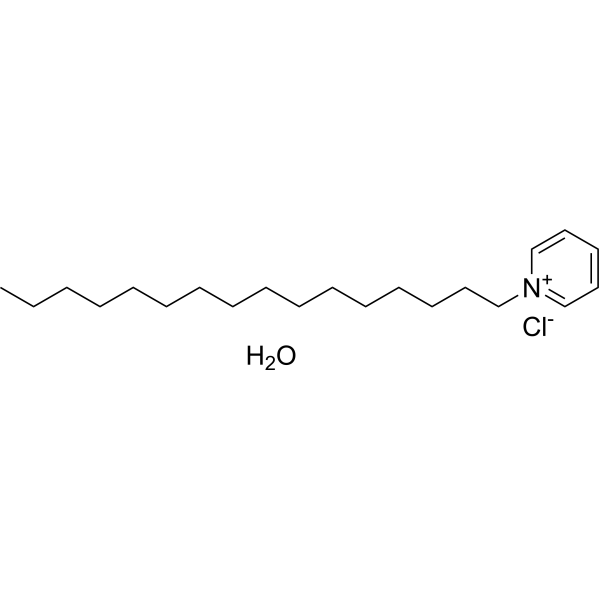
    Cetylpyridinium chloride monohydrate is a cationic quaternary ammonium compound used in some types of mouthwashes, toothpastes, and throat and nasal sprays as an antiseptic that kills bacteria and other microorganisms. Effectively prevents plaque and reduces gingivitis.
    Cetylpyridinium chloride monohydrate
  • HY-16755
    Solcitinib
    3 Publications Verification

    GSK-2586184; GLPG-0778

    JAK Inflammation/Immunology
    Solcitinib is an orally active, competitive, potent, selective JAK1 inhibitor, with an IC50 of 9.8 nM, and 11-, 55- and 23-fold selectivity over JAK2, JAK3 and TYK2, respectively; Solcitinib is used in the research of moderate-to-severe plaque-type psoriasis.
    Solcitinib
  • HY-P99754

    BCD-085

    Interleukin Related Infection Inflammation/Immunology
    Netakimab (BCD-085) is a humanized IgG1κ monoclonal anti-IL-17 antibody that binds to and blocks IL-17 and IL-17A activity, including reduction of downstream IL-6 production. Netakimab can be used for the research of moderate-to-severe plaque psoriasis, ankylosing spondylitis, and COVID-19 with cytokine release syndrome . Recommend Isotype Controls: Human IgG1 kappa, Isotype Control (HY-P99001).
    Netakimab
  • HY-P0265C
    β-Amyloid (1-40), HFIP-treated TFA
    Maximum Cited Publications
    10 Publications Verification

    Amyloid-β Neurological Disease
    β-Amyloid (1-40), HFIP-treated is a β-Amyloid (1-40) (HY-P0265A) treated with HFIP. β-Amyloid (1-40) is a primary protein in plaques found in the brains of patients with Alzheimer's disease .
    β-Amyloid (1-40), HFIP-treated TFA
  • HY-120384
    AZD-0284
    3 Publications Verification

    ROR Inflammation/Immunology
    AZD-0284 is a selective inverse agonist of the nuclear receptor RORγ. AZD-0284 has the potential for plaque psoriasis vulgaris and respiratory tract disorders treatment .
    AZD-0284
  • HY-P9947
    Efalizumab
    1 Publications Verification

    Integrin Others
    Efalizumab is a targeted T cell modulator, and is a humanized monoclonal antibody of CD11a, the α subunit of LFA-1. Efalizumab inhibits T cell activation, cutaneous T cell trafficking, and T cell adhesion to keratinocytes, can be used for plaque psoriasis research .
    Efalizumab
  • HY-153701S

    Envudeucitinib; ESK-001

    JAK Interleukin Related IFNAR Isotope-Labeled Compounds Inflammation/Immunology
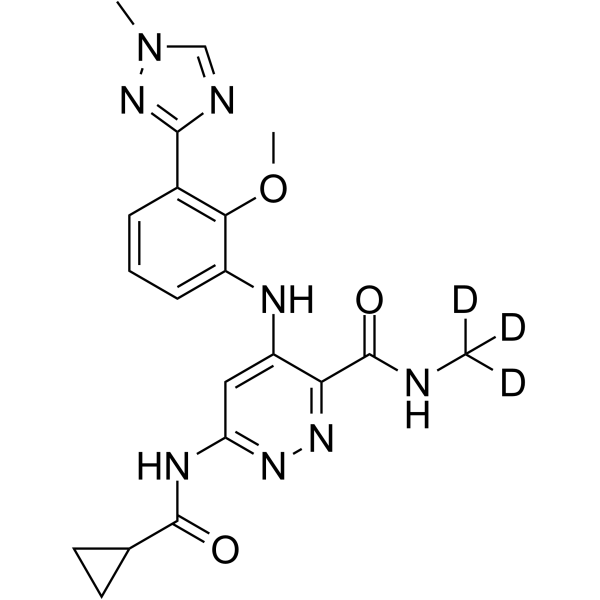
    Envudeucitinibum (Envudeucitinib) is a highly selective, allosteric and orally active TYK2 inhibitor binding to the JH2 domain of TYK2. Envudeucitinibum has no off-target effects on other kinases (JAK1-3). Envudeucitinibum reduces signaling and production of proinflammatory cytokines including IL-12, IL-23, IL-17, and type I interferons (IFNs). Envudeucitinibum can be used for the research of plaque psoriasis, systemic lupus erythematosus (SLE), and other immune-mediated diseases .
    Envudeucitinibum
  • HY-P1466

    Amyloid β-Protein (1-16)

    Amyloid-β Neurological Disease
    β-Amyloid (1-16) is a β-Amyloid protein fragment involved in metal binding. Beta-amyloid is a peptide that forms amyloid plaques in the brains of Alzheimer's disease (AD) patients.
    β-Amyloid (1-16)
  • HY-B0738

    Anthralin

    DNA/RNA Synthesis Inflammation/Immunology
    Dithranol (Anthralin) is an anthraquinone derivative, with potent anti-psoriatic effects. Dithranol can inhibit DNA replication and repair .
    Dithranol
  • HY-P99185

    AAB-001

    Amyloid-β Neurological Disease
    Bapineuzumab is an anti-β-amyloid protein (APP) monoclonal antibody. Bapineuzumab is a humanized IgG1 that recognizes the N terminus of Aβ cleared plaques from the brains. Bapineuzumab can be used for the research of Alzheimer’s disease (AD) .
    Bapineuzumab
  • HY-34350

    2-Hydroxybenzylamine; o-Hydroxybenzylamine; 2-HOBA

    Reactive Oxygen Species (ROS) Cardiovascular Disease Inflammation/Immunology
    2-(Aminomethyl)phenol (2-Hydroxybenzylamine) is a selective dicarbonyl scavenger. 2-(Aminomethyl)phenol is an antioxidant and scavanger of free radicals and isolevuglandins (IsoLGs). 2-(Aminomethyl)phenol can prevent early recurrence of atrial fibrillation. 2-(Aminomethyl)phenol can reduce inflammation and plaque apoptotic cells and promote efferocytosis and features of stable plaques. 2-(Aminomethyl)phenol can reduce malondialdehyde (MDA)-LDL and MDA-HDL levels in Ldlr -/- mouse model. 2-(Aminomethyl)phenol can be studied in the research of inflammation and cardiovascular disease, such as atherosclerosis, early recurrence of atrial fibrillation (AF) and arrhythmias .
    2-(Aminomethyl)phenol
  • HY-P99940

    ABT-122

    TNF Receptor Interleukin Related Inflammation/Immunology
    Remtolumab is a bispecific variable domain immunoglobulin molecule with human affinities for TNFα and IL-17 in the low pM range of Kd. Remtolumab can be used in research related to rheumatoid arthritis, psoriatic arthritis, and moderate-to-severe plaque psoriasis .
    Remtolumab
  • HY-P990078

    LY3372993

    Amyloid-β Neurological Disease
    Remternetug (LY3372993) is a monoclonal antibody that targets pyroglutamylated amyloid β fibrils (N3pG-Aβ). Remternetug specifically binds to N3pG-Aβ, thereby clearing amyloid plaques in the brain and reducing amyloid burden. Remternetug can be used in research related to Alzheimer's disease .
    Remternetug
  • HY-14744
    Levamlodipine
    2 Publications Verification

    (S)-Amlodipine; Levoamlodipine

    Calcium Channel MMP Cardiovascular Disease Neurological Disease
    Levamlodipine ((S)-Amlodipine; Levoamlodipin) is an orally active L-type calcium channel blocker and MMP-9 modulator with high permeability and retention properties. Levamlodipine significantly enhances plaque stability and improves lipid profiles by reducing blood pressure, decreasing systolic blood pressure variability, and inhibiting MMP-9 expression in atherosclerotic plaques. Levamlodipine not only alleviates cardiac and aortic hypertrophy and prevents renal atrophy, but also produces synergistic effects in blood pressure reduction and organ protection when combined with bisoprolol (HY-129029). Levamlodipine exerts no significant inhibitory effect on abdominal aortic intimal hyperplasia. When excessively accumulated in the epidermis, Levamlodipine may induce changes in keratin structure, impair the skin barrier and trigger inflammation; long-term use further exacerbates skin irritation caused by local administration. Levamlodipine can be used in research related to hypertension and atherosclerosis .
    Levamlodipine
  • HY-P99335

    Anti-Human IL17A Recombinant Antibody; SHR-1314

    Interleukin Related Inflammation/Immunology
    Vunakizumab (Anti-Human IL17A Recombinant Antibody) is a recombinant human IgGκ monoclonal antibody and an Interleukin-17A (IL-17A) inhibitor. Vunakizumab binds to IL-17A to inhibit downstream cytokines and block inflammatory signaling. Vunakizumab can be used for the research of chronic plaque psoriasis and ankylosing spondylitis .
    Vunakizumab
  • HY-117006
    E1231
    1 Publications Verification

    1-{4-[2-(5-Methylfuran-2-yl)quinoline-4-carbonyl]piperazin-1-yl}ethan-1-one

    Sirtuin Cardiovascular Disease
    E1231 is an orally active activator of Sirtuin 1 (SIRT1) (EC50=0.83 μM), to modulate cholesterol and lipid metabolism. E1231 interactes with SIRT1 (KD=9.61 μM) and deacetylated liver X receptor-alpha (LXRα), and increases ATP-binding cassette transporter A1 (ABCA1) expression. E1231 also reduces atherosclerotic plaque development in ApoE -/- mice model. E1231 can be used for research in cholesterol and lipid disorder-related diseases .
    E1231
  • HY-159838

    EI‐1071

    c-Fms Amyloid-β Neurological Disease Cancer
    Enrupatinib (EI‐1071) is a potent, orally active, CNS-penetrant and selective CSF1R inhibitor. Enrupatinib inhibits macrophage proliferation and osteoclast differentiation in vitro. Enrupatinib preserves microglia distal to plaques. Enrupatinib mitigates Alzheimer's disease (AD)-related pathologies by reducing neuroinflammation, preserving neuronal integrity, lowering disease-associated microglia gene expression, and enhancing cognitive function in 5xFAD and J20 mouse models. Enrupatinib reduces tumor-associated macrophage infiltration and enhances antitumor activity of anti-PD-1 antibody in murine colorectal cancer and breast cancer models. Enrupatinib can be used for the research of AD, colorectal cancer, and breast cancer .
    Enrupatinib
  • HY-113870

    Fluorescent Dye Others
    6-NBDG is a fluorescent glucose analogue, it can be used for fluorescence imaging and monitoring glucose transport and uptake. 6-NBDG can be used as a fluorescent probe for detecting macrophage-rich atherosclerotic plaques .
    6-NBDG
  • HY-109105

    XP-23829; PPC-06

    Drug Derivative Inflammation/Immunology
    Tepilamide fumarate (XP-23829; PPC-06) is an oral fumaric acid ester, acts as a proagent ofMonomethyl fumarate (HY-103252), and is used in the research of moderate to severe chronic plaque psoriasis. Tepilamide fumarate can enhance the effectiveness of oncolytic viruses .
    Tepilamide fumarate
  • HY-125962

    Fluorescent Dye Amyloid-β Neurological Disease
    X-34 is a lipophilic and bright yellow-green fluorescent derivative of Congo red (HY-D0236). X-34 can be used to stain neuritic and diffuse plaques, neurofibrillary tangles (NFTs), neuropil threads, and cerebrovascular amyloid in the brain. X-34 can be used for research of Alzheimer’s disease .
    X-34
  • HY-144683A

    Phosphodiesterase (PDE) Inflammation/Immunology
    PF-07038124 hydrochloride is a PDE4 inhibitor with an IC50 of 0.5 nM for PDE4B2. PF-07038124 hydrochloride shows inhibitory activities against IL-13, IL4, and IFNγ (IC50=125, 4.1, 1.06 nM, respectively). PF-07038124 hydrochloride can be used for research of atopic dermatitis and plaque psoriasis .
    PF-07038124 hydrochloride
  • HY-135517

    RXP-470

    MMP Cardiovascular Disease
    RXP470.1 (RXP-470) is a potent, selective MMP-12 inhibitor with a Ki of 0.2 nM against human MMP-12. RXP470.1 is 2 to 4 orders of magnitude less potent against other MMPs. RXP470.1 significantly reduces atherosclerotic plaque cross-sectional area in mouse. RXP470.1 results in less complex plaques with increased smooth muscle cell:macrophage ratio, less macrophage apoptosis, increased cap thickness, smaller necrotic cores, and decreased incidence of calcification .
    RXP470.1
  • HY-149120

    Phospholipase Cardiovascular Disease Inflammation/Immunology
    ASM-IN-1 is a potent and orally active acid sphingomyelinase (ASM) inhibitor with an IC50 value of 1.5 µM. ASM-IN-1 reduces lipid plaques in the aortic arch and aorta and reduces plasma ceramide concentration and Ox-LDL levels. ASM-IN-1 shows antiatherosclerotic and anti-inflammatory activity .
    ASM-IN-1
  • HY-123495

    Fluorescent Dye Neurological Disease
    CRANAD-28 is a robust fluorescent compound for visualization of amyloid beta plaques .
    CRANAD-28
  • HY-B1735

    Prostaglandin Receptor Cardiovascular Disease
    Picotamide is a combined inhibitor of thromboxane A2 (TxA2) synthase and receptor. Picotamide has antiplatelet activity. Picotamide promotes the reduction of microalbuminuria and the inhibition of growth of carotid plaques in diabetes. Picotamide can be used for researching acute or chronic cardiovascular diseases .
    Picotamide
  • HY-107637

    MMP Cardiovascular Disease
    ONO-4817 is a potent inhibitor of matrix metalloproteinase (MMP). Inhibition of matrix metalloproteinases (MMPs) is expected to suppress atherosclerotic neointimal proliferation and thus limits atheromatous plaque progression. ONO-4817 suppresses the development of aortic intimal hyperplasia in experimental hyperlipidemic rabbit .
    ONO-4817
  • HY-151363

    IRAK Inflammation/Immunology
    IRAK4-IN-21 (compound 17) is an orally active, potent and selective IRAK4 inhibitor with IC50 values of 5 and 56 nM for IRAK4 and TAK1, respectively. IRAK4-IN-21 effectively inhibits IL-23 production (IC50=0.17 μM) and can be used in studies of autoimmune diseases such as plaque psoriasis and psoriatic arthritis .
    IRAK4-IN-21
  • HY-151365

    IRAK Inflammation/Immunology
    IRAK4-IN-22 (compound 18) is an orally active, potent and selective IRAK4 inhibitor with IC50 values of 3 and 17 nM for IRAK4 and TAK1, respectively. IRAK4-IN-21 effectively inhibits IL-23 production (IC50=0.10 µM) and can be used in studies of autoimmune diseases such as plaque psoriasis and psoriatic arthritis .
    IRAK4-IN-22
  • HY-177617

    IMO-8400

    Toll-like Receptor (TLR) Inflammation/Immunology
    Bazlitoran (IMO-8400) is an oligonucleotide-based TLR7/8/9 antagonist. Bazlitoran blocks the activation of Toll-like receptors 7, 8, and 9. Bazlitoran inhibits cytokine responses mediated by Toll-like receptors 7, 8, and 9. Bazlitoran is associated with injection site reactions. Bazlitoran improves moderate-to-severe plaque psoriasis .
    Bazlitoran
  • HY-P1046

    Amyloid β-Protein (1-15)

    Amyloid-β Neurological Disease
    β-Amyloid (1-15) is a fragment of β-Amyloid peptide. Beta-amyloid is a peptide that forms amyloid plaques in the brains of Alzheimer's disease (AD) patients.
    β-Amyloid (1-15)
  • HY-144683

    Phosphodiesterase (PDE) Inflammation/Immunology
    PF-07038124 is a PDE4 inhibitor with an IC50 of 0.5 nM for PDE4B2. PF-07038124 shows inhibitory activities against IL-13, IL4, and IFNγ (IC50=125, 4.1, 1.06 nM, respectively). PF-07038124 can be used for research of atopic dermatitis and plaque psoriasis .
    PF-07038124
  • HY-W611371

    TRP Channel iGluR Neurological Disease
    FP802 is an orally active potent TwinF interface inhibitor that disrupts and detoxifies the NMDAR/TRPM4 death complex. FP802 exerts powerful neuroprotective effects in the 5xFAD mouse model of Alzheimer’s disease (AD) by preventing cognitive decline, preserving neuronal structural integrity, reducing amyloid-β plaque formation, and mitigating mitochondrial pathology . FP802 stops loss of motor neurons, reduces serum neurofilament light chain (NfL) levels, improves motor performance, and extends life in a mouse model of amyotrophic lateral sclerosis (ALS). FP802 can be used for AD and ALS research .
    FP802
  • HY-DY1045

    Amyloid-β Neurological Disease
    Methoxy-X04 (solution) is a fluorescent dye that crosses the blood-brain barrier and selectively binds to beta-pleated sheets found in dense core amyloid Aβ plaques. Methoxy-X04 retains in vitro binding affinity for amyloid b (Ab) fibrils (Ki= 26.8 nM). Methoxy-X04 is fluorescent and stains plaques, tangles, and cerebrovascular amyloid in postmortem sections of AD brain with good specificity .
    Solvent and concentration: DMSO: 5 mg/mL
    Methoxy-X04 (solution)
  • HY-P1468

    Amyloid β-Protein (1-28)

    Amyloid-β Neurological Disease
    β-Amyloid (1-28) is a β-Amyloid protein fragment involved in metal binding. Beta-amyloid is a peptide that forms amyloid plaques in the brains of Alzheimer's disease (AD) patients.
    β-Amyloid (1-28)
  • HY-D2268

    Fluorescent Dye Amyloid-β Neurological Disease
    QM-FN-SO3 is a BBB-penetrable near-infrared (NIR) aggregation-induced emission (AIE)-active probe for Aβ plaques. QM-FN-SO3 can be used for in vivo detection of Aβ plaques. QM-FN-SO3 has ultra-high S/N ratio, binding affinity, and high-performance NIR emission .
    QM-FN-SO3
  • HY-177906

    Fluorescent Dye Amyloid-β Neurological Disease
    h-FTAA is a luminescent conjugated oligothiophene (LCO) probe. h-FTAA can selectively bind to amyloid protein aggregates (such as plaques) and distinguish different conformations of the protein aggregates through changes in fluorescence signals. h-FTAA significantly reduces the neurotoxicity of Aβ1-42 and the Arctic mutant Aβ (AβArc), thereby protecting SH-SY5Y neuroblastoma cells. h-FTAA can be used to dynamically track the formation and maturation process of Aβ plaques .
    h-FTAA

Inquiry Online

Your information is safe with us. * Required Fields.

Salutation


Country or Region *

Applicant Name *


Organization Name *

Department *


Email Address *


Product Name *

Cat. No.


Requested quantity *

Phone Number *


Remarks

Inquiry Online

Inquiry Information

Product Name:
Cat. No.:
Quantity:
MCE Japan Authorized Agent:

