1. Search Result
Search Result
Results for "

postprandial hyperglycemia

" in MedChemExpress (MCE) Product Catalog:

10

Inhibitors & Agonists

1

Peptides

4

Natural
Products

Cat. No. Product Name Target Research Areas Chemical Structure
  • HY-108767

    B28Asp; B28-Asp-insulin; INA-X 14; Insulin X 14

    Insulin Receptor Drug Derivative Metabolic Disease
    Insulin aspart (B28Asp) is a rapid-acting h-Insulin (HY-P0035) analog. Insulin aspart induces a faster hypoglycemic effect. Insulin aspart can be used in diabetes-related research .
    Insulin aspart
  • HY-N2821
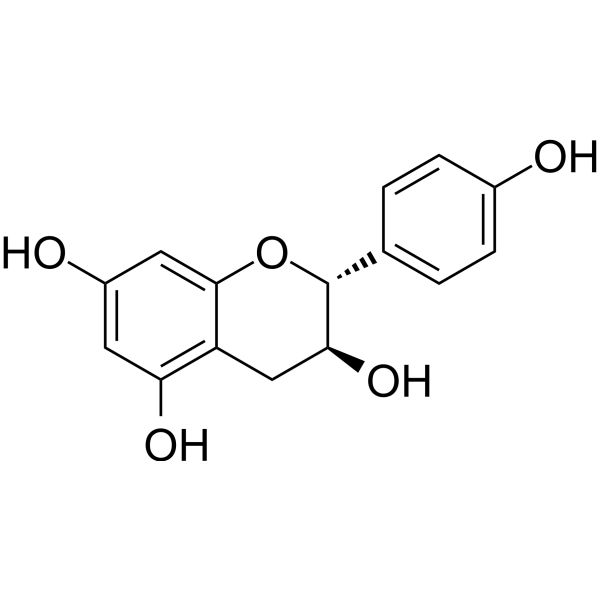
    (+)-Afzelechin
    4 Publications Verification

    Glycosidase Metabolic Disease
    (+)-Afzelechin, isolated from rhizomes of Bergenia ligulata, is an alpha-glucosidase activity inhibitor with an ID50 (50% inhibition dose) value of 0.13 mM. (+)-Afzelechin can delay the absorption of carbohydrates in food to suppress postprandial hyperglycemia and hyperinsulinemia .
    (+)-Afzelechin
  • HY-121811

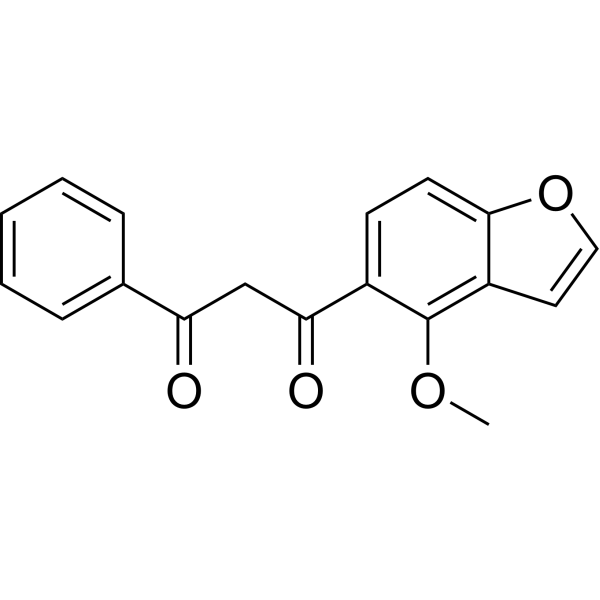
    Lanceolatin C

    Glycosidase Phosphatase Interleukin Related TNF Receptor COX Beclin1 GLUT FAK Akt mTOR p38 MAPK Keap1-Nrf2 Apoptosis Amyloid-β Tau Protein Autophagy Neurological Disease Inflammation/Immunology Cancer
    Pongamol (Lanceolatin C) is an orally active flavonoid with an IC50 of 75 μM and a Ki of 58 μM against PTPase-1B, and an IC50 of 103.5 μM against intestinal α-Glycosidase. Pongamol reduces the release of IL‑1β, TNF‑α, COX‑2 and iNOS in cells, reverses the nuclear translocation of NF‑κB, and upregulates the levels of Beclin 1 and LC3 Ⅱ/LC3 Ⅰ. Pongamol promotes glucose uptake by increasing the level of GLUT4 on the surface of skeletal muscle cells. Pongamol inhibits epithelial-mesenchymal transition by suppressing the FAK/Akt-mTOR signaling pathway. Pongamol inhibits neuronal cytotoxicity, suppresses cell apoptosis and extends the lifespan of Caenorhabditis elegans by activating the MAPKs/Nrf2 signaling pathway. Pongamol exerts hypoglycemic effects in diabetic mouse models. Pongamol exhibits antibacterial activity. Pongamol alleviates oxidative stress, neuroinflammation, deposition and excessive phosphorylation of Tau Protein, and restores autophagy function in Alzheimer's disease mouse models by inhibiting the Akt/mTOR signaling pathway. Pongamol is applicable to research related to Alzheimer's disease, type 2 diabetes, non-small cell lung cancer and postprandial hyperglycemia .
    Pongamol
  • HY-15383

    Biochemical Assay Reagents Metabolic Disease
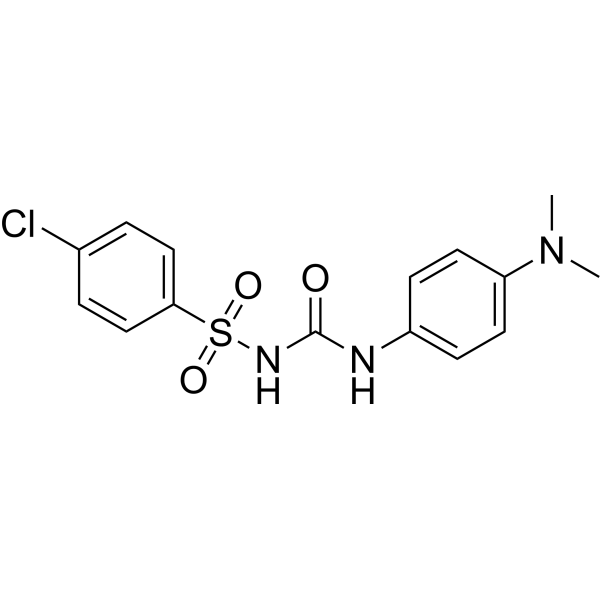
    Glyparamide is an orally active hypoglycemic compound that serves as an auxiliary active ingredient in anti-diabetic agents. Glyparamide can be used in combination with preparations of Rhodamnia cinerea extract and is applicable to the study of hyperglycemia-related disorders-specifically those involving carbohydrate metabolism disturbances-including Type 2 diabetes, metabolic syndrome, and postprandial hyperglycemia. Other notable hypoglycemic agents of significant interest include: Tolbutamide (HY-B0401), Chlorpropamide (HY-B1429), Metformin (HY-B0627), and Glimepiride (HY-B0104) .
    Glyparamide
  • HY-N11728

    Amylases Glycosidase Metabolic Disease
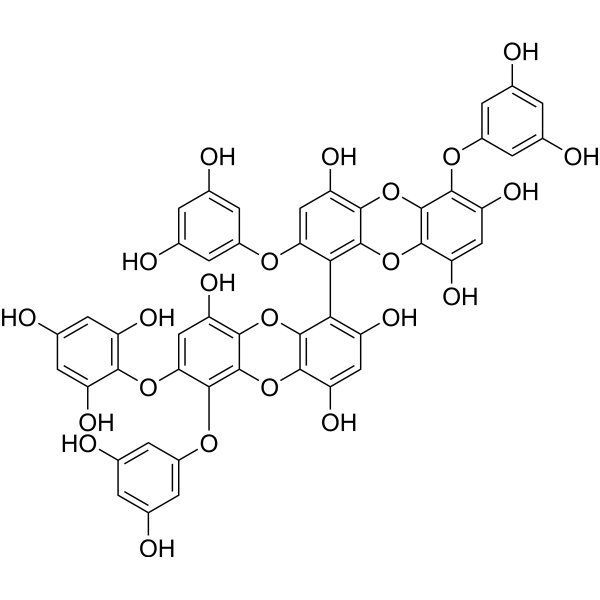
    2,7"-Phloroglucinol-6,6'-bieckol is an orally active dual α-amylase/α-glucosidase inhibitor with IC50 values of 6.94 μM and 23.35 μM respectively. 2,7"-Phloroglucinol-6, 6'-bieckol alleviates postprandial hyperglycemia in diabetic mice. 2,7"-Phloroglucinol-6,6'-bieckol can be used in diabetes research .
    2,7
  • HY-163005

    Glycosidase Metabolic Disease
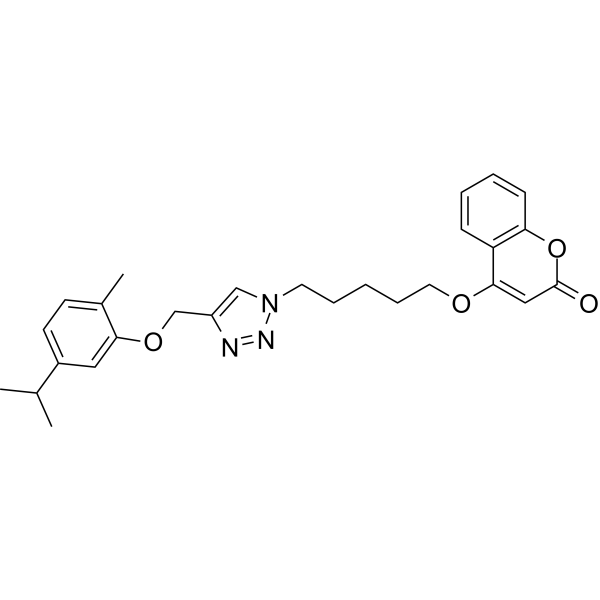
    α-Glucosidase-IN-43 (compound AS14) is an α-glucosidase inhibitor (IC50: 4.32 μM) with acute hypoglycemic activity. α-Glucosidase-IN-43 exhibits safety and in vivo efficacy, is nontoxic to normal mouse fibroblasts, and is able to rescue streptozotocin (HY-13753)-induced diabetic rats. α-Glucosidase-IN-43 can be used to study postprandial hyperglycemia in diabetic patients .
    α-Glucosidase-IN-43
  • HY-N17925

    Glycosidase Metabolic Disease
    Falandioside B is an α-glucosidase inhibitor with an IC50 of 107.52 μM. Falandioside B scavenges ABTS radical cations. Falandioside B is applicable to research related to postprandial hyperglycemia .
    Falandioside B
  • HY-182289

    Glycosidase Metabolic Disease
    LY-23 is an orally active α-glucosidase inhibitor (Ki = 0.05 μM), with IC50 values of 0.18 μM, 0.14 μM and 0.51 μM against maltase, sucrase and isomaltase, respectively. LY-23 reduces the level of postprandial blood glucose elevation. LY-23 is applicable to research related to postprandial hyperglycemia .
    LY-23
  • HY-178383

    Glycosidase Metabolic Disease
    α-Glucosidase-IN-98 is a potent orally active α-Glucosidase inhibitor with an IC50 of 18.1 μM. α-Glucosidase-IN-98 reversibly binds with α-Glucosidase via hydrogen bonds, electrostatic interactions and hydrophobic effects, which induces significant conformational alterations in the secondary structure of α-Glucosidase. α-Glucosidase-IN-98 decreases postprandial hyperglycemia in Starch (HY-B2225B)/Sucrose (HY-B1779)-challenged mice. α-Glucosidase-IN-98 can be used for type 2 diabetes mellitus (T2DM) research .
    α-Glucosidase-IN-98
  • HY-19904B

    (+)-LY2409021

    Endogenous Metabolite Metabolic Disease
    (+)-Adomeglivant ((+)-LY2409021) is a potent and selective glycogenotropin receptor antagonist with glucose-lowering activity. (+)-Adomeglivant reduces fasting blood glucose levels in both healthy subjects and patients with type 2 diabetes. The use of (+)-Adomeglivant can help investigate the mechanisms of hyperglycemia in type 2 diabetes. The antagonistic effect of (+)-Adomeglivant makes it challenging to assess the metabolic consequences of postprandial hyperglycemia .
    (+)-Adomeglivant

Inquiry Online

Your information is safe with us. * Required Fields.

Salutation


Country or Region *

Applicant Name *


Organization Name *

Department *


Email Address *


Product Name *

Cat. No.


Requested quantity *

Phone Number *


Remarks

Inquiry Online

Inquiry Information

Product Name:
Cat. No.:
Quantity:
MCE Japan Authorized Agent:

