


23 Results for "

preclinical tumor models

" in MedChemExpress (MCE) Product Catalog:
Products (23)

23 Results for "preclinical tumor models" in MCE Product Catalog:

17
17 Publications Verification
Cat. No.: HY-13241A
CAS No.: 862505-00-8
Synonyms: LY2228820
Target:  

p38 MAPK Autophagy

Research Areas:  

Cancer

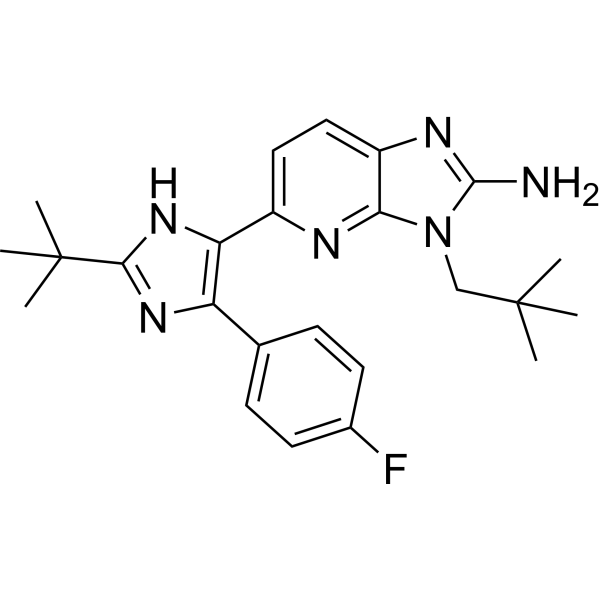
Ralimetinib is an ATP-competitive p38α and p38β MAPK inhibitor with an IC50 of 5.3 nmol/L against human p38α and an IC50 of 3.2 nmol/L against human p38β. Ralimetinib slows tumor growth in preclinical in vivo cancer models, exhibits oral bioavailability in mice, and achieves sustained target inhibition for 4 to 8 h. Ralimetinib is applicable for research on melanoma, non-small cell lung cancer, ovarian cancer, glioma, multiple myeloma, breast cancer, renal cancer, and head and neck squamous cell carcinoma .
loading...
    loading...
7
7 Cited Publications
Cat. No.: HY-147214
CAS No.: 2648450-42-2
Purity:  99.54%
Target:  

YAP

Research Areas:  

Cancer

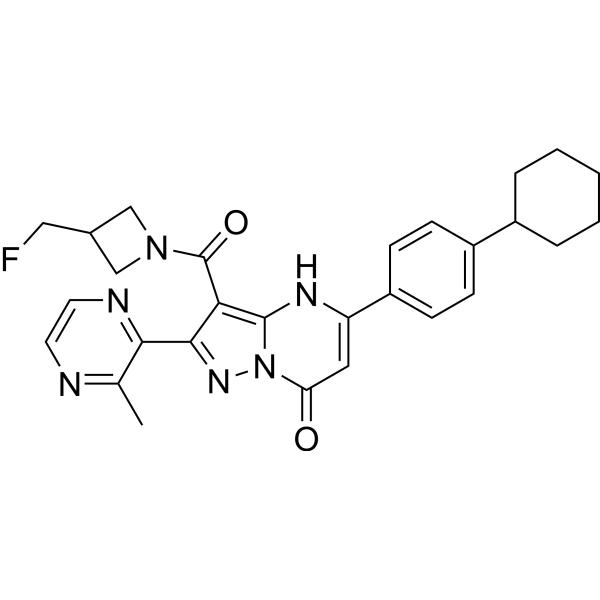
GNE-7883 is a pan-TEAD inhibitor that blocks the association of YAP/TAZ with TEAD. GNE-7883 effectively reduces chromatin accessibility at TEAD motifs, inhibits cell proliferation in multiple cell line models, and achieves strong anti-tumor efficacy in vivo. In addition, GNE-7883 effectively overcomes intrinsic and acquired resistance to KRAS (Kirsten rat sarcoma viral oncogene homolog) G12C inhibitors in multiple preclinical models by inhibiting YAP/TAZ activation .
loading...
    loading...
3
3 Cited Publications
Cat. No.: HY-164992
Synonyms: MRG002; Trastuzumab MMAE
Trastuzumab vedotin (MRG002; Trastuzumab MMAE) is an antibody-drug conjugate and cytotoxin targeting HER2, with a Kd of 7.50E-11 M for human HER2. After binding to HER2, Trastuzumab vedotin undergoes internalization and lysosomal trafficking, delivering a cytotoxic payload to HER2-expressing cells and inducing tumor regression in in vivo xenograft models with HER2-expressing tumors. The anti-tumor activity of Trastuzumab vedotin is enhanced when used in combination with anti-PD-1 antibodies, and it exhibits preclinical anti-tumor activity in drug-resistant breast cancer, gastric cancer, and urothelial carcinoma PDX models. Trastuzumab vedotin has low antibody-dependent cellular cytotoxicity activity and can be used in studies related to HER2-positive breast cancer, HER2-positive gastric cancer, and unresectable locally advanced or metastatic HER2-positive urothelial carcinoma .
loading...
    loading...
2
2 Cited Publications
Cat. No.: HY-P99463
CAS No.: 2268717-61-7
Synonyms: AVB-500; AVB-S6-500

Research Areas:  

Cancer

Batiraxcept (AVB-500; AVB-S6-500) is a selective, soluble AXL receptor and GAS6 inhibitor that targets the GAS6-AXL signaling axis. Batiraxcept is orally inactive and does not cross the blood-brain barrier. Batiraxcept competitively binds to GAS6 ((KD <1 nM), preventing its interaction with the AXL receptor tyrosine kinase, thereby inhibiting downstream PI3K/AKT and MAPK signaling pathways, reducing tumor cell glycolysis, angiogenesis, and metastatic potential. Batiraxcept has demonstrated antitumor activity in preclinical models of endometrial, cholangiocarcinoma, and ovarian cancer by inhibiting tumor growth, invasion, and metastasis .
loading...
    loading...
1
1 Cited Publications
Cat. No.: HY-P99101
CAS No.: 2490556-50-6
Synonyms: AEX-4089; MGC026 antibody

Target:  

ADC Antibodies

Research Areas:  

Cancer

Vobramitamab is a humanized B7-H3 monoclonal antibody (mAb). Vobramitamab conjugated with prodrug seco-DUBA (HY-132180A) via a cleavable linker, to form antibody-drug conjugate (ADC), the MGC018. MGC018 displays potent antitumor activity in preclinical tumor models of breast, ovarian, and lung cancer, as well as melanoma .
loading...
    loading...
1
1 Cited Publications
Cat. No.: HY-119024
CAS No.: 112170-24-8
Purity:  98.88%
Target:  

SHP1 STAT

Research Areas:  

Cancer

BCI-137 is a Argonaute 2 (AGO2) inhibitor. By inhibiting AGO2 function, reducing PTPN6/SHP-1 protein levels and enhancing STAT1 phosphorylation, BCI-137 restores the sensitivity of tumor cells to IFN-γ. BCI-137 effectively enhances the recruitment, activation and cytotoxicity of CD8 + T cells. BCI-137 exerts a synergistic effect with anti-PD-1 antibodies and significantly reduces tumor volume in preclinical mouse models. BCI-137 exhibits favorable safety profiles and does not cause significant weight loss or death in mice. BCI-137 can be used in research related to bladder cancer, colorectal cancer, melanoma and other related fields .
loading...
    loading...
Cat. No.: HY-163028
CAS No.: 459789-75-4
Target:  

Tim3

Research Areas:  

Cancer

ML-T7 is a potent Tim-3 inhibitor. ML-T7 blocks Tim-3 interactions with PtdSer and CEACAM1. ML-T7 not only enhances the antitumor activity of adoptive transfer therapy with cytotoxic T lymphocytes (CTLs) and CAR T cells but also increases the effector function of T cell. ML-T7 promotes NK cells’ killing activity against tumor cells and DC antigen-presenting capacity. ML-T7 directly exerts antitumor efficacy in preclinical tumor models either alone or in combination with Nivolumab (HY-P9903A). ML-T7 can be used for tumor immunotherapy research .
loading...
    loading...
Cat. No.: HY-P99852
CAS No.: 1791420-09-1
Synonyms: ABT165; PR1283233

Target:  

VEGFR Notch

Research Areas:  

Cancer

Dilpacimab (ABT165) is a bispecific variable domain immunoglobulin. Dilpacimab binds to and inhibits DLL4 and VEGF and acts as a tumor growth inhibitor. Dilpacimab can be used in research related to metastatic colorectal cancer and advanced solid tumors .
loading...
    loading...
Cat. No.: HY-173178
CAS No.: 925419-55-2
Research Areas:  

Cancer

LNS8801 is an orally active GPER activator with tumor suppressor activity. LNS8801 mediates suppression of cancer via GPER activation, with activity dependent on GPER expression. LNS8801 suppresses cancer growth in preclinical models. LNS8801 can be used for the research of cancer (including melanoma, pancreatic ductal adenocarcinoma, non-small cell lung cancer, leukemias, colon carcinomas) .
loading...
    loading...
Cat. No.: HY-164725
CAS No.: 3023869-94-2
Research Areas:  

Cancer

FAPI-mFS is a selective fibroblast activation protein (FAP) inhibitor with an IC50 of 0.0014 μM against human FAP. Through its covalent binding property with FAP, FAPI-mFS enhances its uptake and retention time in cancer cells. When radiolabeled with 68Ga, FAPI-mFS serves as a PET/CT imaging agent with superior tumor-to-background tissue contrast and lesion detection capability. When radiolabeled with 177Lu or 225Ac, FAPI-mFS induces tumor regression and inhibition in preclinical models. FAPI-mFS can be used in studies related to cancer and radionuclide-conjugated drugs (RDC) .
loading...
    loading...
Cat. No.: HY-W224634
CAS No.: 304453-52-9
Target:  

HSP

Research Areas:  

Cancer

HSF1-IN-2 (Compound 0048) is a HSF1 inhibitor. HSF1-IN-2 is applicable to cancer research .
loading...
    loading...
Cat. No.: HY-P992340

Research Areas:  

Cancer

CTB006 is a monoclonal antibody targeting a humanized chimeric recombinant anti-DR5. CTB006 specifically binds to and activates DR5, thereby inducing tumor cell apoptosis, inhibiting tumor growth and reducing tumor drug resistance. 177Lu-radiolabeled CTB006 can deliver targeted radiotherapy to tumor cells; while 89Zr- or 177Lu-labeled CTB006 can serve as a PET/CT imaging agent for detecting DR5 expression levels in preclinical tumor models and screening cancers with DR5 overexpression. CTB006 can be applied to research related to gastrointestinal cancer, colorectal cancer and other solid tumors .
loading...
    loading...
Cat. No.: HY-178271
CAS No.: 147597-66-8
Target:  

Drug Intermediate

Research Areas:  

Cancer

P-SCN-Bn-NOTA is a metal chelator and molecular imaging probe precursor that allows radiolabeling with Ga-68. P-SCN-Bn-NOTA can be conjugated to CD70-specific molecules B3, B6, ABDB3 and ABDB6 to form NOTA-labeled derivatives. P-SCN-Bn-NOTA is applicable for preclinical PET/CT imaging of CD70-expressing tumors in NCG mouse PDX models. P-SCN-Bn-NOTA can be used in studies related to CD70-positive tumors .
loading...
    loading...
Cat. No.: HY-186087
CAS No.: 3058972-05-4
Target:  

Ras ERK Cyclophilin

Research Areas:  

Cancer

RM-046 is an orally active, selective ternary complex inhibitor of KRAS Q61H (active form). RM-046 forms a ternary complex with cyclophilin A, binds to active KRAS Q61H in a non-covalent manner, blocks effector binding via steric hindrance and inhibits downstream signal transduction. RM-046 inhibits ERK phosphorylation and cancer cell proliferation, and induces sustained RAS pathway signal inhibition, anti-tumor activity and tumor regression in preclinical xenograft models. RM-046 can be used for the research of KRAS Q61H mutant cancers .
loading...
    loading...
Cat. No.: HY-185279
CAS No.: 3042849-33-9
Synonyms: HS-20093; GSK5764227
Research Areas:  

Cancer

Risvutatug rezetecan (HS-20093; GSK5764227) is a B7-H3-targeting antibody-drug conjugate (ADC). Risvutatug rezetecan binds to B7-H3 on tumor cells and delivers a topoisomerase I inhibitor payload via a tumor microenvironment-responsive cleavable linker. Risvutatug rezetecan is applicable for the research of extensive-stage small cell lung cancer and non-small cell lung cancer .
loading...
    loading...
Cat. No.: HY-P992323

Target:  

VEGFR Tie ERK

Research Areas:  

Cardiovascular Disease Cancer

BI-836880 is a humanized bispecific nanobody and a selective inhibitor of VEGF and ANG2, with a Kd of 16 pM for hANG2, an EC50 of 1.4 nM for VEGF165, and an EC50 of 2.3 nM for VEGF121. BI-836880 blocks ERK phosphorylation downstream of VEGF-A as well as TIE2 phosphorylation downstream of ANG2. BI-836880 does not inhibit ANG1-mediated TIE2 phosphorylation. BI-836880 exerts anti-angiogenic effects, reduces the number of immature endothelial vessels in tumor tissues, and inhibits tumor growth in preclinical models. BI-836880 can be used in the research of pancreatic cancer, non-small cell lung cancer, renal cell carcinoma, ovarian cancer, colon cancer, and Lewis lung cancer .
loading...
    loading...
Cat. No.: HY-126929
CAS No.: 81534-36-3
Synonyms: TXN-B
Trioxacarcin B (TXN-B) is a potent cytotoxic agent and DNA-targeted inhibitor. Trioxacarcin B disrupts DNA function and induces apoptosis in cancer cells. Trioxacarcin B not only effectively inhibits the growth of various Gram-positive and Gram-negative bacteria as well as Plasmodium falciparum, but also blocks the colony formation of cancer stem cells, significantly reduces tumor volume and prolongs survival in preclinical in vivo models. The activity of Trioxacarcin B is highly dependent on its intact spiro-epoxide structure; it loses efficacy once this moiety undergoes hydrolysis, and Trioxacarcin B shows no activity against fungi, microalgae and small RNA viruses. Trioxacarcin B can be used for research on bacterial infections, malaria, and various cancers including colon cancer and melanoma .
loading...
    loading...
Cat. No.: HY-173172
CAS No.: 3076503-34-6
Research Areas:  

Cancer

MG-002 is an orally active eIF4A1 and eIF4A2 inhibitor with a human eIF4A1 IC50 of 43 nM. MG-002 prevents competent ribosome recruitment to mRNA, inhibits cap-dependent mRNA translation, and engages eIF4A2 via the same RNA clamping mechanism to inhibit mRNA translation. MG-002 induces G2/M cell cycle delay, induces apoptosis, suppresses synthesis of c-MYC and cyclin D1, and shows minimal overt toxicity in mice. MG-002 inhibits primary triple-negative breast cancer tumor growth, attenuates metastatic spread, and enhances anti-neoplastic activity of Doxorubicin (HY-15142A) in pre-clinical models .
loading...
    loading...
Cat. No.: HY-181919
Research Areas:  

Cancer

CD73-IN-22 (Compound HX-6) is a non-nucleoside CD73 inhibitor with an IC50 of 0.07 μM. When radiolabeled with 68Ga, CD73-IN-22 acts as a PET radiotracer for detecting CD73 expression. When radiolabeled with 177Lu, CD73-IN-22 exhibits anticancer activity against colorectal adenocarcinoma. CD73-IN-22 is applicable to research related to colon adenocarcinoma and breast cancer .
loading...
    loading...
Cat. No.: HY-P11773
CAS No.: 1094848-94-8
Research Areas:  

Others

3P-RGD2 is a dimeric cyclic RGD (Arg-Gly-Asp) peptide. When radiolabeled with 99mTc, 3P-RGD2 serves as a selective radiotracer for integrin αvβ3. When radiolabeled with 99mTc, 3P-RGD2 enables single-photon emission computed tomography imaging of integrin αvβ3 .
loading...
    loading...

