67 Results for "

primary human hepatocyte

" in MedChemExpress (MCE) Product Catalog:
Products (67)

67 Results for "primary human hepatocyte" in MCE Product Catalog:

9
9 Publications Verification
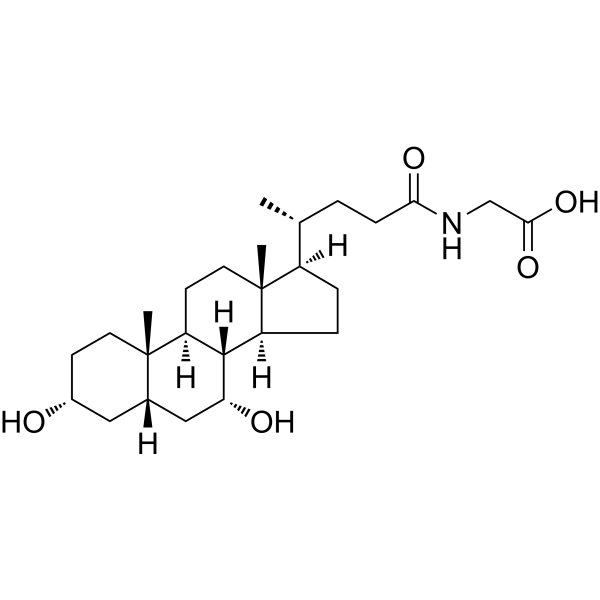
Cat. No.: HY-N2334
CAS No.: 640-79-9
Synonyms: Chenodeoxycholylglycine
Glycochenodeoxycholic acid (Chenodeoxycholylglycine) is a relatively toxic bile salt generated in the liver from chenodeoxycholic acid and glycine. Glycochenodeoxycholic acid inhibits Autophagosome formation and impairs lysosomal function by inhibiting lysosomal proteolysis and increasing lysosomal pH in human normal liver cells, leading to the Apoptosis of human hepatocyte cells. Glycochenodeoxycholic acid induces stemness and chemoresistance via activating STAT3 signaling pathway in hepatocellular carcinoma cells (HCC). Glycochenodeoxycholic acid is promising for research in the field of cholestasis desease, hepatocellular carcinoma and primary sclerosing cholangitis (PSC) .
loading...
    loading...
9
9 Publications Verification
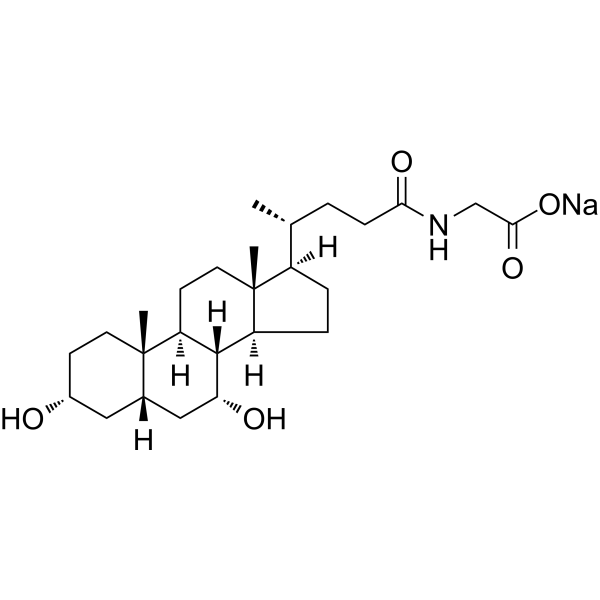
Cat. No.: HY-N2334A
CAS No.: 16564-43-5
Synonyms: Chenodeoxycholylglycine sodium salt; Sodium glycochenodeoxycholate
Glycochenodeoxycholic acid sodium salt (Sodium glycochenodeoxycholate) is a relatively toxic bile salt generated in the liver from chenodeoxycholic acid and glycine. Glycochenodeoxycholic acid sodium salt inhibits Autophagosome formation and impairs lysosomal function by inhibiting lysosomal proteolysis and increasing lysosomal pH in human normal liver cells, leading to the Apoptosis of human hepatocyte cells. Glycochenodeoxycholic acid sodium salt induces stemness and chemoresistance via activating STAT3 signaling pathway in hepatocellular carcinoma cells (HCC). Glycochenodeoxycholic acid sodium salt is promising for research in the field of cholestasis desease, hepatocellular carcinoma and primary sclerosing cholangitis (PSC) .
loading...
    loading...
3
3 Cited Publications
Cat. No.: HY-125913
CAS No.: 618-39-3
Target:  

Ser/Thr Protease

Research Areas:  

Inflammation/Immunology

Benzamidine is a competitive protease inhibitor that blocks the hydrolytic cleavage of glucagon by plasmin, trypsin and thrombin. Benzamidine effectively inhibits the degradation of glucagon by relevant proteases during the collection, storage and analysis of human plasma and blood samples. During in vivo metabolism, Benzamidine undergoes N-hydroxylation and produces multiple metabolites, exhibiting characteristics of delayed excretion or biphasic elimination. Benzamidine only induces slight single-strand DNA breaks at high concentrations and shows no significant genotoxic potential overall. Benzamidine may interfere with the detection of some glucagon antisera, but does not affect key antigen-antibody affinity at specific concentrations. Benzamidine can be used as a stabilizer in glucagon radioimmunoassays to ensure the accuracy and recovery rate of detection results .
loading...
    loading...
3
3 Cited Publications
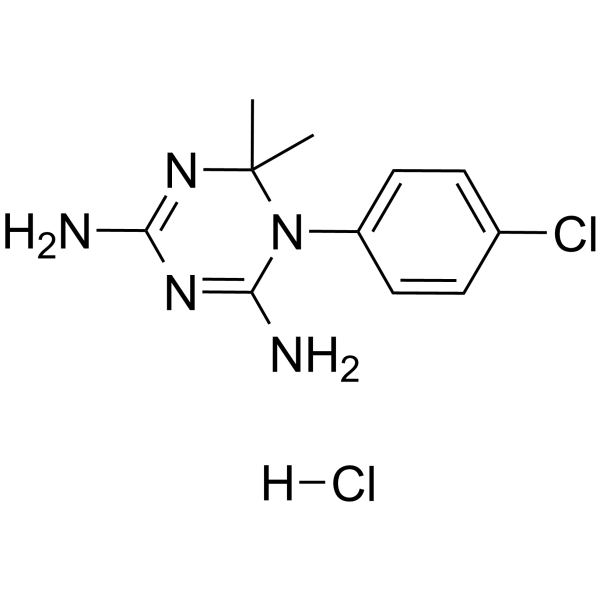
Cat. No.: HY-12784A
CAS No.: 152-53-4
Purity:  99.93%
Synonyms: Chlorguanide triazine hydrochloride
Research Areas:  

Infection Cancer

Cycloguanil (Chlorguanide triazine) hydrochloride is a dihydrofolate reductase (DHFR) inhibitor with an IC50 of 10.8 μM against human DHFR. Cycloguanil hydrochloride blocks the folate metabolic pathway, thereby affecting nucleotide synthesis and interfering with DNA replication. Cycloguanil inhibits DHFR in Plasmodium and is thus used in malaria research. Cycloguanil hydrochloride also potently inhibits DHFR in human cancer cells and blocks the transcriptional activity of STAT3, thereby exhibiting anticancer activity .
loading...
    loading...
2
2 Cited Publications
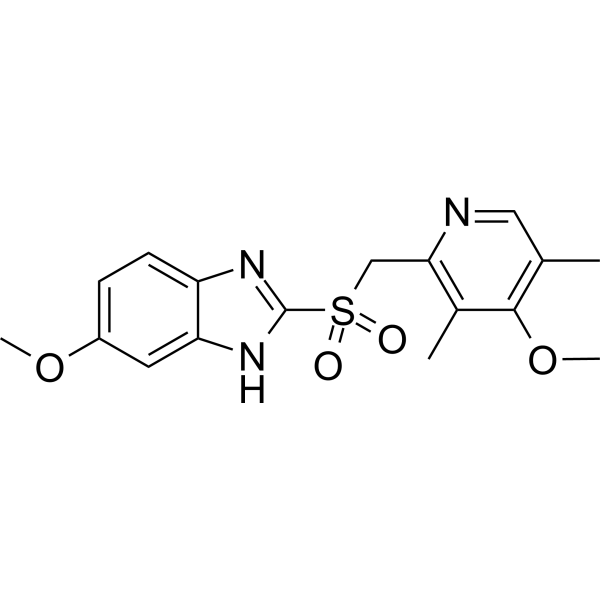
Cat. No.: HY-G0007
CAS No.: 88546-55-8
Synonyms: Omeprazole sulphone
Omeprazole sulfone (Omeprazole sulphone) is one of the major circulating metabolites of Omeprazole (HY-B0113) in vivo, and belongs to class 4 non-mutagenic impurities. Omeprazole sulfone does not bind to the aryl hydrocarbon receptor (AhR), nor does it induce the expression of CYP1A1 or CYP1A2. However, Omeprazole sulfone promotes the migration of gastric epithelial cells under basal conditions and reverses the inhibitory effect of Indomethacin (HY-14397) on cell migration. Omeprazole sulfone does not promote cell proliferation, nor does it upregulate COX-2 expression or activate signaling pathways such as ERK, P38 MAPK and PI3K. Omeprazole sulfone maintains basal ulcer healing under non-acid-dependent conditions and can be used in studies related to gastric ulcer repair .
loading...
    loading...
2
2 Cited Publications
Cat. No.: HY-G0006
CAS No.: 73590-85-9
Synonyms: Ufiprazole
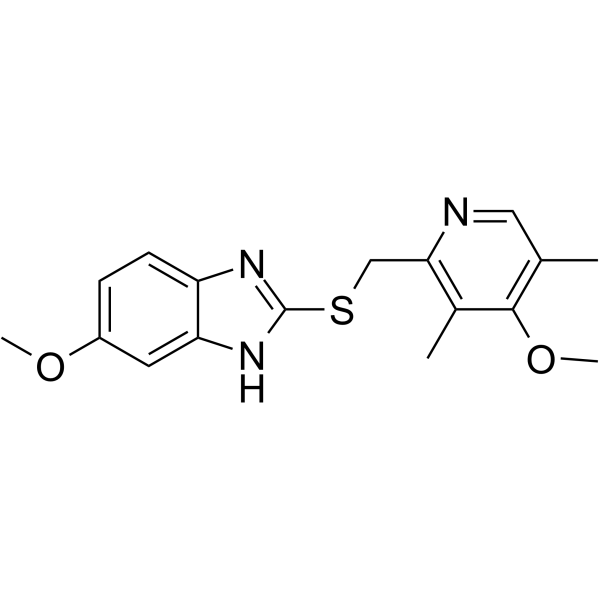
Omeprazole sulfide (Ufiprazole) is a metabolic degradation product of Omeprazole (HY-B0113). Omeprazole sulfide acts as a modulator of AhR. Omeprazole sulfide in cells with low CYP3A4 expression, functions as an AhR antagonist; however, in cells with high CYP3A4 expression, it is rapidly metabolized to Omeprazole, thereby acting as an AhR agonist. Omeprazole sulfide exhibits antibacterial activity when conjugated with silver nanoparticles (AgNPs). Omeprazole sulfide can be used in research on acid suppression and bacterial infections .
loading...
    loading...
1
1 Cited Publications
Cat. No.: HY-155108B
Purity:  99.88%
Target:  

Arginase

Research Areas:  

Cancer

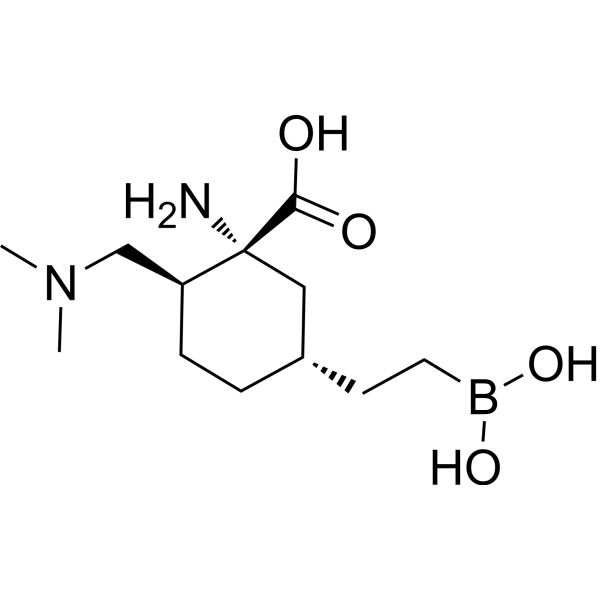
OATD-02 hydrochloride is the hydrochloride salt form of OATD-02 (HY-155108). OATD-02 hydrochloride an orally active, competitive, reversible, noncovalent dual inhibitor of Arginase1 and Arginase2. OATD-02 hydrochloride is a slow offset inhibitor, blocking intracellular arginases with IC50s of 20 nM (hARG1), 39 nM (hARG2), 39 nM (mARG1), and 28 nM (rARG1), respectively. OATD-02 hydrochloride bolishes tumor immunosuppression induced by both arginases. OATD-02 hydrochloride can be used for melanoma study .
loading...
    loading...
Cat. No.: HY-177022
CAS No.: 2495324-66-6
Target:  

HBV

Research Areas:  

Infection

ALG-001075, a capsid assembly modulator (CAM), is an orally active HBV inhibitor. ALG-001075 effectively blocks not only HBV DNA production but also extracellular HBsAg/HBeAg and intracellular HBV RNA in primary human hepatocytes. ALG-001075 shows pronounced reductions of circulating HBV DNA in the AAV-HBV mouse model. ALG-001075 can be used for the study of Chronic hepatitis B (CHB) .
loading...
    loading...
Cat. No.: HY-12281
CAS No.: 957485-64-2
Purity:  99.29%
Synonyms: BRD-9424
Research Areas:  

Metabolic Disease Cancer

FPH2 induces of functional proliferation of primary human hepatocytes and may lead to the development of new therapeutics for liver diseases.
loading...
    loading...
Cat. No.: HY-18056
CAS No.: 857290-04-1
Target:  

11β-HSD

Research Areas:  

Metabolic Disease

PF-915275 is a potent, selective and orally active human 11β-hydroxysteroid dehydrogenase type 1 (11βHSD1) inhibitor with a Ki of 2.3 nM and an EC50 of 15 nM (in HEK293 cells). The dose-dependent effect of PF-915275 on conversion of cortisone to cortisol in primary human and monkey hepatocytes, with an EC50 of 20 and 100 nM, respectively .
loading...
    loading...
Cat. No.: HY-D1078
CAS No.: 127770-45-0
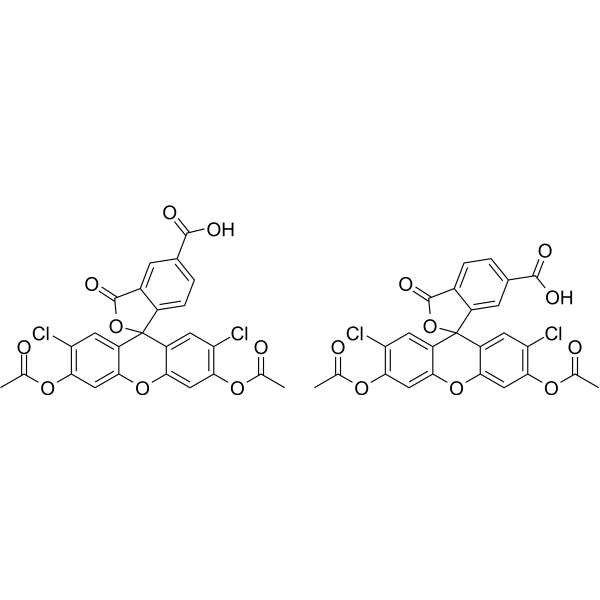
5 (6)-Carboxy-2',7'-dichlorofluorescein diacetate is a fluorescein-based reactive oxygen species (ROS) probe and also a MRP2 substrate. 5 (6)-Carboxy-2',7'-dichlorofluorescein diacetate serves as a substrate for intracellular esterases, which cleave its acetate groups to generate a fluorescent product capable of detecting intracellular ROS. 5 (6)-Carboxy-2',7'-dichlorofluorescein diacetate is ATP-dependent and is transported via a single MRP2 binding site; it competes with LTC4 for MRP2 binding sites and inhibits MRP2-mediated LTC4 transport (Ex/Em = 496/525 nm) .
loading...
    loading...
Cat. No.: HY-B1309
CAS No.: 621-42-1
Synonyms: AMAP
Metacetamol (AMAP) is an analog of Acetaminophen (HY-66005). Metacetamol induces dose-dependent necrosis in primary hepatocytes via glutathione depletion, mitochondrial damage, and formation of mitochondrial protein adducts. Metacetamol derivatives act as anticancer and antibacterial agents. Metacetamol can be used in studies related to breast cancer, bacterial infections, and fungal infections (candidiasis) .
loading...
    loading...
Cat. No.: HY-P991200

Target:  

HCV Claudin

Research Areas:  

Infection

OM-7D3-B3 is an antibody-based antiviral agent targeting the tight junction protein CLDN1 (Kd=4 nM). By binding to the first extracellular domain of CLDN1, OM-7D3-B3 disrupts the formation of the CLDN1-CD81 co-receptor complex, thereby effectively inhibiting the entry of hepatitis C virus (HCV). OM-7D3-B3 not only prevents de novo and chronic HCV infections in humanized liver chimeric mice and uPA-SCID mice transplanted with human livers, but also exhibits favorable safety with no toxic effects observed. OM-7D3-B3 serves as a critical tool for research on HCV infection mechanisms and antiviral drug development .
loading...
    loading...
Cat. No.: HY-137967
CAS No.: 38482-81-4
Purity:  ≥98.0%
Synonyms: Genistein 7-O-glucuronide
Target:  

Drug Metabolite

Research Areas:  

Metabolic Disease

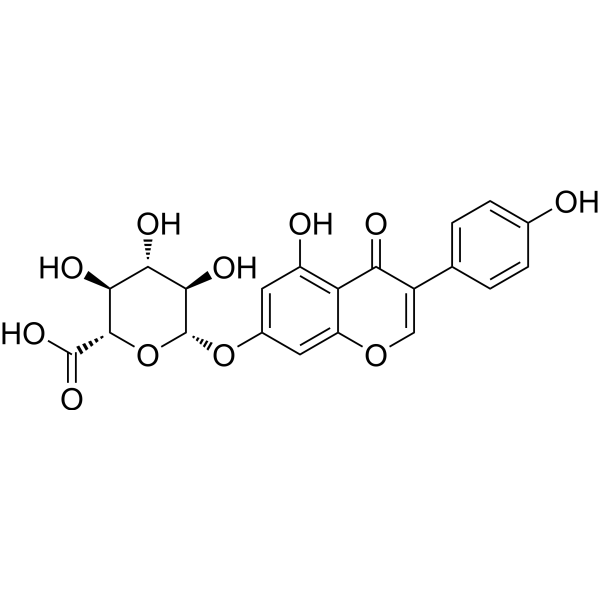
Genistein 7-β-D-Glucuronide (Genistein 7-O-glucuronide) is the primary phase II metabolite of Genistein (HY-14596) in human and rat hepatocytes. Genistein 7-β-D-Glucuronide undergoes distinct deconjugation in different functional assays. Genistein 7-β-D-Glucuronide is produced via hepatic microsomal glucuronidation and shows a mild age-related increase in intrinsic clearance in male F344 rats. Genistein 7-β-D-Glucuronide can be used for research on metabolism .
loading...
    loading...
Cat. No.: HY-P10031
Target:  

GLP Receptor GCGR

Research Areas:  

Metabolic Disease

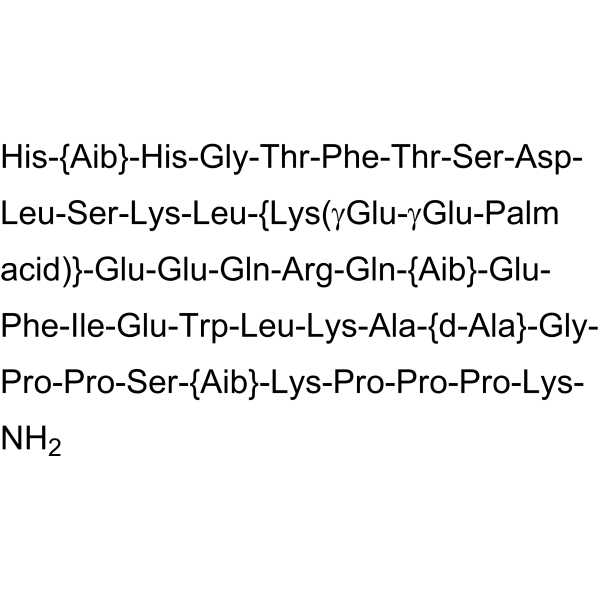
SAR441255 is a GLP-1R/GCGR/GIPR agonist, with human EC50 values of 1.03 pM, 1.01 pM, and 0.73 pM, respectively. SAR441255 stimulates receptor activity and drives cAMP accumulation. SAR441255 can be used for the research of type 2 diabetes, obesity .
loading...
    loading...
Cat. No.: HY-148560A
CAS No.: 2413192-49-9
Purity:  99.71%
Target:  

HBV DNA/RNA Synthesis

Research Areas:  

Infection

trans-ccc_R08 (Compound 1-B) is a cccDNA inhibitor with anti-HBV activity, with an IC50 of 0.14 μM for HBeAg and an IC50 of 0.08 μM for HBsAg in in vitro assays. trans-ccc_R08 inhibits covalently closed circular DNA (cccDNA). trans-ccc_R08 is applicable to research related to hepatitis B virus infection .
loading...
    loading...
Cat. No.: HY-100590
CAS No.: 708219-39-0
Purity:  99.89%
Synonyms: BRD6125
Target:  

Cytochrome P450

Research Areas:  

Others

FPH1(BRD-6125) increases the number and activity of primary human hepatocytes in vitro and promotes the differentiation of iPS cells towards a hepatic lineage .
loading...
    loading...
Cat. No.: HY-155108
CAS No.: 2146132-73-0
Target:  

Arginase

Research Areas:  

Cancer

OATD-02 is an orally active, competitive, reversible, noncovalent dual inhibitor of Arginase1 and 2. OATD-02 is a slow offset inhibitor, blocking intracellular arginases with IC50s of 20 nM (hARG1), 39 nM (hARG2), 39 nM (mARG1), and 28 nM (rARG1), respectively. OATD-02 abolishes tumor immunosuppression induced by both arginases. OATD-02 can be used for melanoma study .
loading...
    loading...
Cat. No.: HY-147645
CAS No.: 127143-25-3
Target:  

FBPase

Research Areas:  

Metabolic Disease

FBPase-IN-2 (Compound HS36) is a covalent FBPase inhibitor with an IC50 value of 0.15 μM for wild-type FBPase. FBPase-IN-2 inhibits glucose production in primary mouse hepatocytes via gluconeogenesis modulation. FBPase-IN-2 can be used for the research of type 2 diabetes mellitus .
loading...
    loading...
Cat. No.: HY-P991674
CAS No.: 3033337-14-0
Synonyms: BJT-778

Target:  

HBV

Research Areas:  

Infection Inflammation/Immunology

Brelovitug (BJT-778) is a humanized IgG1 neutralizing monoclonal antibody targeting hepatitis B surface antigen (HBsAg). Brelovitug binds with high affinity to HBsAg purified from HBV serotypes ad and ay, with Kd values of 0.22 nM and 0.39 nM, respectively. Brelovitug binds with high affinity to HBsAg of HBV genotypes A, B, C and D, with IC50 values of 0.07, 0.02, 0.02 and 0.07 nM, respectively. Brelovitug can be used in research related to chronic hepatitis B and chronic hepatitis D .
loading...
    loading...

