









Search Result
Results for "
recombinant fusion protein
" in MedChemExpress (MCE) Product Catalog:
| Art. -Nr. |
Produktname |
Target |
Forschungsgebiete |
Chemical Structure |
-
- HY-P0223
-
|
|
Biochemical Assay Reagents
|
Inflammation/Immunology
|
|
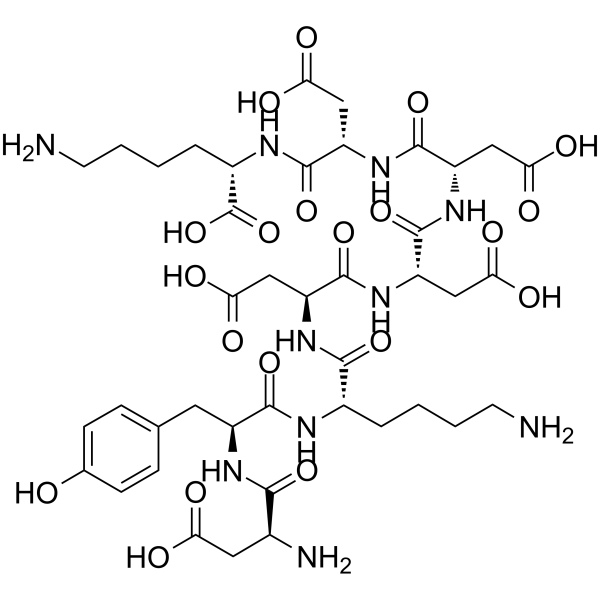
FLAG peptide is a multifunctional fusion tag for the purification of recombinant proteins. FLAG peptide maintances the natural folding of its fusing proteins. FLAG peptide can be removed by enterokinase, and eluted under non-denaturing conditions .
|
-
-
- HY-P99720
-
|
ACE-536; luspatercept–aamt
|
TGF-beta/Smad
|
Metabolic Disease
Cancer
|
|
Luspatercept (ACE-536) is a recombinant modified ActRIIB fusion protein that binds with transforming growth factor β superfamily ligands. Luspatercept increases the erythrocyte numbers and promotes maturation of erythroid precursors. Luspatercept binds with GDF11 and inhibits Smad2/3 signaling. Luspatercept can be used for the research of anemia .
|
-
-
- HY-P99115
-
|
ASC 22; KN 035
|
PD-1/PD-L1
|
Cancer
|
|
Envafolimab (ASC 22; KN 035) is a recombinant protein of a humanized single-domain anti- PD-L1 antibody. Envafolimab is created by a fusion of the of anti-PD-L1 domain with Fc fragment of human IgG1 antibody. Envafolimab blocks interaction between PD-L1 and PD-1 with an IC50 value of 5.25 nM. Envafolimab has the potential for the research of solid tumors .
|
-
-
- HY-P99446
-
|
TACI-Ig; TACI-Fc 5
|
TNF Receptor
|
Inflammation/Immunology
|
|
Atacicept (TACI-Ig) is a is a recombinant fusion protein containing the extracellular, ligand-binding portion of the TACI receptor and the Fc portion of human IgG. Atacicept inhibits B cell stimulation by binding to B lymphocyte stimulator and a proliferation-inducing ligand. Atacicept can be used in research of B-cell autoimmune disease .
|
-
-
- HY-P99917
-
|
F-652; rhIL-22 dimer
|
STAT
|
Infection
Inflammation/Immunology
|
|
Eflepedocokin alfa is a recombinant fusion protein. Eflepedocokin alfa consists of human IL-22 fused to human IgG2-Fc domain. Eflepedocokin alfa leads to the activation of IL-22/IL-22R-mediated signal transduction pathways as well as STAT3. Eflepedocokin alfa plays a role in immune response and bacterial infection, enhancing intestinal barrier function, intestinal immunity, and tissue repair .
|
-
-
- HY-P99667
-
|
OMP-54F28; FZD8-Fc
|
Wnt
|
Cancer
|
|
Ipafricept (OMP-54F28; FZD8-Fc) is a first class recombinant fusion protein with the extracellular part of the human frizzled-8 receptor fused to a human IgG1 Fc fragment that binds Wnt ligands, which blocks Wnt signaling. Ipafricept reduces tumor growth and results in a decrease in both liver and lung metastases combined with Gemcitabine (HY-17026) in pancreatic cancer mouse models. Ipafricept shows solid tumor inhibition activity with well tolerance, such as desmoid tumor, germ cell cancer, ovarian cancer .
|
-
-
- HY-112998
-
|
|
Factor VIII
|
Cardiovascular Disease
|
|
Efmoroctocog alfa is a recombinant factor VIII-Fc fusion protein (rFVIIIFc). In mice with hemophilia A, Efmoroctocog alfa provides longer-lasting protection against tail vein transection injury than conventional rFVIII products. In dogs with hemophilia A, Efmoroctocog alfa produces a longer duration of improvement in whole blood clotting time than conventional rFVIII products. Efmoroctocog alfa can be used for research on hemophilia A .
|
-
-
- HY-P99879
-
|
Benegrastim; Bineuta; F 627
|
STAT
|
Inflammation/Immunology
|
|
Efbemalenograstim alfa (F 627) is a recombinant fusion protein. Efbemalenograstim alfa is a long acting dimeric granulocyte colony-stimulating factor (G-CSF) that contains two human G-CSF fused to a human immunoglobulin G2 (hIgG2)-Fc fragment with a peptide linker. Efbemalenograstim alfa induces the production of white blood cells .
|
-
-
- HY-E70528
-
|
|
Biochemical Assay Reagents
|
Others
|
|
HRV-3C protease fuses with GST is a recombinant protease fused with HRV-3C protease and GST, which recognizes the LEVLFQGP polypeptide sequence. HRV-3C protease fuses with GST precisely cleaves between glutamine and glycine-proline residues to remove fusion tags from target proteins. HRV-3C protease fuses with GST exhibits cleavage activity both in vitro in silkworm fat body lysates and in vivo in silkworm larval fat bodies, and achieves functional expression in E. coli and silkworm-baculovirus expression systems. HRV-3C protease fuses with GST can be applied to recombinant protein-related research .
|
-
-
- HY-P5112A
-
|
Azido-PEG3-FLAG TFA
|
Biochemical Assay Reagents
|
Others
|
|
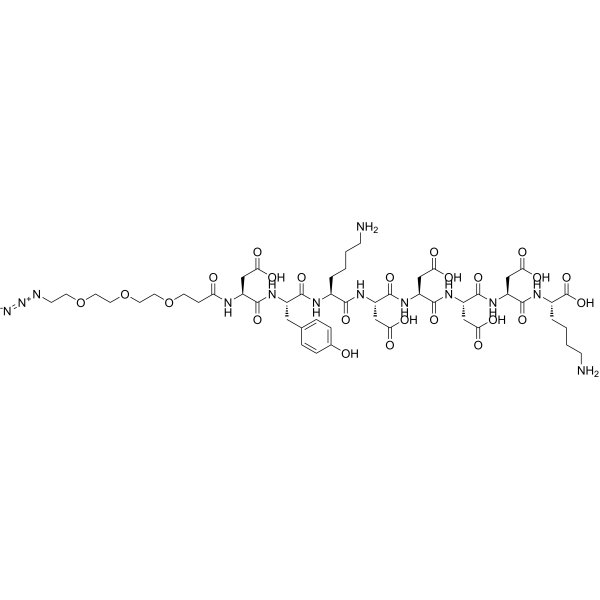
Azido-PEG3-DYKDDDDK (azide-PEG3-FLAG) TFA is a multifunctional fusion tag for the purification of recombinant proteins. Azido-PEG3-DYKDDDDK TFA is a click chemistry reagent, it contains an Azide group and can undergo copper-catalyzed azide-alkyne cycloaddition reaction (CuAAc) with molecules containing Alkyne groups. It can also undergo strain-promoted alkyne-azide cycloaddition (SPAAC) reactions with molecules containing DBCO or BCN groups .
|
-
-
- HY-P99830
-
|
KH902
|
VEGFR
TNF Receptor
Interleukin Related
|
Cardiovascular Disease
Inflammation/Immunology
Cancer
|
|
Conbercept (KH902) is a recombinant fusion protein composed of VEGFR-1 (second domain) and VEGFR-2 (third and fourth domains) regions fused to human IgG1 Fc. Conbercept is a VEGF inhibitor (IC50 = 8.8 pM) and is a soluble receptor decoy that blocks all isoforms of VEGF-A (Kd = 0.5 pM), VEGF-B (Kd = 8 pM), VEGF-C, and PlGF (Kd = 5 pM). Conbercept has anti-inflammatory effects, can lower the levels of VEGF, TNF-α and IL-6, and reduce the infiltration of inflammatory cells. Conbercept decreases tumor growth in several oncology studies. Conbercept can be used for various eye diseases such as polypoidal choroidal vasculopathy (PCV), diabetic macular edema (DME) and pathologic myopia choroidal neovascularization (pmCNV) .
|
-
-
- HY-P0223A
-
|
|
Biochemical Assay Reagents
|
Others
|
|
FLAG peptide TFA is the TFA salt form of FLAG peptide (HY-P0223). FLAG peptide TFA is a multifunctional fusion tag for the purification of recombinant proteins. FLAG peptide TFA maintances the natural folding of its fusing proteins. FLAG peptide TFA can be removed by enterokinase, and eluted under non-denaturing conditions .
|
-
-
- HY-P99696
-
|
LIB003
|
PCSK9
|
Cardiovascular Disease
Metabolic Disease
|
|
Lerodalcibep (LIB003) is a recombinant fusion protein of a PCSK9-binding domain (adnectin) and human serum albumin. Lerodalcibep is a Lipid-lowering agent. Lerodalcibep can be used for the research of hypercholesterolemia and cardiovascular diseases .
|
-
-
- HY-P2929B
-
|
|
Glycosidase
|
Others
|
PNGase F (Immobilized, Microspin) is a resin in which PNGase F (peptide N-glycosidase F) is covalently coupled to agarose beads, and it is used to remove N-glycans from antibodies, fusion proteins and other N-glycosylated proteins. The enzyme is recombinantly expressed in Escherichia coli, with its sequence derived from Flavobacterium meningsepticum .
|
-
-
- HY-P3385
-
|
SCB-313
|
Drug Derivative
Apoptosis
|
Cancer
|
|
Rilunermin alfa (SCB-313) is a recombinant fusion protein composed of the human C-propeptide of alpha1(I) collagen (Trimer-Tag) to the C-terminus of the mature human tumor necrosis factor (TNF)-related apoptosis-inducing ligand (TRAIL; Apo2L). Rilunermin alfa has potential pro-apoptotic and antineoplastic activities .
|
-
-
- HY-P5112
-
|
Azido-PEG3-FLAG
|
Biochemical Assay Reagents
|
Others
|
|
Azido-PEG3-DYKDDDDK (azide-PEG3-FLAG) is a multifunctional fusion tag for the purification of recombinant proteins. Azido-PEG3-DYKDDDDK is a click chemistry reagent, it contains an Azide group and can undergo copper-catalyzed azide-alkyne cycloaddition reaction (CuAAc) with molecules containing Alkyne groups. It can also undergo strain-promoted alkyne-azide cycloaddition (SPAAC) reactions with molecules containing DBCO or BCN groups .
|
-
-
- HY-P990720
-
|
KER-050
|
TGF-beta/Smad
|
Inflammation/Immunology
|
|
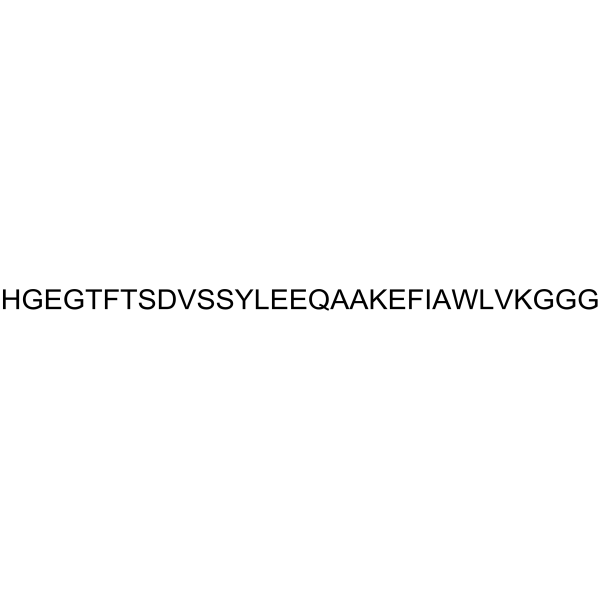
Elritercept (KER-050) is a recombinant fusion protein comprising a modified activin receptor type IIA extracellular domain fused to a human IgG1 Fc. Elritercept inhibits activin A and other select TGF-β superfamily ligands .
|
-
-
- HY-P991415
-
|
AM712
|
VEGFR
Tie
|
Others
|
|
ASKG-712 (AM712) is a recombinant anti-VEGF humanized monoclonal antibody and Ang-2 antagonist peptide fusion protein. ASKG-712 can be used in Wet age-related macular degeneration and Diabetic macular oedema research .
|
-
-
- HY-P99543
-
|
OPRX-106; PRX-106; TNFR-Fc
|
TNF Receptor
|
Cancer
|
|
Tulinercept (OPRX-106) is a recombinant TNF receptor fusion protein fused to an IgG1 Fc domain .
|
-
-
- HY-P990959
-
-
-
- HY-P99692
-
|
p55TNF-R:Ig; Ro 45-2081; TNFR55-IgG1
|
TNF Receptor
|
Inflammation/Immunology
|
|
Lenercept (Ro 45-2081) is a recombinant fusion protein that consists of the soluble TNF-receptor (p55) linked to the Fc portion of human IgG1 .
|
-
-
- HY-P990723
-
|
|
CD47
|
Cancer
|
|
Timdarpacept (DNL310) is a recombinant SIRPa-Fc fusion protein that can activate macrophages to enhance anti-tumor activity by blocking CD47-SIRPa .
|
-
-
- HY-P99782
-
|
|
TNF Receptor
|
Inflammation/Immunology
|
|
Opinercept is a recombinant fusion protein comprising an TNFRSF1B fused to a human IgG1 Fc . Opinercept is a tumor necrosis factor-alpha (TNF-alpha) inhibitor. Opinercept can be used for the research of rheumatoid arthritis (RA) .
|
-
-
- HY-E70714
-
|
|
Anaplastic lymphoma kinase (ALK)
|
Cancer
|
|
EML4-ALK is a fusion-type protein tyrosine kinase produced through gene rearrangement. EML4-ALK can be used for the study of non-small cell lung carcinoma (NSCLC) and neuroblastoma (NB). EML4-ALK has multiple mutants. EML4 ALK F1174L Recombinant Human Active Protein Kinase is a recombinant EML4 ALK F1174L protein that can be used to study EML4 ALK F1174L-related functions .
|
-
-
- HY-E70758
-
|
|
c-Met/HGFR
|
Cancer
|
|
Mesenchymal-to-epithelial transition (MET) is a receptor tyrosine kinase for hepatocyte growth factor (HGF). MET overactivation is strongly associated with angiogenesis, cellular motility, growth, and invasion. Aberrant MET signaling can drive tumorigenesis in several cancer types through various molecular mechanisms, including MET amplification, MET exon 14 skipping mutation, MET overexpression, and MET fusions. MET Y1235D is a mutant of MET. MET Y1235D Recombinant Human Active Protein Kinase is a recombinant MET Y1235D protein that can be used to study MET Y1235D-related functions .
|
-
-
- HY-E70751
-
|
|
c-Met/HGFR
|
Cancer
|
|
Mesenchymal-to-epithelial transition (MET) is a receptor tyrosine kinase for hepatocyte growth factor (HGF). MET overactivation is strongly associated with angiogenesis, cellular motility, growth, and invasion. Aberrant MET signaling can drive tumorigenesis in several cancer types through various molecular mechanisms, including MET amplification, MET exon 14 skipping mutation, MET overexpression, and MET fusions. MET G1163R is a mutant of MET. MET G1163R Recombinant Human Active Protein Kinase is a recombinant MET G1163R protein that can be used to study MET G1163R-related functions .
|
-
-
- HY-P99951
-
-
-
- HY-P990776
-
-
-
- HY-P990763
-
-
-
- HY-P990731
-
-
-
- HY-E70713
-
|
|
Anaplastic lymphoma kinase (ALK)
|
Cancer
|
|
EML4-ALK is a fusion-type protein tyrosine kinase produced through gene rearrangement. EML4-ALK is a potential molecular target in non-small cell lung carcinoma (NSCLC). EML4 ALK Recombinant Human Active Protein Kinase is a recombinant EML4 ALK protein that can be used to study EML4 ALK-related functions .
|
-
-
- HY-P990736
-
|
|
Interleukin Related
|
Inflammation/Immunology
|
|
Efercoleukin alfa is a recombinant fusion protein comprising an IL-2 fused to a human IgG1 Fc. Efercoleukin alfa binds the high-affinity IL-2 receptor alpha chain (CD25) .
|
-
-
- HY-E70789
-
|
|
RET
|
Others
|
|
BCR-RET Recombinant Human Active Protein Kinase is a BCR-RET fusion protein in hematopoietic malignancies. BCR-RET overactivates the Ras-ERK pathway, in addition to JAK/STAT3 and PI3K/AKT pathways .
|
-
-
- HY-E70776
-
|
|
RET
|
Cancer
|
|
Rearranged during transfection (RET) is a transmembrane receptor protein tyrosine kinase (PTK) activated normally by forming ternary complexes with its cognate ligands and co-receptors. RET alterations by point mutations and gene fusions were found in diverse cancers. RET S891A is a mutant of RET. RET S891A Recombinant Human Active Protein Kinase is a recombinant RET S891A protein that can be used to study RET S891A-related functions .
|
-
-
- HY-E70778
-
|
|
RET
|
Cancer
|
|
Rearranged during transfection (RET) is a transmembrane receptor protein tyrosine kinase (PTK) activated normally by forming ternary complexes with its cognate ligands and co-receptors. RET alterations by point mutations and gene fusions were found in diverse cancers. RET V804L is a mutant of RET. RET V804L Recombinant Human Active Protein Kinase is a recombinant RET V804L protein that can be used to study RET V804L-related functions .
|
-
-
- HY-E70777
-
|
|
RET
|
Cancer
|
|
Rearranged during transfection (RET) is a transmembrane receptor protein tyrosine kinase (PTK) activated normally by forming ternary complexes with its cognate ligands and co-receptors. RET alterations by point mutations and gene fusions were found in diverse cancers. RET V804E is a mutant of RET. RET V804E Recombinant Human Active Protein Kinase is a recombinant RET V804E protein that can be used to study RET V804E-related functions .
|
-
-
- HY-E70859
-
|
|
RET
|
Cancer
|
|
Rearranged during transfection (RET) is a transmembrane receptor protein tyrosine kinase (PTK) activated normally by forming ternary complexes with its cognate ligands and co-receptors. RET alterations by point mutations and gene fusions were found in diverse cancers. RET L790F is a mutant of RET. RET L790F Recombinant Human Active Protein Kinase is a recombinant RET L790F protein that can be used to study RET L790F-related functions .
|
-
-
- HY-E70771
-
|
|
RET
|
Cancer
|
|
Rearranged during transfection (RET) is a transmembrane receptor protein tyrosine kinase (PTK) activated normally by forming ternary complexes with its cognate ligands and co-receptors. RET alterations by point mutations and gene fusions were found in diverse cancers. RET L730I is a mutant of RET. RET L730I Recombinant Human Active Protein Kinase is a recombinant RET L730I protein that can be used to study RET L730I-related functions .
|
-
-
- HY-E70779
-
|
|
RET
|
Cancer
|
|
Rearranged during transfection (RET) is a transmembrane receptor protein tyrosine kinase (PTK) activated normally by forming ternary complexes with its cognate ligands and co-receptors. RET alterations by point mutations and gene fusions were found in diverse cancers. RET V804M is a mutant of RET. RET V804M Recombinant Human Active Protein Kinase is a recombinant RET V804M protein that can be used to study RET V804M-related functions .
|
-
-
- HY-E70767
-
|
|
RET
|
Cancer
|
|
Rearranged during transfection (RET) is a transmembrane receptor protein tyrosine kinase (PTK) activated normally by forming ternary complexes with its cognate ligands and co-receptors. RET alterations by point mutations and gene fusions were found in diverse cancers. RET G691S is a mutant of RET. RET G691S Recombinant Human Active Protein Kinase is a recombinant RET G691S protein that can be used to study RET G691S-related functions .
|
-
-
- HY-E70768
-
|
|
RET
|
Cancer
|
|
Rearranged during transfection (RET) is a transmembrane receptor protein tyrosine kinase (PTK) activated normally by forming ternary complexes with its cognate ligands and co-receptors. RET alterations by point mutations and gene fusions were found in diverse cancers. RET G810C is a mutant of RET. RET G810C Recombinant Human Active Protein Kinase is a recombinant RET G810C protein that can be used to study RET G810C-related functions .
|
-
-
- HY-E70773
-
|
|
RET
|
Cancer
|
|
Rearranged during transfection (RET) is a transmembrane receptor protein tyrosine kinase (PTK) activated normally by forming ternary complexes with its cognate ligands and co-receptors. RET alterations by point mutations and gene fusions were found in diverse cancers. RET M918T is a mutant of RET. RET M918T Recombinant Human Active Protein Kinase is a recombinant RET M918T protein that can be used to study RET M918T-related functions .
|
-
-
- HY-E70775
-
|
|
RET
|
Cancer
|
|
Rearranged during transfection (RET) is a transmembrane receptor protein tyrosine kinase (PTK) activated normally by forming ternary complexes with its cognate ligands and co-receptors. RET alterations by point mutations and gene fusions were found in diverse cancers. RET R813Q is a mutant of RET. RET R813Q Recombinant Human Active Protein Kinase is a recombinant RET R813Q protein that can be used to study RET R813Q-related functions .
|
-
-
- HY-E70772
-
|
|
RET
|
Cancer
|
|
Rearranged during transfection (RET) is a transmembrane receptor protein tyrosine kinase (PTK) activated normally by forming ternary complexes with its cognate ligands and co-receptors. RET alterations by point mutations and gene fusions were found in diverse cancers. RET L730M is a mutant of RET. RET L730M Recombinant Human Active Protein Kinase is a recombinant RET L730M protein that can be used to study RET L730M-related functions .
|
-
-
- HY-E70774
-
|
|
RET
|
Cancer
|
|
Rearranged during transfection (RET) is a transmembrane receptor protein tyrosine kinase (PTK) activated normally by forming ternary complexes with its cognate ligands and co-receptors. RET alterations by point mutations and gene fusions were found in diverse cancers. RET R749T is a mutant of RET. RET R749T Recombinant Human Active Protein Kinase is a recombinant RET R749T protein that can be used to study RET R749T-related functions .
|
-
-
- HY-E70769
-
|
|
RET
|
Cancer
|
|
Rearranged during transfection (RET) is a transmembrane receptor protein tyrosine kinase (PTK) activated normally by forming ternary complexes with its cognate ligands and co-receptors. RET alterations by point mutations and gene fusions were found in diverse cancers. RET G810R is a mutant of RET. RET G810R Recombinant Human Active Protein Kinase is a recombinant RET G810R protein that can be used to study RET G810R-related functions .
|
-
-
- HY-E70766
-
|
|
RET
|
Cancer
|
|
Rearranged during transfection (RET) is a transmembrane receptor protein tyrosine kinase (PTK) activated normally by forming ternary complexes with its cognate ligands and co-receptors. RET alterations by point mutations and gene fusions were found in diverse cancers. RET E762Q is a mutant of RET. RET E762Q Recombinant Human Active Protein Kinase is a recombinant RET E762Q protein that can be used to study RET E762Q-related functions .
|
-
-
- HY-E70780
-
|
|
RET
|
Cancer
|
|
Rearranged during transfection (RET) is a transmembrane receptor protein tyrosine kinase (PTK) activated normally by forming ternary complexes with its cognate ligands and co-receptors. RET alterations by point mutations and gene fusions were found in diverse cancers. RET Y791F is a mutant of RET. RET Y791F Recombinant Human Active Protein Kinase is a recombinant RET Y791F protein that can be used to study RET Y791F-related functions .
|
-
-
- HY-E70781
-
|
|
RET
|
Cancer
|
|
Rearranged during transfection (RET) is a transmembrane receptor protein tyrosine kinase (PTK) activated normally by forming ternary complexes with its cognate ligands and co-receptors. RET alterations by point mutations and gene fusions were found in diverse cancers. RET Y806H is a mutant of RET. RET Y806H Recombinant Human Active Protein Kinase is a recombinant RET Y806H protein that can be used to study RET Y806H-related functions .
|
-
-
- HY-E70770
-
|
|
RET
|
Cancer
|
|
Rearranged during transfection (RET) is a transmembrane receptor protein tyrosine kinase (PTK) activated normally by forming ternary complexes with its cognate ligands and co-receptors. RET alterations by point mutations and gene fusions were found in diverse cancers. RET G810S is a mutant of RET. RET G810S Recombinant Human Active Protein Kinase is a recombinant RET G810S protein that can be used to study RET G810S-related functions .
|
-
- HY-E70722
-
|
|
FGFR
|
Cancer
|
|
FGFR4 is a transcriptional target of the PAX3-FOXO1 fusion gene. FGFR4 expression is significantly higher in rhabdomyosarcoma. FGFR4 V550E is a mutant of FGFR3 that may be present in rhabdomyosarcoma. FGFR4 V550E Recombinant Human Active Protein Kinase is a recombinant FGFR4 V550E protein that can be used to study FGFR4 V550EK-related functions .
|
-
- HY-E70721
-
|
|
FGFR
|
Cancer
|
|
FGFR4 is a transcriptional target of the PAX3-FOXO1 fusion gene. FGFR4 expression is significantly higher in rhabdomyosarcoma. FGFR3 K650E is a mutant of FGFR3 that may be present in rhabdomyosarcoma. FGFR4 N535K Recombinant Human Active Protein Kinase is a recombinant FGFR4 N535K protein that can be used to study FGFR4 N535K-related functions .
|
-
- HY-157232
-
|
|
Biochemical Assay Reagents
|
Others
|
AC Antibody purification resin 2 is based on spherical, highly cross-linked agarose beads with a narrow size distribution and high mechanical stability. Used for the separation and purification of complex antibodies such as monoclonal antibody, double antibody, multi-antibody and Fc fusion protein .
Substrate: highly crosslinked agarose microspheres; Particle size: 65μm; Ligand: alkali-resistant recombinant Protein A; ADC purified resin.
|
-
- HY-E70754
-
|
|
c-Met/HGFR
|
Cancer
|
|
Mesenchymal-to-epithelial transition (MET) is a receptor tyrosine kinase for hepatocyte growth factor (HGF). MET overactivation is strongly associated with angiogenesis, cellular motility, growth, and invasion. Aberrant MET signaling can drive tumorigenesis in several cancer types through various molecular mechanisms, including MET amplification, MET exon 14 skipping mutation, MET overexpression, and MET fusions. MET Y1230A is a mutant of MET. MET Y1230A Recombinant Human Active Protein Kinase is a recombinant MET Y1230A protein that can be used to study MET Y1230A-related functions .
|
-
- HY-E70756
-
|
|
c-Met/HGFR
|
Cancer
|
|
Mesenchymal-to-epithelial transition (MET) is a receptor tyrosine kinase for hepatocyte growth factor (HGF). MET overactivation is strongly associated with angiogenesis, cellular motility, growth, and invasion. Aberrant MET signaling can drive tumorigenesis in several cancer types through various molecular mechanisms, including MET amplification, MET exon 14 skipping mutation, MET overexpression, and MET fusions. MET Y1230D is a mutant of MET. MET Y1230D Recombinant Human Active Protein Kinase is a recombinant MET Y1230D protein that can be used to study MET Y1230D-related functions .
|
-
- HY-E70749
-
|
|
c-Met/HGFR
|
Cancer
|
|
Mesenchymal-to-epithelial transition (MET) is a receptor tyrosine kinase for hepatocyte growth factor (HGF). MET overactivation is strongly associated with angiogenesis, cellular motility, growth, and invasion. Aberrant MET signaling can drive tumorigenesis in several cancer types through various molecular mechanisms, including MET amplification, MET exon 14 skipping mutation, MET overexpression, and MET fusions. MET D1228N is a mutant of MET. MET D1228N Recombinant Human Active Protein Kinase is a recombinant MET D1228N protein that can be used to study MET D1228N-related functions .
|
-
- HY-E70748
-
|
|
c-Met/HGFR
|
Cancer
|
|
Mesenchymal-to-epithelial transition (MET) is a receptor tyrosine kinase for hepatocyte growth factor (HGF). MET overactivation is strongly associated with angiogenesis, cellular motility, growth, and invasion. Aberrant MET signaling can drive tumorigenesis in several cancer types through various molecular mechanisms, including MET amplification, MET exon 14 skipping mutation, MET overexpression, and MET fusions. MET D1228H is a mutant of MET. MET D1228H Recombinant Human Active Protein Kinase is a recombinant MET D1228H protein that can be used to study MET D1228H-related functions .
|
-
- HY-E70755
-
|
|
c-Met/HGFR
|
Cancer
|
|
Mesenchymal-to-epithelial transition (MET) is a receptor tyrosine kinase for hepatocyte growth factor (HGF). MET overactivation is strongly associated with angiogenesis, cellular motility, growth, and invasion. Aberrant MET signaling can drive tumorigenesis in several cancer types through various molecular mechanisms, including MET amplification, MET exon 14 skipping mutation, MET overexpression, and MET fusions. MET Y1230C is a mutant of MET. MET Y1230C Recombinant Human Active Protein Kinase is a recombinant MET Y1230C protein that can be used to study MET Y1230C-related functions .
|
-
- HY-E70752
-
|
|
c-Met/HGFR
|
Cancer
|
|
Mesenchymal-to-epithelial transition (MET) is a receptor tyrosine kinase for hepatocyte growth factor (HGF). MET overactivation is strongly associated with angiogenesis, cellular motility, growth, and invasion. Aberrant MET signaling can drive tumorigenesis in several cancer types through various molecular mechanisms, including MET amplification, MET exon 14 skipping mutation, MET overexpression, and MET fusions. MET L1195V is a mutant of MET. MET L1195V Recombinant Human Active Protein Kinase is a recombinant MET L1195V protein that can be used to study MET L1195V-related functions .
|
-
- HY-E70757
-
|
|
c-Met/HGFR
|
Cancer
|
|
Mesenchymal-to-epithelial transition (MET) is a receptor tyrosine kinase for hepatocyte growth factor (HGF). MET overactivation is strongly associated with angiogenesis, cellular motility, growth, and invasion. Aberrant MET signaling can drive tumorigenesis in several cancer types through various molecular mechanisms, including MET amplification, MET exon 14 skipping mutation, MET overexpression, and MET fusions. MET Y1230H is a mutant of MET. MET Y1230H Recombinant Human Active Protein Kinase is a recombinant MET Y1230H protein that can be used to study MET Y1230H-related functions .
|
-
- HY-E70753
-
|
|
c-Met/HGFR
|
Cancer
|
|
Mesenchymal-to-epithelial transition (MET) is a receptor tyrosine kinase for hepatocyte growth factor (HGF). MET overactivation is strongly associated with angiogenesis, cellular motility, growth, and invasion. Aberrant MET signaling can drive tumorigenesis in several cancer types through various molecular mechanisms, including MET amplification, MET exon 14 skipping mutation, MET overexpression, and MET fusions. MET M1250T is a mutant of MET. MET M1250T Recombinant Human Active Protein Kinase is a recombinant MET M1250T protein that can be used to study MET M1250T-related functions .
|
-
- HY-P99803
-
|
VAL-1221
|
Glycosidase
|
Others
|
|
Clervonafusp alfa (VAL-1221) is a fusion protein targeting both cytosolic and lysosomal glycogen. Clervonafusp alfa is comprised of the Fab portion of a cell-penetrating antibody and recombinant human acid alpha glucosidase (rhGAA), the former utilizing the nucleoside transporter ENT-2 to gain access to the cytosol, and the latter enters lysosomes via mannose-6-phosphate receptors (M6PRs). Clervonafusp alfa can be used for late-onset Pompe disease research .
|
-
- HY-P99911
-
|
MEDI-6383
|
Orexin Receptor (OX Receptor)
|
Inflammation/Immunology
Cancer
|
|
Efizonerimod alfa (MEDI-6383) is a recombinant human OX40L IgG4P Fc fusion protein that assembles into a hexameric structure and exerts potent agonist activity upon binding to OX40. The activity of Efizonerimod alfa is enhanced by Fcγ receptor-mediated aggregation. Efizonerimod alfa binds to OX40 on the surface of activated T cells, induces NF-κB promoter activity in OX40-expressing T cells, and triggers the production of Th1-type cytokines, T cell proliferation, and resistance to regulatory T cell (Treg)-mediated suppression. Efizonerimod alfa enhances the cytolytic activity of tumor-reactive T cells and slows tumor growth in immunodeficient mice. Efizonerimod alfa induces the proliferation of CD4, CD8, and B cells in the peripheral blood of healthy non-human primates. Efizonerimod alfa can be used in the research of advanced solid malignancies and melanoma .
|
-
- HY-E71034
-
|
|
Thrombin
|
Others
|
|
Biotinylated-recombinant human thrombin (EC 3.4.21.5) enables on-column cleavage of fusion proteins with a thrombin cleavage site.
|
-
- HY-E70750
-
|
|
c-Met/HGFR
|
Cancer
|
|
Mesenchymal-to-epithelial transition (MET) is a receptor tyrosine kinase for hepatocyte growth factor (HGF). MET overactivation is strongly associated with angiogenesis, cellular motility, growth, and invasion. Aberrant MET signaling can drive tumorigenesis in several cancer types through various molecular mechanisms, including MET amplification, MET exon 14 skipping mutation, MET overexpression, and MET fusions. MET F1200I is a mutant of MET. MET F1200I Recombinant Human Active Protein Kinase is a recombinant MET F1200I protein that can be used to study MET F1200I-related functions .
|
-
- HY-P5311
-
|
GSK-716155
|
GLP Receptor
|
Metabolic Disease
|
|
Albiglutide is a long acting GLP-1 receptor agonist. Albiglutide is a recombinant fusion protein consisting of two copies of a 30-amino-acid sequence of modified human GLP-1 (fragment 7-36), modified with a glycine substituted for the naturally occurring alanine at position 8 in order to augment resistance to DPP-4. Albiglutide can be used for research of Type 2 diabetes .
|
-
- HY-P992101
-
|
AUR-200
|
TNF Receptor
IFNAR
Interleukin Related
|
Inflammation/Immunology
|
|
Aritinercept (AUR-200) is a recombinant fusion protein targeting TNFSF13B/BAFF/CD257. Aritinercept neutralizes BAFF and APRIL (TNFSF13), reduces B cell proliferation, suppresses peripheral B cells, lowers serum immunoglobulins. Aritinercept reduces renal damage markers, decreases IFNγ, IL-17A, and anti-dsDNA autoantibodies, and improves survival in a mouse model of SLE. ritinercept can be used for the research of systemic lupus erythematosus .
|
-
| Art. -Nr. |
Produktname |
Target |
Research Area |
-
- HY-P0223
-
|
|
Biochemical Assay Reagents
|
Inflammation/Immunology
|
|
FLAG peptide is a multifunctional fusion tag for the purification of recombinant proteins. FLAG peptide maintances the natural folding of its fusing proteins. FLAG peptide can be removed by enterokinase, and eluted under non-denaturing conditions .
|
-
- HY-P5112A
-
|
Azido-PEG3-FLAG TFA
|
Biochemical Assay Reagents
|
Others
|
|
Azido-PEG3-DYKDDDDK (azide-PEG3-FLAG) TFA is a multifunctional fusion tag for the purification of recombinant proteins. Azido-PEG3-DYKDDDDK TFA is a click chemistry reagent, it contains an Azide group and can undergo copper-catalyzed azide-alkyne cycloaddition reaction (CuAAc) with molecules containing Alkyne groups. It can also undergo strain-promoted alkyne-azide cycloaddition (SPAAC) reactions with molecules containing DBCO or BCN groups .
|
-
- HY-P0223A
-
|
|
Biochemical Assay Reagents
|
Others
|
|
FLAG peptide TFA is the TFA salt form of FLAG peptide (HY-P0223). FLAG peptide TFA is a multifunctional fusion tag for the purification of recombinant proteins. FLAG peptide TFA maintances the natural folding of its fusing proteins. FLAG peptide TFA can be removed by enterokinase, and eluted under non-denaturing conditions .
|
-
- HY-P3385
-
|
SCB-313
|
Drug Derivative
Apoptosis
|
Cancer
|
|
Rilunermin alfa (SCB-313) is a recombinant fusion protein composed of the human C-propeptide of alpha1(I) collagen (Trimer-Tag) to the C-terminus of the mature human tumor necrosis factor (TNF)-related apoptosis-inducing ligand (TRAIL; Apo2L). Rilunermin alfa has potential pro-apoptotic and antineoplastic activities .
|
-
- HY-P5112
-
|
Azido-PEG3-FLAG
|
Biochemical Assay Reagents
|
Others
|
|
Azido-PEG3-DYKDDDDK (azide-PEG3-FLAG) is a multifunctional fusion tag for the purification of recombinant proteins. Azido-PEG3-DYKDDDDK is a click chemistry reagent, it contains an Azide group and can undergo copper-catalyzed azide-alkyne cycloaddition reaction (CuAAc) with molecules containing Alkyne groups. It can also undergo strain-promoted alkyne-azide cycloaddition (SPAAC) reactions with molecules containing DBCO or BCN groups .
|
-
- HY-K0231
-
|
|
|
MCE Anti-c-Myc Affinity Gel can be used for the detection and purification of c-Myc fusion expressed proteins, and immunoprecipitation (IP) experiments to detect the expression of recombinant proteins in target cells.
|
-
- HY-K0232
-
|
|
|
MCE Anti-HA Affinity Gel can be employed for the detection and purification of HA fusion expressed proteins, and can also be used in immunoprecipitation (IP) experiments to detect the expression of recombinant proteins in target cells.
|
| Art. -Nr. |
Produktname |
Target |
Research Area |
Image |
-
- HY-P99720
-
|
ACE-536; luspatercept–aamt
|
TGF-beta/Smad
|
Metabolic Disease
Cancer
|
|
Luspatercept (ACE-536) is a recombinant modified ActRIIB fusion protein that binds with transforming growth factor β superfamily ligands. Luspatercept increases the erythrocyte numbers and promotes maturation of erythroid precursors. Luspatercept binds with GDF11 and inhibits Smad2/3 signaling. Luspatercept can be used for the research of anemia .
|
-
(5)
-
- HY-P99115
-
|
ASC 22; KN 035
|
PD-1/PD-L1
|
Cancer
|
|
Envafolimab (ASC 22; KN 035) is a recombinant protein of a humanized single-domain anti- PD-L1 antibody. Envafolimab is created by a fusion of the of anti-PD-L1 domain with Fc fragment of human IgG1 antibody. Envafolimab blocks interaction between PD-L1 and PD-1 with an IC50 value of 5.25 nM. Envafolimab has the potential for the research of solid tumors .
|
-
(5)
-
- HY-P99446
-
|
TACI-Ig; TACI-Fc 5
|
TNF Receptor
|
Inflammation/Immunology
|
|
Atacicept (TACI-Ig) is a is a recombinant fusion protein containing the extracellular, ligand-binding portion of the TACI receptor and the Fc portion of human IgG. Atacicept inhibits B cell stimulation by binding to B lymphocyte stimulator and a proliferation-inducing ligand. Atacicept can be used in research of B-cell autoimmune disease .
|
-
(5)
-
- HY-P99917
-
|
F-652; rhIL-22 dimer
|
STAT
|
Infection
Inflammation/Immunology
|
|
Eflepedocokin alfa is a recombinant fusion protein. Eflepedocokin alfa consists of human IL-22 fused to human IgG2-Fc domain. Eflepedocokin alfa leads to the activation of IL-22/IL-22R-mediated signal transduction pathways as well as STAT3. Eflepedocokin alfa plays a role in immune response and bacterial infection, enhancing intestinal barrier function, intestinal immunity, and tissue repair .
|
-
(5)
-
- HY-P99667
-
|
OMP-54F28; FZD8-Fc
|
Wnt
|
Cancer
|
|
Ipafricept (OMP-54F28; FZD8-Fc) is a first class recombinant fusion protein with the extracellular part of the human frizzled-8 receptor fused to a human IgG1 Fc fragment that binds Wnt ligands, which blocks Wnt signaling. Ipafricept reduces tumor growth and results in a decrease in both liver and lung metastases combined with Gemcitabine (HY-17026) in pancreatic cancer mouse models. Ipafricept shows solid tumor inhibition activity with well tolerance, such as desmoid tumor, germ cell cancer, ovarian cancer .
|
-
(5)
-
- HY-112998
-
|
|
Factor VIII
|
Cardiovascular Disease
|
|
Efmoroctocog alfa is a recombinant factor VIII-Fc fusion protein (rFVIIIFc). In mice with hemophilia A, Efmoroctocog alfa provides longer-lasting protection against tail vein transection injury than conventional rFVIII products. In dogs with hemophilia A, Efmoroctocog alfa produces a longer duration of improvement in whole blood clotting time than conventional rFVIII products. Efmoroctocog alfa can be used for research on hemophilia A .
|
-
(5)
-
- HY-P99879
-
|
Benegrastim; Bineuta; F 627
|
STAT
|
Inflammation/Immunology
|
|
Efbemalenograstim alfa (F 627) is a recombinant fusion protein. Efbemalenograstim alfa is a long acting dimeric granulocyte colony-stimulating factor (G-CSF) that contains two human G-CSF fused to a human immunoglobulin G2 (hIgG2)-Fc fragment with a peptide linker. Efbemalenograstim alfa induces the production of white blood cells .
|
-
(5)
-
- HY-P99830
-
|
KH902
|
VEGFR
TNF Receptor
Interleukin Related
|
Cardiovascular Disease
Inflammation/Immunology
Cancer
|
|
Conbercept (KH902) is a recombinant fusion protein composed of VEGFR-1 (second domain) and VEGFR-2 (third and fourth domains) regions fused to human IgG1 Fc. Conbercept is a VEGF inhibitor (IC50 = 8.8 pM) and is a soluble receptor decoy that blocks all isoforms of VEGF-A (Kd = 0.5 pM), VEGF-B (Kd = 8 pM), VEGF-C, and PlGF (Kd = 5 pM). Conbercept has anti-inflammatory effects, can lower the levels of VEGF, TNF-α and IL-6, and reduce the infiltration of inflammatory cells. Conbercept decreases tumor growth in several oncology studies. Conbercept can be used for various eye diseases such as polypoidal choroidal vasculopathy (PCV), diabetic macular edema (DME) and pathologic myopia choroidal neovascularization (pmCNV) .
|
-
(5)
-
- HY-P99696
-
|
LIB003
|
PCSK9
|
Cardiovascular Disease
Metabolic Disease
|
|
Lerodalcibep (LIB003) is a recombinant fusion protein of a PCSK9-binding domain (adnectin) and human serum albumin. Lerodalcibep is a Lipid-lowering agent. Lerodalcibep can be used for the research of hypercholesterolemia and cardiovascular diseases .
|
-
(5)
-
- HY-P3385
-
|
SCB-313
|
Drug Derivative
Apoptosis
|
Cancer
|
|
Rilunermin alfa (SCB-313) is a recombinant fusion protein composed of the human C-propeptide of alpha1(I) collagen (Trimer-Tag) to the C-terminus of the mature human tumor necrosis factor (TNF)-related apoptosis-inducing ligand (TRAIL; Apo2L). Rilunermin alfa has potential pro-apoptotic and antineoplastic activities .
|
-
(5)
-
- HY-P990720
-
|
KER-050
|
TGF-beta/Smad
|
Inflammation/Immunology
|
|
Elritercept (KER-050) is a recombinant fusion protein comprising a modified activin receptor type IIA extracellular domain fused to a human IgG1 Fc. Elritercept inhibits activin A and other select TGF-β superfamily ligands .
|
-
(5)
-
- HY-P991415
-
|
AM712
|
VEGFR
Tie
|
Others
|
|
ASKG-712 (AM712) is a recombinant anti-VEGF humanized monoclonal antibody and Ang-2 antagonist peptide fusion protein. ASKG-712 can be used in Wet age-related macular degeneration and Diabetic macular oedema research .
|
-
(5)
-
- HY-P99543
-
|
OPRX-106; PRX-106; TNFR-Fc
|
TNF Receptor
|
Cancer
|
|
Tulinercept (OPRX-106) is a recombinant TNF receptor fusion protein fused to an IgG1 Fc domain .
|
-
(5)
-
- HY-P990959
-
-
(5)
-
- HY-P99692
-
|
p55TNF-R:Ig; Ro 45-2081; TNFR55-IgG1
|
TNF Receptor
|
Inflammation/Immunology
|
|
Lenercept (Ro 45-2081) is a recombinant fusion protein that consists of the soluble TNF-receptor (p55) linked to the Fc portion of human IgG1 .
|
-
(5)
-
- HY-P990723
-
|
|
CD47
|
Cancer
|
|
Timdarpacept (DNL310) is a recombinant SIRPa-Fc fusion protein that can activate macrophages to enhance anti-tumor activity by blocking CD47-SIRPa .
|
-
(5)
-
- HY-P99782
-
|
|
TNF Receptor
|
Inflammation/Immunology
|
|
Opinercept is a recombinant fusion protein comprising an TNFRSF1B fused to a human IgG1 Fc . Opinercept is a tumor necrosis factor-alpha (TNF-alpha) inhibitor. Opinercept can be used for the research of rheumatoid arthritis (RA) .
|
-
(5)
-
- HY-P99951
-
-
(5)
-
- HY-P990776
-
-
(5)
-
- HY-P990763
-
-
(5)
-
- HY-P990731
-
-
(5)
-
- HY-P990736
-
|
|
Interleukin Related
|
Inflammation/Immunology
|
|
Efercoleukin alfa is a recombinant fusion protein comprising an IL-2 fused to a human IgG1 Fc. Efercoleukin alfa binds the high-affinity IL-2 receptor alpha chain (CD25) .
|
-
(5)
-
- HY-P99803
-
|
VAL-1221
|
Glycosidase
|
Others
|
|
Clervonafusp alfa (VAL-1221) is a fusion protein targeting both cytosolic and lysosomal glycogen. Clervonafusp alfa is comprised of the Fab portion of a cell-penetrating antibody and recombinant human acid alpha glucosidase (rhGAA), the former utilizing the nucleoside transporter ENT-2 to gain access to the cytosol, and the latter enters lysosomes via mannose-6-phosphate receptors (M6PRs). Clervonafusp alfa can be used for late-onset Pompe disease research .
|
-
(5)
-
- HY-P99911
-
|
MEDI-6383
|
Orexin Receptor (OX Receptor)
|
Inflammation/Immunology
Cancer
|
|
Efizonerimod alfa (MEDI-6383) is a recombinant human OX40L IgG4P Fc fusion protein that assembles into a hexameric structure and exerts potent agonist activity upon binding to OX40. The activity of Efizonerimod alfa is enhanced by Fcγ receptor-mediated aggregation. Efizonerimod alfa binds to OX40 on the surface of activated T cells, induces NF-κB promoter activity in OX40-expressing T cells, and triggers the production of Th1-type cytokines, T cell proliferation, and resistance to regulatory T cell (Treg)-mediated suppression. Efizonerimod alfa enhances the cytolytic activity of tumor-reactive T cells and slows tumor growth in immunodeficient mice. Efizonerimod alfa induces the proliferation of CD4, CD8, and B cells in the peripheral blood of healthy non-human primates. Efizonerimod alfa can be used in the research of advanced solid malignancies and melanoma .
|
-
(5)
-
- HY-P5311
-
|
GSK-716155
|
GLP Receptor
|
Metabolic Disease
|
|
Albiglutide is a long acting GLP-1 receptor agonist. Albiglutide is a recombinant fusion protein consisting of two copies of a 30-amino-acid sequence of modified human GLP-1 (fragment 7-36), modified with a glycine substituted for the naturally occurring alanine at position 8 in order to augment resistance to DPP-4. Albiglutide can be used for research of Type 2 diabetes .
|
-
(5)
-
- HY-P992101
-
|
AUR-200
|
TNF Receptor
IFNAR
Interleukin Related
|
Inflammation/Immunology
|
|
Aritinercept (AUR-200) is a recombinant fusion protein targeting TNFSF13B/BAFF/CD257. Aritinercept neutralizes BAFF and APRIL (TNFSF13), reduces B cell proliferation, suppresses peripheral B cells, lowers serum immunoglobulins. Aritinercept reduces renal damage markers, decreases IFNγ, IL-17A, and anti-dsDNA autoantibodies, and improves survival in a mouse model of SLE. ritinercept can be used for the research of systemic lupus erythematosus .
|
-
(5)
| Art. -Nr. |
Produktname |
|
Classification |
-
- HY-P5112A
-
|
Azido-PEG3-FLAG TFA
|
|
Azide
|
|
Azido-PEG3-DYKDDDDK (azide-PEG3-FLAG) TFA is a multifunctional fusion tag for the purification of recombinant proteins. Azido-PEG3-DYKDDDDK TFA is a click chemistry reagent, it contains an Azide group and can undergo copper-catalyzed azide-alkyne cycloaddition reaction (CuAAc) with molecules containing Alkyne groups. It can also undergo strain-promoted alkyne-azide cycloaddition (SPAAC) reactions with molecules containing DBCO or BCN groups .
|
-
- HY-P5112
-
|
Azido-PEG3-FLAG
|
|
Azide
|
|
Azido-PEG3-DYKDDDDK (azide-PEG3-FLAG) is a multifunctional fusion tag for the purification of recombinant proteins. Azido-PEG3-DYKDDDDK is a click chemistry reagent, it contains an Azide group and can undergo copper-catalyzed azide-alkyne cycloaddition reaction (CuAAc) with molecules containing Alkyne groups. It can also undergo strain-promoted alkyne-azide cycloaddition (SPAAC) reactions with molecules containing DBCO or BCN groups .
|
Your information is safe with us. * Required Fields.
Inquiry Information
- Produktname:
- Art. -Nr.:
- Menge:
- MCE Japan Authorized Agent:

