
16 Results for "

residue marker

" in MedChemExpress (MCE) Product Catalog:
Products (16)

16 Results for "residue marker" in MCE Product Catalog:

1
1 Cited Publications
Cat. No.: HY-131146
CAS No.: 43056-63-9
Purity:  99.89%
Synonyms: 3-Amino-5-morpholinomethyl-2-oxazolidone
Target:  

Drug Metabolite

Research Areas:  

Infection

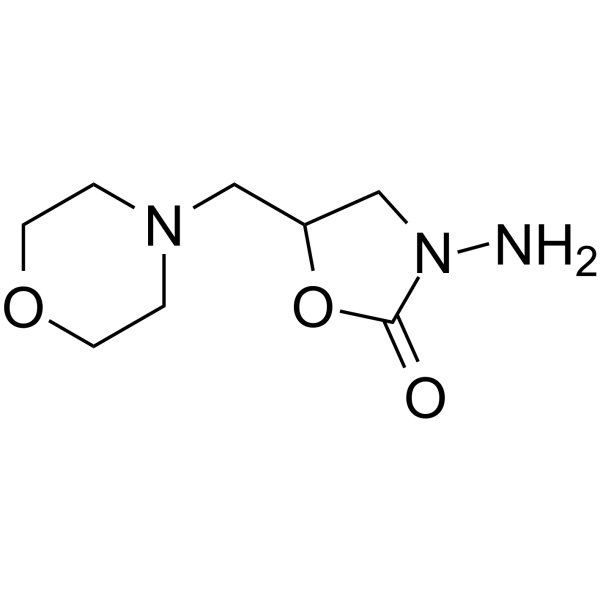
AMOZ is a carcinogenic metabolite of Furaltadone (HY-B1148A), which forms stable tissue residues by covalently binding to proteins as a hapten. AMOZ can be coupled with carrier proteins (such as BSA/OVA) to induce immune response and is released after acid hydrolysis. AMOZ residues can be detected by competitive ELISA method, and the detection limit in the monoclonal antibody 2E5.1 test is as low as 0.16 μg/kg (shrimp sample). AMOZ can be used as a typical marker to monitor drug residues in animal-derived foods in the field of food safety[1][2].
loading...
    loading...
1
1 Cited Publications
Cat. No.: HY-157189
CAS No.: 898211-21-7
Purity:  99.72%
Synonyms: GPR132 antagonist 1
Target:  

G2A (GPR132)

Research Areas:  

Metabolic Disease

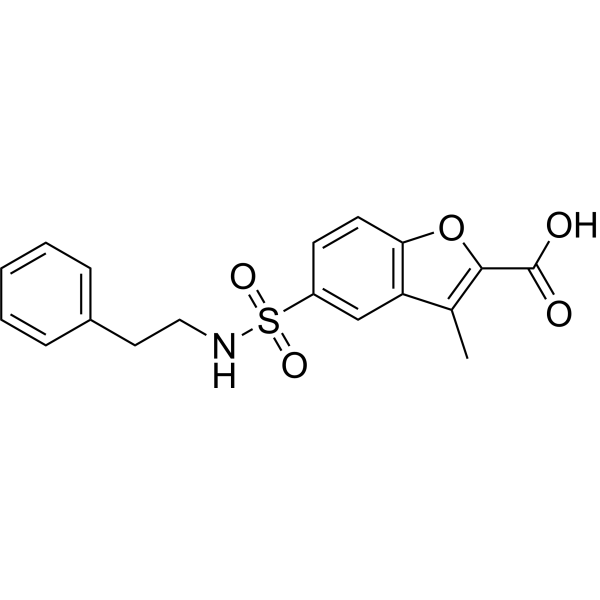
NOX-6-18 (GPR132 antagonist 1) is a GPR132 antagonist with an IC50 of 15.17 nM against the human target. NOX-6-18 inhibits GPR132 activation via interaction with non-conserved residues, blocks activities induced by endogenous agonists and 9 (S)-HODE, and exhibits selectivity for other fatty acid-binding GPCRs. NOX-6-18 regulates macrophage reprogramming, alleviates inflammatory responses, downregulates inflammatory markers and signaling pathways, and reduces the degree of hepatic steatosis and hepatic triglyceride levels. NOX-6-18 regulates metabolic homeostasis, reduces weight gain, enhances glucose metabolism, improves glucose tolerance, decreases fasting blood glucose and insulin levels, and partially reverses reductions in energy expenditure and respiratory quotient. NOX-6-18 can be used in the research of type 2 diabetes .
loading...
    loading...
Cat. No.: HY-W039953
CAS No.: 98924-81-3
Synonyms: N-azidoacetylglucosamine-tetraacylated
Research Areas:  

Infection

Ac4GlcNAz (N-azidoacetylglucosamine-tetraacylated) is an azido-containing fully acetylated N-acetylglucosamine analog, a metabolic glycan marker, and also an inducer of S-glycosylation. Ac4GlcNAz can be taken up by bacteria, processed via endogenous carbohydrate biosynthesis pathways, and integrated into glycans by replacing natural monosaccharides. Under alkali promotion, Ac4GlcNAz undergoes β-elimination to form α,β-unsaturated aldehydes, which then bind to cysteine residues via Michael addition. Ac4GlcNAz can be integrated into glycoproteins. Ac4GlcNAz is applicable to research related to Helicobacter pylori infection .
loading...
    loading...
Cat. No.: HY-118099
CAS No.: 108656-33-3
Purity:  99.45%
Target:  

Drug Metabolite

Research Areas:  

Infection

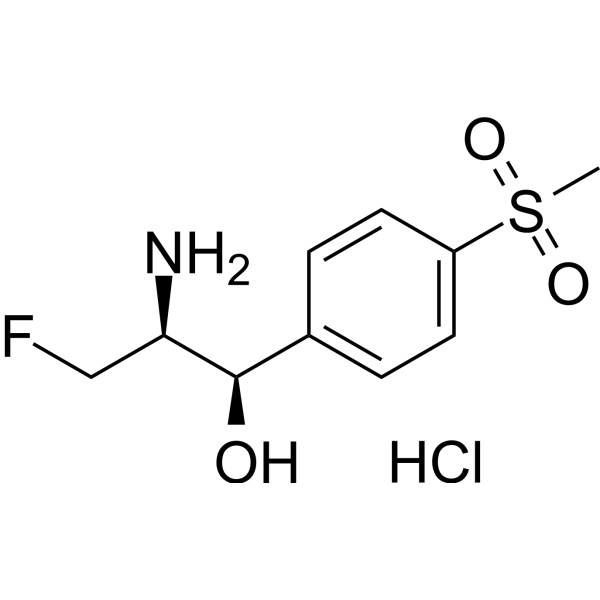
Florfenicol amine hydrochloride is the major metabolite of Florfenicol (HY-B1374) and serves as a marker residue in studies of the in vivo disposition and residue depletion of Florfenicol. Florfenicol amine hydrochloride is eliminated more slowly than the parent compound and persists in plasma and tissues. Florfenicol amine hydrochloride is used in veterinary research for studies on the metabolism, pharmacokinetics, and residue depletion of Florfenicol .
loading...
    loading...
Cat. No.: HY-N10423
CAS No.: 18423-69-3
Synonyms: (-)-Cubebin
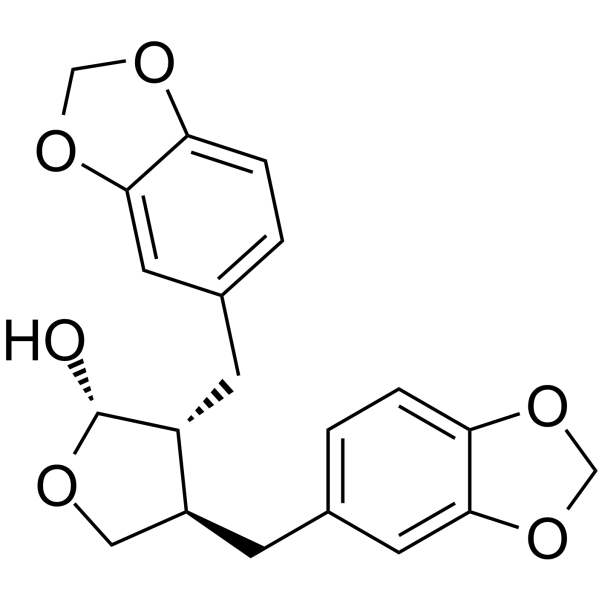
Cubebin ((-)-Cubebin), a dibenzyl butyrolactone lignan, is an orally active AChE inhibitor. Cubebin binds to active sites of NF-κB, TNF-α, and TGF-β1 via hydrogen and hydrophobic interactions, obstructing critical residues to inhibit pro-inflammatory or renal fibrosis-related activity. Cubebin enhances p38 MAPK phosphorylation to increase tyrosinase gene expression, stimulating melanogenesis via elevated tyrosinase activity, expression, and mRNA levels. Cubebin reduces oxidative stress via enhanced endogenous antioxidant enzyme activity and inhibited lipid peroxidation, regulates lipid metabolism, improves glycemic control, and exerts renoprotective effects via reduced renal dysfunction markers and improved renal architecture. Cubebin shows antimicrobial activity. Cubebin exerts larvicidal activity against Angiostrongylus cantonensis larvae, with no cytotoxicity toward monkey or human cell lines or Caenorhabditis elegans. Cubebin can be used for the research of diabetic nephropathy, melanoma, colon adenocarcinoma, neuroangiostrongyliasis, Alzheimer’s disease (AD) and depression .
loading...
    loading...
Cat. No.: HY-P3386A
Synonyms: Cpne7-DP acetate
Target:  

Calcium Channel

Research Areas:  

Metabolic Disease

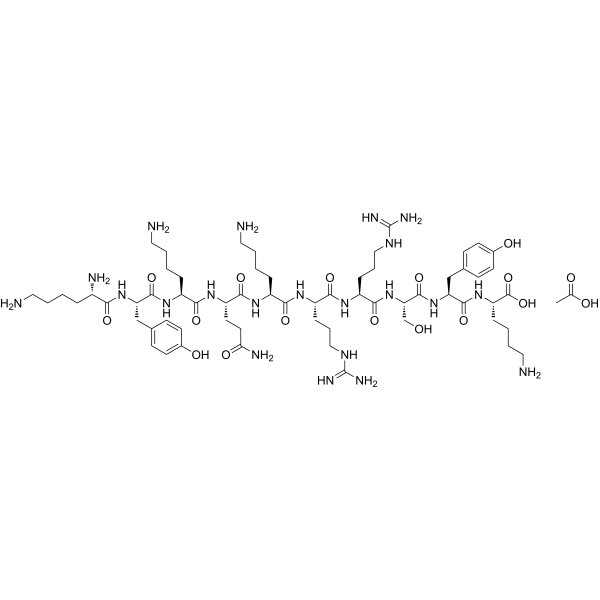
Selcopintide (Cpne7-DP) acetate consists of a synthetic peptide corresponding to the 10 amino acid residue 344-353 fragment of the hCPNE7 protein. Selcopintide acetate highly reproduces the in vitro effects of CPNE7 by upregulating odontoblast marker genes, DSPP, and Nestin. Selcopintide acetate promotes dentin regeneration in dentinal defects of various degrees and that the regenerated hard tissue demonstrates the characteristics of true dentin .
loading...
    loading...
Cat. No.: HY-P3386
CAS No.: 2130912-34-2
Synonyms: Cpne7-DP
Target:  

Calcium Channel

Research Areas:  

Metabolic Disease

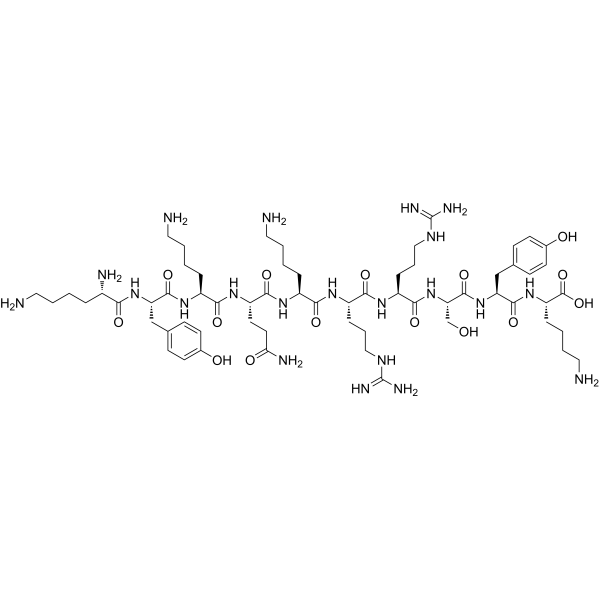
Selcopintide (Cpne7-DP) consists of a synthetic peptide corresponding to the 10 amino acid residue 344-353 fragment of the hCPNE7 protein. Selcopintide highly reproduces the in vitro effects of CPNE7 by upregulating odontoblast marker genes, DSPP, and Nestin. Selcopintide promotes dentin regeneration in dentinal defects of various degrees and that the regenerated hard tissue demonstrates the characteristics of true dentin .
loading...
    loading...
Cat. No.: HY-W653871
CAS No.: 3023974-39-9
Research Areas:  

Infection

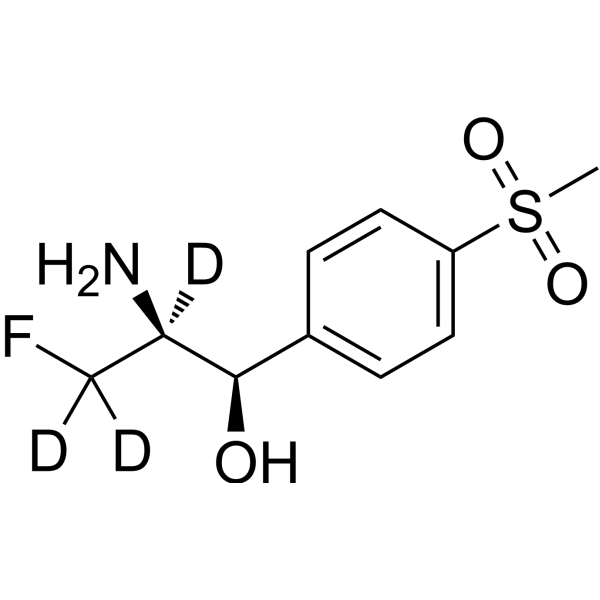
Florfenicol amine-d5 is the deuterated-labeled Florfenicol amine (HY-133695). Florfenicol amine is the major metabolite of Florfenicol (HY-B1374) and serves as a marker residue in studies of the in vivo disposition and residue depletion of Florfenicol. Florfenicol amine is eliminated more slowly than the parent compound and persists in plasma and tissues. Florfenicol amine is used in veterinary research for studies on the metabolism, pharmacokinetics, and residue depletion of Florfenicol .
loading...
    loading...
Cat. No.: HY-133695S
CAS No.: 1217625-88-1
Research Areas:  

Infection

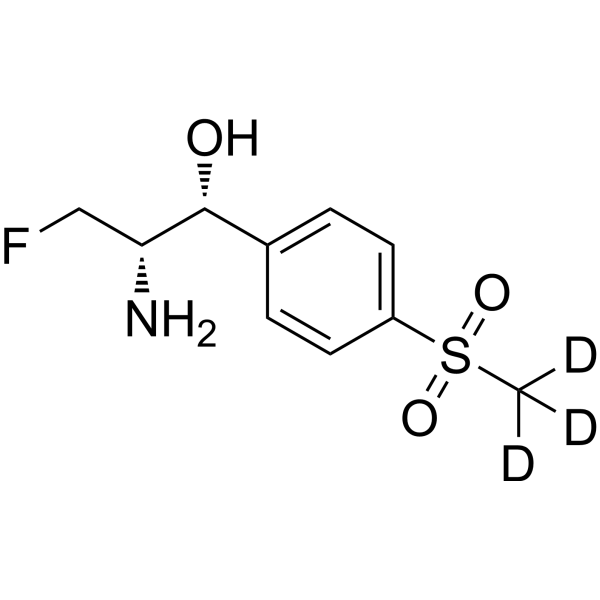
Florfenicol amine-d3-1 is the deuterated-labeled Florfenicol amine (HY-133695). Florfenicol amine is the major metabolite of Florfenicol (HY-B1374) and serves as a marker residue in studies of the in vivo disposition and residue depletion of Florfenicol. Florfenicol amine is eliminated more slowly than the parent compound and persists in plasma and tissues. Florfenicol amine is used in veterinary research for studies on the metabolism, pharmacokinetics, and residue depletion of Florfenicol .
loading...
    loading...
Cat. No.: HY-W011239
CAS No.: 54029-20-8
Synonyms: Oxfendazole sulfone; FBZ-SO2
Research Areas:  

Infection

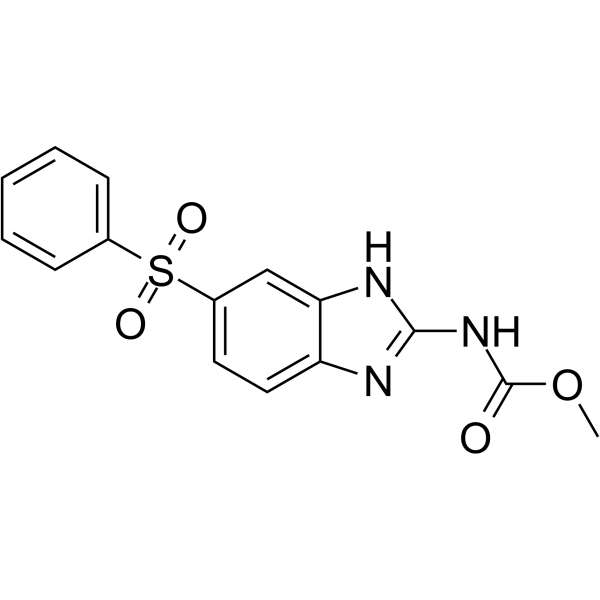
Fenbendazole sulfone (Oxfendazole sulfone) is a metabolite of Fenbendazole (HY-B0413) and benzimidazole Anthelmintic. Fenbendazole sulfone occurs in cow's milk. Fenbendazole sulfone serves as a marker residue component in cow's milk .
loading...
    loading...
Cat. No.: HY-P11421
CAS No.: 1051859-63-2
Research Areas:  

Others

Cys-His Tag is a dual-purpose protein tag combining a cysteine residue and a Histidine tag. Cys-His Tag can be used to improve marker specificity or introduce covalent binding sites .
loading...
    loading...
Cat. No.: HY-E70287
Synonyms: ST6GALNAC5
Target:  

Glycosyltransferase

Research Areas:  

Metabolic Disease

ST6 Sialyltransferase 5 (EC:2.4.3.3, ST6GALNAC5, SIAT7E, ST6 N-acetylgalactosaminide alpha-2,6-sialyltransferase 5) transfers a sialic acid to N-acetylgalactosamine (GalNAc) residues. ST6 Sialyltransferase 5 is a bio-marker in cervical screening samples .
loading...
    loading...
Cat. No.: HY-118099R
CAS No.: 108656-33-3
Research Areas:  

Infection

Florfenicol amine hydrochloride (Standard) is the analytical standard of Florfenicol amine hydrochloride (HY-118099). This product is intended for research and analytical applications. Florfenicol amine hydrochloride is the major metabolite of Florfenicol (HY-B1374) and serves as a marker residue in studies of the in vivo disposition and residue depletion of Florfenicol. Florfenicol amine hydrochloride is eliminated more slowly than the parent compound and persists in plasma and tissues. Florfenicol amine hydrochloride is used in veterinary research for studies on the metabolism, pharmacokinetics, and residue depletion of Florfenicol .
loading...
    loading...
Cat. No.: HY-157189A
Synonyms: GPR132 antagonist 1 (dihydrocholide)
Target:  

G2A (GPR132)

Research Areas:  

Metabolic Disease

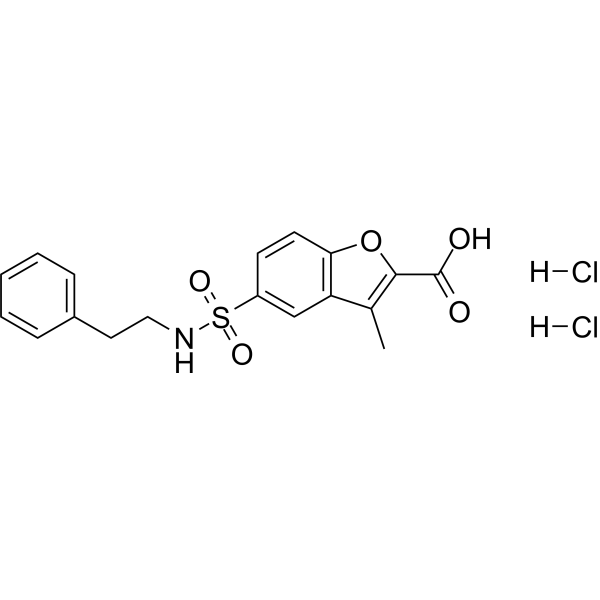
NOX-6-18 (dihydrocholide) (GPR132 antagonist 1 (diHYdrocholide)) is a GPR132 antagonist with an IC50 of 15.17 nM against the human target. NOX-6-18 (dihydrocholide) inhibits GPR132 activation via interaction with non-conserved residues, blocks activities induced by endogenous agonists and 9 (S)-HODE, and exhibits selectivity for other fatty acid-binding GPCRs. NOX-6-18 (dihydrocholide) regulates macrophage reprogramming, alleviates inflammatory responses, downregulates inflammatory markers and signaling pathways, and reduces the degree of hepatic steatosis and hepatic triglyceride levels. NOX-6-18 (dihydrocholide) regulates metabolic homeostasis, reduces weight gain, enhances glucose metabolism, improves glucose tolerance, decreases fasting blood glucose and insulin levels, and partially reverses reductions in energy expenditure and respiratory quotient. NOX-6-18 (dihydrocholide) can be used in the research of type 2 diabetes .
loading...
    loading...
Cat. No.: HY-133695S2
Research Areas:  

Infection

Florfenicol amine-d5 is the deuterated-labeled Florfenicol amine (HY-133695). Florfenicol amine is the major metabolite of Florfenicol (HY-B1374) and serves as a marker residue in studies of the in vivo disposition and residue depletion of Florfenicol. Florfenicol amine is eliminated more slowly than the parent compound and persists in plasma and tissues. Florfenicol amine is used in veterinary research for studies on the metabolism, pharmacokinetics, and residue depletion of Florfenicol .
loading...
    loading...
Cat. No.: HY-187170
CAS No.: 3038211-56-9
BM-51 is a selective inhibitor of CYP4Z1, with a human IC50 value of 91.7 nM. BM-51 binds to amino acid residues of CYP4Z1, thereby inhibiting its enzymatic activity. BM-51 downregulates the protein expression of stem cell markers (ALDH1A1, SOX2, OCT3/4 and KLF4) in cancer cells, inhibits cancer cell migration and invasion, and exhibits low toxicity to normal cells/tissues. BM-51 suppresses tumor initiation capacity and enhances the chemotherapeutic efficacy of Doxorubicin (HY-15142A). BM-51 can be used in breast cancer-related research .
loading...
    loading...
  • 1

