Search Result
Results for "
reversibly
" in MedChemExpress (MCE) Product Catalog:
5
Biochemical Assay Reagents
6
Isotope-Labeled Compounds
| Cat. No. |
Product Name |
Target |
Research Areas |
Chemical Structure |
-
- HY-10108
-
LY294002
Maximum Cited Publications
1120 Publications Verification
|
PI3K
Casein Kinase
DNA-PK
Apoptosis
Autophagy
|
Infection
Cancer
|
|
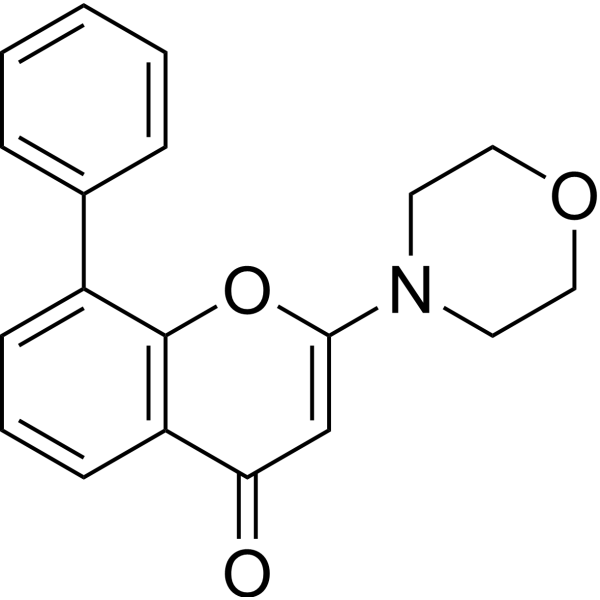
LY294002 is a broad-spectrum inhibitor of PI3K with IC50s of 0.5, 0.57, and 0.97 μM for PI3Kα, PI3Kδ and PI3Kβ, respectively . LY294002 also inhibits CK2 with an IC50 of 98 nM . LY294002 is a competitive DNA-PK inhibitor that binds reversibly to the kinase domain of DNA-PK with an IC50 of 1.4 μM. LY294002 is an apoptosis activator .
|
-
-
- HY-17567A
-
|
Sodium heparin; Sodium heparinate
|
Exosomes
Thrombin
Factor Xa
Autophagy
|
Cardiovascular Disease
Cancer
|
|
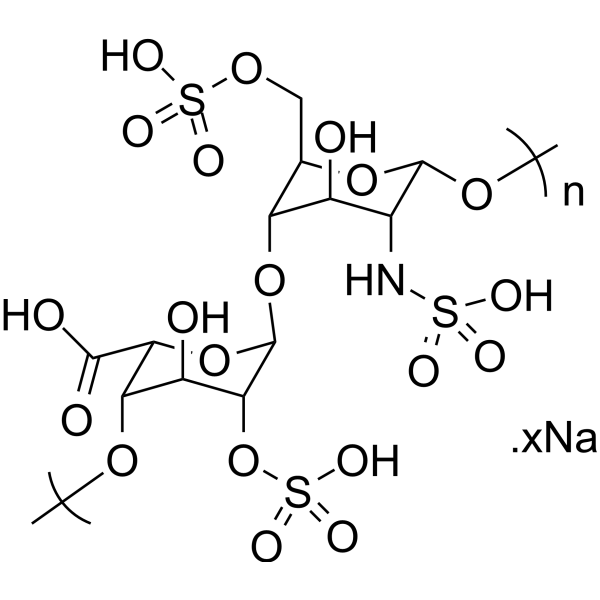
Heparin sodium salt (Sodium heparin) is an anticoagulant which binds reversibly to antithrombin III (ATIII) and greatly accelerates the rate at which ATIII inactivates coagulation enzymes thrombin factor IIa and factor Xa. Heparin sodium salt significantly inhibits exosome-cell interactions.
|
-
-
- HY-100208
-
|
|
TRP Channel
|
Cancer
|
|
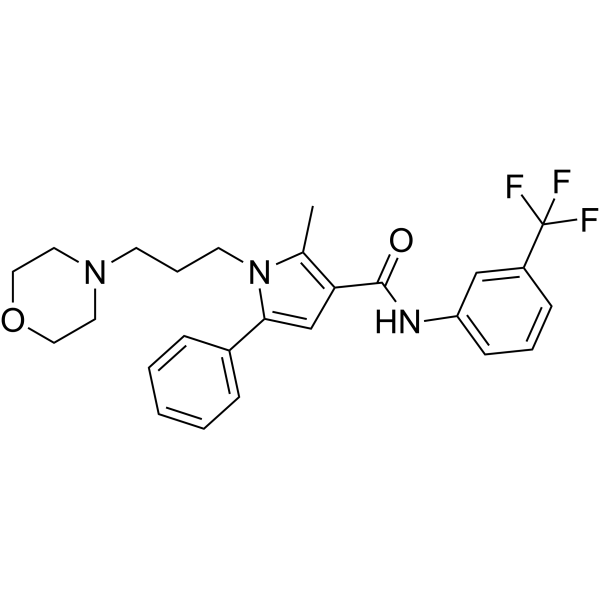
HC-067047 is a potent and selective TRPV4 antagonist and reversibly inhibits currents through the human, rat, and mouse TRPV4 orthologs with IC50 values of 48 nM, 133 nM, and 17 nM, respectively .
|
-
-
- HY-16671
-
|
|
CFTR
Autophagy
|
Others
|
|
CFTR(inh)-172 is a potent and selective blocker of the CFTR chloride channel; reversibly inhibits CFTR short-circuit current in less than 2 minutes with a Ki of 300 nM.
|
-
-
- HY-10355
-
|
AKTi-1/2
|
Akt
Apoptosis
|
Metabolic Disease
Cancer
|
|
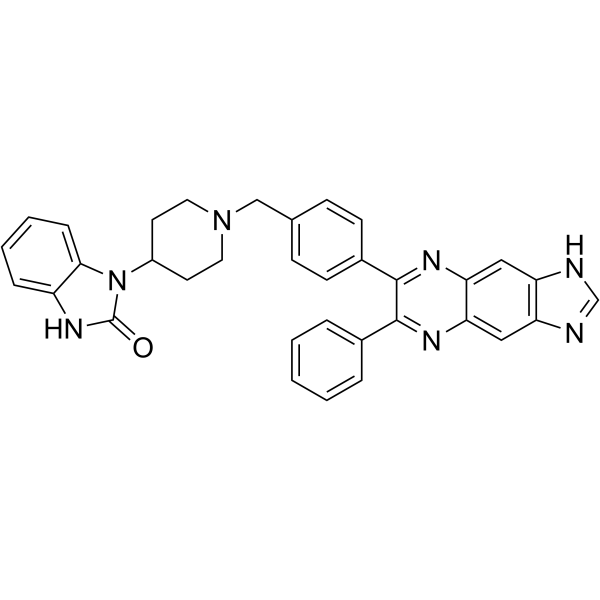
AKT inhibitor VIII (AKTi-1/2) is a cell-permeable quinoxaline compound that has been shown to potently, selectively, allosterically, and reversibly inhibit Akt1, Akt2, and Akt3 activity with IC50s of 58 nM, 210 nM, and 2119 nM, respectively.
|
-
-
- HY-P1929
-
Bivalirudin
Maximum Cited Publications
9 Publications Verification
|
Thrombin
Interleukin Related
RSV
|
Infection
Cardiovascular Disease
Inflammation/Immunology
|
|
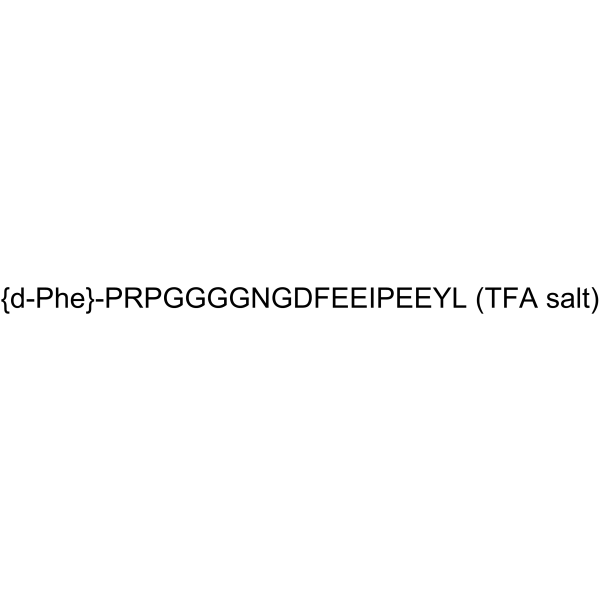
Bivalirudin, a hirudin analog and anticoagulant, is a direct thrombin inhibitor. Bivalirudin inhibits thrombin-mediated fibrinogen cleavage, coagulation factor activation, and platelet activation by reversibly binding to thrombin. In addition, Bivalirudin also has certain effects of anti-virus, anti-inflammation, and vascular endothelial barrier function protection. Bivalirudin can be used for the research of thrombotic diseases and others .
|
-
-
- HY-W015495
-
|
|
Endogenous Metabolite
Dihydroorotate Dehydrogenase
|
Others
|
|
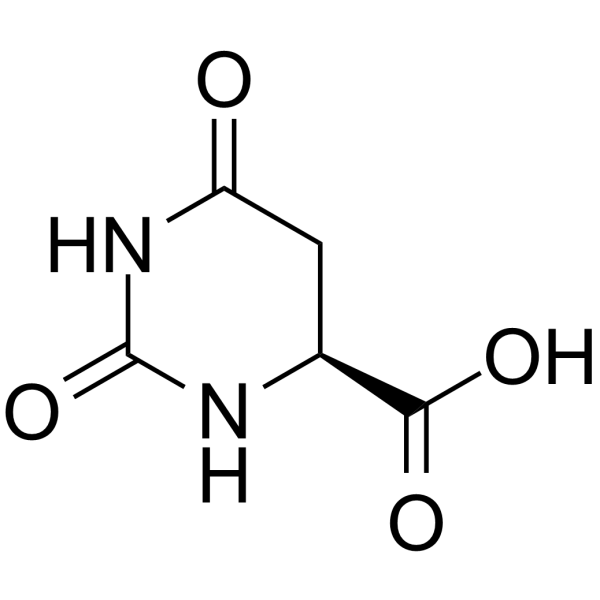
L-Dihydroorotic acid is an important intermediate in the metabolism of orotic acid and a substrate of dihydroorotate dehydrogenase (DHODH). L-Dihydroorotic acid can reversibly hydrolyze to yield the acyclic L-ureidosuccinic acid by dihydrowhey enzyme .
|
-
-
- HY-137431
-
|
BAY-2433334
|
Factor Xa
|
Cardiovascular Disease
|
|
Asundexian (BAY 2433334) is an orally active coagulation factor Xia (FXIa) inhibitor. Asundexian binds directly, potently, and reversibly to the active site of FXIa and thereby inhibits its activity. Asundexian inhibits human FXIa in buffer with an IC50 of 1 nM .
|
-
-
- HY-17567C
-
|
Sodium heparin (MW 15kDa); Sodium heparinate (MW 15kDa)
|
Thrombin
Factor Xa
Autophagy
|
Cardiovascular Disease
|
|
Heparin sodium salt (MW 15kDa) (Sodium heparin (MW 15kDa)) is a polymer of Heparin with the molecular weight of 15kDa. Heparin sodium salt is an anticoagulant which binds reversibly to antithrombin III (ATIII) and greatly accelerates the rate at which ATIII inactivates coagulation enzymes thrombin factor IIa and factor Xa .
|
-
-
- HY-B0398
-
|
|
Bacterial
Antibiotic
Topoisomerase
|
Infection
|
|
Nalidixic acid, a quinolone antibiotic, is effective against both gram-positive and gram-negative bacteria. Nalidixic acid acts in a bacteriostatic manner in lower concentrations and is bactericidal in higher concentrations. Nalidixic acid inhibits a subunit of DNA gyrase and topoisomerase IV and reversibly blocks DNA replication in susceptible bacteria .
|
-
-
- HY-17567B
-
-
-
- HY-14829
-
|
D-Isofagomine; Isofagomine
|
Glycosidase
|
Neurological Disease
|
|
Afegostat is a pharmacological chaperone, which specifically and reversibly binds acid-β-glucosidase (GCase) in the endoplasmic reticulum (ER) with high affinity .
|
-
-
- HY-W011094
-
|
|
Aldehyde Dehydrogenase (ALDH)
|
Endocrinology
|
|
Win 18446 is an orally active testes-specific enzyme ALDH1a2 inhibitor, with an IC50 of 0.3 μM. Win 18446 reversibly inhibits spermatogenesis in many species and inhibits Retinoic acid (HY-14649) biosynthesis from Retinol (HY-B1342) within the testes .
|
-
-
- HY-103489
-
|
|
PI4K
Apoptosis
|
Cancer
|
|
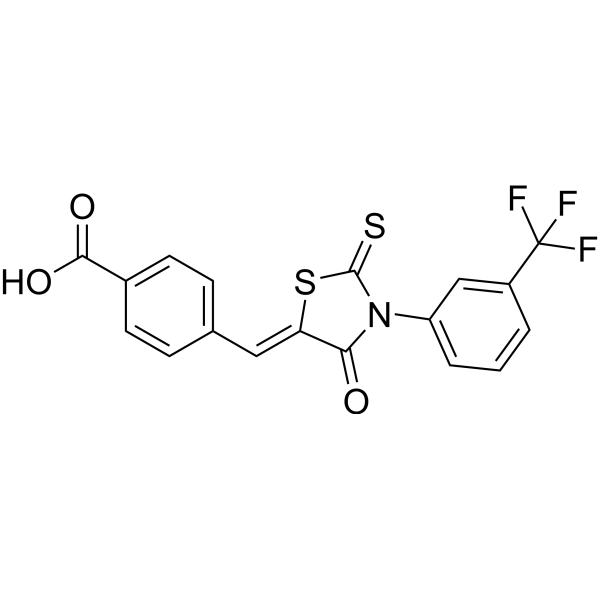
PI-273 is a first reversibly and specific phosphatidylinositol 4-kinase (PI4KIIα) inhibitor with an IC50 of 0.47 μM. PI-273 can inhibit breast cancer cell proliferation, block the cell cycle and induce cell apoptosis .
|
-
-
- HY-W011391
-
|
|
Apoptosis
ASCT
|
Cancer
|
|
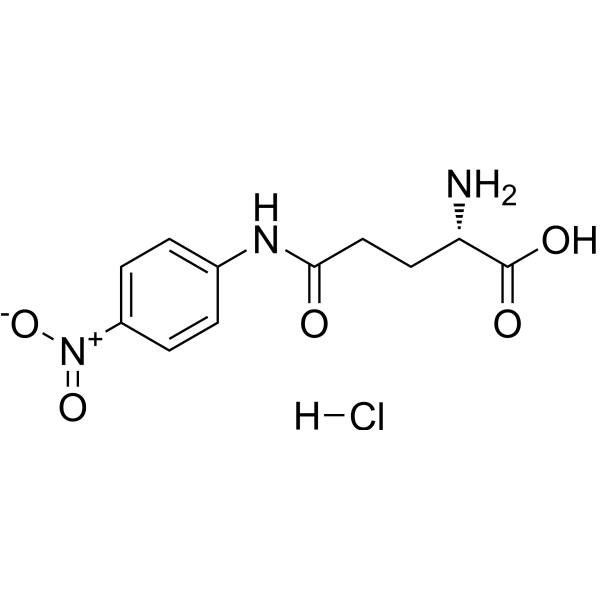
GPNA hydrochloride is a well known substrate of the enzyme γ-glutamyltransferase (GGT). GPNA hydrochloride is a specific glutamine (Gln) transporter ASCT2 inhibitor. GPNA hydrochloride also inhibit Na +-dependent carriers, such as SNAT family (SNAT1/2/4/5), and the Na +-independent leucine transporters LAT1/2. GPNA reversibly induces apoptosis in A549 cells .
|
-
-
- HY-145752
-
|
|
PROTACs
SGK
Autophagy
|
Cancer
|
|
HaloPROTAC-E is a potent Halo PROTAC degrader that reversibly induces degradation of two Halo-tagged endoplasmic reticulum-localized proteins, SGK3 and VPS34, with a DC50 of 3-10 nM. HaloPROTAC-E significantly and selectively induces degradation of endogenous VPS34 complexes (VPS34, VPS15, Beclin1, and ATG14) labeled with Halo and inhibits autophagy.
|
-
-
- HY-P4070
-
|
|
Insulin Receptor
|
Metabolic Disease
|
|
Insulin icodec is an Insulin (HY-P0035) analog that strongly but reversibly binds to albumin. Insulin icodec has long plasma half-life. Insulin icodec modulates insulin receptor activity, controls blood glucose levels, reduces HbA1c levels, and binds reversibly to human serum albumin. Insulin icodec can be used for the research of type 2 diabetes mellitus .
|
-
-
- HY-135416
-
|
|
Endogenous Metabolite
|
Infection
|
|
Streptolysin O, a group A streptococcal toxin, is a well-characterized oxygen-labile prototype of a cholesterol-binding bacterial exotoxin. Streptolysin O causes both lysis of cells and cardiotoxicity. Streptolysin O is widely used for the controlled permeabilization of cell membranes. Streptolysin O exists in two forms, a reduced active state and an oxidized reversibly inactive state .
|
-
-
- HY-15529
-
S0859
4 Publications Verification
|
Na+/HCO3- Cotransporter
|
Cardiovascular Disease
|
|
S0859 is a selective, high-affinity generic Na +/HCO3 - transporter (NBC) inhibitor. S0859 reversibly inhibits NBC-mediated intracellular pH (pHi) recovery (Ki=1.7 μM, full inhibition at approximately 30 μM).
|
-
-
- HY-B0262
-
|
|
Sodium Channel
|
Neurological Disease
|
|
Methocarbamol is an orally active central muscle relaxant and blocks muscular Nav1.4 channel. Methocarbamol reversibly affects voltage dependence of inactivation of Nav1.4 channel. Methocarbamol has the potential for muscle spasms and pain syndromes research .
|
-
-
- HY-121802
-
|
|
Hedgehog
|
Cancer
|
|
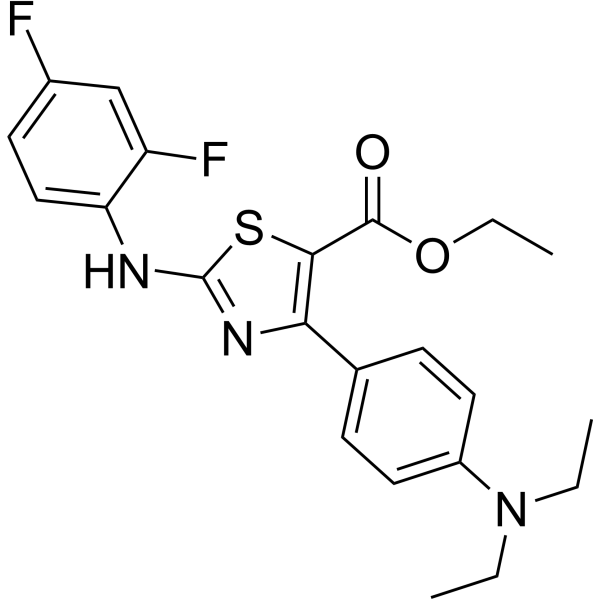
Dynarrestin is a aminothiazole inhibitor of cytoplasmic dyneins 1 and 2. Dynarrestin rapidly and reversibly inhibits dynein 1-driven microtubule gliding in vitro plus a range of dynein 1- and 2-dependent processes in cells without affecting ATP hydrolysis and interfering with ciliogenesis. Dynarrestin suppresses hedgehog (Hh)-dependent proliferation of neuronal precursors and tumor cells .
|
-
-
- HY-B0398A
-
|
|
Bacterial
Antibiotic
Topoisomerase
|
Infection
|
|
Nalidixic acid sodium salt, a quinolone antibiotic, is effective against both gram-positive and gram-negative bacteria. Nalidixic acid acts in a bacteriostatic manner in lower concentrations and is bactericidal in higher concentrations. Nalidixic acid inhibits a subunit of DNA gyrase and topoisomerase IV and reversibly blocks DNA replication in susceptible bacteria .
|
-
-
- HY-Y0504
-
-
-
- HY-D1122
-
|
|
Fluorescent Dye
|
Others
|
|
Janus green B is a supravital stain. Janus green B staining reaction is oxygen dependent, and is reversibly inhibited by cyanide. Janus green B has been used for staining peripheral nerves in live insects, lymphatic vessels of rabbits and mitochondria .
|
-
-
- HY-D2355
-
|
|
Biochemical Assay Reagents
|
Others
|
|
Tris-NTA Biotin is a biotin-labeled version of tris-NTA. Tris-NTA Biotin, as a bridge connecting His-tagged proteins with streptavidin, can reversibly label proteins and cell surfaces. Tris-NTA Biotin can be used in experiments such as protein immobilization, kinetic determination, live cell labeling, and Western blot detection .
|
-
-
- HY-15664
-
|
|
Thrombin
Interleukin Related
RSV
|
Infection
Cardiovascular Disease
Inflammation/Immunology
|
|
Bivalirudin TFA, a hirudin analog and anticoagulant, is a direct thrombin inhibitor. Bivalirudin TFA inhibits thrombin-mediated fibrinogen cleavage, coagulation factor activation, and platelet activation by reversibly binding to thrombin. In addition, Bivalirudin TFA also has certain effects of anti-virus, anti-inflammation, and vascular endothelial barrier function protection. Bivalirudin TFA can be used for the research of thrombotic diseases and others .
|
-
-
- HY-N7068
-
|
BRL-4910A calcium hydrate; Pseudomonic acid calcium hydrate
|
Bacterial
Antibiotic
|
Infection
Inflammation/Immunology
|
|
Mupirocin (BRL-4910A, Pseudomonic acid) calcium hydrate is an orally active antibiotic isolated from Pseudomonas fluorescens. Mupirocin calcium hydrate apparently exerts its antimicrobial activity by reversibly inhibiting isoleucyl-transfer RNA, thereby inhibiting bacterial protein and RNA synthesis .
|
-
-
- HY-14829E
-
|
D-Isofagomine D-Tartrate; Isofagomine D-Tartrate
|
Glycosidase
|
Neurological Disease
|
|
Afegostat D-Tartrate is a pharmacological chaperone, which specifically and reversibly binds acid-β-glucosidase (GCase) in the endoplasmic reticulum (ER) with high affinity .
|
-
-
- HY-B1288
-
|
Benoxinate hydrochloride
|
Sodium Channel
|
Neurological Disease
|
|
Oxybuprocaine hydrochloride (Benoxinate hydrochloride) reversibly blocks sodium channels and prevents propagation of painful nerve impulses in the cornea, conjunctiva, and sclera. Oxybuprocaine hydrochloride is used especially in ophthalmology and otolaryngology .
|
-
-
- HY-D1604
-
|
|
Fluorescent Dye
|
Others
|
|
BODIPY FL Ethylamine is a fluorescent dye that reversibly reacts with aldehyde/ketone to yield a Schiff base. BODIPY FL Ethylamine can be reduced to form a stable amine derviative using sodium borohydride or sodium cyanoborohydride .
|
-
-
- HY-121685A
-
|
|
Potassium Channel
|
Neurological Disease
|
|
Tipepidine hydrochloride reversibly inhibits dopamine (DA) D2 receptor-mediated GIRK currents (IDA(GIRK)) with an IC50 of 7.0 μM. Tipepidine hydrochloride subsequently activates VTA dopamine neuron . Tipepidine hydrochloride, a non-narcotic antitussive, exerts an antidepressant-like effect .
|
-
-
- HY-124717
-
|
|
Endogenous Metabolite
|
Others
|
|
YC-001 is an inverse agonist and antagonist of rod opsin. YC-001 reversibly binds rod opsin and stabilizes the rod opsin structure. YC-001 protects mice from bright light-induced retinal degeneration. YC-001 has the potential for the research of retinal degeneration .
|
-
-
- HY-105118A
-
|
CGS-9343B; KW 5617
|
Calmodulin
|
Neurological Disease
Metabolic Disease
Inflammation/Immunology
|
|
Zaldaride maleate (CGS-9343B) is a potent, orally active and selective inhibitor of calmodulin. Zaldaride maleate inhibits CaM (calmodulin)-stimulated cAMP phosphodiesterase activity, with an IC50 of 3.3 nM . Zaldaride maleate prevents estrogen-induced transcription activation by ER, reversibly blocks voltage-activated Na +, Ca 2+ and K + currents in PC12 cells and inhibits nAChR .
|
-
-
- HY-113995
-
|
(-)-AH5183
|
mAChR
|
Neurological Disease
|
|
(-)-Vesamicol (AH5183) is a vesicular acetylcholine transporter inhibitor. (-)-Vesamicol reversibly and non-competitively inhibits the transport of acetylcholine into circulating synaptic vesicles and blocks the activity of vesicular acetylcholine transporters in medial amygdala neurons. (-)-Vesamicol is applicable to research related to central precocious puberty .
|
-
-
- HY-U00279
-
|
|
DNA/RNA Synthesis
|
Cancer
|
|
Nitracrine inhibits RNA synthesis and covalently, reversibly binds to DNA but also forms covalent adducts with DNA in vivo. Nitracrine, a 1-nitroacridine derivative, is a potent hypoxia-selective agent in vitro and antitumor agent. Nitracrine has cytotoxicity towards most cells .
|
-
-
- HY-15643A
-
|
|
TNF Receptor
Potassium Channel
|
Cancer
|
|
LY 303511 hydrochloride is a structural analogue of LY294002. LY303511 does not inhibit PI3K. LY303511 enhances TRAIL sensitivity of SHEP-1 neuroblastoma cells. LY303511 reversibly blocks K + currents (IC50=64.6±9.1 μM) in MIN6 insulinoma cells.
|
-
-
- HY-105343
-
BW-180C
1 Publications Verification
[D-Ala2, D-Leu5]-Enkephalin; DADLE
|
Opioid Receptor
|
Neurological Disease
|
|
BW-180C ([D-Ala2, D-Leu5]-Enkephalin; DADLE) is an δ opioid receptor (DOR) agonist, which belongs to the enkephalin family. Neuroprotective agent. BW-180C reversibly inhibits cellular transcription in neurons without causing cell injury .
|
-
-
- HY-129677
-
|
|
TRP Channel
|
Others
|
|
ORC-13661 hydrochloride is a hair cell protector. ORC-13661 hydrochloride protects sensory hair cells from aminoglycoside and Cisplatin (HY-17394) ototoxicity. ORC-13661 hydrochloride is a reversibly mechanoelectrical transducer (MET) channel permeant blocker .
|
-
-
- HY-107966A
-
|
Nadroparin calcium (MW 3600-5000)
|
Thrombin
Factor Xa
Autophagy
Bacterial
|
Cardiovascular Disease
Cancer
|
|
Heparin (Nadroparin) calcium (MW 3600-5000) is an anticoagulant which binds reversibly to antithrombin III (ATIII) to form a heparin-antithrombin III complex. The complex binds to and irreversibly inactivates thrombin and other activated clotting factors IX, X, XI, and XII and prevents the transformation of fibrinogen to fibrin .
|
-
-
- HY-B1288A
-
|
Benoxinate; Novesinol; Oxybucaine
|
Sodium Channel
|
Cardiovascular Disease
Neurological Disease
|
|
Oxybuprocaine is a short-acting ester anesthetic. Oxybuprocaine binds to sodium channels and reversibly stabilizes neuronal membranes. Oxybuprocaine has cutaneous analgesic properties. Oxybuprocaine is less potent than Bupivacaine (HY-B0405) at producing central nervous system and cardiovascular toxicity. Oxybuprocaine can be used in ophthalmology and otolaryngology .
|
-
-
- HY-W015050
-
|
1-Aminoanthracene
|
GABA Receptor
Chloride Channel
Fluorescent Dye
|
Neurological Disease
|
|
1-Anthramine (1-aminoanthracene) is a fluorescent general anesthetic. potentiates GABAergic transmission with Kd = 0.1 mM, for binding to the general anesthetic site in horse spleen apoferritin (HSAF). 1-Anthramine fluorescence is enhanced when bound to HSAF. 1-Anthramine potentiates chloride currents elicited by GABA. 1-Anthramine can reversibly inhibit the movement of Xenopus laevis, with an EC50 value of 16 μM .
|
-
-
- HY-W015495R
-
|
|
Reference Standards
Endogenous Metabolite
Dihydroorotate Dehydrogenase
|
Others
|
|
L-Dihydroorotic acid (Standard) is an analytical reference standard for L-Dihydroorotic acid. This product is used for research and analytical applications. L-Dihydroorotic acid is an important intermediate in the metabolism of orotic acid and a substrate of dihydroorotate dehydrogenase (DHODH). L-Dihydroorotic acid can reversibly hydrolyze to yield the acyclic L-ureidosuccinic acid by dihydrowhey enzyme .
|
-
-
- HY-153890
-
|
|
Biochemical Assay Reagents
|
Others
|
|
NVOC cage-TMP-Halo is a cell-permeable and photoactivatable protein dimerization inducer. NVOC cage-TMP-Halo can rapidly and reversibly control protein localization in living cells. NVOC cage-TMP-Halo can be used for dynamic cellular processes research .
|
-
-
- HY-108425
-
|
|
Sodium Channel
|
Neurological Disease
|
|
AMG8379 is a potent, orally active and selective sulfonamide antagonist of the voltage-gated sodium channel NaV1.7, with IC50s of 8.5 and 18.6 nM for hNaV1.7 and mNaV1.7, respectively. AMG8379 potently and reversibly blocks endogenous Tetrodotoxin (TTX)-sensitive sodium channels in dorsal root ganglia (DRG) neurons with an IC50 of 3.1 nM .
|
-
-
- HY-109987
-
|
|
Parasite
|
Infection
|
|
ISPA-28 is a specific plasmodial surface anion channel (PSAC) antagonist. ISPA-28 binds directly and reversibly to CLAG3 .
|
-
-
- HY-W855075A
-
|
|
Biochemical Assay Reagents
|
Others
|
|
Methyl-coenzyme M can reversibly synthesize methane in methanogenic, ANME-1 and ANME-2 archaea under the catalysis of methyl-coenzyme M Reductase .
|
-
-
- HY-102089
-
|
|
Dopamine Receptor
|
Neurological Disease
|
|
Fluoroclebopride binds reversibly to dopamine receptors. 18F labeled fluoroclebopride has been used as a probe for studying D2/D3 receptor availability via PET in various monkey models .
|
-
-
- HY-P3645
-
|
|
Melanocortin Receptor
|
Others
|
|
(Nle4)-α-MSH is a synthetic analogue of α-MSH (HY-P0252), a melanocyte-stimulating hormone. (Nle4)-α-MSH reversibly darkens frog skins and also exhibits prolonged activity after heat-alkali treatment .
|
-
-
- HY-W011094R
-
|
|
Reference Standards
Aldehyde Dehydrogenase (ALDH)
|
Endocrinology
|
|
Win 18446 is an orally active testes-specific enzyme ALDH1a2 inhibitor, with an IC50 of 0.3 μM. Win 18446 reversibly inhibits spermatogenesis in many species and inhibits Retinoic acid (HY-14649) biosynthesis from Retinol (HY-B1342) within the testes .
|
-
-
- HY-10635
-
|
|
TRP Channel
|
Inflammation/Immunology
Cancer
|
|
ABT-102 is a potent and highly selective Vanilloid Receptor (TRPV1) receptor antagonist. ABT-102 potently and reversibly increases heat pain thresholds and reduced painfulness of suprathreshold oral/cutaneous heat. ABT-102 reduces nociceptive responses of animals in models of inflammatory, bone cancer, postoperative, and osteoarthritic pain .
|
-
- HY-15643
-
|
|
TNF Receptor
Potassium Channel
|
Cancer
|
|
LY303511 is a structural analogue of LY294002. LY303511 does not inhibit PI3K. LY303511 enhances TRAIL sensitivity of SHEP-1 neuroblastoma cells. LY303511 reversibly blocks K + currents (IC50=64.6±9.1 μM) in MIN6 insulinoma cells.
|
-
- HY-113045
-
|
|
Endogenous Metabolite
|
Metabolic Disease
|
|
Aquacobalamin is one of the major forms of vitamin B12 isolated from mammalian cells. Aquacobalamin accelerates the oxidation of azo-dye Orange II (HY-N1442) by HSO5 - in aqueous solutions. Aquacobalamin binds hydrogen peroxide reversibly to form a cobalt(III) hydroperoxo adduct with a 0.25 mM dissociation constant .
|
-
- HY-162837
-
|
|
Aurora Kinase
|
Cancer
|
|
AURKA against 1 is an inhibitor of AURKA (IC50 less than 0.5 nM), targeting endogenous lysine (K162) acetylation, and has anti-proliferation activity against tumor cells. AURKA against 1 induces K162 acetylation, and the kinase activity of AURKA is reversibly restored in HCT116 cells transfected with SIRT3 .
|
-
- HY-10108R
-
|
|
Reference Standards
PI3K
Casein Kinase
DNA-PK
Apoptosis
Autophagy
|
Infection
Cancer
|
|
LY294002 (Standard) is the analytical standard of LY294002. This product is intended for research and analytical applications. LY294002 is a broad-spectrum inhibitor of PI3K with IC50s of 0.5, 0.57, and 0.97 μM for PI3Kα, PI3Kδ and PI3Kβ, respectively . LY294002 also inhibits CK2 with an IC50 of 98 nM . LY294002 is a competitive DNA-PK inhibitor that binds reversibly to the kinase domain of DNA-PK with an IC50 of 1.4?μM. LY294002 is an apoptosis activator .
|
-
- HY-W721480
-
|
|
TRP Channel
|
Neurological Disease
|
|
HC-067047 hydrochloride is a potent and selective TRPV4 antagonist and reversibly inhibits currents through the human, rat, and mouse TRPV4 orthologs with IC50 values of 48 nM, 133 nM, and 17 nM, respectively .
|
-
- HY-105173
-
|
EP 24332
|
GnRH Receptor
Histamine Receptor
|
Endocrinology
Cancer
|
|
Teverelix (EP 24332) is a GnRH antagonist. Teverelix binds competitively and reversibly to GnRH receptors, thereby suppressing the release of LH and FSH. Teverelix can be used in the research of prostatic hyperplasia, endometriosis, and prostate cancer .
|
-
- HY-121685
-
|
|
Potassium Channel
|
Neurological Disease
|
|
Tipepidine reversibly inhibits dopamine (DA) D2 receptor-mediated GIRK currents (IDA(GIRK)) with an IC50 of 7.0 μM. Tipepidine subsequently activates VTA dopamine neuron . Tipepidine, a non-narcotic antitussive, exerts an antidepressant-like effect .
|
-
- HY-P1376
-
|
|
mAChR
Adrenergic Receptor
|
Endocrinology
|
|
G-Protein antagonist peptide is the substance P-related peptide that inhibits binding of G proteins to their receptors. G-Protein antagonist peptide competitively and reversibly inhibits M2 muscarinic receptor activation of Gi or Go and inhibits Gs activation by β-adrenoceptors.
|
-
- HY-107966
-
|
Nadroparin calcium (MW 15000-19000)
|
Thrombin
Factor Xa
Autophagy
Bacterial
|
Cardiovascular Disease
Cancer
|
|
Heparin calcium (MW 15000-19000) is an anticoagulant which binds reversibly to antithrombin III (ATIII) to form a heparin-antithrombin III complex. The complex binds to and irreversibly inactivates thrombin and other activated clotting factors IX, X, XI, and XII and prevents the transformation of fibrinogen to fibrin .
|
-
- HY-B0398S
-
|
|
Isotope-Labeled Compounds
Bacterial
Antibiotic
Topoisomerase
|
Infection
|
|
Nalidixic Acid-d5 is the deuterium labeled Nalidixic acid. Nalidixic acid, a quinolone antibiotic, is effective against both gram-positive and gram-negative bacteria. Nalidixic acid acts in a bacteriostatic manner in lower concentrations and is bactericidal in higher concentrations. Nalidixic acid inhibits a subunit of DNA gyrase and topoisomerase IV and reversibly blocks DNA replication in susceptible bacteria .
|
-
- HY-B0398R
-
|
|
Reference Standards
Bacterial
Antibiotic
Topoisomerase
|
Infection
|
|
Nalidixic acid (Standard) is the analytical standard of Nalidixic acid. This product is intended for research and analytical applications. Nalidixic acid, a quinolone antibiotic, is effective against both gram-positive and gram-negative bacteria. Nalidixic acid acts in a bacteriostatic manner in lower concentrations and is bactericidal in higher concentrations. Nalidixic acid inhibits a subunit of DNA gyrase and topoisomerase IV and reversibly blocks DNA replication in susceptible bacteria .
|
-
- HY-B0262R
-
|
|
Reference Standards
Sodium Channel
|
Neurological Disease
|
|
Methocarbamol (Standard) is the analytical standard of Methocarbamol. This product is intended for research and analytical applications. Methocarbamol is an orally active central muscle relaxant and blocks muscular Nav1.4 channel. Methocarbamol reversibly affects voltage dependence of inactivation of Nav1.4 channel. Methocarbamol has the potential for muscle spasms and pain syndromes research .
|
-
- HY-124742
-
|
|
Na+/K+ ATPase
|
Others
|
|
AR-HO47108 is an orally active reversible Na+/K+ ATPase inhibitor. AR-HO47108 reversibly blocks the final step of gastric acid secretion by competitively binding to the potassium ion binding site of the Na+/K+ ATPase in the gastric wall cells. AR-HO47108 can be used for research on diseases related to excessive gastric acid secretion, such as peptic ulcers .
|
-
- HY-149929
-
|
|
Beta-lactamase
Bacterial
|
Infection
|
|
EBL-3183, an indole-2-carboxylate, is a potent metallo-β-lactamase (MBL) inhibitor. EBL-3183 is reversibly binding, non-covalent, competitive NDM-1 inhibitor with a pIC50 of 7.7 .
|
-
- HY-B0958A
-
|
BRL-4910A calcium; Pseudomonic acid calcium
|
Antibiotic
Bacterial
|
Infection
|
|
Mupirocin (BRL-4910A, Pseudomonic acid) calcium is an orally active antibiotic isolated from Pseudomonas fluorescens. Mupirocin calcium apparently exerts its antimicrobial activity by reversibly inhibiting isoleucyl-transfer RNA, thereby inhibiting bacterial protein and RNA synthesis .
|
-
- HY-N7068R
-
|
BRL-4910A calcium hydrate (Standard); Pseudomonic acid calcium hydrate (Standard)
|
Reference Standards
Bacterial
Antibiotic
|
Infection
Inflammation/Immunology
|
|
Mupirocin (calcium hydrate) (Standard) is the analytical standard of Mupirocin (calcium hydrate). This product is intended for research and analytical applications. Mupirocin (BRL-4910A, Pseudomonic acid) calcium hydrate is an orally active antibiotic isolated from Pseudomonas fluorescens. Mupirocin calcium hydrate apparently exerts its antimicrobial activity by reversibly inhibiting isoleucyl-transfer RNA, thereby inhibiting bacterial protein and RNA synthesis .
|
-
- HY-N14569
-
|
|
Arp2/3 Complex
|
Cancer
|
|
Cytochalasin L has many biological activities, such as inhibiting cytoKinesis reversibly, inhibiting megasophil endocytosis and exocytosis .
|
-
- HY-W017785
-
|
Diisopropylidene acetone
|
Glutathione S-transferase
|
Metabolic Disease
Cancer
|
|
Phorone (Diisopropylidene acetone) is a glutathione (GSH) depletor. Phorone specifically and reversibly depletes free GSH through enzymatic binding (Glutathione S-transferase) (Km = 0.9 mM). Phorone reversibly reduces the binding and nuclear uptake of glucocorticoid receptors in rat liver, and this effect is related to the temporal changes in GSH levels. Phorone can be used for studying liver toxicity.
|
-
- HY-N14567
-
|
|
Arp2/3 Complex
|
Cancer
|
|
Cytochalasin F has many biological activities, such as inhibiting cytoKinesis reversibly, inhibiting megasophil endocytosis and exocytosis .
|
-
- HY-N14568
-
|
|
Arp2/3 Complex
|
Cancer
|
|
Cytochalasin G has many biological activities, such as inhibiting cytoKinesis reversibly, inhibiting megasophil endocytosis and exocytosis .
|
-
- HY-N14696
-
|
|
Arp2/3 Complex
|
Cancer
|
|
Cytochalasin M has many biological activities, such as inhibiting cytoKinesis reversibly, inhibiting megasophil endocytosis and exocytosis .
|
-
- HY-14829B
-
|
AT 2101; D-Isofagomine tartrate; Isofagomine tartrate
|
Glycosidase
|
Neurological Disease
|
|
Afegostat tartrate is a pharmacological chaperone, which specifically and reversibly binds acid-β-glucosidase (GCase) in the endoplasmic reticulum (ER) with high affinity .
|
-
- HY-14829H
-
|
|
Glycosidase
|
Neurological Disease
|
|
Afegostat TFA is a pharmacological chaperone, which specifically and reversibly binds acid-β-glucosidase (GCase) in the endoplasmic reticulum (ER) with high affinity .
|
-
- HY-124210
-
|
|
Antibiotic
Parasite
|
Infection
Cancer
|
|
Formycin B is an antibiotic, which exhibits antiparasitic activity against Leishmania. Formycin B exhibits toxicity to leukocytes, reversibly decreases neutrophils. Formycin B can be used in research about myeloid leukemia .
|
-
- HY-14919
-
|
MN-029 free base
|
Microtubule/Tubulin
|
Cancer
|
|
Denibulin, a novel vascular-disrupting agent, inhibits microtubule assembly reversibly, disrupting tumor vascular endothelial cell cytoskeletons. Denibulin demonstrated tolerability and potential anti-vascular effects, warranting further investigation in cancer therapy .
|
-
- HY-177441
-
|
|
Parasite
HDAC
|
Infection
|
|
Apicidin C (Compound 5a) is a cyclic tetrapeptide. Apicidin C has an antiprotozoal and antimalarial activity against Eimeria tenella (IC50: 6 nM) by reversibly inhibiting HDAC acyivity. Apicidin C can be used for malaria infections research .
|
-
- HY-B1288R
-
|
Benoxinate hydrochloride (Standard)
|
Reference Standards
Sodium Channel
|
Neurological Disease
|
|
Oxybuprocaine (hydrochloride) (Standard) is the analytical standard of Oxybuprocaine (hydrochloride). This product is intended for research and analytical applications. Oxybuprocaine hydrochloride (Benoxinate hydrochloride) reversibly blocks sodium channels and prevents propagation of painful nerve impulses in the cornea, conjunctiva, and sclera. Oxybuprocaine hydrochloride is used especially in ophthalmology and otolaryngology .
|
-
- HY-P5859
-
|
α-PMTX
|
Biochemical Assay Reagents
|
Neurological Disease
|
|
α-Pompilidotoxin (α-PMTX) is a neurotoxin that can be obtained from the venom of Anoplius safnariensis. α-Pompilidotoxin reversibly and dose-dependently enhances excitatory postsynaptic currents (EPSCs). α-Pompilidotoxin is a useful tool in the field of neuroscience research .
|
-
- HY-127140
-
|
|
Others
|
Infection
|
|
Cardanol triene is a phenol found in cashew nut shell liquid that reversibly inhibits tyrosinase with an IC50 value of 40.5 μM in vitro. A mixture of cardanol mono-, di-, and triene is used to synthesize cardanol-metal complexes that inhibit uropathogenic E. coli biofilm formation.
|
-
- HY-107605
-
|
|
iGluR
|
Neurological Disease
|
|
UBP296 is a potent and selective antagonist of GLUK5-containing kainate receptor in the spinal cord. UBP296 reversibly blocks ATPA-induced depressions of synaptic transmission, and affects AMPA receptor-mediated synaptic transmission directly in rat hippocampal slices .
|
-
- HY-126749
-
|
|
Histamine Receptor
|
Others
|
|
VUF14738 (compound 28) is a bidirectional photoswitch antagonist that can rapidly and reversibly photoisomerize at the histamine H3 receptor, with binding affinity increased or decreased upon illumination, and can be used in real-time electrophysiological experiments to study the activity of dynamic light modulation of receptor activation.
|
-
- HY-151189
-
|
|
ROCK
|
Others
|
|
ROCK-IN-4 is a potent ROCK inhibitor maintaining NO releasing ability. ROCK-IN-4 reversibly depolymerizes F-actin, and suppresses mitochondrial respiration in human trabecular meshwork (HTM) cells. ROCK-IN-4 can be used for glaucoma or ocular hypertension research .
|
-
- HY-134564
-
|
|
Fluorescent Dye
|
Others
|
|
Fluorescein octadecyl ester is a lipophilic fluorescent reagent is immobilized in a plasticized PVC membrane. Fluorescein octadecyl ester can reversibly recognize alcohol molecules and can be used to determine the concentration of ethanol in alcoholic drinks. Fluorescein octadecyl ester can be used as acceptor to make optrode membrane for the determination of picric acid .
|
-
- HY-U00279A
-
|
|
DNA/RNA Synthesis
|
Cancer
|
|
Nitracrine dihydrochloride hydrate inhibits RNA synthesis and covalently, reversibly binds to DNA but also forms covalent adducts with DNA in vivo. Nitracrine dihydrochloride hydrate, a 1-nitroacridine derivative, is a potent hypoxia-selective agent in vitro and antitumor agent. Nitracrine dihydrochloride hydrate has cytotoxicity towards most cells .
|
-
- HY-B0262S1
-
|
|
Isotope-Labeled Compounds
Sodium Channel
|
Neurological Disease
|
|
Methocarbamol-d3 is the deuterium labeled Methocarbamol. Methocarbamol is an orally active central muscle relaxant and blocks muscular Nav1.4 channel. Methocarbamol reversibly affects voltage dependence of inactivation of Nav1.4 channel. Methocarbamol has the potential for muscle spasms and pain syndromes research .
|
-
- HY-15643B
-
|
|
TNF Receptor
Potassium Channel
|
Cancer
|
|
LY 303511 dihydrochloride is a structural analogue of LY294002. LY 303511 dihydrochloride does not inhibit PI3K. LY 303511 dihydrochloride enhances TRAIL sensitivity of SHEP-1 neuroblastoma cells. LY 303511 dihydrochloride reversibly blocks K + currents (IC50=64.6±9.1 μM) in MIN6 insulinoma cells.
|
-
- HY-P5371
-
|
|
Thrombin
|
Others
|
|
TFLLRNPNDK-NH2 is a biological active peptide. (This peptide is a thrombin receptor activating peptide. This PAR-1 agonist peptide reversibly binds to PAR-1 mimicking the 'tethered ligand' that thrombin makes available through proteolytic cleavage of substrate. It is also known to cause increase in liquid and protein permeability much like thrombin.)
|
-
- HY-122564
-
|
|
Dynamin
|
Others
|
|
Pyrimidyn 7 is an inhibitor of dynamin I/II with IC50 values of 1.1 μM and 1.8 μM, respectively. Pyrimidyn 7 competitively inhibits the interactions between GTP and phospholipids with dynamin I. Additionally, Pyrimidyn 7 reversibly inhibits clathrin-mediated endocytosis (CME) of transferrin and epidermal growth factor (EGF) in various non-neuronal cell linecell [1.
|
-
- HY-W800720
-
|
|
Biochemical Assay Reagents
|
Others
|
|
(S)-2-amino-4-(2-(pyridin-2-yl)disulfanyl)butanoic acid is a small molecule reagent with a 2-thiopyridine linked to a short amino acid. SPDP is a thiol-specific labeling reagent, commonly used in reversibly binding cysteine residues on proteins. The disulfide bond it forms with the cysteine is selectively cleaved in the reducing environment of the cell cytoplasm.
|
-
- HY-B0262S2
-
|
|
Isotope-Labeled Compounds
Sodium Channel
|
Neurological Disease
|
|
Methocarbamol- 13C,d3 is the 13C- and deuterium labeled Methocarbamol. Methocarbamol is an orally active central muscle relaxant and blocks muscular Nav1.4 channel. Methocarbamol reversibly affects voltage dependence of inactivation of Nav1.4 channel. Methocarbamol has the potential for muscle spasms and pain syndromes research .
|
-
- HY-137431S
-
|
BAY-2433334-d3
|
Isotope-Labeled Compounds
Factor Xa
|
Cardiovascular Disease
|
|
Asundexian-d3 (BAY-2433334-d3) is the deuterium labeled Asundexian (HY-137431). Asundexian (BAY 2433334) is an orally active coagulation factor Xia (FXIa) inhibitor. Asundexian binds directly, potently, and reversibly to the active site of FXIa and thereby inhibits its activity. Asundexian inhibits human FXIa in buffer with an IC50 of 1 nM .
|
-
- HY-105118
-
|
CGS-9343B free base; KW 5617 free base
|
Calmodulin
|
Neurological Disease
Metabolic Disease
Inflammation/Immunology
|
|
Zaldaride (CGS-9343B free base) is a potent, orally active and selective inhibitor of calmodulin. Zaldaride inhibits CaM (calmodulin)-stimulated cAMP phosphodiesterase activity, with an IC50 of 3.3 nM . Zaldaride prevents estrogen-induced transcription activation by ER, reversibly blocks voltage-activated Na +, Ca 2+ and K + currents in PC12 cells and inhibits nAChR .
|
-
- HY-111150
-
|
|
Dipeptidyl Peptidase
|
Metabolic Disease
|
|
AMG-222 is a dipeptidyl peptidase IV (DPP-IV) inhibitor that exerts its inhibitory effect by tightly and reversibly binding to DPPIV. AMG 222 binds to human plasma proteins in a saturable and concentration-dependent manner, with a binding rate of 80.8% at 1 nM, while the binding rate decreases to 29.4% at concentrations above 100 nM. AMG-222 can be used in research related to diabetes .
|
-
- HY-N15775
-
|
|
Biochemical Assay Reagents
|
Others
|
|
ACe-1 is a ceramide derivative with an azobenzene moiety to allow for optical control of the N-acyl chain. ACe-1 is capable of reversibly switching lipid domains in a raft-like bilayer membrane .
|
-
- HY-182708
-
|
|
Cytochrome P450
|
Metabolic Disease
|
|
CGS 18320B is a human placental microsomal aromatase inhibitor with a Ki of 0.16 nM. CGS 18320B interacts reversibly with the enzyme's active site to block estrogen biosynthesis from androstenedione. CGS 18320B can be used for the research of aromatase inhibition and estrogen biosynthesis regulation .
|
-
- HY-W578278
-
|
|
Biochemical Assay Reagents
|
Others
|
|
tert-Butyl (2-(pyridin-2-yldisulfanyl)ethyl)carbamate consists of a tert-butyl group, where the protected amine can be deprotected under mild acidic conditions, and the other part of the molecule may act as a thiol-specific labeling reagent, commonly used in reversibly binding cysteine residues on proteins.
|
-
- HY-D3411
-
|
|
Fluorescent Dye
|
Others
|
|
Rhobo6 is a cell-impermeable glycan-binding, fluorescence turn-on imaging agent with a Kd of 53 µM for glycans. Rhobo6 reversibly binds target glycans and enables wash-free live ECM visualization. Rhobo6 can be used for fluorescent labeling of ECM in living samples or decellularized tissues (Ex/Em = 488/561 nm) .
|
-
- HY-100208R
-
|
|
TRP Channel
Reference Standards
|
Cancer
|
|
HC-067047 (Standard) is the analytical standard of HC-067047 (HY-100208). This product is intended for research and analytical applications. HC-067047 is a potent and selective TRPV4 antagonist and reversibly inhibits currents through the human, rat, and mouse TRPV4 orthologs with IC50 values of 48 nM, 133 nM, and 17 nM, respectively .
|
-
- HY-12435
-
|
|
P2Y Receptor
|
Cardiovascular Disease
|
|
SAR216471 is a P2Y12 receptor antagonist. SAR216471 reversibly blocks the binding of 2MeSADP to P2Y12 receptors in vitro with an IC50 of 17 nM. SAR216471 can result in the inhibition of platelet aggregation. SAR216471 exhibits anti-thrombotic activity in rat model. SAR216471 can be studied in research on thrombosis .
|
-
- HY-183750
-
|
|
Cholinesterase (ChE)
|
Metabolic Disease
|
|
BChE reactivator-1 is a human butyrylcholinesterase (BChE) activator and antidote, with a Ki value of 0.52 μM against human BChE. BChE reactivator-1 activates BChE inhibited by organophosphorus compounds, binds reversibly to native BChE, and restores cholinesterase activity in human whole blood. BChE reactivator-1 is applicable to research related to organophosphorus poisoning .
|
-
- HY-10355R
-
|
AKTi-1/2 (Standard)
|
Reference Standards
Akt
Apoptosis
|
Metabolic Disease
Cancer
|
|
AKT inhibitor VIII (Standard) is the analytical standard of AKT inhibitor VIII (HY-10355). This product is intended for research and analytical applications. AKT inhibitor VIII (AKTi-1/2) is a cell-permeable quinoxaline compound that has been shown to potently, selectively, allosterically, and reversibly inhibit Akt1, Akt2, and Akt3 activity with IC50s of 58 nM, 210 nM, and 2119 nM, respectively.
|
-
- HY-P1259
-
|
|
Proteasome
Bacterial
|
Inflammation/Immunology
|
|
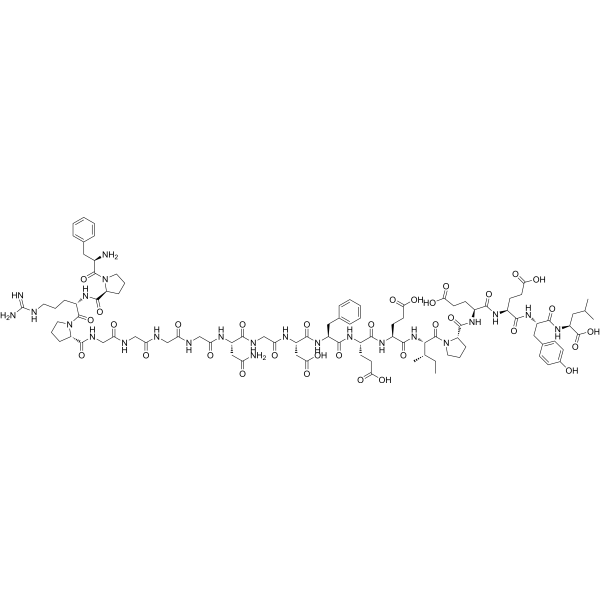
PR-39, a natural proline- and arginine-rich antibacterial peptide, is a noncompetitive, reversible and allosteric proteasome inhibitor. PR-39 reversibly binds to the α7 subunit of the proteasome and blocks degradation of NF-κB inhibitor IκBα by the ubiquitin-proteasome pathway. PR-39 stimulates angiogenesis, inhibits inflammatory responses and significant reduces myocardial infarct size in mice .
|
-
- HY-10805A
-
|
ACT 078573 hydrochloride
|
Orexin Receptor (OX Receptor)
Calcium Channel
Caspase
Apoptosis
|
Neurological Disease
Endocrinology
Cancer
|
|
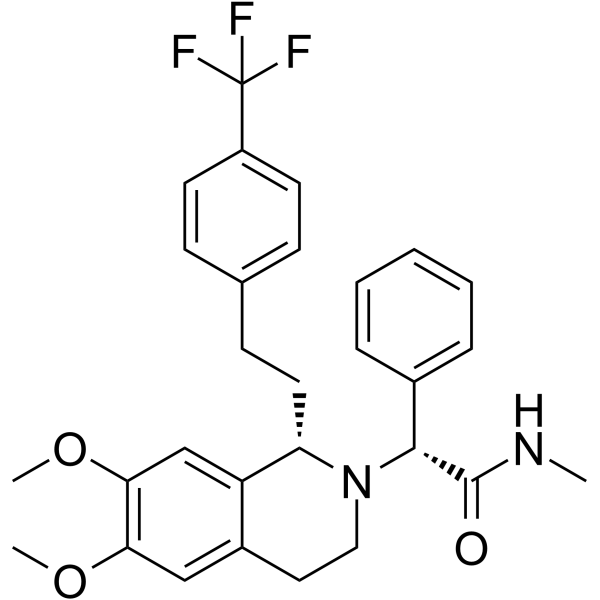
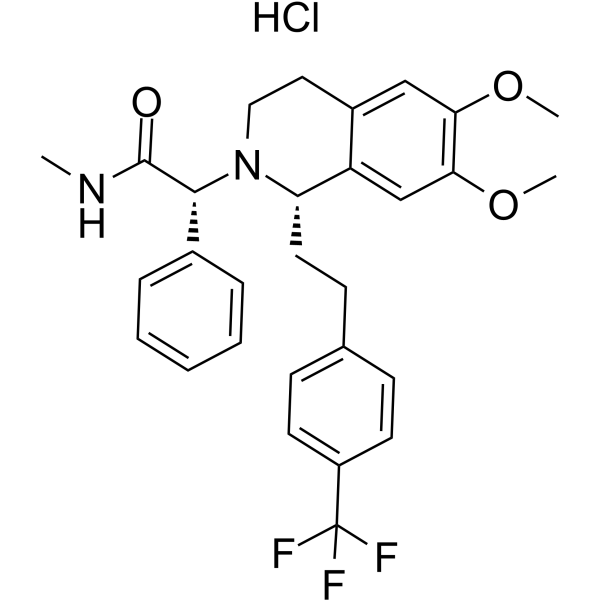
Almorexant (ACT 078573) hydrochloride is an orally active, potent and competitive dual orexin receptor antagonist, with Kd values of 1.3 nM (OX1) and 0.17 nM (OX2), respectively. Almorexant hydrochloride reversibly blocks signaling of orexin-A and orexin-B peptides. Almorexant hydrochloride totally blocked the intracellular Ca 2+ signal pathway. Almorexant hydrochloride stimulates caspase-3 activity in AsPC-1 cells and induces apoptosis .
|
-
- HY-B0349B
-
|
Meclozine dihydrochloride monohydrate
|
Histamine Receptor
Apoptosis
|
Neurological Disease
Inflammation/Immunology
|
|
Meclizine (Meclozine) dihydrochloride monohydrate, an antihistamine, reversibly inhibits the interaction of histamine at the H1 receptors. Meclizine dihydrochloride is a member of the piperazine class of H1 antagonists. Meclizine dihydrochloride monohydrate is an effective anti-motion sickness agent. Meclizine dihydrochloride monohydrate crosses the blood-brain barrier. Meclizine dihydrochloride monohydrate is an agonist ligand for mouse constitutive androstane receptor (CAR) and an inverse agonist for Human CAR. Meclizine dihydrochloride monohydrate can be used for the research of polyQ toxicity disorders, such as Huntington's disease .
|
-
- HY-157469
-
|
NPD3064
|
HIV
|
Infection
|
|
TNT-i (NPD3064) is an inhibitor targeting M-Sec. TNT-i inhibits M-Sec-induced tunneling nanotube (TNT) formation reversibly. TNT-i reduces wild-type HIV-1 production in macrophages and M-Sec-expressing T cells. TNT-i shows low cytotoxic effects on macrophages and T cells. TNT-i can be used for the research of HIV-1 infection .
|
-
- HY-10805
-
|
ACT 078573
|
Orexin Receptor (OX Receptor)
Calcium Channel
Caspase
Apoptosis
|
Neurological Disease
Endocrinology
Cancer
|
|
Almorexant (ACT 078573) is an orally active, potent and competitive dual orexin receptor antagonist, with Kd values of 1.3 nM (OX1) and 0.17 nM (OX2), respectively. Almorexant reversibly blocks signaling of orexin-A and orexin-B peptides. Almorexant totally blocked the intracellular Ca 2+ signal pathway. Almorexant stimulates caspase-3 activity in AsPC-1 cells and induces apoptosis .
|
-
- HY-B0349
-
|
Meclozine dihydrochloride
|
Histamine Receptor
Apoptosis
|
Neurological Disease
Endocrinology
Cancer
|
|
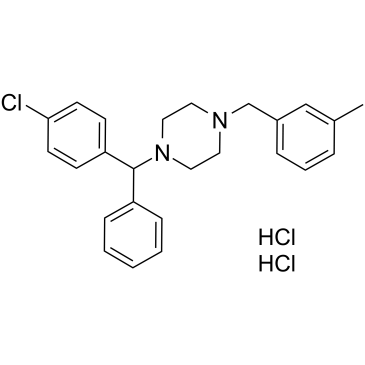
Meclizine (Meclozine) dihydrochloride, an antihistamine, reversibly inhibits the interaction of histamine at the H1 receptors. Meclizine dihydrochloride is a member of the piperazine class of H1 antagonists. Meclizine dihydrochloride is an effective anti-motion sickness agent. Meclizine dihydrochloride crosses the blood-brain barrier. Meclizine dihydrochloride can be used for the research of polyQ toxicity disorders, such as Huntington's disease. Meclizine dihydrochloride is an agonist ligand for mouse constitutive androstane receptor (CAR) and an inverse agonist for Human CAR .
|
-
- HY-B0349A
-
|
Meclozine
|
Histamine Receptor
Apoptosis
|
Neurological Disease
Inflammation/Immunology
|
|
Meclizine (Meclozine), an antihistamine, reversibly inhibits the interaction of histamine at the H1 receptors. Meclizine is a member of the piperazine class of H1 antagonists. Meclizine is an effective anti-motion sickness agent. Meclizine crosses the blood–brain barrier. Meclizine is an agonist ligand for mouse constitutive androstane receptor (CAR) and an inverse agonist for Human CAR. Meclizine can be used for the research of polyQ toxicity disorders, such as Huntington's disease .
|
-
- HY-168992A
-
|
|
Histone Methyltransferase
|
Others
|
|
UNC6535 TFA is a covalent ligand targeting the triple Tudor domain (3TD) of SETDB1. UNC6535 TFA reversibly binds to the aromatic cages of both TD2 and TD3 within SETDB1 3TD simultaneously, weakly inhibits the methyltransferase activity of SETDB1, and displaces the H3K9Me2K14Ac peptide from SETDB1 3TD .
|
-
- HY-18684
-
|
5'-Isobutylthioadenosine; 5'-Deoxy-5'-isobutylthioadenosine
|
Nucleoside Antimetabolite/Analog
HSV
Parasite
|
Infection
Metabolic Disease
Cancer
|
|
SIBA (5'-Isobutylthioadenosine) is a transmethylation inhibitor (SAH (HY-19528) analogue), with potent anti-proliferative activity. SIBA reversibly inhibits the production of HSV-1 by blocking methylation, specifically by blocking the 5' end-capping of viral mRNA. SIBA also inhibits the growth of tumour cells in vitro and metastatic spread in vivo. SIBA can be used in cancer, HSV-1 infection and anti-malaria studies .
|
-
- HY-120235
-
|
|
Beta-lactamase
Bacterial
|
Infection
|
|
CB-618 is a β-lactamase inhibitor. CB-618 reversibly covalently inhibits Ambler class A, C, and some class D serine β-lactamases. CB-618 has weak antibacterial activity as a single agent, but it significantly enhances the antibacterial activity of Meropenem (HY-13678) against enzyme-producing Enterobacteriaceae. CB-618 can be used in research on drug-resistant bacteria .
|
-
- HY-W108875R
-
|
BRL-4910A lithium (Standard); Pseudomonic acid lithium (Standard)
|
Antibiotic
Bacterial
Reference Standards
Aminoacyl-tRNA Synthetase
|
Infection
Endocrinology
|
|
Mupirocin (lithium) (Standard) is the analytical standard of Mupirocin lithium (HY-W108875). This product is intended for research and analytical applications. Mupirocin lithium is an antibiotic. Mupirocin lithium inhibits bacterial isoleucyl-tRNA synthetase, blocking protein synthesis. Mupirocin lithium has high activity against Gram-positive bacteria such as Staphylococcus and Streptococcus, as well as some Gram-negative bacteria (such as Haemophilus influenzae). Mupirocin lithium can be used in the research of diseases such as skin infections (such as MRSA infections) and chronic sinusitis .
|
-
- HY-B0958R
-
|
BRL-4910A (Standard); Pseudomonic acid (Standard)
|
Reference Standards
Bacterial
Antibiotic
Aminoacyl-tRNA Synthetase
|
Infection
Endocrinology
|
|
Mupirocin (Standard) is the analytical standard of Mupirocin (HY-B0958). This product is intended for research and analytical applications. Mupirocin is an antibiotic. Mupirocin inhibits bacterial isoleucyl-tRNA synthetase, blocking protein synthesis. Mupirocin has high activity against Gram-positive bacteria such as Staphylococcus and Streptococcus, as well as some Gram-negative bacteria (such as Haemophilus influenzae). Mupirocin can be used in the research of diseases such as skin infections (such as MRSA infections) and chronic sinusitis .
|
-
- HY-B0958
-
|
BRL-4910A; Pseudomonic acid
|
Bacterial
Antibiotic
Aminoacyl-tRNA Synthetase
|
Infection
Endocrinology
|
|
Mupirocin is an antibiotic. Mupirocin inhibits bacterial isoleucyl-tRNA synthetase, blocking protein synthesis. Mupirocin has high activity against Gram-positive bacteria such as Staphylococcus and Streptococcus, as well as some Gram-negative bacteria (such as Haemophilus influenzae). Mupirocin can be used in the research of diseases such as skin infections (such as MRSA infections) and chronic sinusitis .
|
-
- HY-W108875
-
|
BRL-4910A lithium; Pseudomonic acid lithium
|
Antibiotic
Bacterial
Aminoacyl-tRNA Synthetase
|
Infection
Endocrinology
|
|
Mupirocin lithium is an antibiotic. Mupirocin lithium inhibits bacterial isoleucyl-tRNA synthetase, blocking protein synthesis. Mupirocin lithium has high activity against Gram-positive bacteria such as Staphylococcus and Streptococcus, as well as some Gram-negative bacteria (such as Haemophilus influenzae). Mupirocin lithium can be used in the research of diseases such as skin infections (such as MRSA infections) and chronic sinusitis .
|
-
- HY-17466
-
|
Bonomycin; 6-Demethyl-6-deoxytetracycline
|
Bacterial
Antibiotic
|
Metabolic Disease
Inflammation/Immunology
|
|
Sancycline (6-Demethyl-6-deoxytetracycline) acts by reversibly binding to the 30 S ribosomal subunit and inhibiting protein translation by blocking entry of aminoacyl-tRNA into the ribosome a site similar to tetracycline (HY-A0107). Sancycline, four linearly fused six-membered rings with four stereocenters, is a rare semi-synthetic tetracycline (HY-A0107) prepared by hydrogenolysis of the chloro and benzylic hydroxy moieties of Declomycin .
|
-
- HY-N17717
-
|
Flavosativaside
|
Glycosidase
|
Metabolic Disease
|
|
Vitexin-2''-O-glucoside (Flavosativaside) is a potent and selective alpha-glucosidase inhibitor found in hawthorn leaf flavonoids. Vitexin-2''-O-glucoside can reversibly inhibit the α-glucosidase activity on the brush border of the small intestine, and its inhibitory effect is superior to that of the Acarbose (HY-B0089). Vitexin-2''-O-glucoside can be used for the research of type 2 diabetes .
|
-
- HY-135416A
-
|
|
Endogenous Metabolite
|
Infection
|
|
Streptolysin O (≥1000000 units/mg) is a ≥1000000 units/mg Streptolysin O (HY-135416). Streptolysin O, a group A streptococcal toxin, is a well-characterized oxygen-labile prototype of a cholesterol-binding bacterial exotoxin. Streptolysin O causes both lysis of cells and cardiotoxicity. Streptolysin O is widely used for the controlled permeabilization of cell membranes. Streptolysin O exists in two forms, a reduced active state and an oxidized reversibly inactive state .
|
-
- HY-N16424
-
|
Me cis-ferulate; cis-Ferulic acid methyl ester
|
Fungal
|
Infection
|
|
Methyl (Z)-ferulate (Me cis-ferulate) (cis-Ferulic acid methyl ester) is an endogenous Germination self-inhibitor. Methyl (Z)-ferulate can be isolated from the leaves of Tetragonia tetragonoides. Methyl (Z)-ferulate blocks uredospores germination in rust fungi by reversibly inhibiting the digestion of the germination pore plug through the regulation of pre-existing enzyme activity. Methyl (Z)-ferulate also has antioxidant activity, effectively scavenging DPPH and ABTS + radical .
|
-
- HY-19220
-
|
|
Thrombin
|
Cardiovascular Disease
|
|
S-18326 is an orally active direct thrombin inhibitor. S-18326 inhibits thrombus formation by reversibly and with high affinity binding to the active site of thrombin, directly preventing the conversion of fibrinogen to fibrin. S-18326 effectively prolongs various clotting times in human plasma. S-18326 has demonstrated antithrombotic efficacy in multiple animal models without causing thrombocytopenia. S-18326 can be used in research on thromboembolic diseases .
|
-
- HY-111914A
-
|
|
NO Synthase
Fatty Acid Synthase (FASN)
|
Cardiovascular Disease
|
|
Ferroheme is the ferrous form of heme in hemoglobin, reversibly binding oxygen as an oxygen carrier. Its free form induces oxidative stress and ferroptosis by releasing iron ions, which catalyze reactive oxygen species generation via Fenton reactions, leading to lipid peroxidation and cell death. This mechanism is critical in pathological contexts like intracerebral hemorrhage and neurodegenerative diseases, making it a target for studying iron-overload disorders and ferroptosis-related pathologies[1][2][3].
|
-
- HY-126010
-
|
|
Piezo Channel
|
Others
|
|
Dooku1 is a reversibly Yoda1 antagonist with IC50 value of 1.3 μM and 1.5 μM for 2 μM Yoda1-induced Ca 2+ entry HEK 293 cells and HUVECs, respectively. Dooku1 can disrupt Yoda1-induced Piezo1 channel activity and inhibit Yoda1-induced relaxation of aorta. Dooku1 can be used for vascular physiology and disease research .
|
-
- HY-17466A
-
|
Bonomycin hydrochloride; 6-Demethyl-6-deoxytetracycline hydrochloride
|
Antibiotic
Bacterial
|
Metabolic Disease
Inflammation/Immunology
|
|
Sancycline (6-Demethyl-6-deoxytetracycline) hydrochloride acts by reversibly binding to the 30 S ribosomal subunit and inhibiting protein translation by blocking entry of aminoacyl-tRNA into the ribosome a site similar to tetracycline (HY-A0107). Sancycline hydrochloride, four linearly fused six-membered rings with four stereocenters, is a rare semi-synthetic tetracycline (HY-A0107) prepared by hydrogenolysis of the chloro and benzylic hydroxy moieties of Declomycin .
|
-
- HY-170649
-
|
|
SARS-CoV
|
Infection
|
|
RdRP-IN-9 (Compound 6b) is a reversible covalent allosteric inhibitor of RdRp. RdRP-IN-9 demonstrates high anti-coronavirus activity, with an EC50 value of 0.68 μM against HCoV-OC43 RdRP-IN-9 exerts a more prolonged antiviral effect by reversibly acylating Cys12 in the NiRAN domain of non-structural protein 12 (nsp 12) and exhibits synergistic anti-coronavirus activity with Molnupiravir (HY-135853) .
|
-
- HY-105343R
-
|
[D-Ala2, D-Leu5]-Enkephalin (Standard); DADLE (Standard)
|
Reference Standards
Opioid Receptor
|
Neurological Disease
|
|
BW-180C (Standard) is the analytical standard of BW-180C (HY-105343). This product is intended for research and analytical applications. BW-180C ([D-Ala2, D-Leu5]-Enkephalin; DADLE) is an δ opioid receptor (DOR) agonist, which belongs to the enkephalin family. Neuroprotective agent. BW-180C reversibly inhibits cellular transcription in neurons without causing cell injury .
|
-
- HY-112961
-
|
|
JAK
Interleukin Related
STAT
|
Metabolic Disease
|
|
Patiromer is an orally active, selective and non-absorbable intestinal potassium (K +) polymer binder that reversibly binds potassium ions in exchange for calcium (Ca 2+). Patiromer can rapidly and continuously reduce serum potassium levels, maintain a normal blood potassium state, and reduce serum aldosterone levels. Patiromer also increases fecal potassium excretion. Patiromer is mainly used in the study of hyperkalemia associated with diseases such as chronic kidney disease, diabetes, and heart failure, and is particularly suitable for improving renin-angiotensin-aldosterone system inhibitor (RAASi) therapy .
|
-
- HY-W016586R
-
|
AT-125 (Standard); U-42126 (Standard)
|
Reference Standards
Parasite
γ-Glutamyl Transferase (GGT)
|
Infection
Cancer
|
|
Articaine (Standard) is the analytical standard of Articaine. This product is intended for research and analytical applications. Articaine (Hoe-045 free base) is an amide agent that can suppress or relieve pain. containing an ester group, reversibly binding to the α-subunit of the voltage-gated sodium channels within the inner cavity of the nerve, can provide effective pain relief. Articaine ameliorates LPS-induced acute kidney injury via inhibition of NF-κB activation and the NLRP3 inflammasome pathway .
|
-
- HY-10805R
-
|
ACT 078573 (Standard)
|
Orexin Receptor (OX Receptor)
Calcium Channel
Caspase
Apoptosis
Reference Standards
|
Neurological Disease
Endocrinology
Cancer
|
|
Almorexant (Standard) is the analytical standard of Almorexant. This product is intended for research and analytical applications. Almorexant (ACT 078573) is an orally active, potent and competitive dual orexin receptor antagonist, with Kd values of 1.3 nM (OX1) and 0.17 nM (OX2), respectively. Almorexant reversibly blocks signaling of orexin-A and orexin-B peptides. Almorexant totally blocked the intracellular Ca2+ signal pathway. Almorexant stimulates caspase-3 activity in AsPC-1 cells and induces apoptosis .
|
-
- HY-103489R
-
|
|
Reference Standards
PI4K
Apoptosis
|
Cancer
|
|
PI-273 (Standard) is the analytical standard of PI-273 (HY-103489). This product is intended for research and analytical applications. PI-273 is a first reversibly and specific phosphatidylinositol 4-kinase (PI4KIIα) inhibitor with an IC50 of 0.47 μM. PI-273 can inhibit breast cancer cell proliferation, block the cell cycle and induce cell apoptosis .
|
-
- HY-B0349R
-
|
Meclozine dihydrochloride (Standard)
|
Reference Standards
Histamine Receptor
Apoptosis
|
Neurological Disease
Endocrinology
Cancer
|
|
Meclizine (dihydrochloride) (Standard) is the analytical standard of Meclizine (dihydrochloride). This product is intended for research and analytical applications. Meclizine (Meclozine) dihydrochloride, an antihistamine, reversibly inhibits the interaction of histamine at the H1 receptors. Meclizine dihydrochloride is a member of the piperazine class of H1 antagonists. Meclizine dihydrochloride is an effective anti-motion sickness agent. Meclizine dihydrochloride crosses the blood-brain barrier. Meclizine dihydrochloride can be used for the research of polyQ toxicity disorders, such as Huntington's disease. Meclizine dihydrochloride is an agonist ligand for mouse constitutive androstane receptor (CAR) and an inverse agonist for Human CAR .
|
-
- HY-182478
-
|
|
Microtubule/Tubulin
|
Cancer
|
|
MDL-27048, a tubulin inhibitor, binds competitively, reversibly to the Colchicine (HY-16569)-binding site on tubulin heterodimers. MDL-27048 inhibits microtubule assembly, induces slow depolymerization of preassembled microtubules, disrupts microtubule polymerization-depolymerization dynamics, and disrupts cytoplasmic microtubule networks. MDL-27048 exerts growth inhibitory effects on human cancer cells, induces mitotic arrest, and does not disrupt actin filaments at microtubule-depolymerizing concentrations. MDL-27048 can be used for the research of malignant tumors .
|
-
- HY-P2707
-
|
α-DTX
|
Sodium Channel
Potassium Channel
|
Neurological Disease
|
|
α-Dendrotoxin (α-DTX) is a voltage-gated K + channel blocker and an acid-sensing ion channel (ASIC) inhibitor. α-Dendrotoxin blocks Kv1.1, Kv1.2, Kv1.6 and D-type (ID) voltage-gated K + channels, and reversibly inhibits slowly inactivating potassium currents. α-Dendrotoxin induces epilepsy-related behaviors in mice. α-Dendrotoxin can be used in studies related to tonic-clonic seizures .
|
-
- HY-B2185
-
|
|
Dopamine Receptor
Potassium Channel
AMPK
|
Neurological Disease
Metabolic Disease
Inflammation/Immunology
|
|
Tipepidine citrate is a non-narcotic antitussive agent. Tipepidine citrate reversibly inhibits dopamine D2 receptor-mediated GIRK current (IDA(GIRK)), thereby activating VTA dopamine neurons, with an IC50 of 7.0 μM for IDA(GIRK). Tipepidine activates AMPK. Tipepidine citrate has antidepressant-like effects. Tipepidine citrate enhances the analgesic effect of Carbamazepine (HY-B0246). Tipepidine citrate improves adipose tissue fibrosis and glucose intolerance in high-fat diet-induced obese mice .
|
-
- HY-10805AR
-
|
ACT 078573 hydrochloride (Standard)
|
Reference Standards
Orexin Receptor (OX Receptor)
Calcium Channel
Caspase
Apoptosis
|
Neurological Disease
Endocrinology
Cancer
|
|
Almorexant hydrochloride (Standard) is the analytical standard of Almorexant (hydrochloride) (HY-10805A). This product is intended for research and analytical applications. Almorexant (ACT 078573) hydrochloride is an orally active, potent and competitive dual orexin receptor antagonist, with Kd values of 1.3 nM (OX1) and 0.17 nM (OX2), respectively. Almorexant hydrochloride reversibly blocks signaling of orexin-A and orexin-B peptides. Almorexant hydrochloride totally blocked the intracellular Ca2+ signal pathway. Almorexant hydrochloride stimulates caspase-3 activity in AsPC-1 cells and induces apoptosis .
|
-
- HY-182571
-
|
|
Chloride Channel
|
Neurological Disease
|
|
AK-42 is a selective CLC-2 chloride channel inhibitor with human IC50 of 17 nM and rat IC50 of 14 nM. AK-42 binds to an extracellular vestibule above the channel pore, inhibits CLC-2 currents acutely and reversibly, including with auxiliary subunit GlialCAM coexpression. AK-42 acts as a selective tool compound for acute CLC-2 function modulation to probe CLC-2 neurophysiology. AK-42 can be used for the research of leukodystrophy and idiopathic generalized epilepsies .
|
-
- HY-178124
-
|
|
Deubiquitinase
|
Neurological Disease
Cancer
|
|
Huib32 is a potent small-molecule inhibitor of USP32 (IC50 = 21.2 nM), exhibiting high selectivity over other closely related deubiquitinating enzymes (DUBs), such as USP8/10/16, UCHL1 and OTUB2. Huib32 reversibly inhibits USP32 by covalently binding to the active site Cys743, which enhances substrate ubiquitination, alters endosomal morphology, and mimics USP32 depletion. Huib32 can be used for breast, ovarian, and lung cancer and Alzheimer's and Parkinson’s diseases research .
|
-
- HY-17466R
-
|
Bonomycin (Standard); 6-Demethyl-6-deoxytetracycline (Standard)
|
Reference Standards
Bacterial
Antibiotic
|
Metabolic Disease
Inflammation/Immunology
|
|
Sancycline (Standard) is the analytical standard of Sancycline. This product is intended for research and analytical applications. Sancycline (6-Demethyl-6-deoxytetracycline) acts by reversibly binding to the 30 S ribosomal subunit and inhibiting protein translation by blocking entry of aminoacyl-tRNA into the ribosome a site similar to tetracycline (HY-A0107). Sancycline, four linearly fused six-membered rings with four stereocenters, is a rare semi-synthetic tetracycline (HY-A0107) prepared by hydrogenolysis of the chloro and benzylic hydroxy moieties of Declomycin[1][2][3].
|
-
- HY-110105
-
|
|
Potassium Channel
|
Neurological Disease
|
|
NS8593 hydrochloride is a potent and selective small conductance Ca 2+-activated K + channels (SK channels) inhibitor. NS8593 hydrochloride reversibly inhibits SK3-mediated currents with a Kd value of 77 nM. NS8593 hydrochloride inhibits all the SK1-3 subtypes Ca 2+-dependently (Kds of 0.42, 0.60, and 0.73 μM, respectively, at 0.5 μM Ca 2+), and does not affect the Ca 2+-activated K + channels of intermediate and large conductance (hIK and hBK channels, respectively) .
|
-
- HY-118922
-
|
|
TNF Receptor
|
Neurological Disease
Inflammation/Immunology
Cancer
|
|
IW927 is a photochemically enhanced TNF-α-TNFR1 interaction inhibitor that blocks the binding of TNF-α to TNFRc1 with an IC50 value of 50 nM. IW927 binds reversibly to the TNFRc1 with weak affinity (Kd = 40-100 μM), covalently modifies the receptor via a photochemical reaction, and does not bind the related cytokine receptors TNFRc2 or CD40. IW927 disrupts TNFα-induced IκB phosphorylation with an IC50 value of 600 nM. IW927 can be used to develop light-independent inhibitors .
|
-
- HY-401721
-
|
|
Biochemical Assay Reagents
|
Others
|
|
5-CNAC is an orally active enhancer of absorption, with no pharmacological activity on its own. 5-CNAC can significantly enhance the absorption efficiency of the drug (such as Salmon calcitonin (HY-P0090)) when administered together with it in the gastrointestinal tract. 5-CNAC binds reversibly and non-covalently to peptide drugs, protecting them from degradation by gastrointestinal enzymes, increasing their lipid solubility, promoting passive transcellular absorption, and not damaging the integrity of the intestinal epithelium. 5-CNAC can be used in the research of adjuvants for orally administered peptide agents .
|
-
- HY-126751
-
|
|
Na+/K+ ATPase
|
Metabolic Disease
|
|
DBM-819 is a reversible inhibitor of H⁺/K⁺-ATPase (H +/K +-ATPase), with an IC50 value of 5 μM. DBM-819 can reversibly block gastric acid secretion by inhibiting the proton pump in the gastric mucosa. It shows significant protective effects against duodenal ulcers induced by Cysteamine (HY-77591), gastric ulcers induced by Indomethacin (HY-14397), and gastric ulcers induced by Aspirin (HY-14654), with EC50 values of 6, 3.1, and 4 mg/kg respectively. DBM-819 can be used in ulcer prevention research .
|
-
- HY-171776
-
|
|
MMP
|
Cancer
|
|
OPB-3206 is a selective matrix metalloproteinase (MMP) inhibitor. OPB-3206 inhibits interstitial collagenase, gelatinase A (MMP-2), gelatinase B (MMP-9) and stromelysin with IC50 values of 7×10 -7 M, 5×10 -6 M, 5×10 -7 M and 2×10 -6 M, respectively. OPB-3206 reversibly binds to the zinc-binding region of MMPs, preventing the activation of MMP-9 and reducing extracellular matrix degradation to inhibit tumor lung metastasis. OPB-3206 is promising for research of lung metastasis of osteosarcoma .
|
-
- HY-156957
-
|
|
Biochemical Assay Reagents
|
Others
|
|
5-CNAC disodium is an orally active enhancer of absorption, with no pharmacological activity on its own. 5-CNAC disodium can significantly enhance the absorption efficiency of the drug (such as Salmon calcitonin (HY-P0090)) when administered together with it in the gastrointestinal tract. 5-CNAC disodium binds reversibly and non-covalently to peptide drugs, protecting them from degradation by gastrointestinal enzymes, increasing their lipid solubility, promoting passive transcellular absorption, and not damaging the integrity of the intestinal epithelium. 5-CNAC disodium can be used in the research of adjuvants for orally administered peptide agents .
|
-
- HY-117724
-
|
|
PAI-1
|
Cardiovascular Disease
|
|
AZ3976 is a potent plasminogen activator inhibitor type 1 (PAI-1) inhibitor with an IC50 value of 26 μM in an enzymatic chromogenic assay. AZ3976 is active with an IC50 of 16 μM in a plasma clot lysis assay. AZ3976 does not bind to active PAI-1 but bound reversibly to latent PAI-1. AZ3976 inhibits PAI-1 by enhancing the latency transition of active PAI-1. AZ3976 displays profibrinolytic activities in a human plasma clot lysis assay .
|
-
- HY-P3187
-
|
|
DNA/RNA Synthesis
|
Others
|
|
Exo-1,4-β-xylosidase is an exonuclease that specifically acts on the β-1,4 glycosidic bonds at the non-reducing ends of xylan and xylooligosaccharides. Exo-1,4-β-xylosidase is Ca 2+-dependent and reversibly binds to metal ions to catalyze the hydrolysis of β-1,4 glycosidic bonds, thereby degrading xylan to produce xylose. Exo-1,4-β-xylosidase can be used in research fields such as lignocellulose bioconversion, bioethanol production, and optimization of xylan saccharification processes .
|
-
- HY-182474
-
|
Indolopyridone-1
|
Reverse Transcriptase
DNA/RNA Synthesis
HIV
|
Infection
|
|
INDOPY-1 (Indolopyridone-1) is a selective, reversible, and competitive HIV-1 reverse transcriptase inhibitor. INDOPY-1 reversibly binds to the active site of reverse transcriptase. INDOPY-1 inhibits DNA synthesis. INDOPY-1 exhibits antiviral activity against various retroviruses, including HIV-1 IIIB, HIV-1 HXB2 K103N Y181C, HIV-2 ROD, and SIV Mac251. INDOPY-1 can be used in the research of immunodeficiency virus infection .
|
-
- HY-10108AR
-
|
|
Reference Standards
PI3K
Casein Kinase
DNA-PK
Apoptosis
|
Cancer
|
|
LY294002 (hydrochloride) (Standard) is the analytical standard of LY294002 (hydrochloride). This product is intended for research and analytical applications. LY294002 hydrochloride is a potent and broad-spectrum PI3K inhibitor, with IC50 values of 0.5, 0.57, and 0.97 μM for P110α, P110δ and P110β, respectively. LY294002 hydrochloride also inhibits CK2 with an IC50 of 98 nM. LY294002 hydrochloride can be used for pancreatic cancer research .
|
-
- HY-10108A
-
|
|
PI3K
Casein Kinase
DNA-PK
Apoptosis
|
Cancer
|
|
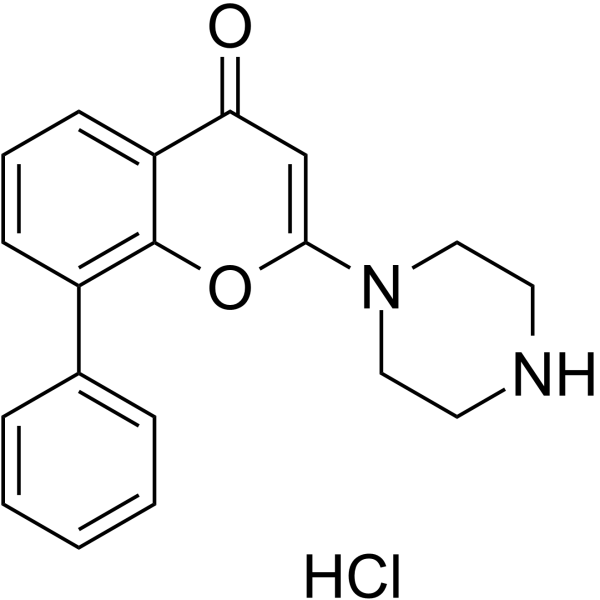
LY294002 hydrochloride is a potent and broad-spectrum PI3K inhibitor, with IC50 values of 0.5, 0.57, and 0.97 μM for P110α, P110δ and P110β, respectively. LY294002 hydrochloride also inhibits CK2 with an IC50 of 98 nM. LY294002 hydrochloride can be used for pancreatic cancer research .
|
-
- HY-78035
-
|
Methylmaleic anhydride
|
Biochemical Assay Reagents
|
Others
|
|
Citraconic anhydride (Methylmaleic anhydride) is a derivative of maleic anhydride (HY-Z0060) and novel antigen retrieval solution. Citraconic anhydride reversibly blocks protein amino groups, stabilizing specific enzymes and improving their catalytic performance. Citraconic anhydride reacts with free amino groups on proteins (especially lysine residues), converting positively charged NH3 + into carboxyl groups, thereby disrupting methylene bridge crosslinks caused by Formaldehyde during antigen retrieval. Citraconic anhydride functionalizes Isotactic polypropylene. Citraconic anhydride precisely responds to pH changes to achieve reversible modification. Citraconic anhydride is irritating to skin and eyes .
|
-
- HY-135783
-
AT 1001
1 Publications Verification
|
nAChR
|
Neurological Disease
Metabolic Disease
Inflammation/Immunology
|
|
AT 1001 is an orally effective α3β4 nicotinic acetylcholine receptor (α3β4 nAChR) antagonist with a Ki value of 2.64 nM. AT 1001 reversibly blocks Epibatidine (HY-101078)-induced inward currents in HEK cells transfected with α3β4 nAChR. AT 1001 dose-dependently blocks nicotine self-administration behavior in rats, alleviates gluten-induced gastrointestinal symptoms, blocks tight junction toxin-induced immune responses, and reduces the incidence of type 1 diabetes in rats. AT 1001 can be used in the research of nicotine addiction and celiac disease .
|
-
- HY-168992
-
|
|
Histone Methyltransferase
|
Neurological Disease
Cancer
|
|
UNC6535 is a covalent ligand targeting the SETDB1 triple Tudor domain (3TD) with negative allosteric modulator properties, with an IC50 of 3.4 μM and a Kd of 4.2 μM. UNC6535 inhibits the methyltransferase activity of recombinant SETDB1 protein lacking the 3TD domain. UNC6535 reversibly binds to the aromatic cages of both TD2 and TD3 subdomains of SETDB1 3TD simultaneously, displacing the endogenous H3K9Me2K14Ac histone tail ligand. UNC6535 can be used in research on cancer and neurodegenerative diseases .
|
-
- HY-P3187B
-
|
|
DNA/RNA Synthesis
|
Others
|
|
exo-β-1,4-xylosidase, Bacteroides ovatus (EC.3.2.1.37) is an exonuclease that specifically acts on the β-1,4 glycosidic bonds at the non-reducing ends of xylan and xylooligosaccharides. exo-β-1,4-xylosidase is Ca 2+-dependent and reversibly binds to metal ions to catalyze the hydrolysis of β-1,4 glycosidic bonds, thereby degrading xylan to produce xylose. exo-β-1,4-xylosidase can be used in research fields such as lignocellulose bioconversion, bioethanol production, and optimization of xylan saccharification processes .
|
-
- HY-B1777A
-
|
|
Endogenous Metabolite
Bacterial
Reactive Oxygen Species (ROS)
DNA/RNA Synthesis
|
Infection
Neurological Disease
Inflammation/Immunology
|
|
Spermine tetrahydrochloride is a polyamine nitric oxide donor that can provide nitric oxide to platelets and inhibit platelet activation to a certain extent concentration-dependently. Spermine tetrahydrochloride occurs in mammalian tissues, plants, bacteria, ribosomes and bacteriophage. Spermine tetrahydrochloride inhibits primary human embryo lung fibroblasts in vitro. Spermine is a natural antioxidant and anti-inflammatory agent. Spermine is known to inhibit some bacterial cultures, especially strains of Staphylococcus aureus. Spermine induces neurotoxicity in the striarum dose-dependently. Spermine can reversibly inhibits DNA synthetic response, mixed lymphocyte response and the induction of cytolytic lymphocyte response in primary cultures of murine spleen cells .
|
-
- HY-B1777
-
Spermine
Maximum Cited Publications
8 Publications Verification
NSC 268508; Neuridine
|
Endogenous Metabolite
Bacterial
Reactive Oxygen Species (ROS)
DNA/RNA Synthesis
|
Infection
Neurological Disease
Inflammation/Immunology
|
|
Spermine is a natural antioxidant and anti-inflammatory agent. Spermine is known to inhibit some bacterial cultures, especially strains of Staphylococcus aureus. Spermine induces neurotoxicity in the striarum dose-dependently. Spermine can reversibly inhibits DNA synthetic response, mixed lymphocyte response and the induction of cytolytic lymphocyte response in primary cultures of murine spleen cells. Spermine tetrahydrochloride is a polyamine nitric oxide donor that can provide nitric oxide to platelets and inhibit platelet activation to a certain extent concentration-dependently. Spermine tetrahydrochloride occurs in mammalian tissues, plants, bacteria, ribosomes and bacteriophage. Spermine tetrahydrochloride inhibits primary human embryo lung fibroblasts in vitro .
|
-
- HY-178383
-
|
|
Glycosidase
|
Metabolic Disease
|
|
α-Glucosidase-IN-98 is a potent orally active α-Glucosidase inhibitor with an IC50 of 18.1 μM. α-Glucosidase-IN-98 reversibly binds with α-Glucosidase via hydrogen bonds, electrostatic interactions and hydrophobic effects, which induces significant conformational alterations in the secondary structure of α-Glucosidase. α-Glucosidase-IN-98 decreases postprandial hyperglycemia in Starch (HY-B2225B)/Sucrose (HY-B1779)-challenged mice. α-Glucosidase-IN-98 can be used for type 2 diabetes mellitus (T2DM) research .
|
-
- HY-P3187A
-
|
|
DNA/RNA Synthesis
|
Others
|
|
exo-β-1,4-xylosidase,Clostridium stercorarium (EC.3.2.1.37) is an exonuclease that specifically acts on the β-1,4 glycosidic bonds at the non-reducing ends of xylan and xylooligosaccharides. exo-β-1,4-xylosidase is Ca 2+-dependent and reversibly binds to metal ions to catalyze the hydrolysis of β-1,4 glycosidic bonds, thereby degrading xylan to produce xylose. exo-β-1,4-xylosidase can be used in research fields such as lignocellulose bioconversion, bioethanol production, and optimization of xylan saccharification processes .
|
-
- HY-P99138
-
|
|
Interleukin Related
|
Inflammation/Immunology
Cancer
|
|
Anti-Mouse IL-1a Antibody (ALF-161) is an anti-mouse IL-1a IgG1 monoclonal antibody. Anti-Mouse IL-1a Antibody (ALF-161) can inhibit CD8 + T cell response by blocking IL-1a signaling. Anti-Mouse IL-1a Antibody (ALF-161) can reversibly transform myeloid cell expansion and improve T cell function. Anti-Mouse IL-1a Antibody (ALF-161) can be used for researches on immune response and cancer such as breast cancer .
|
-
- HY-173397
-
|
|
β-glucuronidase
Bacterial
|
Metabolic Disease
|
|
β-Glucuronidase-IN-3 (Compound 49) is a covalent allosteric β-glucuronidase inhibitor. β-Glucuronidase-IN-3 has potent inhibitory activity against Escherichia coli β-glucuronidase (EcGUS) (IC50: 12.9 nM). β-Glucuronidase-IN-3 exerts its inhibitory effect by reversibly covalently modifying the cysteine residues (Cys28, Cys443, and Cys197) of EcGUS. β-Glucuronidase-IN-3 can be used in the study of intestinal microbiota-related diseases, especially to alleviate the toxic side effects of Irinotecan (HY-16562) and nonsteroidal anti-inflammatory drugs (NSAIDs) .
|
-
- HY-118447
-
|
|
CDK
Survivin
|
Cancer
|
|
RO0505124 is a selective CDK4 inhibitor with an IC50 of 20 nM. RO0505124 reversibly binds the ATP pocket of the kinase. RO0505124 induces G1 phase arrest in cancer cells via reduced retinoblastoma protein (Rb) phosphorylation, blocking S phase progression. RO0505124 exhibits anti-proliferative activity against various cancer cells. RO0505124 delays mitotic entry, induces aberrant mitosis with lagging chromosomes, driving mitotic slippage and formation of multinucleated or micronucleated cells. RO0505124 inhibits G2/M phase accumulation of survivin and borealin. RO0505124 can be used for the research of cancer .
|
-
- HY-W010514
-
|
|
Endogenous Metabolite
|
Metabolic Disease
|
|
trans-Cyclohexane-1,2-diol (TCHD) is a transient dilator of the nuclear pore complex (NPC). By interacting with the hydrophobic core (FG nucleoporin) of the NPC, trans-Cyclohexane-1,2-diol can disrupt the NPC structure and reversibly increase the permeability of the nuclear pore, allowing macromolecules larger than 40 kDa (such as plasmid DNA) to enter the cell nucleus by passive diffusion, thereby enhancing the nuclear import efficiency of non-viral vectors. trans-Cyclohexane-1,2-diol can improve the efficiency of in vitro electrotransfection or lipid-mediated gene transfection, especially significantly increasing gene expression in differentiated airway epithelial cells .
|
-
- HY-155330
-
|
|
5-HT Receptor
Monoamine Oxidase
|
Neurological Disease
|
|
PZ-1922 (Compound 16) is a BBB-penetrable 5-HT6R/5-HT3R antagonist (Ki: 17 nM, 0.45 nM for 5-HT6R/5-HT3R respectively). PZ-1922 reversibly inhibits MAO-B (pIC50: 8.93). PZ-1922 reverses Scopolamine (SCOP) (HY-N0296) induced memory deficits in the novel object recognition (NOR) test in rats. PZ-1922 prevents Aβ-induced memory decline in the T-maze test .
|
-
- HY-D1236
-
|
|
Parasite
Deubiquitinase
PARP
|
Cancer
|
|
Fluorescent brightener 71 (FB71) is an inhibitor targeting deubiquitinases UCHL5 and USP14, as well as a CD40 ligand. Fluorescent brightener 71 blocks enzymatic activity, induces apoptosis, inhibits cell growth and triggers reactive oxygen species production. Meanwhile, Fluorescent brightener 71 upregulates the expression of oxidative stress-related genes gpx-4 and sod-4, and reversibly increases the protein levels of UCHL5 and USP14 through a feedback response. Fluorescent brightener 71 inhibits the growth, movement and reproductive capacity of Caenorhabditis elegans, and also exhibits concentration-dependent toxic effects. Fluorescent brightener 71 can be applied to scientific research in related fields such as breast cancer .
|
-
- HY-B1777AS
-
|
|
Isotope-Labeled Compounds
Endogenous Metabolite
Reactive Oxygen Species (ROS)
Bacterial
DNA/RNA Synthesis
|
Metabolic Disease
|
|
Spermine-d8 (tetrahydrochloride) is the deuterium labeled Spermine tetrahydrochloride. Spermine tetrahydrochloride is a polyamine nitric oxide donor that can provide nitric oxide to platelets and inhibit platelet activation to a certain extent concentration-dependently. Spermine tetrahydrochloride occurs in mammalian tissues, plants, bacteria, ribosomes and bacteriophage. Spermine tetrahydrochloride inhibits primary human embryo lung fibroblasts in vitro. Spermine is a natural antioxidant and anti-inflammatory agent. Spermine is known to inhibit some bacterial cultures, especially strains of Staphylococcus aureus. Spermine induces neurotoxicity in the striarum dose-dependently. Spermine can reversibly inhibits DNA synthetic response, mixed lymphocyte response and the induction of cytolytic lymphocyte response in primary cultures of murine spleen cells .
|
-
- HY-B1777AR
-
|
|
Reference Standards
Endogenous Metabolite
Bacterial
Reactive Oxygen Species (ROS)
DNA/RNA Synthesis
|
Infection
Neurological Disease
Inflammation/Immunology
|
|
Spermine (tetrahydrochloride) (Standard) is the analytical standard of Spermine (tetrahydrochloride). This product is intended for research and analytical applications. Spermine tetrahydrochloride is a polyamine nitric oxide donor that can provide nitric oxide to platelets and inhibit platelet activation to a certain extent concentration-dependently. Spermine tetrahydrochloride occurs in mammalian tissues, plants, bacteria, ribosomes and bacteriophage. Spermine tetrahydrochloride inhibits primary human embryo lung fibroblasts in vitro. Spermine is a natural antioxidant and anti-inflammatory agent. Spermine is known to inhibit some bacterial cultures, especially strains of Staphylococcus aureus. Spermine induces neurotoxicity in the striarum dose-dependently. Spermine can reversibly inhibits DNA synthetic response, mixed lymphocyte response and the induction of cytolytic lymphocyte response in primary cultures of murine spleen cells .
|
-
- HY-155330A
-
|
|
5-HT Receptor
Monoamine Oxidase
|
Neurological Disease
|
|
PZ-1922 free base is a BBB-penetrable 5-HT6R/5-HT3R antagonist (Ki: 17 nM, 0.45 nM for 5-HT6R/5-HT3R respectively). PZ-1922 free base reversibly inhibits MAO-B (pIC50: 8.93). PZ-1922 free base reverses Scopolamine (SCOP) (HY-N0296) induced memory deficits in the novel object recognition (NOR) test in rats. PZ-1922 free base prevents Aβ-induced memory decline in the T-maze test .
|
-
- HY-D2772
-
|
|
Biochemical Assay Reagents
|
Others
|
|
5-TAMRA cadaverine can used to modify carboxylic acid group in the presence of activators (e.g. EDC, or DCC) or activated esters (e.g. NHS esters) through a stable amide bond. It also can be reversibly coupled to aldehydes and ketones to form a Schiff base – which can be reduced to a generate stable amine derivative by sodium borohydride (NaBH4) or sodium cyanoborohydride (NaCNH3).
Although the mixed isomers of 5(6)-TAMRA cadaverine is a preferred, routinely used orange-fluorescent dye for staining proteins, it is rearly used for labeling peptides and nucleotides. Purification of 5(6)-TAMRA labeled peptide and nucleotides might be troublesome due to significant signal broadening in HPLC purification. Peptides and nucleotides labeled with a single isomer TAMRA usually give better resolution in HPLC purification that is often required in the conjugation processes.
|
-
- HY-137952
-
|
|
Potassium Channel
TRP Channel
|
Neurological Disease
|
|
NS8593 is an SK channel (small conductance Ca 2+-activated K+ channels) inhibitor. NS8593 reversibly inhibited recombinant SK3-mediated currents (human SK3 and rat SK3). NS8593 inhibits all the SK1-3 subtypes Ca 2+-dependently (Kd = 0.42, 0.60, and 0.73 μM, respectively, at 0.5 μM Ca 2+). NS8593 does not affect the Ca 2+-activated K channels of intermediate and large conductance (hlk and hBK channels, respectively). NS8593 can also inhibit TRPM7 (melastatin-related TRP cation channel 7) (IC50 = 1.6 mM). NS8593 can be used for the study of central nervous system (CNS) related diseases .
|
-
- HY-B1777S
-
|
NSC 268508-15N2; Neuridine-15N2
|
Isotope-Labeled Compounds
Endogenous Metabolite
Bacterial
Reactive Oxygen Species (ROS)
DNA/RNA Synthesis
|
Infection
Neurological Disease
Inflammation/Immunology
|
|
Spermine- 15N2 (NSC 268508- 15N2) is the 15N-labeled Spermine (HY-B1777). Spermine is a natural antioxidant and anti-inflammatory agent. Spermine is known to inhibit some bacterial cultures, especially strains of Staphylococcus aureus. Spermine induces neurotoxicity in the striarum dose-dependently. Spermine can reversibly inhibits DNA synthetic response, mixed lymphocyte response and the induction of cytolytic lymphocyte response in primary cultures of murine spleen cells. Spermine tetrahydrochloride is a polyamine nitric oxide donor that can provide nitric oxide to platelets and inhibit platelet activation to a certain extent concentration-dependently. Spermine tetrahydrochloride occurs in mammalian tissues, plants, bacteria, ribosomes and bacteriophage. Spermine tetrahydrochloride inhibits primary human embryo lung fibroblasts in vitro .
|
-
- HY-119062
-
|
|
MetAP
CDK
|
Cancer
|
|
A-800141 is an orally active, selective, sulfonamide-based MetAP2 inhibitor (IC50=12 nM) that binds reversibly to MetAP2 and interacts with its manganese ions. A-800141 induces the production of N-terminal methionine-unprocessed GAPDH variants, which in turn triggers G1-phase cell cycle arrest, elevates p21 levels, and reduces the levels of phosphorylated Rb and total cyclin A. A-800141 exhibits anti-angiogenic and tumor growth inhibitory effects, and produces synergistic effects when combined with cytotoxic inhibitors or BCL-2 inhibitors. A-800141 has been widely used in scientific research related to B-cell lymphoma, neuroblastoma, prostate cancer, colon cancer, melanoma and other fields .
|
-
- HY-P1793A
-
|
|
Opioid Receptor
Biochemical Assay Reagents
|
Neurological Disease
Inflammation/Immunology
Cancer
|
|
α-Casein (90-95) TFA is a partial agonist of opioid receptors and a copper ion ligand, with opioid activity. α-Casein (90-95) TFA inhibits the secretion of β-hexosaminidase by rat peritoneal mast cells (PMC) with IC50= 0.1 μM. α-Casein (90-95) TFA inhibits the proliferation of prostate cancer cells LNCaP, DU145, and PC3 with IC50 of 0.94 nM, 137 nM, and 6.92 nM, respectively. α-Casein (90-95) TFA activates Gi-like proteins through a membrane-assisted, receptor-independent pathway, or reversibly binds to opioid receptors, inducing intracellular calcium release and conformational changes, and exerts the activity of promoting mast cell secretion and inhibiting tumor cell proliferation. α-Casein (90-95) TFA can be used in the study of the mechanisms of allergic diseases and prostate cancer .
|
-
- HY-P1793
-
|
|
Opioid Receptor
Biochemical Assay Reagents
|
Neurological Disease
Inflammation/Immunology
Cancer
|
|
α-Casein (90-95) is a partial agonist of opioid receptors and a copper ion ligand, with opioid activity. α-Casein (90-95) inhibits the secretion of β-hexosaminidase by rat peritoneal mast cells (PMC) with IC50= 0.1 μM. α-Casein (90-95) inhibits the proliferation of prostate cancer cells LNCaP, DU145, and PC3 with IC50 of 0.94 nM, 137 nM, and 6.92 nM, respectively. α-Casein (90-95) activates Gi-like proteins through a membrane-assisted, receptor-independent pathway, or reversibly binds to opioid receptors, inducing intracellular calcium release and conformational changes, and exerts the activity of promoting mast cell secretion and inhibiting tumor cell proliferation. α-Casein (90-95) can be used in the study of the mechanisms of allergic diseases and prostate cancer .
|
-
- HY-W010514R
-
|
|
Endogenous Metabolite
Reference Standards
|
Metabolic Disease
|
|
trans-Cyclohexane-1,2-diol (Standard) is the analytical standard of trans-Cyclohexane-1,2-diol (HY-W010514). This product is intended for research and analytical applications. trans-Cyclohexane-1,2-diol (TCHD) is a transient dilator of the nuclear pore complex (NPC). By interacting with the hydrophobic core (FG nucleoporin) of the NPC, trans-Cyclohexane-1,2-diol can disrupt the NPC structure and reversibly increase the permeability of the nuclear pore, allowing macromolecules larger than 40 kDa (such as plasmid DNA) to enter the cell nucleus by passive diffusion, thereby enhancing the nuclear import efficiency of non-viral vectors. trans-Cyclohexane-1,2-diol can improve the efficiency of in vitro electrotransfection or lipid-mediated gene transfection, especially significantly increasing gene expression in differentiated airway epithelial cells .
|
-
- HY-150229
-
|
|
Liposome
|
Cancer
|
|
306-N16B is a selective lung-targeted lipid nanoparticle that reversibly targets lung endothelial cells and specific immune cells through selective adsorption of a protein corona mediated by differences in tail structure (such as fibrinogen β/γ chain). 306-N16B binds to specific plasma proteins in the blood to form a protein corona, which guides the particles to be enriched in the lungs, releases mRNA and promotes target cell gene expression, exerts efficient lung cell transfection activity, and can precisely regulate gene delivery of different cell types in the lungs (such as endothelial cells and macrophages). 306-N16B can be used in gene therapy technologies for hereditary lung diseases including pulmonary lymphangioleiomyomatosis (LAM), restoring tumor suppressor function by delivering Tsc2 mRNA, and can also be used for lung-specific mRNA vaccines and gene editing therapies .
|
-
- HY-N11546
-
|
|
Cytochrome P450
Bacterial
Fungal
|
Infection
Cancer
|
|
Sapindoside B is a substance with hepatoprotective activity, and also acts as a cytochrome P-450 (cytochrome P-450) inhibitor, antibacterial agent and membrane-disrupting agent. Sapindoside B reversibly inhibits the content of cytochrome P-450 in liver microsomes, suppresses the phenobarbital-induced increase in enzyme content, reduces the production of active metabolites mediated by cytochrome P-450, and alleviates hepatotoxic injury. Sapindoside B binds to Cutibacterium acnes lipase, reduces lipase activity, inhibits biofilm formation, and decreases bacterial adhesion. Sapindoside B exhibits cytotoxicity against human cancer, liver cancer, leukemia and glioblastoma cells. Sapindoside B inhibits mycelial growth of phytopathogenic fungal strains, possesses antibacterial activity against dermatophytes, and also has hemolytic/membrane-lytic activity. Sapindoside B can be used in research related to liver injury, Cutibacterium acnes biofilm-associated infections, gastric cancer, carcinoma, promyelocytic leukemia, glioblastoma, apple scab and grape gray mold .
|
-
- HY-182517
-
|
|
TRP Channel
|
Inflammation/Immunology
|
|
AG1529 is a TRPV1 inhibitor and capsaicinoid-based soft agent with a human TRPV1 IC50 of 0.9-0.93 μM. AG1529 reversibly blocks capsaicin-evoked TRPV1 activation, binds to the TRPV1 capsaicin binding site, moderately affects pH-induced TRPV1 gating, and does not alter voltage- or heat-mediated TRPV1 responses. AG1529 suppresses TRPV1-mediated neuronal excitability, reduces capsaicin- and pH-evoked neuronal firing, abolishes histaminergic and inflammation-mediated TRPV1 sensitization. AG1529 exhibits anti-nociceptive and antipruritic effects, attenuates in vivo hyperalgesia and pruritus, dose-dependently reduces acute histaminergic itch in rodents, and mildly blocks hTRPA1 and hTRPM8 channel activity. AG1529 undergoes hydrolysis and dermal deactivation, minimizes TRPV1-associated side reactions, does not evoke capsaicin-like burning sensation, and does not disrupt physiological thermal regulation. AG1529 can be used for the research of inflammatory cutaneous nociception and acute histaminergic pruritus .
|
-
| Cat. No. |
Product Name |
Type |
-
- HY-D1122
-
|
|
Fluorescent Dye
|
|
Janus green B is a supravital stain. Janus green B staining reaction is oxygen dependent, and is reversibly inhibited by cyanide. Janus green B has been used for staining peripheral nerves in live insects, lymphatic vessels of rabbits and mitochondria .
|
-
- HY-D2355
-
|
|
Fluorescent Dye
|
|
Tris-NTA Biotin is a biotin-labeled version of tris-NTA. Tris-NTA Biotin, as a bridge connecting His-tagged proteins with streptavidin, can reversibly label proteins and cell surfaces. Tris-NTA Biotin can be used in experiments such as protein immobilization, kinetic determination, live cell labeling, and Western blot detection .
|
-
- HY-D1604
-
|
|
Fluorescent Dye
|
|
BODIPY FL Ethylamine is a fluorescent dye that reversibly reacts with aldehyde/ketone to yield a Schiff base. BODIPY FL Ethylamine can be reduced to form a stable amine derviative using sodium borohydride or sodium cyanoborohydride .
|
-
- HY-D2772
-
|
|
Fluorescent Dye
|
|
5-TAMRA cadaverine can used to modify carboxylic acid group in the presence of activators (e.g. EDC, or DCC) or activated esters (e.g. NHS esters) through a stable amide bond. It also can be reversibly coupled to aldehydes and ketones to form a Schiff base – which can be reduced to a generate stable amine derivative by sodium borohydride (NaBH4) or sodium cyanoborohydride (NaCNH3).
Although the mixed isomers of 5(6)-TAMRA cadaverine is a preferred, routinely used orange-fluorescent dye for staining proteins, it is rearly used for labeling peptides and nucleotides. Purification of 5(6)-TAMRA labeled peptide and nucleotides might be troublesome due to significant signal broadening in HPLC purification. Peptides and nucleotides labeled with a single isomer TAMRA usually give better resolution in HPLC purification that is often required in the conjugation processes.
|
-
- HY-134564
-
|
|
Fluorescent Dye
|
|
Fluorescein octadecyl ester is a lipophilic fluorescent reagent is immobilized in a plasticized PVC membrane. Fluorescein octadecyl ester can reversibly recognize alcohol molecules and can be used to determine the concentration of ethanol in alcoholic drinks. Fluorescein octadecyl ester can be used as acceptor to make optrode membrane for the determination of picric acid .
|
-
- HY-D3411
-
|
|
Fluorescent Dye
|
|
Rhobo6 is a cell-impermeable glycan-binding, fluorescence turn-on imaging agent with a Kd of 53 µM for glycans. Rhobo6 reversibly binds target glycans and enables wash-free live ECM visualization. Rhobo6 can be used for fluorescent labeling of ECM in living samples or decellularized tissues (Ex/Em = 488/561 nm) .
|
-
- HY-D1236
-
|
|
Fluorescent Dye
|
|
Fluorescent brightener 71 (FB71) is an inhibitor targeting deubiquitinases UCHL5 and USP14, as well as a CD40 ligand. Fluorescent brightener 71 blocks enzymatic activity, induces apoptosis, inhibits cell growth and triggers reactive oxygen species production. Meanwhile, Fluorescent brightener 71 upregulates the expression of oxidative stress-related genes gpx-4 and sod-4, and reversibly increases the protein levels of UCHL5 and USP14 through a feedback response. Fluorescent brightener 71 inhibits the growth, movement and reproductive capacity of Caenorhabditis elegans, and also exhibits concentration-dependent toxic effects. Fluorescent brightener 71 can be applied to scientific research in related fields such as breast cancer .
|
| Cat. No. |
Product Name |
Type |
-
- HY-150229
-
|
|
Biochemical Assay Reagents
|
|
306-N16B is a selective lung-targeted lipid nanoparticle that reversibly targets lung endothelial cells and specific immune cells through selective adsorption of a protein corona mediated by differences in tail structure (such as fibrinogen β/γ chain). 306-N16B binds to specific plasma proteins in the blood to form a protein corona, which guides the particles to be enriched in the lungs, releases mRNA and promotes target cell gene expression, exerts efficient lung cell transfection activity, and can precisely regulate gene delivery of different cell types in the lungs (such as endothelial cells and macrophages). 306-N16B can be used in gene therapy technologies for hereditary lung diseases including pulmonary lymphangioleiomyomatosis (LAM), restoring tumor suppressor function by delivering Tsc2 mRNA, and can also be used for lung-specific mRNA vaccines and gene editing therapies .
|
-
- HY-NP007
-
|
|
Biochemical Assay Reagents
|
|
Myoglobin is a small molecular pigment protein formed by binding globin to Heme, which can be reversibly bound to oxygen to form MbO2, MbO2 is called oxymyoglobin, and Mb is called deoxymyoglobin. Myoglobin has the role of transporting and storing oxygen in muscle cells .
|
-
- HY-78035
-
|
Methylmaleic anhydride
|
Biochemical Assay Reagents
|
|
Citraconic anhydride (Methylmaleic anhydride) is a derivative of maleic anhydride (HY-Z0060) and novel antigen retrieval solution. Citraconic anhydride reversibly blocks protein amino groups, stabilizing specific enzymes and improving their catalytic performance. Citraconic anhydride reacts with free amino groups on proteins (especially lysine residues), converting positively charged NH3 + into carboxyl groups, thereby disrupting methylene bridge crosslinks caused by Formaldehyde during antigen retrieval. Citraconic anhydride functionalizes Isotactic polypropylene. Citraconic anhydride precisely responds to pH changes to achieve reversible modification. Citraconic anhydride is irritating to skin and eyes .
|
-
- HY-107966A
-
|
Nadroparin calcium (MW 3600-5000)
|
Biochemical Assay Reagents
|
|
Heparin (Nadroparin) calcium (MW 3600-5000) is an anticoagulant which binds reversibly to antithrombin III (ATIII) to form a heparin-antithrombin III complex. The complex binds to and irreversibly inactivates thrombin and other activated clotting factors IX, X, XI, and XII and prevents the transformation of fibrinogen to fibrin .
|
-
- HY-107966
-
|
Nadroparin calcium (MW 15000-19000)
|
Biochemical Assay Reagents
|
|
Heparin calcium (MW 15000-19000) is an anticoagulant which binds reversibly to antithrombin III (ATIII) to form a heparin-antithrombin III complex. The complex binds to and irreversibly inactivates thrombin and other activated clotting factors IX, X, XI, and XII and prevents the transformation of fibrinogen to fibrin .
|
| Cat. No. |
Product Name |
Target |
Research Area |
-
- HY-P1929
-
Bivalirudin
Maximum Cited Publications
9 Publications Verification
|
Thrombin
Interleukin Related
RSV
|
Infection
Cardiovascular Disease
Inflammation/Immunology
|
|
Bivalirudin, a hirudin analog and anticoagulant, is a direct thrombin inhibitor. Bivalirudin inhibits thrombin-mediated fibrinogen cleavage, coagulation factor activation, and platelet activation by reversibly binding to thrombin. In addition, Bivalirudin also has certain effects of anti-virus, anti-inflammation, and vascular endothelial barrier function protection. Bivalirudin can be used for the research of thrombotic diseases and others .
|
-
- HY-P4070
-
|
|
Insulin Receptor
|
Metabolic Disease
|
|
Insulin icodec is an Insulin (HY-P0035) analog that strongly but reversibly binds to albumin. Insulin icodec has long plasma half-life. Insulin icodec modulates insulin receptor activity, controls blood glucose levels, reduces HbA1c levels, and binds reversibly to human serum albumin. Insulin icodec can be used for the research of type 2 diabetes mellitus .
|
-
- HY-P4094
-
CTP
2 Publications Verification
Cardiac targeting peptide
|
Peptides
|
Cardiovascular Disease
|
|
CTP (cardiac targeting peptide) can transduce cardiomyocytes in vitro. CTP leads to efficient and specific transduction of heart tissue in mice model. CTP can be reversibly linked (e.g. via enolases, thiol groups) to cargo (e.g. miRNAs) for delivery specifically to cardiomyocytes over all other organs .
|
-
- HY-15664
-
|
|
Thrombin
Interleukin Related
RSV
|
Infection
Cardiovascular Disease
Inflammation/Immunology
|
|
Bivalirudin TFA, a hirudin analog and anticoagulant, is a direct thrombin inhibitor. Bivalirudin TFA inhibits thrombin-mediated fibrinogen cleavage, coagulation factor activation, and platelet activation by reversibly binding to thrombin. In addition, Bivalirudin TFA also has certain effects of anti-virus, anti-inflammation, and vascular endothelial barrier function protection. Bivalirudin TFA can be used for the research of thrombotic diseases and others .
|
-
- HY-105343
-
BW-180C
1 Publications Verification
[D-Ala2, D-Leu5]-Enkephalin; DADLE
|
Opioid Receptor
|
Neurological Disease
|
|
BW-180C ([D-Ala2, D-Leu5]-Enkephalin; DADLE) is an δ opioid receptor (DOR) agonist, which belongs to the enkephalin family. Neuroprotective agent. BW-180C reversibly inhibits cellular transcription in neurons without causing cell injury .
|
-
- HY-P1793
-
|
|
Opioid Receptor
Biochemical Assay Reagents
|
Neurological Disease
Inflammation/Immunology
Cancer
|
|
α-Casein (90-95) is a partial agonist of opioid receptors and a copper ion ligand, with opioid activity. α-Casein (90-95) inhibits the secretion of β-hexosaminidase by rat peritoneal mast cells (PMC) with IC50= 0.1 μM. α-Casein (90-95) inhibits the proliferation of prostate cancer cells LNCaP, DU145, and PC3 with IC50 of 0.94 nM, 137 nM, and 6.92 nM, respectively. α-Casein (90-95) activates Gi-like proteins through a membrane-assisted, receptor-independent pathway, or reversibly binds to opioid receptors, inducing intracellular calcium release and conformational changes, and exerts the activity of promoting mast cell secretion and inhibiting tumor cell proliferation. α-Casein (90-95) can be used in the study of the mechanisms of allergic diseases and prostate cancer .
|
-
- HY-P2707
-
|
α-DTX
|
Sodium Channel
Potassium Channel
|
Neurological Disease
|
|
α-Dendrotoxin (α-DTX) is a voltage-gated K + channel blocker and an acid-sensing ion channel (ASIC) inhibitor. α-Dendrotoxin blocks Kv1.1, Kv1.2, Kv1.6 and D-type (ID) voltage-gated K + channels, and reversibly inhibits slowly inactivating potassium currents. α-Dendrotoxin induces epilepsy-related behaviors in mice. α-Dendrotoxin can be used in studies related to tonic-clonic seizures .
|
-
- HY-P3645
-
|
|
Melanocortin Receptor
|
Others
|
|
(Nle4)-α-MSH is a synthetic analogue of α-MSH (HY-P0252), a melanocyte-stimulating hormone. (Nle4)-α-MSH reversibly darkens frog skins and also exhibits prolonged activity after heat-alkali treatment .
|
-
- HY-P1259
-
|
|
Proteasome
Bacterial
|
Inflammation/Immunology
|
|
PR-39, a natural proline- and arginine-rich antibacterial peptide, is a noncompetitive, reversible and allosteric proteasome inhibitor. PR-39 reversibly binds to the α7 subunit of the proteasome and blocks degradation of NF-κB inhibitor IκBα by the ubiquitin-proteasome pathway. PR-39 stimulates angiogenesis, inhibits inflammatory responses and significant reduces myocardial infarct size in mice .
|
-
- HY-105173
-
|
EP 24332
|
GnRH Receptor
Histamine Receptor
|
Endocrinology
Cancer
|
|
Teverelix (EP 24332) is a GnRH antagonist. Teverelix binds competitively and reversibly to GnRH receptors, thereby suppressing the release of LH and FSH. Teverelix can be used in the research of prostatic hyperplasia, endometriosis, and prostate cancer .
|
-
- HY-P1376
-
|
|
mAChR
Adrenergic Receptor
|
Endocrinology
|
|
G-Protein antagonist peptide is the substance P-related peptide that inhibits binding of G proteins to their receptors. G-Protein antagonist peptide competitively and reversibly inhibits M2 muscarinic receptor activation of Gi or Go and inhibits Gs activation by β-adrenoceptors.
|
-
- HY-P1793A
-
|
|
Opioid Receptor
Biochemical Assay Reagents
|
Neurological Disease
Inflammation/Immunology
Cancer
|
|
α-Casein (90-95) TFA is a partial agonist of opioid receptors and a copper ion ligand, with opioid activity. α-Casein (90-95) TFA inhibits the secretion of β-hexosaminidase by rat peritoneal mast cells (PMC) with IC50= 0.1 μM. α-Casein (90-95) TFA inhibits the proliferation of prostate cancer cells LNCaP, DU145, and PC3 with IC50 of 0.94 nM, 137 nM, and 6.92 nM, respectively. α-Casein (90-95) TFA activates Gi-like proteins through a membrane-assisted, receptor-independent pathway, or reversibly binds to opioid receptors, inducing intracellular calcium release and conformational changes, and exerts the activity of promoting mast cell secretion and inhibiting tumor cell proliferation. α-Casein (90-95) TFA can be used in the study of the mechanisms of allergic diseases and prostate cancer .
|
-
- HY-P5859
-
|
α-PMTX
|
Biochemical Assay Reagents
|
Neurological Disease
|
|
α-Pompilidotoxin (α-PMTX) is a neurotoxin that can be obtained from the venom of Anoplius safnariensis. α-Pompilidotoxin reversibly and dose-dependently enhances excitatory postsynaptic currents (EPSCs). α-Pompilidotoxin is a useful tool in the field of neuroscience research .
|
-
- HY-P5371
-
|
|
Thrombin
|
Others
|
|
TFLLRNPNDK-NH2 is a biological active peptide. (This peptide is a thrombin receptor activating peptide. This PAR-1 agonist peptide reversibly binds to PAR-1 mimicking the 'tethered ligand' that thrombin makes available through proteolytic cleavage of substrate. It is also known to cause increase in liquid and protein permeability much like thrombin.)
|
-
- HY-P2135
-
|
|
Peptides
|
Neurological Disease
|
|
Neuropeptide AF1 is a FMRFamide-like neuropeptide. Neuropeptide AF1 can be isolated from head extracts of the nematode Ascaris suum. Neuropeptide AF1 rapidly and reversibly abolishs slow membrane potential oscillations of identified ventral and dorsal inhibitory motoneurons and selectively reduces their input resistances. Neuropeptide AF1 inhibits locomotory movements in intact Ascaris .
|
-
- HY-105343R
-
|
[D-Ala2, D-Leu5]-Enkephalin (Standard); DADLE (Standard)
|
Reference Standards
Opioid Receptor
|
Neurological Disease
|
|
BW-180C (Standard) is the analytical standard of BW-180C (HY-105343). This product is intended for research and analytical applications. BW-180C ([D-Ala2, D-Leu5]-Enkephalin; DADLE) is an δ opioid receptor (DOR) agonist, which belongs to the enkephalin family. Neuroprotective agent. BW-180C reversibly inhibits cellular transcription in neurons without causing cell injury .
|
| Cat. No. |
Product Name |
Target |
Research Area |
Image |
-
- HY-P99138
-
|
|
Interleukin Related
|
Inflammation/Immunology
Cancer
|
|
Anti-Mouse IL-1a Antibody (ALF-161) is an anti-mouse IL-1a IgG1 monoclonal antibody. Anti-Mouse IL-1a Antibody (ALF-161) can inhibit CD8 + T cell response by blocking IL-1a signaling. Anti-Mouse IL-1a Antibody (ALF-161) can reversibly transform myeloid cell expansion and improve T cell function. Anti-Mouse IL-1a Antibody (ALF-161) can be used for researches on immune response and cancer such as breast cancer .
|
-
(5)
| Cat. No. |
Product Name |
Category |
Target |
Chemical Structure |
-
- HY-B1777
-
-
-
- HY-W015495
-
-
-
- HY-B0398
-
-
-
- HY-B0958
-
-
-
- HY-111914A
-
-
-
- HY-135416
-
-
-
- HY-B1777A
-
-
-
- HY-Y0504
-
-
-
- HY-N7068
-
-
-
- HY-124717
-
-
-
- HY-W010514
-
|
|
Natural Products
Classification of Application Fields
Metabolic Disease
Endogenous metabolite
Disease Research Fields
Source Classification
|
Endogenous Metabolite
|
|
trans-Cyclohexane-1,2-diol (TCHD) is a transient dilator of the nuclear pore complex (NPC). By interacting with the hydrophobic core (FG nucleoporin) of the NPC, trans-Cyclohexane-1,2-diol can disrupt the NPC structure and reversibly increase the permeability of the nuclear pore, allowing macromolecules larger than 40 kDa (such as plasmid DNA) to enter the cell nucleus by passive diffusion, thereby enhancing the nuclear import efficiency of non-viral vectors. trans-Cyclohexane-1,2-diol can improve the efficiency of in vitro electrotransfection or lipid-mediated gene transfection, especially significantly increasing gene expression in differentiated airway epithelial cells .
|
-
-
- HY-135416A
-
-
-
- HY-W015495R
-
-
-
- HY-113045
-
|
|
Microorganisms
Source Classification
|
Endogenous Metabolite
|
|
Aquacobalamin is one of the major forms of vitamin B12 isolated from mammalian cells. Aquacobalamin accelerates the oxidation of azo-dye Orange II (HY-N1442) by HSO5 - in aqueous solutions. Aquacobalamin binds hydrogen peroxide reversibly to form a cobalt(III) hydroperoxo adduct with a 0.25 mM dissociation constant .
|
-
-
- HY-N11546
-
|
|
Structural Classification
Eleutherococcus sieboldianus Makino
Terpenoids
Diterpenoids
Plants
Araliaceae
Source Classification
|
Cytochrome P450
Bacterial
Fungal
|
|
Sapindoside B is a substance with hepatoprotective activity, and also acts as a cytochrome P-450 (cytochrome P-450) inhibitor, antibacterial agent and membrane-disrupting agent. Sapindoside B reversibly inhibits the content of cytochrome P-450 in liver microsomes, suppresses the phenobarbital-induced increase in enzyme content, reduces the production of active metabolites mediated by cytochrome P-450, and alleviates hepatotoxic injury. Sapindoside B binds to Cutibacterium acnes lipase, reduces lipase activity, inhibits biofilm formation, and decreases bacterial adhesion. Sapindoside B exhibits cytotoxicity against human cancer, liver cancer, leukemia and glioblastoma cells. Sapindoside B inhibits mycelial growth of phytopathogenic fungal strains, possesses antibacterial activity against dermatophytes, and also has hemolytic/membrane-lytic activity. Sapindoside B can be used in research related to liver injury, Cutibacterium acnes biofilm-associated infections, gastric cancer, carcinoma, promyelocytic leukemia, glioblastoma, apple scab and grape gray mold .
|
-
-
- HY-B0398R
-
-
-
- HY-N7068R
-
-
-
- HY-N14569
-
-
-
- HY-W017785
-
-
-
- HY-N14567
-
-
-
- HY-N14568
-
-
-
- HY-N14696
-
-
-
- HY-124210
-
-
-
- HY-B0958R
-
-
-
- HY-W016586R
-
-
-
- HY-B1777AR
-
|
|
Structural Classification
Natural Products
Endogenous metabolite
Source Classification
|
Reference Standards
Endogenous Metabolite
Bacterial
Reactive Oxygen Species (ROS)
DNA/RNA Synthesis
|
|
Spermine (tetrahydrochloride) (Standard) is the analytical standard of Spermine (tetrahydrochloride). This product is intended for research and analytical applications. Spermine tetrahydrochloride is a polyamine nitric oxide donor that can provide nitric oxide to platelets and inhibit platelet activation to a certain extent concentration-dependently. Spermine tetrahydrochloride occurs in mammalian tissues, plants, bacteria, ribosomes and bacteriophage. Spermine tetrahydrochloride inhibits primary human embryo lung fibroblasts in vitro. Spermine is a natural antioxidant and anti-inflammatory agent. Spermine is known to inhibit some bacterial cultures, especially strains of Staphylococcus aureus. Spermine induces neurotoxicity in the striarum dose-dependently. Spermine can reversibly inhibits DNA synthetic response, mixed lymphocyte response and the induction of cytolytic lymphocyte response in primary cultures of murine spleen cells .
|
-
-
- HY-N15775
-
|
|
Lipid
|
Biochemical Assay Reagents
|
|
ACe-1 is a ceramide derivative with an azobenzene moiety to allow for optical control of the N-acyl chain. ACe-1 is capable of reversibly switching lipid domains in a raft-like bilayer membrane .
|
-
-
- HY-N17717
-
-
-
- HY-N16424
-
|
Me cis-ferulate; cis-Ferulic acid methyl ester
|
Monophenols
Phenols
Aizoaceae
Plants
Tetragonia tetragonioides (Pall.) Kuntze
Source Classification
|
Fungal
|
|
Methyl (Z)-ferulate (Me cis-ferulate) (cis-Ferulic acid methyl ester) is an endogenous Germination self-inhibitor. Methyl (Z)-ferulate can be isolated from the leaves of Tetragonia tetragonoides. Methyl (Z)-ferulate blocks uredospores germination in rust fungi by reversibly inhibiting the digestion of the germination pore plug through the regulation of pre-existing enzyme activity. Methyl (Z)-ferulate also has antioxidant activity, effectively scavenging DPPH and ABTS + radical .
|
-
-
- HY-W010514R
-
|
|
Structural Classification
Natural Products
Endogenous metabolite
Source Classification
|
Endogenous Metabolite
Reference Standards
|
|
trans-Cyclohexane-1,2-diol (Standard) is the analytical standard of trans-Cyclohexane-1,2-diol (HY-W010514). This product is intended for research and analytical applications. trans-Cyclohexane-1,2-diol (TCHD) is a transient dilator of the nuclear pore complex (NPC). By interacting with the hydrophobic core (FG nucleoporin) of the NPC, trans-Cyclohexane-1,2-diol can disrupt the NPC structure and reversibly increase the permeability of the nuclear pore, allowing macromolecules larger than 40 kDa (such as plasmid DNA) to enter the cell nucleus by passive diffusion, thereby enhancing the nuclear import efficiency of non-viral vectors. trans-Cyclohexane-1,2-diol can improve the efficiency of in vitro electrotransfection or lipid-mediated gene transfection, especially significantly increasing gene expression in differentiated airway epithelial cells .
|
-
| Cat. No. |
Product Name |
Chemical Structure |
-
- HY-B1777AS
-
|
|
|
Spermine-d8 (tetrahydrochloride) is the deuterium labeled Spermine tetrahydrochloride. Spermine tetrahydrochloride is a polyamine nitric oxide donor that can provide nitric oxide to platelets and inhibit platelet activation to a certain extent concentration-dependently. Spermine tetrahydrochloride occurs in mammalian tissues, plants, bacteria, ribosomes and bacteriophage. Spermine tetrahydrochloride inhibits primary human embryo lung fibroblasts in vitro. Spermine is a natural antioxidant and anti-inflammatory agent. Spermine is known to inhibit some bacterial cultures, especially strains of Staphylococcus aureus. Spermine induces neurotoxicity in the striarum dose-dependently. Spermine can reversibly inhibits DNA synthetic response, mixed lymphocyte response and the induction of cytolytic lymphocyte response in primary cultures of murine spleen cells .
|
-
-
- HY-B0398S
-
|
|
|
Nalidixic Acid-d5 is the deuterium labeled Nalidixic acid. Nalidixic acid, a quinolone antibiotic, is effective against both gram-positive and gram-negative bacteria. Nalidixic acid acts in a bacteriostatic manner in lower concentrations and is bactericidal in higher concentrations. Nalidixic acid inhibits a subunit of DNA gyrase and topoisomerase IV and reversibly blocks DNA replication in susceptible bacteria .
|
-
-
- HY-B1777S
-
|
|
|
Spermine- 15N2 (NSC 268508- 15N2) is the 15N-labeled Spermine (HY-B1777). Spermine is a natural antioxidant and anti-inflammatory agent. Spermine is known to inhibit some bacterial cultures, especially strains of Staphylococcus aureus. Spermine induces neurotoxicity in the striarum dose-dependently. Spermine can reversibly inhibits DNA synthetic response, mixed lymphocyte response and the induction of cytolytic lymphocyte response in primary cultures of murine spleen cells. Spermine tetrahydrochloride is a polyamine nitric oxide donor that can provide nitric oxide to platelets and inhibit platelet activation to a certain extent concentration-dependently. Spermine tetrahydrochloride occurs in mammalian tissues, plants, bacteria, ribosomes and bacteriophage. Spermine tetrahydrochloride inhibits primary human embryo lung fibroblasts in vitro .
|
-
-
- HY-B0262S1
-
|
|
|
Methocarbamol-d3 is the deuterium labeled Methocarbamol. Methocarbamol is an orally active central muscle relaxant and blocks muscular Nav1.4 channel. Methocarbamol reversibly affects voltage dependence of inactivation of Nav1.4 channel. Methocarbamol has the potential for muscle spasms and pain syndromes research .
|
-
-
- HY-B0262S2
-
|
|
|
Methocarbamol- 13C,d3 is the 13C- and deuterium labeled Methocarbamol. Methocarbamol is an orally active central muscle relaxant and blocks muscular Nav1.4 channel. Methocarbamol reversibly affects voltage dependence of inactivation of Nav1.4 channel. Methocarbamol has the potential for muscle spasms and pain syndromes research .
|
-
-
- HY-137431S
-
|
|
|
Asundexian-d3 (BAY-2433334-d3) is the deuterium labeled Asundexian (HY-137431). Asundexian (BAY 2433334) is an orally active coagulation factor Xia (FXIa) inhibitor. Asundexian binds directly, potently, and reversibly to the active site of FXIa and thereby inhibits its activity. Asundexian inhibits human FXIa in buffer with an IC50 of 1 nM .
|
-
| Cat. No. |
Product Name |
|
Classification |
-
- HY-150229
-
|
|
|
Cationic Lipids
|
|
306-N16B is a selective lung-targeted lipid nanoparticle that reversibly targets lung endothelial cells and specific immune cells through selective adsorption of a protein corona mediated by differences in tail structure (such as fibrinogen β/γ chain). 306-N16B binds to specific plasma proteins in the blood to form a protein corona, which guides the particles to be enriched in the lungs, releases mRNA and promotes target cell gene expression, exerts efficient lung cell transfection activity, and can precisely regulate gene delivery of different cell types in the lungs (such as endothelial cells and macrophages). 306-N16B can be used in gene therapy technologies for hereditary lung diseases including pulmonary lymphangioleiomyomatosis (LAM), restoring tumor suppressor function by delivering Tsc2 mRNA, and can also be used for lung-specific mRNA vaccines and gene editing therapies .
|
Your information is safe with us. * Required Fields.
Inquiry Information
- Product Name:
- Cat. No.:
- Quantity:
- MCE Japan Authorized Agent:

