1. Search Result
Search Result
Results for "

splenic lymphocytes

" in MedChemExpress (MCE) Product Catalog:

10

Inhibitors & Agonists

6

Natural
Products

Cat. No. Product Name Target Research Areas Chemical Structure
  • HY-B1916
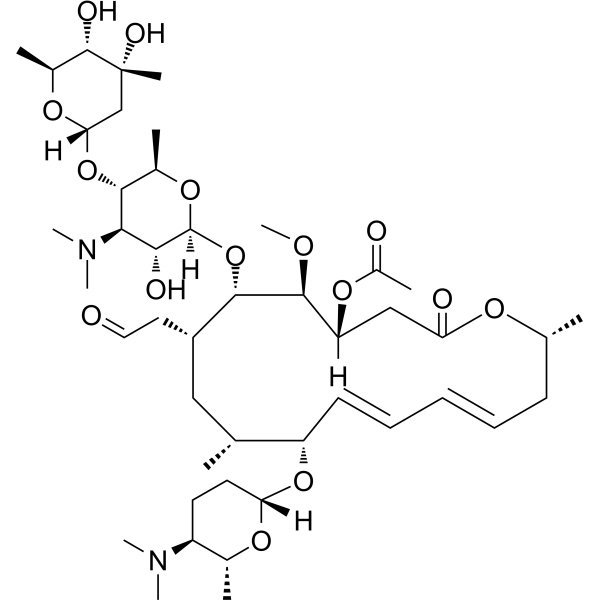
    Acetylspiramycin
    2 Publications Verification

    Spiramycin B; Spiramycin II; Foromacidin B

    Antibiotic Bacterial Parasite Infection
    Acetylspiramycin (Spiramycin B) is an effective oral macrolide antibiotic produced by Streptomyces, It can inhibit the splenic lymphocyte transformation induced by phytohemagglutinin (PHA), LPS (HY-D1056) and antigen, reduce the procoagulant activity of macrophages, have good antibacterial effect on gram-positive bacteria, and is also an effective antigenic insect agent, which can be used to fight parasitic infection .
    Acetylspiramycin
  • HY-N10424
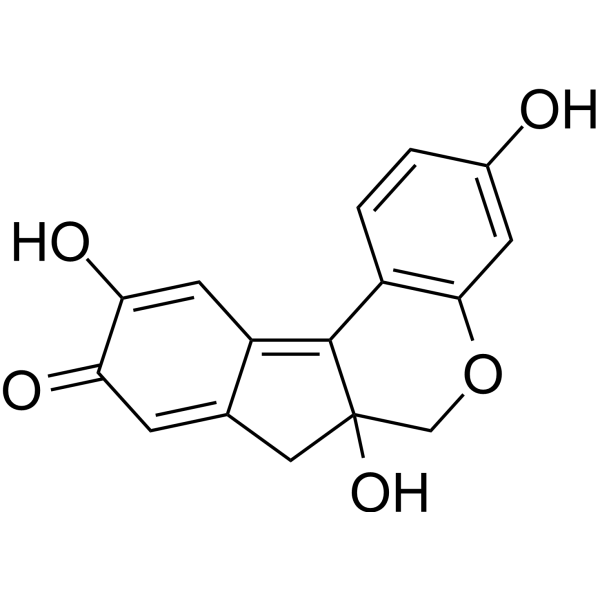
    Brazilein
    2 Publications Verification

    Na+/K+ ATPase Apoptosis Interleukin Related NO Synthase Bacterial Parasite Cardiovascular Disease Infection Neurological Disease Inflammation/Immunology
    Brazilein is a compound with anti-inflammatory and neuroprotective activities, with an IC50 of 500 μM against guinea pig Na +,K +-ATPase. Brazilein reduces iNOS mRNA expression, thereby inhibiting nitric oxide production in immune cells. Brazilein suppresses inflammatory responses by reducing the mRNA expression of TNF-α and IL-6, but has no effect on IL-1β expression. Brazilein reduces the cerebral infarction volume and improves the neurological function scores of rats with cerebral ischemia-reperfusion injury. Brazilein induces apoptosis of splenic lymphocytes in mice. Brazilein inhibits humoral immune responses in mice, and causes thymus and spleen atrophy as well as body weight loss in mice. Brazilein also possesses antimalarial and antibacterial activities. Brazilein is also a red dye. Brazilein can be used in studies related to the infection, nervous system, cardiovascular system and inflammatory diseases .
    Brazilein
  • HY-111827
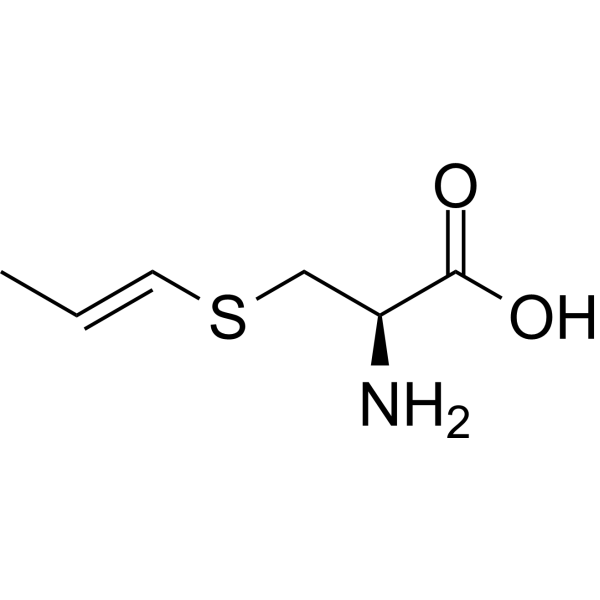
    S-1-Propenyl-L-cysteine
    5+ Cited Publications

    Histamine Receptor Cardiovascular Disease Others Metabolic Disease Inflammation/Immunology
    S-1-Propenyl-L-cysteine is a stereoisomer of S-allyl-l-cysteine, extracted from garlic, with immunomodulatory effects and reduces blood pressure in a hypertensive animal model . S-1-Propenyl-L-cysteine exhibits antioxidative efficacy through a NO-dependent BACH1 signaling pathway . S-1-Propenyl-L-cysteine is orally active.
    S-1-Propenyl-L-cysteine
  • HY-126813

    Antibiotic Fungal Infection
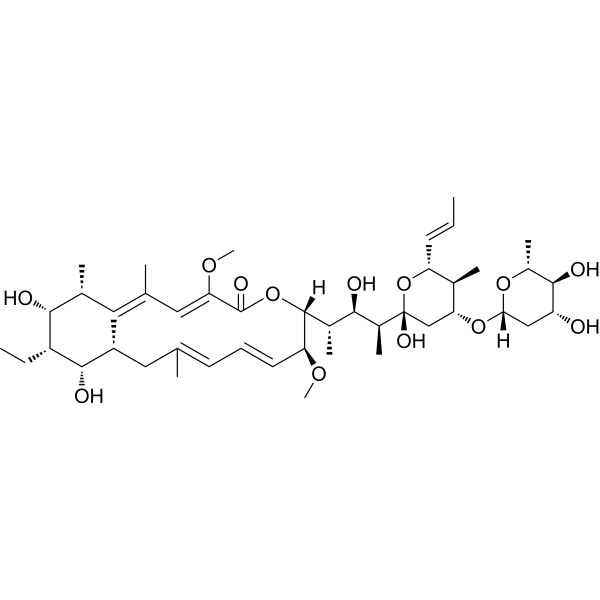
    Concanamycin C is a macrolide antibiotic with inhibitory activity against certain fungi and yeasts, but no activity against bacteria. Concanamycin C inhibits the proliferation of mouse splenic lymphocytes. Concanamycin C exhibits acute toxicity in ddY mice. Concanamycin C can be used in studies related to fungal infections and yeast infections .
    Concanamycin C
  • HY-N12126

    MS-347b

    Others Inflammation/Immunology
    Sydowinin B (MS-347b) is a active compound and can be isolated from A. sydowii. Sydowinin B shows has immunosuppressant activity .
    Sydowinin B
  • HY-130757

    Endogenous Metabolite Inflammation/Immunology
    Remisporine B is a polyketide, that can be isolated from Penicillium sp. ZJ-SY2. Remisporine B exhibits immunosuppressive efficacy, that inhibits concanavalin A (HY-P2149)-induced T-cell proliferation and LPS (HY-D1056)- induced B-cell proliferations of mouse splenic lymphocytes with IC50 of 30.1 µg/mL and 32.4 µg/mL .
    Remisporine B
  • HY-B1916R

    Spiramycin B (Standard); Spiramycin II (Standard); Foromacidin B (Standard)

    Reference Standards Antibiotic Bacterial Parasite Infection
    Acetylspiramycin (Standard) is the analytical standard of Acetylspiramycin. This product is intended for research and analytical applications. Acetylspiramycin (Spiramycin B) is an effective oral macrolide antibiotic produced by Streptomyces, It can inhibit the splenic lymphocyte transformation induced by phytohemagglutinin (PHA), LPS (HY-D1056) and antigen, reduce the procoagulant activity of macrophages, have good antibacterial effect on gram-positive bacteria, and is also an effective antigenic insect agent, which can be used to fight parasitic infection[1][2][3][4].
    Acetylspiramycin (Standard)
  • HY-111827R

    Histamine Receptor Cardiovascular Disease Others Metabolic Disease Inflammation/Immunology
    S-1-Propenyl-L-cysteine (Standard) is the analytical standard of S-1-Propenyl-L-cysteine. This product is intended for research and analytical applications. S-1-Propenyl-L-cysteine is a stereoisomer of S-allyl-l-cysteine, extracted from garlic, with immunomodulatory effects and reduces blood pressure in a hypertensive animal model . S-1-Propenyl-L-cysteine exhibits antioxidative efficacy through a NO-dependent BACH1 signaling pathway . S-1-Propenyl-L-cysteine is orally active.
    S-1-Propenyl-L-cysteine (Standard)
  • HY-W517092

    1,2,3,4,7,8,9-HpCDF

    Aryl Hydrocarbon Receptor Cytochrome P450 Metabolic Disease Inflammation/Immunology
    1,2,3,4,7,8,9-Heptachlorodibenzofuran (1,2,3,4,7,8,9-HpCDF) is a compound that induces the expression of CYP1A1 and CYP1B1 genes in human peripheral blood lymphocytes, while also promoting the expression of the aryl hydrocarbon receptor repressor (AhRR). 1,2,3,4,7,8,9-Heptachlorodibenzofuran can increase ethoxyresorufin-O-deethylase (EROD) activity in isolated human peripheral blood lymphocytes in a concentration-dependent manner, which serves as a marker of CYP1A1 activity. Furthermore, 1,2,3,4,7,8,9-Heptachlorodibenzofuran exhibits immunosuppressive effects by reducing the number of splenic plaque-forming cells in mice and increasing aryl hydrocarbon hydroxylase (AHH) activity in liver microsomes of mice injected with sheep red blood cells. 1,2,3,4,7,8,9-Heptachlorodibenzofuran can be used in research in the fields of immunology, metabolic diseases, and environmental toxicology .
    1,2,3,4,7,8,9-Heptachlorodibenzofuran
  • HY-182487

    Arp2/3 Complex Inflammation/Immunology
    Deoxaphomin is a cytochalasin. Deoxaphomin inhibits Actin filament elongation and reduces the viscosity of polymerized actin filaments. Deoxaphomin induces rounding of fibroblasts, contraction of actin cables, formation of actin-containing hairy structures, and formation of actin-containing cytoplasmic rodlets in fibroblasts. Deoxaphomin inhibits membrane ruffling in fibroblasts and capping in lymphocytes .
    Deoxaphomin

Inquiry Online

Your information is safe with us. * Required Fields.

Salutation


Country or Region *

Applicant Name *


Organization Name *

Department *


Email Address *


Product Name *

Cat. No.


Requested quantity *

Phone Number *


Remarks

Inquiry Online

Inquiry Information

Product Name:
Cat. No.:
Quantity:
MCE Japan Authorized Agent:

