7 Results for "

tamoxifen-resistant cells

" in MedChemExpress (MCE) Product Catalog:
Products (7)

7 Results for "tamoxifen-resistant cells" in MCE Product Catalog:

644
644 Cited Publications
Cat. No.: HY-100523
CAS No.: 846557-71-9
Purity:  99.96%
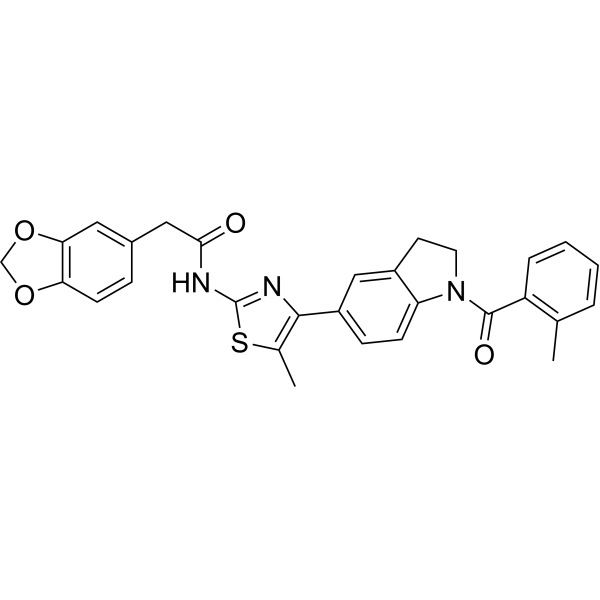
ML385 is a potent and selective Nrf2 inhibitor with an IC50 of 1.9 μM. ML385 directly binds to the Neh1 domain of NRF2, interferes with the binding of the MAFG-NRF2 protein complex to the antioxidant response element (ARE) DNA sequence, thereby blocking the expression of downstream target genes of NRF2. ML385 can be used in studies related to adult T-cell leukemia, breast cancer, myocardial ischemia/reperfusion injury, non-small cell lung cancer, esophageal squamous cell carcinoma, head and neck squamous cell carcinoma, and lung squamous cell carcinoma .
loading...
    loading...
3
3 Cited Publications
Cat. No.: HY-114305
CAS No.: 2064292-12-0
Purity:  99.70%
Research Areas:  

Cancer

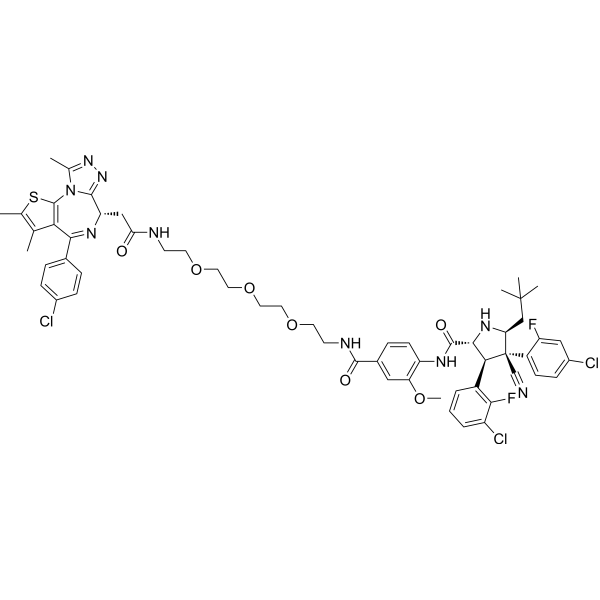
A1874 is an orally active BRD4 PROTAC degrader with a DC50 of 32 nM. A1874 degrades BRD4 via the ubiquitin-proteasome system by recruiting the MDM2 E3 ligase, while disrupting the MDM2-p53 interaction to stabilize p53 and upregulate p21, thereby inducing cell cycle arrest and apoptosis. A1874 exhibits selectivity for wild-type p53 cells and MDM2-amplified tumors, and it can be used in research on breast cancer, colorectal cancer, melanoma, lung cancer, lymphoma, myeloid leukemia, osteosarcoma, and glioblastoma .
loading...
    loading...
Cat. No.: HY-148214
CAS No.: 2531748-80-6
Purity:  98.20%
Target:  

CDK

Research Areas:  

Cancer

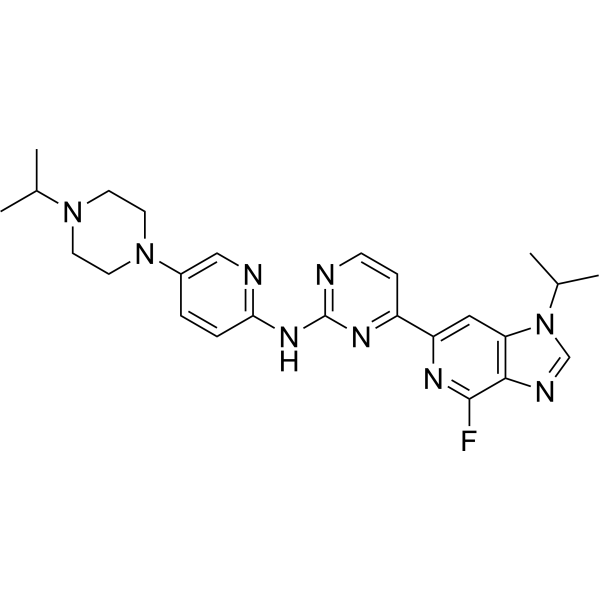
CDK2/4/6-IN-2 is a selective CDK2/4/6 inhibitor with IC50 values <1 μM. CDK2/4/6-IN-2 inhibits cells proliferation and phosphorylation of retinoblastoma protein at Ser807/811 in breast cancer cells. CDK2/4/6-IN-2 can be used for the research of cancer, such as breast cancer .
loading...
    loading...
Cat. No.: HY-174453
Research Areas:  

Cancer

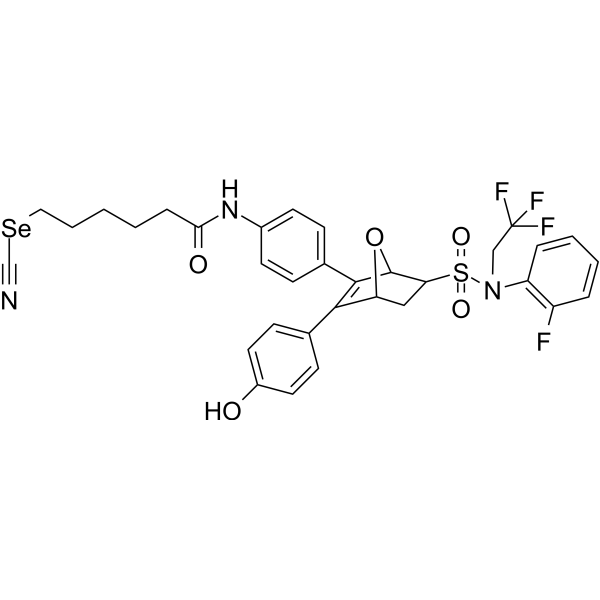
PROTAC ERα Degrader-12 is a VHL-recruiting ERα PROTAC degrader with a DC50 of 1.02 μM in MCF-7 cells. PROTAC ERα Degrader-12 binds to ERα and recruits the VHL E3 ligase to form a ternary complex, promoting proteasomal degradation of both wild-type and mutant ERα, thereby inhibiting ER-mediated transcriptional activity and breast cancer cell proliferation. PROTAC ERα Degrader-12 can be used in the research of ERα-positive breast cancer .
loading...
    loading...
Cat. No.: HY-155197
CAS No.: 2922929-63-1
Research Areas:  

Cancer

ER degrader 7 is an estrogen receptor α (ERα) degrader and a tubulin (tubulin) inhibitor. ER degrader 7 inhibits the cell viability of various cancer cell lines. ER degrader 7 disrupts the microtubule network in breast cancer cells, induces G2/M phase cell cycle arrest, and exhibits concentration-dependent accumulation in Tamoxifen-resistant LCC2 cells. ER degrader 7 suppresses tumor growth in vivo without causing body weight loss. ER degrader 7 can be applied in studies related to breast cancer .
loading...
    loading...
Cat. No.: HY-125675
CAS No.: 2027540-49-2
Target:  

Estrogen Receptor/ERR

Research Areas:  

Cancer

VPC-16606 is a selective inhibitor targeting the activation function 2 (AF2) domain of estrogen receptor α (ERα). VPC-16606 blocks the interaction between ERα and coactivators, inhibits the activity of both wild-type and clinically drug-resistant mutant ERα, and exerts inhibitory effects on hormone-resistant breast cancer cells. VPC-16606 can be used in breast cancer research .
loading...
    loading...
Cat. No.: HY-100523R
CAS No.: 846557-71-9
ML385 (Standard) is the analytical standard of ML385 (HY-100523). This product is intended for research and analytical applications. ML385 is a potent and selective Nrf2 inhibitor with an IC50 of 1.9 μM. ML385 directly binds to the Neh1 domain of NRF2, interferes with the binding of the MAFG-NRF2 protein complex to the antioxidant response element (ARE) DNA sequence, thereby blocking the expression of downstream target genes of NRF2. ML385 can be used in studies related to adult T-cell leukemia, breast cancer, myocardial ischemia/reperfusion injury, non-small cell lung cancer, esophageal squamous cell carcinoma, head and neck squamous cell carcinoma, and lung squamous cell carcinoma .
loading...
    loading...

