


1. Search Result
Search Result
Results for "

target nucleic acids

" in MedChemExpress (MCE) Product Catalog:

26

Inhibitors & Agonists

2

Screening Libraries

4

Fluorescent Dyes

8

Biochemical Assay Reagents

6

Peptides

1

MCE Kits

1

Natural
Products

1

Isotope-Labeled Compounds

3

Click Chemistry

4

Oligonucleotides

Cat. No. Product Name Target Research Areas Chemical Structure
  • HY-D1055
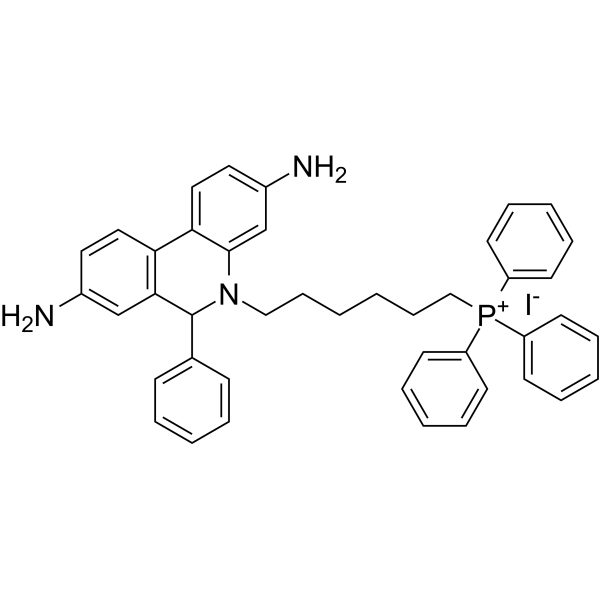
    MitoSOX Red
    Maximum Cited Publications
    263 Publications Verification

    Fluorescent Dye Reactive Oxygen Species (ROS) Mitochondrial Metabolism Cancer
    MitoSOX Red is a live cell fluorescent probe that specifically targets mitochondria and is cell membrane permeable. MitoSOX Red enters mitochondria and is oxidized by superoxide but not by other ROS or RNS generating systems. The oxidized MitoSOX Red then binds to nucleic acids in mitochondria/nucleus, producing strong red fluorescence. MitoSOX Red can be used as a fluorescent indicator to specifically detect superoxide. In addition, superoxide dismutase (SOD) can prevent the oxidation of MitoSOX Red.
    Excitation/emission wavelength: 510/580 nm.
    MitoSOX Red
  • HY-D0971
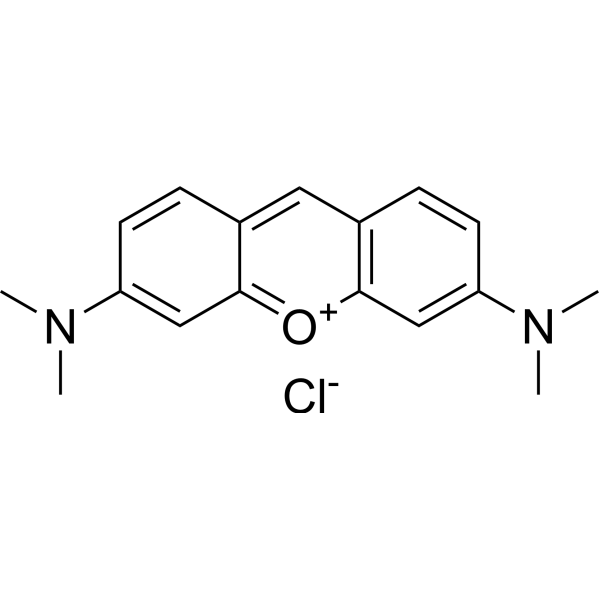
    Pyronin Y
    4 Publications Verification

    Pyronine G; C.I. 45005

    DNA Stain Others
    Pyronin Y (Pyronine G) is a cationic dye that intercalates RNA and has been used to target cell structures including RNA, DNA and organelles. Pyronin Y forms fluorescent complexes with double-stranded nucleic acids (especially RNA) enabling semi-quantitative analysis of cellular RNA. Pyronin Y can be used to identify specific RNA subspecies of ribonuclear proteins complexes in live cells .
    Pyronin Y
  • HY-15906
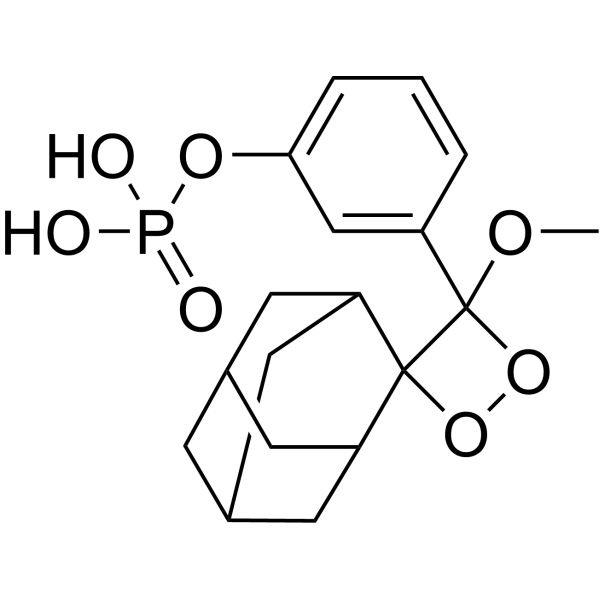
    AMPPD
    1 Publications Verification

    Lumi-Phos Plus; Lumigen PPD; PPD

    Phosphatase Others
    AMPPD (Lumi-Phos Plus; Lumigen PPD) is a chemiluminescent substrate for alkaline phosphatase (APase). AMPPD is hydrolyzed by APase to generate an unstable dioxetane intermediate, and the intermediate releases a chemiluminescent signal when it decomposes. The luminescent signal of AMPPD can be detected by highly sensitive equipment, thereby achieving quantitative analysis of the target molecule. AMPPD can be used in ultrasensitive enzyme-linked immunosorbent assays (such as quantitative detection of human tissue kininogen), chemiluminescent detection of proteins and nucleic acids, and other fields .
    AMPPD
  • HY-W583868

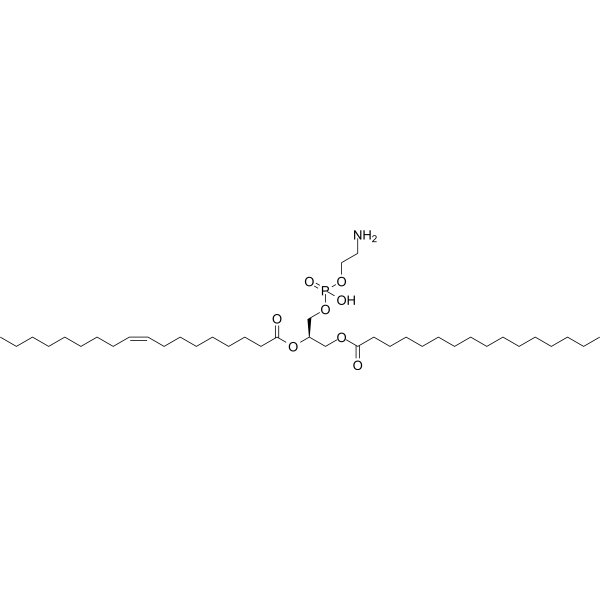
    1,2-POPE; 16:0-18:1 PE

    Liposome Others
    1-Palmitoyl-2-oleoyl-sn-glycero-3-PE (1,2-POPE; 16:0-18:1 PE) is a phosphatidylethanolamine (PE) lipid. 1-Palmitoyl-2-oleoyl-sn-glycero-3-PE can induce lipid bilayer to form a hexagonal phase (HII) structure in an acidic environment and promote membrane fusion. 1-Palmitoyl-2-oleoyl-sn-glycero-3-PE can enhance the endosomal escape ability of lipid nanoparticles (LNPs) and improve the cellular delivery efficiency of nucleic acid drugs such as mRNA. 1-Palmitoyl-2-oleoyl-sn-glycero-3-PE can be used for LNP carrier targeting of gene therapy and mRNA vaccines .
    1-Palmitoyl-2-oleoyl-sn-glycero-3-PE
  • HY-160523

    Biochemical Assay Reagents Others
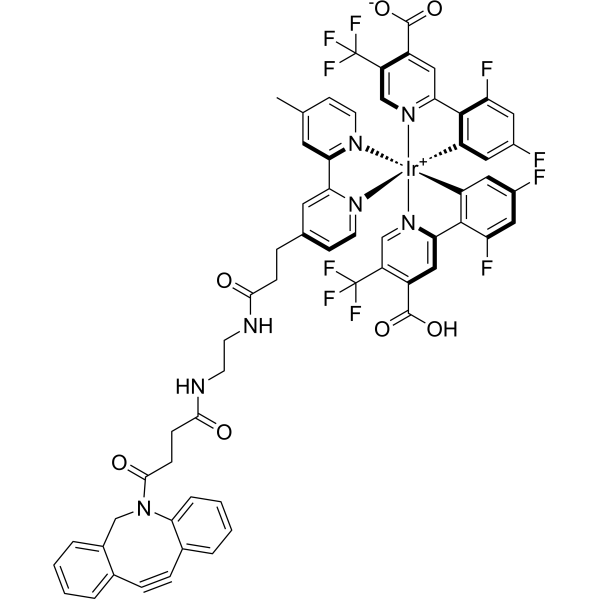
    DBCO Ir catalyst is an iridium catalyst labeled with DBCO. DBCO Ir catalyst can be used for in situ labeling and imaging of biomolecules (e.g., proteins, nucleic acids) in living organisms or for constructing targeted drug delivery systems .
    DBCO Ir catayst
  • HY-NP165

    AGEs

    Biochemical Assay Reagents Cardiovascular Disease Metabolic Disease Inflammation/Immunology
    Advanced glycation end products (AGEs) are a series of stable compounds generated through non-enzymatic reactions between reducing sugars and proteins, lipids, or nucleic acids. Advanced glycation end products are often used as targets to evaluate the inhibitory effects of anti-glycation compounds. Advanced glycation end products can be applied to research on diabetes, cardiovascular and cerebrovascular diseases, inflammation, aging, and other conditions .
    Advanced glycation end products
  • HY-W440911

    Liposome Fluorescent Dye Cancer
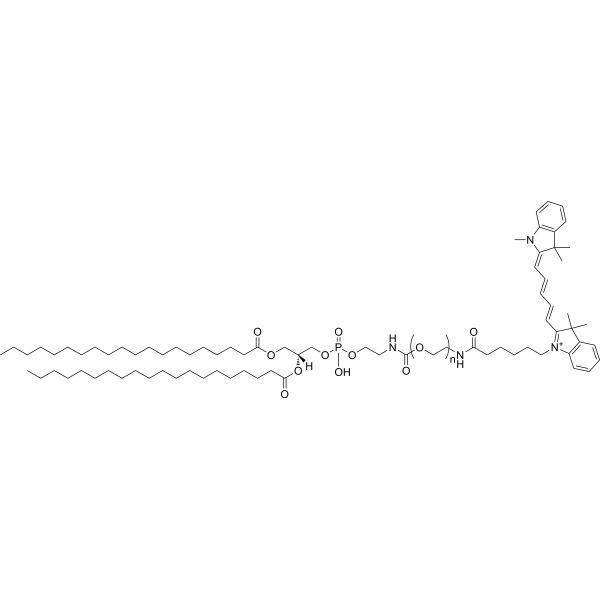
    DSPE-PEG2000-Cy5 is a Cy5 (HY-D0821) fluorophore-labeled conjugate of distearoylphosphatidylethanolamine and polyethylene glycol, as well as a liposome component. The Cy5 fluorophore is commonly used for labeling proteins and nucleic acids in imaging, flow cytometry and genomic applications. DSPE-PEG2000-Cy5 supports cell membrane modification, in vivo tumor targeting research and long-term in vivo circulation of its liposomal formulations (Ex/Em=633/670 nm) .
    DSPE-PEG2000-Cy5
  • HY-106991A

    S-303 dihydrochloride

    HIV Bacterial CHIKV Infection
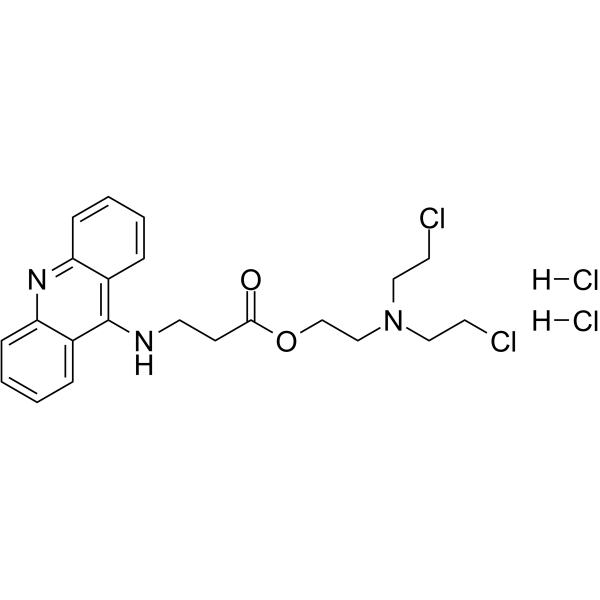
    Amustaline (S-303) dihydrochloride, a nucleic acid-targeted alkylator, is an efficient pathogen inactivation agent for blood components containing red blood cells. Amustaline dihydrochloride has three components: an acridine anchor (an intercalator that targets nucleic acids non-covalently), an effector (a bis-alkylator group that reacts with nucleophiles), and a linker (a small flexible carbon chain containing a labile ester bond that hydrolyzes at neutral pH to yield non-reactive breakdown products) .
    Amustaline dihydrochloride
  • HY-136248
    Cyanine 3 Tyramide
    1 Publications Verification

    Tyramide-Cy3

    DNA Stain Fluorescent Dye Others
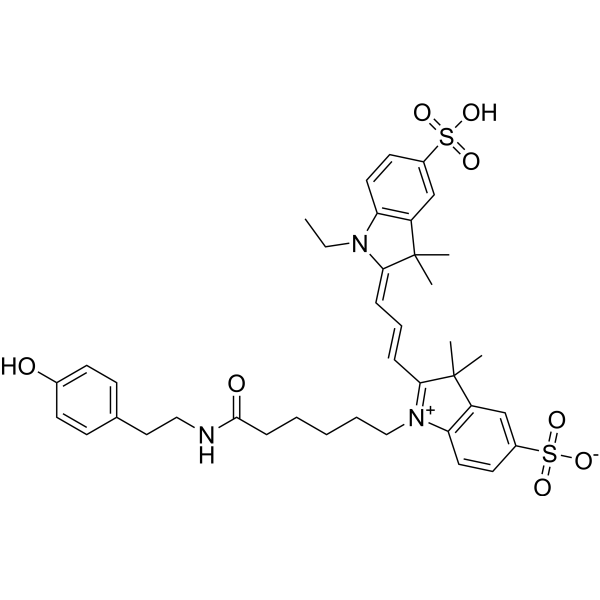
    Cyanine 3 Tyramide (Tyramide-Cy3) is an orange fluorescent dye used as a reporter fluorescent substrate for horseradish peroxidase (HRP)-catalyzed deposition, which serves as a signal amplification technique in immunoassays and in situ nucleic acid hybridization .
    Cyanine 3 Tyramide
  • HY-156045C

    Biochemical Assay Reagents Others
    Cross-linked dextran G 200 is a hydrophilic gel based on molecular size exclusion and targeted macromolecular separation. Cross-linked dextran G 200 works through the gel permeation mechanism, and the cross-linked structure forms a three-dimensional network with a specific pore size, achieving separation based on the molecular hydrodynamic volume. Cross-linked dextran G 200 can be used to adjust the osmotic solute distribution coefficient and the ability to maintain osmotic equilibrium, such as in gel filtration chromatography for purification and analysis of biomacromolecules such as proteins and nucleic acids . Cross-linked dextran G 200 can also be used as a gel filtration filler (particle size range: 40-120 μm; globular protein separation range: 5-600 kDa) .
    Cross-linked dextran G 200
  • HY-126327A

    Histone Methyltransferase Cancer
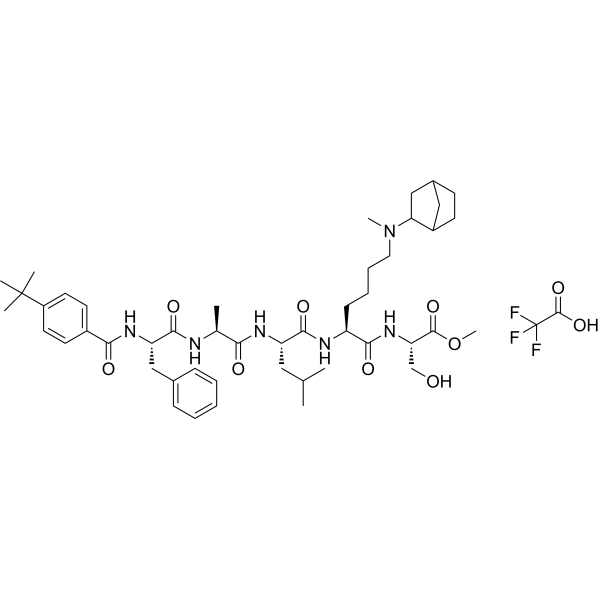
    UNC4976 TFA is a positive allosteric modulator (PAM) peptidomimetic of CBX7 chromodomain binding to nucleic acids. UNC4976 TFA simultaneously antagonizes H3K27me3-specific recruitment of CBX7 to target genes while increasing non-specific binding to DNA and RNA .
    UNC4976 TFA
  • HY-155887

    DSPE-PEG-NH2, MW 3400 ammonium

    Liposome Cancer
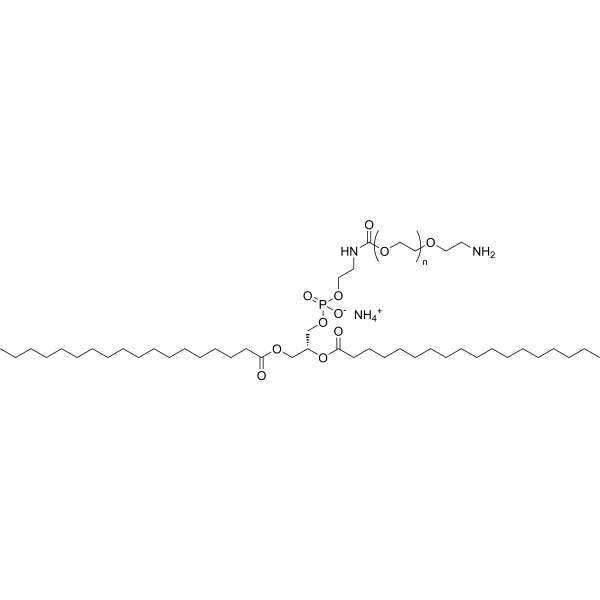
    DSPE-PEG-Amine (DSPE-PEG-NH2), MW 3400 ammonium is an amino-functionalized PEGylated phospholipid. It serves not only as a key component for preparing σ receptor-targeted liposomes (such as anisamide-modified lipids) but also as a starting material for synthesizing click chemistry- and tumor-targeted lipids including DSPE-PEG-DBCO (HY-155788) and DSPE-PEG2000-TCO (HY-170704). DSPE-PEG-Amine, MW 3400 ammonium effectively modulates the ζ potential of nanoparticles, enables complexation with nucleic acids or proteins to protect DNA from nuclease degradation, and supports ligand conjugation on the nanoparticle surface. It is used in studies related to DU-145 tumors, breast cancer, and other relevant research .
    DSPE-PEG-Amine, MW 3400 ammonium
  • HY-156045B

    Biochemical Assay Reagents Others
    Cross-linked dextran G 150 is a hydrophilic gel based on molecular size exclusion and targeted for the separation of macromolecules. Cross-linked dextran G 150 functions through the gel permeation mechanism, where the cross-linked structure forms a three-dimensional network with specific pore diameters, achieving separation based on the molecular volumetric flow. Cross-linked dextran G 150 can be used to regulate the distribution coefficient of permeating solutes and maintain the permeation balance, such as in gel filtration chromatography for the purification and analysis of biological macromolecules like proteins and nucleic acids. Cross-linked dextran G 150 can also be used as a gel filtration filler (particle size range: 40-120 μm; spherical protein separation range: 5-300 kDa) .
    Cross-linked dextran G 150
  • HY-126327

    Histone Methyltransferase Cancer
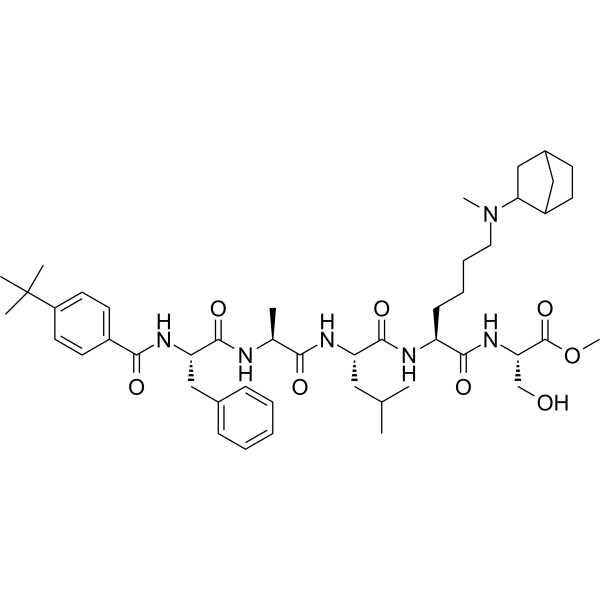
    UNC4976 is a positive allosteric modulator (PAM) peptidomimetic of CBX7 chromodomain binding to nucleic acids. UNC4976 simultaneously antagonizes H3K27me3-specific recruitment of CBX7 to target genes while increasing non-specific binding to DNA and RNA .
    UNC4976
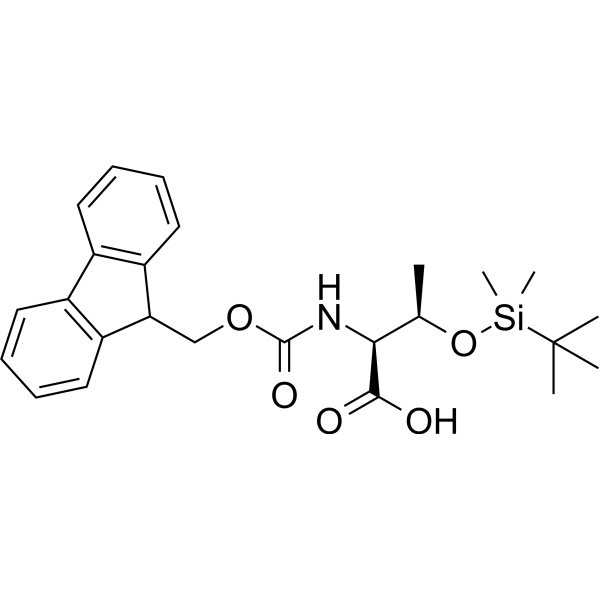
  • HY-W048671

    Amino Acid Derivatives Others
    Fmoc-Thr(TBDMS)-OH is a Threonine derivative. Fmoc-Thr(TBDMS)-OH can be used for the preparation of sugar ligand-tethered functional nucleic acid conjugates for targeted research .
    Fmoc-Thr(TBDMS)-OH
  • HY-N2625

    Apoptosis Cancer
    Harmalol is a β-carbazine alkaloid with anticancer activity. Harmalol binds and interacts with several natural and synthetic nucleic acids of different motifs, including DNA and RNA. In addition, harmalol has an apoptosis-inducing effect on human hepatoma cells in vitro .
    Harmalol
  • HY-160577

    Liposome Others
    DOG-IM4 can be used to synthesize nanoparticles to deliver antigen-encoding nucleic acids. It could be used to try to target autoimmune diseases, rare blood or metabolic diseases, allergies, cancer or infectious diseases .
    DOG-IM4
  • HY-153665

    Biochemical Assay Reagents Others
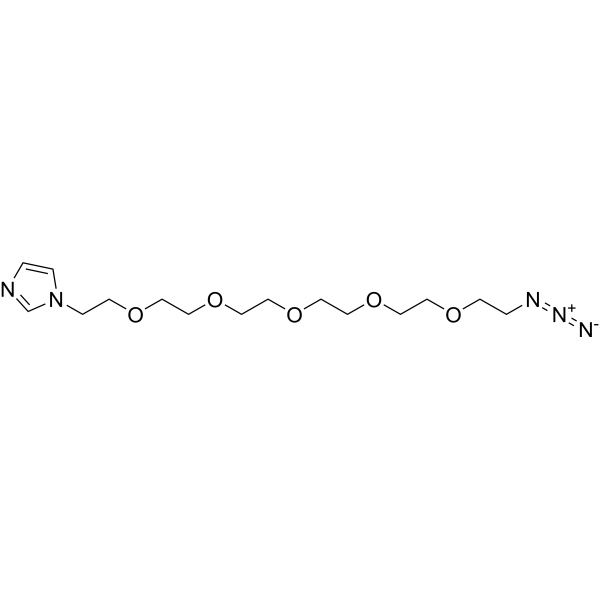
    Deg-1 is a a bifunctional probe with a cleavage group and a covalent binding group. Deg-1 covalently binds to the target nucleic acid, and serves as click-degrader to cleave a nucleic acid molecule. Deg-1 has potential to selectively cleave target nucleic acids in cells . It contains an azide group and can undergo copper-catalyzed azide-alkyne cycloaddition (CuAAc) with molecules containing alkyne groups. It can also undergo ring strain-promoted alkyne-azide cycloaddition (SPAAC) with molecules containing DBCO or BCN groups.
    Deg-1
  • HY-106991AR

    S-303 dihydrochloride (Standard)

    HIV Bacterial Reference Standards CHIKV Infection
    Amustaline (dihydrochloride) (Standard) is the analytical standard of Amustaline (dihydrochloride). This product is intended for research and analytical applications. Amustaline (S-303) dihydrochloride, a nucleic acid-targeted alkylator, is an efficient pathogen inactivation agent for blood components containing red blood cells. Amustaline dihydrochloride has three components: an acridine anchor (an intercalator that targets nucleic acids non-covalently), an effector (a bis-alkylator group that reacts with nucleophiles), and a linker (a small flexible carbon chain containing a labile ester bond that hydrolyzes at neutral pH to yield non-reactive breakdown products) .
    Amustaline dihydrochloride (Standard)
  • HY-173238

    Bacterial Reactive Oxygen Species (ROS) Infection
    Antibacterial Agent 273 (Compound 15e) is a membrane-targeting antimicrobial agent that disrupts bacterial cell membranes, exhibiting a MIC of 4 μg/mL against Staphylococcus aureus. By compromising membrane integrity, it induces leakage of intracellular nucleic acids and proteins, suppresses bacterial metabolic activity, and triggers the accumulation of reactive oxygen species (ROS). Antibacterial Agent 273 is suitable for research on infections caused by Staphylococcus aureus .
    Antibacterial agent 273
  • HY-130670

    GABA Receptor Neurological Disease
    CGP 54626 is a GABAB receptor modulator, which is essential in the central and peripheral nervous systems. It is used as a tool to identify and characterize GABAB receptor agonists and antagonists, which will aid in the development of drugs targeting diseases related to these systems. This discovery involves purified GABAB receptors, receptor proteins and their encoding nucleic acids, facilitating the study of new members of the GABAB receptor family through DNA cloning technology and sequence-derived probes .
    CGP 54626
  • HY-W127719

    Biochemical Assay Reagents Others
    Photobiotin (acetate)It is a biological probe used to study biochemical processes such as protein interactions and enzymatic reactions. It is a molecule containing a photosensitive group, which can be combined with specific target molecules (such as proteins, nucleic acids, etc.) through photochemical cross-linking technology, so as to realize the labeling and detection of these molecules. During the photosensitive crosslinking process, Photobiotin (acetate)Can participate in the formation of covalent bonds and form stable compounds. In addition, the compound also has high biocompatibility and biological activity, so it is widely used in the field of biomedical research, such as enzymatic research, proteomics, western blotting and other aspects. Photobiotin (acetate) is a click chemistry reagent, it contains an Azide group and can undergo copper-catalyzed azide-alkyne cycloaddition reaction (CuAAc) with molecules containing Alkyne groups. It can also undergo strain-promoted alkyne-azide cycloaddition (SPAAC) reactions with molecules containing DBCO or BCN groups.
    Photobiotin acetate
  • HY-P11688

    Biochemical Assay Reagents Others
    Fmoc-PNA-M (Bhoc)-OH is a standard peptide nucleic acid (PNA) monomer building block. Fmoc-PNA-M (Bhoc)-OH carries two protecting groups, Fmoc and Bhoc, and is specifically designed for solid-phase and automated PNA synthesis. Fmoc-PNA-M (Bhoc)-OH efficiently participates in the construction of sequence-specific PNA probes. Through its protecting group strategy, Fmoc-PNA-M (Bhoc)-OH ensures the accuracy and efficiency of PNA synthesis, and is one of the important raw materials for PNA synthesis at present .
    Fmoc-PNA-M(Bhoc)-OH
  • HY-P11689

    Biochemical Assay Reagents Others
    Fmoc-PNA-J (Bhoc)-OH is a protected peptide nucleic acid (PNA) monomer building block used for solid-phase synthesis of PNA oligomers. Fmoc-PNA-J (Bhoc)-OH carries Fmoc/Bhoc protecting groups and functions as a standard Fmoc-protected PNA monomer .
    Fmoc-PNA-J(Bhoc)-OH
  • HY-D3404

    DNA Stain Others
    BODi-1 is a fluorescent modulator targeting dsDNA, which binds to dsDNA via a bis-intercalation mechanism (Ex=465 nm, Em=490 nm). BODi-1 exhibits a fluorescence enhancement effect upon binding to nucleic acids, but its fluorescence intensity, anisotropy and average lifetime decrease at higher dye/DNA ratios. When BODi-1 binds to DNA in liposome complexes, it also shows red-shifted emission spectra, along with reduced quantum yield and average lifetime. BODi-1 does not induce significant DNA conformational changes when the dye/DNA ratio is below 0.01. BODi-1 can be used as a fluorescent probe for the characterization of liposome complexes and FRET studies at this ratio .
    BODi-1
  • HY-W583868S

    1,2-POPE-d62; 16:0-18:1 PE-d62

    Isotope-Labeled Compounds Others
    1-Palmitoyl-2-oleoyl-sn-glycero-3-PE-d62 (1,2-POPE-d62) is the deuterium labeled 1-Palmitoyl-2-oleoyl-sn-glycero-3-PE. 1-Palmitoyl-2-oleoyl-sn-glycero-3-PE (1,2-POPE; 16:0-18:1 PE) is a phosphatidylethanolamine (PE) lipid. 1-Palmitoyl-2-oleoyl-sn-glycero-3-PE can induce lipid bilayer to form a hexagonal phase (HII) structure in an acidic environment and promote membrane fusion. 1-Palmitoyl-2-oleoyl-sn-glycero-3-PE can enhance the endosomal escape ability of lipid nanoparticles (LNPs) and improve the cellular delivery efficiency of nucleic acid drugs such as mRNA. 1-Palmitoyl-2-oleoyl-sn-glycero-3-PE can be used for LNP carrier targeting of gene therapy and mRNA vaccines .
    1-Palmitoyl-2-oleoyl-sn-glycero-3-PE-d62

Inquiry Online

Your information is safe with us. * Required Fields.

Salutation


Country or Region *

Applicant Name *


Organization Name *

Department *


Email Address *


Product Name *

Cat. No.


Requested quantity *

Phone Number *


Remarks

Inquiry Online

Inquiry Information

Product Name:
Cat. No.:
Quantity:
MCE Japan Authorized Agent:

