1. Search Result
Search Result
Results for "

teratogenicity and toxicity

" in MedChemExpress (MCE) Product Catalog:

11

Inhibitors & Agonists

2

Biochemical Assay Reagents

1

Natural
Products

3

Isotope-Labeled Compounds

Cat. No. Product Name Target Research Areas Chemical Structure
  • HY-Y1275

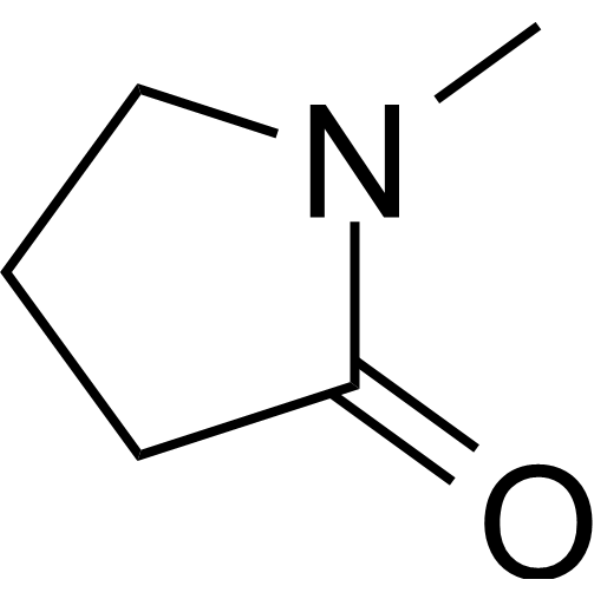
    NMP; 1-Methyl-2-pyrrolidinone

    Environmental Pollutants Biochemical Assay Reagents Cancer
    N-Methylpyrrolidone (1-Methyl-2-pyrrolidinone), a five-membered cyclic amide, is an orally active organic polar solvent with teratogenicity and toxicity. N-Methylpyrrolidone is low in acute toxicity with a LD50 value of 3914 mg/kg in rats and of 4050 mg/kg in mice. N-Methylpyrrolidone is extensively used in the manufacture of adhesives, paints, fuels, and pharmaceuticals .
    N-Methylpyrrolidone
  • HY-W088065

    Environmental Pollutants DNA/RNA Synthesis Others
    Sodium formate acts as a key promoter for heterogeneous nucleation of ZIF crystals and thin film synthesis. It is also recognized as a GRAS substance by the FDA, and serves as a cosmetic preservative and food additive. Sodium formate has low acute oral toxicity (acute oral LD50=7410 mg/kg and acute intravenous LD50=807 mg/kg in mice), with no heritable or carcinogenic effects, but exhibits embryonic developmental toxicity and teratogenicity at high concentrations. Sodium formate may cause moderate irritation to rabbit eyes, is relatively safe to the skin, and does not induce tumor formation in rats in vivo. Sodium formate is rapidly absorbed and oxidized to carbon dioxide in vivo, and forms DNA adducts in specific metabolic deficiency models or upon high-dose exposure .
    Sodium formate
  • HY-75308
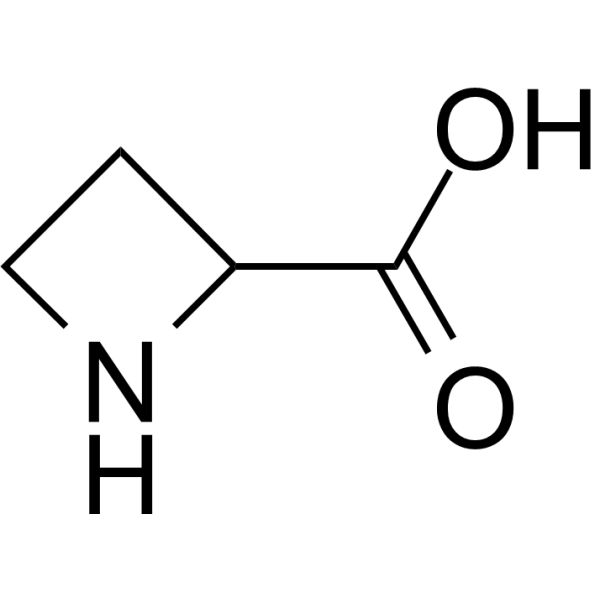
    Azetidine-2-carboxylic acid
    1 Publications Verification

    Others Cancer
    Azetidine-2-carboxylic acid is a non proteinogenic amino acid homologue of proline. Found in common beets. Azetidine-2-carboxylic acid can be misincorporated into proteins in place of proline in many species, including humans. Toxic and teratogenic agent .
    Azetidine-2-carboxylic acid
  • HY-B0742
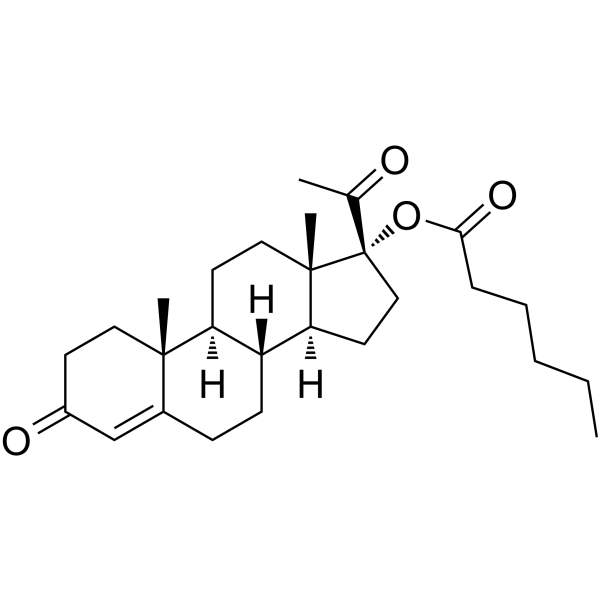
    Hydroxyprogesterone caproate
    Maximum Cited Publications
    6 Publications Verification

    17α-Hydroxyprogesterone hexanoate; 17α-Hydroxyprogesterone caproate

    Progesterone Receptor Endocrinology
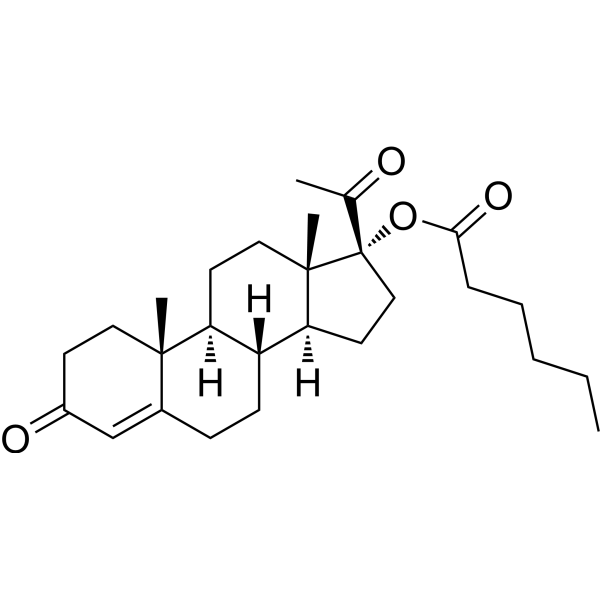
    Hydroxyprogesterone caproate (17α-Hydroxyprogesterone hexanoate; 17α-Hydroxyprogesterone caproate) is a progesterone receptor (progesterone receptor) ligand and steroid hormone transcription inhibitor. Hydroxyprogesterone caproate downregulates estrogen receptors in target tissues and activates their metabolic pathways, and exhibits equivalent affinity for progesterone receptor A and progesterone receptor B. Hydroxyprogesterone caproate shows no consistent teratogenicity or developmental toxicity in rat, mouse and monkey models, but induces resorption or abortion in rhesus monkeys at human-equivalent doses. Hydroxyprogesterone caproate promotes the production of TNF-α in lipopolysaccharide-stimulated whole blood from non-pregnant women. Hydroxyprogesterone caproate can be used in scientific research related to preterm birth .
    Hydroxyprogesterone caproate
  • HY-131551

    Environmental Pollutants Biochemical Assay Reagents Others
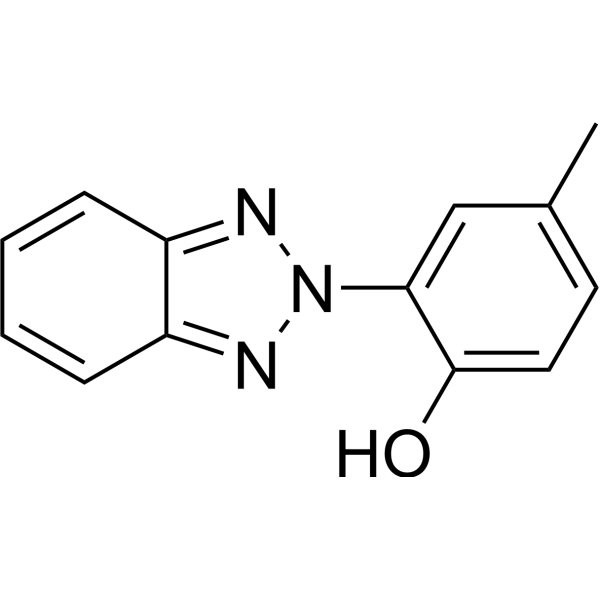
    Drometrizole is an orally active UV absorber and can be used in cosmetic research. Drometrizole has low acute toxicity, no teratogenicity and carcinogenicity .
    Drometrizole
  • HY-Y1275S

    NMP-d9; 1-Methyl-2-pyrrolidinone-d9

    Isotope-Labeled Compounds Biochemical Assay Reagents Cancer
    N-Methylpyrrolidone-d9 (NMP-d9) is deuterium labeled N-Methylpyrrolidone. N-Methylpyrrolidone (1-Methyl-2-pyrrolidinone), a five-membered cyclic amide, is an orally active organic polar solvent with teratogenicity and toxicity. N-Methylpyrrolidone is low in acute toxicity with a LD50 value of 3914 mg/kg in rats and of 4050 mg/kg in mice. N-Methylpyrrolidone is extensively used in the manufacture of adhesives, paints, fuels, and pharmaceuticals .
    N-Methylpyrrolidone-d9
  • HY-B0742R
    Hydroxyprogesterone caproate (Standard)
    Maximum Cited Publications
    6 Publications Verification

    17α-Hydroxyprogesterone hexanoate(Standard); 17α-Hydroxyprogesterone caproate (Standard)

    Reference Standards Progesterone Receptor Others
    Hydroxyprogesterone caproate (Standard) is the analytical standard of Hydroxyprogesterone caproate. This product is intended for research and analytical applications. Hydroxyprogesterone caproate (17α-Hydroxyprogesterone hexanoate; 17α-Hydroxyprogesterone caproate) is a progesterone receptor (progesterone receptor) ligand and steroid hormone transcription inhibitor. Hydroxyprogesterone caproate downregulates estrogen receptors in target tissues and activates their metabolic pathways, and exhibits equivalent affinity for progesterone receptor A and progesterone receptor B. Hydroxyprogesterone caproate shows no consistent teratogenicity or developmental toxicity in rat, mouse and monkey models, but induces resorption or abortion in rhesus monkeys at human-equivalent doses. Hydroxyprogesterone caproate promotes the production of TNF-α in lipopolysaccharide-stimulated whole blood from non-pregnant women. Hydroxyprogesterone caproate can be used in scientific research related to preterm birth .
    Hydroxyprogesterone caproate (Standard)
  • HY-131551R

    Biochemical Assay Reagents Reference Standards Others
    Drometrizole (Standard) is the analytical standard of Drometrizole (HY-131551). This product is intended for research and analytical applications. Drometrizole is an orally active UV absorber and can be used in cosmetic research. Drometrizole has low acute toxicity, no teratogenicity and carcinogenicity .
    Drometrizole (Standard)
  • HY-170514

    Aryl Hydrocarbon Receptor Others
    1,2,3,7,8,9-Hexachlorodibenzofuran is a polychlorinated dibenzofuran homologue. 1,2,3,7,8,9-Hexachlorodibenzofuran can interact with AhR. 1,2,3,7,8, 9-hexachlorodibenzofuran is highly toxic, teratogenic, carcinogenic and mutagenic .
    1,2,3,7,8,9-Hexachlorodibenzofuran
  • HY-W746440

    D,L-Azetidine-2-carboxylic acid-d4

    Isotope-Labeled Compounds Cancer
    Azetidine-2-carboxylic acid-d4 (D,L-Azetidine-2-carboxylic acid-d4) is the deuterium labeled Azetidine-2-carboxylic acid (HY-75308). Azetidine-2-carboxylic acid is a non proteinogenic amino acid homologue of proline. Found in common beets. Azetidine-2-carboxylic acid can be misincorporated into proteins in place of proline in many species, including humans. Toxic and teratogenic agent .
    Azetidine-2-carboxylic acid-d4
  • HY-B0742S1

    17α-Hydroxyprogesterone hexanoate-d8; 17α-Hydroxyprogesterone caproate-d8

    Isotope-Labeled Compounds Progesterone Receptor Others
    Hydroxyprogesterone caproate-d8 (17α-Hydroxyprogesterone hexanoate-d8) is the deuterium labeled Hydroxyprogesterone caproate (HY-B0742). Hydroxyprogesterone caproate (17α-Hydroxyprogesterone hexanoate; 17α-Hydroxyprogesterone caproate) is a progesterone receptor (progesterone receptor) ligand and steroid hormone transcription inhibitor. Hydroxyprogesterone caproate downregulates estrogen receptors in target tissues and activates their metabolic pathways, and exhibits equivalent affinity for progesterone receptor A and progesterone receptor B. Hydroxyprogesterone caproate shows no consistent teratogenicity or developmental toxicity in rat, mouse and monkey models, but induces resorption or abortion in rhesus monkeys at human-equivalent doses. Hydroxyprogesterone caproate promotes the production of TNF-α in lipopolysaccharide-stimulated whole blood from non-pregnant women. Hydroxyprogesterone caproate can be used in scientific research related to preterm birth .
    Hydroxyprogesterone caproate-d8

Inquiry Online

Your information is safe with us. * Required Fields.

Salutation


Country or Region *

Applicant Name *


Organization Name *

Department *


Email Address *


Product Name *

Cat. No.


Requested quantity *

Phone Number *


Remarks

Inquiry Online

Inquiry Information

Product Name:
Cat. No.:
Quantity:
MCE Japan Authorized Agent:

