
8 Results for "

tumor cell destruction

" in MedChemExpress (MCE) Product Catalog:
Products (8)

8 Results for "tumor cell destruction" in MCE Product Catalog:

Cat. No.: HY-P99605
CAS No.: 2218515-90-1
Synonyms: PRS 343

Target:  

EGFR TNF Receptor

Research Areas:  

Cancer

Cinrebafusp alfa (PRS 343) is a high affinity CD137/HER2 bispecfic anticalin-based drug. Cinrebafusp alfa binds to recombinant human HER2 (Kd=0.3 nM) and human monomeric CD137 (4-1BB; Kd=5 nM). Cinrebafusp alfa facilitates T-cell costimulation by tumor-localized, HER2-dependent 4-1BB clustering and activation, further enhancing T-cell receptor-mediated activity and leading to tumor destruction. Cinrebafusp alfa has the potential for HER2+ solid tumors research .
loading...
    loading...
Cat. No.: HY-P10370
CAS No.: 721397-24-6
Target:  

Bacterial Apoptosis

Research Areas:  

Infection Cancer

d-(KLAKLAK)2, as an antibacterial and anti-tumor polypeptide, is a representative of the antimicrobial peptide group, and also has good anticancer properties. d-(KLAKLAK)2 is able to kill bacteria by damaging their cell membranes, causing cell contents to leak out. d-(KLAKLAK)2 can also inhibit tumor cell proliferation by causing mitochondrial swelling and mitochondrial membrane destruction, triggering apoptosis (programmed cell death) .
loading...
    loading...
Cat. No.: HY-P10743
Research Areas:  

Cancer

BQ7876 is a probe targeting prostate-specific membrane antigen (PSMA) that contains a DOTA chelator. BQ7876, after being radiolabeled with radionuclide (177Lu), functions in both radionuclide imaging and tumor cell destruction by specifically binding to PSMA. BQ7876 shows potential for research in the field of metastatic castration-resistant prostate cancer (mCRPC) . BQ7876 can be used for the synthesis/research of Radionuclide-Drug Conjugates (RDCs).
loading...
    loading...
Cat. No.: HY-156996
CAS No.: 1821461-84-0
Target:  

Others

Research Areas:  

Inflammation/Immunology Cancer

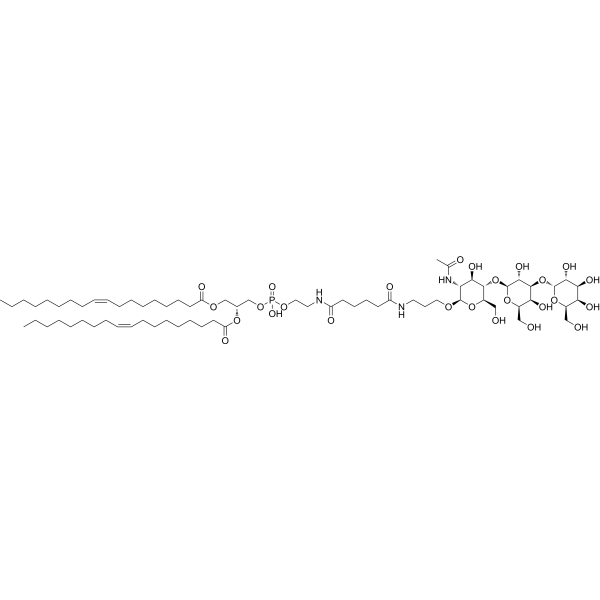
AGI-134 is a fully synthetic alpha-Gal glycolipid. AGI-134 invokes CD8+ T cell-mediated immunity. AGI-134 induces tumor cell destruction and phagocytosis .
loading...
    loading...
Cat. No.: HY-12238G
CAS No.: 1127442-82-3
Synonyms: endo-IWR 1 (GMP); IWR-1-endo (GMP)
IWR-1 (IWR-1-endo) (GMP) is the IWR-1 (HY-12238) produced by using GMP guidelines. GMP small molecules work appropriately as an auxiliary reagent for cell therapy manufacture. IWR-1 (IWR-1-endo) is a tankyrase inhibitor targeting Wnt/β-catenin (IC50 = 180 nM). IWR-1 compromises critical steps of the canonical Wnt signaling, namely translocation of β-catenin to the nucleus and subsequent TCF/LEF activation and expression of Wnt/β-catenin downstream targets. IWR-1 promotes β-catenin phosphorylation by promoting stability of Axin-scaffolded destruction complexes. IWR-1 can be studied in research for anti-tumor purposes, and diseases such as osteosarcoma, colorectal cancer and psoriasis .
loading...
    loading...
Cat. No.: HY-P99279A

Target:  

Inhibitory Antibodies

Research Areas:  

Inflammation/Immunology Cancer

Bavituximab (Mouse IgG1) is a mouse-derived IgG1 antibody. The human-mouse chimeric Bavituximab localizes to tumor sites by crosslinking exposed PS with two β2GP1 molecules on the cell surface, activates host effector (immune) functions such as antibody-dependent cellular cytotoxicity, and ultimately leads to tumor vascular destruction .
loading...
    loading...
Cat. No.: HY-183480
CAS No.: 80841-47-0
Synonyms: CI-921; NSC 343499
Target:  

Topoisomerase

Research Areas:  

Cancer

Asulacrine (CI-921) is an orally active DNA intercalating topoisomerase II inhibitor. Asulacrine binds to DNA via intercalation, with its acridine chromophore intercalated between base pairs and substituents located in the major/minor grooves, which stabilizes DNA against acid denaturation. Asulacrine acts as a cell cycle inhibitor, disruptor, and arrest inducer, slowing cell progression in late S/G2 phase, causing G2 phase arrest and inducing unbalanced growth. Asulacrine inhibits cell growth, clonogenicity, and colony formation, and leads to histological destruction of tumor cells. Compared to cells in exponential growth phase, Asulacrine exhibits lower toxicity to quiescent cells; its activity depends on cationic properties, and it has better water solubility and metabolic stability. Asulacrine can be used in research related to leukemia, lung cancer, colon cancer, breast cancer, melanoma, adriamycin-resistant mammary adenocarcinoma, and mouse solid tumors .
loading...
    loading...
Cat. No.: HY-L210
2,023 compounds

Rheumatoid Arthritis (RA) is a autoimmune disease characterized by persistent joint inflammation. The pathology of RA includes immune cell infiltration, synovial lining proliferation, pannus formation, and the destruction of joint cartilage and bone, which is highly disabling. Due to long-term chronic inflammation, RA not only severely affects the quality of life of patients but can also damage multiple organs, leading to lung diseases, cardiovascular diseases, and malignant tumors. The pathogenesis of RA is complex, involving genetic, environmental, and immune factors. With the advancement of high-throughput screening technology, screening for compounds targeting JAK, CCR, MEK, MMP targets may contribute to the development of more effective drugs against Rheumatoid Arthritis (RA).

MCE has collected 2,023 small molecule compounds with definite or potential anti-rheumatoid arthritis activity. This library is of significant value for researching the anti-RA drugs.

