1. Search Result
Search Result
Results for "

tumor retention

" in MedChemExpress (MCE) Product Catalog:

29

Inhibitors & Agonists

1

Biochemical Assay Reagents

6

Peptides

2

Inhibitory Antibodies

1

Isotope-Labeled Compounds

Cat. No. Product Name Target Research Areas Chemical Structure
  • HY-W1126504

    MC339

    Notch Cancer
    ETN029 (MC339) is a selective DLL3 ligand. ETN029 labeled with 225Ac has dose-dependent cytotoxicity in SCLC, NEPC and metastatic melanoma cells and increases the phosphorylation of H2AX expression. ETN029 labeled with 177Lu shows rapid uptake persistent tumor retention and favorable tumor-to-kidney ratio. ETN029 can be used for cancers like SCLC and NEPC imaging and research .
    ETN029
  • HY-112624A

    Dextran 1; Dextran D1; Dextran T1(MW 800-1200)

    Biochemical Assay Reagents Others
    Dextran T1 (Dextran 1; Dextran D1) (with a molecular weight of 1,000) is a dehydrated glucose polymer with an average molecular weight of 1,000. Dextran T1 (MW 1,000) has excellent biodegradability and biocompatibility, and can be used as a nanobody carrier scaffold and a freeze-drying protectant. Dextran T1 (MW 1,000) promotes the retention of circulating tumor cells in the capillary bed .
    Dextran T1 (MW 1,000)
  • HY-175023A

    Phosphatase Cancer
    OncoACP3 TFA is a small-molecule ligand of prostatic acid phosphatase (ACP3) with an IC50 of 0.30 nM. OncoACP3 TFA has a modular structure that supports flexible payload delivery. After radiolabeling with Lu-177 it selectively accumulates in ACP3-expressing tumors with a long retention time, enabling targeted radiation delivery. OncoACP3 TFA is applicable to research related to prostate cancer .
    OncoACP3 TFA
  • HY-P5126
    DOTA-LM3
    2 Publications Verification

    Radionuclide-Drug Conjugates (RDCs) Somatostatin Receptor Cancer
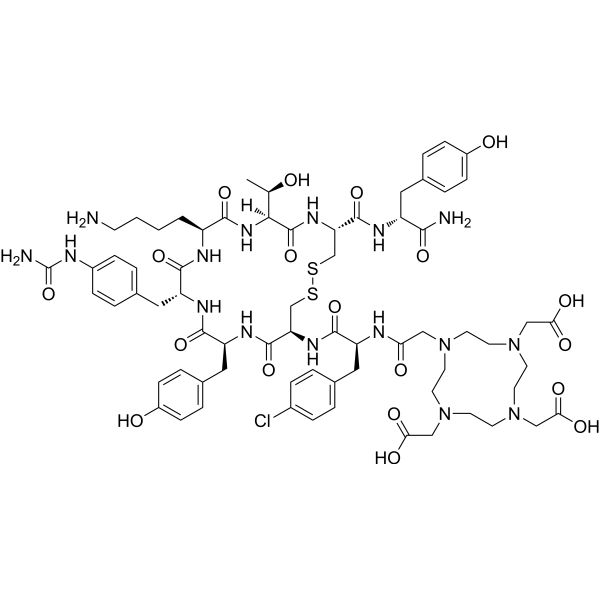
    DOTA-LM3 is a somatostatin receptor (SSTR) antagonist. LM3 refers to p-Cl-Phe- cyclo(D-Cys-Tyr-D-4-amino-Phe(carbamoyl)-Lys-Thr-Cys)D-Tyr- NH2, as well as a somatostatin antagonist. DOTA-LM3 is often isotopically labeled for tracing tumors in vivo, such as 177Lu-DOTA-LM3 and 68 Ga-DOTA-LM3. 68 Ga-DOTA-LM3 shows favorable biodistribution, high tumor uptake, good tumor retention, and few safety concerns. 177Lu-DOTA-LM3 can be used for research in DOTATOC-negative liver metastases, such as pancreatic NET and extensive tumor thrombosis . DOTA-LM3 can be used for the synthesis/research of Radionuclide-Drug Conjugates (RDCs).
    DOTA-LM3
  • HY-P5126A
    DOTA-LM3 TFA
    2 Publications Verification

    Radionuclide-Drug Conjugates (RDCs) Somatostatin Receptor Cancer
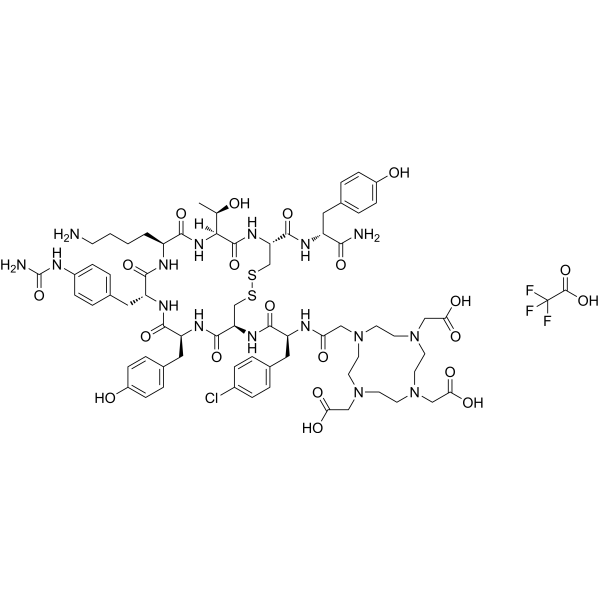
    DOTA-LM3 TFA is a somatostatin receptor (SSTR) antagonist. LM3 refers to p-Cl-Phe- cyclo(D-Cys-Tyr-D-4-amino-Phe(carbamoyl)-Lys-Thr-Cys)D-Tyr- NH2, as well as a somatostatin antagonist. DOTA-LM3 TFA is often isotopically labeled for tracing tumors in vivo, such as 177Lu-DOTA-LM3 TFA and 68 Ga-DOTA-LM3 TFA. 68 Ga-DOTA-LM3 TFA shows favorable biodistribution, high tumor uptake, good tumor retention, and few safety concerns. 177Lu-DOTA-LM3 TFA can be used for research in DOTATOC-negative liver metastases, such as pancreatic NET and extensive tumor thrombosis . DOTA-LM3 (TFA) can be used for the synthesis/research of Radionuclide-Drug Conjugates (RDCs).
    DOTA-LM3 TFA
  • HY-175023

    Phosphatase Cancer
    OncoACP3 is a small-molecule ligand of prostatic acid phosphatase (ACP3) with an IC50 of 0.30 nM. OncoACP3 has a modular structure that supports flexible payload delivery. After radiolabeling with Lu-177 it selectively accumulates in ACP3-expressing tumors with a long retention time, enabling targeted radiation delivery. OncoACP3 is applicable to research related to prostate cancer .
    OncoACP3
  • HY-173374

    FAP Drug Derivative Cancer
    DOTAGA-FAP-2286-ALB is a derivative of Rofapitide tetraxetan (HY-147057). DOTAGA-FAP-2286-ALB is a selective fibroblast activation protein (FAP) inhibitor with an IC50 value of 67.5 nM. DOTAGA-FAP-2286-ALB enhances tumor retention via albumin interaction, prolonging blood circulation and improving radiometal complex stability (e.g., with 111In and 225Ac). DOTAGA-FAP-2286-ALB is promising for research of radionuclide therapy (TRT) of FAP-positive solid tumors .
    DOTAGA-FAP-2286-ALB
  • HY-175613

    FAP Cancer
    DOTA-ALB-02 is an albumin-bound FAP inhibitor (FAPI) ligand. DOTA-ALB-02 labeled with 177Lu has a high FAP-binding affinity and enhanced tumor uptake and retention with a significant tumor/nontarget ratio. DOTA-ALB-02 can be used for PET/CT and SPECT/CT imaging of cancers, especially late-stage cancers .
    DOTA-ALB-02
  • HY-P990144

    Integrin Inflammation/Immunology Cancer
    Anti-Mouse/Human VLA-4/CD49d Antibody (PS/2) is an anti-mouse/human VLA-4/CD49d IgG2b monoclonal antibody. Anti-Mouse/Human VLA-4/CD49d Antibody (PS/2) can reduce VLA-4 positive cells. Anti-Mouse/Human VLA-4/CD49d Antibody (PS/2) can inhibit the migration of Tc1 cells to tumors. Anti-Mouse/Human VLA-4/CD49d Antibody (PS/2) inhibits the retention of leukemia cells in the spleen and bone marrow by blocking VLA-4. Anti-Mouse/Human VLA-4/CD49d Antibody (PS/2) can be used for research on inflammation conditions and cancer such as experimental autoimmune encephalomyelitis (EAE), melanoma and leukemia .
    Anti-Mouse/Human VLA-4/CD49d Antibody (PS/2)
  • HY-158119A

    Felivotide mopaxetan

    PSMA Cancer
    PSMA-trillium (Felivotide mopaxetan) is a PSMA-targeted molecule that contains a highly specific PSMA-binding motif, an albumin-binding domain optimized for tumor uptake and retention, and a Macropa chelator conjugated to the α-emitter 225Ac. PSMA-trillium binds to albumin to prolong plasma retention time and binds to PSMA via its specific motif. 225Ac-PSMA-Trillium exhibits dose-dependent inhibition of LNCaP tumor growth in mice. PSMA-trillium can be used in research related to prostate cancer and metastatic castration-resistant prostate cancer .
    PSMA-trillium
  • HY-170779

    FAP Cancer
    DOTA-NI-FAPI-04 is a FAP inhibitor (IC50 = 7.44 nM). By integrating FAP targeting with hypoxia-sensitive groups (nitroimidazole), DOTA-NI-FAPI-04 significantly enhances tumor uptake and retention capabilities. DOTA-NI-FAPI-04 chelates metallic isotopes (such as 68Ga and 177Lu) through DOTA to produce radioactive probes ([68Ga]Ga/DOTA-NI-FAPI-04 and [177Lu]Lu/DOTA-NI-FAPI-04), which can be used for research in tumor diagnostics and therapeutic agents. DOTA-NI-FAPI-04 holds dual targeting potential in the fields of cancer imaging, tumor microenvironment analysis, and radionuclide therapy, particularly suitable for scenarios where the tumor stroma and hypoxic regions synergistically interact .
    DOTA-NI-FAPI-04
  • HY-175685

    FAP Cancer
    FAP-IN-7 (Compound 5b) is a FAPtumor retention with high selectivity and favorable pharmacokinetics. FAP-IN-7 can be used as a radiotracer for PET imaging and radionuclide therapy of cancers research .
    FAP-IN-7
  • HY-175612

    FAP Cancer
    DOTA-ALB-01 is an albumin-bound FAP inhibitor (FAPI) ligand. DOTA-ALB-01 labeled with 68Ga or 177Lu has a high FAP-binding affinity and enhanced tumor uptake and retention. DOTA-ALB-01 can be used for PET/CT and SPECT/CT imaging of cancers, especially late-stage cancers .
    DOTA-ALB-01
  • HY-174440

    PSMA Cancer
    BWD is a PSMA ligand (IC50 = 35.86). BWD exhibits excellent in vitro stability and high affinity. BWD can enhance tumor uptake and retention. BWD can inhibit tumor growth in vivo. BWD can be studied in anticancer research .
    BWD
  • HY-158266

    LNC1003

    Radionuclide-Drug Conjugates (RDCs) PSMA Cancer
    DOTA-PSMA-EB-01 (Compound LNC1003) is a specific inhibitor of PSMA (IC50= 10.77 nM).DOTA-PSMA-EB-01 enhances the uptake and retention time of 177Lu in tumors . DOTA-PSMA-EB-01 can be used for the synthesis/research of Radionuclide-Drug Conjugates (RDCs).
    DOTA-PSMA-EB-01
  • HY-159771

    FAP Cancer
    FAP6-19 is a fibroblast activation protein (FAP) targeting radioligand with a Kd of 18.2 nM. FAP6-19 selectively delivers therapeutic radioactive nuclides (such as 177Lu) to the tumor site by targeting the overexpressed FAP protein in the tumor microenvironment, achieving precise killing of cancer cells while minimizing radiation damage to healthy tissues. FAP6-19 exhibits extremely high total cellular uptake and good intracellular retention ability in HT1080 cells. After being labeled with 111In, FAP6-19 produced extremely high tumor/kidney and tumor/liver dose ratios in the mouse model with 4T1 tumors. FAP6-19 can be used in the research of solid tumors expressing FAP.
    FAP6-19
  • HY-170842

    Apoptosis Cancer
    TDK-HCPT is a small-molecule conjugate that links glutathione-sensitive thiamine disulfide to the chemotherapy drug 10-Hydroxycamptothecin (HY-N0095) via a thioketal bond. TDK-HCPT can target tumor cells and prolong the retention of chemotherapy agents within tumor cells. TDK-HCPT can inhibit tumor growth, induce apoptosis of tumor cells, and has anti-tumor activity .
    TDK-HCPT
  • HY-171331

    PD-1/PD-L1 Integrin Cancer
    AB-3PRGD2 is a radiotherapeutic agent targeting integrin αvβ3. AB-3PRGD2 shows improved tumor uptake and prolonged tumor retention, leading to significantly enhanced tumor growth suppression. AB-3PRGD2 can remodel the tumor immune microenvironment by upregulating PD-L1 expression and increasing tumor-infiltrating CD8 + T cells .
    AB-3PRGD2
  • HY-116604

    PD 139530

    PI3K Akt Cancer
    RLX (PD 139530) is a PI3K/Akt/FoxO3a signaling inhibitor, possessing significant therapeutic potential in experimental colon cancer. RLX can effectively modulate the tumor microenvironment, enhancing the efficacy of cancer immunotherapy. RLX demonstrates the ability to improve the retention time of therapeutic agents within the tumor microenvironment by utilizing advanced nanoparticle delivery systems. RLX can be integrated with various treatment modalities, such as chemotherapy and radiotherapy, to enhance overall tumor therapy effectiveness .
    RLX
  • HY-116604A

    PD 139530 hydrochloride

    PI3K Akt Cancer
    RLX (PD 139530) hydrochloride is the hydrochloride of RLX (HY-116604). RLX is a PI3K/Akt/FoxO3a signaling inhibitor, possessing significant therapeutic potential in experimental colon cancer. RLX can effectively modulate the tumor microenvironment, enhancing the efficacy of cancer immunotherapy. RLX demonstrates the ability to improve the retention time of therapeutic agents within the tumor microenvironment by utilizing advanced nanoparticle delivery systems. RLX can be integrated with various treatment modalities, such as chemotherapy and radiotherapy, to enhance overall tumor therapy effectiveness .
    RLX hydrochloride
  • HY-159176

    Cytochrome P450 Cancer
    Antitumor agent-183 (compound 3f) has antitumor activity with metabolic stability. Antitumor agent-183 inhibits cancer cell growth, with IC50s less than 5 nM for A549, HCT116, and HS578T cells. The albumin-bound nanoparticle formulation of Antitumor agent-183 has prolonged retention in the tumor tissues .
    Antitumor agent-183
  • HY-163958

    PD-1/PD-L1 Cancer
    PD-L1-IN-7 (compound CB31) is an inhibitor of PD-L1, which can induce PD-L1 internalization and PD-L1 retention in cells. PD-L1-IN-7 can inhibit the interaction of PD-1/PD-L1 (IC50: 0.2 nM), change the glycosylation pattern, and promote PD-L1 degradation. PD-L1-IN-7 can also enhance T cell infiltration, amplify T cell function and the ability to kill tumor cells .
    PD-L1-IN-7
  • HY-182387

    Radionuclide-Drug Conjugates (RDCs) Cancer
    NM404 is a targeted radionuclide processing agent with slow clearance. Radioiodine-labeled NM404 is a small-molecule phospholipid ether analog that exhibits significant tumor uptake capacity and persistent tumor retention properties in more than 45 spontaneous and xenograft tumor models .
    NM404
  • HY-P11591

    PSMA-DOTA-PEI2

    Radionuclide-Drug Conjugates (RDCs) PSMA Cancer
    PDI2 (PSMA-DOTA-PEI2) is a prostate-specific membrane antigen (PSMA) ligand that acts as a tumor retention agent, renal uptake reducer, imaging agent and antitumor agent, applicable in SPECT diagnostic imaging and radiotheranostics. PDI2 specifically binds to PSMA on prostate cancer cells, enters cells via clathrin-dependent endocytosis, and exhibits higher tumor retention rate and lower renal uptake level. PDI2 is applicable in research related to prostate cancer and castration-resistant metastatic prostate cancer .
    PDI2
  • HY-P2674

    MHC Inflammation/Immunology Cancer
    KDEL is a tetrapeptide serving as an endoplasmic reticulum (ER) retrieval/retention signal. KDEL can target and deliver exogenous antigen peptides to the ER, significantly enhance and prolong MHC class I molecule presentation, and effectively boost anti-tumor immune responses .
    KDEL
  • HY-116156

    Biochemical Assay Reagents Cancer
    SR-4554 is a probe for the measurement of tumor hypoxia. SR-4554 undergoes enzymatic single-electron reduction reactions within hypoxic cells. SR-4554 determines the 19F retention index for four commonly used mouse tumors (EMT6, SCCVII, KILT and RIF-I) through 19F MRS technique. SR-4554 can used to detect tumor Hypoxia noninvasively by 19F magnetic resonance spectroscopy ( 19F MRS) .
    SR-4554
  • HY-181494

    FAP Cancer
    FAPI-X5 is a fibroblast activation protein (FAP) inhibitor. FAPI-X5 binds to the FAP catalytic domain, forming hydrogen bonds with key active residues and engaging in π-π stacking to drive functional inhibition. FAPI-X5 exhibits albumin binding activity to prolong systemic circulation half-life. FAPI-X5 induces cytostatic effects on glioblastoma tumors, slowing tumor growth without regression. FAPI-X5, when labeled with 68Ga, acts as a PET tracer with rapid tumor uptake and high-contrast imaging in glioblastoma tumor-bearing mice. FAPI-X5, when labeled with 177Lu or 47Sc, functions as a targeted radionuclide agent with prolonged tumor retention. FAPI-X5 can be used for the research of glioblastoma .
    FAPI-X5
  • HY-P992367

    TROP2 Cancer
    hIMB1636 is a humanized monoclonal antibody targeting Trop2. By binding to the conformational Trop2 epitope, hIMB1636 regulates related signaling pathways, triggers lysosomal endocytosis, and further induces apoptosis, cell cycle arrest, and antibody-dependent cellular cytotoxicity. hIMB1636 effectively inhibits tumor cell proliferation, migration and in vivo tumor growth, and also exerts bystander killing effect and mediates long-term retention. hIMB1636 can be conjugated with NOTA/DOTA for radiolabeling to enable immuno-PET imaging, or prepared as hIMB1636-LDP-AE to significantly inhibit the growth of breast cancer and lung cancer xenografts .
    hIMB1636
  • HY-181580

    FAP Cancer
    FAP Ligand 3 is a FAP ligand with a Ki value of 0.092 nM. FAP Ligand 3 acts as a tumor-retaining agent and serves as a FAP-targeted positron emission tomography (PET) tracer for tumor imaging. FAP Ligand 3 is applicable to studies related to glioma .
    FAP Ligand 3

Inquiry Online

Your information is safe with us. * Required Fields.

Salutation


Country or Region *

Applicant Name *


Organization Name *

Department *


Email Address *


Product Name *

Cat. No.


Requested quantity *

Phone Number *


Remarks

Inquiry Online

Inquiry Information

Product Name:
Cat. No.:
Quantity:
MCE Japan Authorized Agent:

