





78 Results for "

vector

" in MedChemExpress (MCE) Product Catalog:
Products (78)

78 Results for "vector" in MCE Product Catalog:

110
110 Publications Verification
Cat. No.: HY-112735
CAS No.: 28728-55-4
Purity:  99.69%
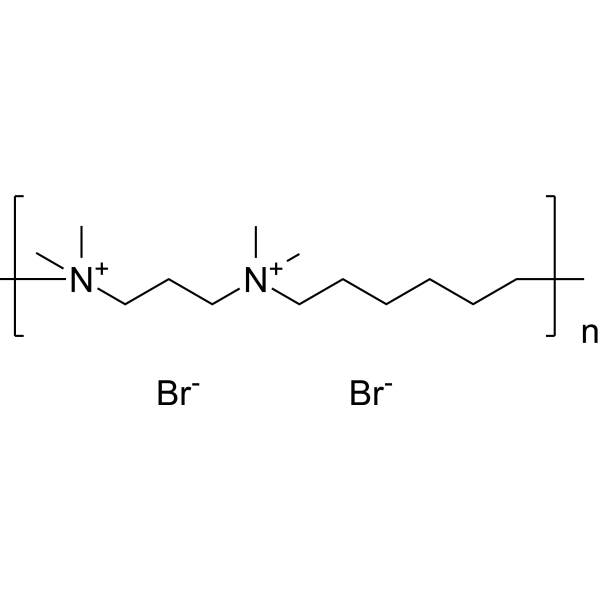
Synonyms: Polybrene; 1,5-Dimethyl-1,5-diazaundecamethylene polymethobromide
Hexadimethrine bromide (Polybrene) is a cationic polymer used routinely to enhance the efficiency of retrovirus vector-mediated gene transfer .
16
16 Cited Publications
Cat. No.: HY-W127378
CAS No.: 144189-73-1
Synonyms: 1,2-Dioleoyl-3-trimethylammonium-propane methylsulfate
DOTAP methylsulfat is a cationic lipid reagent, a cationic derivative of trimethylammonium, linked to two 18-carbon fatty acid tails, each with a single olefin group. DOTAP methylsulfat can self-assemble with negatively charged ions (such as DNA) to form complexes, which can be adsorbed to the cell membrane surface and enter the cell by electrostatic interaction and endocytosis, respectively. DOTAP methylsulfat promotes endosomal membrane fusion with its own hydrophobic domain, releases DNA into the cytoplasm, and exerts gene delivery function. DOTAP methylsulfat can be widely used in research fields such as gene therapy, cell transfection, and non-viral vector design .
9
9 Cited Publications
Cat. No.: HY-109506
CAS No.: 63-89-8
Purity:  99.91%
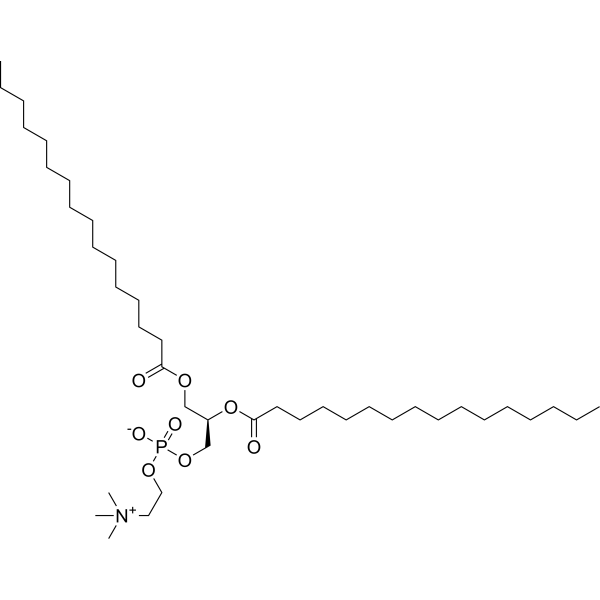
Synonyms: 129Y83
DPPC (129Y83) is a phosphoglyceride that can be used to prepare lipid monolayers, bilayers, and liposomes. DPPC is the main lipid component of pulmonary surfactant. Dppc-liposome can be effectively used as a delivery vector to induce an immune response against GSL antigen in mice .
3
3 Cited Publications
Cat. No.: HY-P2341
Target:  

LDLR

Research Areas:  

Cancer

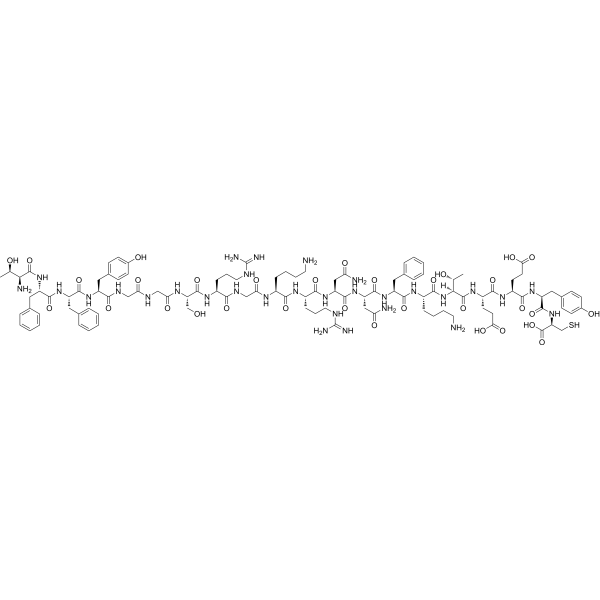
Angiopep-2 hydrochloride is a brain peptide vector. The conjugation of anticancer agents with the Angiopep-2 peptide vector could increase their efficacy in the treatment of brain cancer .
1
1 Cited Publications
Cat. No.: HY-139200
CAS No.: 104872-42-6
Purity:  ≥98.0%
DOTMA is a cationic lipid that has been used as a non-viral vector for gene therapy. DOTMA is used as a component of liposomes to encapsulate siRNA, microRNA, and oligonucleotides and for in vitro gene transfection. DOTMA promotes effective interaction between liposomes and cell membranes by inducing positive charge on the liposomes. DOTMA showed good gene transfection effect both in vitro and in vivo .
1
1 Cited Publications
Cat. No.: HY-142118
CAS No.: 925681-61-4
Synonyms: AP 12009
Target:  

TGF-beta/Smad

Research Areas:  

Cancer

Trabedersen (AP 12009) is an orally active synthetic antisense phosphorothioate oligodeoxynucleotide that selectively targets human TGFβ2 mRNA. Trabedersen blocks TGFβ2 protein production, enters the nucleus without a transfection vector, and exerts dose-dependent antitumor effects. By reversing TGFβ2-induced immunosuppression and enhancing immune cytotoxicity, Trabedersen exhibits significant antiproliferative, antimigratory, and antimetastatic activities, with favorable safety profiles. Trabedersen is widely used in research related to various solid tumors, including anaplastic astrocytoma, glioblastoma, colorectal tumor, and melanoma .
1
1 Cited Publications
Cat. No.: HY-142118A
Purity:  92.09%
Synonyms: AP 12009 sodium
Target:  

TGF-beta/Smad

Research Areas:  

Cancer

Trabedersen (AP 12009) sodium is an orally active synthetic antisense phosphorothioate oligodeoxynucleotide that selectively targets human TGFβ2 mRNA. Trabedersen sodium blocks TGFβ2 protein production, enters the nucleus without a transfection vector, and exerts dose-dependent antitumor effects. By reversing TGFβ2-induced immunosuppression and enhancing immune cytotoxicity, Trabedersen sodium exhibits significant antiproliferative, antimigratory, and antimetastatic activities, with favorable safety profiles. Trabedersen sodium is widely used in research related to various solid tumors, including anaplastic astrocytoma, glioblastoma, colorectal tumor, and melanoma .
1
1 Cited Publications
Cat. No.: HY-109506S9
CAS No.: 65277-91-0
Purity:  ≥95.0%
Synonyms: 129Y83-13C2
DPPC-13C2 is a deuterated labeled DPPC . DPPC (129Y83) is a phosphoglyceride that can be used to prepare lipid monolayers, bilayers, and liposomes. DPPC is the main lipid component of pulmonary surfactant. Dppc-liposome can be effectively used as a delivery vector to induce an immune response against GSL antigen in mice .
Cat. No.: HY-P1351
CAS No.: 906480-09-9
Research Areas:  

Cancer

Angiopep-2-cys is a conjugate of Angiopep-2 hydrochloride (HY-P2341) and cysteine. Angiopep-2 hydrochloride is a brain peptide vector. The conjugation of anticancer agents with the Angiopep-2 peptide vector could increase their efficacy in the treatment of brain cancer .
Cat. No.: HY-137131
CAS No.: 166023-21-8
Purity:  99.91%
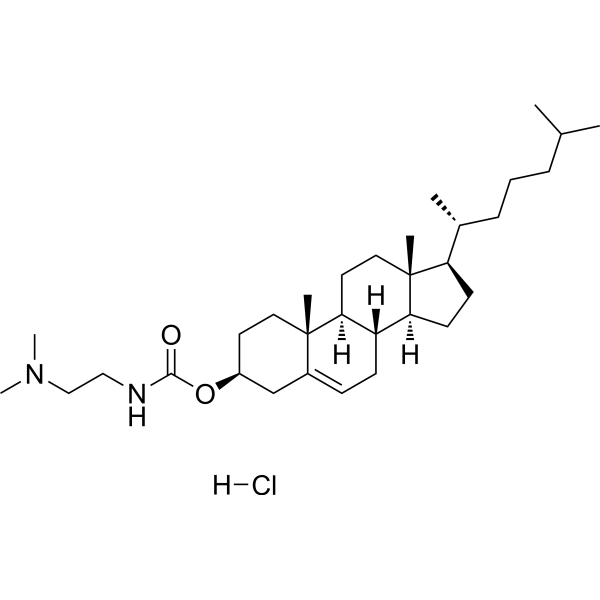
Synonyms: DC-Cholesterol hydrochloride
DC-Chol hydrochloride is a cationic lipid. DC-Chol hydrochloride could inhibit Aβ40 fibril formation under appropriate experimental conditions. DC-Chol hydrochloride strongly inhibits amyloidogenesis of oxidized hCT in a dose-dependent manner. DC-Chol hydrochloride induces the production of Th1 (IL-2 and IFN-γ) and Th2 (IL-5) cytokines. DC-Chol hydrochloride can enhance the body's immune response to antigens. DC-Chol hydrochloride is used as a gene delivery vector. DC-Chol hydrochloride can be used in research in areas such as hepatitis B vaccines to improve vaccine immunity .
Cat. No.: HY-155882
CAS No.: 80506-64-5
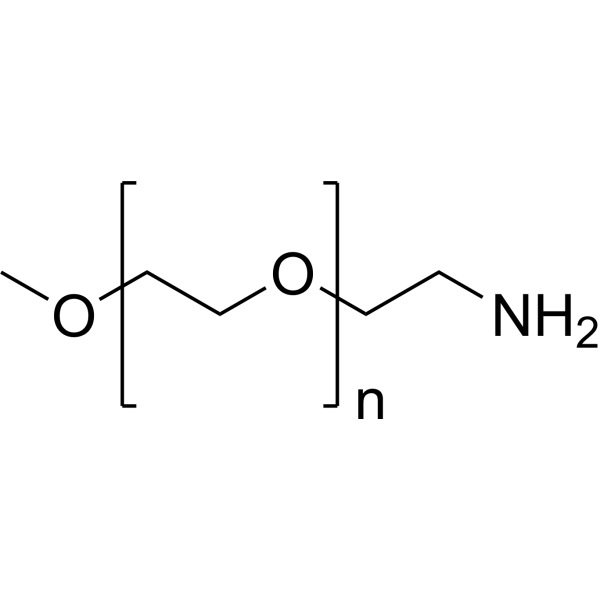
Synonyms: mPEG750-NH2
mPEG750-amine (mPEG750-NH2) is a chemical modification reagent for nanoparticles, capable of covalently binding to Ad-PVA to form Ad-PVA-PEG polymers. mPEG750-amine stabilizes gene delivery complexes by providing steric hindrance, reducing particle aggregation, while enhancing the water solubility and serum stability of the complex, reducing carrier cytotoxicity, and assisting in the efficient condensation of pDNA by cationic components to form nanoparticles that can be endocytosed by cells. mPEG750-amine can also be used to synthesize folate-conjugated polymer micelles for encapsulating the anticancer agent Camptothecin (HY-16560). Folate-conjugated polymer micelles are effective carriers for poorly soluble anticancer drugs, capable of avoiding macrophages and acting through folate receptor (FR)-mediated endocytosis to target tumor cells. mPEG750-amine can be applied to research in the field of non-viral gene delivery, as a component of gene delivery vectors, facilitating the safe and efficient delivery of nucleic acid drugs to target cells .
Cat. No.: HY-P3522
CAS No.: 107978-83-6
Target:  

Integrin

Research Areas:  

Cardiovascular Disease

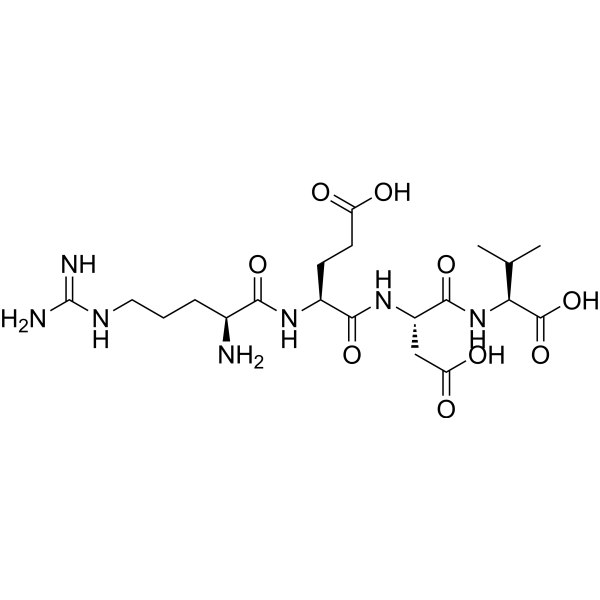
REDV is the minimal active sequence within the CS5 site of the alternatively spliced type III connecting segment (IIICS) region of fibronectin. REDV can mediate adhesion to the IIICS region of plasma fibronectin by binding the integrin alpha 4 beta 1(α4β1). REDV can be used for the research of cell adhesion. REDV is used to study the effects of gene vectors containing REDV on cells .
Cat. No.: HY-E70541B
CAS No.: 9001-28-9
Research Areas:  

Cardiovascular Disease

Canine Factor IX is a functional coagulation factor. Canine Factor IX shortens whole blood clotting time and activated partial thromboplastin time, and restores coagulation function. After intramuscular administration via rAAV vector in hemophilia B dogs, Canine Factor IX maintains a sustained circulating level for at least 1 year, partially corrects the hemophilia B phenotype in a dose-dependent manner, and its plasma expression persists for more than 17 months. Canine Factor IX is applicable to relevant research on hemophilia B .
Cat. No.: HY-148049
CAS No.: 1821214-50-9
Purity:  ≥98.0%
TT3 is an ionizable lipid-like material and a lipid nanoparticle (LLNs)-based mRNA delivery vector. TT3 exhibits liver and spleen specificity and excellent delivery efficiency .
Cat. No.: HY-126437I
CAS No.: 25988-63-0
Poly-L-lysine hydrobromide (MW 1000-5000) is a homopolymer of L-lysine and a polycationic non-viral gene delivery vector. Poly-L-lysine hydrobromide (MW 1000-5000) forms complexes with plasmid DNA. Poly-L-lysine hydrobromide (MW 1000-5000) is applicable to relevant research on lung cancer .
Cat. No.: HY-112624U
CAS No.: 9004-54-0
Synonyms: Dextran 20; Dextran D20; Dextran T20(MW 16000-24000)
Dextran T20 (Dextran 20; Dextran D20) (MW 20,000) is a dehydrated glucose polymer with an average molecular weight of 20,000. Dextran T20 (MW 20,000) has excellent biodegradability and good biocompatibility, and can be used as a gene delivery vector, an immune adjuvant carrier, and a hemoglobin stabilizer .
Cat. No.: HY-168940B
CAS No.: 139729-28-5
NH2-PEG5000-COOH is a compound composed of an NH2 group, PEG units (MW = 2000) and a carboxyl group (-COOH) . NH2-PEG-COOH is widely used for surface modification and functionalization of polymer carriers or nanoparticles .
Cat. No.: HY-P2218
CAS No.: 1821136-83-7
Research Areas:  

Cancer

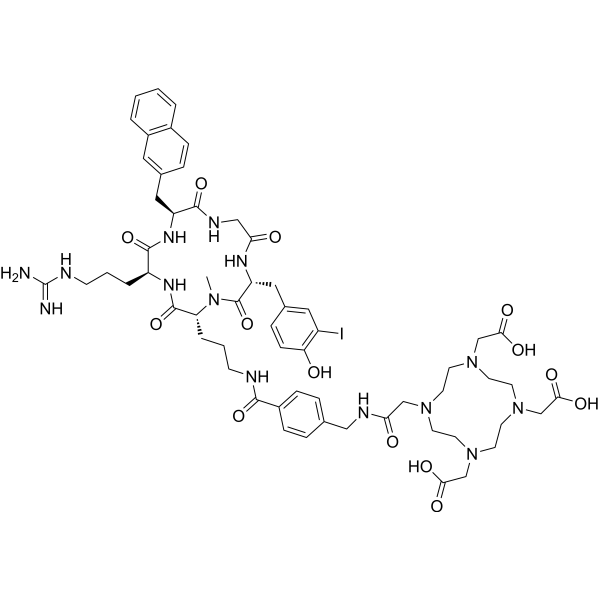
Anditixafortide (Pentixather) is an endoradiotherapeutic vector. Anditixafortide is a CXCR4-targeting peptide derivative . Anditixafortide can be used for the synthesis/research of Radionuclide-Drug Conjugates (RDCs).
Cat. No.: HY-P11460
Target:  

Drug Derivative

Research Areas:  

Infection

Vectofusin-1 is a histidine-rich cationic amphipathic peptide derived from the LAH4 (HY-P0311) peptide family, and also acts as a Viral entry enhancer. Vectofusin-1 promotes the adhesion and fusion of retroviral/lentiviral vectors with cell membranes during viral entry, thereby improving transduction efficiency. Vectofusin-1 potently enhances lentiviral transduction of cells .
Cat. No.: HY-144014
CAS No.: 464926-03-2
Purity:  98.34%
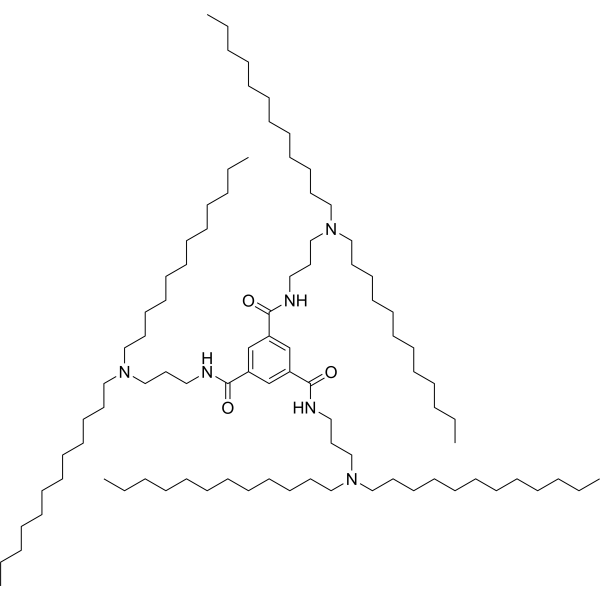
MVL5 is a non-degradable multivalent cationic lipid. MVL5 is a highly efficient vector for both DNA and siRNA. MVL5 can be used in breast cancer research .

