1. Search Result
Search Result
Results for "

viral E protein

" in MedChemExpress (MCE) Product Catalog:

22

Inhibitors & Agonists

1

Screening Libraries

1

Peptides

2

Inhibitory Antibodies

1

Natural
Products

7

Recombinant Proteins

Cat. No. Product Name Target Research Areas Chemical Structure
  • HY-138941
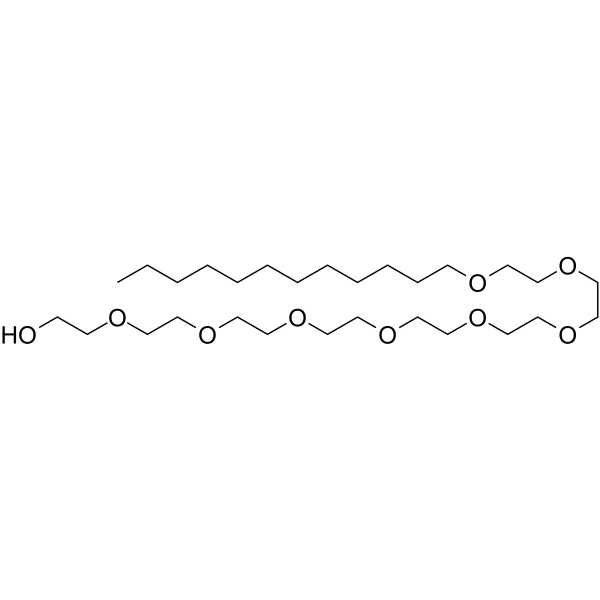
    Octaethylene glycol monododecyl ether
    1 Publications Verification

    C12E8

    Influenza Virus Infection
    Octaethylene glycol monododecyl ether (C12E8) is an non-ionic detergent that can be used for membrane protein extraction. Octaethylene glycol monododecyl ether can solubilize the viral membrane of intact influenza virus .
    Octaethylene glycol monododecyl ether
  • HY-N0086R
    N6-Methyladenosine (Standard)
    1 Publications Verification

    6-Methyladenosine (Standard); N-Methyladenosine (Standard)

    Endogenous Metabolite Influenza Virus Reference Standards Infection
    N6-Methyladenosine (Standard) is the analytical standard of N6-Methyladenosine. This product is intended for research and analytical applications. N6-Methyladenosine is the most prevalent internal (non-cap) modification present in the messenger RNA (mRNA) of all higher eukaryotes. N6-Methyladenosine can modifies viral RNAs and has antiviral activities. In Vitro: N6-methyladenosine (m6A) is selectively recognized by the human YTH domain family 2 (YTHDF2) protein to regulate mRNA degradation. N6-methyladenosine (m6A), a prevalent internal modification in the messenger RNA of all eukaryotes, is post-transcriptionally installed by m6A methyltransferase (e.g., MT-A70) within the consensus sequence of G(m6A)C (70%) or A(m6A)C (30%). N6-methyladenosine (m6A)-containing RNAs are greatly enriched in the YTHDF-bound portion and diminished in the flow-through portion . N6-methyladenosine (m6A), the most abundant internal RNA modification, functions in diverse biological processes, including regulation of embryonic stem cell self-renewal and differentiation. N6-methyladenosine (m6A) is a large protein complex, consisting in part of methyltransferase-like 3 (METTL3) and methyltransferase-like 14 (METTL14) catalytic subunits .
    N6-Methyladenosine (Standard)
  • HY-109045A

    BTA074 hydrochloride; AP 611074 hydrochloride

    E1/E2/E3 Enzyme HPV Infection
    Teslexivir (BTA074) hydrochloride is a potent antiviral agent. Teslexivir hydrochloride is a potent and selective inhibitor of the interaction between two essential viral proteins, E1 and E2, an association that is a necessary step in the DNA replication and thus viral production for Human Papilloma Virus (HPV) 6 and 11. Teslexivir hydrochloride can be used for condyloma research .
    Teslexivir hydrochloride
  • HY-109045

    BTA074; AP 611074

    E1/E2/E3 Enzyme HPV Infection
    Teslexivir (BTA074) is a potent antiviral agent. Teslexivir is a potent and selective inhibitor of the interaction between two essential viral proteins, E1 and E2, an association that is a necessary step in the DNA replication and thus viral production for Human Papilloma Virus (HPV) 6 and 11. Teslexivir can be used for condyloma research .
    Teslexivir
  • HY-176433

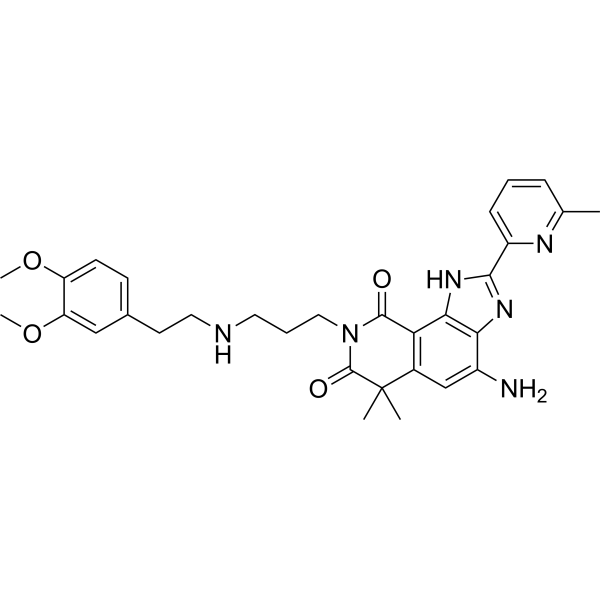
    Flavivirus Infection
    NSC-323241 is a potent STT3A-mediated mega protein complex assembly inhibitor. NSC-323241 disrupts he endoplasmic reticulum (ER) mega complex nucleated by STT3A during dengue virus (DENV) and Zika virus (ZIKV) infection. NSC-323241 targets the binding of STT3A subcomplex with viral nonstructural proteins (e.g., NS2B, NS3) and host translocon proteins, disrupting the formation of viral replication microenvironment. NSC-323241 is promising for research of flavivirus infection, such as dengue fever and Zika virus .
    NSC-323241
  • HY-111311

    Bacterial Drug Derivative Infection
    NVC-422 is a N-chlorotaurine analog, virucidal agent, antibacterial agent. NVC-422 exhibits virucidal activity against Ad5 by the oxidative inactivation of key viral proteins (fiber and hexon), leading to the loss of viral integrity and infectivity. NVC-422 is shown to be highly effective in killing all microbial strains tested, including antibiotic-resistant S. aureus and E. faecium. NVC-422 can be used in the research of adenoviral conjunctivitis .
    NVC-422
  • HY-161804

    PROTACs Dengue Virus Infection
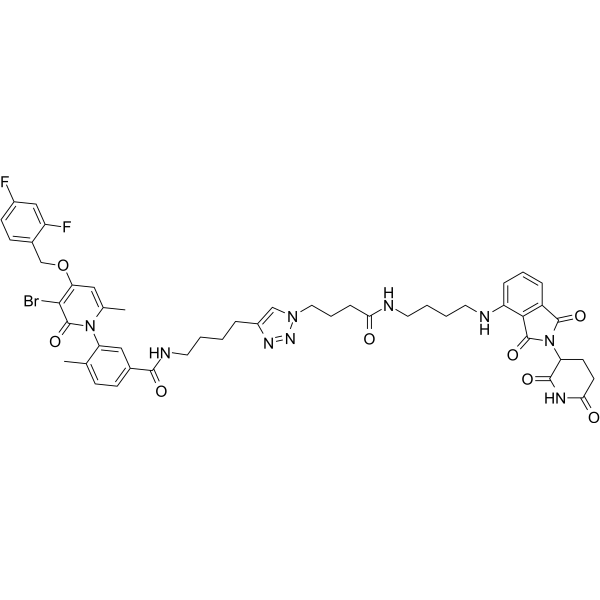
    GNF-2-deg is a PROTAC degrader for dengue virus envelope protein (DENV E protein) with DC50 of 0.83 μM. GNF-2-deg prevents viral entry by inhibiting E-mediated membrane fusion, prevents virion production by protein degradation, and thereby exhibits antiviral activity against DENV 2 with EC90 of 3.5 μM. GNF-2-deg exhibits antiviral activity against ZIKV, JEV, WNV and YFV with EC90 of 1.96-7.79 μM. (Pink: ligand for target protein (HY-161805); Black: linker (HY-42149); Blue: ligand for E3 ligase (HY-23095))
    GNF-2-deg
  • HY-171788

    N-myristoyltransferase Cancer
    NMT-IN-8 (Compound Ex.129) is an orally active and highly selective inhibitor of N-myristoyl transferase (NMT) with an IC50 value of <10 nM. NMT-IN-8 binds to the peptide binding pocket of NMT, blocking its catalyzed protein N-myristoylation to interfere with key pathways such as protein trafficking, signal transduction, and viral replication. NMT-IN-8 is promising for research of oncology (e.g., MYC-addicted cancers, B-cell lymphoma) and infectious diseases (e.g., malaria, HIV, rhinovirus infection) .
    NMT-IN-8
  • HY-175460

    SARS-CoV Infection
    SARS-CoV-2-IN-117 (Compound C19) is a SARS-CoV-2 E protein inhibitor. SARS-CoV-2-IN-117 significantly inhibits SARS-CoV-2 E protein interaction with host ZO-1 PDZ2 domain. SARS-CoV-2-IN-117 has potent antiviral activity and significantly reduces viral replication. SARS-CoV-2-IN-117 can be used for COVID-19 research .
    SARS-CoV-2-IN-117
  • HY-138941R

    C12E8 (Standard)

    Influenza Virus Reference Standards Infection
    Octaethylene glycol monododecyl ether (Standard) is the analytical standard of Octaethylene glycol monododecyl ether. This product is intended for research and analytical applications. Octaethylene glycol monododecyl ether (C12E8) is an non-ionic detergent that can be used for membrane protein extraction. Octaethylene glycol monododecyl ether can solubilize the viral membrane of intact influenza virus .
    Octaethylene glycol monododecyl ether (Standard)
  • HY-154968

    RSV Infection
    RSV L-protein-IN-5 (compound E) is a potent inhibitor of Respiratory syncytial virus (RSV) (EC50=0.1 μM). RSV L-protein-IN-5 inhibits Polymerase (IC50=0.66 μM),and blocks RSV mRNA synthesis by inhibiting guanylation of viral transcripts. RSV L-protein-IN-5 shows moderate cytotoxicity (CC50=10.7 μM,HEp-2),also exhibits activity and lowers virus titers in mouse models of RSV infection .
    RSV L-protein-IN-5
  • HY-161789

    PROTACs SARS-CoV Virus Protease Infection
    PROTAC SARS-CoV-2 Mpro degrader-3 (Compound P2) exhibits antiviral activity through the degradation of the main protease (Mpro) of human coronaviruses (HCoVs) (DC50=27 μM). PROTAC SARS-CoV-2 Mpro degrader-3 inhibits the viral replication, with EC50 of 4.6 μM, 4.6 μM, and 0.71 μM, for human coronaviruses HCoV-229E, HCoV-OC43 and SARS-CoV-2, respectively. (Pink: ligand for target protein Mpro ligand 2 (HY-161791); Black: linker (HY-161792); Blue: ligand for E3 ligase (S,R,S)-AHPC (HY-125845)) .
    PROTAC SARS-CoV-2 Mpro degrader-3
  • HY-P991766

    Flavivirus Infection
    Anti-Venezuelan equine encephalitis virus E2 protein Antibody (VEEV-57) reacts with the E2 protein of the Venezuelan equine encephalitis virus (VEEV). Anti-Venezuelan equine encephalitis virus E2 protein Antibody (VEEV-57) inhibits VEEV attachment to Vero cells, viral egress, viral fusion, and LDLRAD3-D1-Fc binding. Recommend Isotype Controls: Mouse IgG2c kappa, Isotype Control (HY-P99981) .
    Anti-Venezuelan equine encephalitis virus E2 protein Antibody (VEEV-57)
  • HY-109045AR

    BTA074 hydrochloride (Standard); AP 611074 hydrochloride (Standard)

    Reference Standards E1/E2/E3 Enzyme HPV Infection
    Teslexivir hydrochloride (Standard) is the analytical standard of Teslexivir (hydrochloride) (HY-109045A). This product is intended for research and analytical applications. Teslexivir (BTA074) hydrochloride is a potent antiviral agent. Teslexivir hydrochloride is a potent and selective inhibitor of the interaction between two essential viral proteins, E1 and E2, an association that is a necessary step in the DNA replication and thus viral production for Human Papilloma Virus (HPV) 6 and 11. Teslexivir hydrochloride can be used for condyloma research .
    Teslexivir hydrochloride (Standard)
  • HY-P991768

    Virus Protease Infection
    Anti-Eastern equine encephalitis virus E2 protein Antibody (EEEV-3) reacts with the B domain of the E2 glycoprotein on the eastern equine encephalitis virus (EEEV). Anti-Eastern equine encephalitis virus E2 protein Antibody (EEEV-3) exhibits a modest inhibition of viral attachment to the plasma membrane of the cells. Recommend Isotype Controls: Mouse IgG2c kappa, Isotype Control (HY-P99981) .
    Anti-Eastern equine encephalitis virus E2 protein Antibody (EEEV-3)
  • HY-P11640

    Ligands for E3 Ligase HIV Infection
    Vpr (1-14) is a viral protein R and acts as an accessory protein of HIV-1. Vpr (1-14) can binds to Cul4A-DDB1-DCAF1 E3 ligase complex and can be used as an E3 ligase-binding component in PROTACs. Vpr (1-14) can be used to synthesize PROTAC BRD4 Degrader-43 (HY-181164) .
    Vpr (1-14)
  • HY-170515A

    E1/E2/E3 Enzyme SARS-CoV Infection Neurological Disease Cancer
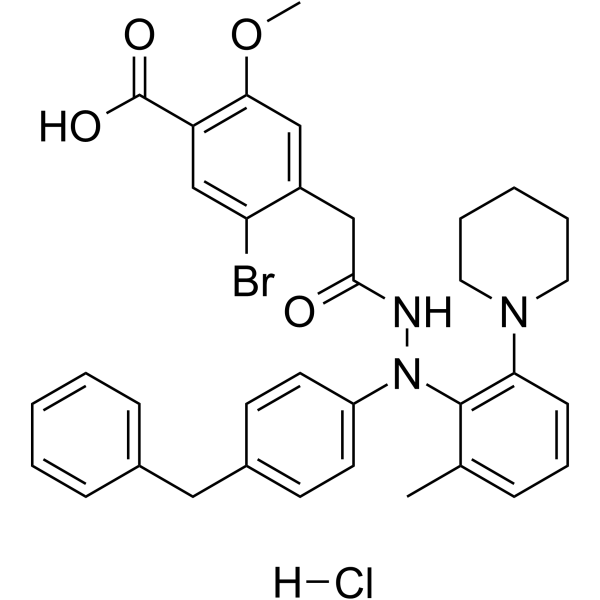
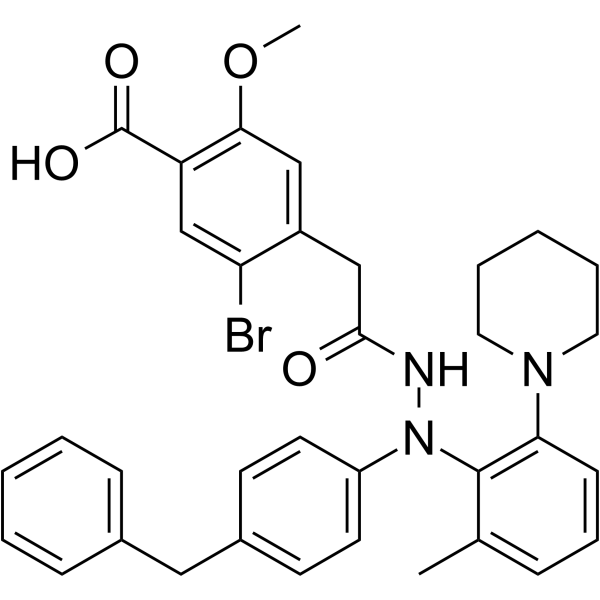
    (E),(Z)-RNF5 agonist 1 (Compound Analog-1) is a RNF5 agonist that can enhance the ubiquitination and degradation of SARS-CoV-2 E protein by RNF5. (E),(Z)-RNF5 agonist 1 effectively inhibits the replication of SARS-CoV-2 and significantly alleviates pulmonary pathological damage and systemic inflammatory response in mouse infection models. (E),(Z)-RNF5 agonist 1 has a strong cytotoxic effect on neuroblastoma and melanoma. (E),(Z)-RNF5 agonist 1 can be used for research on anti-cancer and anti-viral purposes .
    (E),(Z)-RNF5 agonist 1
  • HY-183322

    HPV Infection
    Antiviral agent 83 is a boronic acid-modified Neocryptolepine (HY-E70250) derivative and is an anti-HPV agent. Antiviral agent 83 bind to the viral capsid protein and/or envelope protein, inducing conformational changes that effectively obstruct the interaction between the virus and host cell receptors. Antiviral agent 83 exhibits inhibitory activity against multiple high-risk HPV strains. Antiviral agent 83 inhibits HPV infection in vitro and in vaginal tract in vivo .
    Antiviral agent 83
  • HY-184048

    Flavivirus Virus Protease Dengue Virus Infection
    JMX0207 is an orally active flavivirus NS2B-NS3 protease inhibitor. JMX0207 showed an IC50-SLC of 1.3 μM for blocking NS2B-NS3 protein interaction and an IC50-pro of 8.2 μM for inhibiting protease catalytic activity.. JMX0207 directly binds viral NS3 protease at the NS2B-NS3 interface with a Kd of 1.1 μM, blocks viral polyprotein precursor processing, suppresses viral RNA replication and viral protein production. JMX0207 can be used for the study of Zika virus infection and Dengue virus infection .
    JMX0207
  • HY-182924

    PROTACs Enterovirus Infection
    Jun15702 is a PROTAC degrader targeting the capsid protein VP1 of enterovirus D68. Jun15702 recruits the Cereblon (CRBN) E3 ligase and activates the ubiquitin-proteasome pathway. Jun15702 inhibits viral entry and exerts inhibitory effects during the early, middle and late stages of viral replication. Jun15702 exhibits antiviral activity against multiple wild-type enterovirus D68 strains, and also shows submicromolar antiviral activity against the Pleconaril (HY-19952)-resistant enterovirus D68 variant rMO-VP1 F159V. Jun15702 can be used in studies related to enterovirus D68 (EV-D68) infection .
    Jun15702
  • HY-183761

    SARS-CoV DNA/RNA Synthesis Infection
    Antiviral agent 86 is an anti-coronavirus agent. Antiviral agent 86 acts as a binder of coronavirus non-structural protein 15 (nsp15), with a Kd value of 67 μM against human targets. Antiviral agent 86 inhibits the replication of HCoV-229E and SARS-CoV-2. Antiviral agent 86 exerts inhibitory effects at the post-entry lifecycle stage of coronaviruses in host cells and inhibits the formation of viral double-stranded RNA (dsRNA). Antiviral agent 86 exhibits an additive antiviral effect when used in combination with GS-441524. Antiviral agent 86 can be used in studies related to coronavirus infections .
    Antiviral agent 86
  • HY-117252

    HSP EGFR Akt Dengue Virus Caspase Infection Cancer
    HS-72 is a selective allosteric inducible heat shock protein 70 Hsp70i inhibitor. HS-72 reduces ATP affinity of Hsp70i, elevates caspase 3/7 apoptotic activity, and promotes degradation of Hsp70 client proteins, including HER2 and Akt, and blocks DENV entry by disrupting Hsp70i association with the DENV receptor complex. HS-72 can be used for breast cancer and dengue virus infection research .
    HS-72

Inquiry Online

Your information is safe with us. * Required Fields.

Salutation


Country or Region *

Applicant Name *


Organization Name *

Department *


Email Address *


Product Name *

Cat. No.


Requested quantity *

Phone Number *


Remarks

Inquiry Online

Inquiry Information

Product Name:
Cat. No.:
Quantity:
MCE Japan Authorized Agent:

