



MCTR3

Based on 1 Customer Validation
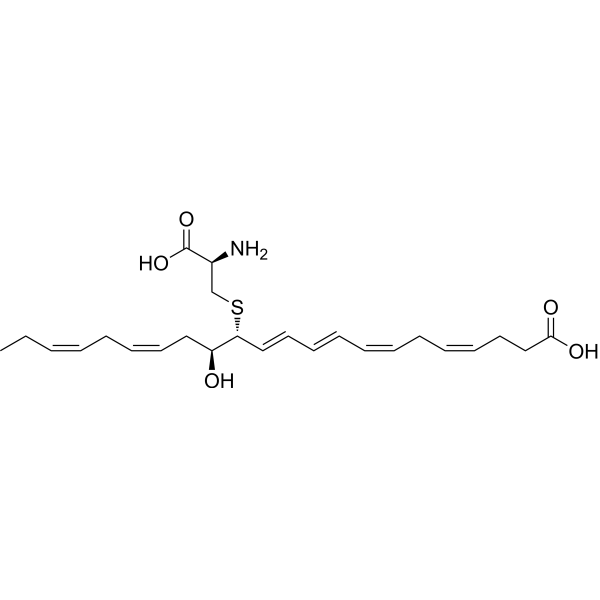
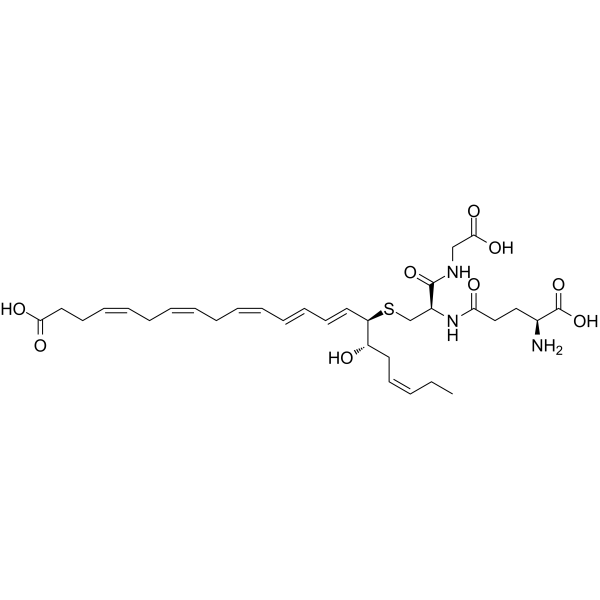
MCTR3 is a potent cytokine of pro-resolving mediating maresin conjugates in tissue regeneration (MCTR), which reduces the inflammatory response and promotes the tissue regeneration. MCTR3 exhibits potency in ameliorating LPS-induced acute lung injury and arthritis.
For research use only. We do not sell to patients.
- Purity : 96.87%
- CAS No.: 1784701-63-8
- Formula: C25H37NO5S
- Molecular Weight:463.63
-
Storage:
Solution, -20°C, 2 years

To place orders, for customer services and technical support, please contact: MedChemExpress USA
Tel: 609-228-6898 E-mail: [email protected] [email protected]


-
 Biological Activity
-
Chemical Information
- Protocols
- Purity & Documentation
- References
-
 Help & FAQs


-
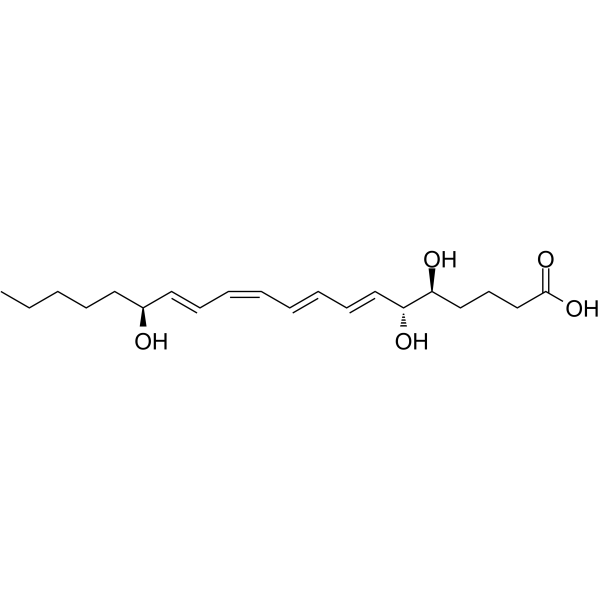
HY-113509
Lipoxin A4Anti-inflammatory Agent -
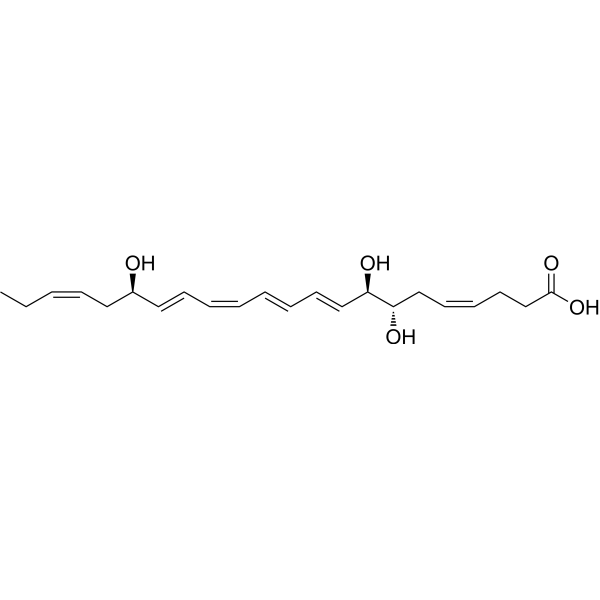
HY-125527A
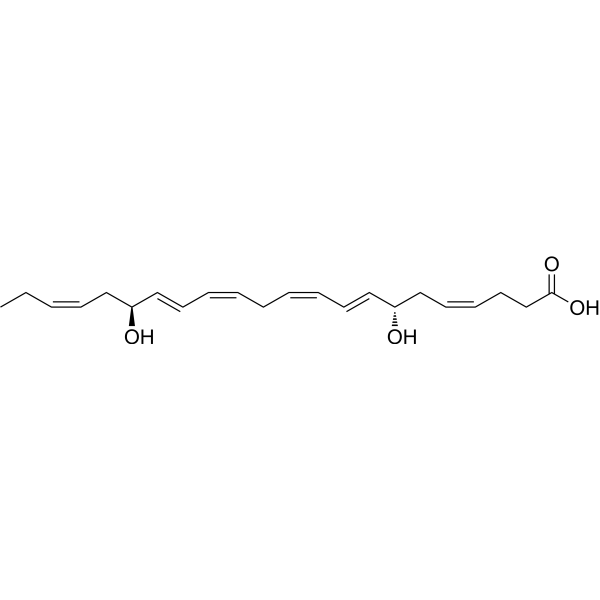
17(R)-Resolvin D1TRPV3 Inhibitor -

HY-155286
(7S,8R,17S)-RCTR1Resolvin-Sulfido Conjugate -
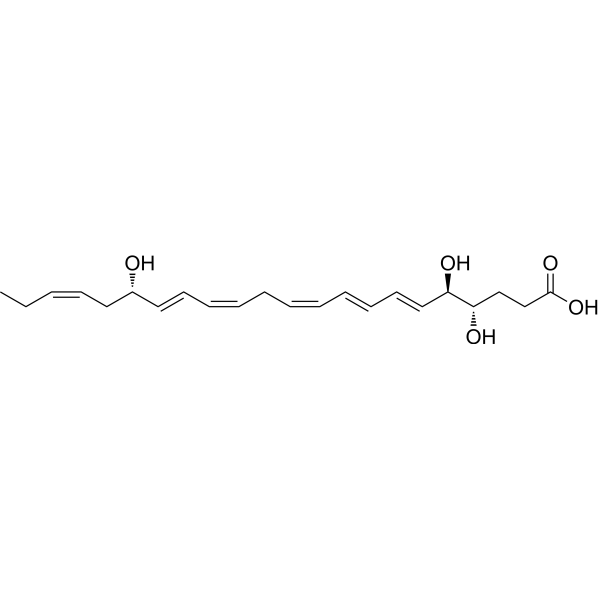
HY-113533
Resolvin D4Proresolving Mediator -
HY-125445
PCTR1Pro-resolving Mediator -
HY-145491
Resolvin D5Inflammation Inhibitor -
HY-155126
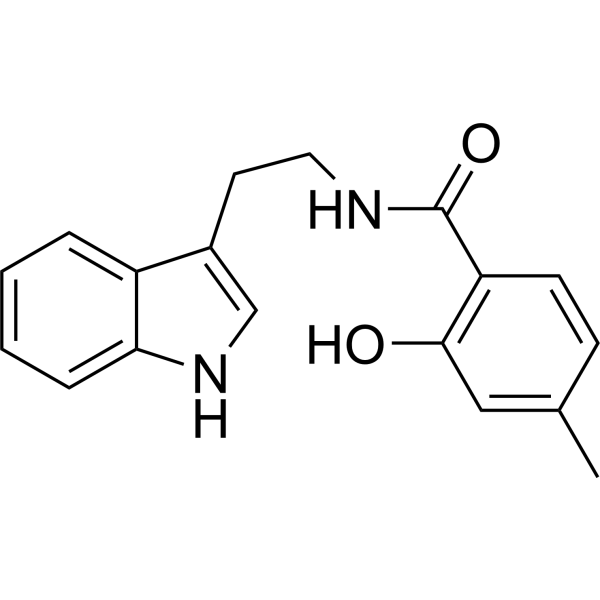
LZWL02003Anti-Neuroinflammatory Agent -

HY-125408
Maresin conjugates in tissue regeneration 1cytokine -

HY-130322
Maresin Conjugates in Tissue Regeneration 2Specialized Pro-resolving Mediator -

HY-158792
GK241 -

HY-170645
Neuroprotectin D1 methyl esterProtectin D1 Intermediate -
HY-120502
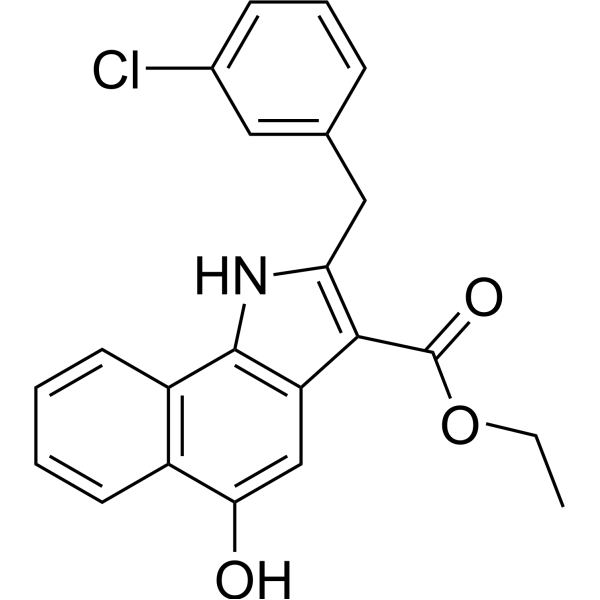
5-LOX-IN-65-LO Inhibitor
All Endogenous Metabolite Isoforms
More

Biological Activity
Description
In Vitro
MCTR3 (1 nM) alleviates LPS-induced cellular damage and oxidative stress, reduces apoptosis and autophagy-related protein production in cells MLE12 through the ALX/PINK1 pathway[1].
MCTR3 (1 nM) enhances efferocytosis and bacterial phagocytosis by exudate leukocytes, reduces neutrophil infiltration and eicosanoids[2].
MedChemExpress (MCE) has not independently confirmed the accuracy of these methods. They are for reference only.
-
Cell Line:MLE12
-
Concentration:1 nM
-
Incubation Time:24 h
-
Result:Decreased LPS-stimulated expressions of PINK1 and Parkin.
-
Cell Line:MLE12
-
Concentration:1 nM
-
Incubation Time:24 h
-
Result:Decreased levels of Bax, Bak, Cyto C and LC3BII/I, increased levels of BCL2 and Bcl-xl.
In Vivo
MCTR3 (1-100 nM, in cold water) stimulates tissue regeneration in surgical injuried Planaria in a dose-dependent manner with a 50% tissue regeneration TRI50 of 2.5 days[2].
MedChemExpress (MCE) has not independently confirmed the accuracy of these methods. They are for reference only.
-
Animal Model:Lipopolysaccharide induced acute lung injury in C57BL6 mice[1]
-
Dosage:2 ng/g
-
Administration:i.p., single dose
-
Result:Reduced inflammatory cell infiltration and protein accumulation in bronchoalveolar lavage fluid (BALF), reduced MDA levels and increased SOD activity in lung tissue.
Decreased levels of pro-inflammatory cytokine in serum.
-
Animal Model:Surgical injury in Planaria[2]
-
Dosage:1-100 nM
-
Administration:In cold water for 6 days
-
Result:Accelerated tissue regeneration in a dose-dependent manner with a TRI50 of 2.5 days.


Chemical Information
-
CAS No. 1784701-63-8
-
Appearance Liquid
-
Molecular Weight 463.63
-
Formula C25H37NO5S
-
Color Colorless to light yellow
-
SMILES
O[C@H]([C@@H](/C=C/C=C/C=C\C/C=C\CCC(O)=O)SC[C@@H](C(O)=O)N)C/C=C\C/C=C\CC
-
Shipping
Room temperature in continental US; may vary elsewhere.
-
Storage
Solution, -20°C, 2 years


Purity & Documentation
-
Data Sheet (267 KB)
-
SDS (393 KB)
- English - EN (393 KB)
- Français - FR (393 KB)
- Deutsch - DE (393 KB)
- Norwegian - NO (393 KB)
- Español - ES (393 KB)
- Swedish - SV (393 KB)
- Italian - IT (393 KB)
- Korean - KR (393 KB)
- Portuguese - PT (393 KB)
-
Handling Instructions (2659 KB)
References
[1]. Zhuang R, et al., MCTR3 reduces LPS-induced acute lung injury in mice via the ALX/PINK1 signaling pathway. Int Immunopharmacol. 2021 Jan;90:107142. [Content Brief]
[2]. Dalli J et al., Identification and Actions of a Novel Third Maresin Conjugate in Tissue Regeneration: MCTR3. PLoS One. 2016 Feb 16;11(2):e0149319. [Content Brief]
[3]. Pistorius K, et al., MCTR3 reprograms arthritic monocytes to upregulate Arginase-1 and exert pro-resolving and tissue-protective functions in experimental arthritis. EBioMedicine. 2022 May;79:103974. [Content Brief]

Calculators
Concentration (start) × Volume (start) = Concentration (final) × Volume (final)


MCTR3 Related Classifications
HY-125516 Related Classifications
 Powered by Bioz