



Linagliptin-d4

Based on 1 Customer Validation
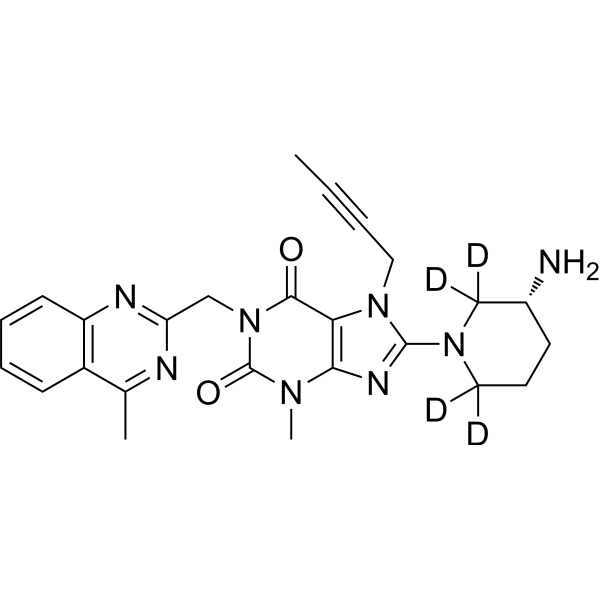
Linagliptin-d4 is deuterium labeled Linagliptin. Linagliptin is a highly potent, selective DPP-4 inhibitor with IC50 of 1 nM. Linagliptin-d4 is a click chemistry reagent, it contains an Alkyne group and can undergo copper-catalyzed azide-alkyne cycloaddition (CuAAc) with molecules containing Azide groups.
For research use only. We do not sell to patients.
- Purity : 99.90%
- CAS No.: 2140263-92-7
- Formula: C25H24D4N8O2
- Molecular Weight:476.57
-
Storage:Powder -20°C, 3 years ; In solvent -80°C, 6 months , -20°C, 1 month

To place orders, for customer services and technical support, please contact: MedChemExpress USA
Tel: 609-228-6898 E-mail: [email protected] [email protected]


-
 Biological Activity
-
Chemical Information
-
Solvent & Solubility
- Protocols
- Purity & Documentation
- References
-
 Help & FAQs


-

HY-A0023R
Alogliptin Benzoate (Standard)DPP-4 Inhibitor -
HY-B0422S
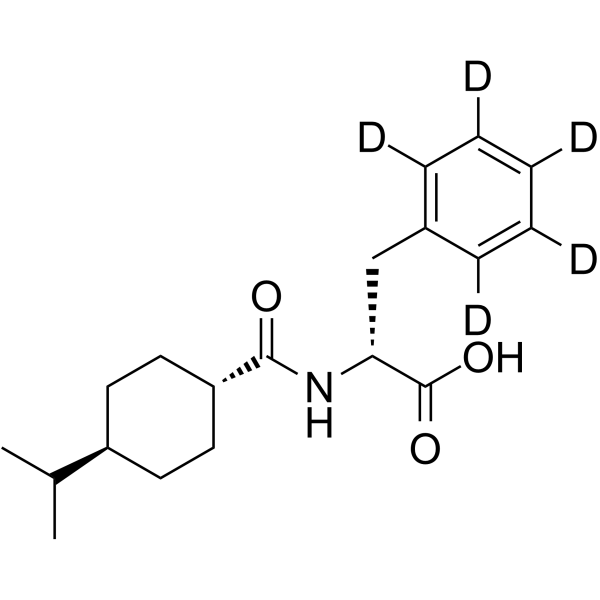
Nateglinide-d5Stable Isotope -
HY-B0422
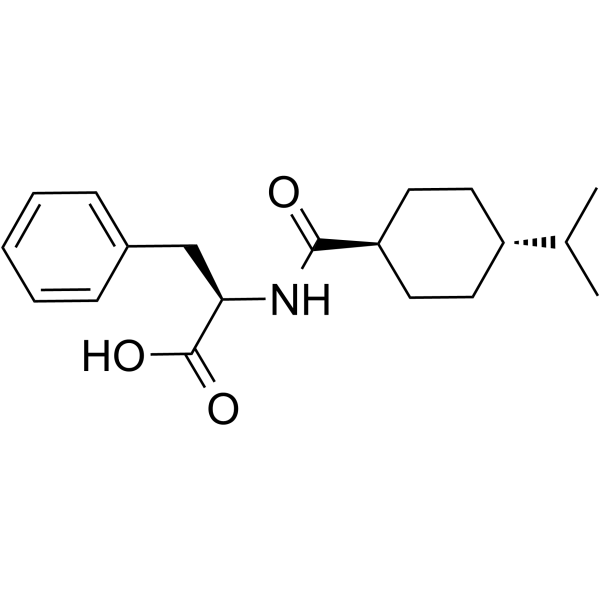
NateglinideK+ Channel Inhibitor -
HY-A0023
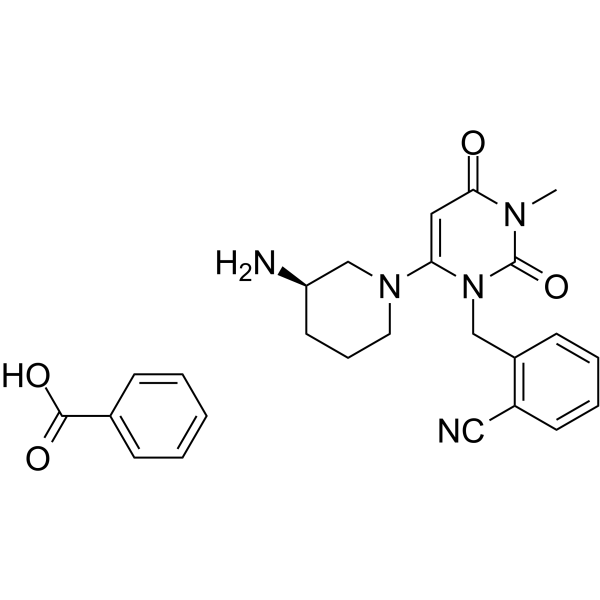
Alogliptin BenzoateDPP-4 Inhibitor -
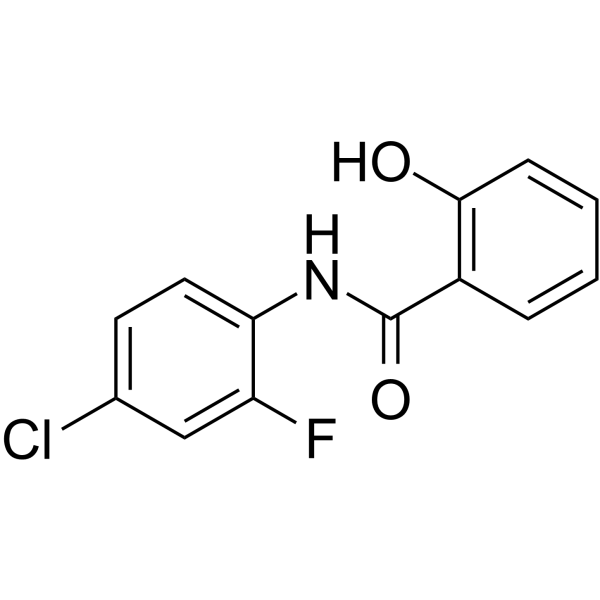
HY-124958
NDMC101Osteoclastogenesis Inhibitor -
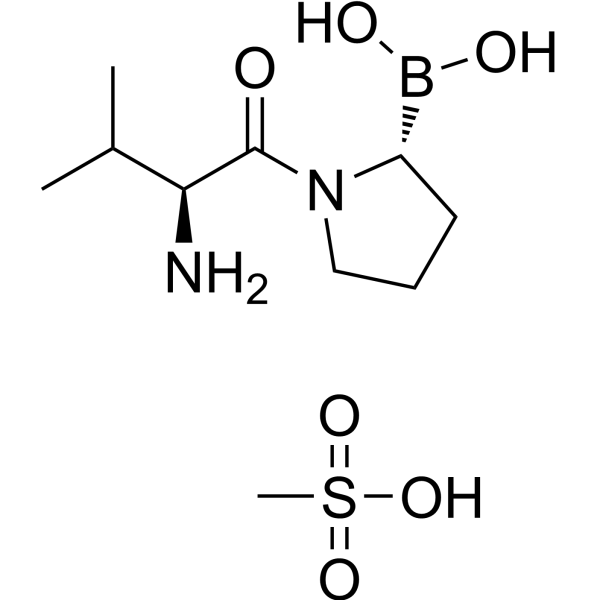
HY-13233A
Talabostat mesylateDipeptidyl Peptidase Inhibitor -
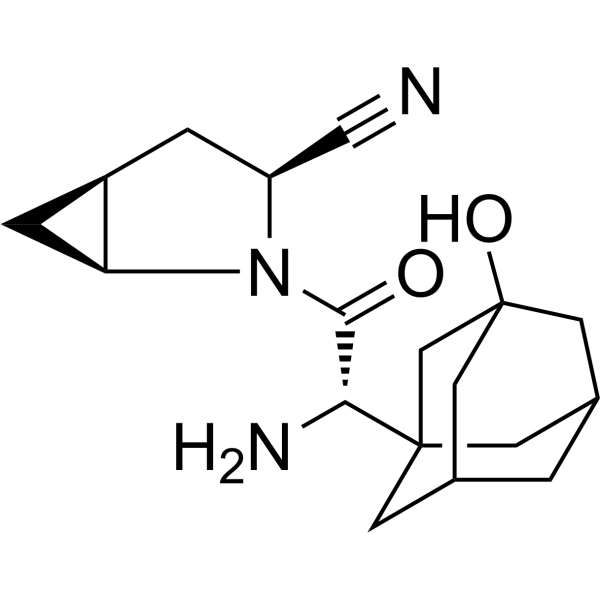
HY-10285
SaxagliptinDPP-4 Inhibitor -

HY-B0422R
Nateglinide (Standard)K+ Channel Inhibitor -
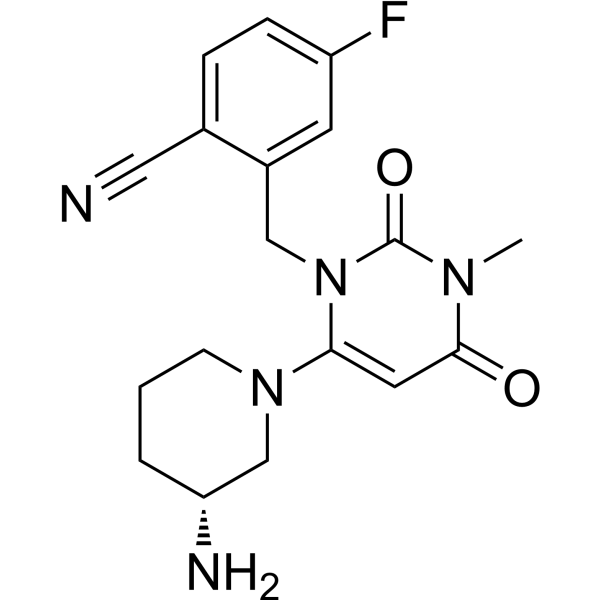
HY-15408
TrelagliptinDPP-4 Inhibitor -
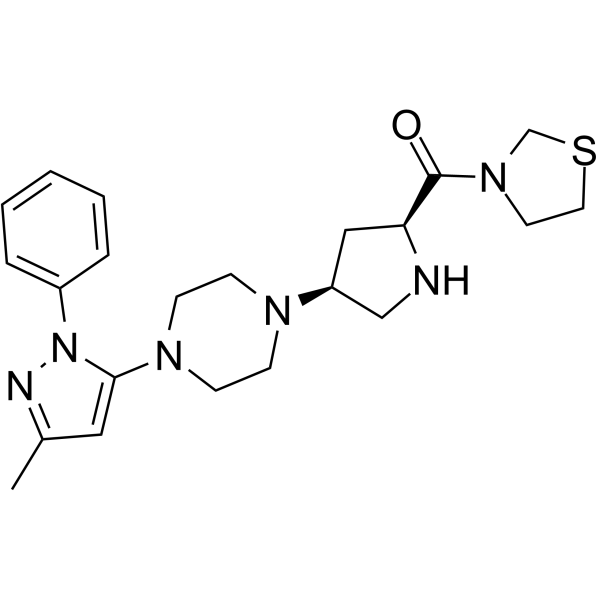
HY-14806
TeneligliptinDPP-4 Inhibitor -
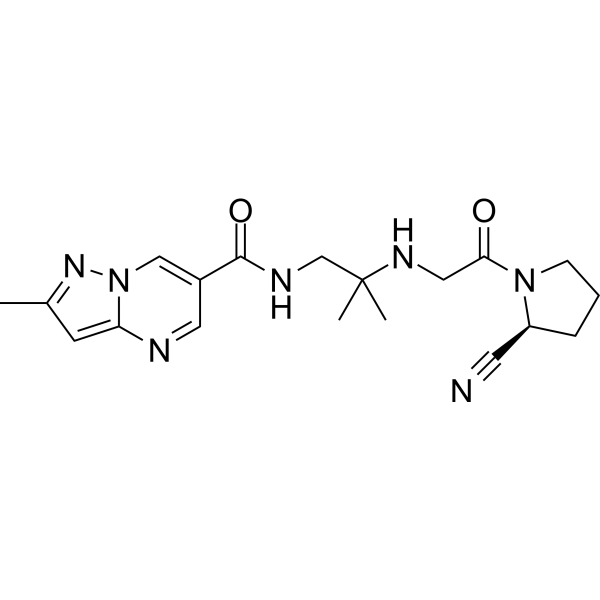
HY-14877
AnagliptinDPP-4 Inhibitor -
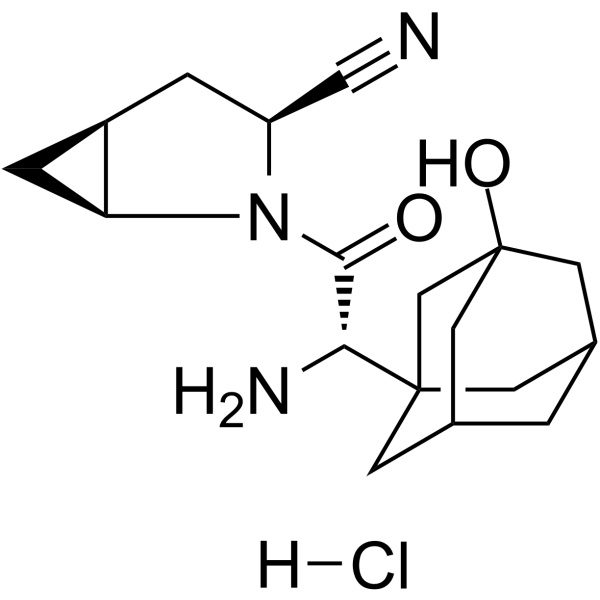
HY-16448
Saxagliptin hydrochlorideDPP-4 Inhibitor


Biological Activity
Description
IC50 & Target
|
DPP-4 |
In Vitro
Stable heavy isotopes of hydrogen, carbon, and other elements have been incorporated into drug molecules, largely as tracers for quantitation during the drug development process. Deuteration has gained attention because of its potential to affect the pharmacokinetic and metabolic profiles of drugs[1].
MedChemExpress (MCE) has not independently confirmed the accuracy of these methods. They are for reference only. Further protocols information, click here.
Application
1. This compound can be used as a tracer
2. This compound can be used as an internal standard for quantitative analysis by NMR, GC-MS, or LC-MS.


Chemical Information
-
CAS No. 2140263-92-7
-
Unlabeled CAS 668270-12-0
-
Appearance Solid
-
Molecular Weight 476.57
-
Formula C25H24D4N8O2
-
Color Off-white to light yellow
-
SMILES
CC#CCN1C2=C(N(C(N(C2=O)CC3=NC4=C(C=CC=C4)C(C)=N3)=O)C)N=C1N5C([2H])([2H])[C@@H](CCC5([2H])[2H])N
-
Synonyms
BI 1356-d4
-
Shipping
Room temperature in continental US; may vary elsewhere.
-
Storage
Powder -20°C 3 years In solvent -80°C 6 months -20°C 1 month


Solvent & Solubility
In Vitro:
DMSO : 25 mg/mL (52.46 mM; ultrasonic and warming and heat to 80°C; Hygroscopic DMSO has a significant impact on the solubility of product, please use newly opened DMSO)
Please refer to the solubility information to select the appropriate solvent. Once prepared, please aliquot and store the solution to prevent product inactivation from repeated freeze-thaw cycles.
Storage method and period of stock solution: -80°C, 6 months; -20°C, 1 month. When stored at -80°C, please use it within 6 months. When stored at -20°C, please use it within 1 month.
Please refer to the solubility information to select the appropriate solvent. Once prepared, please aliquot and store the solution to prevent product inactivation from repeated freeze-thaw cycles.
Storage method and period of stock solution: -80°C, 6 months; -20°C, 1 month. When stored at -80°C, please use it within 6 months. When stored at -20°C, please use it within 1 month.
Concentration (start) × Volume (start) = Concentration (final) × Volume (final)

Protocols
-
EdU Incorporation Assay (Click Chemistry-Based DNA Synthesis Measurement)
The EdU incorporation assay measures DNA synthesis by adding the thymidine analog 5-ethynyl-2′-deoxyuridine to cells or tissues, where it is incorporated into newly synthesized DNA during S phase. Incorporated EdU is detected by copper-catalyzed azide-alkyne cycloaddition, in which a fluorescent azide covalently reacts with the ethynyl group on EdU, allowing S-phase cells to be detected by fluorescence microscopy, flow cytometry, or high-content imaging. EdU detection does not require DNA denaturation or anti-BrdU antibody access, which preserves sample structure and improves compatibility with immunostaining and multiparameter cytometry compared with BrdU-based detection. EdU can be cytotoxic in a cell-type- and exposure-dependent manner, so pulse duration, concentration, and continuous-labeling designs should be validated for each cell type.
-
Cell Cytotoxicity Assay
Cytotoxicity assays are usually based on the assessment of cell membrane damage, which can also be indirectly detected by measuring cell viability. Detection methods include MTT assay, CKK-8 assay, LDH assay and ATP assay, etc.


Purity & Documentation
-
Data Sheet (274 KB)
-
SDS (252 KB)
- English - EN (252 KB)
- Français - FR (252 KB)
- Deutsch - DE (252 KB)
- Norwegian - NO (252 KB)
- Español - ES (252 KB)
- Swedish - SV (252 KB)
- Italian - IT (252 KB)
- Korean - KR (252 KB)
- Portuguese - PT (252 KB)
-
Handling Instructions (2659 KB)
References
[1]. Russak EM, et al. Impact of Deuterium Substitution on the Pharmacokinetics of Pharmaceuticals. Ann Pharmacother. 2019;53(2):211-216. [Content Brief]
[2]. Eckhardt M, et al. 8-(3-(R)-aminopiperidin-1-yl)-7-but-2-ynyl-3-methyl-1-(4-methyl-quinazolin-2-ylmethyl)-3,7-dihydropurine-2,6-dione (BI 1356), a highly potent, selective, long-acting, and orally bioavailable DPP-4 inhibitor for the treatment of type 2 d [Content Brief]
[3]. Thomas L, et al. (R)-8-(3-amino-piperidin-1-yl)-7-but-2-ynyl-3-methyl-1-(4-methyl-quinazolin-2-ylmethyl)-3,7-dihydro-purine-2,6-dione (BI 1356), a novel xanthine-based dipeptidyl peptidase 4 inhibitor, has a superior potency and longer duration of action [Content Brief]
[4]. Schurmann C, et al. The dipeptidyl peptidase-4 inhibitor linagliptin attenuates inflammation and accelerates epithelialization in wounds of diabetic ob/ob mice. J Pharmacol Exp Ther. 2012 Jul;342(1):71-80. [Content Brief]
[5]. Huan Y, et al. The dual DPP4 inhibitor and GPR119 agonist HBK001 regulates glycemic control and beta cell function ex and in vivo. Sci Rep. 2017 Jun 28;7(1):4351. [Content Brief]


Complete Stock Solution Preparation Table
Please refer to the solubility information to select the appropriate solvent. Once prepared, please aliquot and store the solution to prevent product inactivation from repeated freeze-thaw cycles.
Storage method and period of stock solution: -80°C, 6 months; -20°C, 1 month. When stored at -80°C, please use it within 6 months. When stored at -20°C, please use it within 1 month.
| Optional Solvent | Concentration Solvent Mass | 1 mg | 5 mg | 10 mg | 25 mg |
|---|---|---|---|---|---|
| DMSO | 1 mM | 2.0983 mL | 10.4916 mL | 20.9833 mL | 52.4582 mL |
| 5 mM | 0.4197 mL | 2.0983 mL | 4.1967 mL | 10.4916 mL | |
| 10 mM | 0.2098 mL | 1.0492 mL | 2.0983 mL | 5.2458 mL | |
| 15 mM | 0.1399 mL | 0.6994 mL | 1.3989 mL | 3.4972 mL | |
| 20 mM | 0.1049 mL | 0.5246 mL | 1.0492 mL | 2.6229 mL | |
| 25 mM | 0.0839 mL | 0.4197 mL | 0.8393 mL | 2.0983 mL | |
| 30 mM | 0.0699 mL | 0.3497 mL | 0.6994 mL | 1.7486 mL | |
| 40 mM | 0.0525 mL | 0.2623 mL | 0.5246 mL | 1.3115 mL | |
| 50 mM | 0.0420 mL | 0.2098 mL | 0.4197 mL | 1.0492 mL |


Linagliptin-d4 Related Classifications
HY-10284S Related Classifications
 Powered by Bioz