



Isorhamnetin
Based on 21 publication(s) in Google Scholar
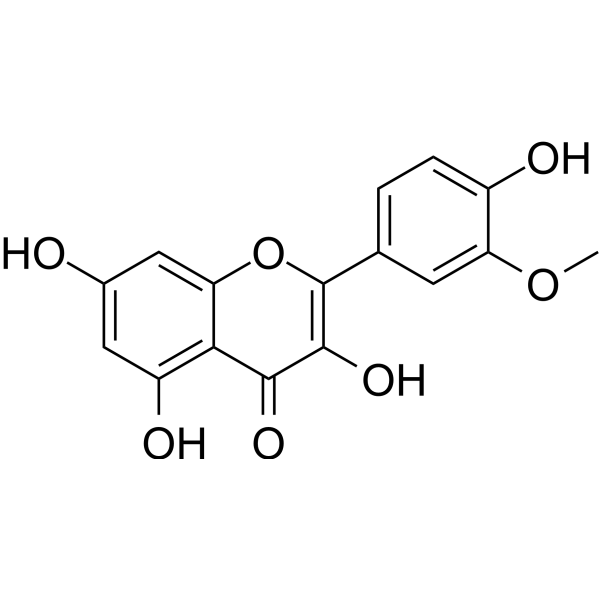
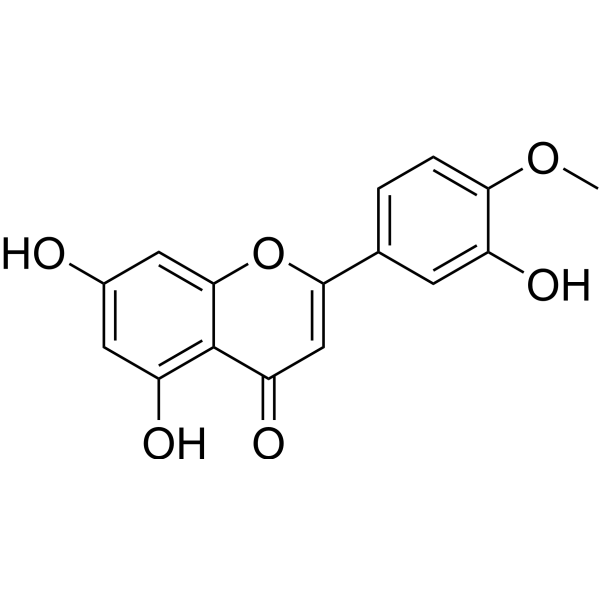
Isorhamnetin is a flavonoid compound extracted from the Chinese herb Hippophae rhamnoides L.. Isorhamnetin suppresses skin cancer through direct inhibition of MEK1 and PI3K.
For research use only. We do not sell to patients.
- Purity : 99.74%
- CAS No.: 480-19-3
- Formula: C16H12O7
- Molecular Weight:316.26
-
Storage:Powder -20°C, 3 years , 4°C, 2 years ; In solvent -80°C, 1 year , -20°C, 6 months

To place orders, for customer services and technical support, please contact: MedChemExpress USA
Tel: 609-228-6898 E-mail: [email protected] [email protected]


-
 Biological Activity
-
Chemical Information
-
Solvent & Solubility
- Protocol
- Purity & Documentation
- References
-
 Help & FAQs


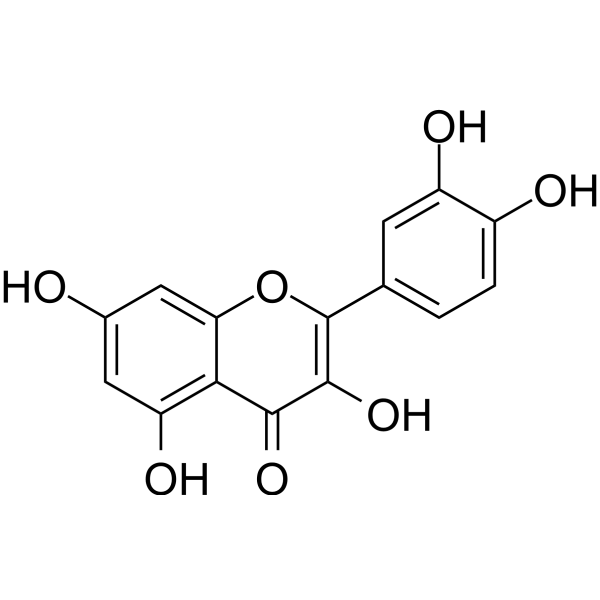
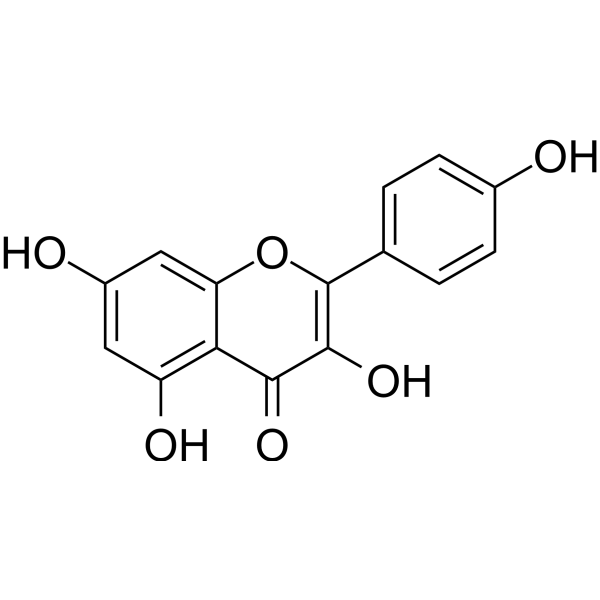
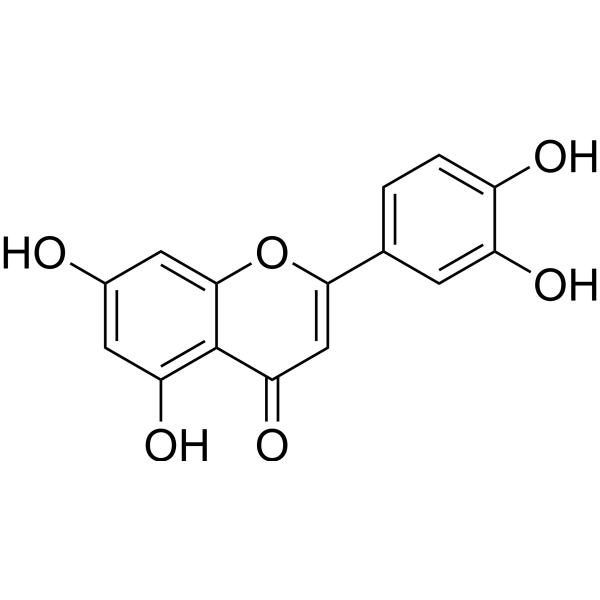
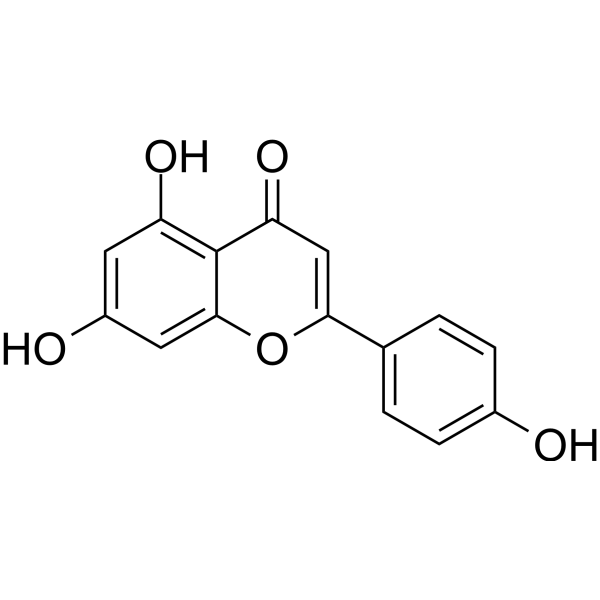
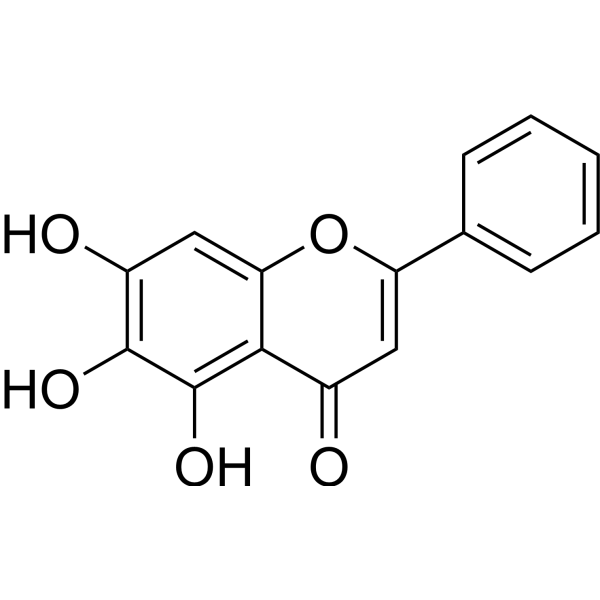
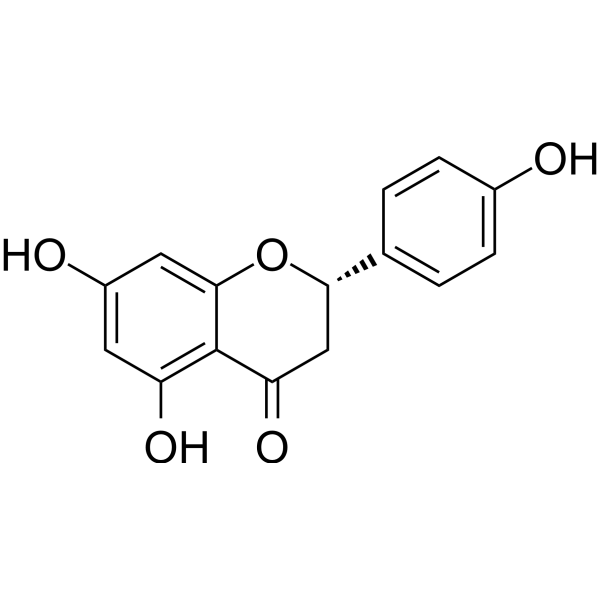
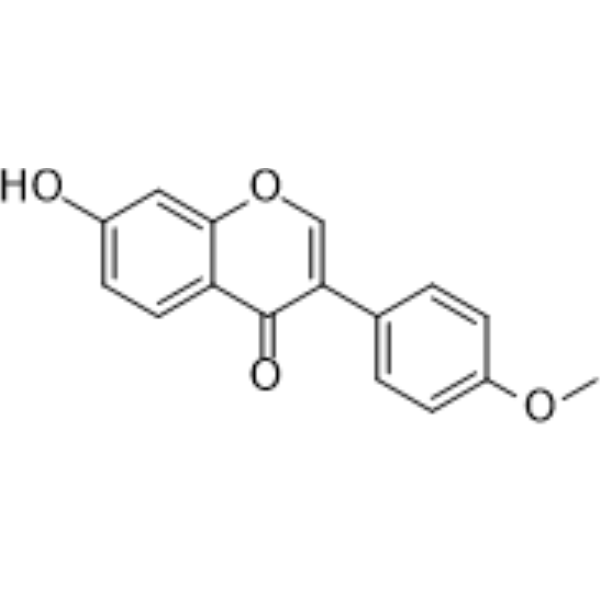
Publications Citing Use of MedChemExpress (MCE) Isorhamnetin
More- Nat Aging. 2024 Sep;4(9):1231-1248. [Abstract]
- Acta Pharm Sin B. 2021 Jan;11(1):143-155. [Abstract]
- Phytomedicine. 2025 May:140:156484. [Abstract]
- Food Chem. 2025 Dec 30:497:146992. [Abstract]
- Food Chem. 2025 Oct 15:489:144992. [Abstract]
- Food Chem. 2023 Mar 30;405(Pt A):134807. [Abstract]
- J Ethnopharmacol. 2026 Apr 6:360:121196. [Abstract]
- Ind Crops Prod. 2026 May 8;246:123392.
- Ind Crops Prod. 2025 Dec 11;239:122458.
- Food Biosci. 2026 Apr 15;80:108917.
- Invest Ophthalmol Vis Sci. 2021 Mar 1;62(3):38. [Abstract]
- Bioorg Chem. 2024 Jun:147:107412. [Abstract]
- Biol Proced Online. 2025 Dec 22;27(1):48. [Abstract]
- Sci Rep. 2023 Aug 3;13(1):12607. [Abstract]
- BMC Complement Med Ther. 2023 Dec 1;23(1):433. [Abstract]
- Exp Eye Res. 2024 Mar:240:109823. [Abstract]
- Cell Biochem Biophys. 2024 Dec;82(4):3607-3617. [Abstract]
- Front Cardiovasc Med. 2022 Jun 16:9:804801. [Abstract]
- Fitoterapia. 2026 Sep:193:107388.
- Vet Microbiol. 2026 May:316:110992. [Abstract]
- J Neurophysiol. 2025 Jan 1;133(1):22-33. [Abstract]
 Customer Validation & Images

-
Cell Proliferation/Viability Assay
-
Cell Imaging/Staining
-
In Vivo Efficacy Study
-
Histological Imaging/Staining
-
WB
All MEK Isoforms
MoreAll Endogenous Metabolite Isoforms
More

Biological Activity
Description
IC50 & Target
[1]|
MEK1 |
PI3-K |
Human Endogenous Metabolite |
Cellular Effect
|
Cell Line

|
Type | Value | Description | References |
|---|---|---|---|---|
| HeLa | IC50 |
≥10 μM
Compound: isorhamnetin
|
Cytotoxicity against human HeLa cells by MTT assay
Cytotoxicity against human HeLa cells by MTT assay
|
[PMID: 19278239] |
| HeLa | IC50 |
8.1 μM
Compound: Isorhamnetol
|
Cytotoxicity against human HeLa cells assessed as reduction in cell viability incubated for 48 hrs by MTT assay
Cytotoxicity against human HeLa cells assessed as reduction in cell viability incubated for 48 hrs by MTT assay
|
[PMID: 31784199] |
| Huh-7 | CC50 |
>50 μM
Compound: 27
|
Cytotoxicity against human Huh7.5.1 cells by MTT assay
Cytotoxicity against human Huh7.5.1 cells by MTT assay
|
[PMID: 22445328] |
| HUVEC | IC50 |
2.8 μM
Compound: 39, isorhamnetin
|
Inhibition of NADPH oxidase in Homo sapiens (human) HUVEC cells
Inhibition of NADPH oxidase in Homo sapiens (human) HUVEC cells
|
10.1007/s00044-012-0353-y |
| MCF7 | IC50 |
10.3 μM
Compound: Isorhamnetol
|
Cytotoxicity against human MCF7 cells assessed as reduction in cell viability incubated for 48 hrs by MTT assay
Cytotoxicity against human MCF7 cells assessed as reduction in cell viability incubated for 48 hrs by MTT assay
|
[PMID: 31784199] |
| Monocyte | IC50 |
3.8 μM
Compound: isorhamnetin
|
Inhibition of procoagulant activity in monocyte from human blood assessed as counteraction of IL1-induced tissue factor expression after 18 hrs
Inhibition of procoagulant activity in monocyte from human blood assessed as counteraction of IL1-induced tissue factor expression after 18 hrs
|
[PMID: 8882428] |
| Monocyte | IC50 |
3.8 x 10⁻⁶ M
Compound: isorhamnetin
|
Inhibition of procoagulant activity in monocyte from human blood assessed as counteraction of IL1-induced tissue factor expression after 18 hrs
Inhibition of procoagulant activity in monocyte from human blood assessed as counteraction of IL1-induced tissue factor expression after 18 hrs
|
[PMID: 8882428] |
| N9 | IC50 |
17.87 μM
Compound: 1
|
Antineuroinflammatory activity in mouse N9 cells assessed as inhibition of LPS-induced nitric oxide production after 24 hrs by Griess assay
Antineuroinflammatory activity in mouse N9 cells assessed as inhibition of LPS-induced nitric oxide production after 24 hrs by Griess assay
|
[PMID: 28073678] |
In Vitro
Isorhamnetin is a plant flavonoid that occurs in fruits and medicinal herbs. Isorhamnetin binds directly to MEK1 in an ATP-noncompetitive manner and to PI3-K in an ATP-competitive manner. In vitro and ex vivo kinase assay data show that Isorhamnetin inhibits the kinase activity of MAP/ERK kinase (MEK) 1 and PI3-K and the inhibition is due to direct binding with Isorhamnetin[1]. Isorhamnetin inhibits the Akt/mTOR and MEK/ERK signaling pathways, and promotes the activity of the mitochondrial apoptosis signaling pathway. The inhibitory effects of Isorhamnetin on breast cancer cells are determined using the CCK-8 method. Isorhamnetin inhibits the proliferation of numerous breast cancer cells (IC50, ~10 μM), including MCF7, T47D, BT474, BT-549, MDA-MB-231 and MDA-MB-468, whereas less inhibitory activity is observed in the MCF10A normal breast epithelial cell line (IC50, 38 μM)[2].
MedChemExpress (MCE) has not independently confirmed the accuracy of these methods. They are for reference only.
In Vivo
MedChemExpress (MCE) has not independently confirmed the accuracy of these methods. They are for reference only.


Chemical Information
-
CAS No. 480-19-3
-
Appearance Solid
-
Molecular Weight 316.26
-
Formula C16H12O7
-
Color Light yellow to yellow
-
SMILES
O=C1C(O)=C(C2=CC=C(O)C(OC)=C2)OC3=CC(O)=CC(O)=C13
-
Synonyms
3'-Methylquercetin
-
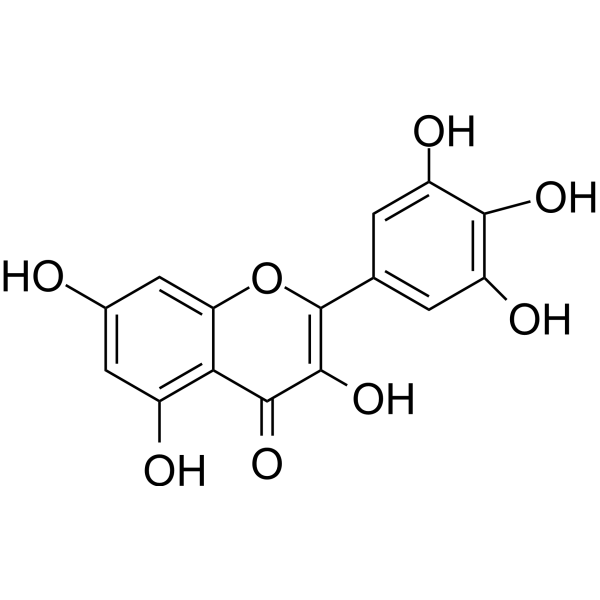
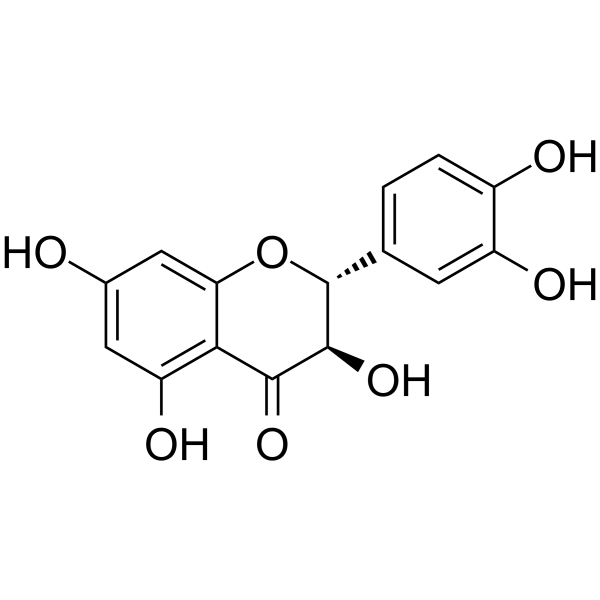
Structure Classification
-
Shipping
Room temperature in continental US; may vary elsewhere.
-
Storage
Powder -20°C 3 years 4°C 2 years In solvent -80°C 1 year -20°C 6 months


Publications (21)
-
Journal Impact Factor
-
Most Recent
-
Nat Aging
Targeting senescence induced by age or chemotherapy with a polyphenol-rich natural extract improves longevity and healthspan in mice. [Abstract]2024 Sep;4(9):1231-1248. PMID: 38951692 -
Acta Pharm Sin B
Chrysin serves as a novel inhibitor of DGK α/FAK interaction to suppress the malignancy of esophageal squamous cell carcinoma (ESCC). [Abstract]2021 Jan;11(1):143-155. PMID: 33532186 -
Phytomedicine
Fangchinoline suppresses nasopharyngeal carcinoma progression by inhibiting SQLE to regulate the PI3K/AKT pathway dysregulation. [Abstract]2025 May:140:156484. PMID: 40090046 -
Food Chem
Effects of sun drying combined with baking processes on the flavor quality of Chongqing Tuocha raw tea. [Abstract]2025 Dec 30:497:146992. PMID: 41285060 -
Food Chem
Flavonoid-mediated metabolic underpinning quality variation in red bud-sport pear mutants. [Abstract]2025 Oct 15:489:144992. PMID: 40466530 -
Food Chem
Discovery of novel ascorbic acid derivatives and other metabolites in fruit of Rosa roxburghii Tratt through untargeted metabolomics and feature-based molecular networking. [Abstract]2023 Mar 30;405(Pt A):134807. PMID: 36370576 -
J Ethnopharmacol
Integrated metabolomics and proteomics analysis elucidated the therapeutic effect of Huangkui Capsule on tacrolimus-induced chronic nephrotoxicity in rats. [Abstract]2026 Apr 6:360:121196. PMID: 41534748 -
-
-
-
Invest Ophthalmol Vis Sci
Isorhamnetin Ameliorates Aspergillus fumigatus Keratitis by Reducing Fungal Load, Inhibiting Pattern-Recognition Receptors and Inflammatory Cytokines. [Abstract]2021 Mar 1;62(3):38. PMID: 33783487
Isorhamnetin purchased from MedChemExpress. Usage Cited in: Invest Ophthalmol Vis Sci. 2021 Mar 1;62(3):38. [Abstract]
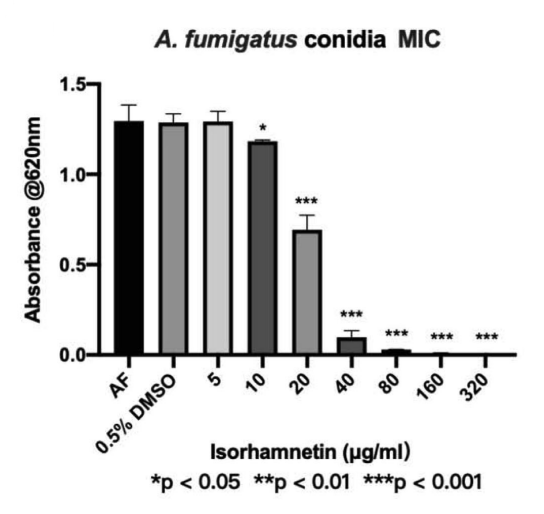
Fumigatus conidia were cultured with 0.5% DMSO and Isorhamnetin at different concentrations (5–320 μg/mL) for 48 hours. Isorhamnetin started to inhibit the growth of A. fumigatus at 10 μg/mL and prevented 90% of A. fumigatus growth (MIC90) at 80 μg/mL.
Isorhamnetin purchased from MedChemExpress. Usage Cited in: Invest Ophthalmol Vis Sci. 2021 Mar 1;62(3):38. [Abstract]
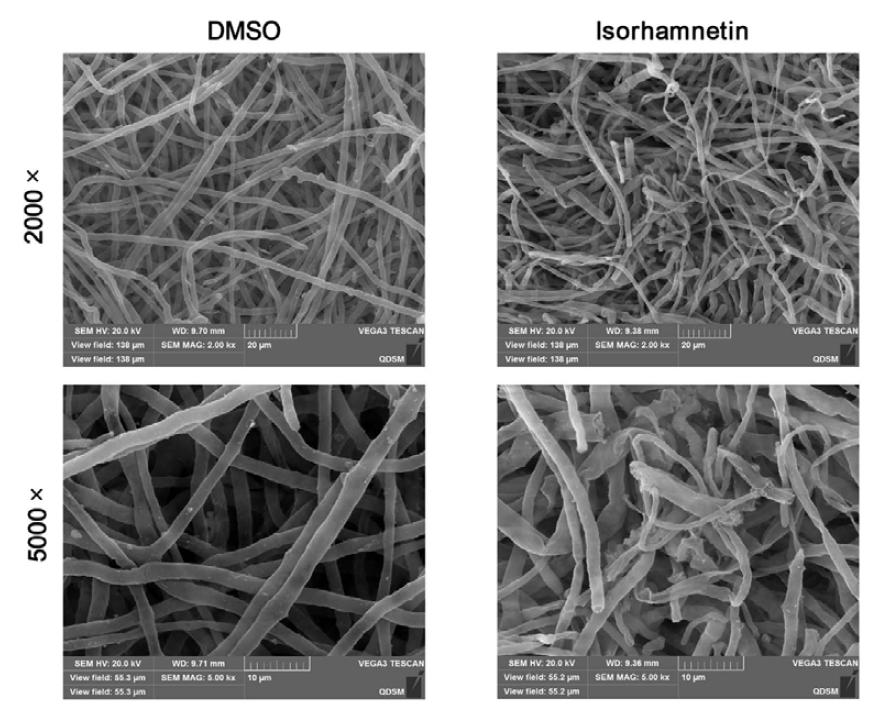
Hyphae treated with 0.5% DMSO showed an intact morphological structure characterized by smooth surface and rounded mycelia. Isorhamnetin (80 μg/mL; 24 h) treatment caused the hyphae of A. fumigatus to become thinner, swollen, twisted, and knotted.
Isorhamnetin purchased from MedChemExpress. Usage Cited in: Invest Ophthalmol Vis Sci. 2021 Mar 1;62(3):38. [Abstract]
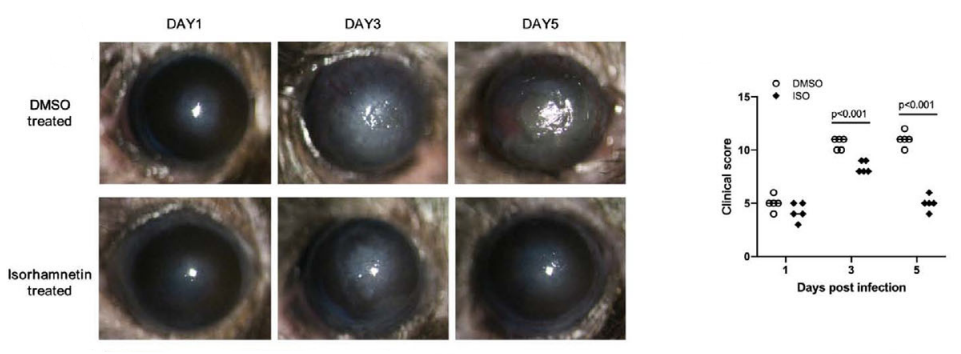
Representative slit lamp photographs and clinical scores of DMSO or Isorhamnetin (5 µL; 80 µg/mL; four times daily for five days) treated A. fumigatus keratitis mice at days 1, 3, and 5. Isorhamnetin treatment made the corneas of mice more transparent, with smaller ulcers and no perforation, and also significantly decreased the clinical score at 3 and 5 days.
Isorhamnetin purchased from MedChemExpress. Usage Cited in: Invest Ophthalmol Vis Sci. 2021 Mar 1;62(3):38. [Abstract]
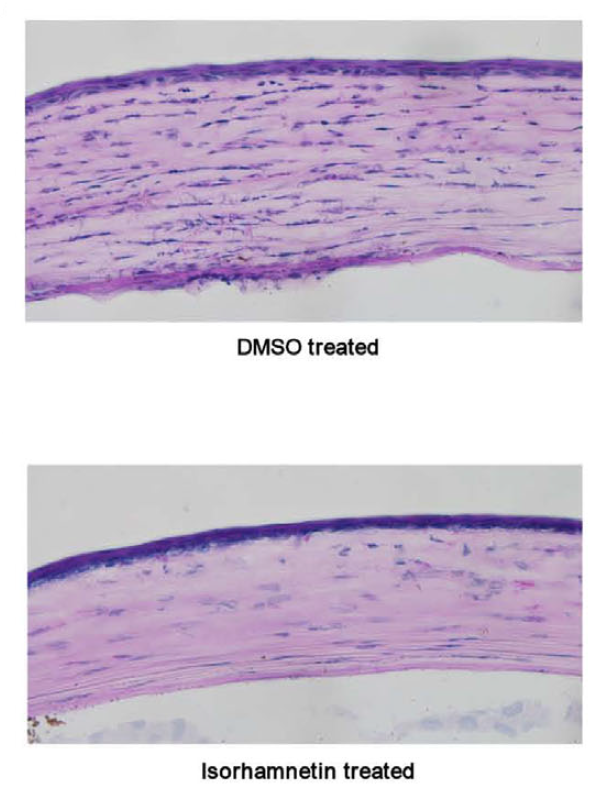
PAS staining of corneal tissue sections (magnification × 400) of DMSO or Isorhamnetin (5 µL; 80 µg/mL; four times daily for five days) treated. Isorhamnetin observably reduced fungal hyphal load and alleviated corneal edema in A. fumigatus–infected mice on the third day after.
Isorhamnetin purchased from MedChemExpress. Usage Cited in: Invest Ophthalmol Vis Sci. 2021 Mar 1;62(3):38. [Abstract]
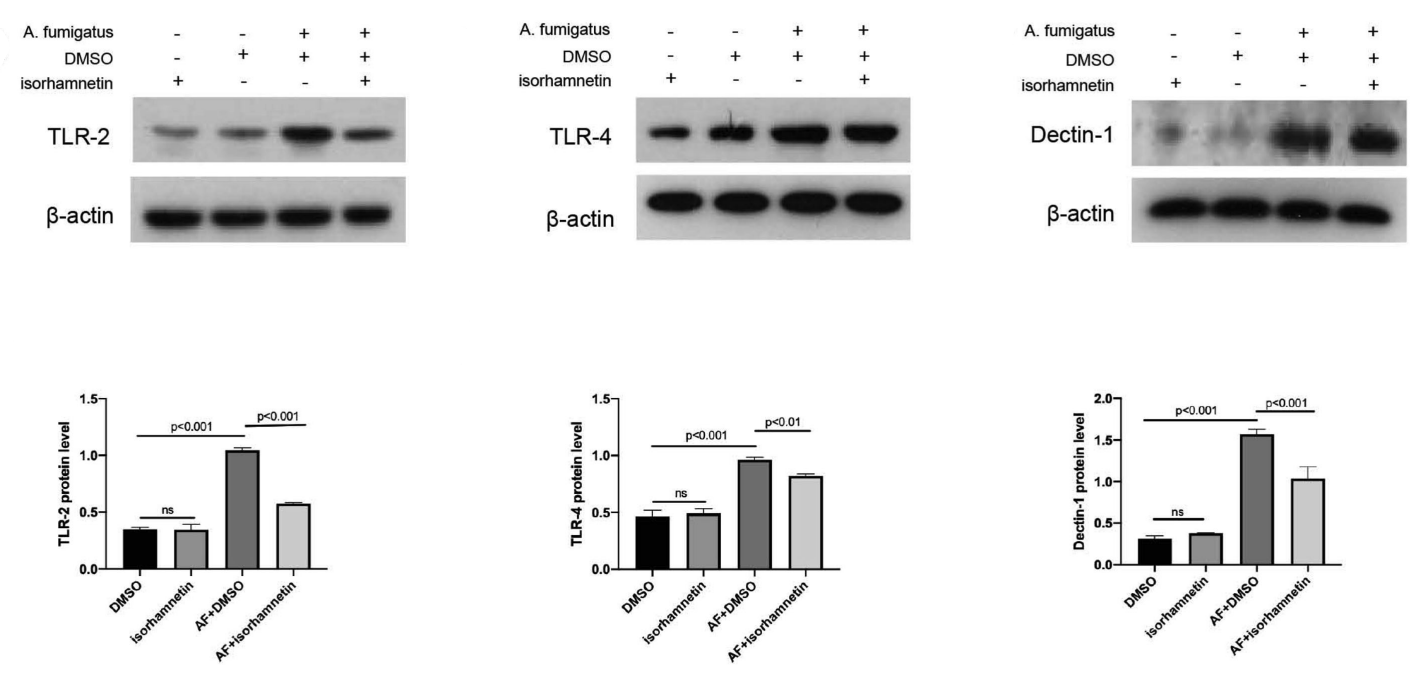
Western blot results and grayscale analysis of TLR-2, TLR-4, Dectin-1 at 3 days p.i. Isorhamnetin (5 µL; 80 µg/mL; four times daily) significantly inhibited A. fumigatus induction of TLR-2, TLR-4 and Dectin-1 in protein level.
-
Bioorg Chem
Identification of FTY720 and COH29 as novel topoisomerase I catalytic inhibitors by experimental and computational studies. [Abstract]2024 Jun:147:107412. PMID: 38696845 -
Biol Proced Online
Network Pharmacology and Experimental Validation Reveal Aidi Injection Suppresses Prostate Cancer via EGFR Inhibition and STAT3-Mediated Apoptosis. [Abstract]2025 Dec 22;27(1):48. PMID: 41430119 -
Sci Rep
Active ingredients Isorhamnetin of Croci Srigma inhibit stomach adenocarcinomas progression by MAPK/mTOR signaling pathway. [Abstract]2023 Aug 3;13(1):12607. PMID: 37537191 -
BMC Complement Med Ther
Network pharmacology-based strategy to investigate the bioactive ingredients and molecular mechanism of Evodia rutaecarpa in colorectal cancer. [Abstract]2023 Dec 1;23(1):433. PMID: 38041080 -
Exp Eye Res
Isorhamnetin suppresses the epithelial-mesenchymal transition of the retinal pigment epithelium both in vivo and in vitro through Nrf2-dependent AKT/GSK-3β pathway. [Abstract]2024 Mar:240:109823. PMID: 38331017 -
Cell Biochem Biophys
Pro-differentiative, Pro-adhesive and Pro-migratory Activities of Isorhamnetin in MC3T3-E1 Osteoblasts via Activation of ERK-dependent BMP2-Smad Signaling. [Abstract]2024 Dec;82(4):3607-3617. PMID: 39136840 -
Front Cardiovasc Med
Exploring the Mechanism of Hawthorn Leaves Against Coronary Heart Disease Using Network Pharmacology and Molecular Docking. [Abstract]2022 Jun 16:9:804801. PMID: 35783840 -
-
Vet Microbiol
The Chinese medicine monomer Schisandrin C inhibits PRRSV infection by regulating the OGT-PI3K/AKT/mTOR signaling pathway. [Abstract]2026 May:316:110992. PMID: 41865607 -
J Neurophysiol
Isorhamnetin ameliorates dopaminergic neuronal damage via targeting FOSL1 to activate AKT/mTOR in 6-OHDA-induced SH-SY5Y cells. [Abstract]2025 Jan 1;133(1):22-33. PMID: 39560297


Solvent & Solubility
In Vitro:
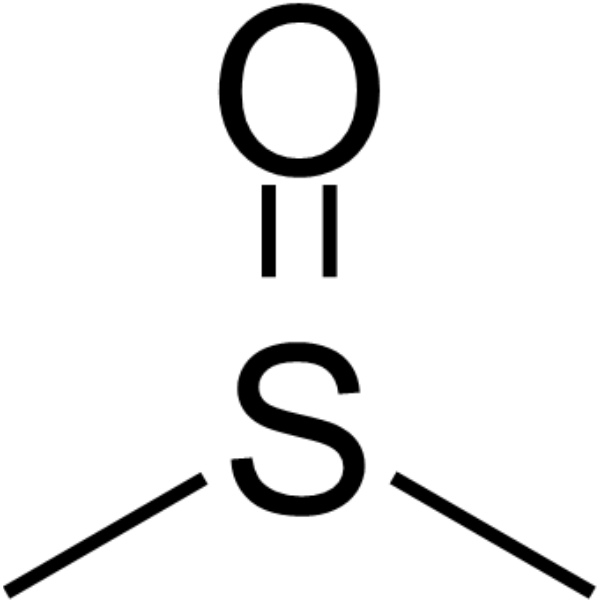
DMSO : 100 mg/mL (316.20 mM; Need ultrasonic; Hygroscopic DMSO has a significant impact on the solubility of product, please use newly opened DMSO)
Please refer to the solubility information to select the appropriate solvent. Once prepared, please aliquot and store the solution to prevent product inactivation from repeated freeze-thaw cycles.
Storage method and period of stock solution: -80°C, 1 year; -20°C, 6 months. When stored at -80°C, please use it within 1 year. When stored at -20°C, please use it within 6 months.
Please refer to the solubility information to select the appropriate solvent. Once prepared, please aliquot and store the solution to prevent product inactivation from repeated freeze-thaw cycles.
Storage method and period of stock solution: -80°C, 1 year; -20°C, 6 months. When stored at -80°C, please use it within 1 year. When stored at -20°C, please use it within 6 months.
Concentration (start) × Volume (start) = Concentration (final) × Volume (final)
In Vivo:
Select the appropriate dissolution method based on your experimental animal and administration route.
- For the following dissolution methods, please ensure to first prepare a clear stock solution using an In Vitro approach and then sequentially add co-solvents:
- To ensure reliable experimental results, the clarified stock solution can be appropriately stored based on storage conditions. As for the working solution for In Vivo experiments, it is recommended to prepare freshly and use it on the same day.
- The percentages shown for the solvents indicate their volumetric ratio in the final prepared solution. If precipitation or phase separation occurs during preparation, heat and/or sonication can be used to aid dissolution.
Add each solvent one by one: 10% DMSO 40% PEG300 5% Tween-80 45% Saline
Solubility: 2.08 mg/mL (6.58 mM); Suspended solution; Need ultrasonic
This protocol yields a suspended solution of 2.08 mg/mL. Suspended solution can be used for oral and intraperitoneal injection.
Taking 1 mL working solution as an example, add 100 μL DMSO stock solution (20.8 mg/mL) to 400 μL PEG300, and mix evenly; then add 50 μL Tween-80 and mix evenly; then add 450 μL Saline to adjust the volume to 1 mL.
Preparation of Saline: Dissolve 0.9 g sodium chloride in ddH₂O and dilute to 100 mL to obtain a clear Saline solution.
In Vivo Dissolution Calculator
Please enter the basic information of animal experiments:
-
-
-
-
Recommended: Prepare an additional quantity of animals to account for potential losses during experiments.
Please enter your animal formula composition:
-
%DMSO +
Recommended: Keep the proportion of DMSO in working solution below 2% if your animal is weak.
-
%+
-
+%Tween-80 + +
-
%Saline +
The co-solvents required include: DMSO, . All of co-solvents are available by MedChemExpress (MCE). , Tween 80. All of co-solvents are available by MedChemExpress (MCE).
Working solution concentration: 0.22 mg/mL
Method for preparing stock solution: mg drug dissolved in μL DMSO. Stock solution concentration: mg/mL.
1. Take μL DMSO stock solution;
2. Add μL .
μL , mix evenly;
3. Then add μL Tween 80, mix evenly;
4. Then add μL
Please ensure that the stock solution in the first step is dissolved to a clear state, and add co-solvents in sequence. You can use ultrasonic heating (ultrasonic cleaner, recommended frequency 20-40 kHz), vortexing, etc. to assist dissolution.

Protocol
Cell Assay[2]
MCF7, T47D, BT474, BT-549, MDA-MB-231 and MDA-MB-468 breast cancer cell lines, as well as a MCF10A normal breast epithelial cell line (control) are seeded into 96-well plates at a density of 5×10³ cells/well in 100 µL DMEM and placed in cell incubator for 12 h at 37°C in an atmosphere containing 5% CO2. The cells are then treated with various concentrations of Isorhamnetin (100, 33.3, 11.1, 3.7, 1.2, 0.4 and 0 µM) for 48 h, and cell proliferation rates are determined by adding 10 µL CCK-8 solution prior to incubation at 37°C for 2 h. The absorbance is measured at a wavelength of 450 nm using a SpectraMax 190 Microplate Reader. For each assay, four parallel wells are included, and the half maximal inhibitory concentration (IC50) is measured using the inhibition curve and presented as the mean of three independent experiments[2].
MedChemExpress (MCE) has not independently confirmed the accuracy of these methods. They are for reference only.
Animal Administration[1]
Mice[1]
Female athymic nude mice are injected subcutaneously in the flank with A431 cells (1×10⁶ cells in 50 μL of medium and 50 μL of Matrigel). Cells are allowed to form tumors, and once the tumors reach a size of 40 mm3, the mice are randomly assigned into groups (6 mice/group) and treated with (1 or 5 mg/kg body weight) or without Isorhamnetin in 40% DMSO/PBS buffer, administered intraperitoneally every other day for 28 days. Tumor size is measured every week with calipers, and the tumor volume is calculated. Mice are sacrificed after 28 days of treatment when the control tumors reach approximately 600 mm3. The tumors are harvested, photographed, and weighed. Tumor tissues are used for western blot analysis and immunohistochemical analysis.
MedChemExpress (MCE) has not independently confirmed the accuracy of these methods. They are for reference only.


Purity & Documentation
-
Data Sheet (280 KB)
-
SDS (418 KB)
- English - EN (418 KB)
- Français - FR (418 KB)
- Deutsch - DE (418 KB)
- Norwegian - NO (418 KB)
- Español - ES (418 KB)
- Swedish - SV (418 KB)
- Italian - IT (418 KB)
- Korean - KR (418 KB)
- Portuguese - PT (418 KB)
-
Handling Instructions (2659 KB)
References
[1]. Kim JE, et al. Isorhamnetin suppresses skin cancer through direct inhibition of MEK1 and PI3-K. Cancer Prev Res (Phila). 2011 Apr;4(4):582-91. [Content Brief]
[2]. Hu S, et al. Isorhamnetin inhibits cell proliferation and induces apoptosis in breast cancer via Akt and mitogen activated protein kinase kinase signaling pathways. Mol Med Rep. 2015 Nov;12(5):6745-51. [Content Brief]


Complete Stock Solution Preparation Table
Please refer to the solubility information to select the appropriate solvent. Once prepared, please aliquot and store the solution to prevent product inactivation from repeated freeze-thaw cycles.
Storage method and period of stock solution: -80°C, 1 year; -20°C, 6 months. When stored at -80°C, please use it within 1 year. When stored at -20°C, please use it within 6 months.
| Optional Solvent | Concentration Solvent Mass | 1 mg | 5 mg | 10 mg | 25 mg |
|---|---|---|---|---|---|
| DMSO | 1 mM | 3.1620 mL | 15.8098 mL | 31.6196 mL | 79.0489 mL |
| 5 mM | 0.6324 mL | 3.1620 mL | 6.3239 mL | 15.8098 mL | |
| 10 mM | 0.3162 mL | 1.5810 mL | 3.1620 mL | 7.9049 mL | |
| 15 mM | 0.2108 mL | 1.0540 mL | 2.1080 mL | 5.2699 mL | |
| 20 mM | 0.1581 mL | 0.7905 mL | 1.5810 mL | 3.9524 mL | |
| 25 mM | 0.1265 mL | 0.6324 mL | 1.2648 mL | 3.1620 mL | |
| 30 mM | 0.1054 mL | 0.5270 mL | 1.0540 mL | 2.6350 mL | |
| 40 mM | 0.0790 mL | 0.3952 mL | 0.7905 mL | 1.9762 mL | |
| 50 mM | 0.0632 mL | 0.3162 mL | 0.6324 mL | 1.5810 mL | |
| 60 mM | 0.0527 mL | 0.2635 mL | 0.5270 mL | 1.3175 mL | |
| 80 mM | 0.0395 mL | 0.1976 mL | 0.3952 mL | 0.9881 mL | |
| 100 mM | 0.0316 mL | 0.1581 mL | 0.3162 mL | 0.7905 mL |


Isorhamnetin Related Classifications
HY-N0776 Related Classifications
 Powered by Bioz