



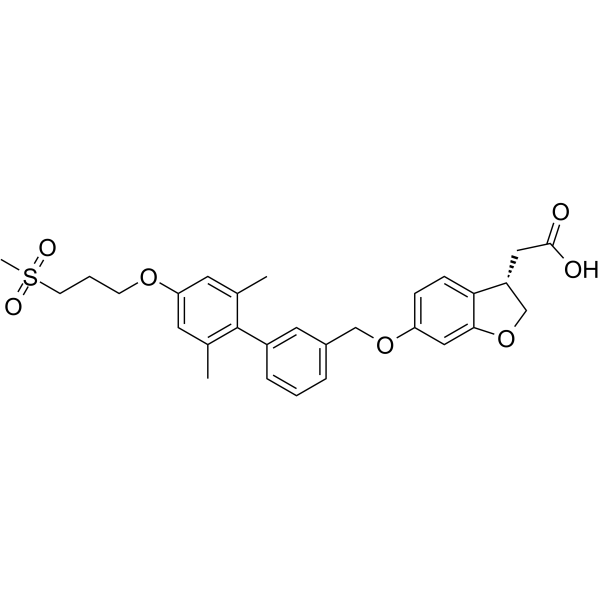
Fasiglifam
Based on 17 publication(s) in Google Scholar
Fasiglifam (TAK-875) is a potent, selective and orally bioavailable GPR40 agonist with EC50 of 72 nM.
Nur für Forschungszwecke. Wir verkaufen nicht an Patienten.
- Reinheit : 98.97%
- CAS. Nr.: 1000413-72-8
- Formel: C29H32O7S
- Molecular Weight:524.63
-
Speicherung:Powder -20°C, 3 years , 4°C, 2 years ; In solvent -80°C, 2 years , -20°C, 1 year

To place orders, for customer services and technical support, please contact: MedChemExpress USA
Tel: 609-228-6898 E-mail: [email protected] [email protected]


-
 Biologische Aktivität
-
Chemical Information
-
Lösungsmittel & Löslichkeit
- Reinheit & Dokumentation
- Verweise
-
 Help & FAQs


-
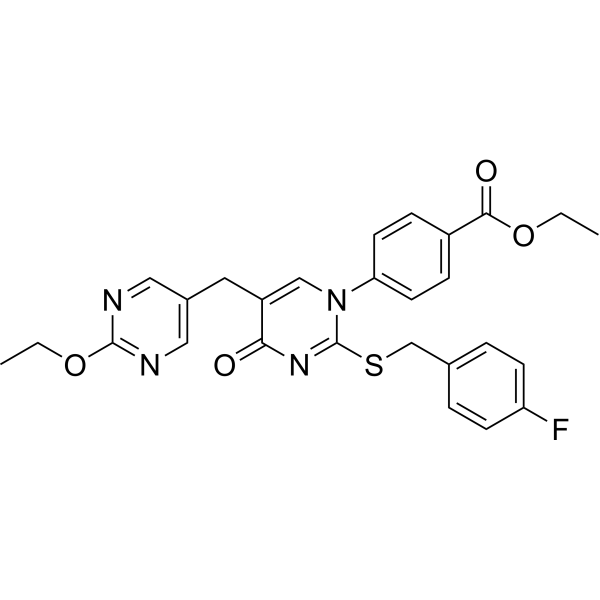
HY-50691
GW-1100Free Fatty Acid Receptor Antagonist -
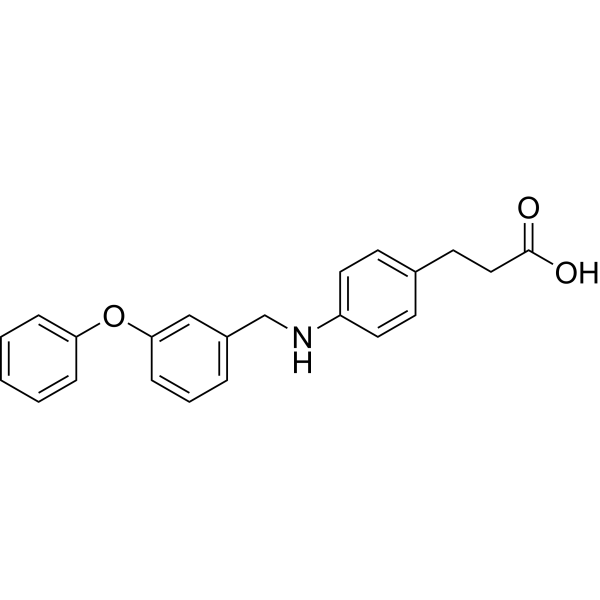
HY-15589
GW9508GPR40 Agonist -
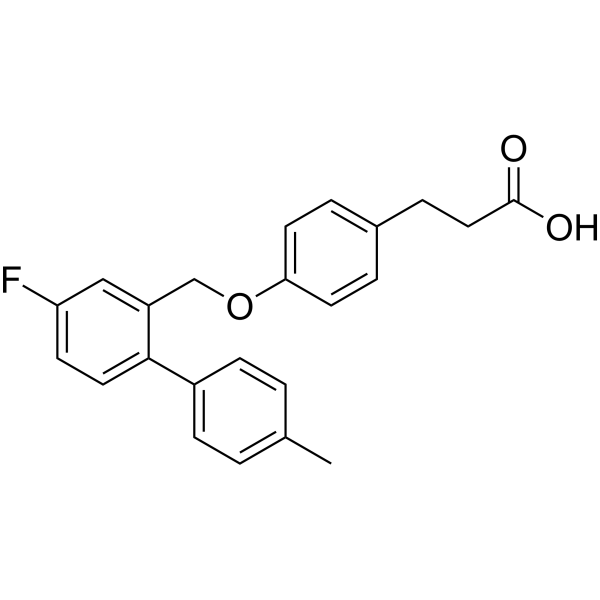
HY-100881
TUG-891FFA4/GPR120 Agonist -
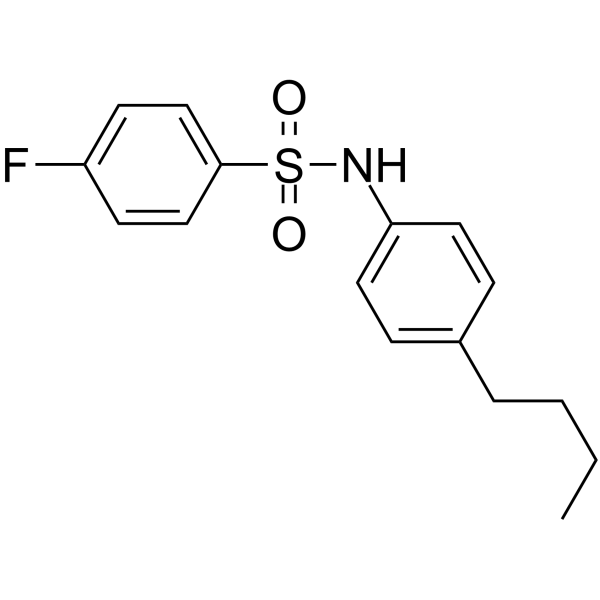
HY-101906
DC260126GPR40 antagonist -
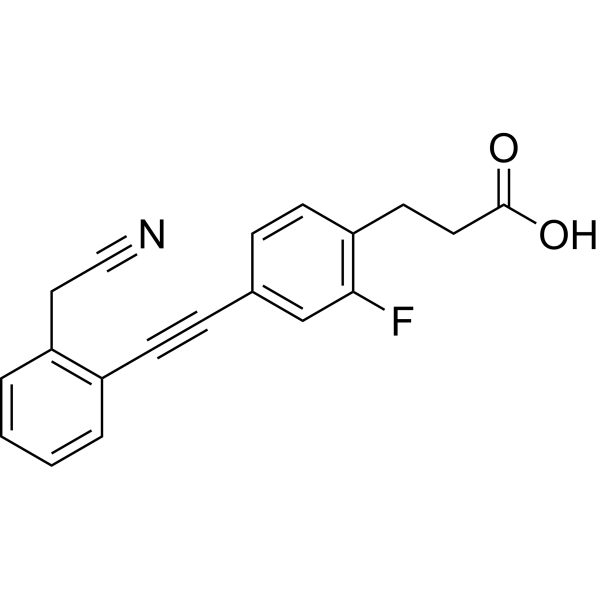
HY-15697
TUG-770GPR40/FFA1 Agonist -
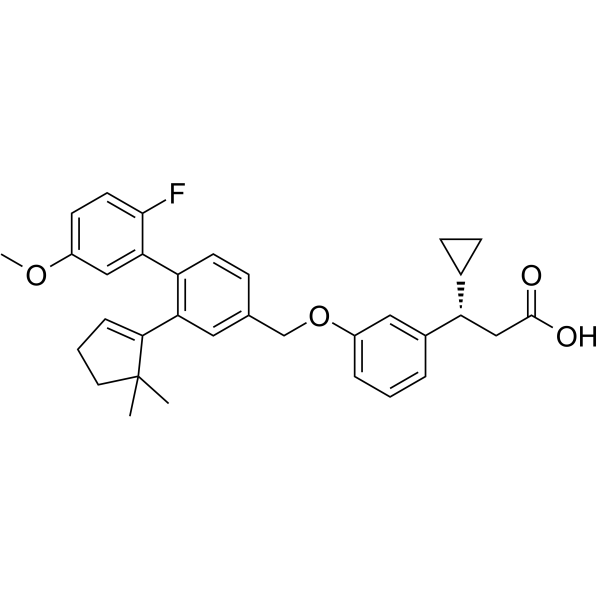
HY-13467
AM-1638GPR40/FFA1 Agonist -
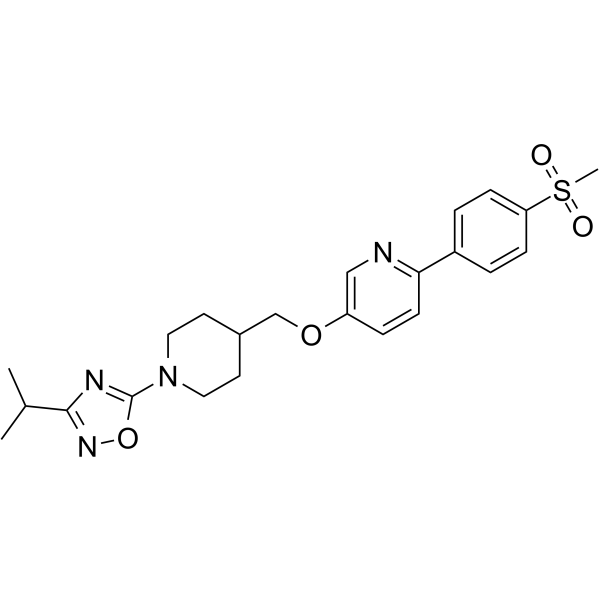
HY-12066
GSK1292263 -
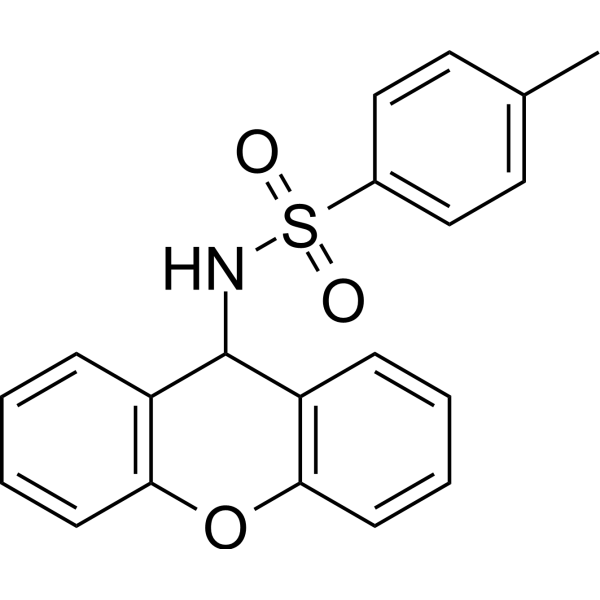
HY-19996
AH-7614FFA4 Antagonist -
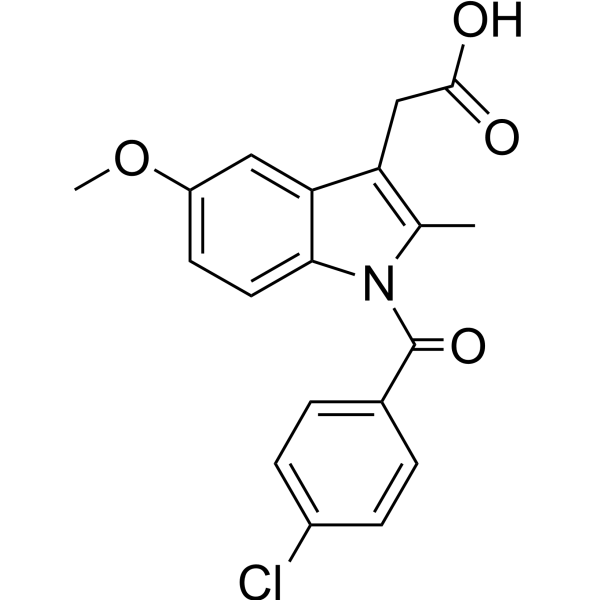
HY-14397
IndomethacinCOX1/2 Inhibitor -
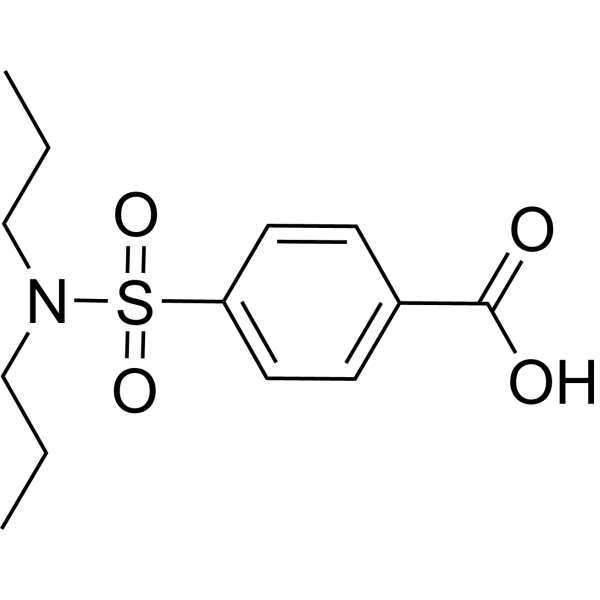
HY-B0545
ProbenecidBacterial Inhibitor -
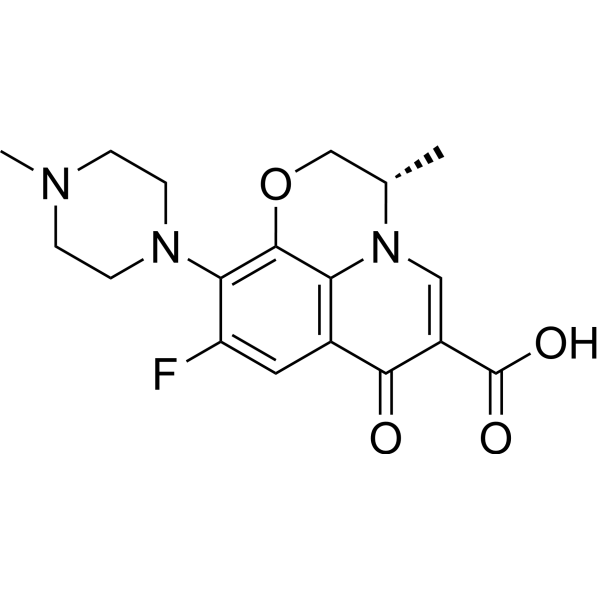
HY-B0330
LevofloxacinDNA Gyrase/Topoisomerase Inhibitor -
HY-125824
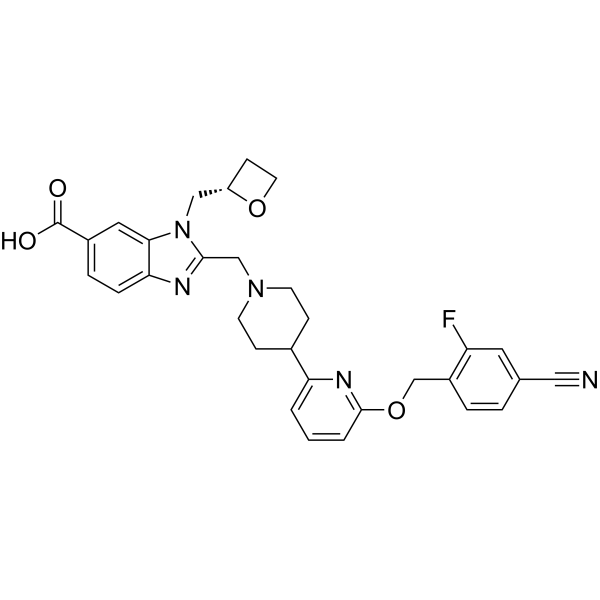
DanuglipronGLP-1R Agonist
Publications Citing Use of MedChemExpress (MCE) Fasiglifam
More- Nat Commun. 2026 Feb 12;17(1):1214. [Abstract]
- J Allergy Clin Immunol. 2018 Aug;142(2):470-484.e12. [Abstract]
- Phytomedicine. 2025 May:140:156618. [Abstract]
- Proc Natl Acad Sci U S A. 2023 May 30;120(22):e2219569120. [Abstract]
- Eur J Med Chem. 2022 Feb 5:229:114061. [Abstract]
- Biochem Pharmacol. 2024 Jan:219:115957. [Abstract]
- Food Funct. 2024 Apr 22;15(8):4627-4641. [Abstract]
- RSC Adv. 2019 May 15;9(26):15073-15083. [Abstract]
- Cell Regen. 2023 Mar 3;12(1):6. [Abstract]
- Chem Biol Interact. 2018 Dec 25:296:185-197. [Abstract]
- J Cell Physiol. 2022 Sep;237(9):3651-3660. [Abstract]
- Bioorg Med Chem. 2022 Feb 15:56:116615. [Abstract]
- Animals (Basel). 2025 Nov 26;15(23):3418. [Abstract]
- J Cell Biochem. 2017 May;118(5):1249-1261. [Abstract]
- PLoS One. 2018 Jul 11;13(7):e0200449. [Abstract]
- Biomed Chromatogr. 2020 Sep;34(9):e4870. [Abstract]
- Biomed Pharmacother. 2023 May:161:114509. [Abstract]
 Customer Validation & Images

-
Bio/Physico-chemical Assay
-
Histological Imaging/Staining
-
IF
-
Histological Imaging/Staining
-
Cell Proliferation/Viability Assay


Biologische Aktivität
Beschreibung
IC50 & Target
EC50: 72 nM (GPR40)
Cellular Effect
|
Cell Line

|
Type | Value | Description | References |
|---|---|---|---|---|
| CHO | EC50 |
0.016 μM
Compound: 16 Anhydrous
|
Agonist activity at human GP40 receptor expressed in CHO cells assessed as increase in intracellular calcium level for 90 secs by FLIPR assay in the presence of 0.1% BSA
Agonist activity at human GP40 receptor expressed in CHO cells assessed as increase in intracellular calcium level for 90 secs by FLIPR assay in the presence of 0.1% BSA
|
[PMID: 22490067] |
| CHO | EC50 |
27.5 nM
Compound: TAK-875
|
Agonist activity at human GPR40 expressed in CHO cells by FLIPR calcium flux assay
Agonist activity at human GPR40 expressed in CHO cells by FLIPR calcium flux assay
|
[PMID: 27054485] |
| CHO | EC50 |
29.6 nM
Compound: TAK-875
|
Agonist activity at human FFA1 expressed in CHO cells assessed as induction of receptor activation by measuring Ca2+influx incubated for by FLIPR method
Agonist activity at human FFA1 expressed in CHO cells assessed as induction of receptor activation by measuring Ca2+influx incubated for by FLIPR method
|
[PMID: 26420383] |
| CHO | EC50 |
29.6 nM
Compound: TAK-875
|
Agonist activity at human FFA1 receptor expressed in CHO cells assessed as increase in intracellular calcium flux by FLIPR assay
Agonist activity at human FFA1 receptor expressed in CHO cells assessed as increase in intracellular calcium flux by FLIPR assay
|
[PMID: 26482570] |
| CHO | EC50 |
29.6 nM
Compound: TAK-875
|
Agonist activity at human FFA1 expressed in CHO cells assessed as intracellular Ca2+ level measured for 90 secs by Fluo-4 AM-based FLIPR assay
Agonist activity at human FFA1 expressed in CHO cells assessed as intracellular Ca2+ level measured for 90 secs by Fluo-4 AM-based FLIPR assay
|
[PMID: 27020683] |
| CHO | EC50 |
37.1 nM
Compound: TAK-875
|
Agonist activity at FFA1 receptor (unknown origin) stably expressed in CHO cells assessed as increase in calcium flux by Fluo4-AM based FLIPR assay
Agonist activity at FFA1 receptor (unknown origin) stably expressed in CHO cells assessed as increase in calcium flux by Fluo4-AM based FLIPR assay
|
[PMID: 31279294] |
| CHO | EC50 |
38.6 nM
Compound: TAK-875
|
Agonist activity at human FFA1 expressed in CHO cells assessed as increase in intracellular Ca2+ concentration by Fluo-4 AM based fluorescence assay
Agonist activity at human FFA1 expressed in CHO cells assessed as increase in intracellular Ca2+ concentration by Fluo-4 AM based fluorescence assay
|
[PMID: 25481394] |
| CHO | EC50 |
45 nM
Compound: TAK-875
|
Agonist activity at human FFA1 receptor expressed in CHO cells by Fluo 4-AM dye based FLIPR assay
Agonist activity at human FFA1 receptor expressed in CHO cells by Fluo 4-AM dye based FLIPR assay
|
[PMID: 30605833] |
| HEK293 | EC50 |
0.08 μM
Compound: 3; TAK-875
|
Agonist activity at human FFA1 receptor expressed in HEK293 cells assessed as increase in intracellular Ca2+ flux by Fluo-4 dye based assay
Agonist activity at human FFA1 receptor expressed in HEK293 cells assessed as increase in intracellular Ca2+ flux by Fluo-4 dye based assay
|
[PMID: 30685095] |
| HEK293 | EC50 |
1.9 nM
Compound: TAK-875
|
Agonist activity at human GPR40 expressed in HEK293 cells measured after 18 to 20 hrs by beta-gal based luciferase reporter gene assay
Agonist activity at human GPR40 expressed in HEK293 cells measured after 18 to 20 hrs by beta-gal based luciferase reporter gene assay
|
[PMID: 27994752] |
| HEK293 | EC50 |
31 nM
Compound: 1; TAK-875
|
Agonist activity at human GPR40 expressed in HEK293 cells assessed as induction of intracellular calcium mobilization by Fluo-8 dye based FLIPR assay
Agonist activity at human GPR40 expressed in HEK293 cells assessed as induction of intracellular calcium mobilization by Fluo-8 dye based FLIPR assay
|
[PMID: 30655940] |
| HEK293 | EC50 |
39 nM
Compound: 1; TAK-875
|
Agonist activity at rat GPR40 expressed in HEK293 cells assessed as induction of intracellular calcium mobilization by Fluo-8 dye based FLIPR assay
Agonist activity at rat GPR40 expressed in HEK293 cells assessed as induction of intracellular calcium mobilization by Fluo-8 dye based FLIPR assay
|
[PMID: 30655940] |
In Vitro
Fasiglifam (TAK-875) (0.01-10 μM) produces a concentration-dependent increase in intracellular IP production in CHO-hGPR40, with EC50 of 0.072 μM. Fasiglifam (TAK-875) (0.1-10 μM) dose-dependently augments intracellular IP production in CHO cells[1]. Fasiglifam (TAK-875) (3-30 μM) concentration-dependently augments [Ca2+]i. In the presence of 10 mM glucose, TAK-875 (0.001-10 μM) dose-dependently stimulats insulin secretion from INS-1 833/15 cells[2].
MedChemExpress (MCE) has not independently confirmed the accuracy of these methods. They are for reference only. .
In Vivo
MedChemExpress (MCE) has not independently confirmed the accuracy of these methods. They are for reference only.
Clinical Trial
| NCT Number | Sponsor | Condition | Start Date |
Phase
|
|---|---|---|---|---|
| NCT01329991 | Plexxikon| | 2011-05 | PHASE1 |


Chemical Information
-
CAS. Nr. 1000413-72-8
-
Appearance Solid
-
Molecular Weight 524.63
-
Formel C29H32O7S
-
Color White to off-white
-
SMILES
CC1=C(C(C)=CC(OCCCS(C)(=O)=O)=C1)C2=CC(COC3=CC=C4[C@@H](COC4=C3)CC(O)=O)=CC=C2
-
Synonyms
TAK-875
-
Versand
Room temperature in continental US; may vary elsewhere.
-
Speicherung
Powder -20°C 3 years 4°C 2 years In solvent -80°C 2 years -20°C 1 year


Publications (17)
-
Journal Impact Factor
-
Most Recent
-
Nat Commun
Human iPSC-based Modeling of Pulmonary Fibrosis Reveals p300/CBP Inhibition Suppresses Alveolar Transitional Cell State. [Abstract]2026 Feb 12;17(1):1214. PMID: 41680175 -
J Allergy Clin Immunol
The 17,18-epoxyeicosatetraenoic acid-G protein-coupled receptor 40 axis ameliorates contact hypersensitivity by inhibiting neutrophil mobility in mice and cynomolgus macaques. [Abstract]2018 Aug;142(2):470-484.e12. PMID: 29288079 -
Phytomedicine
2025 May:140:156618. PMID: 40085989 -
Proc Natl Acad Sci U S A
2023 May 30;120(22):e2219569120. PMID: 37216523
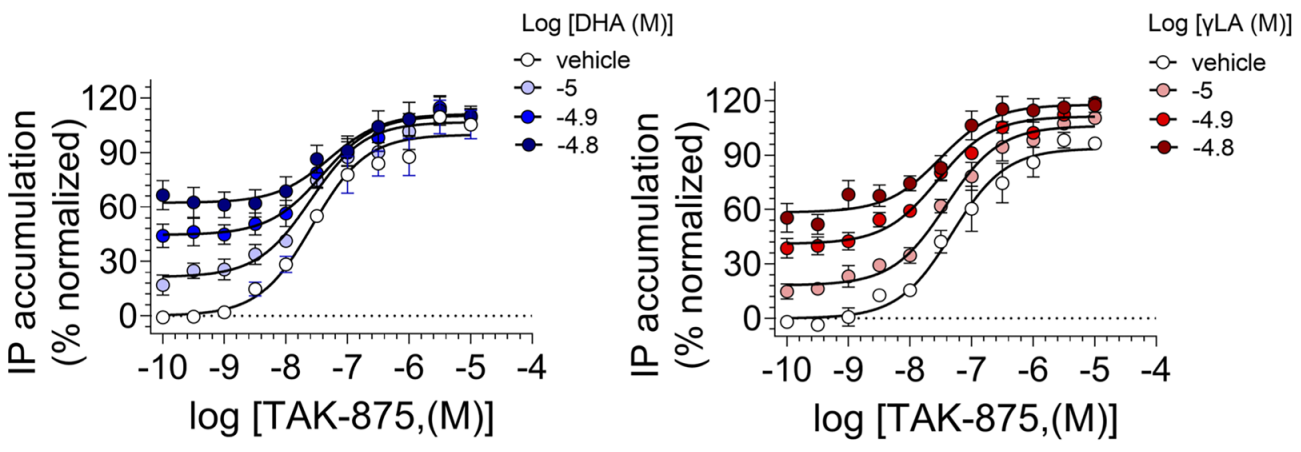
Fasiglifam purchased from MedChemExpress. Usage Cited in: Proc Natl Acad Sci U S A. 2023 May 30;120(22):e2219569120. [Abstract]
Stimulation of Gq by FFAR1 in response to TAK-875 in the presence of increasing concentrations of DHA or γLA.
-
Eur J Med Chem
Discovery of new and highly effective quadruple FFA1 and PPARα/γ/δ agonists as potential anti-fatty liver agents. [Abstract]2022 Feb 5:229:114061. PMID: 34954593 -
Biochem Pharmacol
2024 Jan:219:115957. PMID: 38049007 -
Food Funct
trans-Palmitoleic acid promotes adipose thermogenesis to reduce obesity via hypothalamic FFAR1 signaling. [Abstract]2024 Apr 22;15(8):4627-4641. PMID: 38592736 -
RSC Adv
Label-free cell phenotypic study of FFA4 and FFA1 and discovery of novel agonists of FFA4 from natural products. [Abstract]2019 May 15;9(26):15073-15083. PMID: 35516320 -
Cell Regen
Modeling drug-induced liver injury and screening for anti-hepatofibrotic compounds using human PSC-derived organoids. [Abstract]2023 Mar 3;12(1):6. PMID: 36864321 -
Chem Biol Interact
Comparative hepatic transcriptome analyses revealed possible pathogenic mechanisms of fasiglifam (TAK-875)-induced acute liver injury in mice. [Abstract]2018 Dec 25:296:185-197. PMID: 30243991 -
J Cell Physiol
The role of free fatty acid receptor pathways in a selective regulation of TRPA1 and TRPV1 by resolvins in primary sensory neurons. [Abstract]2022 Sep;237(9):3651-3660. PMID: 35802479 -
Bioorg Med Chem
Design, synthesis, and biological evaluation of novel dual FFA1 and PPARδ agonists possessing phenoxyacetic acid scaffold. [Abstract]2022 Feb 15:56:116615. PMID: 35051813 -
Animals (Basel)
Divergent Regulation of Mammary Lipogenesis by trans-10, cis-12 and cis-9, trans-11 CLA Isomers Is Determined by Receptor-Specific Signaling. [Abstract]2025 Nov 26;15(23):3418. PMID: 41375476 -
J Cell Biochem
Free Fatty Acids Induce Autophagy and LOX-1 Upregulation in Cultured Aortic Vascular Smooth Muscle Cells. [Abstract]2017 May;118(5):1249-1261. PMID: 28072480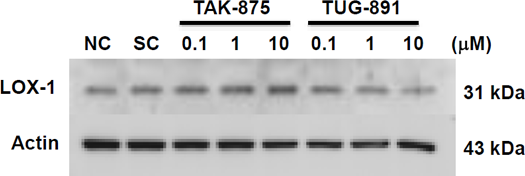
Fasiglifam purchased from MedChemExpress. Usage Cited in: J Cell Biochem. 2017 May;118(5):1249-1261. [Abstract]
Free fatty acid receptor 1 (FFAR1) agonist induces LOX-1 upregulation in cultured vascular smooth muscle cells (VSMCs). Cultured VSMCs are treated with synthetic agonists for either FFAR1 (TAK-875) or FFAR4 (TUG-891) at indicated doses for 24 hours. Both FFAR1 and FFAR4 are known responsible for long chain fatty acids. 0.1% DMSO is used as solvent control (SC). Western blotting detection indicates that treatment with agonistic action of FFAR1, but not FFAR4, remarkably upregulated LOX-1 expressi
-
PLoS One
Anthocyanins from purple corn activate free fatty acid-receptor 1 and glucokinase enhancing in vitro insulin secretion and hepatic glucose uptake. [Abstract]2018 Jul 11;13(7):e0200449. PMID: 29995924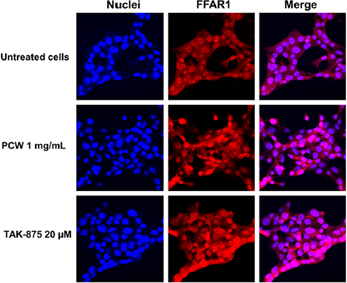
Fasiglifam purchased from MedChemExpress. Usage Cited in: PLoS One. 2018 Jul 11;13(7):e0200449. [Abstract]
TAK-875 increases (p<0.05) the membrane expression of FFAR1 compared to the untreated control by 97%.
-
Biomed Chromatogr
Simultaneous determination of TUG-891 and its metabolites in rat plasma using LC-HRMS with application to preclinical pharmacokinetic study. [Abstract]2020 Sep;34(9):e4870. PMID: 32346871 -
Biomed Pharmacother
2023 May:161:114509. PMID: 37002580
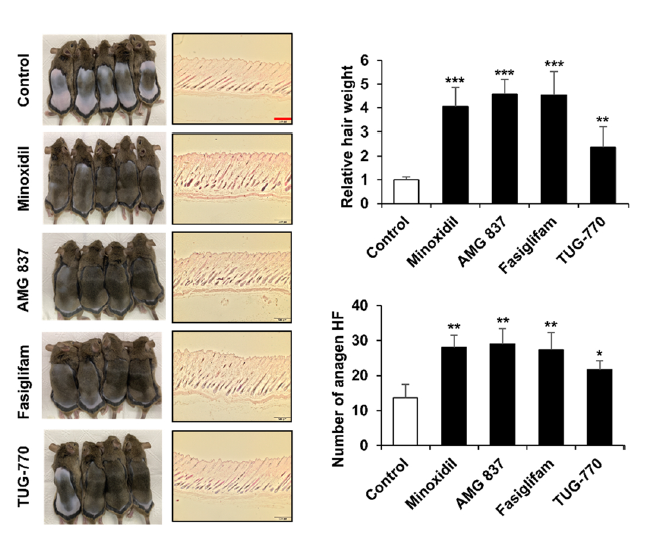
Fasiglifam purchased from MedChemExpress. Usage Cited in: Biomed Pharmacother. 2023 May:161:114509. [Abstract]
Fasiglifam (0.03%; 100 μL; 14 d) promoted the telogen-anagen transition, which was demonstrated by an increased hair weight and an increased number of anagen hair follicles of C3H/HeN mice.
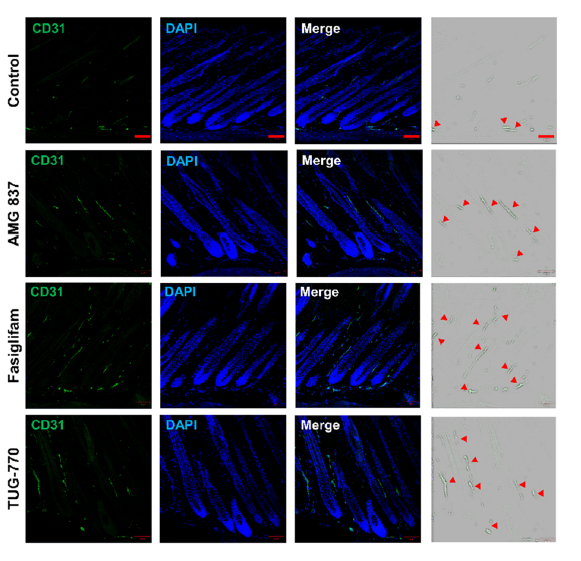
Fasiglifam purchased from MedChemExpress. Usage Cited in: Biomed Pharmacother. 2023 May:161:114509. [Abstract]
Fasiglifam (0.03%; 100 μL; 14 d) increased the angiogenesis around the hair follicle of C3H/HeN mice.
Fasiglifam purchased from MedChemExpress. Usage Cited in: Biomed Pharmacother. 2023 May:161:114509. [Abstract]
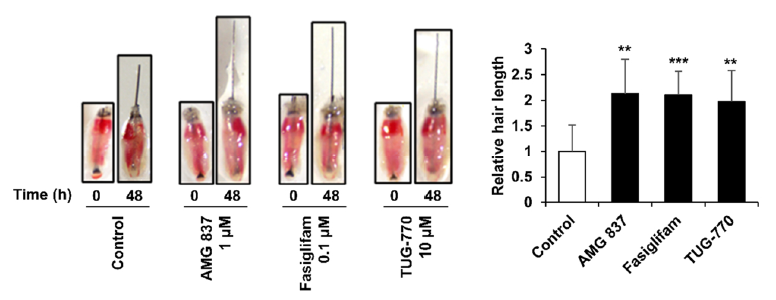
Fasiglifam (0.1 μM; 2 d) promoted the growth of mouse vibrissae in the mouse vibrissae organ culture model.
Fasiglifam purchased from MedChemExpress. Usage Cited in: Biomed Pharmacother. 2023 May:161:114509. [Abstract]
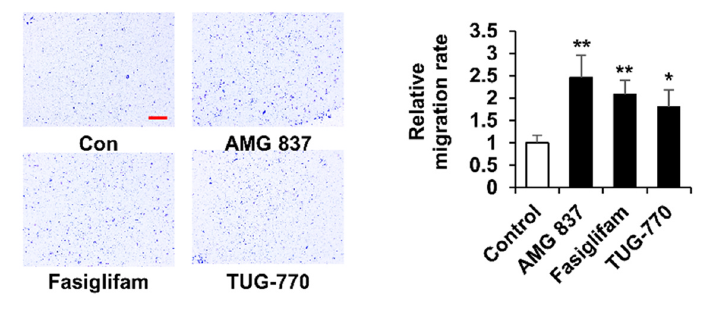
Fasiglifam (0.1 μM) increased the migration of hORS cells.


Lösungsmittel & Löslichkeit
In Vitro:
DMSO : ≥ 128 mg/mL (243.98 mM; Hygroscopic DMSO has a significant impact on the solubility of product, please use newly opened DMSO)
* "≥" means soluble, but saturation unknown.
Please refer to the solubility information to select the appropriate solvent. Once prepared, please aliquot and store the solution to prevent product inactivation from repeated freeze-thaw cycles.
Storage method and period of stock solution: -80°C, 2 years; -20°C, 1 year. When stored at -80°C, please use it within 2 years. When stored at -20°C, please use it within 1 year.
Please refer to the solubility information to select the appropriate solvent. Once prepared, please aliquot and store the solution to prevent product inactivation from repeated freeze-thaw cycles.
Storage method and period of stock solution: -80°C, 2 years; -20°C, 1 year. When stored at -80°C, please use it within 2 years. When stored at -20°C, please use it within 1 year.
Konzentration (Stammlösung) × Volumen (Stammlösung) = Konzentration (Ziellösung) × Volumen (Ziellösung)
In Vivo:
Select the appropriate dissolution method based on your experimental animal and administration route.
- For the following dissolution methods, please ensure to first prepare a clear stock solution using an In Vitro approach and then sequentially add co-solvents:
- To ensure reliable experimental results, the clarified stock solution can be appropriately stored based on storage conditions. As for the working solution for In Vivo experiments, it is recommended to prepare freshly and use it on the same day.
- The percentages shown for the solvents indicate their volumetric ratio in the final prepared solution. If precipitation or phase separation occurs during preparation, heat and/or sonication can be used to aid dissolution.
Add each solvent one by one: 10% DMSO 40% PEG300 5% Tween-80 45% Saline
Solubility: ≥ 2.5 mg/mL (4.77 mM); Clear solution
This protocol yields a clear solution of ≥ 2.5 mg/mL (saturation unknown).
Taking 1 mL working solution as an example, add 100 μL DMSO stock solution (25.0 mg/mL) to 400 μL PEG300, and mix evenly; then add 50 μL Tween-80 and mix evenly; then add 450 μL Saline to adjust the volume to 1 mL.
Preparation of Saline: Dissolve 0.9 g sodium chloride in ddH₂O and dilute to 100 mL to obtain a clear Saline solution.
Add each solvent one by one: 10% DMSO 90% (20% SBE-β-CD in Saline)
Solubility: ≥ 2.5 mg/mL (4.77 mM); Clear solution
This protocol yields a clear solution of ≥ 2.5 mg/mL (saturation unknown).
Taking 1 mL working solution as an example, add 100 μL DMSO stock solution (25.0 mg/mL) to 900 μL 20% SBE-β-CD in Saline, and mix evenly.
Preparation of 20% SBE-β-CD in Saline (4°C, storage for one week): 2 g SBE-β-CD powder is dissolved in 10 mL Saline, completely dissolve until clear.
In Vivo Dissolution Calculator
Please enter the basic information of animal experiments:
-
-
-
-
Recommended: Prepare an additional quantity of animals to account for potential losses during experiments.
Please enter your animal formula composition:
-
%DMSO +
Recommended: Keep the proportion of DMSO in working solution below 2% if your animal is weak.
-
%+
-
+%Tween-80 + +
-
%Saline +
The co-solvents required include: DMSO, . All of co-solvents are available by MedChemExpress (MCE). , Tween 80. All of co-solvents are available by MedChemExpress (MCE).
Working solution concentration: 0.22 mg/mL
Method for preparing stock solution: mg drug dissolved in μL DMSO. Stock solution concentration: mg/mL.
1. Take μL DMSO stock solution;
2. Add μL .
μL , mix evenly;
3. Then add μL Tween 80, mix evenly;
4. Then add μL
Please ensure that the stock solution in the first step is dissolved to a clear state, and add co-solvents in sequence. You can use ultrasonic heating (ultrasonic cleaner, recommended frequency 20-40 kHz), vortexing, etc. to assist dissolution.


Reinheit & Dokumentation
-
Data Sheet (277 KB)
-
SDS (396 KB)
- English - EN (396 KB)
- Français - FR (396 KB)
- Deutsch - DE (396 KB)
- Norwegian - NO (396 KB)
- Español - ES (396 KB)
- Swedish - SV (396 KB)
- Italian - IT (396 KB)
- Korean - KR (396 KB)
- Portuguese - PT (396 KB)
-
Handling Instructions (2659 KB)
Verweise
[1]. Tsujihata Y,et al. TAK-875, an orally available G protein-coupled receptor 40/free fatty acid receptor 1 agonist, enhances glucose-dependent insulin secretion and improves both postprandial and fasting hyperglycemia in type 2 diabetic rats.J Pharmacol Exp [Content Brief]
[3]. Nagatake T, et al. 17,18-EpETE-GPR40 axis ameliorates contact hypersensitivity by inhibiting neutrophil mobility in mice and cynomolgus macaques. J Allergy Clin Immunol. 2017 Dec 26. pii: S0091-6749(17)32949-4. [Content Brief]
[4]. Urano Y, et al. Comparative hepatic transcriptome analyses revealed possible pathogenic mechanisms of fasiglifam (TAK-875)-induced acute liver injury in mice. Chem Biol Interact. 2018 Sep 20;296:185-197. [Content Brief]


Complete Stock Solution Preparation Table
Please refer to the solubility information to select the appropriate solvent. Once prepared, please aliquot and store the solution to prevent product inactivation from repeated freeze-thaw cycles.
Storage method and period of stock solution: -80°C, 2 years; -20°C, 1 year. When stored at -80°C, please use it within 2 years. When stored at -20°C, please use it within 1 year.
| Optional Solvent | Concentration Solvent Mass | 1 mg | 5 mg | 10 mg | 25 mg |
|---|---|---|---|---|---|
| DMSO | 1 mM | 1.9061 mL | 9.5305 mL | 19.0611 mL | 47.6526 mL |
| 5 mM | 0.3812 mL | 1.9061 mL | 3.8122 mL | 9.5305 mL | |
| 10 mM | 0.1906 mL | 0.9531 mL | 1.9061 mL | 4.7653 mL | |
| 15 mM | 0.1271 mL | 0.6354 mL | 1.2707 mL | 3.1768 mL | |
| 20 mM | 0.0953 mL | 0.4765 mL | 0.9531 mL | 2.3826 mL | |
| 25 mM | 0.0762 mL | 0.3812 mL | 0.7624 mL | 1.9061 mL | |
| 30 mM | 0.0635 mL | 0.3177 mL | 0.6354 mL | 1.5884 mL | |
| 40 mM | 0.0477 mL | 0.2383 mL | 0.4765 mL | 1.1913 mL | |
| 50 mM | 0.0381 mL | 0.1906 mL | 0.3812 mL | 0.9531 mL | |
| 60 mM | 0.0318 mL | 0.1588 mL | 0.3177 mL | 0.7942 mL | |
| 80 mM | 0.0238 mL | 0.1191 mL | 0.2383 mL | 0.5957 mL | |
| 100 mM | 0.0191 mL | 0.0953 mL | 0.1906 mL | 0.4765 mL |


Fasiglifam Related Classifications
HY-10480 Related Classifications
 Powered by Bioz