



Glyoxalase (GLO)
The glyoxalase system is critical for the detoxification of advanced glycation end-products (AGEs). AGEs are toxic compounds resulting from the non-enzymatic modification of biomolecules by sugars or their metabolites through a process called glycation. AGEs have adverse effects on many tissues, playing a pathogenic role in the progression of molecular and cellular aging.
The glyoxalase system consists of two cooperating enzymes named Glyoxalase 1 (Glo1) and Glyoxalase 2 (Glo2). Glo1 converts a non-enzymatically formed hemithioacetal, the adduct between an intracellular thiol such as glutathione (GSH) and a metabolically produced α-ketoaldehyde such as MG, into a thioester product . In the case of MG and GSH, S-D-lactoylglutathione is the product. Glo2 hydrolyzes this thioester into D-lactate and regenerates the intracellular thiol GSH. Glo1 and Glo2 work in tandem to convert cytoxic MG into D-lactate.
All Product Categories
-
Glyoxalase (GLO) Related Products (28)
Related Products (28)

-
Antibodies (1)
- 1
- 2
-
Glyoxalase I inhibitor 1
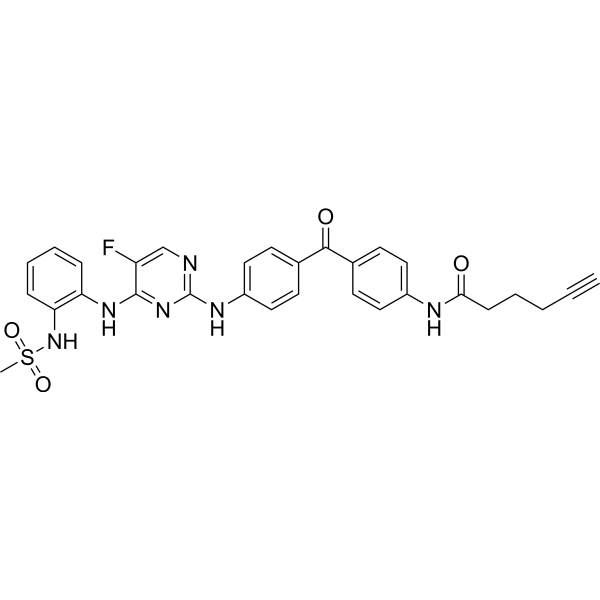 0 ImagesCat. No.: HY-146653CAS No.: 1622952-07-1Glyoxalase I inhibitor 1 (compound 23) is a potent glyoxalase I (GLO1) inhibitor with an IC50 of 26 nM. Glyoxalase I inhibitor 1 is a click chemistry reagent, itcontains an Alkyne group and can undergo copper-catalyzed azide-alkyne cycloaddition (CuAAc) with molecules containing Azide groups.
-
Glyoxalase I inhibitor 2
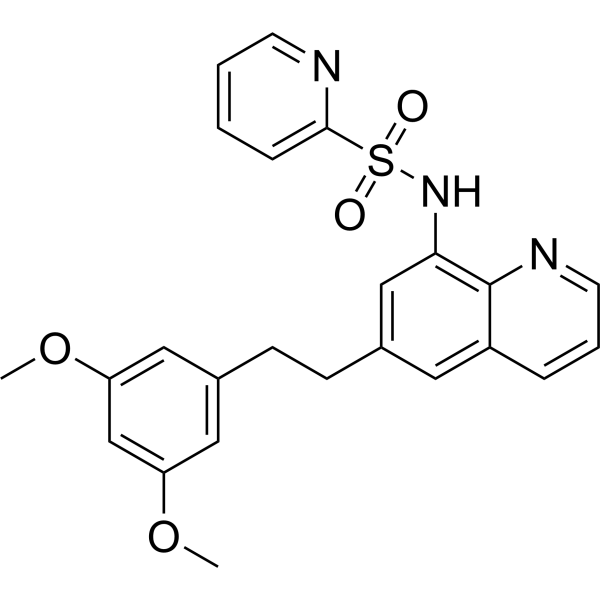 0 ImagesCat. No.: HY-146654CAS No.: 2314467-61-1Glyoxalase I inhibitor 2 (compound 26) is a potent glyoxalase I (GLO1) inhibitor with an IC50 of 0.5 µM. Glyoxalase I inhibitor 2 has the potential for the research of depression and anxiety.
-
COTC
 0 ImagesCat. No.: HY-N12255CAS No.: 57449-30-6COTC is a bacterial metabolite with anticancer activity that is found in S. griseosporeus. COTC inhibits glyoxalase in the presence of glutathione (GSH). COTC also inhibits the proliferation of HeLa cells (IC50 = 18 µg/mL), as well as reduces tumor growth and improves survival in an Ehrlich murine spontaneous adenocarcinoma model.
-
Methyl gerfelin
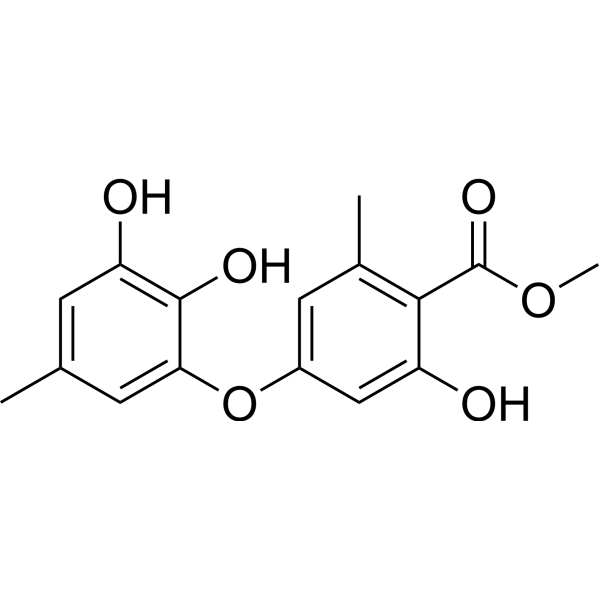 0 ImagesMethyl gerfelin inhibits osteoclast differentiation by binding 3 major cellular proteins: glyoxalase 1 (GLO1), sterol binding protein 2 (SCP2), and small glutamine-rich tetratricopeptide repeat containing protein A (SGTA). Methyl gerfelin is a potent GLO1 inhibitor related to the flavonoid class.
-
HBPC–GSH
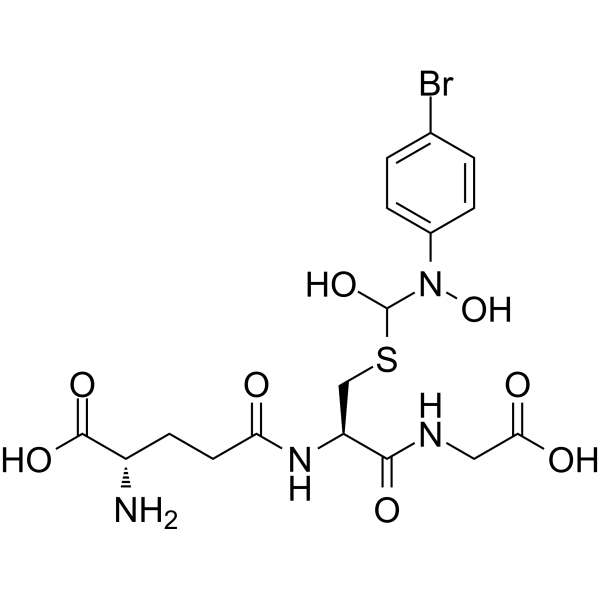 0 ImagesCat. No.: HY-148216CAS No.: 156727-62-7HBPC-GSH is a glyoxalase (Glo) inhibitor (cGloI IC50=0.6 μM; cGloII IC50=1.6 μM), a glutathione derivative. HBPC-GSH can be used in antimalarial research.
-
CAD-09
 0 ImagesCat. No.: HY-189378CAD-09 is a GLO I inhibitor. CAD-09 exerts anticancer effects against leukemia.
-
4BAB
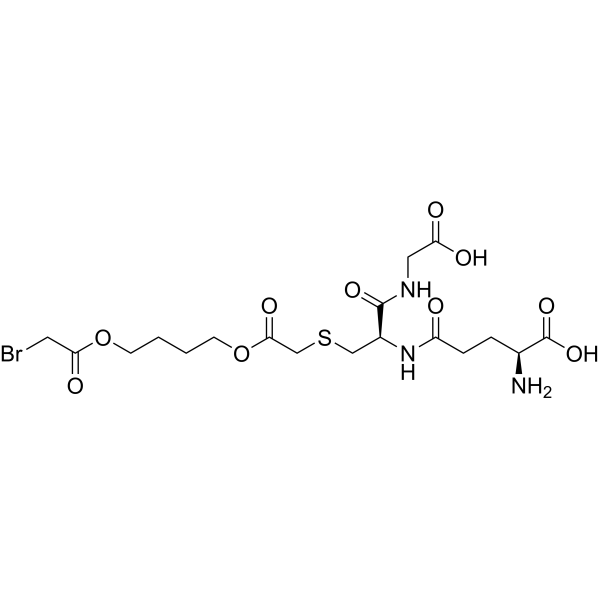 0 ImagesCat. No.: HY-146657CAS No.: 828262-76-64BAB (compound 29) is an irreversible glyoxalase I (GLO1) inhibitor. 4BAB has anticancer effects.
-
Indole-4-carboxaldehyde-13C
 0 ImagesCat. No.: HY-W001288SIndole-4-carboxaldehyde-13C is the 13C-labeled Indole-4-carboxaldehyde (HY-W001288). Indole-4-carboxaldehyde is an ergot alkaloid precursor that regulates glycosylation and inflammation. Indole-4-carboxaldehyde upregulates Glo-1, inhibits MGO-induced NF-κB activation, and suppresses MGO-induced expression of TNF-α and IFN-γ. Indole-4-carboxaldehyde inhibits MGO-induced formation of advanced glycation end products (AGE) and expression of their receptor (RAGE). Indole-4-carboxaldehyde is a core metabolite produced in the pedicels of Summer Black grapes after exogenous gibberellin treatment, and it directly promotes fruit enlargement and fruit set of Summer Black grapes. Indole-4-carboxaldehyde can be used in studies related to hepatic steatosis and plant growth regulation.
- 1
- 2




