



LDHB
Lactate dehydrogenase B (LDHB) catalyzes the reversible conversion of lactate to pyruvate, maintaining NAD+/NADH homeostasis in glycolytic metabolism[1]. Mechanistically, LDHB activity supports autophagy in cancer cells, linking metabolic flux to cell survival under nutrient stress[2]. LDHB is distinct from LDHA in its pH-dependent kinetics, showing lower NADH affinity and a greater sensitivity to inorganic phosphate activation, indicating isoform-specific regulatory features[1]. Phylogenetic analyses indicate that LDHB arose from a single ancestral locus prior to the divergence of cartilaginous and bony fishes, highlighting its evolutionary conservation in heart-predominant tissues[3]. In disease models, elevated LDHB expression correlates with serum LDH levels in cardiac tissue and predicts metabolic adaptation in tumors, establishing its relevance as a biomarker and therapeutic target[4][5]. Selective LDHB inhibitors, including peptide-based and pyrazole derivatives, demonstrate isoform-specific inhibition, enabling mechanistic studies of LDHB function in vitro and in vivo[6][7][8]. For experimental applications, these inhibitors allow differentiation of LDHB-mediated metabolic flux from LDHA-driven glycolysis, supporting studies in oncology, cardiology, and microbial metabolism[1][8]. Compared with LDHA, LDHB exhibits narrower substrate specificity and distinct activation properties, emphasizing its unique role in tissue-specific energy metabolism[1].
References:
- [1]. Brisson L, et al. Lactate dehydrogenase B controls lysosome activity and autophagy in cancer. Cancer Cell. 2016;30(3):418-431.
- [2]. Rai G, et al. Pyrazole-Based Lactate Dehydrogenase Inhibitors with Optimized Cell Activity and Pharmacokinetic Properties. J Med Chem. 2020 Oct 8;63(19):10984-11011. [Content Brief]
- [3]. Schoenenberger GA, et al. Peptide inhibitors of lactic dehydrogenase (LDH). II. Isolation and characterization of peptides I and II. Biochemistry. 1966 Apr;5(4):1375-9. [Content Brief]
- [4]. Stock DW, et al. A monophyletic origin of heart-predominant lactate dehydrogenase (LDH) isozymes of gnathostome vertebrates: evidence from the cDNA sequence of the spiny dogfish (Squalus acanthias) LDH-B. Mol Mar Biol Biotechnol. 1998;7(2):160-164. [Content Brief]
- [5]. Kaundal M, et al. Beta-agonists enhance the lactic dehydrogenase (LDH) expression in serum and ventricular myocytes of mice. Acta Physiol Hung. 2007 Sep;94(3):249-59. [Content Brief]
- [6]. Gaspar P, et al. The lactate dehydrogenases encoded by the ldh and ldhB genes in Lactococcus lactis exhibit distinct regulation and catalytic properties - comparative modeling to probe the molecular basis. FEBS J. 2007 Nov;274(22):5924-36. [Content Brief]
- [7]. Damavandi S, et al. A study of the interaction space of two lactate dehydrogenase isoforms (LDHA and LDHB) and some of their inhibitors using proteochemometrics modeling. BMC Chem. 2023 Jul 6;17(1):70. [Content Brief]
- [8]. Hao X, et al. Electromagnetic Functional Properties of Flexible Picosecond Laser-Induced Graphene Films Modified with Silver Nanoparticles. ACS Appl Mater Interfaces. 2026 May 27;18(20):28957-28968. [Content Brief]
All Product Categories
-
LDHB Related Products (8)
Related Products (8)

-
(R)-GNE-140
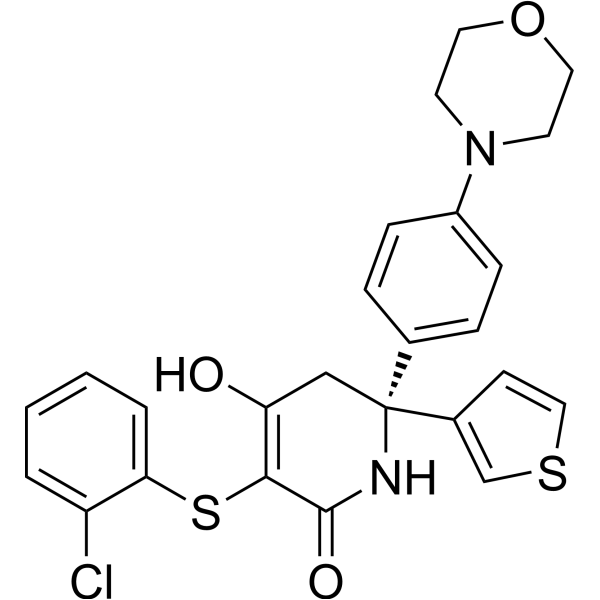 0 Images(R)-GNE-140 is a potent inhibitor of lactate dehydrogenase (LDH) A, B and C, with IC50 values of 3, 5 and 5 nM against LDHA, LDHB, LDHC, respectively. (R)-GNE-140 blocks the conversion of pyruvate to lactate, reduces lactate production and histone lysine lactylation, and inhibits glycolysis. (R)-GNE-140 attenuates cardiac hypertrophy, alleviates PM2.5-induced pulmonary inflammation and fibrosis, blocks MRSA-induced Arg1 expression. (R)-GNE-140 is applicable to research related to pathological cardiac hypertrophy, pulmonary fibrosis, MRSA infection and pancreatic cancer.
-
AXKO-0046
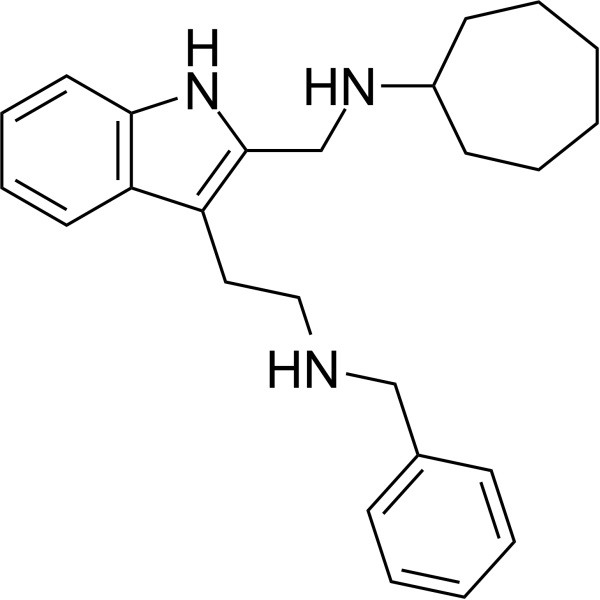 0 ImagesAXKO-0046, indole derivative, is an uncompetitive Lactate dehydrogenase B (LDHB) selective inhibitor.AXKO-0046 has LDHB inhibitory activity with an EC50 value of 42 nM.AXKO-0046 can be used for the research of cancer metabolism.
-
GNE-140 racemate
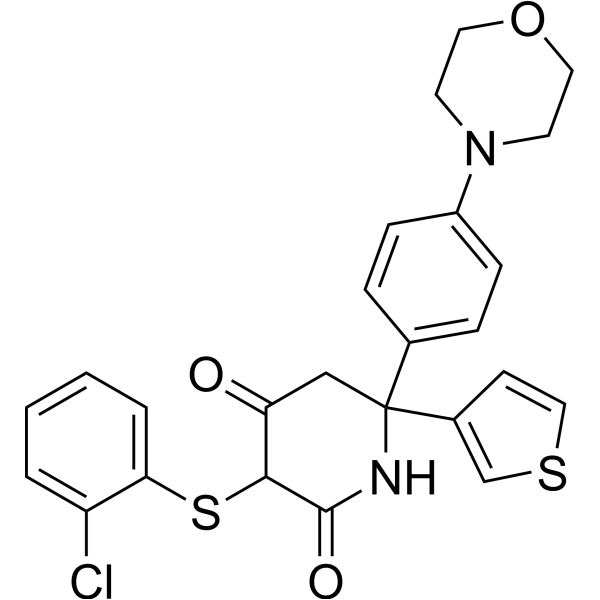 0 ImagesGNE-140 racemate is a racemic mixture of (R)-GNE-140 (HY-100742A) and (S)-GNE-140 (HY-100742B), and also a tautomer of GNE-140 (HY-118241). GNE-140 racemate is an orally active lactate dehydrogenase inhibitor, with an IC50 of 3 nM against human LDHA and an IC50 of 5 nM against LDHB. GNE-140 racemate reduces the phosphorylation level and total protein expression of p38 MAPK, and inhibits EGF-induced AKT phosphorylation. GNE-140 racemate decreases lactate production, regulates glycolysis, the pentose phosphate pathway and nucleotide biosynthesis, increases extracellular pH, inhibits cell proliferation, migration and invasion, and induces caspase-3 activation and ROS accumulation. GNE-140 racemate can be used in research related to breast cancer, cystic fibrosis and pancreatic cancer.
-
(S)-GNE-140
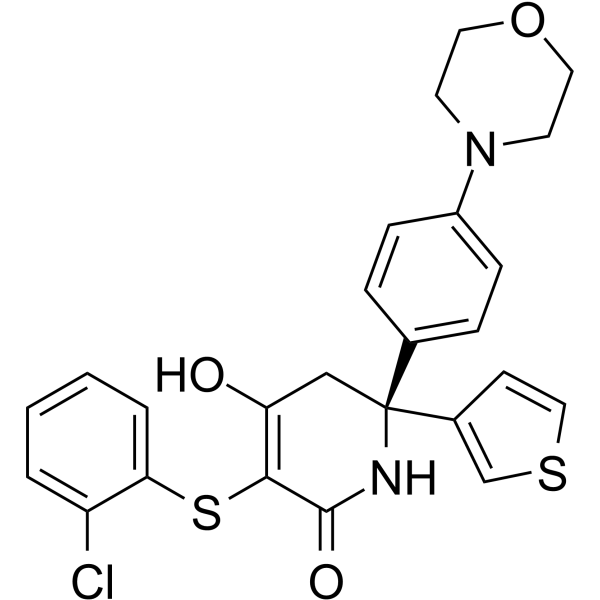 0 Images(S)-GNE-140 (Compound 30-S) is the S-enantiomer of GNE-140 (HY-118241). (S)-GNE-140 is an effective lactate dehydrogenase (LDH) inhibitor, with IC50 values of 55 nM for LDHA and 140 nM for LDHB. (S)-GNE-140 can be used in cancer research.
-
GNE-140
 0 ImagesGNE-140 (Compound 28) is an external racemic mixture of (R)-GNE-140 (HY-100742A) and (S)-GNE-140 (HY-100742B). GNE-140 is an effective lactate dehydrogenase (LDH) inhibitor, with the IC50 values for LDHA and LDHB being 9 nM and 30 nM respectively. GNE-140 can be used in cancer research.
-
NCATS-SM1440
 0 ImagesCat. No.: HY-183858CAS No.: 1964516-59-3NCATS-SM1440 is a glycolysis inhibitor and metabolic regulator that targets LDHA and LDHB (IC50=0.06 μM and 0.03 μM, respectively). Upon binding to LDHA, NCATS-SM1440 blocks the glycolysis pathway and reduces lactate production. NCATS-SM1440 drives the shift of pyruvate metabolism toward mitochondrial metabolism, effectively disrupting the dependence of cancer cells on aerobic glycolysis. NCATS-SM1440 can be widely used in research related to cancer, Ewing's sarcoma, and other related conditions.

-
GNE-140 racemate (Standard)
 0 ImagesCat. No.: HY-100742RCAS No.: 1802977-61-2GNE-140 racemate (Standard) is the analytical standard of GNE-140 racemate (HY-100742). This product is intended for research and analytical applications. GNE-140 racemate is a racemic mixture of (R)-GNE-140 (HY-100742A) and (S)-GNE-140 (HY-100742B), and also a tautomer of GNE-140 (HY-118241). GNE-140 racemate is an orally active lactate dehydrogenase inhibitor, with an IC50 of 3 nM against human LDHA and an IC50 of 5 nM against LDHB. GNE-140 racemate reduces the phosphorylation level and total protein expression of p38 MAPK, and inhibits EGF-induced AKT phosphorylation. GNE-140 racemate decreases lactate production, regulates glycolysis, the pentose phosphate pathway and nucleotide biosynthesis, increases extracellular pH, inhibits cell proliferation, migration and invasion, and induces caspase-3 activation and ROS accumulation. GNE-140 racemate can be used in research related to breast cancer, cystic fibrosis and pancreatic cancer.



