



Inwardly rectifying potassium channel
Inwardly rectifying potassium channels (Kir) maintain potassium homeostasis and resting membrane potential, thereby controlling cellular excitability and cell volume[1][2]. Mechanistically, Kir channels form tetrameric pore-forming α-subunits, and related subfamilies differ by regulation: Kir2.x channels are constitutively active, Kir3.x channels are G-protein activated, and Kir6.x channels are ATP-sensitive with SUR subunits[3]. In nervous-system models, Kir channels regulate neonatal spinal nociceptive pacemaker activity, and Ba2+ blockade unmasks rhythmic burst firing in nonbursting lamina I neurons[4]. In disease-relevant contexts, Kir dysfunction is linked to epilepsy, atrial fibrillation, retinal disease, and inherited channelopathies involving cardiac, renal, ocular, pancreatic, and neurological abnormalities[1][2][5][6]. Compared with related isoforms, Kir4.1 supports astrocytic spatial potassium buffering, whereas Kir5.1 functions as a heteromeric channel with Kir4.1 in oligodendrocytes[7]. For experimental applications, Ba2+, ML133-derived Kir2.1 inhibitors, VU573, and VU0529331 provide pharmacological tools for testing Kir subtype function, selectivity, and disease-model mechanisms[4][8][9][10].
References:
- [1]. Akyuz E, et al. Envisioning the role of inwardly rectifying potassium (Kir) channel in epilepsy. J Neurosci Res. 2022 Feb;100(2):413-443. [Content Brief]
- [2]. Pattnaik BR, et al. Genetic defects in the hotspot of inwardly rectifying K(+) (Kir) channels and their metabolic consequences: a review. Mol Genet Metab. 2012 Jan;105(1):64-72. [Content Brief]
- [3]. Adelman J, et al. Inwardly rectifying potassium channels (KIR) in GtoPdb v.2023.1. IUPHAR/BPS Guide to Pharmacology CITE. 2023
- [4]. Li J, et al. Inward-rectifying potassium (Kir) channels regulate pacemaker activity in spinal nociceptive circuits during early life. J Neurosci. 2013 Feb 20;33(8):3352-62. [Content Brief]
- [5]. Ehrlich JR. Inward rectifier potassium currents as a target for atrial fibrillation therapy. J Cardiovasc Pharmacol. 2008 Aug;52(2):129-35. doi: 10.1097/FJC.0b013e31816c4325. PMID: 18670367. et al. Inward rectifier potassium currents as a target for atrial fibrillation therapy. J Cardiovasc Pharmacol. 2008 Aug;52(2):129-35. [Content Brief]
- [6]. Carrington SJ, et al. G protein-coupled receptors differentially regulate glycosylation and activity of the inwardly rectifying potassium channel Kir7.1. J Biol Chem. 2018 Nov 16;293(46):17739-17753. [Content Brief]
- [7]. Brasko C, et al. Expression of Kir4.1 and Kir5.1 inwardly rectifying potassium channels in oligodendrocytes, the myelinating cells of the CNS. Brain Struct Funct. 2017 Jan;222(1):41-59. [Content Brief]
- [8]. Duncan RA, et al. Characterization of Next-Generation Inhibitors for the Inward-Rectifier Potassium Channel Kir2.1: Discovery of VU6080824. ACS Med Chem Lett. 2025 Aug 29;16(9):1762-1771. [Content Brief]
- [9]. Raphemot R, et al. Discovery, characterization, and structure-activity relationships of an inhibitor of inward rectifier potassium (Kir) channels with preference for Kir2.3, Kir3.x, and Kir7.1. Front Pharmacol. 2011 Nov 30;2:75. [Content Brief]
- [10]. Kozek KA, et al. Discovery and Characterization of VU0529331, a Synthetic Small-Molecule Activator of Homomeric G Protein-Gated, Inwardly Rectifying, Potassium (GIRK) Channels. ACS Chem Neurosci. 2019 Jan 16;10(1):358-370. [Content Brief]
-
Inwardly rectifying potassium channel Related Products (13)
Related Products (13)

- 1
-
Talatisamine
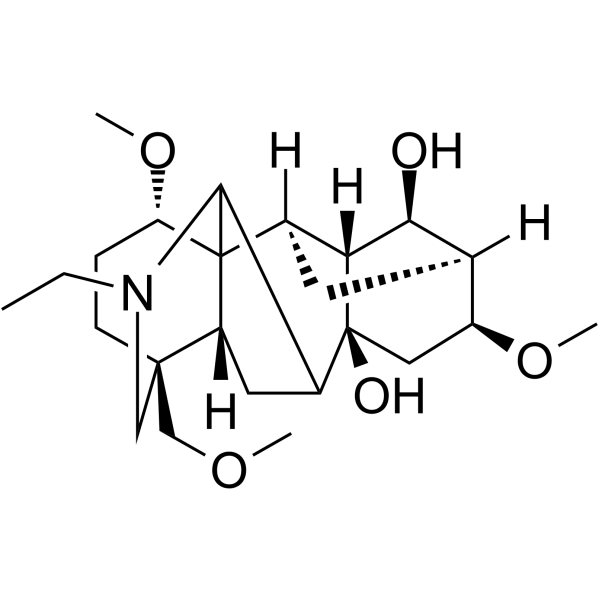 0 ImagesTalatisamine is an orally active cyclophilin D activator isolated from the roots of Aconitum carmichaeli Debx. Talatisamine exerts biological functions by activating cyclophilin D, inhibiting Ca2+-dependent opening of the mitochondrial permeability transition pore (mPTP) (IC50=78 μM), and blocking delayed rectifier K+ channels (IC50=146 μM). Talatisamine possesses both antioxidant and membrane-stabilizing properties, effectively inhibits lipid peroxidation and protects mitochondrial membrane function. Talatisamine exhibits multiple activities including antiarrhythmic, hypotensive, anti-inflammatory, anticancer and neuroprotective effects. Talatisamine finds applications in the research of ischemic diseases, rheumatoid arthritis, inflammation-related diseases and Alzheimer's disease.
-
Tetramisole hydrochloride
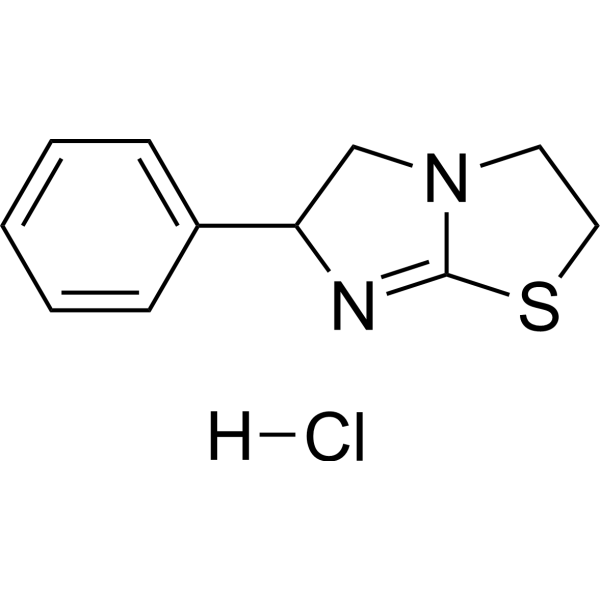 0 ImagesSynonyms: (±)-Tetramisole hydrochloride; DL-Tetramisole hydrochloride; R-829Tetramisole hydrochloride is an orally active, selective inward rectifier potassium channel agonist with an EC50 of approximately 30 μM for the Kir2.1 subunit. Tetramisole hydrochloride is also an anti-nematode agent that blocks neuromuscular transmission by non-competitive depolarization. Tetramisole hydrochloride promotes the forward transport of Kir2.1 channels, hyperpolarizes the resting potential (RP), shortens the action potential duration (APD), inhibits intracellular calcium overload and the PKA signaling pathway, and exerts anti-arrhythmic and anti-myocardial remodeling activities. Tetramisole hydrochloride can be used in cardiac electrophysiology research and research related to myocardial ischemia and heart failure.
-
Azimilide dihydrochloride
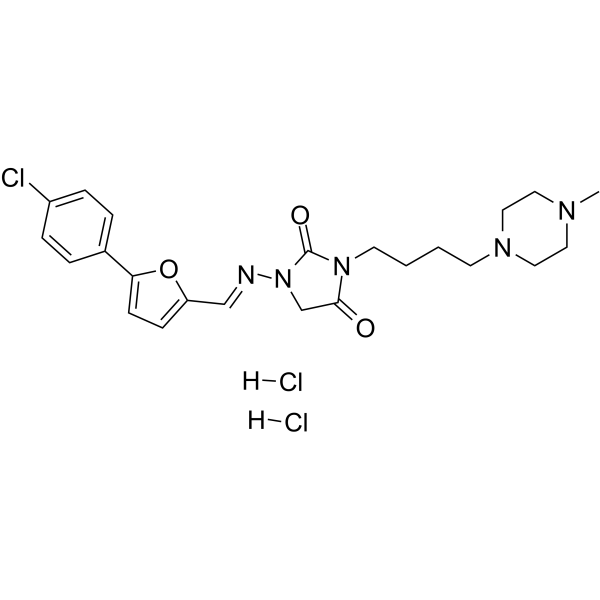 0 ImagesSynonyms: NE-10064 dihydrochlorideAzimilide (NE-10064) dihydrochloride is a class III antiarrhythmic agent, which works by blocking potassium channels in the heart. Azimilide dihydrochloride is a dual blocker of IKs (IC50 = 2.6 μM (2mM [K⁺]ₑ)) and IKr (IC50 = 1 μM (4 mM [K⁺])). Azimilide dihydrochloride blocked HERG channel at 0.1 and 1 Hz with IC50s of 1.4 μM and 5.2 μM respectively. Azimilide dihydrochloride also inhibits L-type calcium current (ICa) (IC50 = 17.8 μM) and sodium current (INa) (IC50 = 19 μM). Azimilide dihydrochloride can be used for the study of atrial fibrillation and ventricular fibrillation.
-
Landiolol hydrochloride
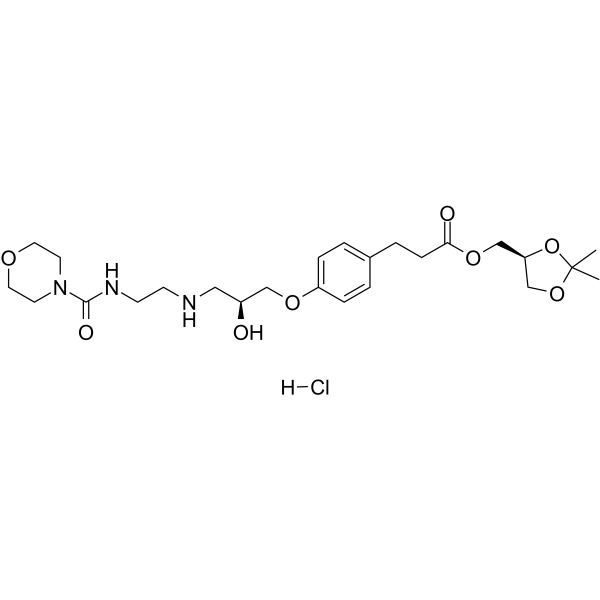 0 ImagesSynonyms: ONO1101 hydrochlorideLandiolol (ONO1101) hydrochloride is a highly selective, ultra-short-acting competitive inhibitor of β1 adrenergic receptors. Landiolol hydrochloride specifically blocks cardiac β1 receptors, reducing heart rate and myocardial oxygen consumption. Landiolol hydrochloride inhibits TNF-α-induced excessive mitochondrial oxygen consumption and reactive oxygen species production in a sepsis model, alleviating renal injury. Landiolol hydrochloride has little effect on cardiac ion channels (such as L-type calcium current and inward rectifier potassium current) and has a weak negative inotropic effect. Landiolol hydrochloride can be used for perioperative tachycardia control and protection studies of sepsis-related acute kidney injury.
-
Azimilide
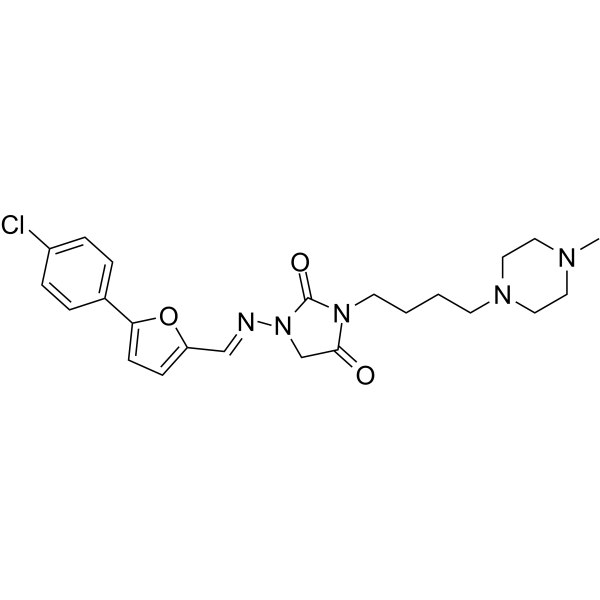 0 ImagesSynonyms: NE-10064Azimilide (NE-10064) is a class III antiarrhythmic agent, which works by blocking potassium channels in the heart. Azimilide is a dual blocker of IKs (IC50 = 2.6 μM (2mM [K⁺]ₑ)) and IKr (IC50 = 1 μM (4 mM [K⁺])). Azimilide blocked HERG channel at 0.1 and 1 Hz with IC50s of 1.4 μM and 5.2 μM respectively. Azimilide also inhibits L-type calcium current (ICa) (IC50 = 17.8 μM) and sodium current (INa) (IC50 = 19 μM). Azimilide can be used for the study of atrial fibrillation and ventricular fibrillation.
-
CPU-228
 0 ImagesCat. No.: HY-124940CAS No.: 446877-42-5CPU-228 is a complex class III antiarrhythmic agent. CPU-228 concentration-dependently blocks the activities of the rapid component 50 of the delayed rectifier potassium channel (IKr) and the L-type calcium channel (ICa,L), with an IC50 value of 0.909 μM for ICa,L current. CPU-228 produces negative inotropic effects and induces mild, non-frequency-dependent prolongation of the effective refractory period (ERP) in isolated left atria. CPU-228 reduces the incidence of torsades de pointes (TDP) in anesthetized rabbits and inhibits ischemia/reperfusion-induced arrhythmias in rats. CPU-228 can be used in studies related to torsades de pointes.
-
Tetramisole
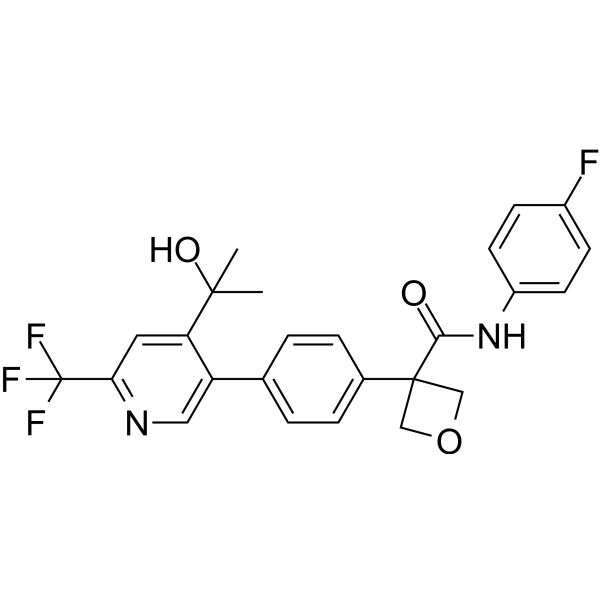
 0 ImagesTetramisole is an orally active, selective inward rectifier potassium channel agonist with an EC50 of approximately 30 μM for the Kir2.1 subunit. Tetramisole is also an anti-nematode agent that blocks neuromuscular transmission by non-competitive depolarization. Tetramisole promotes the forward transport of Kir2.1 channels, hyperpolarizes the resting potential (RP), shortens the action potential duration (APD), inhibits intracellular calcium overload and the PKA signaling pathway, and exerts anti-arrhythmic and anti-myocardial remodeling activities. Tetramisole can be used in cardiac electrophysiology research and research related to myocardial ischemia and heart failure.
-
Landiolol
 0 ImagesCat. No.: HY-100607CAS No.: 133242-30-5Synonyms: ONO1101Landiolol (ONO1101) is a highly selective, ultra-short-acting competitive inhibitor of β1 adrenergic receptors. Landiolol specifically blocks cardiac β1 receptors, reducing heart rate and myocardial oxygen consumption. Landiolol inhibits TNF-α-induced excessive mitochondrial oxygen consumption and reactive oxygen species production in a sepsis model, alleviating renal injury. Landiolol has little effect on cardiac ion channels (such as L-type calcium current and inward rectifier potassium current) and has a weak negative inotropic effect. Landiolol can be used for perioperative tachycardia control and protection studies of sepsis-related acute kidney injury.
-
VU6080824
 0 ImagesCat. No.: HY-178058VU6080824 (Compound 5s), a derivative of ML-133 (HY-100230), is an inward-rectifier potassium channel (Kir2.1) inhibitor with an IC50 of 0.35 μM. VU6080824 has superior thallium flux and manual patch clamp (MPC) functional potency.
-
Landiolol hydrochloride (Standard)
 0 ImagesCat. No.: HY-100607ARCAS No.: 144481-98-1Synonyms: ONO1101 hydrochloride (Standard)Landiolol (ONO1101) hydrochloride (Standard) is the analytical standard of Landiolol hydrochloride (HY-100607A). This product is intended for research and analytical applications. Landiolol (ONO1101) hydrochloride is a highly selective, ultra-short-acting competitive inhibitor of β1 adrenergic receptors. Landiolol hydrochloride specifically blocks cardiac β1 receptors, reducing heart rate and myocardial oxygen consumption. Landiolol hydrochloride inhibits TNF-α-induced excessive mitochondrial oxygen consumption and reactive oxygen species production in a sepsis model, alleviating renal injury. Landiolol hydrochloride has little effect on cardiac ion channels (such as L-type calcium current and inward rectifier potassium current) and has a weak negative inotropic effect. Landiolol hydrochloride can be used for perioperative tachycardia control and protection studies of sepsis-related acute kidney injury.
-
Tetramisole hydrochloride (Standard)
 0 ImagesSynonyms: (±)-Tetramisole hydrochloride (Standard); DL-Tetramisole hydrochloride (Standard); R-829 (Standard)Tetramisole hydrochloride (Standard) is the analytical standard of Tetramisole (hydrochloride). This product is intended for research and analytical applications. Tetramisole hydrochloride is an orally active, selective inward rectifier potassium channel agonist with an EC50 of approximately 30 μM for the Kir2.1 subunit. Tetramisole hydrochloride is also an anti-nematode agent that blocks neuromuscular transmission by non-competitive depolarization. Tetramisole hydrochloride promotes the forward transport of Kir2.1 channels, hyperpolarizes the resting potential (RP), shortens the action potential duration (APD), inhibits intracellular calcium overload and the PKA signaling pathway, and exerts anti-arrhythmic and anti-myocardial remodeling activities. Tetramisole hydrochloride can be used in cardiac electrophysiology research and research related to myocardial ischemia and heart failure.
-
ROMK-IN-1
 0 ImagesCat. No.: HY-115548CAS No.: 1443735-02-1ROMK-IN-1 is an orally active inhibitor of ROMK (Kir1.1) with an IC50 of 0.073 μM. ROMK-IN-1 exhibits no activity against Kir2.1, Kir4.1, Kir7.1, Nav1.5, Cav1.2, as well as the enzymes CYP3A4, CYP2D6, and CYP2C9. ROMK-IN-1 can be used in research related to hypertension.
- 1



