



TNF Receptor
Tumor Necrosis Factor Receptor; TNFR
Tumor necrosis factor (TNF) is a major mediator of apoptosis as well as inflammation and immunity, and it has been implicated in the pathogenesis of a wide spectrum of human diseases, including sepsis, diabetes, cancer, osteoporosis, multiple sclerosis, rheumatoid arthritis, and inflammatory bowel diseases.
TNF-α is a 17-kDa protein consisting of 157 amino acids that is a homotrimer in solution. In humans, the gene is mapped to chromosome 6. Its bioactivity is mainly regulated by soluble TNF-α–binding receptors. TNF-α is mainly produced by activated macrophages, T lymphocytes, and natural killer cells. Lower expression is known for a variety of other cells, including fibroblasts, smooth muscle cells, and tumor cells. In cells, TNF-α is synthesized as pro-TNF (26 kDa), which is membrane-bound and is released upon cleavage of its pro domain by TNF-converting enzyme (TACE).
Many of the TNF-induced cellular responses are mediated by either one of the two TNF receptors, TNF-R1 and TNF-R2, both of which belong to the TNF receptor super-family. In response to TNF treatment, the transcription factor NF-κB and MAP kinases, including ERK, p38 and JNK, are activated in most types of cells and, in some cases, apoptosis or necrosis could also be induced. However, induction of apoptosis or necrosis is mainly achieved through TNFR1, which is also known as a death receptor. Activation of the NF-κB and MAPKs plays an important role in the induction of many cytokines and immune-regulatory proteins and is pivotal for many inflammatory responses.
TNF Receptor Isoform Specific Products
-
TNF Receptor
(684)
View all products
-
TNFRSF1A/CD120a
(8)
View all products
-
TNFRSF3/CD18
(1)
View all products
-
TNFRSF4
(5)
View all products
-
TNFRSF5/CD40
(107)
View all products
-
TNFRSF6/Fas/CD95
(2)
View all products
-
TNFRSF7/CD27
(2)
View all products
-
TNFRSF8/CD30
(3)
View all products
-
TNFRSF9/4-1BB/CD137
(3)
View all products
-
TNFRSF10B/DR5/CD262
(1)
View all products
-
TNFRSF12A/TWEAK
(5)
View all products
-
TNFRSF16/NGF Receptor/CD271
(1)
View all products
-
TNFRSF18/GITR/CD357
(6)
View all products
All Product Categories
-
TNF Receptor Inhibitors
(845)
View all products
-
TNF Receptor Agonists
(35)
View all products
-
TNF Receptor Antagonists
(25)
View all products
-
TNF Receptor Activators
(72)
View all products
-
TNF Receptor Modulators
(8)
View all products
-
TNF Receptor Inducers
(9)
View all products
-
TNF Receptor Controls
(4)
View all products
-
TNF Receptor Ligands
(2)
View all products
-
TNF Receptor Superfamily Proteins
(282)
View all products
-
TNF Receptor Related Products (1186)
Related Products (1186)

-
Recombinant Proteins (282)
-
Antibodies (23)
-
TNF Receptor Signaling Pathway
-
TNF Receptor Isoform Comparison
-
NO-Pravastatin
 0 ImagesCat. No.: HY-184354CAS No.: 733034-46-3NO-Pravastatin is a derivative of Pravastatin (HY-B0165) covalently linked with an NO donor moiety, endowing it with dual functions of HMG-CoA reductase (HMGCR) inhibition and exogenous nitric oxide (NO) release. NO-Pravastatin activates PPARα/γ and ABCA1, and inhibits LPS (HY-D1056)-induced TNFα production. NO-Pravastatin can be used in research related to gallstones and cardiovascular diseases.
-
hMAO-B-IN-11
 0 ImagesCat. No.: HY-173334hMAO-B-IN-11 (Compound 12) is a selective and reversible inhibitor of human monoamine oxidase B (hMAO-B) with an IC50 of 0.11 µM. hMAO-B-IN-11 acts through competitive binding to the hMAO-B active site, preventing oxidative deamination of monoamines and reducing hydrogen peroxide production. hMAO-B-IN-11 also inhibits pro-inflammatory mediators (NO, TNF-α, IL-1β) in activated microglia, hMAO-B-IN-11 is promising for research of neurodegenerative diseases like Parkinson’s and Alzheimer’s.
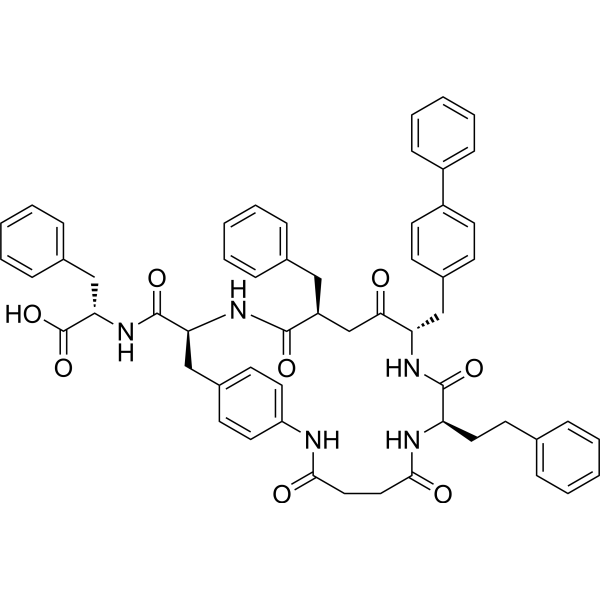
-
Ataquimast
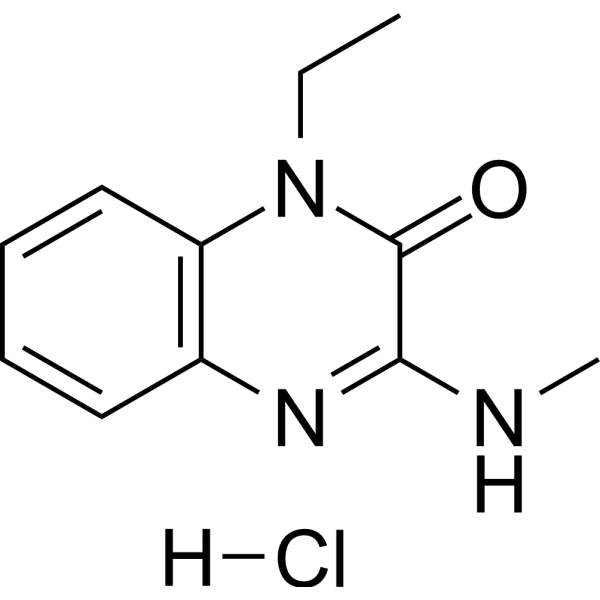 0 ImagesCat. No.: HY-108162ACAS No.: 182316-31-0
-
Peptide HV2
 0 ImagesCat. No.: HY-P11098Peptide HV2 is an antibiotic that exerts anti-inflammatory effects by inhibiting TNF-α. Peptide HV2 has antibacterial activity.
-
Anti-CD27 Antibody (M2177)
 0 ImagesCat. No.: HY-P991465Anti-CD27 Antibody (M2177) is a human monoclonal antibody (mAb) targeting TNFRSF7/CD27. Anti-CD27 Antibody (M2177) inhibits the binding of sCD70 to human CD27 ECD-Fc. Anti-CD27 Antibody (M2177) can be used in the study of anti-tumor immunity. Recommended isotype control: Human IgG1 kappa, Isotype Control (HY-P99001).
-
Theophylline L-lysine
 0 ImagesCat. No.: HY-130054CAS No.: 83920-54-1Synonyms: Lysine theophyllinateTheophylline L-lysine (Lysine theophyllinate) is a soluble derivative of Theophylline (HY-B0809). Theophylline L-lysine is a potent phosphodiesterase (PDE) inhibitor, adenosine receptor antagonist, and histone deacetylase (HDAC) activator. Theophylline L-lysine inhibits PDE3 activity to relax airway smooth muscle. Theophylline L-lysine has anti-inflammatory activity by increasing IL-10 and inhibiting NF-κB into the nucleus. Theophylline L-lysine induces apoptosis. Theophylline L-lysine can be used for asthma and chronic obstructive pulmonary disease (COPD) research.
-
CJ-14897
 0 ImagesCat. No.: HY-182630CAS No.: 377755-95-8CJ-14897 is a cytokine production inhibitor, with IC50 values of 0.059 μM and 0.59 μM for IL-1β and TNF-α production, respectively, and an IC50 of 180 μM for leucine uptake. CJ-14897 is isolated from the fermentation broth of the basidiomycete Marasmius strain CL21624.
-
Verproside
 0 ImagesCat. No.: HY-126232CAS No.: 50932-20-2Verproside, a catalpol derivative iridoid glycoside isolated from the genus Pseudolysimachion, represses TNF-α -induced MUC5AC expression by inhibiting NF-κB activation via the IKK/IκB signaling cascade. Verproside has potent anti-inflammatory, antioxidant, antinociceptive and anti-asthmatic activities. Verproside has the potential for the study of chronic obstructive pulmonary disease (COPD).
-
Salicylate choline
 0 ImagesCat. No.: HY-W338346CAS No.: 2016-36-6Salicylate choline is an orally active derivative of Aspirin (acetylsalicylic acid) (HY-14654). Salicylate choline significantly reduces IL-1β, IL-6, TNF-α and IL-10 levels in cells. Salicylate choline enhances the anti-tumor activity of the CRM1 inhibitor Selinexor (KPT-330) (HY-17536) through inducing S-phase cell cycle arrest and impairing DNA damage repair. Salicylate choline combined with Selinexor demonstrates excellent anti-tumor efficacy in mice xenograft model harboring JeKo-1 cells. Salicylate choline can be used for the study of rheumatic diseases, inflammation and cancer.
-
Khasianine (Standard)
 0 ImagesCat. No.: HY-N2322RCAS No.: 32449-98-2Khasianine (Standard) is the analytical standard of Khasianine (HY-N2322). This product is intended for research and analytical applications. Khasianine is a steroidal glycoalkaloid. Khasianine alleviates psoriasis-like skin inflammation by inhibiting the TNF-α/NF-κB axis. Khasianine can downregulate the RhoA pathway and exhibits potential antimetastatic activity. Khasianine upregulates the expression of TNFR I and TNFR II without inducing apoptotic effects. Khasianine can be used in studies related to psoriasis, pancreatic ductal adenocarcinoma, and liver cancer.
-
Atractylenolide I (Standard)
 0 ImagesAtractylenolide I (Standard) is the analytical standard of Atractylenolide I. This product is intended for research and analytical applications. Atractylenolide I is a sesquiterpene derived from the rhizome of Atractylodes macrocephala, possesses diverse bioactivities, such as neuroprotective, anti-allergic, anti-inflammatory and anticancer properties. Atractylenolide I reduces protein levels of phosphorylated JAK2 and STAT3 in A375 cells, and acts as a TLR4-antagonizing agent.
-
HS-276 hydrochloride
 0 ImagesCat. No.: HY-147141AHS-276 hydrochloride is an orally active, potent and highly selective TAK1 inhibitor, with a Ki of 2.5 nM. HS-276 hydrochloride shows significant inhibition of TAK1, CLK2, GCK, ULK2, MAP4K5, IRAK1, NUAK, CSNK1G2, CAMKKβ-1, and MLK1, with IC50 values of 8.25, 29, 33, 63, 125, 264, 270, 810, 1280, and 5585 nM, respectively. HS-276 hydrochloride reduces the expression of TNF, IL-6, and IL-1β. HS-276 hydrochloride can be used for rheumatoid arthritis (RA) research.
-
Koaburaside
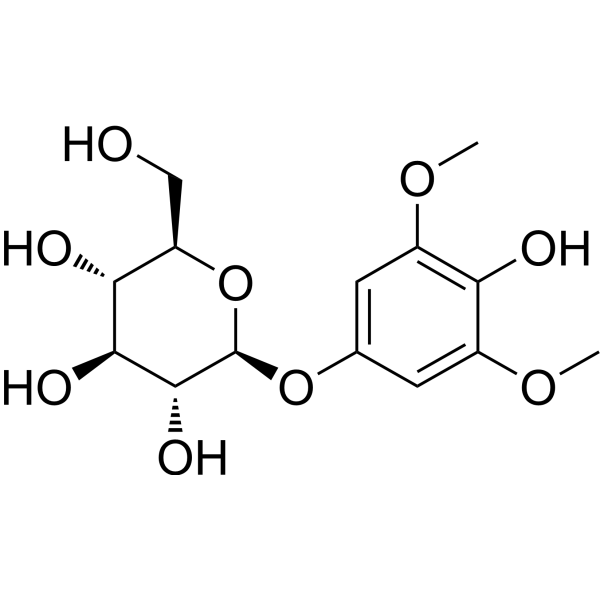 0 ImagesCat. No.: HY-N3421CAS No.: 41653-73-0Koaburaside is a cytoprotective and anti-inflammatory natural compound. Koaburaside shows antioxidant activity with an IC50 of 9.0 μM for DPPH-free radical scavenging assay. Koaburaside inhibits histamine release and expressions of IL-6 and TNF-α in human mast cells. Koaburaside also effectively inhibits influenza A neuraminidase.
-
TNF-α-IN-25
 0 ImagesCat. No.: HY-175250TNF-α-IN-25 is an orally active TNF-α inhibitor. TNF-α-IN-25 shows Fluorescence Polarization (FP) assay IC50 of 103 nM in FP binding assays and L929 assay IC50 of 505 nM in cell-based assays. TNF-α-IN-25 inhibits paw swelling in the glucose-6-phosphate isomerase (GPI) arthritis model. TNF-α-IN-25 can be used for the study of arthritis.
-
MR-39
 0 ImagesCat. No.: HY-184654CAS No.: 2169267-60-9MR-39 is a FPR2 agonist (EC50 = 3.9 μM). MR-39 activates FPR2 to promote neuroinflammation resolution (downregulates IL-1β and TNF-α, modulates NF-κB), upregulates synaptic proteins (synaptic proteins) and improves dendritic spine morphology. MR-39 inhibits MAPK/ERK and AKT phosphorylation in glioblastoma, induces S-phase arrest, and suppresses migration, angiogenesis, and hypoxic adaptation. MR-39 reduces Aβ plaque burden via inhibiting MyD88/NF-κB and NLRP3 inflammasome. MR-39 can be used for research on autism spectrum disorder, Alzheimer's disease, and glioblastoma.
-
t9,t11,c15-CLNA
 0 ImagesCat. No.: HY-171837ACAS No.: 678138-44-8t9,t11,c15-CLNA is a conjugated linolenic acid (CLNA) isomer produced by Lactobacillus plantarum ZS2058. t9,t11,c15-CLNA has the main activities of anti-inflammatory, antioxidant and improving intestinal barrier function. The regulatory mechanism of t9,t11,c15-CLNA includes upregulation of tight junction proteins, inhibition of pro-inflammatory cytokines (such as TNF-α, IL-6) and activation of antioxidant enzymes (such as SOD, CAT). t9,t11,c15-CLNA can be used in the study of inflammatory bowel diseases (such as colitis).
-
PDE4-IN-34
 0 ImagesCat. No.: HY-181646CAS No.: 3052591-16-6PDE4-IN-34 is a phosphodiesterase 4 (PDE4) inhibitor, with IC50 values of 19 pM and 14 pM against PDE4B1 and PDE4D2, respectively. PDE4-IN-34 shows weak inhibitory activity against PDE8A1, with an IC50 value of 4.092 μM, and exhibits significant selectivity over other subtypes (IC50 > 10 μM). PDE4-IN-34 improves pulmonary function, reduces inflammatory responses and alleviates lung tissue damage in a rat model induced by cigarette smoke combined with LPS (HY-D1056). PDE4-IN-34 can be used for research related to chronic obstructive pulmonary disease.
-
TACE-IN-1
 0 ImagesCat. No.: HY-153504CAS No.: 1219812-22-2TACE-IN-1 is an orally active hydantoin-based tumor necrosis factor-α converting enzyme (TACE) inhibitor. TACE-IN-1 inhibits the production of TNF-α in human whole blood. TACE-IN-1 can be prepared as a stable neutral form. TACE-IN-1 can be used in anti-inflammatory research.
-
EGFR-IN-144
 0 ImagesCat. No.: HY-172111EGFR-IN-144 (Compound 4B) exhibits inhibitory activities against EGFR (IC50=0.639 µg/mL) and tubulin polymerization (IC50=7.339 µg/mL). EGFR-IN-144 exhibits cytotoxicity in multiple cancer cell with GI50 of nanomolare levels. EGFR-IN-144 downregulates the expressions of mTOR, TNF-α, and IL-6, arrests the cell cycle at G1/S phase, and induces apoptosis.




