



TRPV1 Inhibitor
-
Tivanisiran
 0 ImagesCat. No.: HY-132596CAS No.: 1848224-71-4Synonyms: SYL1001
Tivanisiran (SYL1001) is a small interfering RNA (siRNA) targeting TRPV1 . Tivanisiran induces the degradation of TRPV1 mRNA, thereby inhibiting protein synthesis. Tivanisiran alleviates ocular discomfort and pain, and improves ocular hyperemia and tear quality. Tivanisiran is applicable to research related to dry eye disease.
-
Tivanisiran sodium
 0 ImagesCat. No.: HY-132596ACAS No.: 1848239-71-3Synonyms: SYL1001 sodium
Tivanisiran sodium (SYL1001 sodium) is a small interfering RNA (siRNA) targeting TRPV1 . Tivanisiran sodium induces the degradation of TRPV1 mRNA, thereby inhibiting protein synthesis. Tivanisiran sodium alleviates ocular discomfort and pain, and improves ocular hyperemia and tear quality. Tivanisiran sodium is applicable to research related to dry eye disease.
-
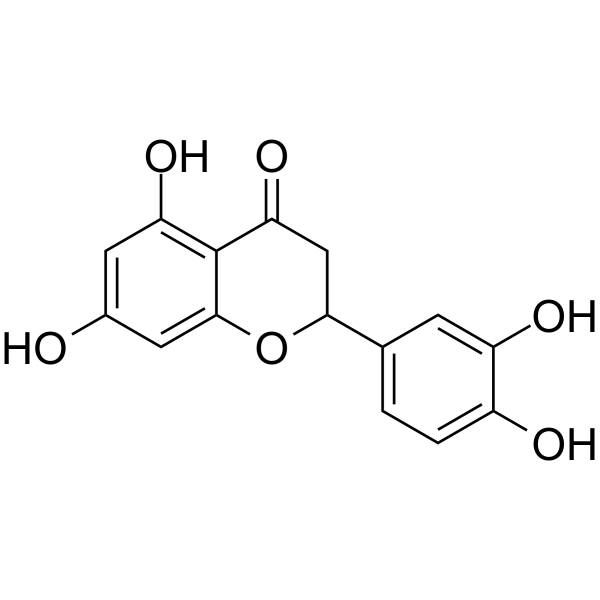
(±)-Eriodictyol
 0 Images
(±)-Eriodictyol ((±)-Huazhongilexone; Dihydroluteolin) is an orally active TRPV1 receptor antagonist (IC50=44-47 nM, rTRPV1) with antioxidant and anti-inflammatory activities. (±)-Eriodictyol effectively inhibits lipid peroxidation and the release of proinflammatory cytokines by specifically antagonizing the TRPV1 receptor and activating the Nrf2 signaling pathway. (±)-Eriodictyol reduces the levels of ICAM-1, VEGF, eNOS and TNF-α in the retina and maintains the integrity of the blood-retinal barrier. (±)-Eriodictyol alleviates oxidative stress-induced apoptosis and hyperalgesia, enhances the activity and cytotoxicity of immune cells (such as B lymphocytes, NK cells and macrophages), and increases the levels of antioxidant enzymes simultaneously. (±)-Eriodictyol can be used in the research of diabetic retinopathy, acute lung injury and various pain-related diseases.
-
TL-119
 0 ImagesCat. No.: HY-P11022CAS No.: 55599-68-3Synonyms: A-3302-B
TL-119 (A-3302-B) is a polypeptide. TL-119 can be isolated from the bacteria Micromonospora sp. MAG 9-7 and Saccharomonospora sp. CNQ-490. TL-119 inhibits TRPV-1. TL-119 exhibits antiviral activity against HSV-2. TL-119 possesses anticancer activity against gastric cancer and colorectal cancer.
-
Ovalicin
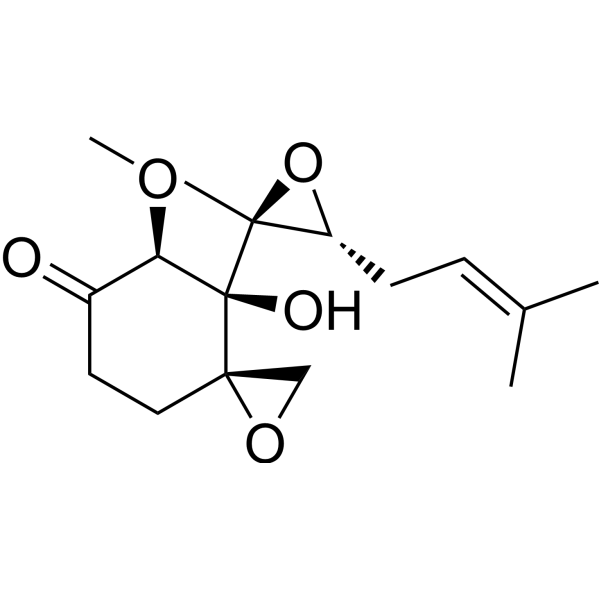 0 ImagesCat. No.: HY-156959CAS No.: 19683-98-8
Ovalicin is a multi-target inhibitor that targets MetAP2, HRH2, JAK2 and TRPV1, with anti-inflammatory and anti-atopic dermatitis activities. Ovalicin covalently binds to MetAP2 to inhibit its function, thereby blocking the replication of Enterocytozoon bieneusi and Vittaforma corneae. Ovalicin alleviates intestinal injury and prolongs survival in infected mouse models, without showing obvious hepatorenal toxicity. Ovalicin attenuates LPS-induced calcium influx, reduces the infiltration of macrophages and mast cells in the skin, and regulates the expression of inflammation-related genes such as IL-31, effectively relieving allergic symptoms in mouse models. Ovalicin can be used for the research of microsporidiosis and atopic dermatitis.
-
A 80426
 0 ImagesCat. No.: HY-120037CAS No.: 152148-63-5
A 80426 is an orally active serotonin (5-HT uptake) inhibitor (IC50 = 13 nM; Ki = 3.8 nM) and α2-Adrenoceptor receptor antagonist (Ki = 2 nM). A 80426 shows weak antagonistic effect to dopamine D1 receptor (Ki = 744 nM) and D2 receptor (Ki = 52 nM). A 80426 upregulates the expression and activity of TRPV1, activates the NF-κB and PI3K pathways, and reduces the levels of pro-inflammatory cytokines IL-1β, IL-6, and TNF-α. A 80426 can be used in research related to inflammatory pain and depression.
-
DD-161515
 0 ImagesCat. No.: HY-183857CAS No.: 410080-55-6
DD-161515 is a TRPV1/VR1 inhibitor with an IC50 of 0.7 μM in rats. DD-161515 binds to an allosteric site of TRPV1 distinct from that of capsaicin, blocks channel opening, inhibits receptor-mediated calcium ion influx, reduces the excitability of peripheral sensory nerve fibers, and thereby inhibits nociception induced by heat and transmission of chemically induced pain signals. DD-161515 can be used in studies related to inflammatory pain.



