



VEGFR
Vascular endothelial growth factor receptor
VEGFRs consist of three subtypes, the fms-like tyrosine kinase Flt-1 (VEGFR1/Flt-1), the kinase domain region, also referred to as fetal liver kinase (VEGFR2/KDR/Flk-1), and Flt-4 (VEGFR3). Each receptor has seven immunoglobulinlike domains in the extracellular domain, a single transmembrane region, and a consensus tyrosine kinase sequence interrupted by a kinase insert domain. VEGFR1 and 2 are expressed on vascular endothelial cells, whereas VEGFR3 is expressed on lymphatic endothelial. The VEGF family members VEGF-A, -B, -C, -D, -E, and PlGF, and the human immunodeficiency (HIV) Tat protein bind in specific patterns to three related receptor protein tyrosine kinases, VEGFR1, 2, and 3, and induce the formation of homo- and heteromeric receptor complexes. Binding of VEGF to VEGFR causes dimerization and autophosphorylation of the receptor. Intracellular proteins such as VEGFR-associated protein (VRAP), PLC, and Sck that associate with specific tyrosine residues of VEGFR are phosphorylated upon receptor activation. Several signal transduction pathways are activated by the binding of VEGF to its receptor, leading to increased proliferation, survival, permeability, and migration of cells.
VEGFR Isoform Specific Products
All Product Categories
-
VEGFR Inhibitors
(719)
View all products
-
VEGFR Agonists
(7)
View all products
-
VEGFR Antagonists
(6)
View all products
-
VEGFR Activators
(15)
View all products
-
VEGFR Modulators
(6)
View all products
-
VEGFR Chemical
(1)
View all products
-
VEGFR Inducer
(1)
View all products
-
VEGFR Degraders
(4)
View all products
-
VEGFR Ligands
(6)
View all products
-
VEGFR Proteins
(36)
View all products
-
VEGFR-1 Proteins
(10)
View all products
-
VEGFR-3 Proteins
(7)
View all products
-
VEGFR Related Products (811)
Related Products (811)

-
Recombinant Proteins (36)
-
Antibodies (9)
-
VEGFR Isoform Comparison

-
TG 100948
 0 ImagesCat. No.: HY-W423707CAS No.: 1001341-27-0
-
VEGFR-2/InhA-IN-1
 0 ImagesCat. No.: HY-159565VEGFR-2/InhA-IN-1 is a pyrazole-based dual inhibitor of InhA-VEGFR with anti-tuberculosis and anti-angiogenic activities. VEGFR-2/InhA-IN-1 has good antibacterial activity against Mycobacterium tuberculosis H37Rv strain (MIC=6.25 μg/mL) and significantly inhibits VEGFR-2 (IC50=15.27 nM).
-
Naphazoline-d4 hydrochloride
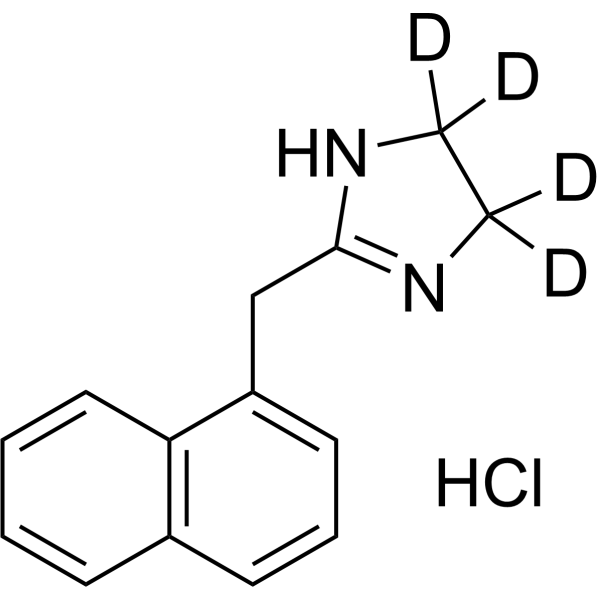 0 ImagesCat. No.: HY-111326SSynonyms: Naphthazoline-d4 hydrochlorideNaphazoline-d4 (hydrochloride) is the deuterium labeled Naphazoline hydrochloride.
-
VEGFR-2-IN-22
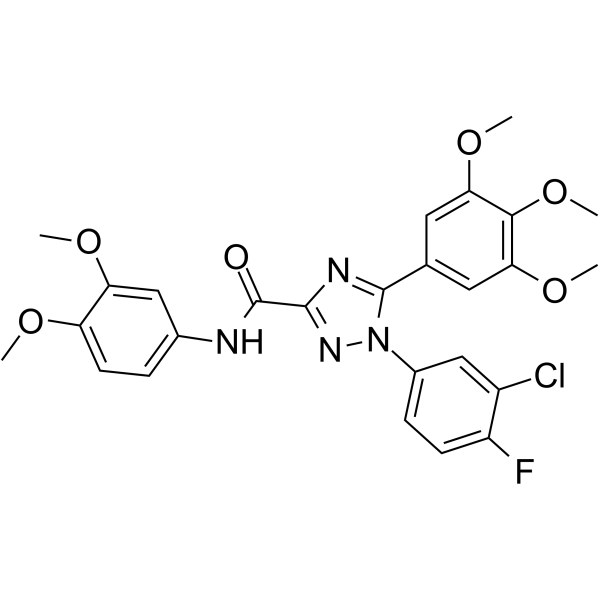 0 ImagesCat. No.: HY-147872CAS No.: 2447587-73-5VEGFR-2-IN-22 (Compound 25) is a dual VEGFR-2 and β-tubulin polymerization inhibitor with an IC50 of 19.82 nM against VEGFR-2. VEGFR-2-IN-22 induces apoptosis.
-
YM-359445 dihydroxybutanedioate
 0 ImagesCat. No.: HY-117039CAS No.: 1020067-28-0YM-359445 dihydroxybutanedioate is an orally active VEGFR2 tyrosine kinase inhibitor, with an IC50 of 8.5 nM. YM-359445 dihydroxybutanedioate shows a complete inhibition of vascular permeability induced by VEGF. YM-359445 dihydroxybutanedioate shows antitumor activity against both lung cancer and Paclitaxel (HY-B0015)-resistant colon cancer.
-
hCA/VEGFR-2-IN-2
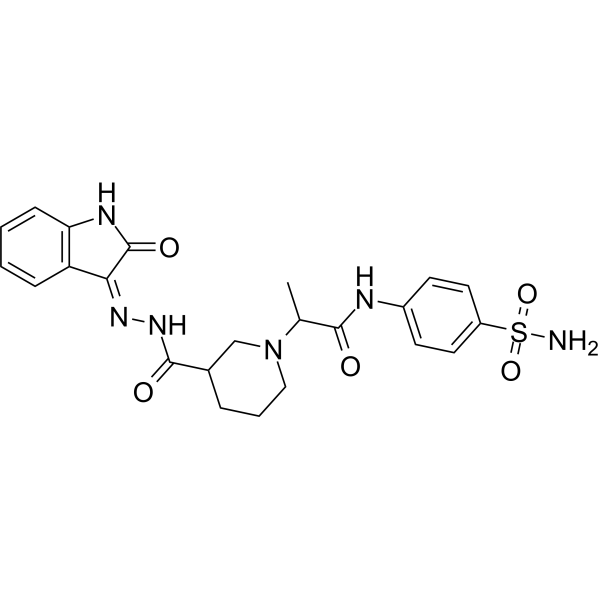 0 ImagesCat. No.: HY-155758CAS No.: 2971782-66-6hCA/VEGFR-2-IN-2 (compound 8g) is an indolinonylbenzenesulfonamide and a potential dual inhibitor of cancer-associated hCA IX/XII and VEGFR-2. hCA/VEGFR-2-IN-2 inhibits VEGFR-2 (IC50=204 nM) and has high binding activity to hCAs, with Kis of 3.6 nM (hCA IX), 16.1 nM (hCA II), 16.7 nM (hCA XII), and 75.3 nM (hCA I), respectively. hCA/VEGFR-2-IN-2 has antiproliferative activity on VEGFR-2-overexpressing breast cancer cells.
-
hPV19
 0 ImagesCat. No.: HY-P992371hPV19 is a humanized inhibitory monoclonal antibody targeting vascular endothelial growth factor (VEGF) with a unique binding site. hPV19 can be used for the research of advanced solid tumors.
-
Bevasiranib
 0 ImagesCat. No.: HY-153484CAS No.: 959961-96-7Bevasiranib is a siRNA designed to silence the genes that produce vascular endothelial growth factor (VEGF). It is widely accepted that vascular endothelial growth factor (VEGF) is a key component in the pathogenesis of choroidal neo-vascularization (CNV), which is a precursor to wet age-related macular degeneration (wet AMD).
-
VEGFR-2-IN-88
 0 ImagesCat. No.: HY-184719VEGFR-2-IN-88 is a VEGFR-2 inhibitor with an IC50 of 0.202 μM. VEGFR-2-IN-88 potently inhibits EGFR (IC50 = 0.139 μM), and moderately inhibits PDGFR-β (IC50 of 0.236 μM) and c-Met (IC50 of 0.281 μM). VEGFR-2-IN-88 acts as a cell cycle inhibitor that arrests cells at the G0/G1 phase. VEGFR-2-IN-88 induces Apoptosis. VEGFR-2-IN-88 downregulates serum AST and ALT levels. VEGFR-2-IN-88 exerts selective anticancer effects. VEGFR-2-IN-88 reduces liver weight in in vivo models. VEGFR-2-IN-88 can be used in research related to hepatocellular carcinoma.

-
EGFR-IN-57
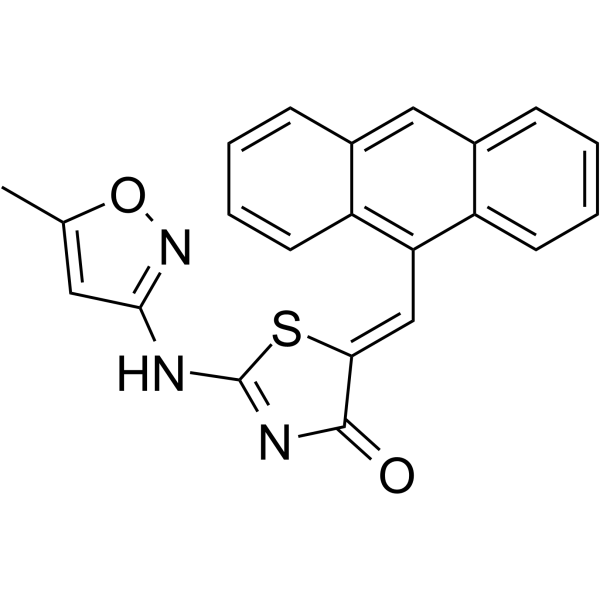 0 ImagesCat. No.: HY-146138CAS No.: 2492382-37-1EGFR-IN-57 (Compound 25a) is a potent, orally active EGFR-TK inhibitor with an IC50 of 0.054 µM. EGFR-IN-57 also inhibits VEGFR-2, CK2α, topoisomerase IIβ and tubulin polymerization with IC50 values of 0.087, 0.171, 0.13 and 3.61 µM, respectively. EGFR-IN-57 induces cell cycle arrest at G2/M and pre-G1 phases. EGFR-IN-57 induces cancer cell apoptosis.
-
Anti-VEGFR1/FLT1 Antibody
 0 ImagesCat. No.: HY-P990541Anti-VEGFR1/FLT1 Antibody is a CHO-expressed humanized antibody that targets VEGFR1/FLT1. Anti-VEGFR1/FLT1 Antibody contains huIgG1 heavy chain and huκ light chain, with a predicted molecular weight (MW) of 145 kDa. The isotype control for the Anti-VEGFR1/FLT1 Antibody can be referenced as Human IgG1 kappa, Isotype Control (HY-P99001).
-
Toceranib-d8
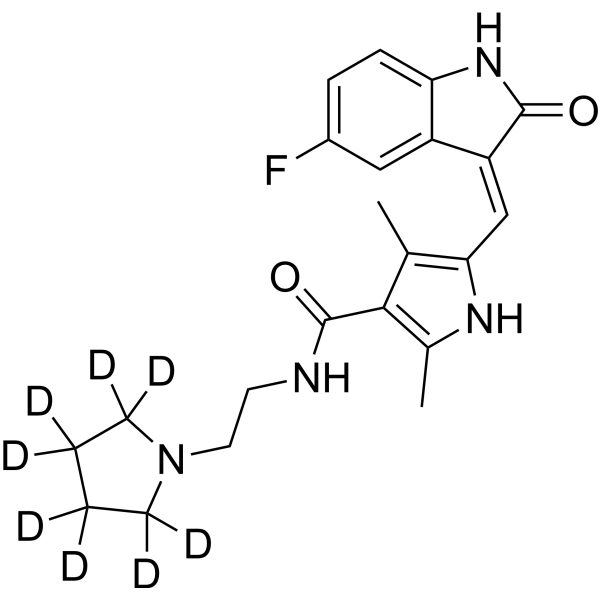 0 ImagesToceranib-d8 is the deuterium labeled Toceranib. Toceranib (SU11654) is an orally active receptor tyrosine kinase (RTK) inhibitor, and it potently inhibits PDGFR, VEGFR, and Kit with Kis of 5 and 6 nM for PDGFRβ and Flk-1/KDR, respectively. Toceranib (SU11654) has antitumor and antiangiogenic activity, and used in the treatment of canine mast cell tumors.
-
Vandetanib-d4
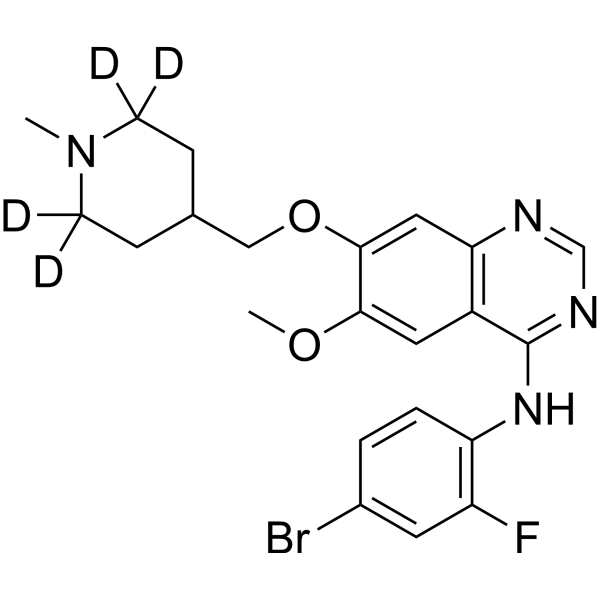 0 ImagesCat. No.: HY-10260S1CAS No.: 1215100-18-7Vandetanib-d4 is the deuterium labeled Vandetanib. Vandetanib (ZD6474) is a potent, orally active inhibitor of VEGFR2/KDR tyrosine kinase activity (IC50=40 nM). Vandetanib also has activity versus the tyrosine kinase activity of VEGFR3/FLT4 (IC50=110 nM) and EGFR/HER1 (IC50=500 nM).
-
(±)-Aiphanol
 0 ImagesCat. No.: HY-152120CAS No.: 578020-29-8Synonyms: Aiphanol(±)-Aiphanol is a newly discovered stilbenolignan analog. (±)-Aiphanol exhibits significant anti-inflammatory activity, acting through inhibition of COX-1 and COX-2. The inhibitory effect on COX-1 (IC50 = 1.9 μM) is particularly strong, while the effect on COX-2 (IC50= 9.9 μM) is relatively weak.(±)-Aiphanol effectively inhibits VEGFR2 (IC50=0.92 μM). (±)-Aiphanol blocks angiogenesis and promotes apoptosis through inhibition of VEGFR2 and COX2 activity. (±)-Aiphanol is orally active.
-
CDK2/FLT4/PDGFRA-IN-1
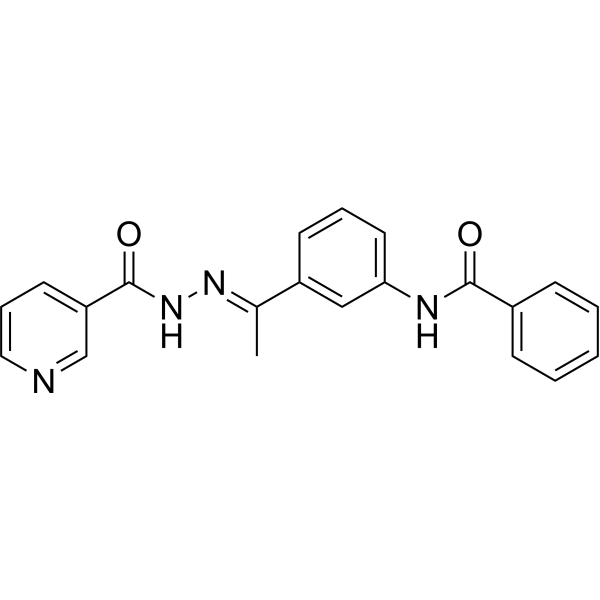
 0 ImagesCat. No.: HY-173124CDK2/FLT4/PDGFRA-IN-1 (Compound 4a) is a potent inhibitor of CDK2/cyclin A, FLT4 (VEGFR3) and PDGFRA, with IC50s of 1.672, 0.554, and 0.629 μM, respectively. CDK2/FLT4/PDGFRA-IN-1 exhibits potent antiproliferative effects against cancer cells (lung EBC-1, pancreatic ductal adenocarcinoma AsPC-1, colorectal HT-29 cells). CDK2/FLT4/PDGFRA-IN-1 can also induce apoptosis in cancer cells.

-
MET kinase-IN-3
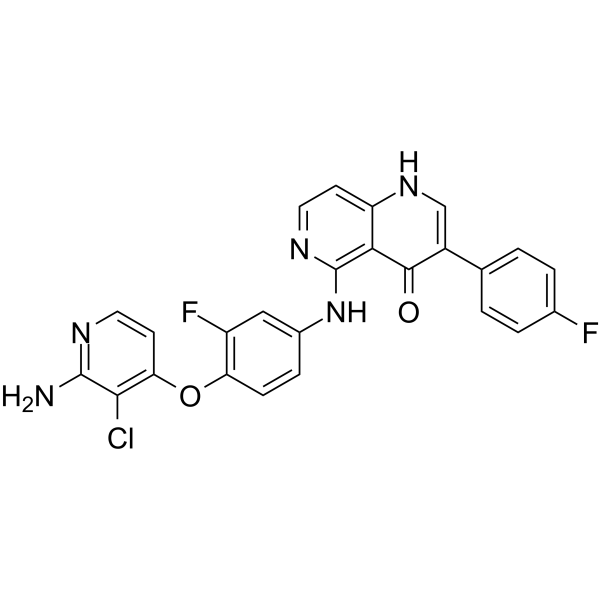 0 ImagesCat. No.: HY-146884CAS No.: 1446324-02-2MET kinase-IN-3 (compound 8) is an orally active and potent MET inhibitor, with an IC50 of 9.8 nM. MET kinase-IN-3 shows good and broad-spectrum antiproliferative activity against cancer cell lines.




