



Wnt
The Wnt signaling pathways are a group of signal transduction pathways made of proteins that pass signals from outside of a cell through cell surface receptors to the inside of the cell. Three Wnt signaling pathways have been characterized: the canonical Wnt pathway, the noncanonical planar cell polarity pathway, and the noncanonical Wnt/calcium pathway. All three Wnt signaling pathways are activated by the binding of a Wnt-protein ligand to a Frizzled family receptor, which passes the biological signal to the protein Dishevelled inside the cell. The canonical Wnt pathway leads to regulation of gene transcription, the noncanonical planar cell polarity pathway regulates the cytoskeleton that is responsible for the shape of the cell, and the noncanonical Wnt/calcium pathway regulates calcium inside the cell. The clinical importance of Wnt signaling pathway has been demonstrated by mutations that lead to a variety of diseases, including breast and prostate cancer, glioblastoma, type II diabetes.
Wnt Isoform Specific Products
All Product Categories
-
Wnt Related Products (441)
Related Products (441)

-
Antibodies (26)
-
Wnt Isoform Comparison
-
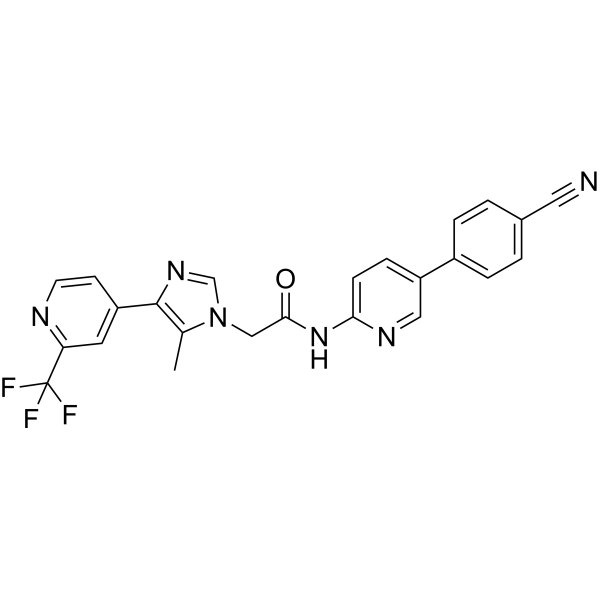
AZ1366
 0 ImagesCat. No.: HY-165503CAS No.: 1645286-58-3AZ1366 is an orally active tankyrase inhibitor. AZ1366 stabilizes Axin2, reduces NuMA levels, disrupts the interaction between tankyrase and NuMA, induces G2/M phase arrest, inhibits the Wnt pathway, and downregulates the expression of β-catenin-dependent genes. AZ1366 inhibits tumor growth in colorectal cancer xenograft models. AZ1366 synergistically inhibits the proliferation of non-small cell lung cancer cells, improves tumor control and significantly prolongs survival in orthotopic non-small cell lung cancer mouse models. AZ1366 is applicable to research related to colorectal cancer and non-small cell lung cancer.
-
Fluocinolone acetonide-13C3
 0 ImagesCat. No.: HY-W777281CAS No.: 1262192-25-5Fluocinolone acetonide-13C3 is the 13C-labeled Fluocinolone (Acetonide) (HY-B0415). Fluocinolone is a glucocorticoid glucocorticoid receptor agonist. Fluocinolone is effective in preventing both lipid accumulation and inflammation. Fluocinolone can promote the proliferation of DPCs and has the potential role in repairing injured pulp tissues. Fluocinolone can be used to study the prevention of chemotherapy-induced peripheral neuropathy caused by Paclitaxel (HY-B0015).
-
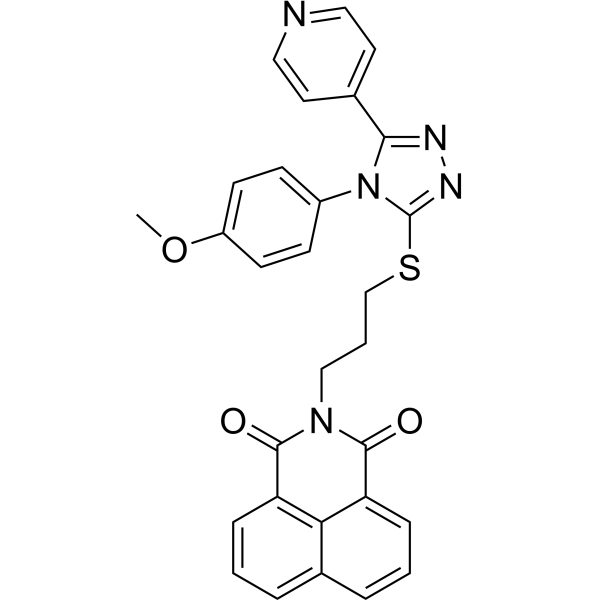
NLS-StAx-h
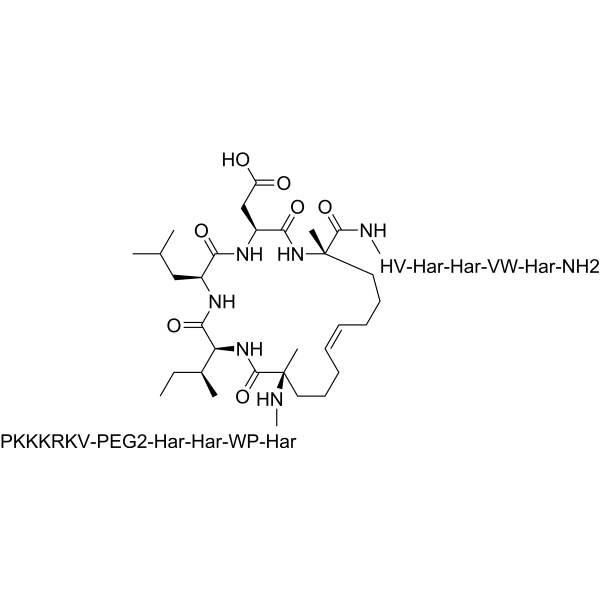 0 ImagesCat. No.: HY-P2272CAS No.: 2872559-21-0
-
BML-284 hydrochloride
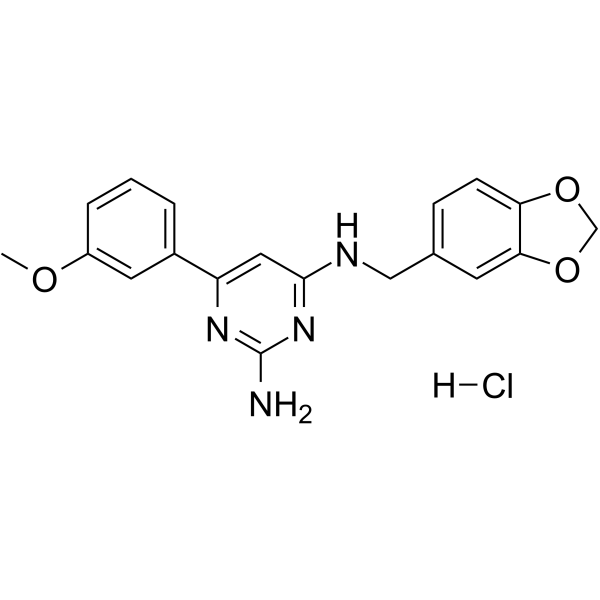 0 ImagesCat. No.: HY-19987ACAS No.: 2095432-75-8BML-284 hydrochloride is a potent and cell-permeable Wnt signaling activator. BML-284 induces TCF-dependent transcriptional activity with an EC50 of 700 nM.

-
Antiproliferative agent-76
 0 ImagesCat. No.: HY-182053CAS No.: 33757-62-9Antiproliferative agent-76 (Compound II-2) is an 8-sulfonamidoquinoline derivative and a selective anticancer agent. Antiproliferative agent-76 blocks the NF-κB and WNT signaling pathways. Antiproliferative agent-76 promotes cancer cell Apoptosis. Antiproliferative agent-76 exhibits anticancer activity against colorectal cancer and leukemia.
-
Laduviglusib-d4
 0 ImagesCat. No.: HY-W714048Synonyms: CHIR-99021-d4; CT99021-d4Laduviglusib-d4 (CHIR-99021-d4) is the deuterium labeled Laduviglusib (HY-10182). Laduviglusib (CHIR-99021) is a potent, selective and orally active GSK-3α/β inhibitor with IC50s of 10 nM and 6.7 nM. Laduviglusib shows >500-fold selectivity for GSK-3 over CDC2, ERK2 and other protein kinases. Laduviglusib is also a potent Wnt/β-catenin signaling pathway activator. Laduviglusib enhances mouse and human embryonic stem cells self-renewal. Laduviglusib induces autophagy.
-
PF-04840082
 0 ImagesCat. No.: HY-P991569PF-04840082 is a humanized IgG2 monoclonal antibody inhibitor targeting Dkk-1. PF-04840082 binds the physiological antagonist (Dkk-1) of the Wnt/LRP5 signal pathway and increases bone mass and bone mass density by activating osteoblasts. PF-04840082 can be used for osteoporosis research.
-
FZD7 antagonist 1
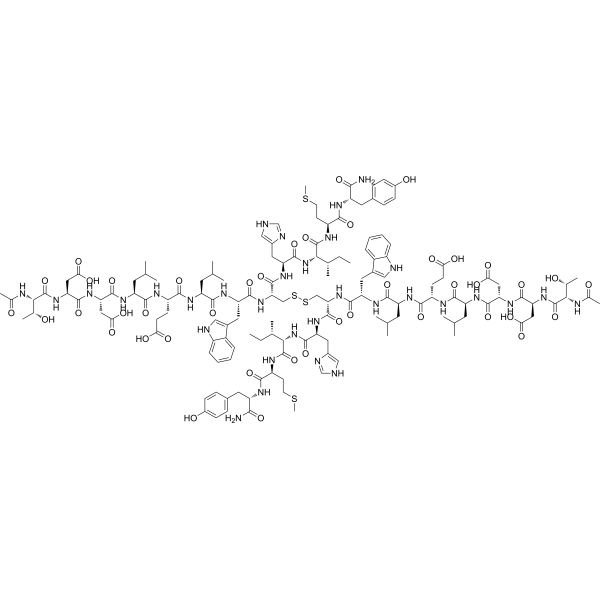 0 ImagesCat. No.: HY-P10204CAS No.: 2416664-25-8FZD7 antagonist 1 (peptide 34) is a dFz7-21 analogue. FZD7 antagonist 1 is an FZD7 antagonist that inhibits the wnt3a with IC50 value of 9.2 nM. FZD7 antagonist 1 blocks TcdB−FZD interaction via targeting FZD receptors.

-
AXIN2/β-catenin-IN-1
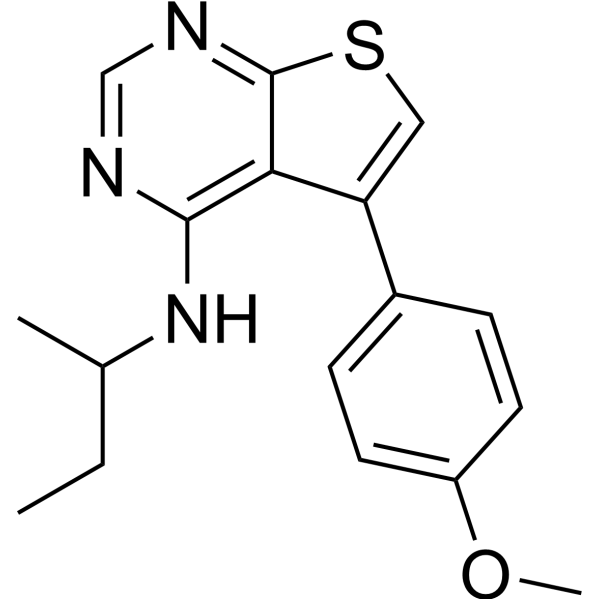
 0 ImagesCat. No.: HY-180449CAS No.: 3004884-16-3Anticancer agent 291 (Compound 2406) is an anti-cancer agent. Anticancer agent 291 interferes with the integrity of the β-tubulin cytoskeleton and inhibits the Wnt/β-catenin signal transduction. Anticancer agent 291 significantly inhibits the invasion, migration and colony formation of tumor cells. Anticancer agent 291 induces the cell cycle of EC-9706 and HT-29 cells to arrest at the G2/M phase and inhibits cell proliferation. Anticancer agent 291 can be used for the study of gastrointestinal cancer.
-
SEN461
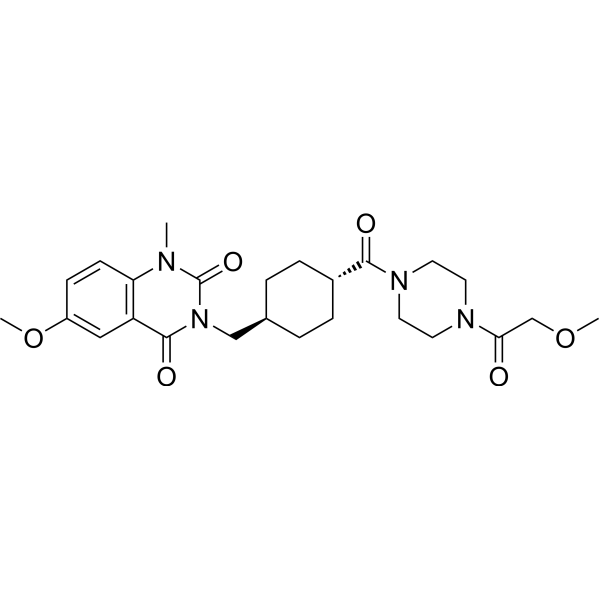 0 ImagesCat. No.: HY-120864CAS No.: 1287727-28-9SEN461 is a potent and orally active Wnt pathway inhibitor. SEN461 shows effective anti-tumor activity and can be used for GBM research.
-
Anti-DKK2 Antibody
 0 ImagesCat. No.: HY-P992224
-
Apoptosis inducer 22
 0 ImagesCat. No.: HY-161900Apoptosis inducer 22 (QR-5) is an apoptosis inducer with IC50 values of 63.1 and 46.5 μM for colon cancer cell lines SW480 and HT29, respectively. Apoptosis inducer 22 induces apoptosis by inhibiting the Wnt/β-catenin axis in colon cancer cells. Apoptosis inducer 22 can be used in anti-colon cancer research.
-
Butrin
 0 ImagesButrin is a compound found in Butea monosperma flowers. Butrin reduces expression of SIRT1, AURKB, cyclin D1, pAKT, GSK-3β, β-catenin, and TGF-3β expression, enhances apoptosis and ROS production in cancer cells. Butrin downregulates Wnt and NF-κB signaling, mitigates oxidative stress, reduces proinflammatory cytokine (TNF-α, IL-6 and IL-8) production and suppresses neuroinflammation. Butrin inhibits IKK enzyme activity. Butrin can be used for the researches of colorectal cancer, Alzheimer’s disease, and rheumatoid arthritis.
-
21H7
 0 ImagesCat. No.: HY-169671CAS No.: 217317-45-821H7 is a selective inhibitor of the Wnt/b-catenin pathway. 21H7 markedly inhibits the growth of HFs. 21H7 potently decreases growth of breast and colon cancer cells.
-
Anti-LRP5 Antibody
 0 ImagesCat. No.: HY-P992263




