



Liposome
Liposomes (NPs typically 100–500 nm in diameter) are fabricated from the self-assembly of phospholipids, which consist of a polar phosphate head group and hydrophobic lipid tails. In aqueous environments, the hydrophobic tails self-orient, resulting in a spherical structure comprised of an aqueous core surrounded by a lipophilic bilayer membrane. Liposomes are both biocompatible and biodegradable (e.g., at certain pH and temperature), which can be controlled by modifying the lipid composition. Furthermore, liposomes are amenable to various modifications that improve their efficacy as drug delivery carriers.
All Product Categories
-
Liposome Related Products (1265)
Related Products (1265)

-
Ceramide 1-phosphate
 0 ImagesCat. No.: HY-P2982CAS No.: 128543-23-7Ceramide 1-phosphate is a bioactive lipid and one of the key components of sphingolipids. Ceramide 1-phosphate playing diverse roles in cellular behaviors such as cell differentiation, migration, proliferation and death.
-
LNP Lipid-3
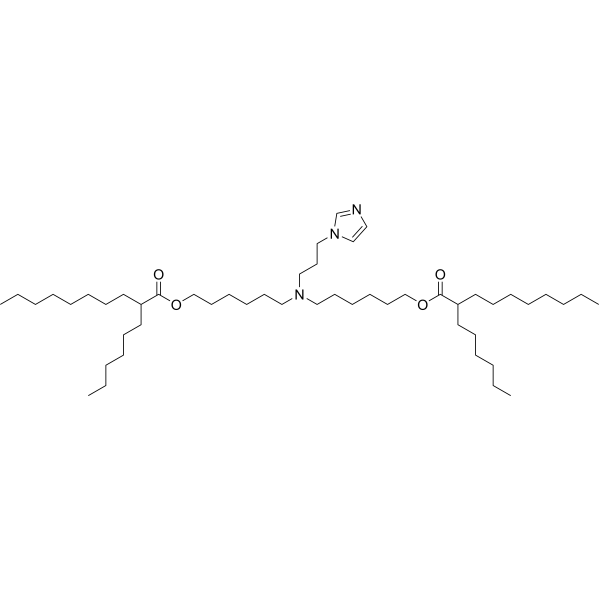 0 ImagesLNP Lipid-3 is an ionizable lipid that can be used to synthesize lipid nanoparticles. LNP Lipid-3 is applicable for mRNA delivery.
-
1,19-Bis(2-butyloctyl) 10-[[3-(dimethylamino)propyl](1-oxononyl)amino]nonadecanedioate
amino]nonadecanedioate](https://file.medchemexpress.com/product_pic/hy-134783.gif "Click to View 1,19-Bis(2-butyloctyl) 10-[[3-(dimethylamino)propyl](1-oxononyl)amino]nonadecanedioate Product Detail") 0 Images1,19-Bis(2-butyloctyl) 10-[[3-(dimethylamino)propyl](1-oxononyl)amino]nonadecanedioate is an excipient for vaccines. 1,19-Bis(2-butyloctyl) 10-[[3-(dimethylamino)propyl](1-oxononyl)amino]nonadecanedioate can be used for the research of the development of COVID-19 vaccines and drug delivery for gene therapy.
0 Images1,19-Bis(2-butyloctyl) 10-[[3-(dimethylamino)propyl](1-oxononyl)amino]nonadecanedioate is an excipient for vaccines. 1,19-Bis(2-butyloctyl) 10-[[3-(dimethylamino)propyl](1-oxononyl)amino]nonadecanedioate can be used for the research of the development of COVID-19 vaccines and drug delivery for gene therapy.
-
1,2-Dipalmitoyl-sn-glycero-3-PS sodium
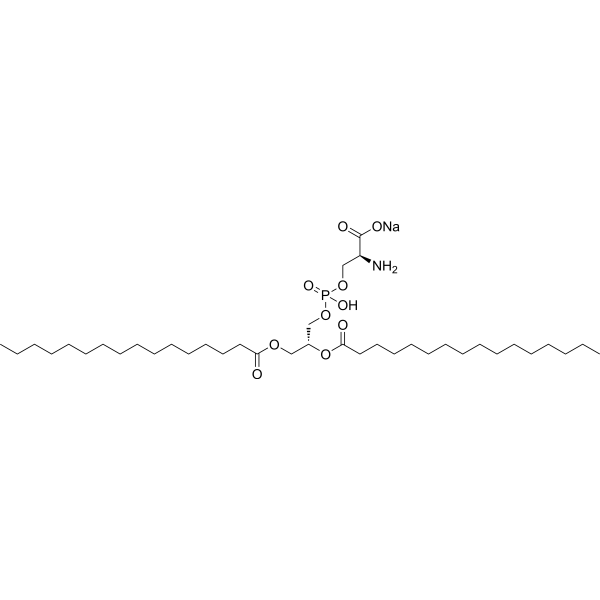 0 Images1,2-Dipalmitoyl-sn-glycero-3-PS sodium is a phosphatidylserine phospholipid. 1,2-Dipalmitoyl-sn-glycero-3-PS sodium is used for the preparation of phospholipid bilayers.
-
18:0 mPEG5000 PE ammonium
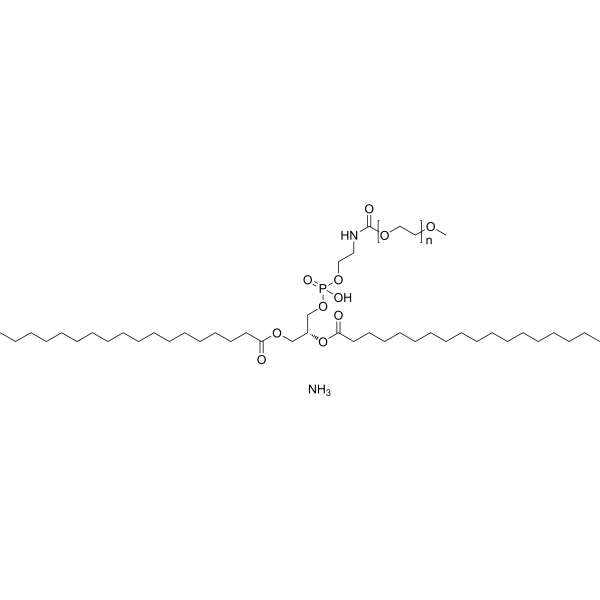 0 ImagesSynonyms: DSPE-mPEG5000 ammonium; 1,2-Distearoyl-sn-glycero-3-phosphoethanolamine-N-[methoxy(polyethylene glycol)-5000] ammonium18:0 mPEG5000 PE (DSPE-mPEG5000) ammonium is a kind of amphiphilic polymer material. 18:0 mPEG5000 PE ammonium combines hydrophobic lipids (18:0 stearic acid chain) with hydrophilic polyethylene glycol (5 kDa) chains to form amphiphilic molecules, which are used to construct stable liposomes/nanoparticles, thereby enhancing drug delivery, prolonging circulation time, and achieving targeted effects through its functional terminal groups (usually biotin or carboxyl groups). 18:0 mPEG5000 PE ammonium can be used for the research of nanoprobes and drug delivery.
-
DOPE-mPEG2000
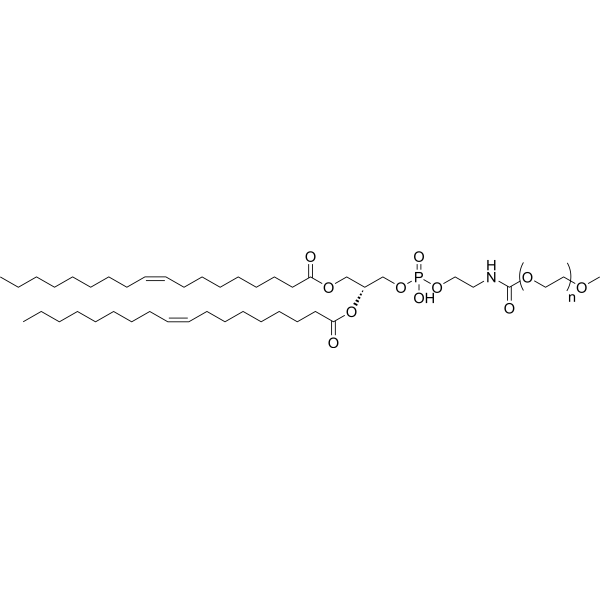 0 ImagesCat. No.: HY-W440988
-
Cholesterol decanoate
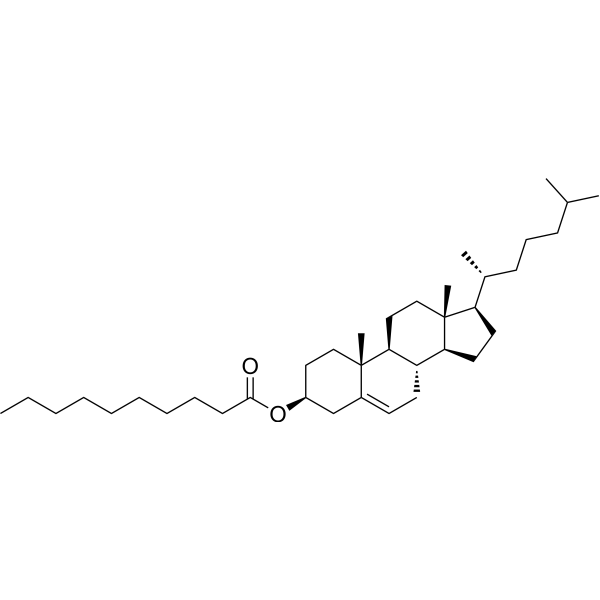 0 ImagesCholesterol decanoate is an organic compound belonging to the class of esters. It is formed from the reaction between cholesterol and capric acid. Cholesterol decanoate has several applications in the pharmaceutical industry, particularly as a bioactive compound with potential research potential for improving a range of medical conditions, such as high cholesterol and inflammation-related diseases. Additionally, it has potential applications as a food additive to improve texture and stability.
-
DSPE-PEG2000-TAT
 0 ImagesCat. No.: HY-172279ADSPE-PEG2000-TAT is a cell-penetrating peptide-modified PEGylated phospholipid conjugate and cellular uptake enhancer. DSPE-PEG2000-TAT forms via conjugation of Cys-TAT to DSPE-PEG2000-Mal. DSPE-PEG2000-TAT enhances liposomal cellular uptake and siRNA transfection efficiency in glomerular mesangial and macrophage cells. DSPE-PEG2000-TAT can be used for drug delivery.
-
DSPE-PEG2000-GE11
 0 ImagesCat. No.: HY-172470DSPE-PEG2000-GE11 is a nanocarrier component composed of DSPE and the EGFR-targeting peptide (GE11). DSPE-PEG2000-GE11 specifically binds to EGFR and mediates receptor-mediated endocytosis of micellar drug carriers. DSPE-PEG2000-GE11 can be used for drug delivery.
-
GL67 pentahydrochloride
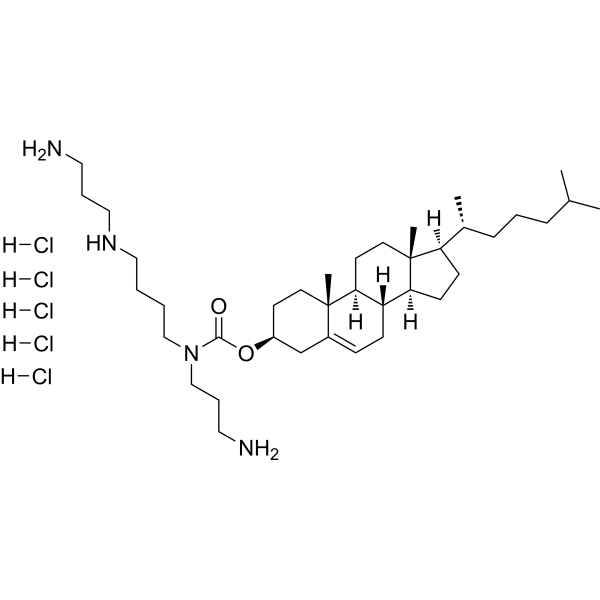 0 ImagesCat. No.: HY-149037APurity: 99.95%Synonyms: N4-Spermine cholesteryl carbamate pentahydrochlorideGL67 pentahydrochloride (N4-Spermine cholesteryl carbamate pentahydrochloride) is a cationic lipid that serves as a non-viral siRNA delivery vector and a non-viral gene transfer vector. GL67 pentahydrochloride enhances the encapsulation efficiency of siRNA in liposomal formulations and promotes the cellular uptake of siRNA across cancer cell membranes. GL67 pentahydrochloride mediates the transduction of plasmid DNA into cells. GL67 pentahydrochloride can be used in drug delivery-related research.
-
SPPC
 0 ImagesSynonyms: 1-Stearoyl-2-palmitoyl-sn-glycero-3-phosphocholineSPPC is a phospholipid with different length of fatty acid. The sn-1 position contains a stearic acid (18:0) while the sn-2 position is occupied by a palmitic acid (16:0).
-
eGFP circRNA-LNP
 0 ImagesCat. No.: HY-153232eGFP circRNA-LNP is a lipid nanoparticle (LNP) containing eGFP circRNA, suitable for assays of RNA delivery, translation efficiency, cell viability, etc. eGFP circRNA carries Enhanced Green Fluorescent Protein (Enhanced Green Fluorescent Protein) eGFP, which will express green fluorescent protein after entering the cell. eGFP is commonly used as a reporter gene detectable by fluorescence microscopy or flow cytometry.
-
C10-200
 0 ImagesC10-200 is an ionizable cationic lipid that can be used to generate lipid nanoparticles (LNPs). C10-200 is used in the study of mRNA delivery.
-
18:0,18:1 PS
 0 Images18:0,18:1 PS is the dominant phosphatidylserine subtype in cells, exosomes and HIV particles. It is abundant in the brain and is essential for maintaining membrane structure, lipid raft organization and intracellular trafficking. 18:0,18:1 PS mediates interleaflet membrane coupling through cholesterol-dependent interactions with very long-chain sphingolipids, and can induce the clustering of glycosylphosphatidylinositol-anchored proteins. In addition, clusters formed by the binding of 18:0,18:1 PS to cholesterol not only facilitate the proper distribution of cholesterol in lipid bilayers, but also effectively protect cholesterol from oxidative damage.
-
1,2-Diheptadecanoyl-sn-glycero-3-phosphorylcholine
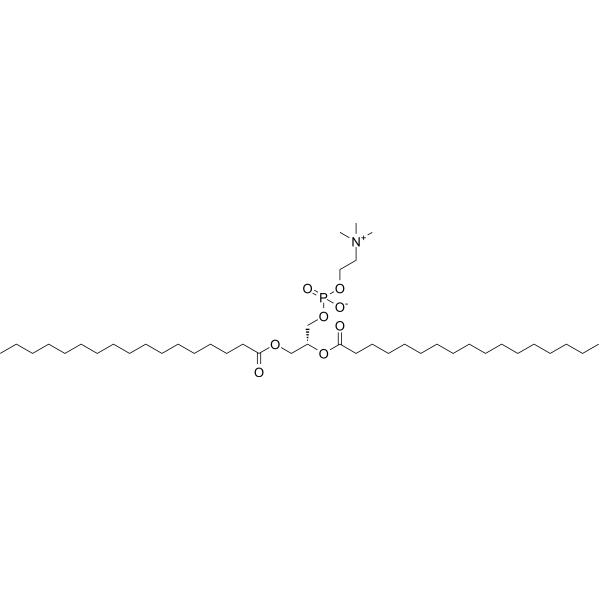 0 ImagesSynonyms: DHPC1,2-Diheptadecanoyl-sn-glycero-3-phosphorylcholine (DHPC) is a biologically active phospholipid compound and a derivative of phosphatidylcholine (PC). It can be used in the generation of micelles, liposomes, and other types of artificial membranes.
-
1-Stearoyl-2-oleoyl-sn-glycerol-3-phosphoethanolamine
 0 ImagesSynonyms: 1-Stearoyl-2-Oleoyl-sn-glycero-3-PE; 18:0-18:1 PE; PE(18:0/18:1)1-Stearoyl-2-oleoyl-sn-glycerol-3-phosphoethanolamine is a phospholipids that contains stearic acid and oleic acid at the sn-1 and sn-2 positions, respectively. It has been used in the generation of lipid nanoparticles (LNPs) for in vitro delivery of mRNA or nuclear-targeted plasmid DNA.
-
16:1 (DELTA 9-Cis) PC
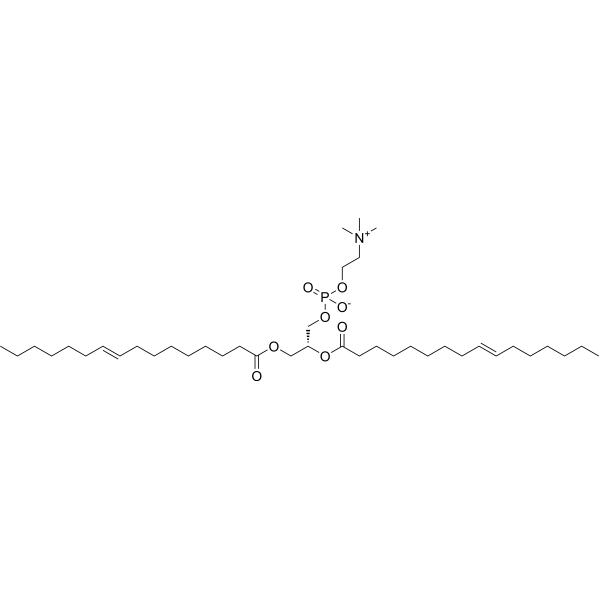 0 ImagesSynonyms: 1,2-Dipalmitoleoyl-sn-glycero-3-phosphocholine16:1 (DELTA 9-Cis) PC is a phospholipid metabolite .
-
DSPE-PEG-DBCO ammonium
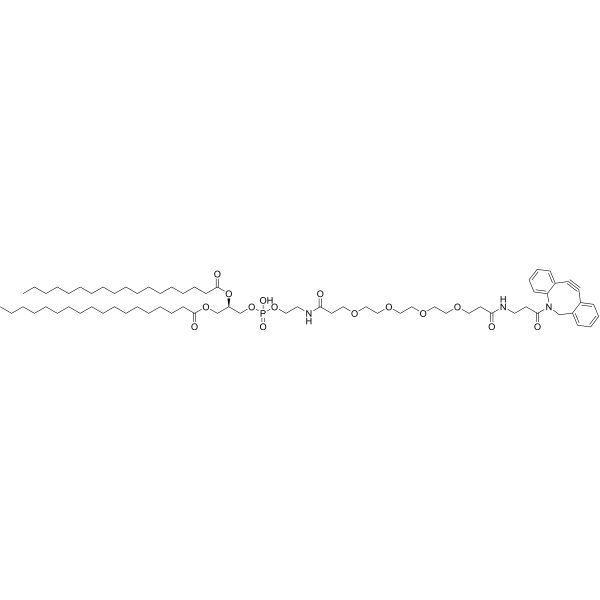
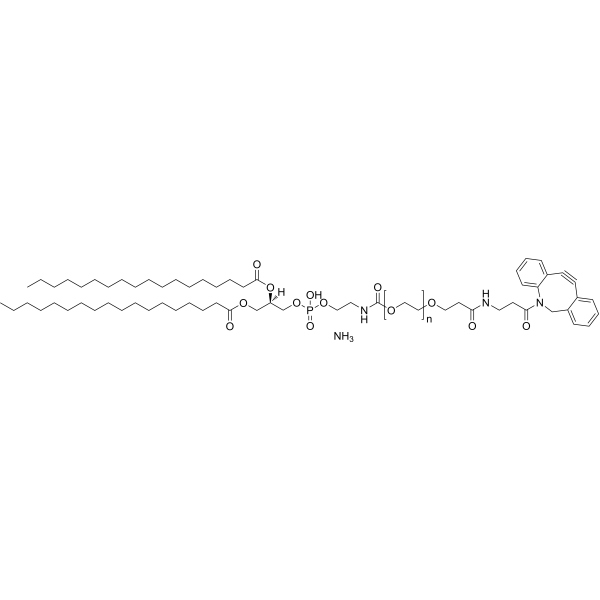 0 ImagesDSPE-PEG-DBCO ammonium is the ammonium salt form of DSPE-PEG-DBCO. DSPE-PEG-DBCO ammonium is utilized in copper-free click chemistry through SPAAC conjugation with an azido-functionalized peptide ligand. DSPE-PEG-DBCO ammonium is applied in drug-delivery and nanoparticle research.
-
DSPE-PEG-Maleimide ammonium (MW 2000)
 0 ImagesCat. No.: HY-166648APurity: 99%DSPE-PEG-Maleimide ammonium (MW 2000) is a functional lipid component and a thiol-reactive crosslinker. DSPE-PEG-Maleimide ammonium (MW 2000) undergoes Michael addition with the thiol groups of thiolated or cyclic RGD peptides to form stable thioether bonds and DSPE-PEG (2000)-RGD. DSPE-PEG-Maleimide ammonium (MW 2000) is applicable to research on drug delivery.



